
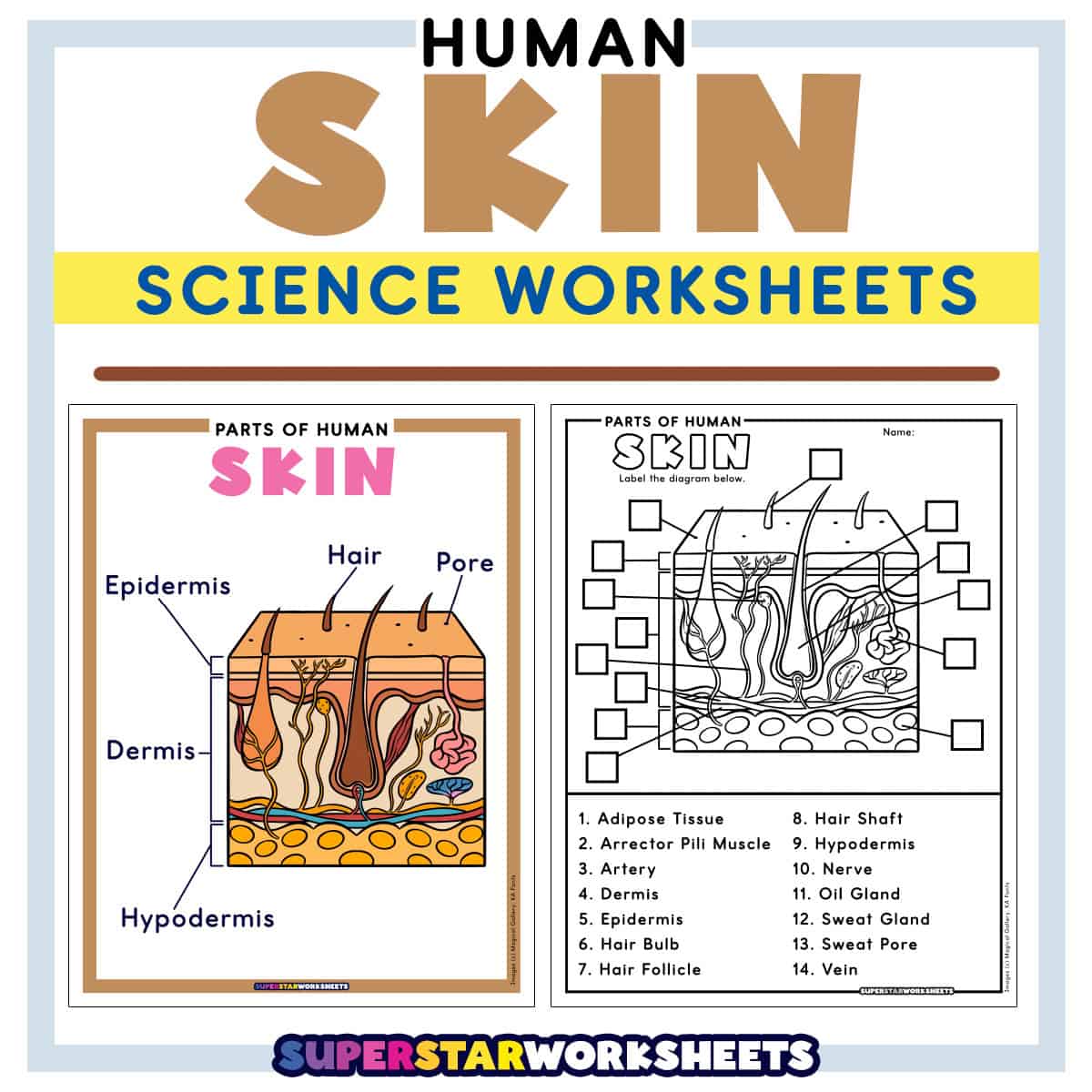
Free printable Human Skin Diagram worksheets help kids explore the layers, structures, and functions of skin through labeling activities, coloring pages, quizzes, and hands-on crafts. Download and print PDF diagrams, vocabulary charts, and research pages covering everything from simple skin parts for young learners to detailed layered anatomy and function charts for middle school students. These worksheets build skills in anatomy vocabulary, diagram reading, and scientific reasoning while keeping the content playful and easy to follow. Teachers can use them for science centers or whole-class lessons, and parents will find them just as useful for homeschool units on the human body.
Simple Human Skin Diagrams for Kids
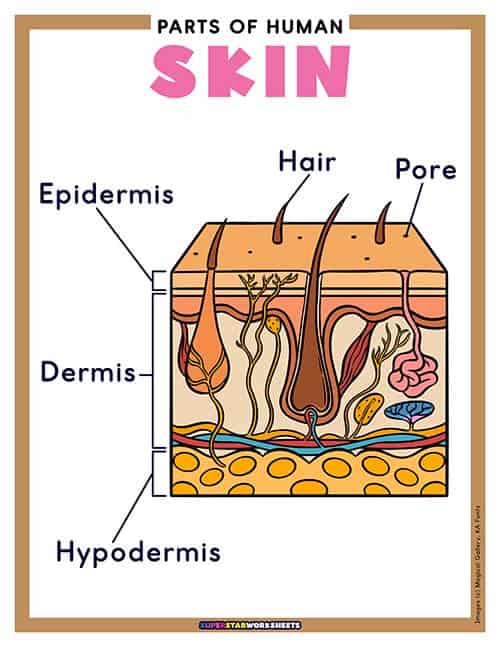
Download and print this simple skin diagram made for our youngest learners. It labels the three main layers of skin, plus hair and a pore, using easy, kid-friendly language. A great first introduction to skin anatomy for early elementary science.
Simple Skin Diagram Coloring Page
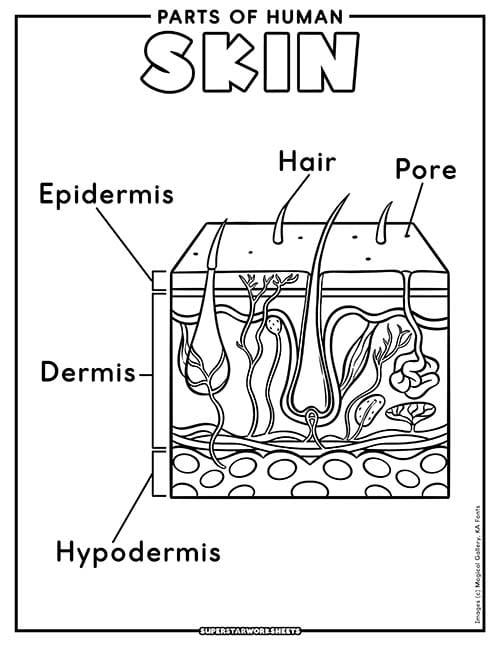
This black and white version of our Simple Skin Diagram lets younger students color and review the parts of skin, including the epidermis, dermis, hypodermis, hair, and pore, while reinforcing each label.
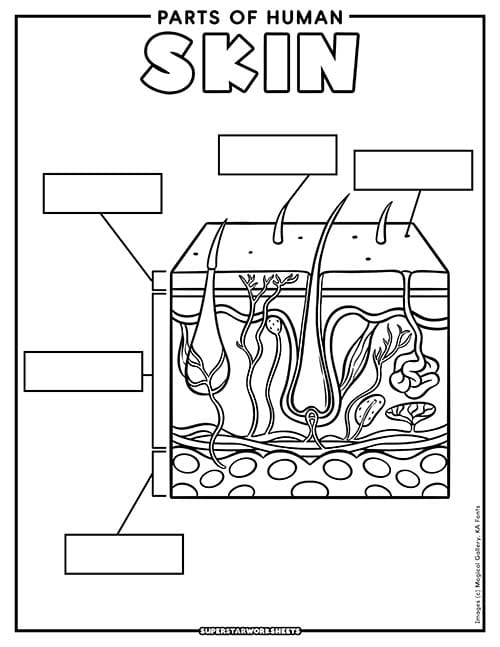
This blank practice page asks students to label the epidermis, dermis, hypodermis, hair, and pore on their own, making it a simple, low prep way to check understanding after the introductory diagram.
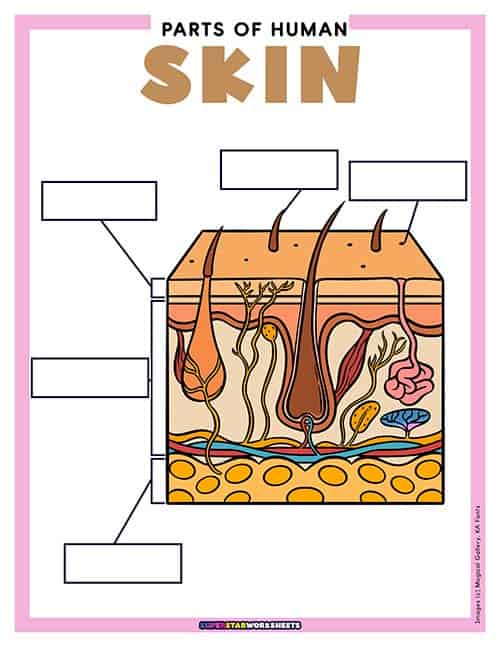
Simple Skin Diagram Learning Mat
This reusable learning mat and label card set lets young learners practice matching each basic skin part to its correct spot again and again, perfect for a science center or small group activity.
Printable Human Skin Diagrams
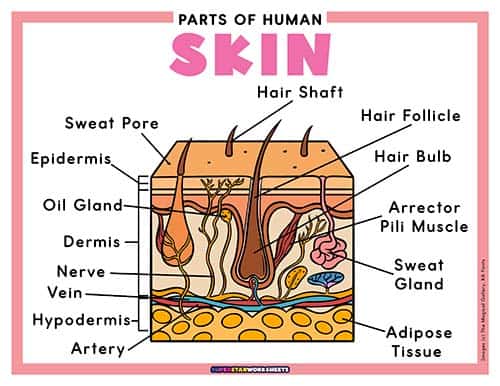
Download and print this free Parts of Human Skin diagram, built for middle school anatomy lessons. It labels all 14 structures found in the skin, from the epidermis and dermis down to nerves and blood vessels. A detailed, classroom-ready reference chart for any human body unit.
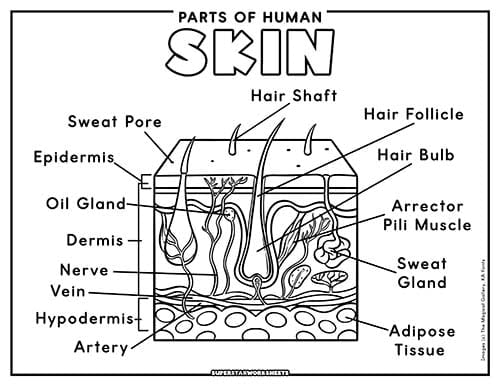
Human Skin Diagram Coloring Page
This black and white version of the Human Skin Diagram gives middle school students a chance to color and review all 14 labeled structures, from the epidermis down to the nerves and blood vessels.
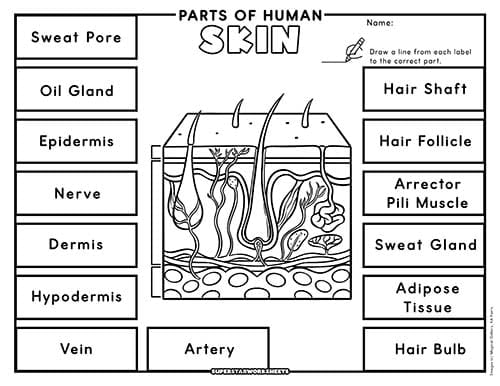
Using a word bank of all 14 skin structures, students label this detailed cross-section diagram themselves, reinforcing vocabulary before moving on to an unassisted quiz.
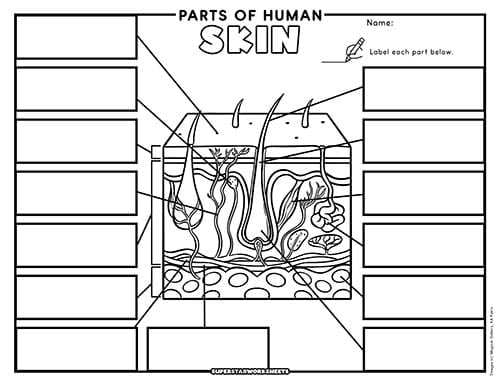
This version removes the word bank, challenging students to label all 14 structures of the skin from memory or with a partner.
Skin Anatomy Quizzes
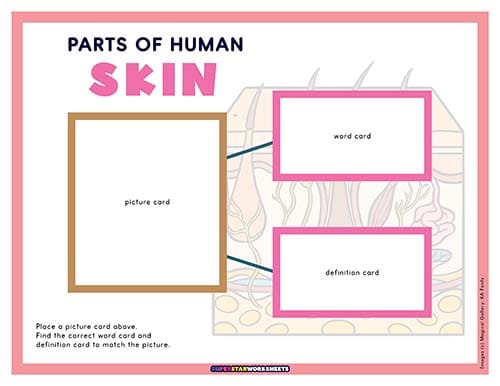
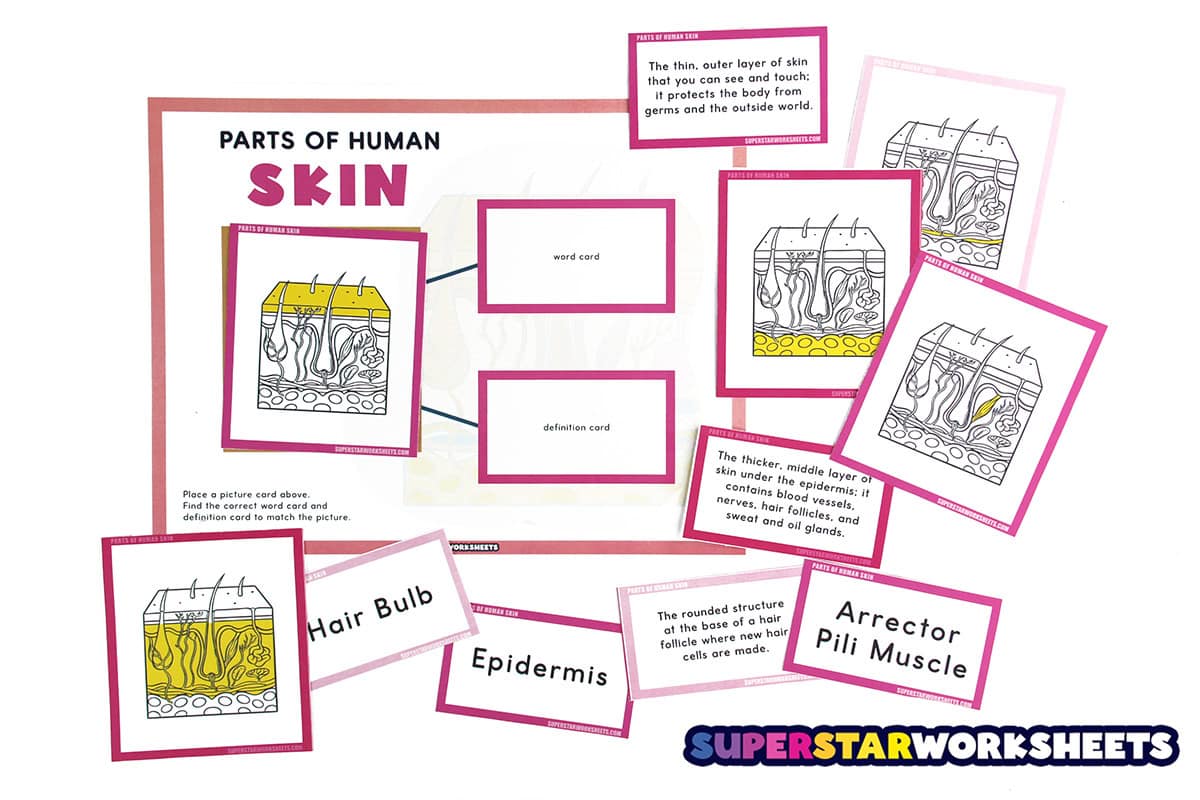
Our take on traditional anatomy flashcards, this hands-on matching set pairs a picture, word, and definition card for every skin structure. Students test their knowledge by matching each set correctly, making it perfect for review, centers, or small group study.
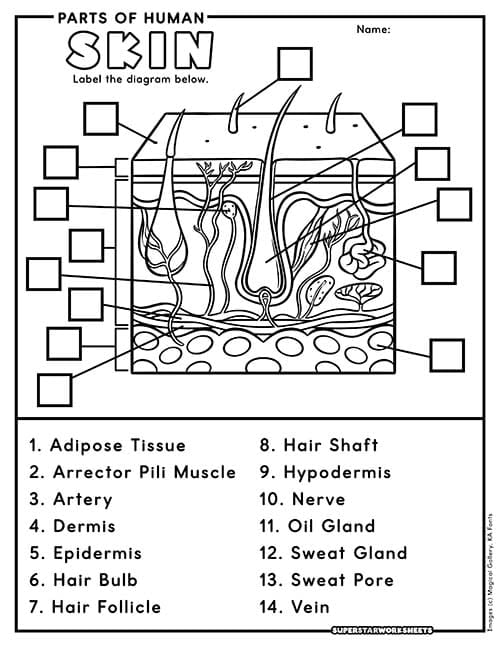
This numbered quiz has students match key words in alphabetical order to the correct location on an unlabeled skin diagram, a great formal check for understanding skin anatomy.
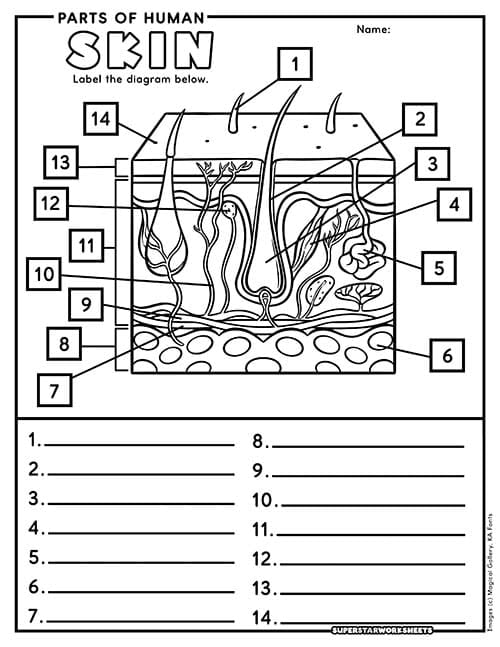
Students write in each label themselves on this clockwise numbered diagram, with no word bank provided, making it a strong independent assessment of skin anatomy vocabulary.
Human Skin Anatomy Printables
Labeled Human Skin Diagram Chart
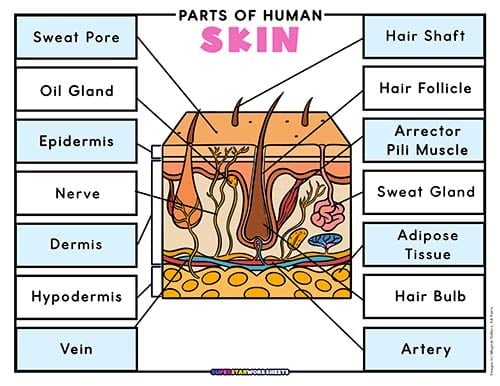
Here is a full color, fully labeled skin diagram chart with all 14 structures and their locations clearly marked. Great as a standalone reference poster or paired with our fill in the blank labeling worksheet for a complete lesson.
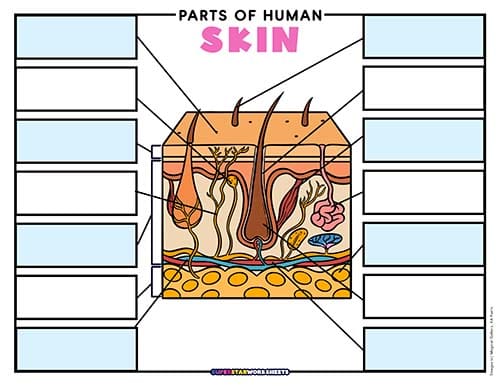
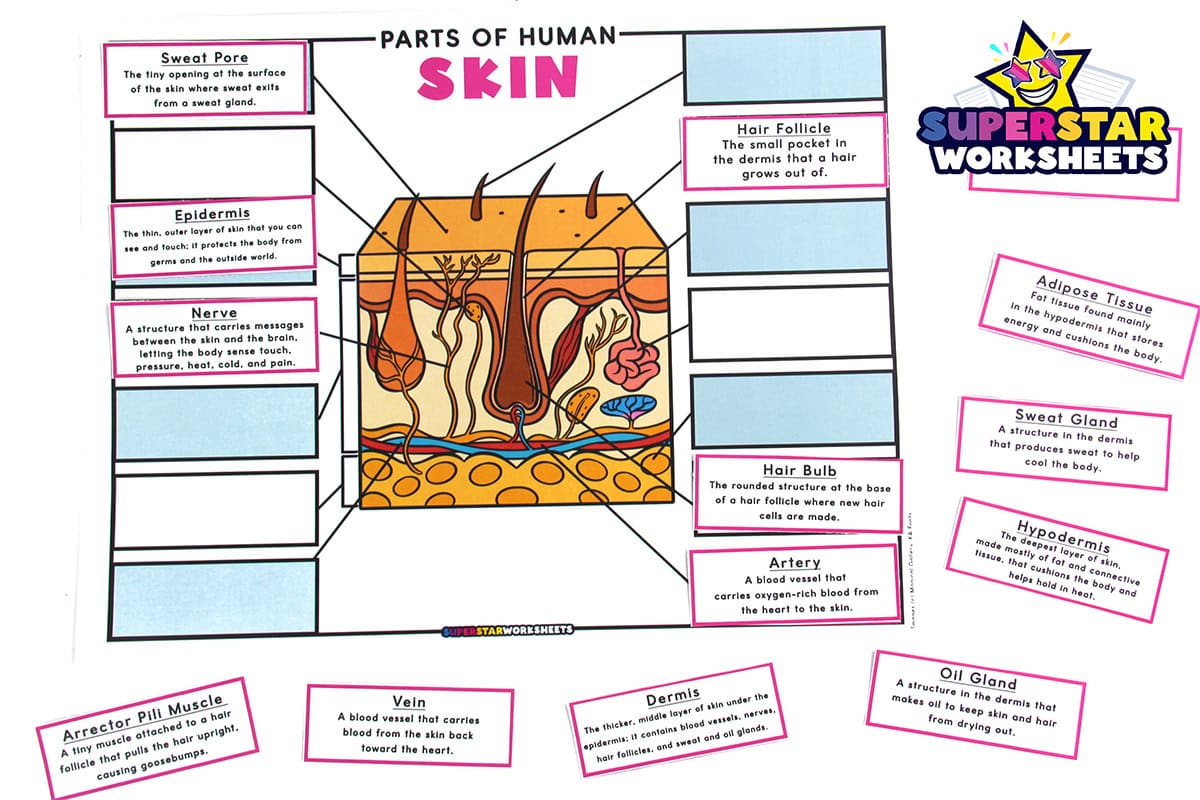
This cut and paste activity has students build their own labeled skin diagram from scratch, gluing each term and definition onto the correct spot on a blank cross section.
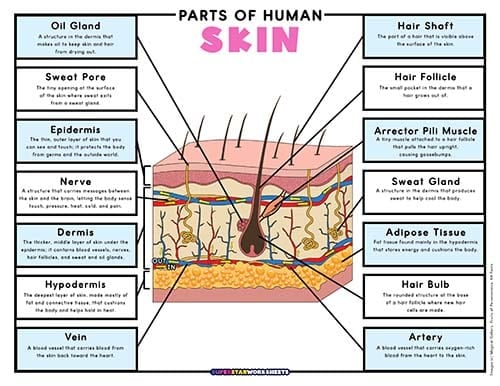
How Blood Flows Through the Skin
This close up diagram shows how blood moves in and out of the skin through the artery and vein network, connecting skin structure to the body’s larger circulatory system.
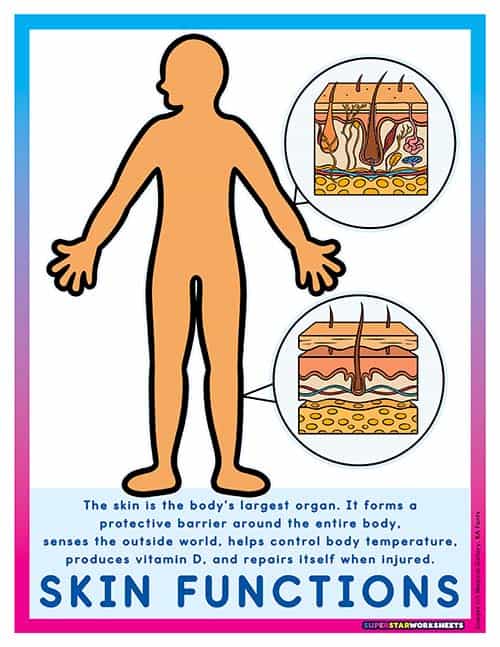
This overview chart introduces the skin’s big picture role in the body, pairing a simple layer diagram with a plain language summary of what skin does every day. For more human science printables, take a look at our Heart Worksheets!
Parts of Human Skin
Adipose Tissue: Fat tissue that stores energy and cushions the body.
Arrector Pili Muscle: A tiny muscle attached to a hair follicle that causes goosebumps.
Artery: A blood vessel that carries oxygen-rich blood to the skin.
Dermis: The thicker, middle layer of skin, found just under the epidermis.
Epidermis: The thin, outer layer of skin that you can see and touch.
Hair: A thin strand that grows from a follicle in the skin.
Hair Bulb: The base of a hair follicle, where new hair cells are made.
Hair Follicle: The small pocket in the dermis that a hair grows from.
Hair Shaft: The part of a hair that is visible above the skin’s surface.
Hypodermis: The deepest layer of skin, made mostly of fat.
Nerve: A structure that carries touch, pressure, and temperature signals to the brain.
Oil Gland: A structure that makes oil to keep skin and hair from drying out.
Pore: A tiny opening in the skin where sweat or oil reaches the surface.
Sweat Gland: A structure that produces sweat to help cool the body.
Sweat Pore: The tiny opening where sweat exits the skin.
Vein: A blood vessel that carries blood from the skin back to the heart.
Printable Skin Functions Diagrams
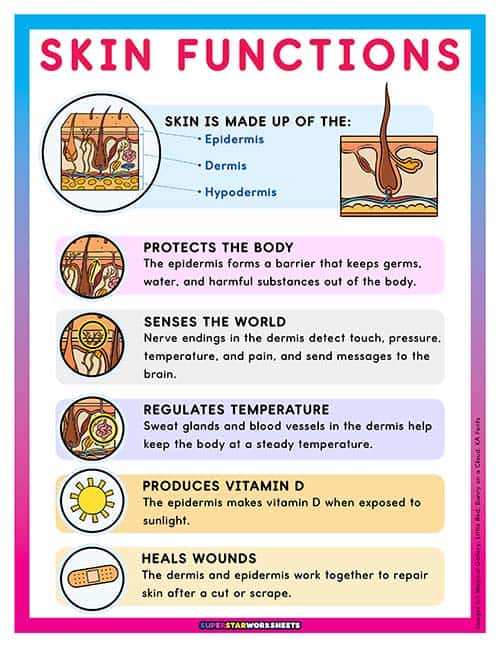
This large diagram breaks down the five main jobs of human skin: protection, sensation, temperature regulation, vitamin D production, and wound healing, and connects each one to the exact skin structures responsible for it. A clear visual for teaching how skin works as a system.
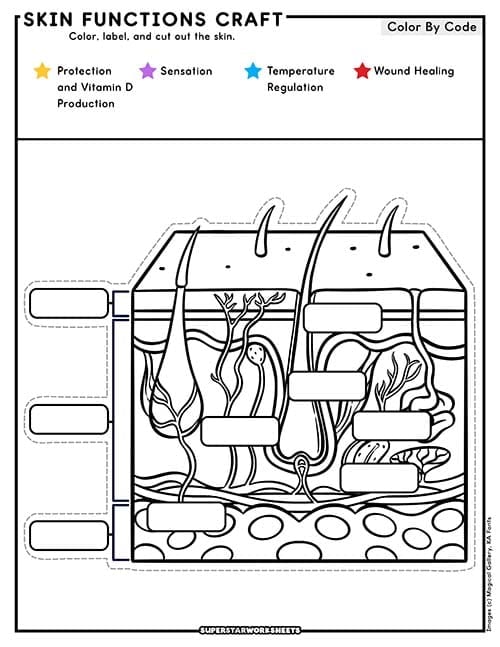
Skin Functions Color-by-Code Craft
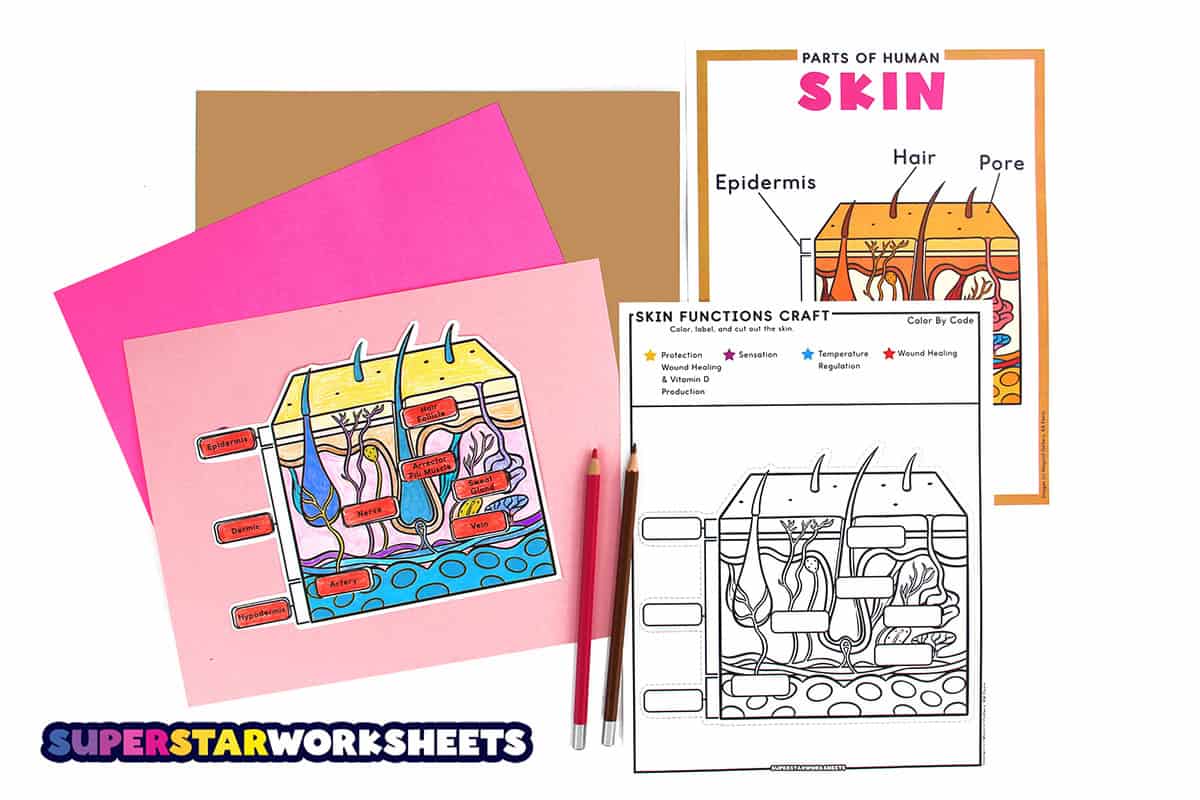
In this hands on color by code craft, students color and label a large skin diagram to show exactly where each of skin’s five functions takes place, then assemble it into a keepsake project.
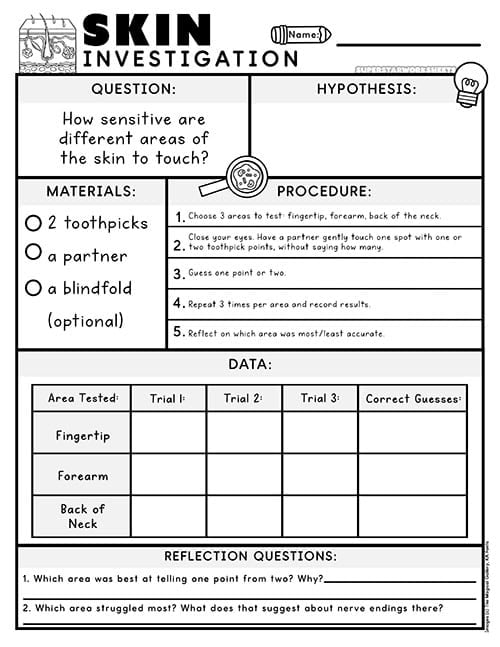
In this simple science investigation, students test how sensitive different areas of skin are to touch, then record and reflect on their results, connecting real data to how nerve endings work.
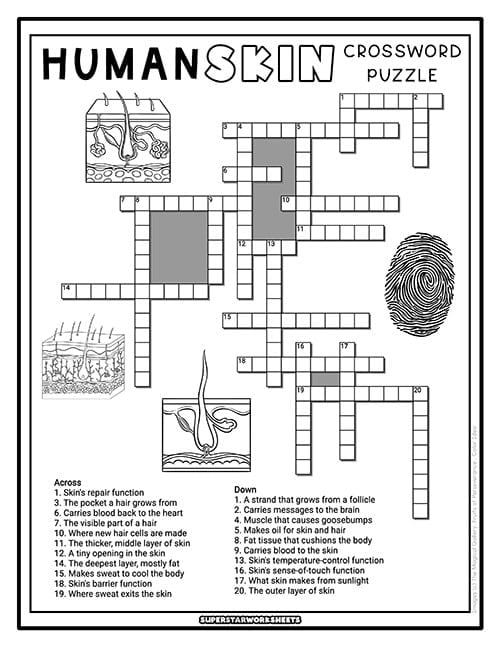
This crossword puzzle reviews all 21 skin vocabulary words from both the structure and functions arcs, making it a fun way to reinforce spelling and definitions.
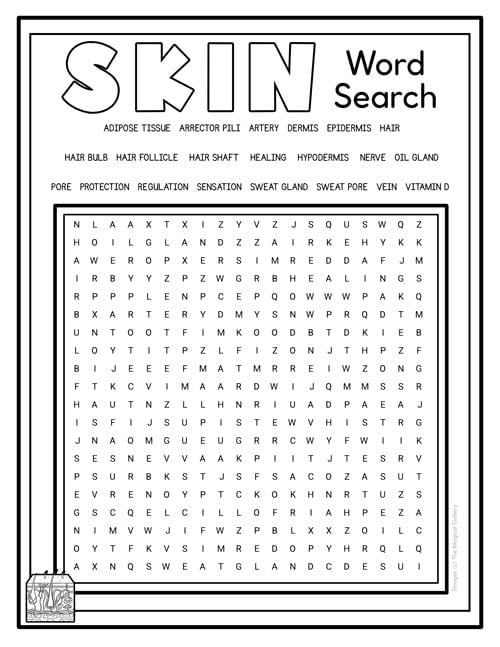
Students search for all 21 skin vocabulary words in this word search, a low-prep way to build vocabulary recognition and review before a quiz or test.
How Skin Functions
Skin has five main jobs, and it does all of them at the same time, every single day. The epidermis forms a protective barrier that keeps germs, water, and other harmful substances out of the body, while nerve endings in the dermis constantly sense touch, pressure, temperature, and pain and send that information straight to the brain. Sweat glands and blood vessels in the dermis work together to keep the body at a safe, steady temperature, widening or narrowing and releasing sweat as needed. At the same time, the epidermis produces vitamin D whenever it is exposed to sunlight, and if the skin is ever cut or scraped, the dermis and epidermis work together to heal the wound and rebuild themselves. Skin may look like a simple covering, but underneath the surface it is constantly protecting, sensing, regulating, producing, and repairing, all at once.
Human Skin Facts for Kids
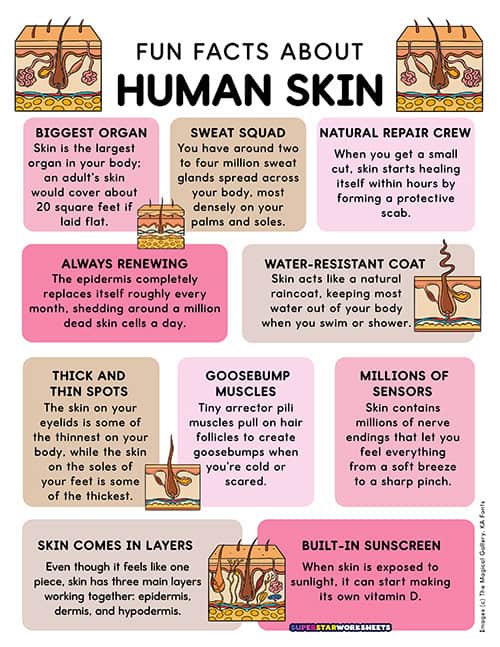
Fun Facts About Human Skin for Kids
Download this fun facts chart packed with surprising and kid-friendly trivia about human skin. Pairs perfectly with our Two Truths and a Lie game and KWLQ research page for an engaging skin science unit wrap-up.
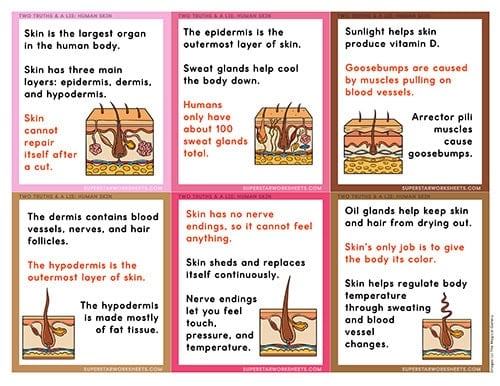
Human Skin Two Truths and a Lie
This critical thinking game gives students six sets of skin facts, two true and one false, challenging them to use what they’ve learned to spot the lie in each set.
This KWLQ chart has students record what they already know, what they want to learn, what they learned, and any new questions they still have about human skin. For more FREE printables, check out our Lungs Worksheets today!
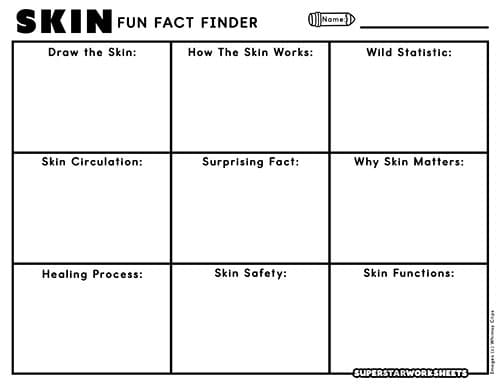
This open ended research grid gives students nine creative prompts, from drawing the skin to uncovering a wild statistic, for a flexible wrap up activity or homework assignment.
Fun Facts About Human Skin
Biggest Organ: Skin is the largest organ in your body; an adult’s skin would cover about 20 square feet if laid flat.
Always Renewing: The epidermis completely replaces itself roughly every month, shedding around a million dead skin cells a day.
Water-Resistant Coat: Skin acts like a natural raincoat, keeping most water out of your body when you swim or shower.
Skin Comes in Layers: Even though it feels like one piece, skin has three main layers working together: epidermis, dermis, and hypodermis.
Built-In Sunscreen: When skin is exposed to sunlight, it can start making its own vitamin D.
Thick and Thin Spots: The skin on your eyelids is some of the thinnest on your body, while the skin on the soles of your feet is some of the thickest.
Goosebump Muscles: Tiny arrector pili muscles pull on hair follicles to create goosebumps when you’re cold or scared.
Millions of Sensors: Skin contains millions of nerve endings that let you feel everything from a soft breeze to a sharp pinch.
Natural Repair Crew: When you get a small cut, skin starts healing itself within hours by forming a protective scab.
Sweat Squad: You have around two to four million sweat glands spread across your body, most densely on your palms and soles.
Leave a Reply