
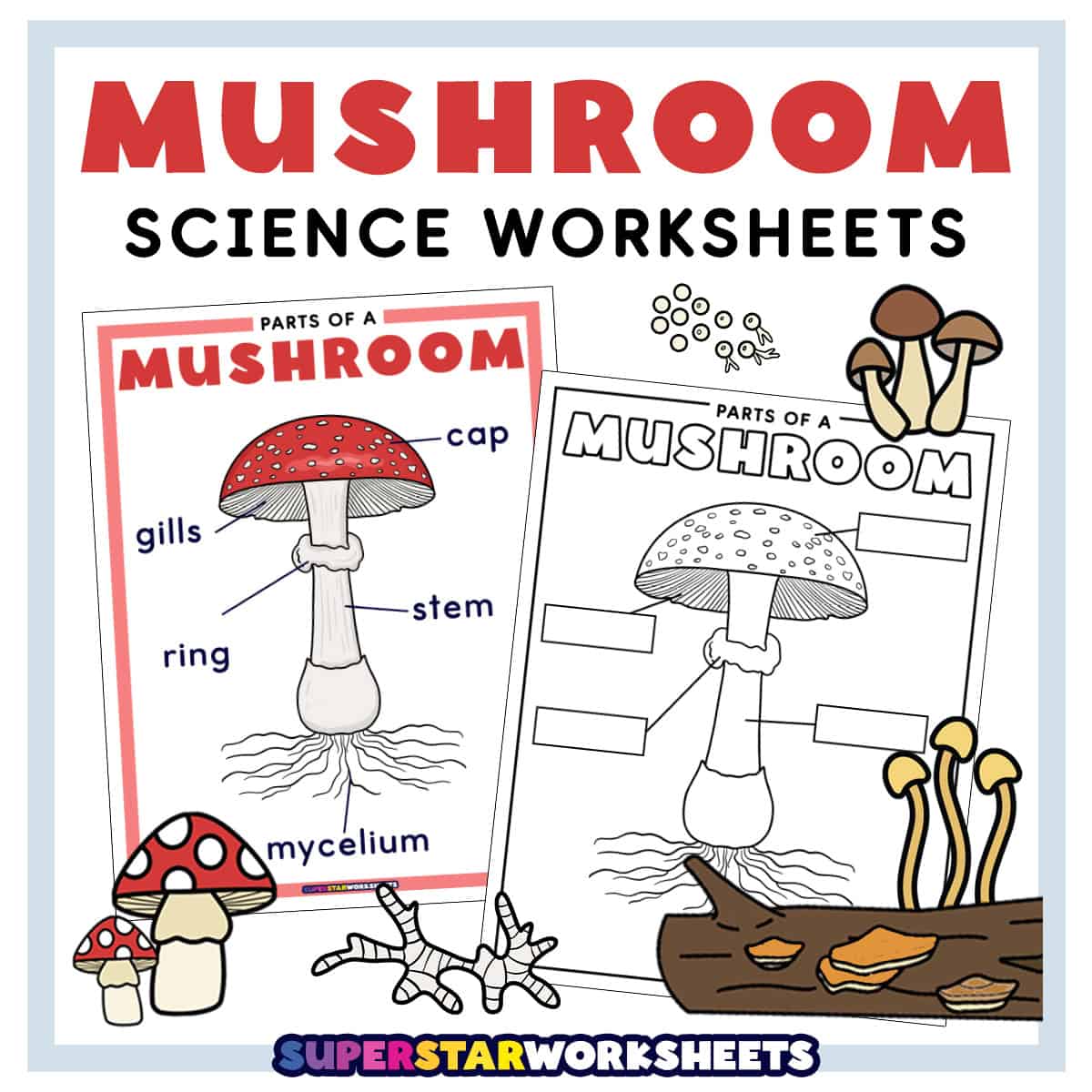
Free printable Mushroom Worksheets make it easy to bring fungi into your science lessons. Download and print PDF activities covering mushroom parts, the mushroom life cycle, decomposers, and the hidden underground world of mycelium. These hands-on printables help elementary students build vocabulary, practice scientific observation, and compare living things across categories. Whether you’re planning for a science center, a homeschool unit, or a small group lesson, these worksheets bring nature’s recyclers to life on the page.
Parts of a Mushroom Printables
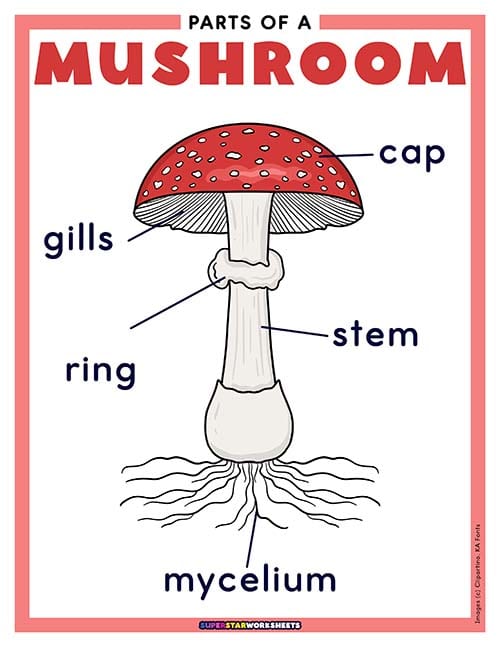
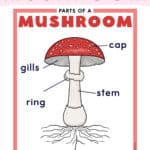
This colorful parts of a mushroom chart introduces young learners to the cap, stem, gills, ring, and mycelium. It’s a great anchor chart for a science center or the start of a fungi unit, helping kids build the vocabulary they need before diving into hands-on activities.
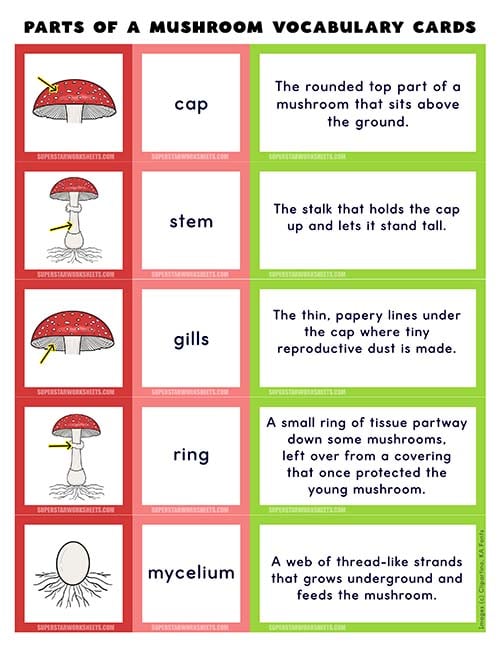
Parts of a Mushroom Vocabulary Cards
These parts of a mushroom vocabulary cards pair each term with a picture and a simple definition. Kids can match, sort, or quiz each other with the cards, making them perfect for a science station or small group review.
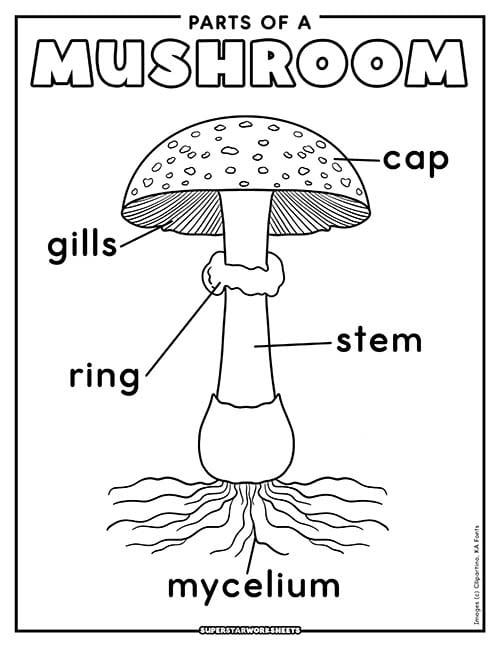
This black and white parts of a mushroom worksheet lets students color, label, and cut-and-paste each part into place. It’s an easy independent practice page that reinforces the vocabulary from the anchor chart.
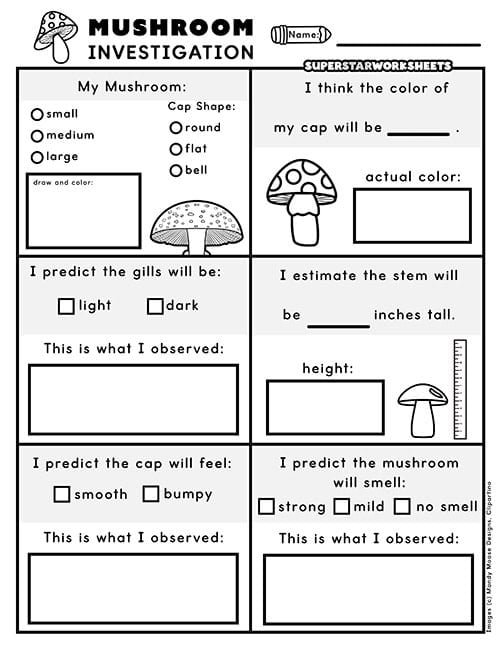
This mushroom investigation page invites students to observe a real or pictured mushroom and record what they notice about its color, size, texture, and smell. It’s a simple way to build observation skills using the scientific method.
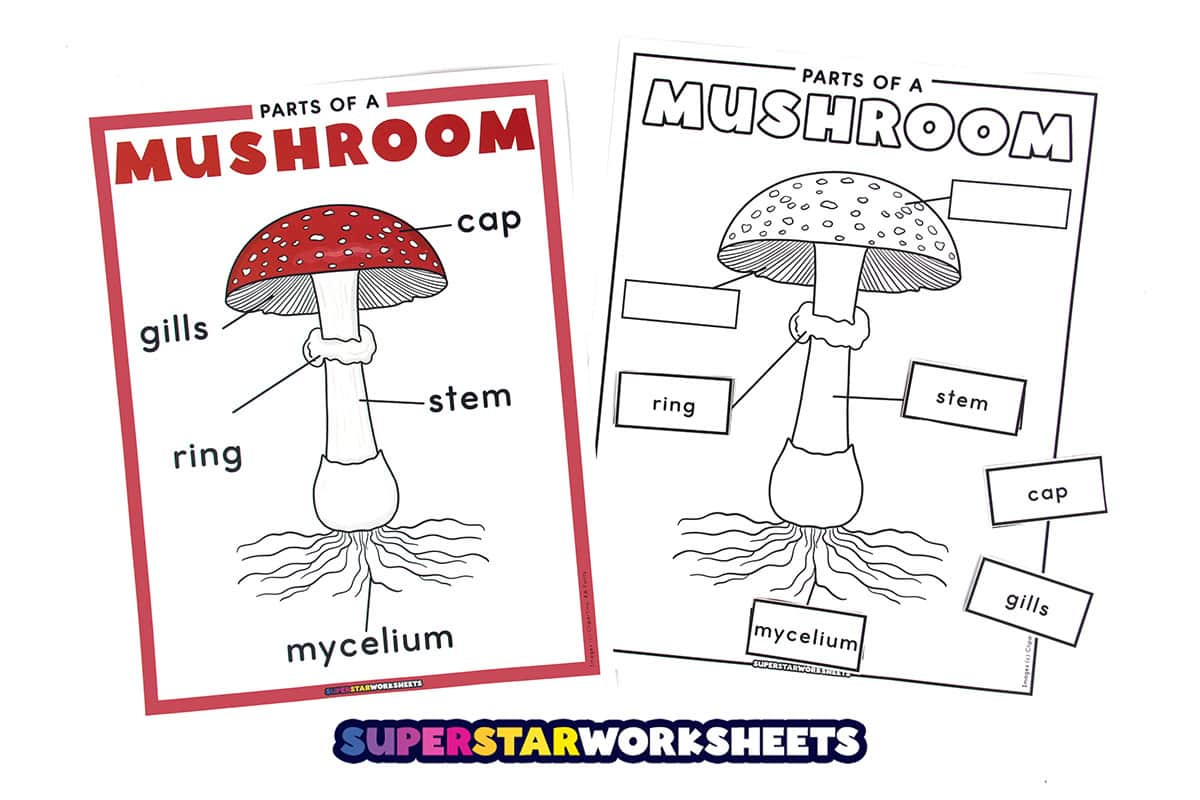
Teaching the Parts of a Mushroom
Every mushroom you see poking up from the ground is only the visible part of a much bigger organism. The cap is the rounded top, and the stem holds it upright. Flip the cap over and you’ll find the gills. They are thin, papery lines where the mushroom’s reproductive dust is made. Some mushrooms also have a ring, a leftover bit of tissue from the covering that protected them when they were young (though not every species has one). Underground, a mushroom is connected to a huge web of thread-like strands called mycelium, which is really the main body of the fungus.
Teaching Tip: Bring in a real mushroom (or a large photo) and have students find each part before labeling the worksheet. This hands-on look at real gills makes the vocabulary click.
Mushroom Life Cycle Printables
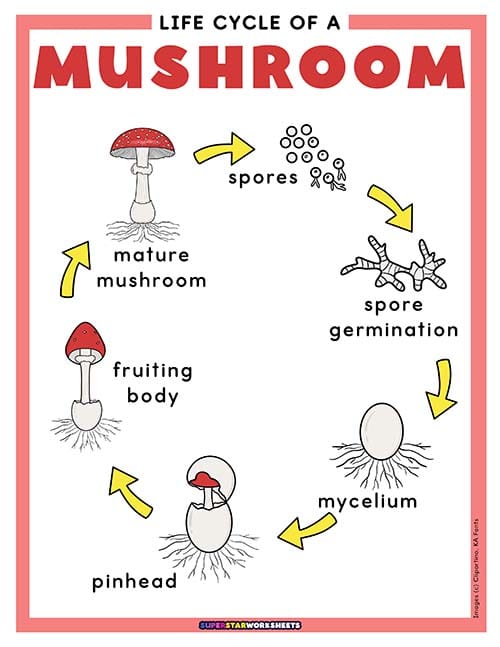
This life cycle of a mushroom chart walks students through all six stages, from spores to a mature mushroom. The colorful circular diagram makes an ideal reference chart for a fungi or decomposers unit.
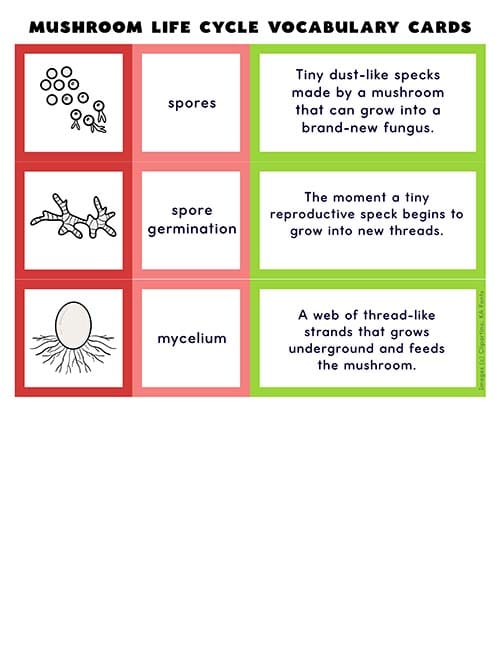
Mushroom Life Cycle Vocabulary Cards
These mushroom life cycle vocabulary cards break each stage into a picture, word, and definition set. Use them for matching games, sequencing practice, or a life cycle vocabulary review. Expand your students learning about mushrooms with our FREE Mushroom Unit Study!
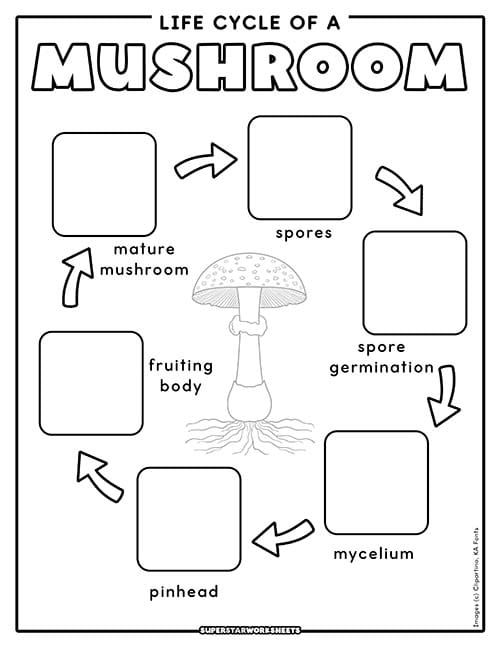
This life cycle of a mushroom cut and paste worksheet asks students to sequence each stage in order. It’s a hands-on way to reinforce the growth pattern fungi share with every other living thing.
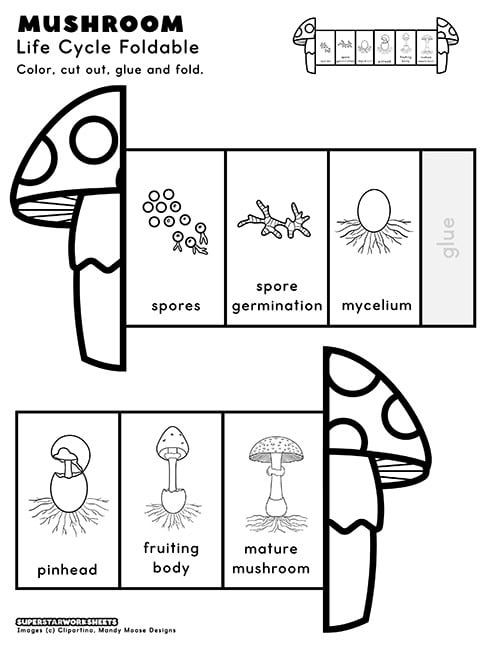
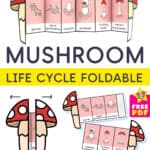
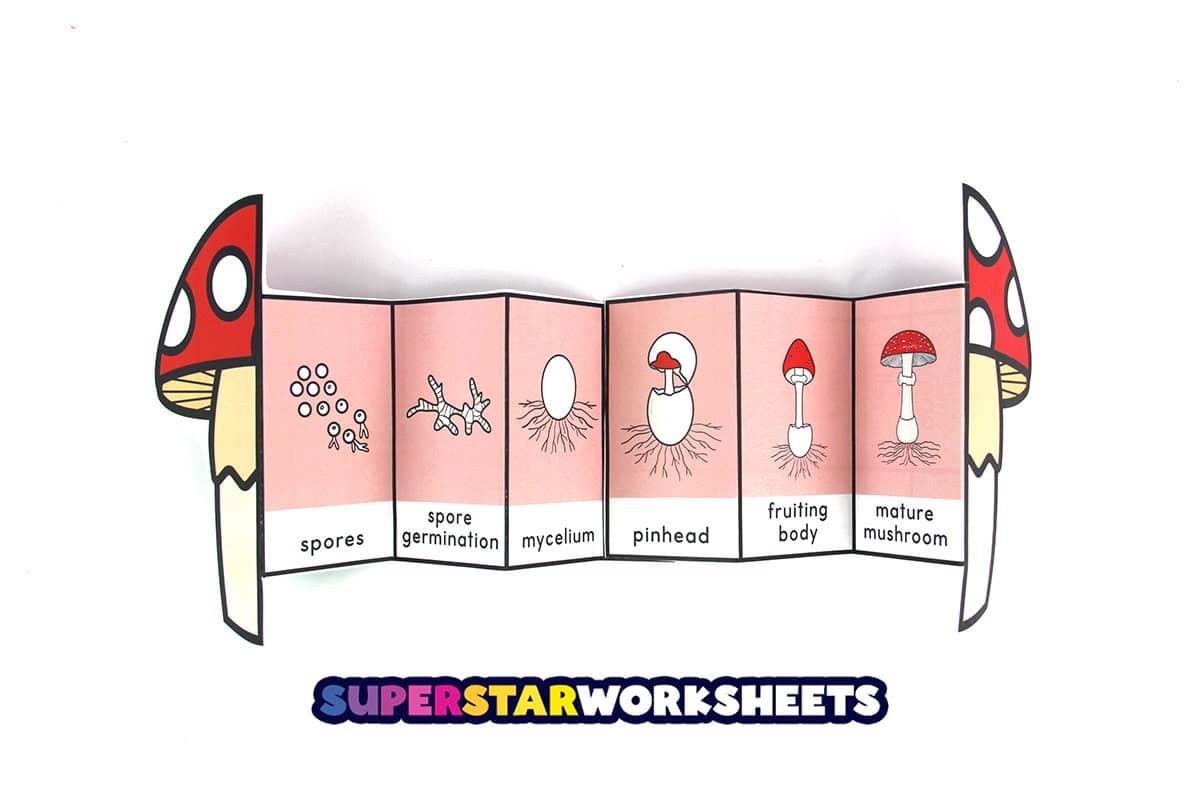
This mushroom life cycle foldable is a layered, hands-on craft that reveals each growth stage under its own flap. It makes a fun interactive notebook page or a stand-alone life cycle project.
Teaching the Mushroom Life Cycle
A mushroom’s life follows the same pattern every living thing shares: growth, reproduction, and renewal. It begins with a spore, a tiny speck too small to see with the naked eye. When a spore lands somewhere damp and shaded, spore germination begins, and it starts growing thread-like strands. Those strands spread out to form mycelium, an underground network that feeds the fungus. Eventually, a tiny bump called a pinhead forms, which grows into the fruiting body. This is the part we recognize as a mushroom. Once it becomes a mature mushroom, it releases new spores from its gills, and the cycle starts again.
Teaching Tip: Have students act out each life cycle stage as a class to build a physical memory of the sequence before they try the cut-and-paste activity.
Mushroom vs. Plant Printables
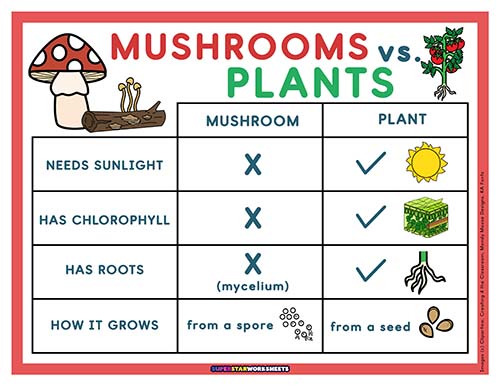
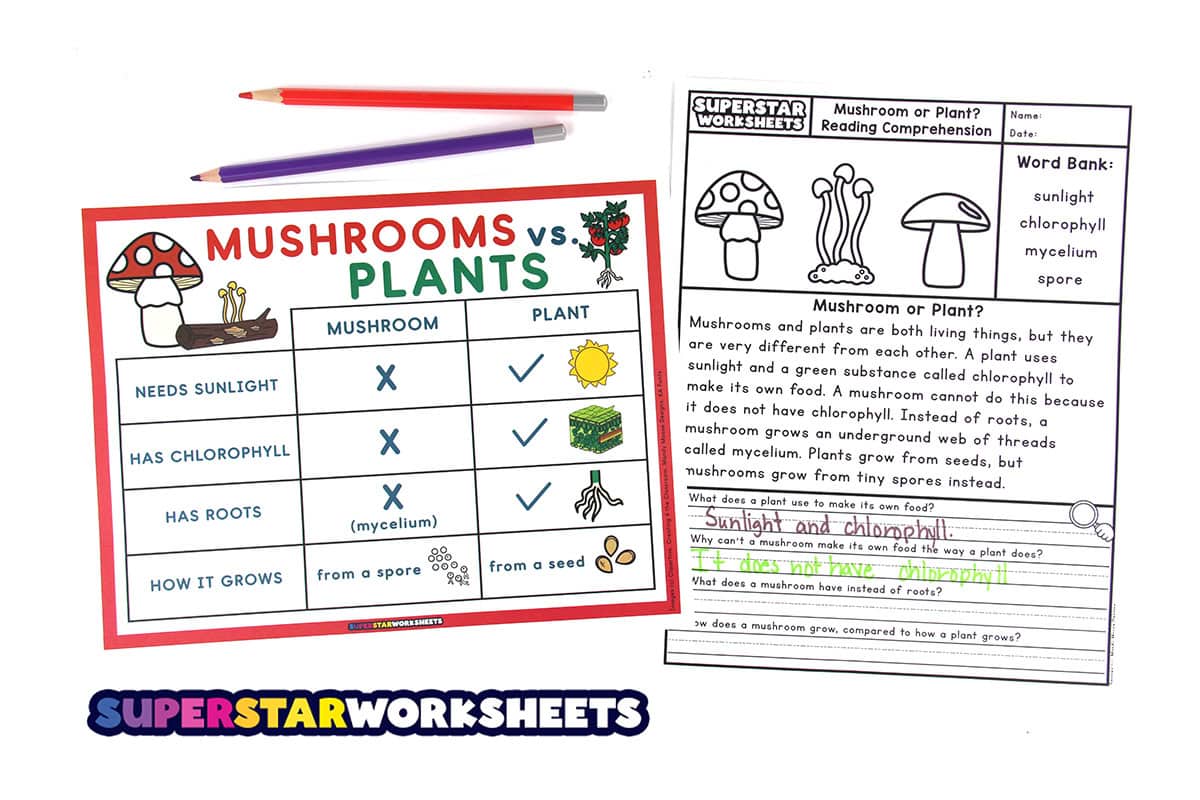
This mushrooms vs. plants comparison chart highlights the key differences between fungi and plants, including sunlight, chlorophyll, and root structures. It’s a strong visual for introducing the idea that mushrooms are not plants.
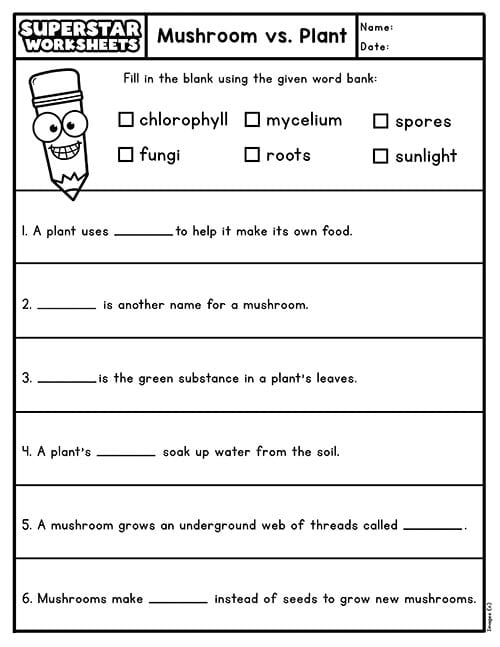
This mushroom vs. plant fill in the blank worksheet has students use vocabulary like chlorophyll, mycelium, and spores in context. It reinforces the comparison chart with independent reading and writing practice.
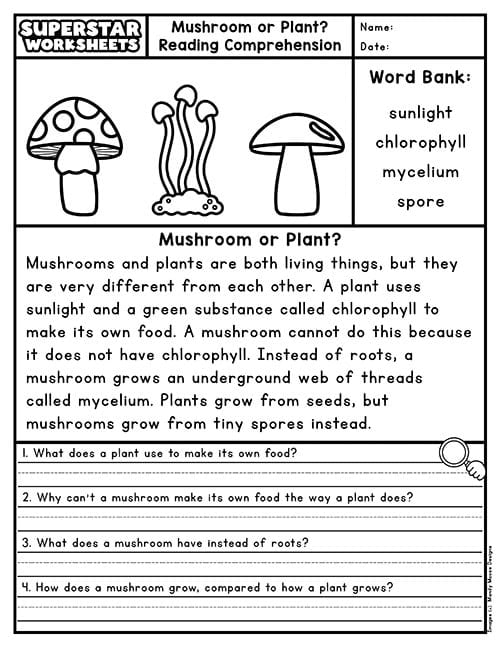
This mushroom or plant reading comprehension page pairs a short informational passage with comprehension questions. It’s a great way to build reading skills while reinforcing fungi vs. plant vocabulary.
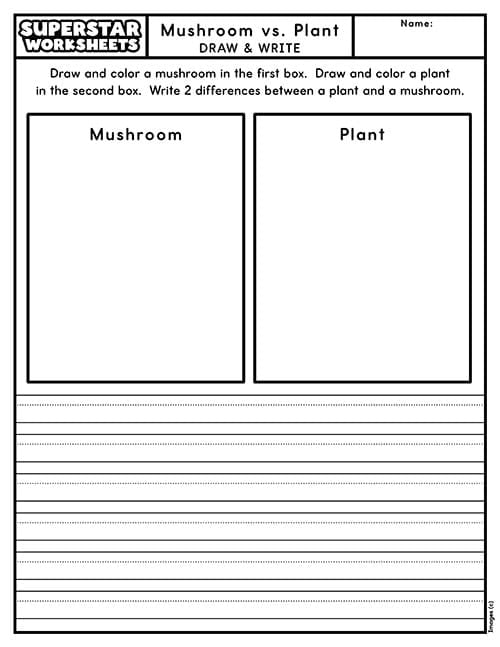
This mushroom vs. plant compare and draw worksheet asks students to illustrate a plant and a mushroom side by side and write two differences. It’s a creative, low-prep way to check understanding. For more FREE printable science worksheets take a look at our Plant Worksheets!
Teaching Mushroom vs. Plant Differences
It’s easy to mistake a mushroom for a plant, but the two are very different living things. Plants use sunlight and a green substance called chlorophyll to make their own food, mushrooms can’t do either. Instead of roots, a mushroom relies on its underground mycelium to take in what it needs. And while plants grow from seeds, mushrooms grow from tiny spores instead. These differences are why scientists classify fungi separately from plants altogether.
Teaching Tip: Pair a real houseplant with a real (or pictured) mushroom side by side and have students point out one difference at a time before completing the comparison chart.
Decomposers and the Forest Floor Printables
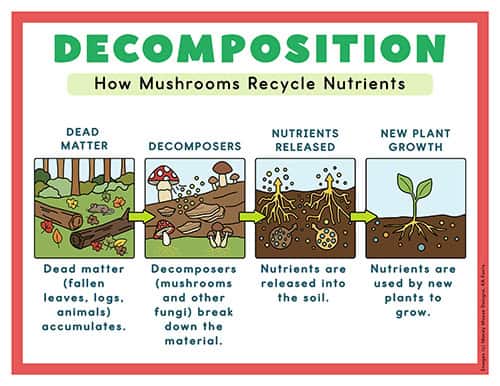
This decomposition diagram shows how dead matter becomes soil nutrients through the work of mushrooms and other decomposers. It’s an ideal anchor chart for introducing the nutrient cycle and the forest floor.
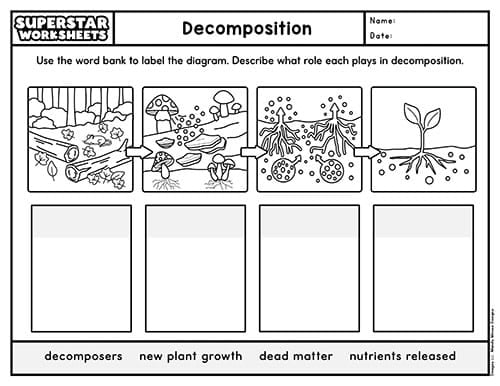
This decomposition labeling worksheet has students fill in each stage of the decomposer process using a word bank. It reinforces the diagram above with independent, hands-on practice.
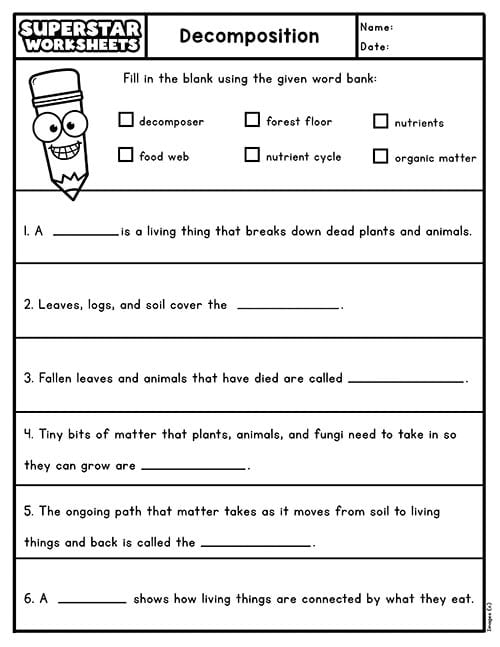
This decomposition fill in the blank worksheet uses vocabulary like decomposer, nutrients, and forest floor in context sentences. It’s a quick way to check vocabulary retention after the process diagram.
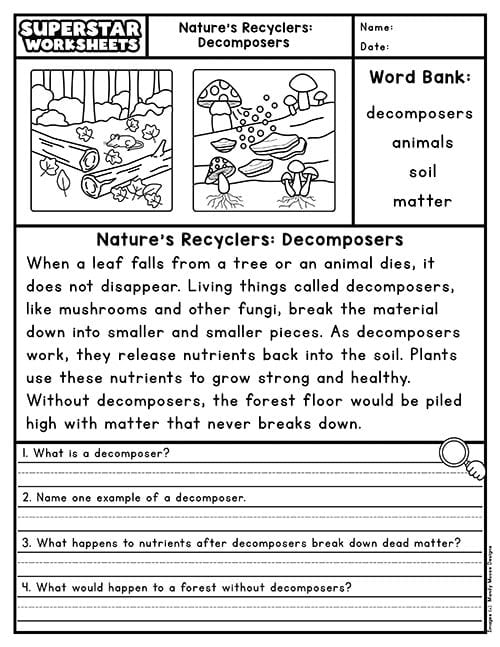
Nature’s Recyclers: Decomposers
This nature’s recyclers reading comprehension page features a short passage about decomposers followed by four comprehension questions. It pairs nicely with the decomposition diagram for a full lesson on nutrient cycling.
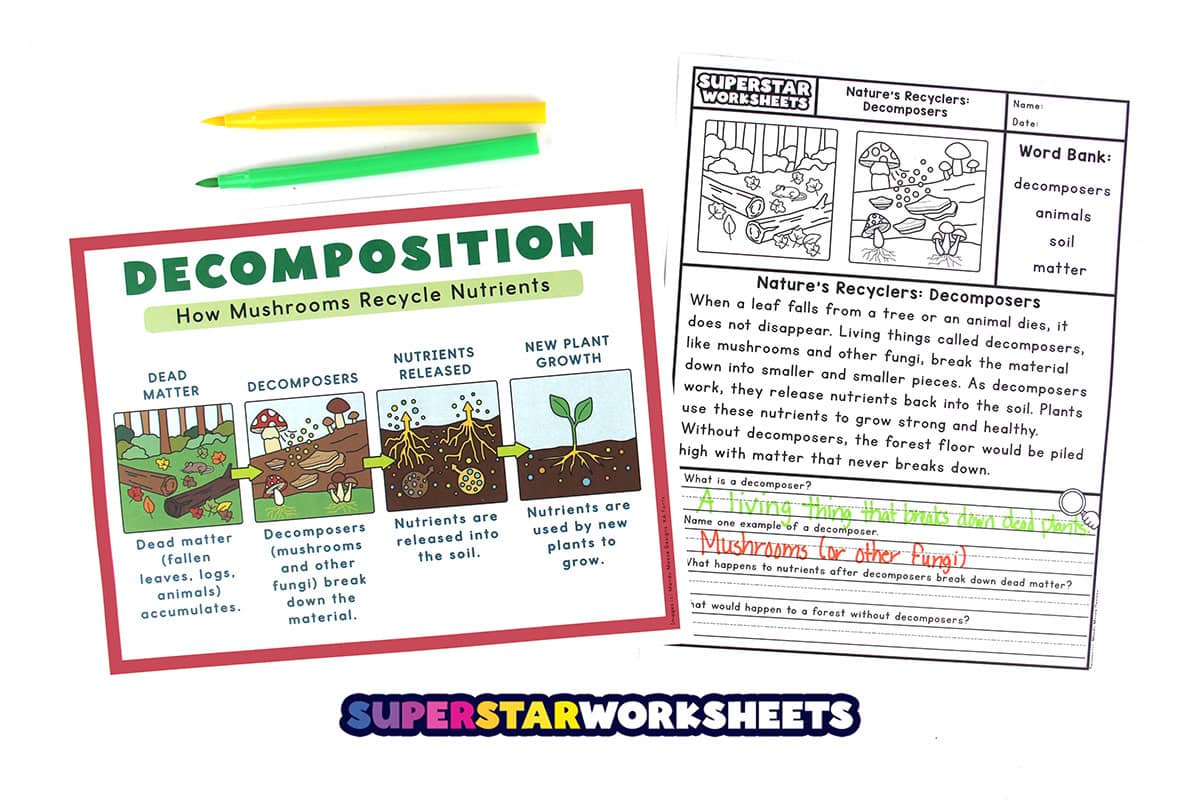
Teaching How Decomposers Work
When a leaf falls or an animal dies, it doesn’t just disappear; it becomes food for decomposers. Mushrooms and other fungi break down this dead and organic matter on the forest floor, turning it into nutrients that plants can use to grow. This process is part of the larger nutrient cycle, where matter moves from soil to living things and back again. Decomposers are a key part of every food web, connecting the living and the once-living in every ecosystem.
Teaching Tip: Take students on a short nature walk (or show photos of the forest floor) to spot real decomposers like mushrooms and mold before completing the process diagram.
Mycelium Underground Network Printables
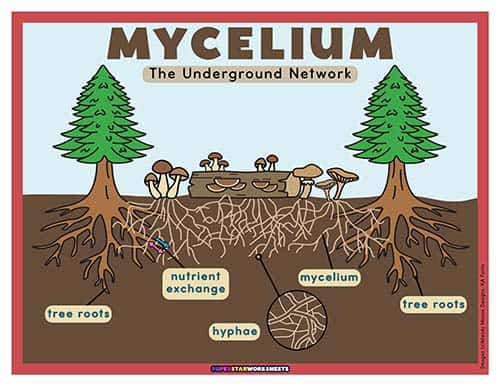
Mycelium: The Underground Network
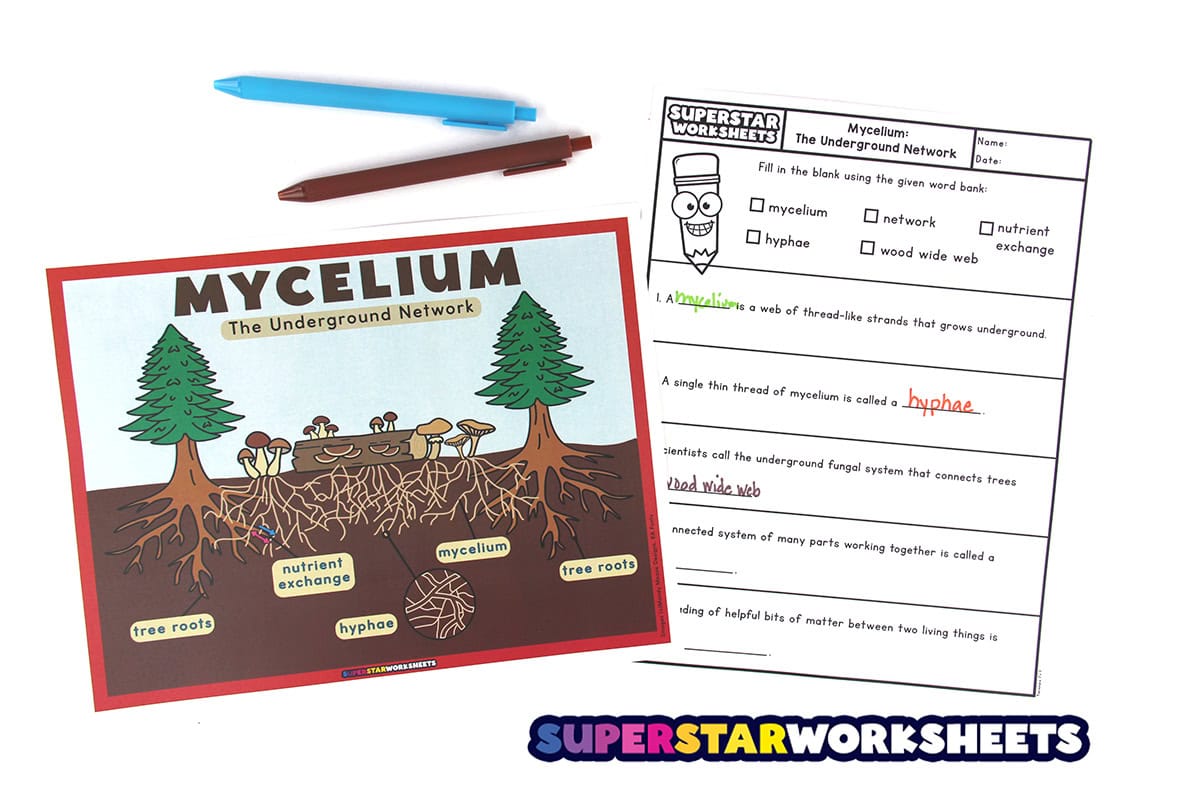
This mycelium network chart shows how underground fungal threads connect to tree roots, sharing nutrients across the forest floor. It introduces the fascinating idea nicknamed the “wood wide web.”
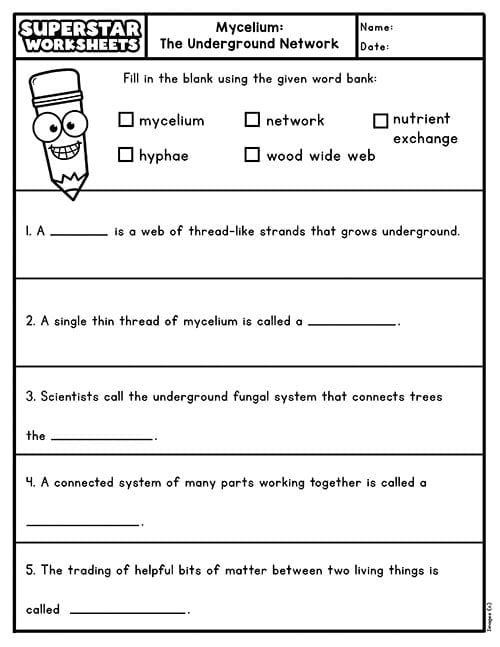
Mycelium: The Underground Network
This mycelium fill in the blank worksheet has students practice vocabulary like hyphae, network, and nutrient exchange. It reinforces the underground network chart with independent vocabulary practice.
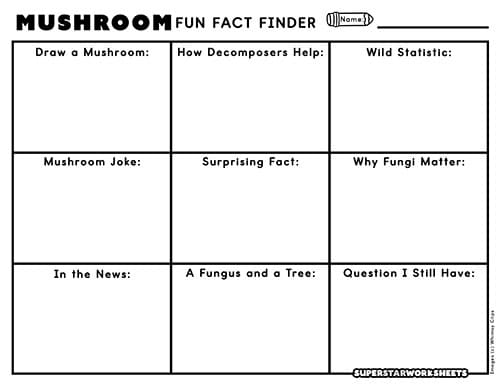
This mushrooms fact finder combines research prompts about mushrooms, decomposers, and mycelium into one engaging grid. It’s a flexible research activity for independent work, homework, or a science center.
Teaching Mycelium — The Wood Wide Web
Underground, a mushroom is connected to a vast web of threads called mycelium, made up of even thinner strands called hyphae. This underground network can stretch for miles, connecting to the roots of trees and other plants. Through a process called nutrient exchange, fungi and trees trade resources, and some scientists have found that trees can even share warning signals through this system. Because of how far it can spread and connect an entire forest, this network has earned the nickname the “wood wide web.”
Teaching Tip: Challenge students to imagine mycelium as an underground internet for trees.
Mushroom Fun Facts & Experiment Printables
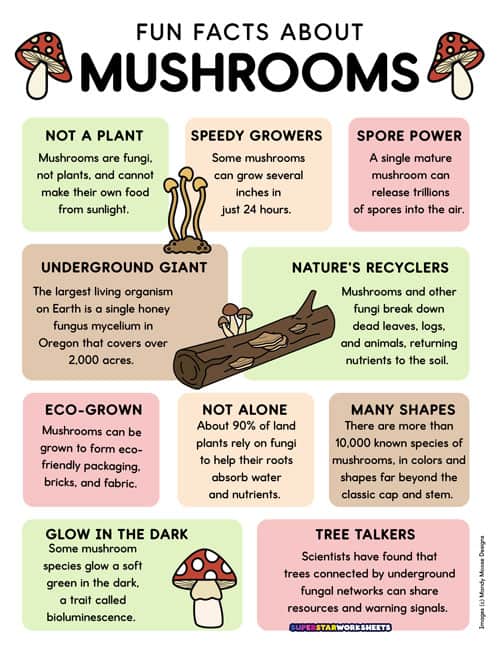
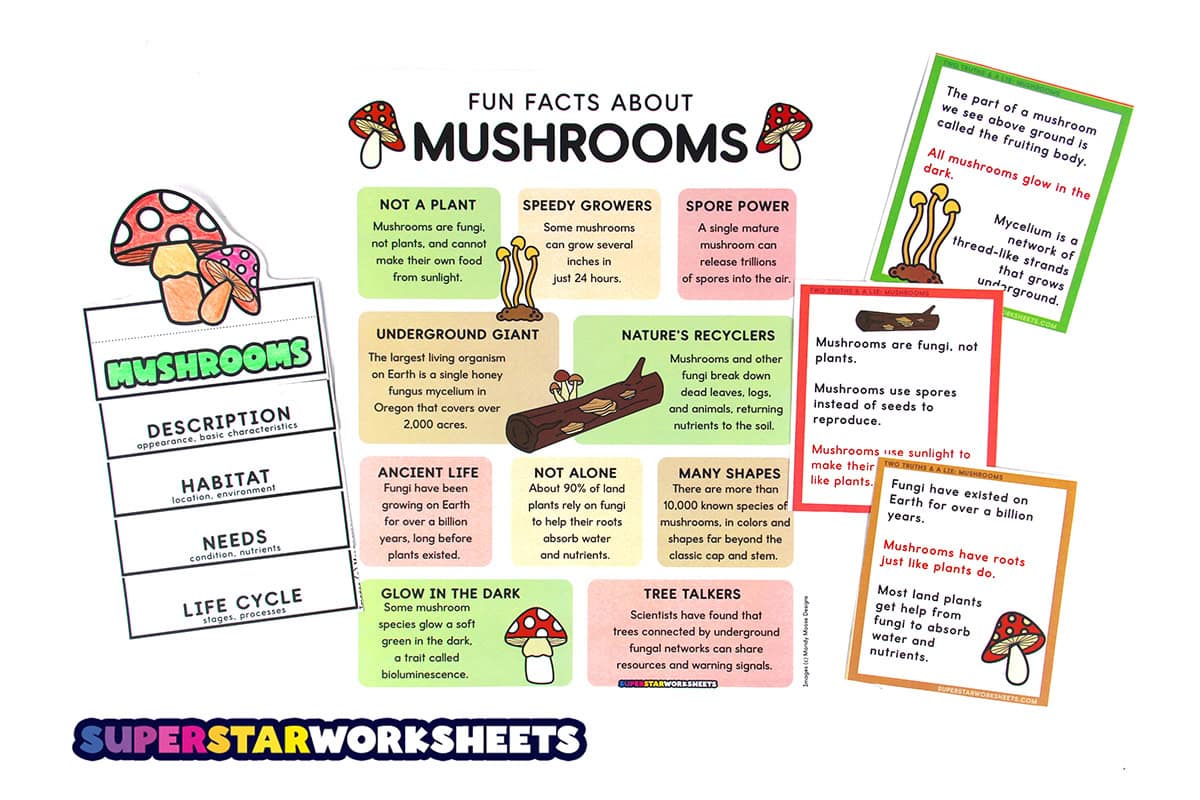
This fun facts about mushrooms chart features ten surprising facts, from glowing fungi to record-breaking underground networks. It’s a colorful, engaging reference for a fungi unit bulletin board or morning meeting.
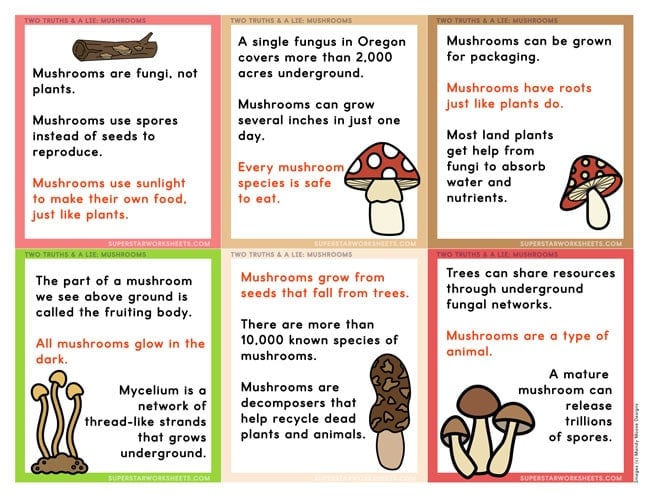
This two truths and a lie mushroom game challenges students to spot the false statement among true mushroom facts. It’s a playful way to review content and build critical thinking skills.
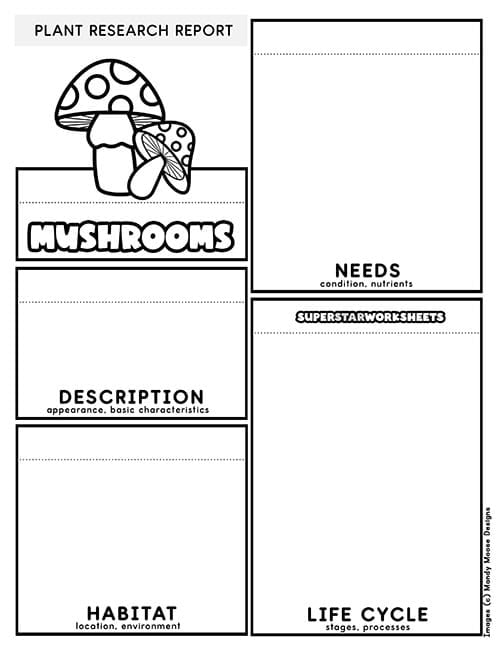
This mushroom research layer book has students record what they’ve learned about a mushroom’s description, habitat, needs, and life cycle in a hands-on flip book format. It’s a great culminating project for a fungi unit.
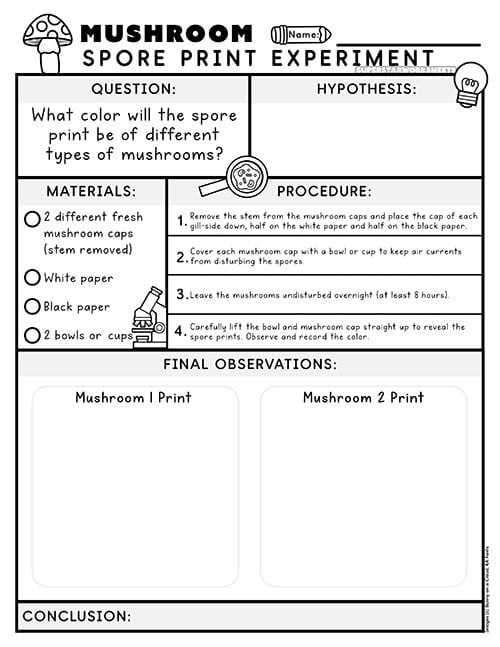
Mushroom Spore Print Experiment
This mushroom spore print experiment guides students through a hands-on investigation comparing spore prints from two different mushrooms. It’s a memorable, low-prep science experiment that brings the reproduction process to life.
Teaching the Mushroom Spore Print Experiment
Materials: 2 different fresh mushroom caps (stems removed), white paper, black paper, 2 bowls or cups
Procedure Overview: Students place each mushroom cap gill-side down across both white and black paper, cover with a bowl, and leave undisturbed overnight. The next day, they lift the bowl and cap to reveal a spore print.
Expected Results: Spore prints commonly appear white, brown, black, or pink, depending on the mushroom species used. Comparing two different mushrooms typically produces two different spore print colors.
Science Connection: Spores are the reproductive cells of a mushroom, released from the gills. This is the process introduced in the Mushroom Life Cycle section above.
Teaching Tip: Run this experiment with two very different-looking mushrooms (like a white button mushroom and a portobello) for the most visually striking contrast between spore prints.
Comments (4)
Incase you didn’t know:
The link on this page to your free mushroom unit study is broken. https://thecraftyclassroom.com/2019/08/02/mushroom-unit-study/
It goes to a 404 page.
Thank you for letting us know Annika! It should be all fixed up now 🙂
Do you have the answer key for the Life cycle worksheet?
On the Parts of a mushroom worksheet, there are two markers pointing to the Cap but is one supposed to be pointing to the scales?
We have fixed this, thank you for letting us know!