
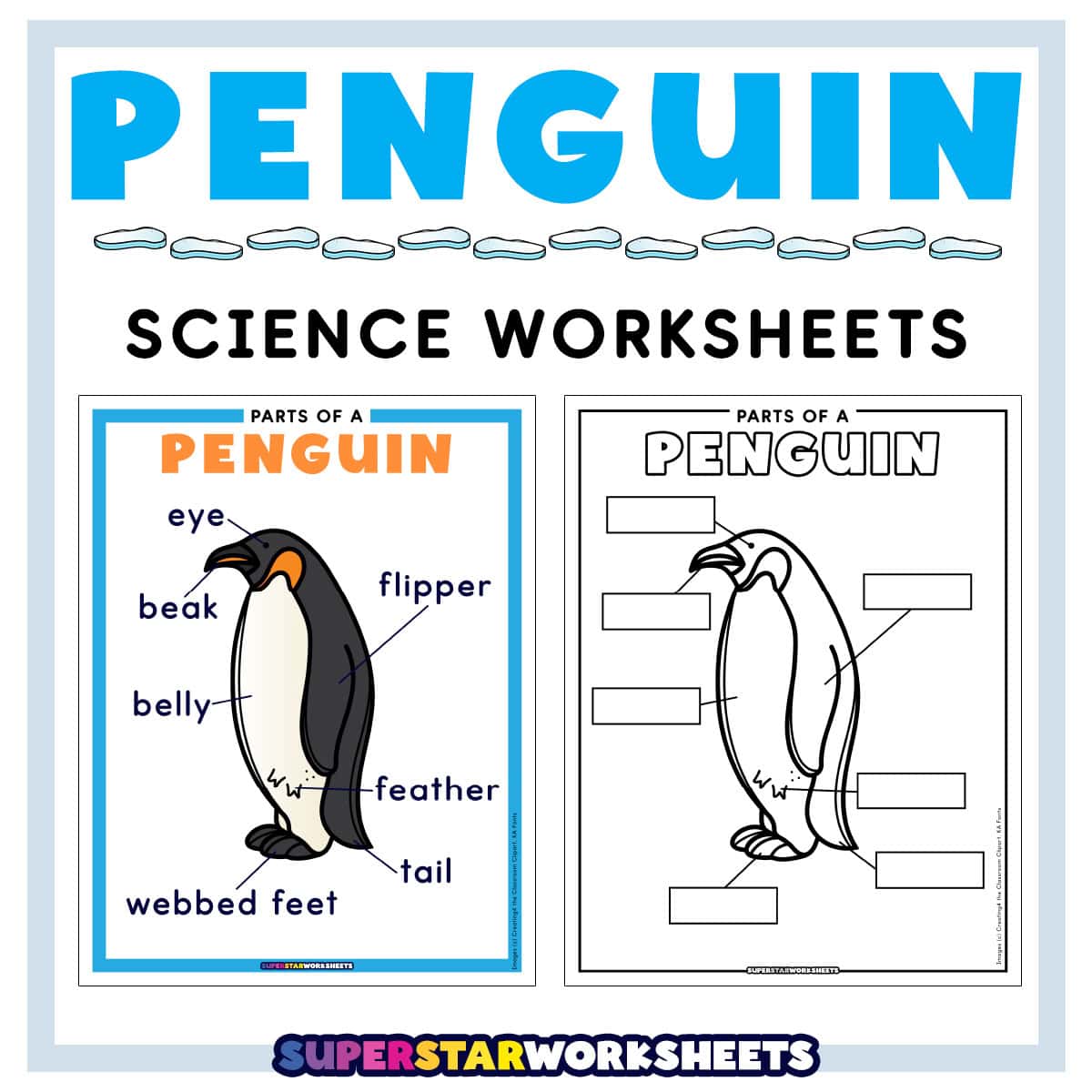
Free printable Penguin Worksheets give elementary students a fun, hands-on way to explore penguin facts, life cycle, body parts, and species. Download and print PDF vocabulary cards, reading comprehension pages, labeling charts, and a fun fact finder covering everything from penguin adaptations to migration. Kids will build science vocabulary, reading comprehension, and research skills while learning how penguins survive in icy habitats. These worksheets are perfect for science centers, homeschool lessons, or classroom units on Antarctic animals.
Penguin Life Cycle
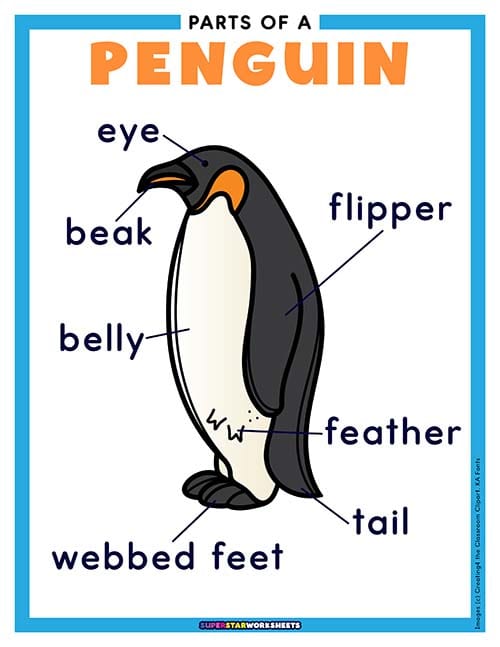
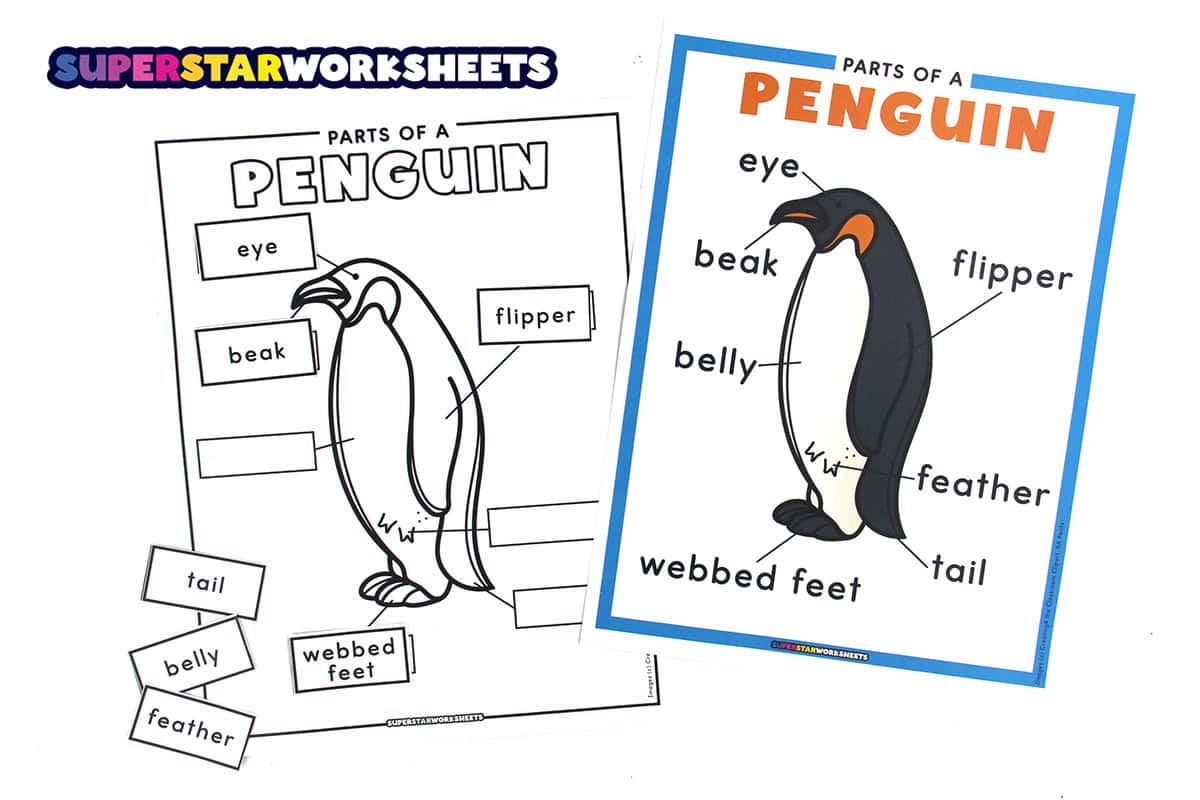
Teach the parts of a penguin with this colorful printable chart. Perfect as a classroom anchor chart, this diagram labels the beak, eye, flipper, feather, tail, webbed feet, and belly so young learners can identify each part and its purpose.
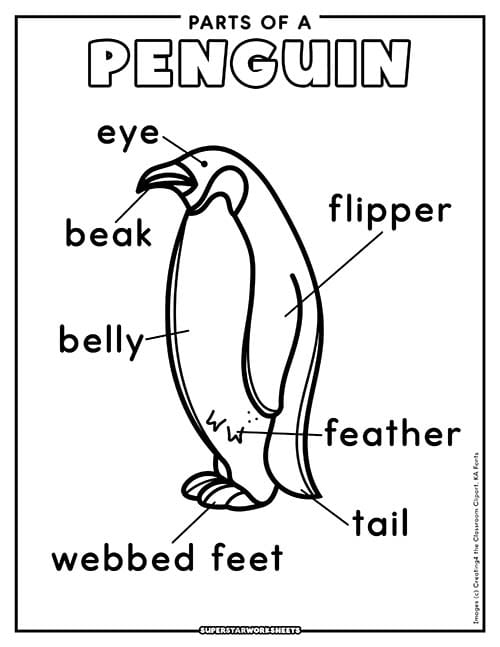
Parts of a Penguin Coloring Page
This black-and-white parts of a penguin worksheet lets students color while learning the same labeled body parts featured in our anatomy chart. A simple, low-prep way to reinforce penguin vocabulary.
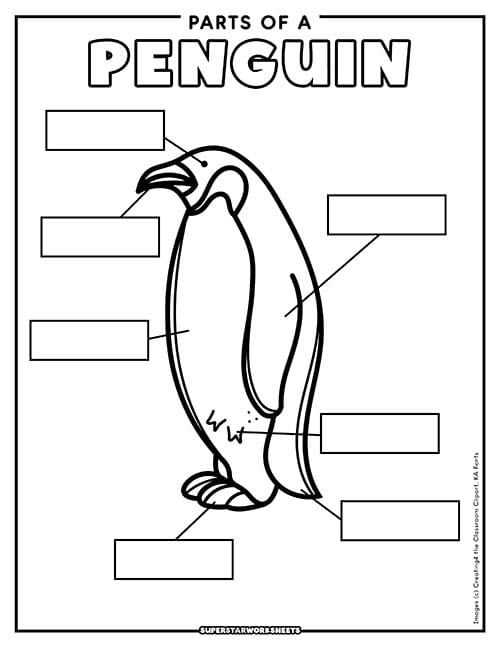
Label the Parts of a Penguin Worksheet
Students color the parts of a penguin, then cut and paste the correct vocabulary label onto each part. This two-page set provides built-in differentiation for early learners who aren’t ready to write the words independently.
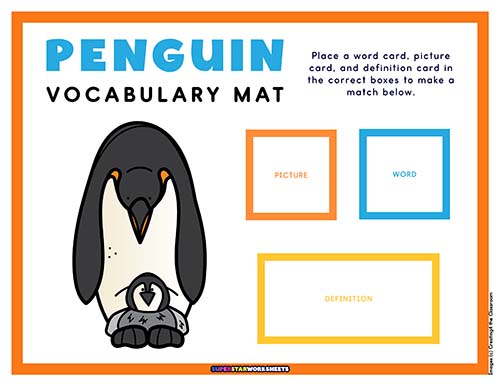
Penguin Vocabulary Learning Mat
This reusable penguin vocabulary mat helps students match pictures, words, and definitions in a hands-on way. Laminate it for your science center so it can be used again and again across every arc in this penguin unit.
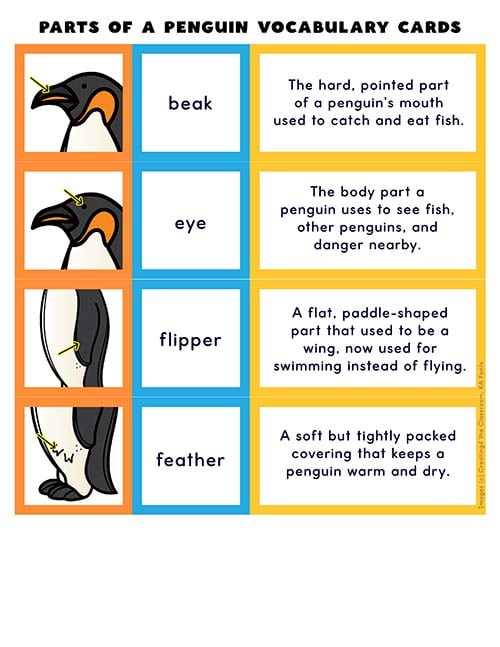
Parts of a Penguin Vocabulary Cards
Build vocabulary and anatomy knowledge with these penguin parts vocabulary cards. Students match a picture, word, and simple definition for each body part, making this a great addition to science learning centers or small group instruction.
Teaching the Parts of a Penguin
When introducing the parts of a penguin to your students, it’s important to use language and vocabulary terms they are familiar with. Here are our recommended definitions for each part of the penguin. Each description provides a visual description as well as a purpose and how each part helps the penguin survive in the water and on land.
beak: the hard, pointy mouth at the front of a penguin’s head. Penguins use their beaks to catch slippery fish, and they even have tiny spikes on their tongues to help hold on to their food!
eye: the small, round eye on each side of the head. Penguins can see clearly underwater, which helps them spot fish and watch out for danger while they swim!
flipper: the two stiff, flat wings on the sides of a penguin’s body. Penguins can’t fly in the air, but they flap their flippers to “fly” through the water super fast!
feather: the short, tightly packed coverings all over a penguin’s body. They are waterproof and work like a warm coat, keeping the penguin cozy and dry in icy cold water!
tail: the short, stiff feathers at the back of a penguin’s body. Penguins lean on their tails like a little stool to help them balance when they stand!
webbed feet: the two feet with skin stretched between the toes. Penguins use them to steer while they swim and to waddle and hop across the ice, and some penguin dads even keep their eggs warm on top of their feet!
belly: the smooth white front of a penguin’s body. Its white color helps the penguin blend in with the bright water above when seen from below, and penguins love to slide on their bellies across the snow and ice!
Penguin Life Cycle Printables
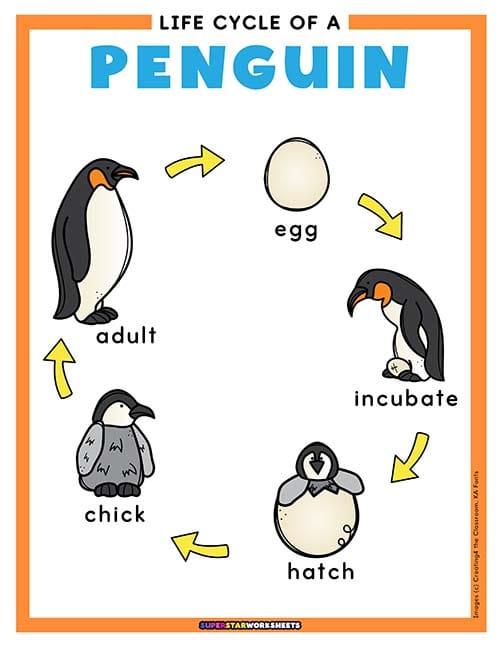
This full-color penguin life cycle chart walks students through each stage, from egg to incubation to hatching, chick, and adult. A great visual introduction before diving into life cycle worksheets and activities.
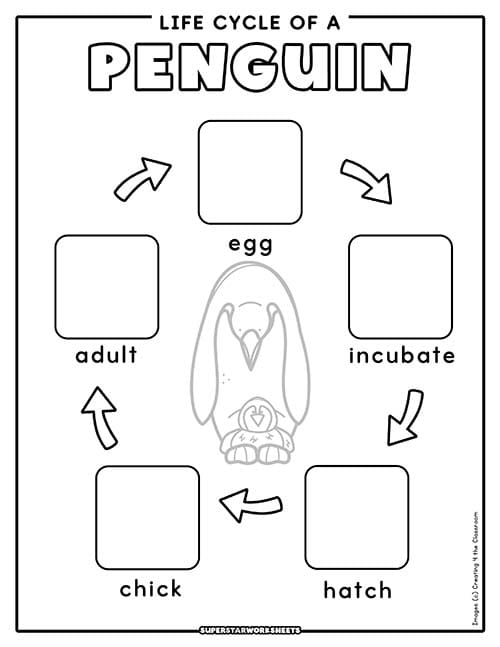
Penguin Life Cycle Cut and Paste
This hands-on cut-and-paste activity has students sequence the stages of the penguin life cycle in order. Includes a picture-based sorting page, perfect for younger learners still building fine motor skills.
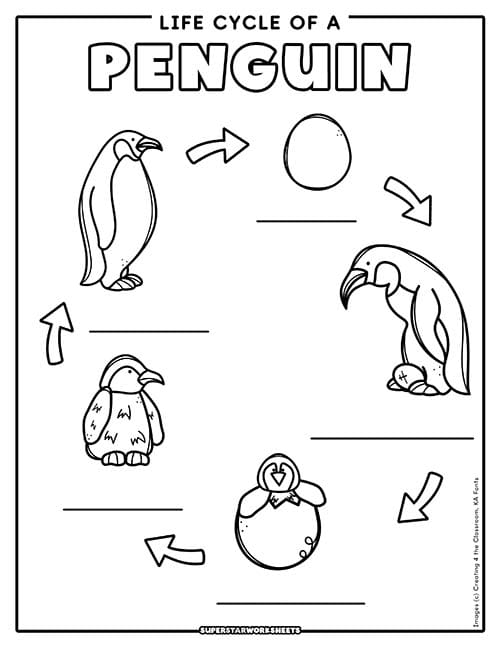
Students test their knowledge by labeling each stage of the penguin life cycle on this blank diagram. A great follow-up activity once students have learned the vocabulary from the life cycle chart.
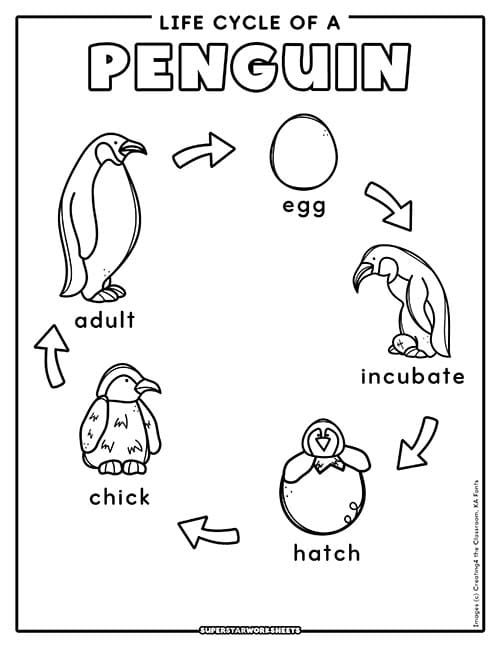
Penguin Life Cycle Coloring Page
This black-and-white penguin life cycle worksheet has students color and identify each stage of growth and development. Pairs perfectly with our full-color life cycle chart for a simple introduction and assessment set.
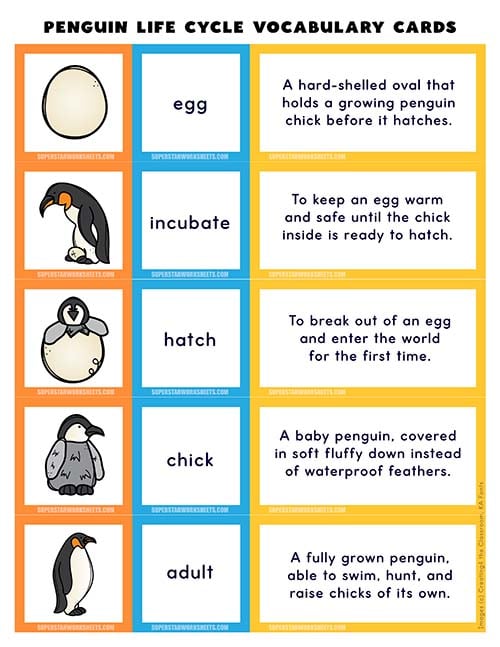
Penguin Life Cycle Vocabulary Cards
Reinforce life cycle vocabulary with these picture, word, and definition matching cards. Students practice identifying each stage of the penguin life cycle in a fun, hands-on format. Check out these FREE Winter Coloring Pages here!
Teaching the Life Cycle of a Penguin
Since raising penguins in the classroom isn’t possible, the best way for students to learn about their life cycle is through photos, videos, and live zoo and aquarium penguin cams! Encourage students to notice how a fluffy chick grows into a sleek swimmer. Help students learn that some stages have more than one name they can use interchangeably (i.e. chick and baby penguin, or juvenile and fledgling).
egg: a smooth, white egg that holds a baby penguin growing inside. Most penguins lay one or two eggs in a nest made of rocks, grass, or mud. Emperor penguin dads hold their egg on top of their feet, tucked under a warm flap of skin, to keep it safe from the ice for about two months!
chick: a baby penguin covered in fluffy gray or brown down. Its fuzzy feathers keep it warm but aren’t waterproof yet, so it stays on land while its parents bring it food. Chicks often huddle together in big groups to stay warm while their parents go fishing!
juvenile: a young penguin that has lost its fluffy down and grown sleek, waterproof feathers. Now it’s ready to dive into the ocean, swim, and catch fish all on its own!
adult penguin: a fully grown penguin with a black back, white belly, and strong flippers. After a few years, adult penguins find a mate, build a nest, and lay eggs of their own!
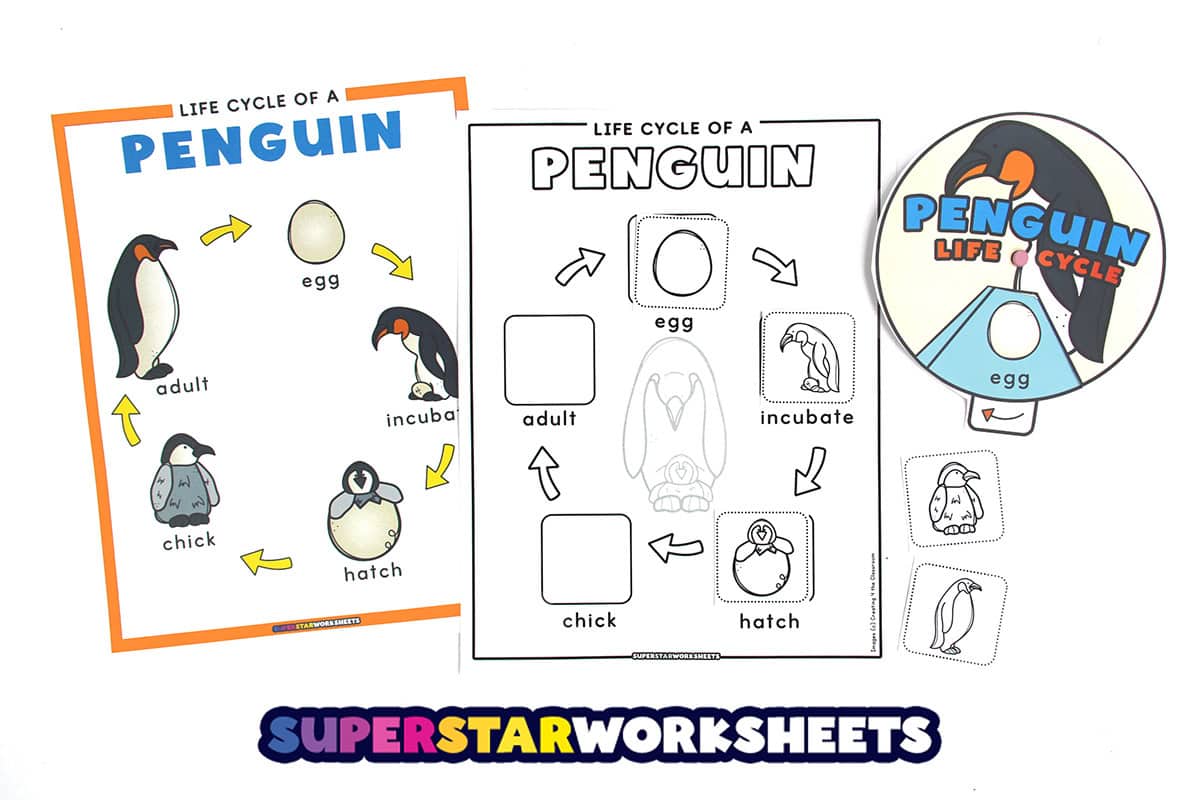
Penguin Life Cycle Crafts & Activities for Kids
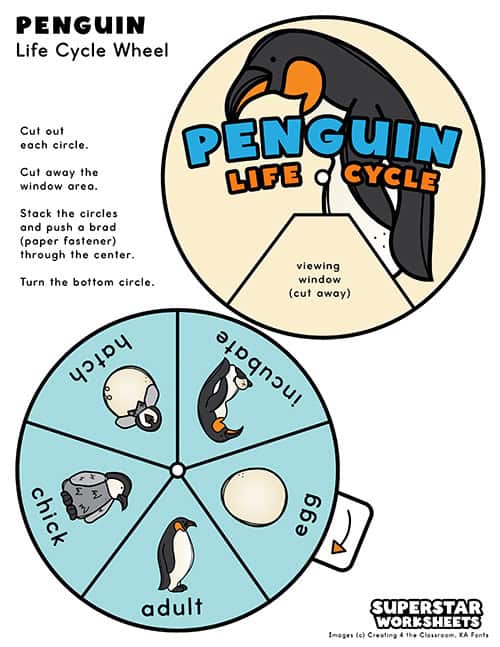
Students color, cut, and assemble this spinning penguin life cycle wheel to review each stage of growth. A fun, interactive review tool that doubles as a hands-on science craft.
Penguin Facts for Kids
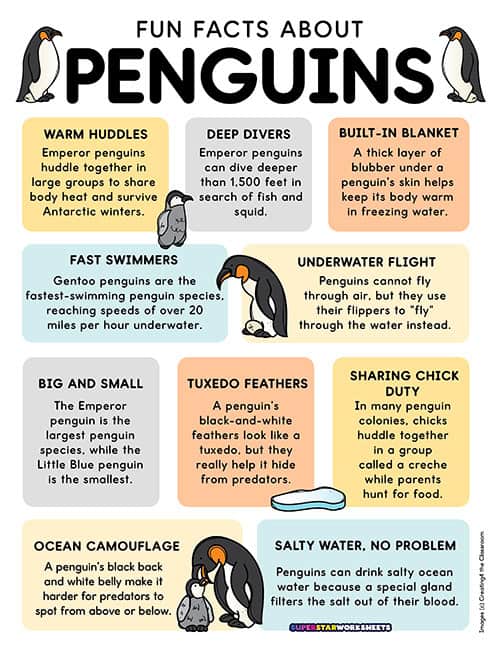
This colorful fun facts poster is packed with fascinating penguin facts perfect for classroom display or independent reading. A great way to spark curiosity before starting penguin research projects.
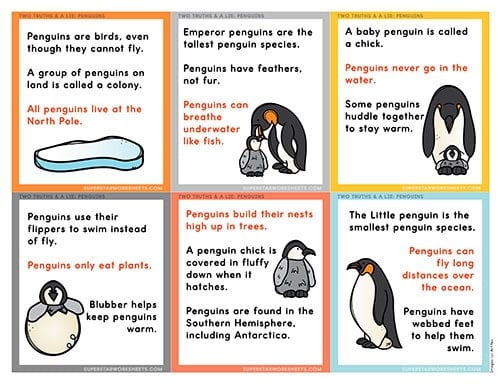
Two Truths and a Lie: Penguins
Put penguin knowledge to the test with this fun two truths and a lie game. Teacher reads three statements per card to students as they shout out the false one, making it a great small group or whole class activity.
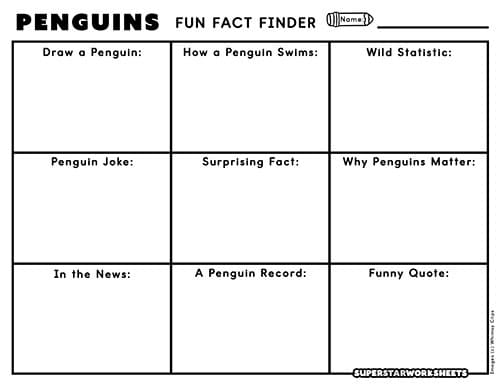
This engaging research activity has students seek out fun and surprising penguin facts using guided prompts. A great low-prep way to build research skills while exploring penguin trivia.
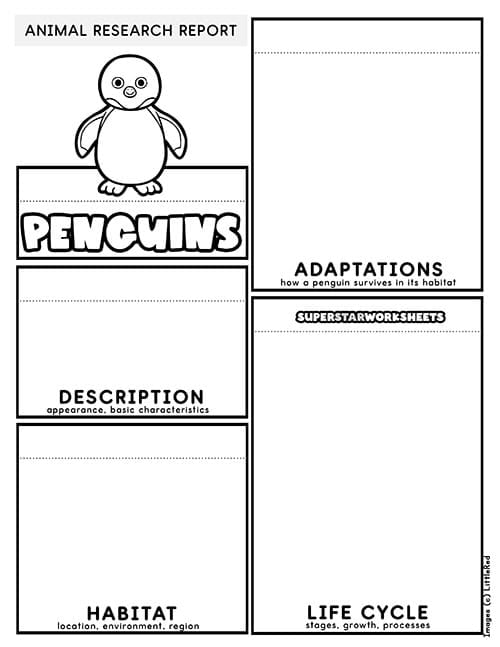
Penguin Animal Research Report
Students record what they learn about penguins in this simple structured research report, covering description, habitat, adaptations, and life cycle. A great culminating activity for a penguin unit study.
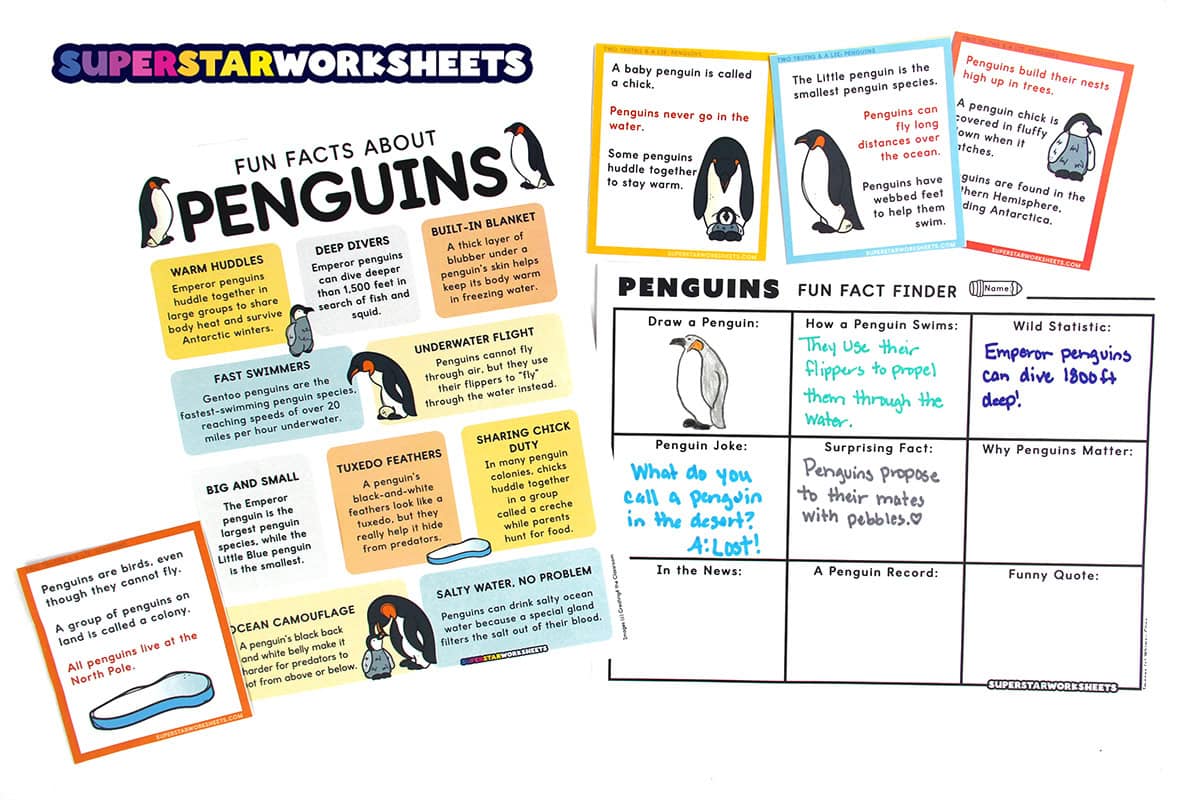
Amazing Penguin Facts
Lots of Penguins: There are about 18 different kinds of penguins in the world.
Not Just Ice: Almost all penguins live in the Southern Hemisphere, but not all of them live on ice. Galápagos penguins live near the warm equator!
Big and Small: Emperor penguins are the tallest at about 4 feet, while little penguins are only about 1 foot tall.
Speedy Swimmers: Gentoo penguins are the fastest swimming birds in the world and can zoom through the water at about 22 miles per hour.
Deep Divers: Emperor penguins can dive more than 1,800 feet deep and hold their breath for over 20 minutes.
Salty Drinkers: Penguins can drink salt water because a special gland above their eyes filters the salt out of their bodies.
Pebble Presents: Some penguins give their mates smooth pebbles to help build their nests.
Huddle Up: Emperor penguins crowd together in huge huddles to stay warm, taking turns moving from the cold outside to the cozy middle.
Ocean Lovers: Penguins spend up to three-quarters of their lives in the water.
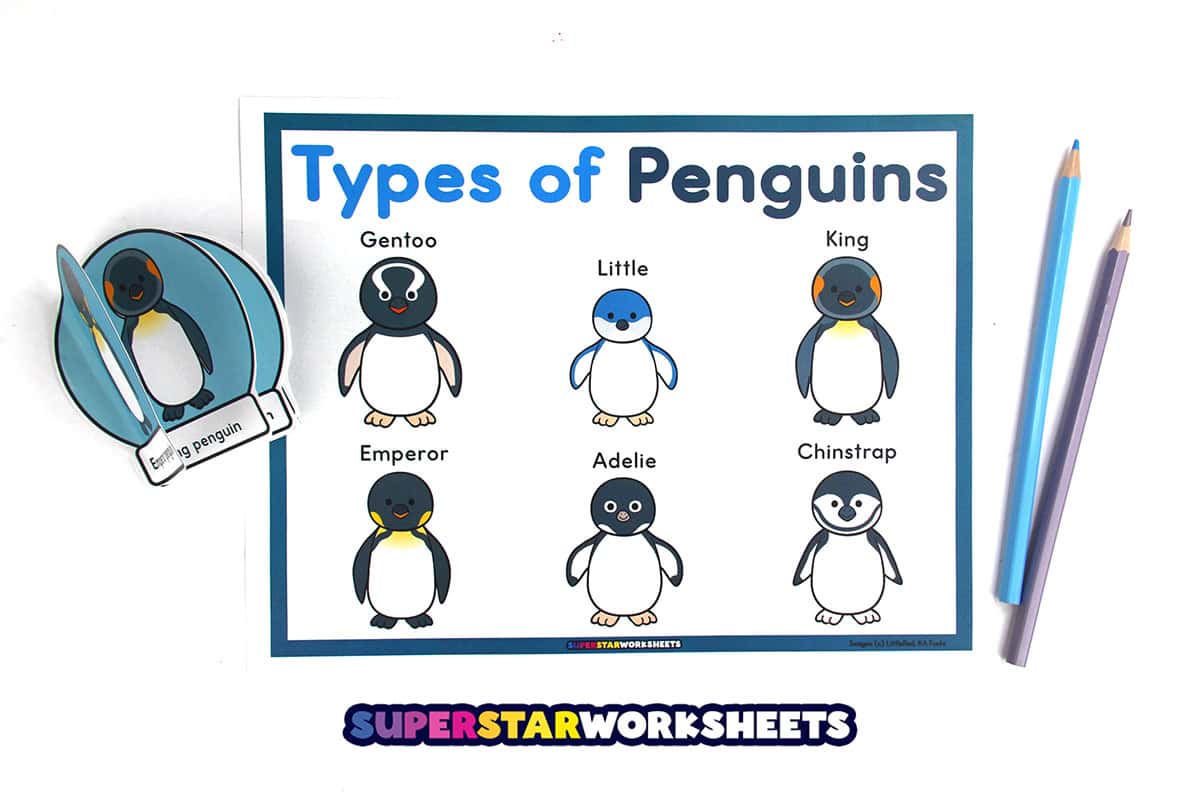
Types of Penguins
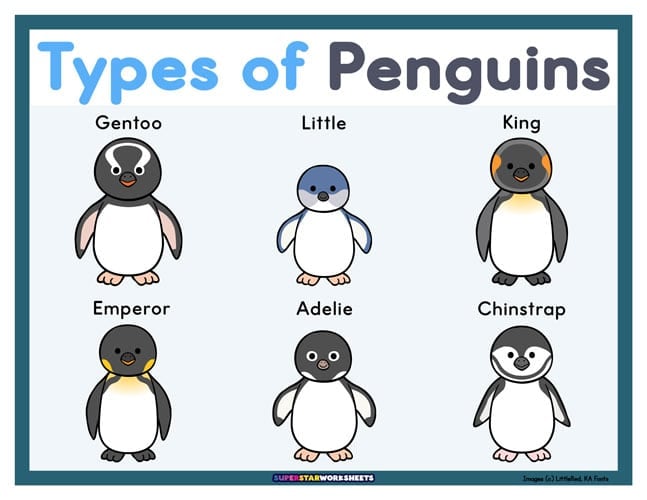
Introduce students to different penguin species with this colorful reference chart. Featuring Emperor, King, Gentoo, Adelie, Chinstrap, and Little penguins, it’s a great way to explore the diversity of the penguin species.
Types of Penguins Vocabulary Cards
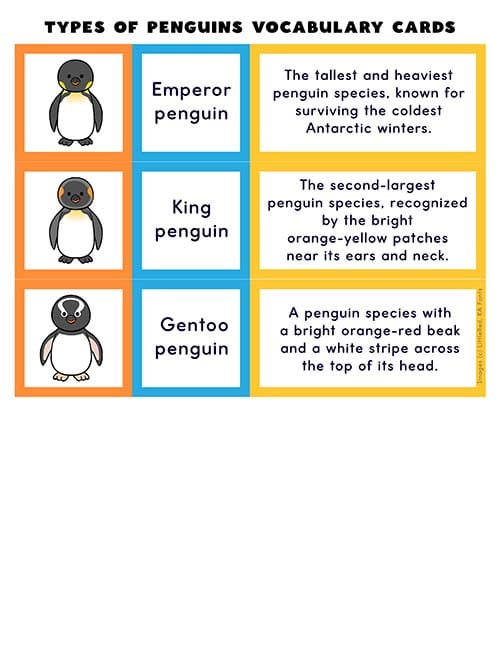
These picture, word, and definition cards help students learn to identify six different penguin species. A hands-on matching activity that’s perfect for science centers. For more FREE penguin printables, check out our Penguin Templates today!
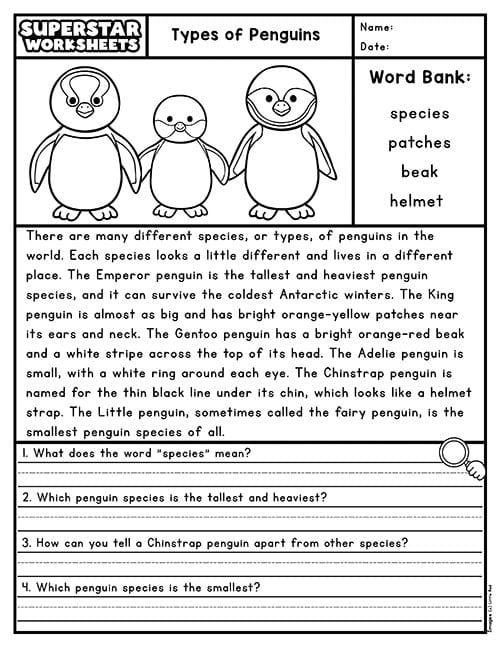
Types of Penguins Reading Comprehension
This reading passage introduces students to several penguin species and their unique features, followed by comprehension questions and a matching activity. A great way to build reading skills alongside science content.
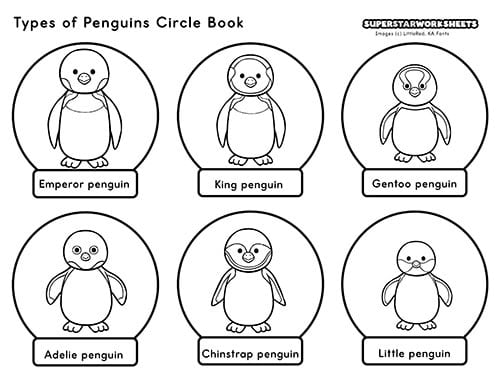
Students color, cut, and assemble this layered circle book featuring six different penguin species. A fun, hands-on project that doubles as a take-home reference for types of penguins.
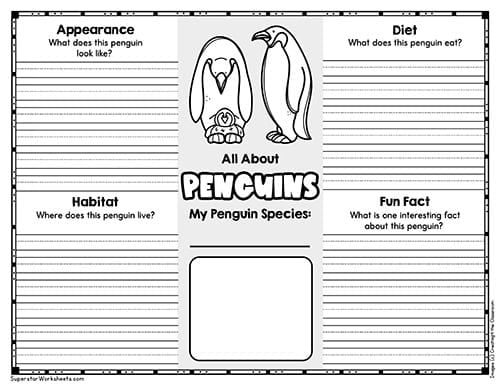
All About Penguins Research Page
This penguin investigation worksheet lets students research a teacher-assigned penguin species and record its appearance, habitat, diet, and a fun fact. A perfect independent research project for wrapping up a penguin unit.
Teaching Types of Penguins
When introducing the different types of penguins to your students, it’s important to use language and vocabulary terms they are familiar with. Here are our recommended definitions for each species, along with what makes each one look different and where in the world it lives.
Emperor penguin: the biggest penguin in the world, standing about 4 feet tall with soft yellow patches on its neck. Emperor penguins live in Antarctica, the coldest place on Earth, and huddle together in huge groups to stay warm through the freezing winter!
King penguin: the second biggest penguin, with bright orange patches on its head and chest. King penguins live on chilly islands near Antarctica, and like emperor penguins, they keep their eggs warm on top of their feet instead of building nests!
Gentoo penguin: a medium-sized penguin with a bright orange beak and a white stripe across the top of its head like a headband. Gentoo penguins live on islands near Antarctica and are the fastest swimmers of all the penguins!
Adélie penguin: a classic black and white penguin with a white ring around each eye, making it look like it’s wearing a tuxedo. Adélie penguins live along the icy coast of Antarctica and build their nests out of small rocks and pebbles!
Chinstrap penguin: a black and white penguin with a thin black line under its chin, making it look like it’s wearing a helmet strap. Chinstrap penguins live on rocky islands and shores near Antarctica, and they are known for being noisy and bold!
Little penguin: the smallest penguin in the world, only about 1 foot tall with blue-gray feathers. Little penguins live along the coasts of Australia and New Zealand, sleep in burrows, and waddle home from the ocean in groups after the sun goes down!
Penguin Migration & Adaptations
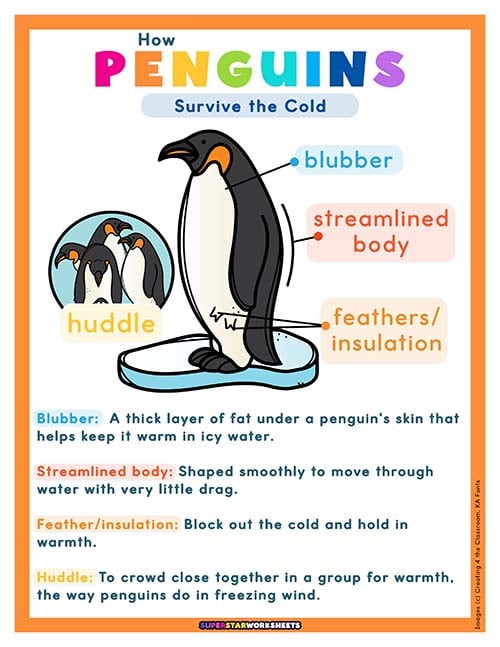
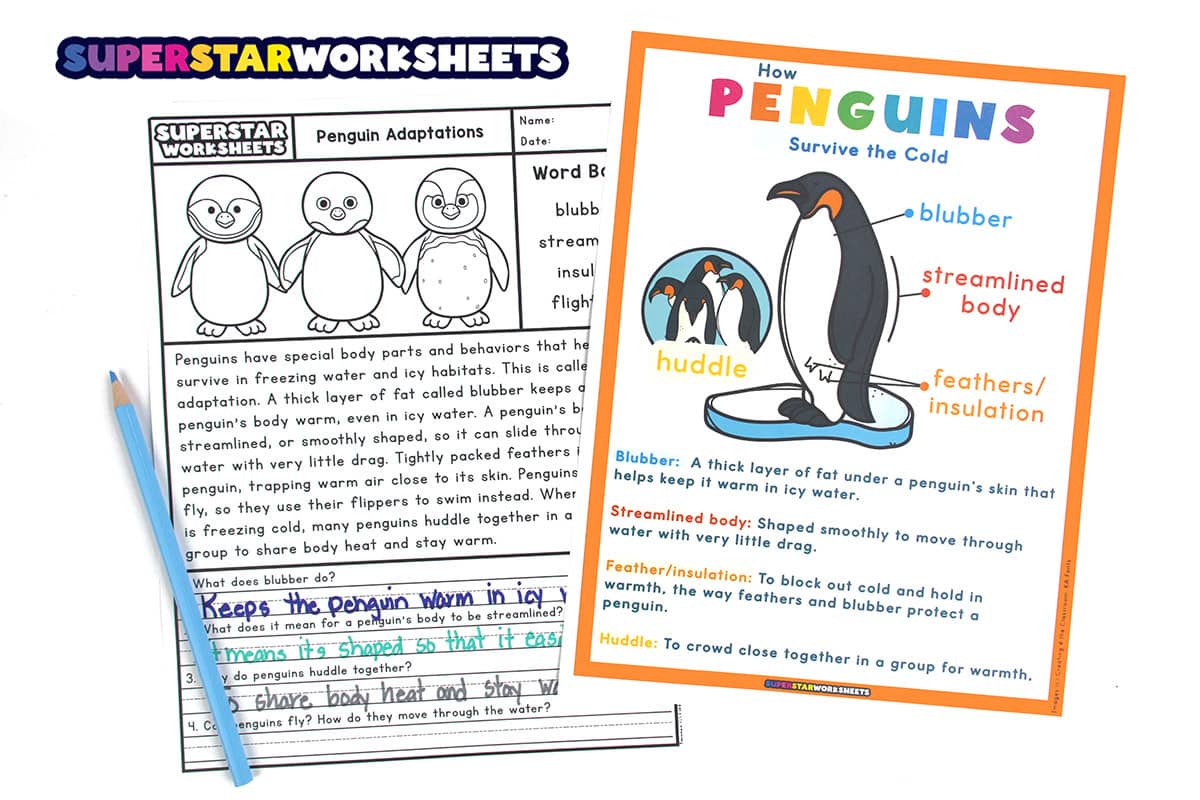
This labeled diagram explores the adaptations that help penguins survive freezing temperatures, including blubber, a streamlined body, and insulating feathers. A great visual reference before exploring migration and adaptation worksheets.
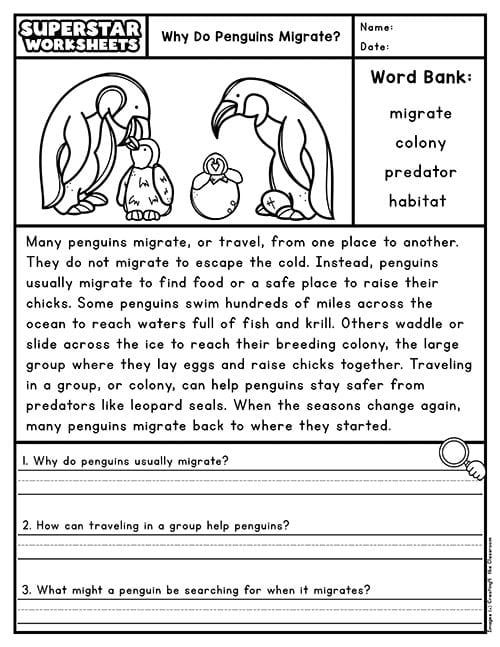
This penguin migration reading passage and comprehension worksheet teaches students why penguins travel to find food and safe places to raise their chicks. Includes comprehension questions and a vocabulary matching section.
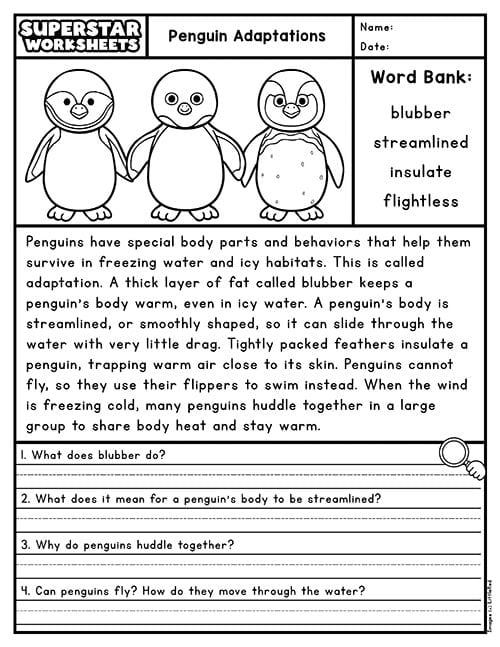
Students read about the special adaptations that help penguins survive icy water and freezing habitats, then answer comprehension questions. This reading passage reinforces key vocabulary like blubber, streamlined, and insulate.
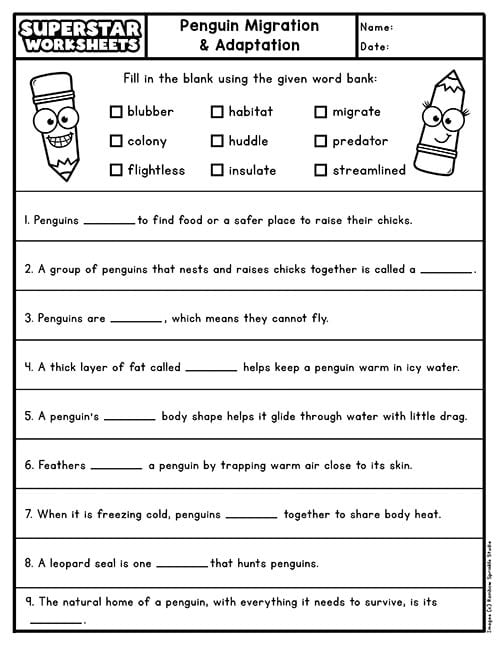
Penguin Migration & Adaptation Fill in the Blank
This fill-in-the-blank worksheet has students use context clues to complete sentences about penguin migration and adaptation. A quick, engaging way to review vocabulary from both topics at once.
Teaching Penguin Migration & Adaptations
When introducing penguin migration and adaptations to your students, it’s important to use language and vocabulary terms they are familiar with. Here are our recommended definitions for each term, along with how each one helps penguins survive in some of the coldest places on Earth.
habitat: the natural home where an animal lives and finds everything it needs to survive. Penguin habitats include icy Antarctic shores, rocky islands, and even warm beaches, but they all need the ocean nearby for food!
migrate: to travel from one place to another, usually at the same time each year. Many penguins migrate between the ocean where they feed and the land where they lay eggs, and emperor penguins can walk more than 50 miles across the ice to reach their nesting grounds!
colony: a large group of penguins that live and nest together. Some penguin colonies have thousands of penguins, and each parent can find its own chick in the crowd just by listening for its special call!
huddle: to crowd close together in a tight group. Emperor penguins huddle to share body heat during freezing storms, taking turns moving from the chilly outside edge to the warm middle!
predator: an animal that hunts and eats other animals. Leopard seals and orcas hunt penguins in the water, and some seabirds try to steal penguin eggs and chicks on land!
blubber: a thick layer of fat under a penguin’s skin. Blubber works like a cozy blanket that keeps penguins warm and gives them stored energy when food is hard to find!
insulate: to keep heat from escaping. A penguin’s blubber and tightly packed feathers insulate its body, trapping warmth inside so it can stay warm in icy water and freezing winds!
streamlined: having a smooth, sleek shape that moves easily through water or air. A penguin’s torpedo-shaped body helps it zip through the ocean to catch fish and escape from predators!
flightless: not able to fly. Penguins are flightless birds, but their wings have turned into strong flippers that make them amazing swimmers instead!
Leave a Reply