
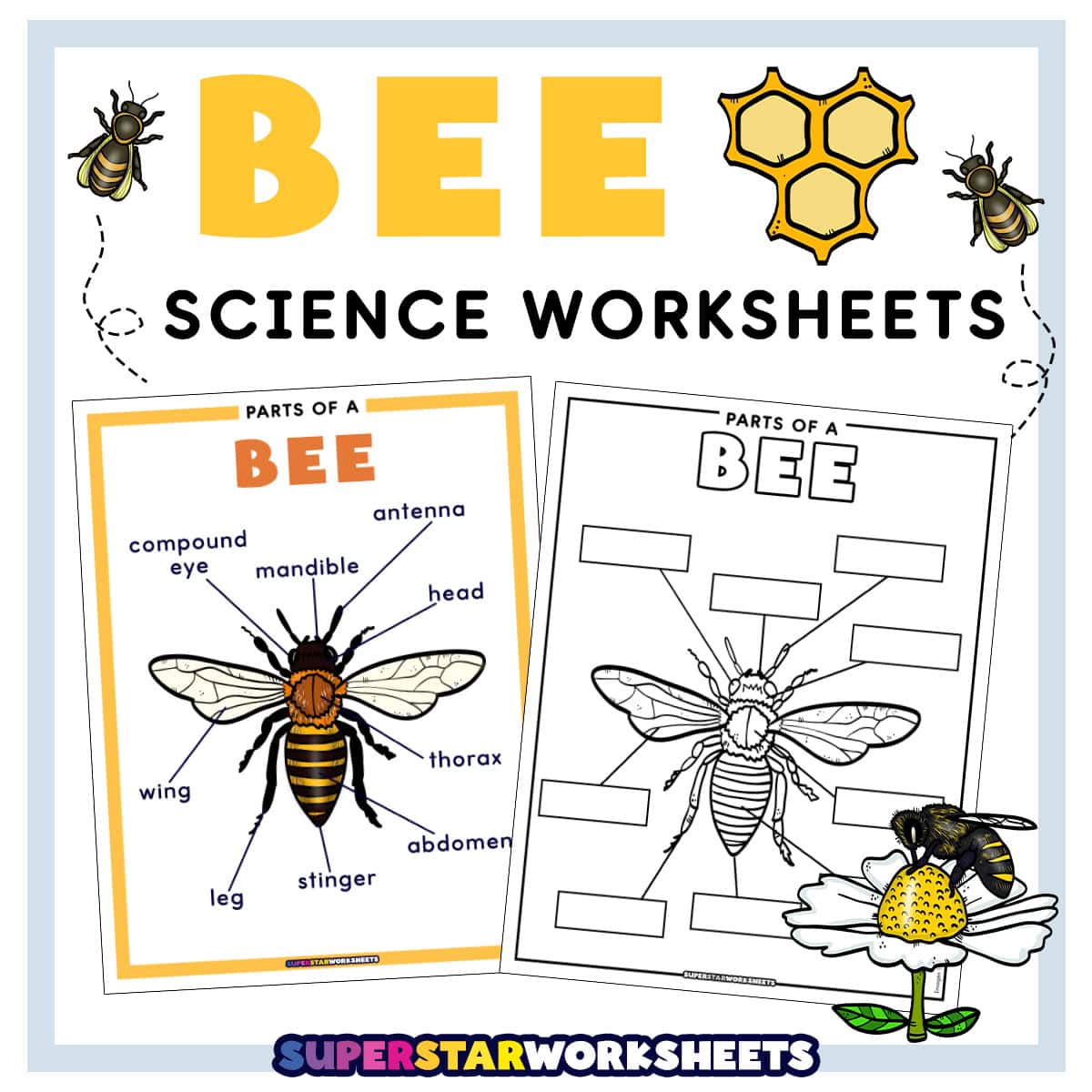
Free printable Bee Worksheets for elementary students. Download and print our parts of a bee PDF charts, labeling worksheets, and vocabulary cards, plus bee life cycle diagrams, a spinning life cycle wheel craft, and coloring pages. Explore how bees pollinate flowers, make honey, and work together in a hive with our reading comprehension pages, colony role charts, and vocabulary cards. Round out your unit with these hands-on bee investigations, a pollinator-preference experiment, and a set of fun facts, a two truths and a lie game, and a research report. Perfect for science centers, homeschool lessons, or small group work.
Parts of a Bee Printables
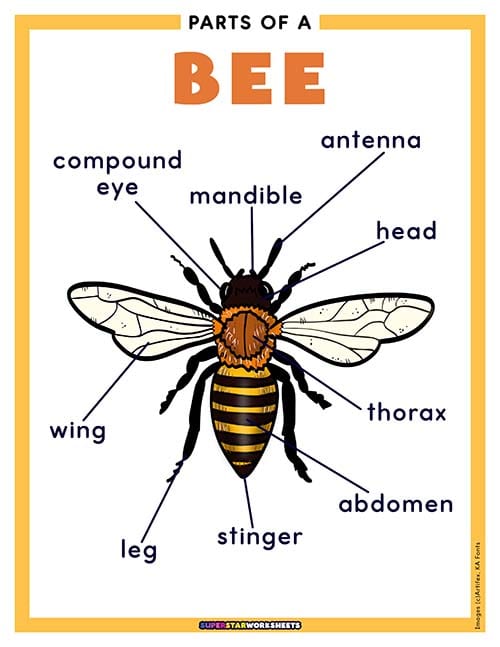
Free printable parts of a bee chart for kids. Download this colorful PDF poster featuring all the external parts of a bee, perfect for a science classroom anchor chart or take-home reference sheet.
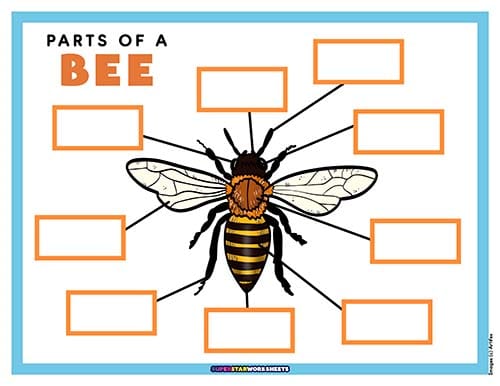
This hands-on bee anatomy learning mat lets kids practice matching labels to the correct part of a bee. Pair the reusable mat with the printable label cards for a laminate-and-reuse science center activity.
Parts of a Bee Vocabulary Cards
Build bee anatomy vocabulary with these picture, word, and definition matching cards. Kids use the reusable vocabulary mat to practice pairing each bee part with its correct term and simple definition.
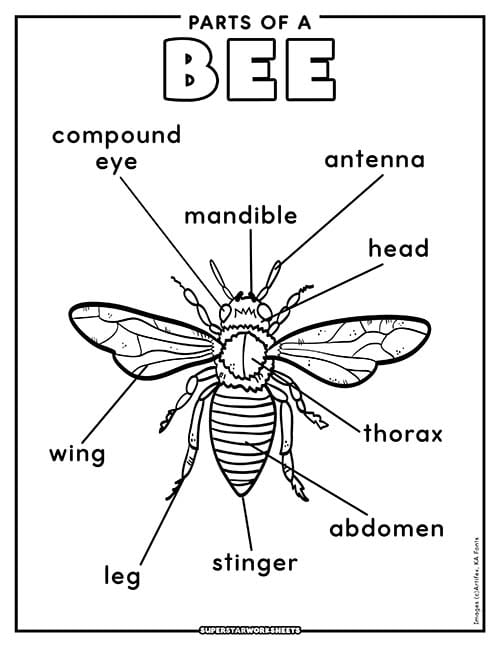
Free printable parts of a bee worksheet for elementary students. This black and white diagram lets kids color and label each part, with a cut-and-paste version for extra hands-on practice.
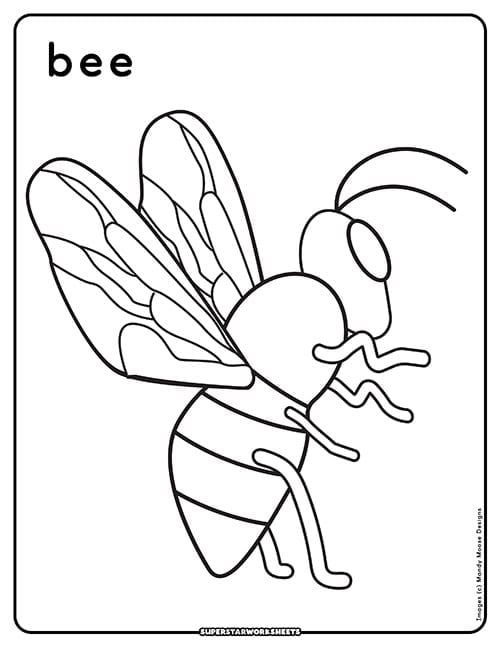
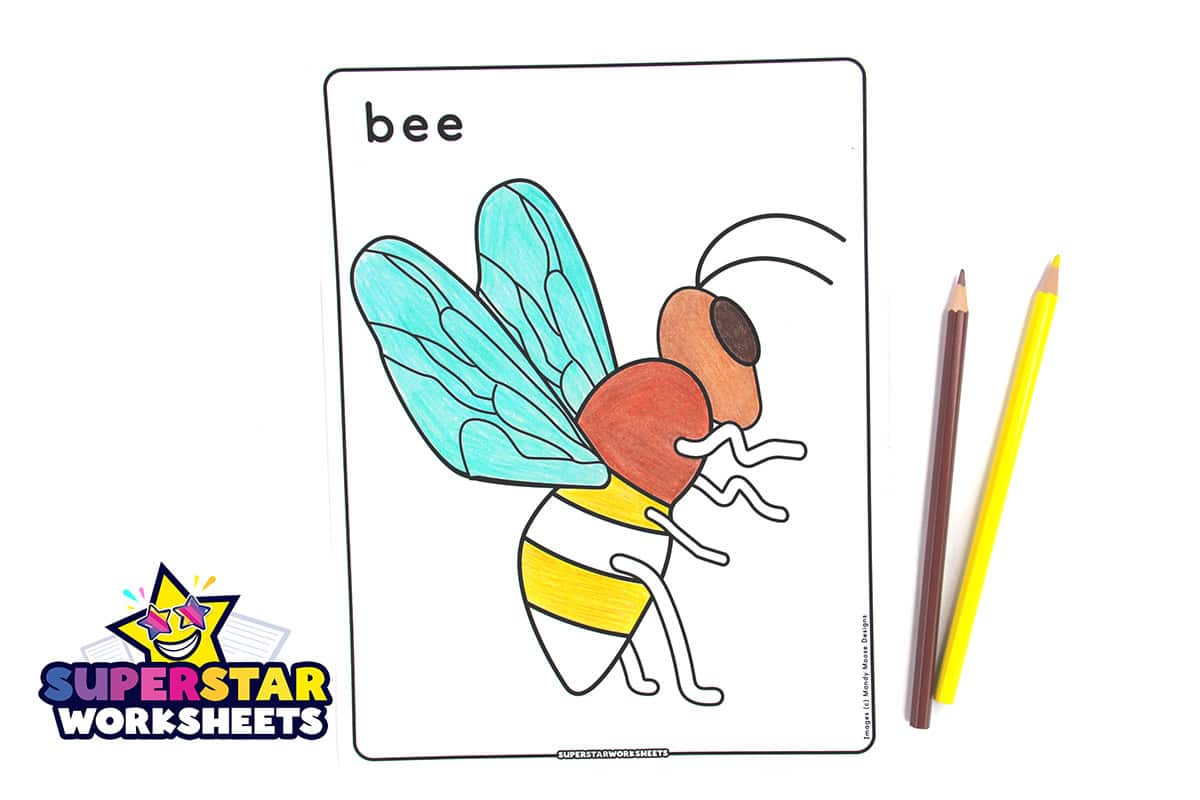
This simple bee coloring page is perfect for early learners. With bold, easy-to-color lines, kids color the parts of a bee while building early science vocabulary.
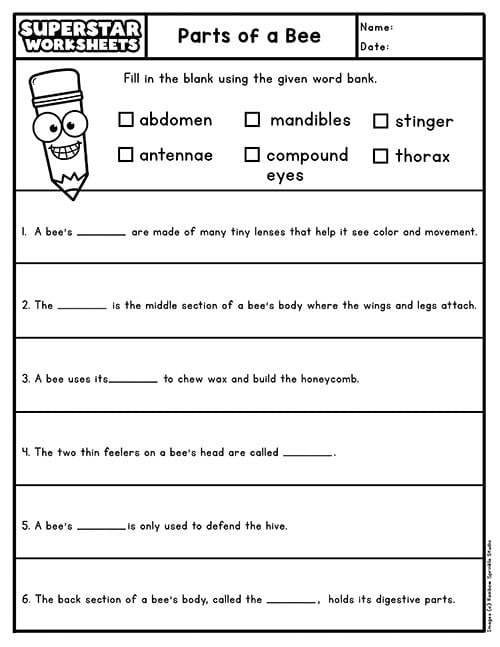
Bee Body Parts Fill-in-the-Blank
Practice bee anatomy vocabulary in context with this fill-in-the-blank worksheet. Students use a word bank to complete sentences about a bee’s head, thorax, abdomen, and other body parts.
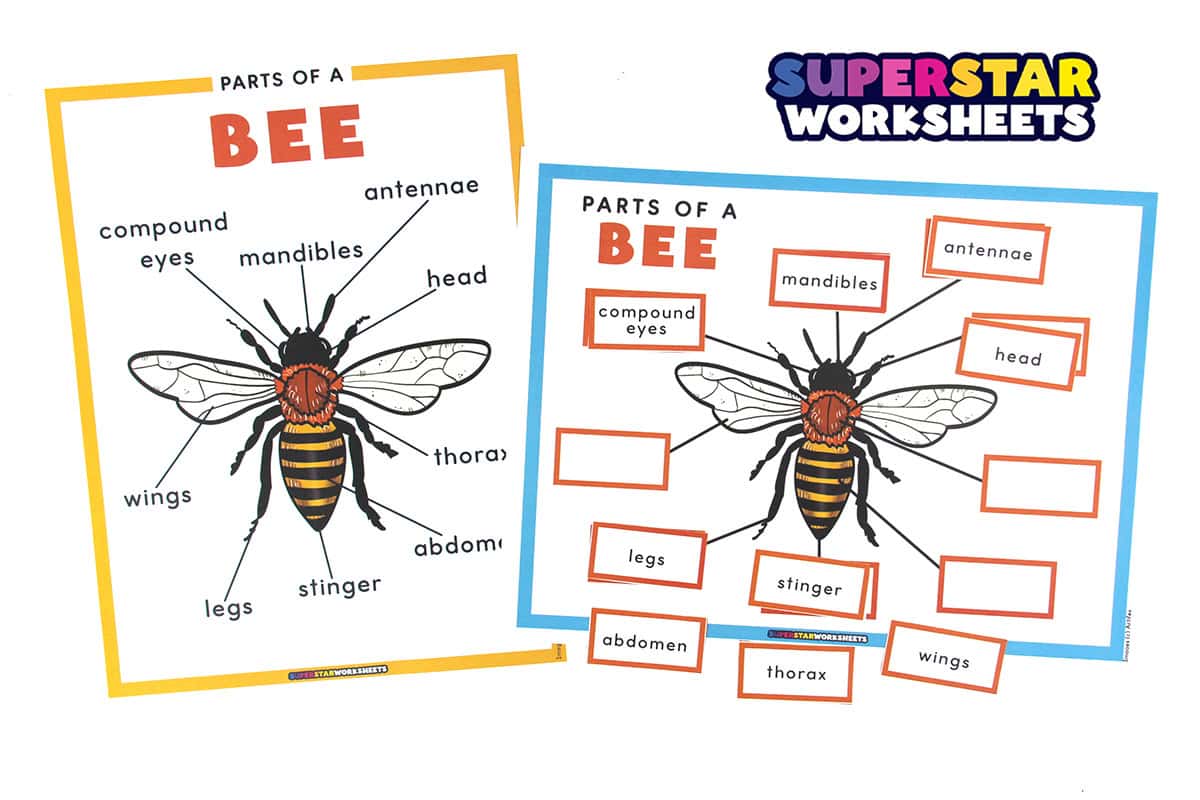
Teaching the Parts of a Bee
Teaching kids the parts of a bee helps them understand how this small but mighty insect is built for its busy job. A bee’s head holds its compound eyes and antennae, which help it see and smell flowers from a distance. Its thorax and wings power flight from bloom to bloom, while its legs are specially suited for gripping and collecting pollen. Encourage students to look closely at real photos or a labeled diagram to spot each part in action.
Vocabulary Bank: head, thorax, abdomen, antennae, compound eyes, wings, legs, mandibles, stinger
Bee Life Cycle Printables
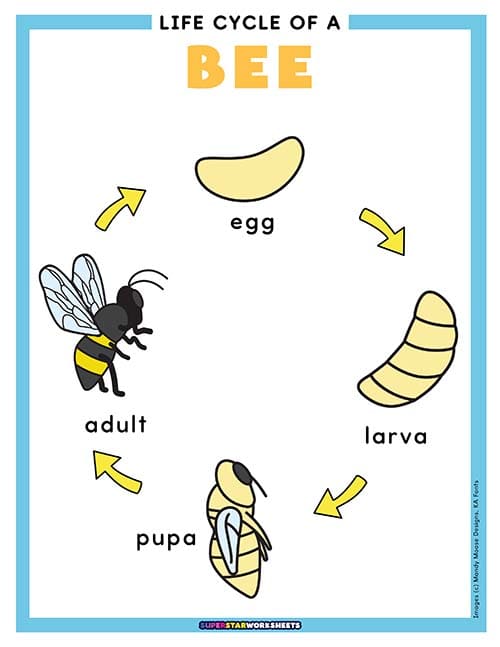
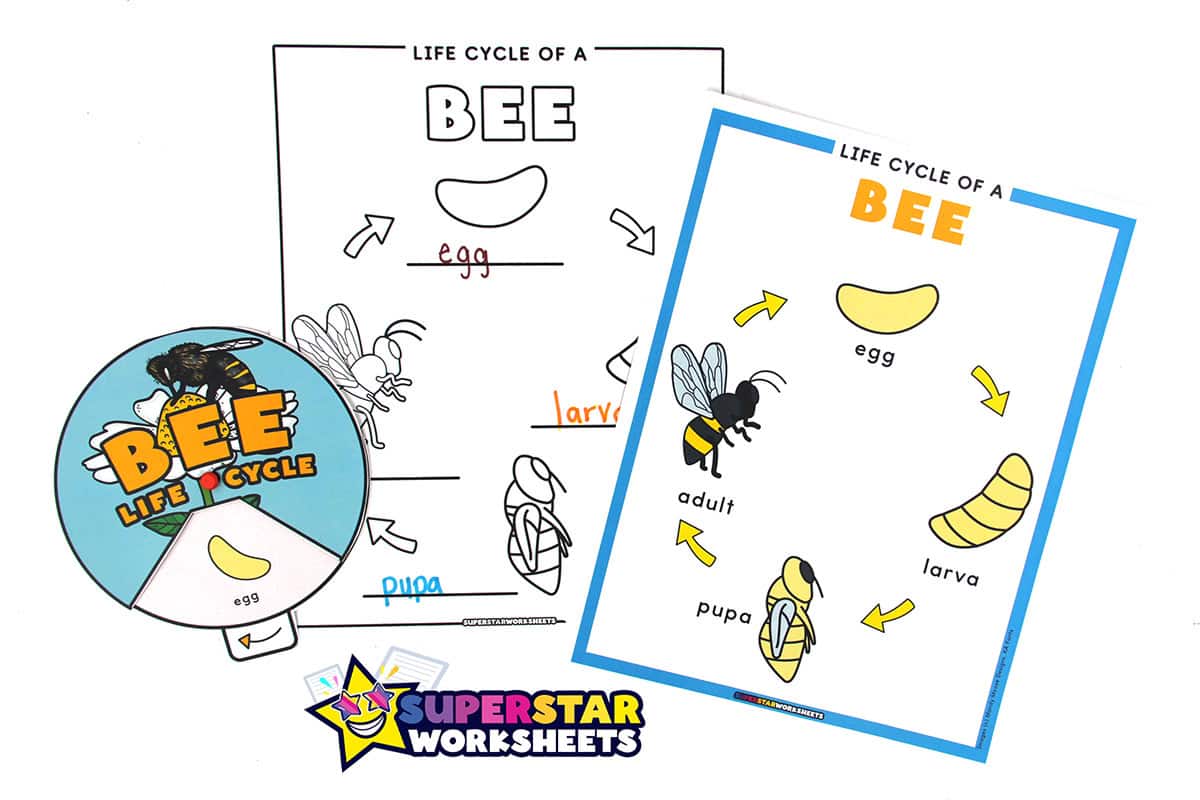
Download and print this free, full color bee life cycle poster. From egg to adult, this anchor chart is a wonderful visual reference for any elementary science classroom or homeschool lesson. For more printable curriculum check out our Color & Learn A-Z Animals & Habitats.
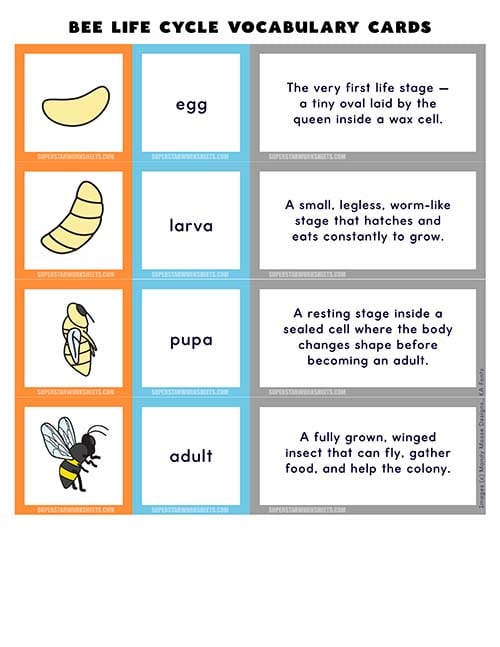
Bee Life Cycle Vocabulary Cards
These bee life cycle vocabulary cards help students match each stage to its correct term and definition. A great hands-on resource for science learning centers or small group review. For more FREE printable science worksheets check out our Butterfly Worksheets!
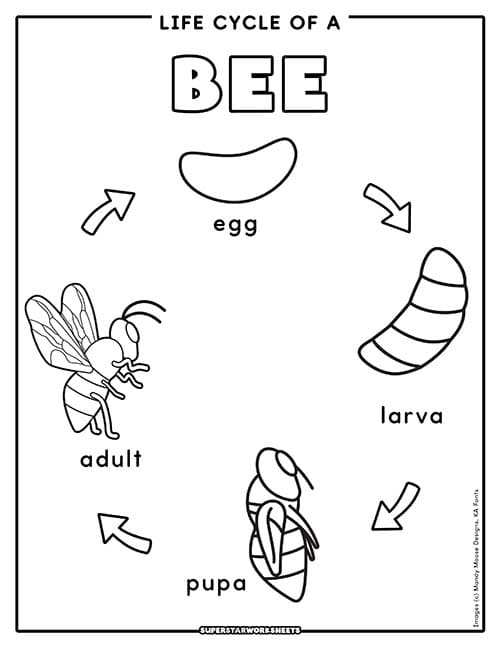
Free printable bee life cycle worksheet featuring the four stages of bee development. Students color and label each stage, from egg and larva to pupa and adult.
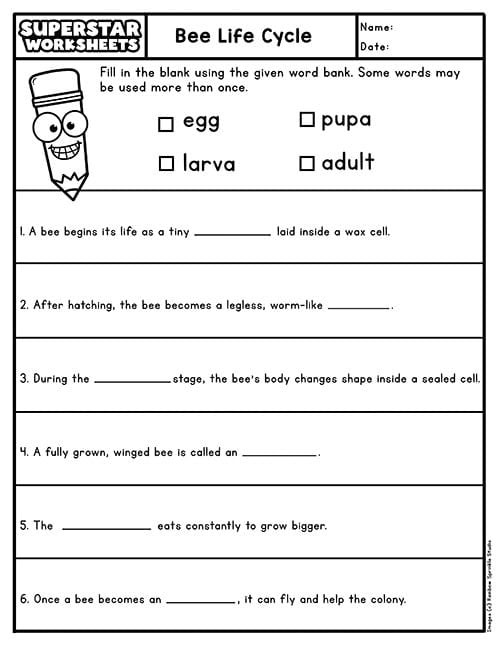
Bee Life Cycle Fill-in-the-Blank
This fill-in-the-blank worksheet helps students apply bee life cycle vocabulary in context, reviewing the stages of egg, larva, pupa, and adult.
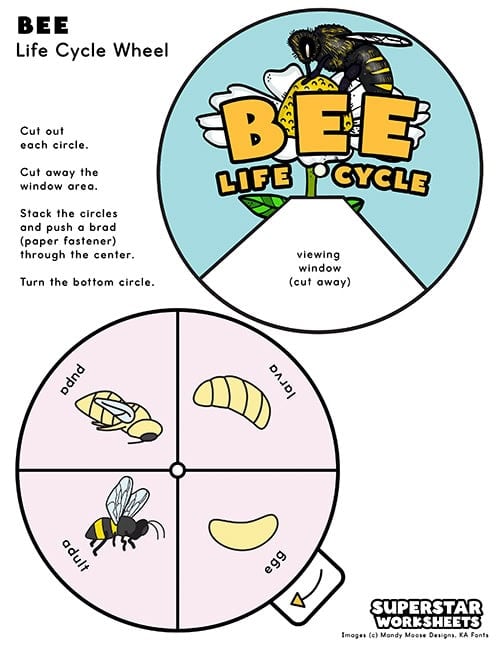
Printable bee life cycle wheel craft featuring all four stages of bee development. Students color, cut, and assemble a spinning wheel to review the cycle again and again.
Teaching the Life Cycle of a Bee
The life cycle of a bee is a great example of complete metamorphosis in the insect world. It begins with a tiny egg laid inside a wax cell, which hatches into a legless, worm-like larva that eats constantly to grow. Next comes the pupa stage, when the bee’s body changes shape inside a sealed cell, before it finally emerges as a fully grown adult ready to fly and help the colony. This four-stage cycle pairs well with life cycle units on butterflies, ladybugs, or frogs.
Vocabulary Bank: egg, larva, pupa, adult
Bee Pollination, Honey & Hive Printables
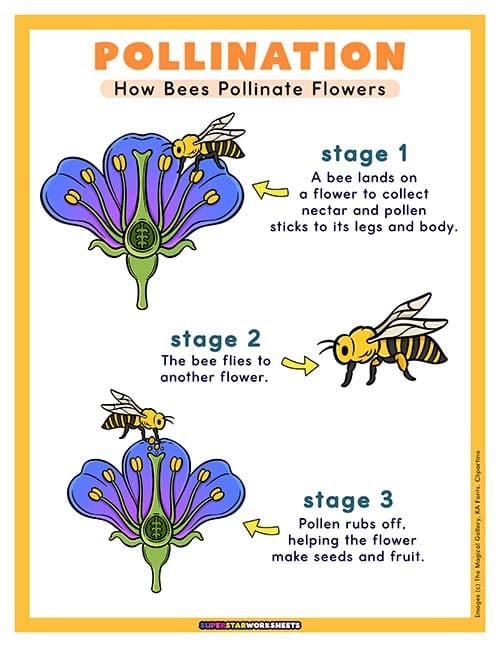
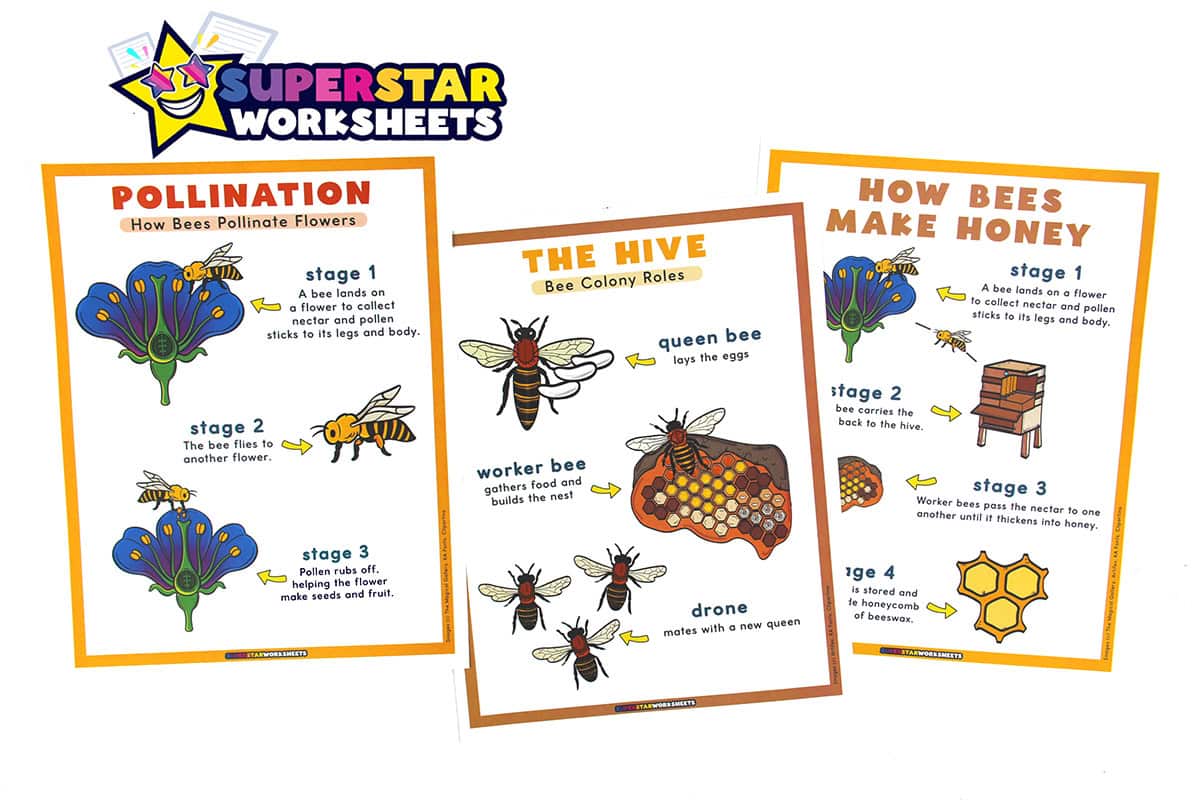
This colorful process chart shows how bees pollinate flowers as they gather nectar and pollen. A great visual reference for teaching plant and pollinator relationships.
Bees & Pollination Reading Comprehension
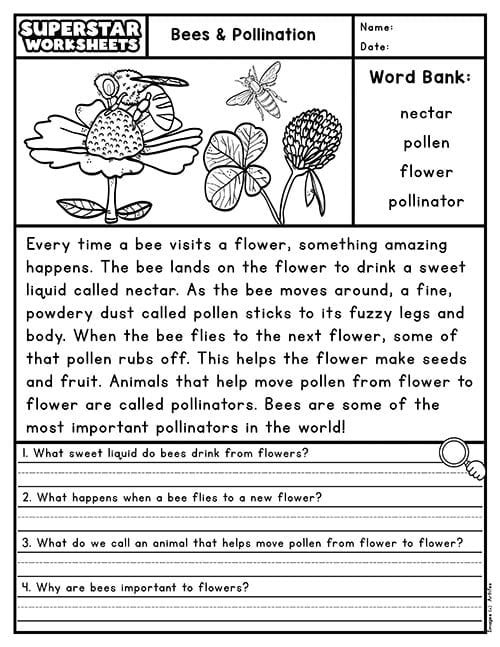
This short reading passage and comprehension activity teaches kids how bees help flowers make seeds and fruit. Includes questions and a vocabulary matching section for nectar, pollen, flower, and pollinator.
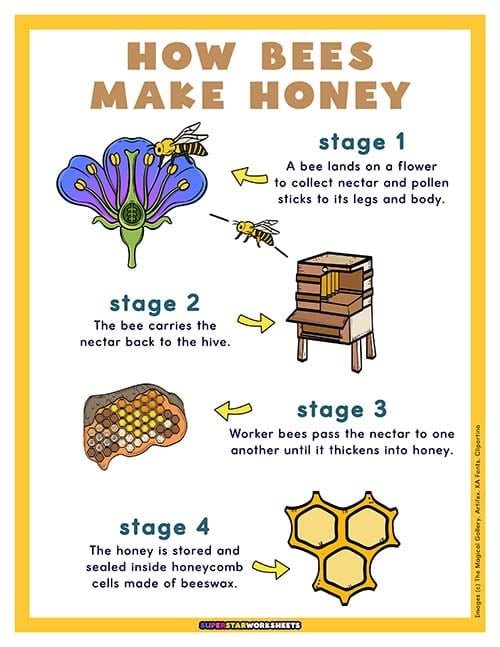
This step-by-step process chart shows how worker bees turn flower nectar into honey. A colorful, easy-to-follow visual for teaching this fascinating part of bee behavior.
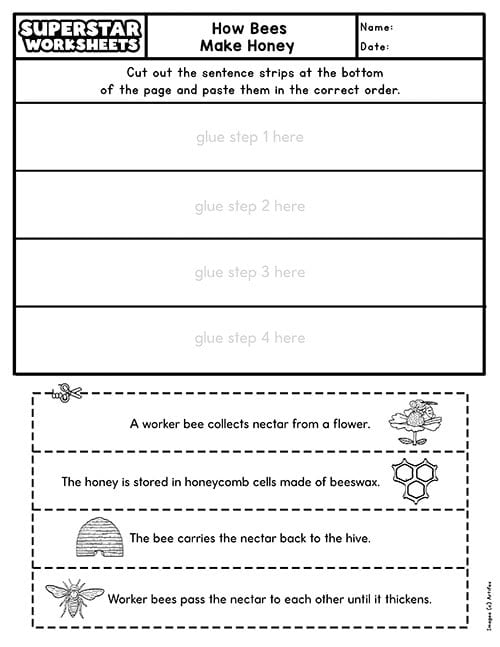
How Bees Make Honey Sequencing Activity
Students cut and paste the steps of honey making in the correct order with this hands-on sequencing activity, reinforcing the process after reading about it.
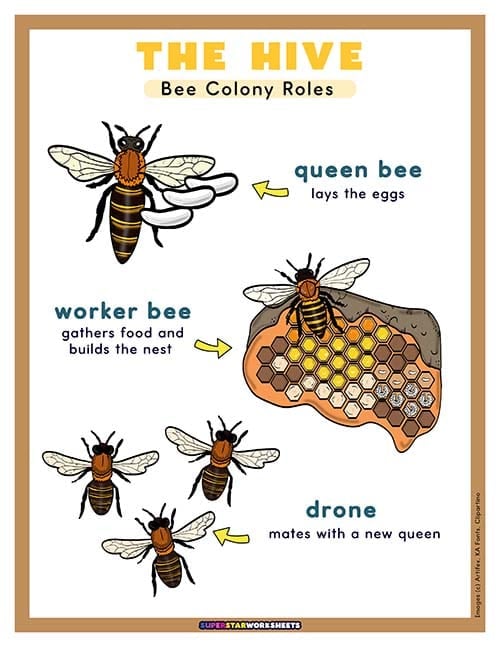
This labeled chart introduces the queen bee, worker bees, and drones and their roles inside the hive. A colorful anchor chart for teaching bee colony life and social structure.
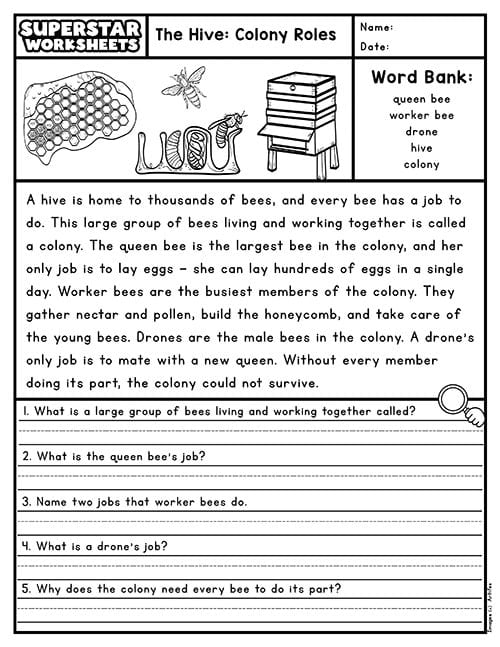
Hive & Colony Roles Reading Comprehension
This reading passage and comprehension worksheet teaches kids about the roles of the queen bee, worker bees, and drones. Includes vocabulary matching for hive and colony terms.
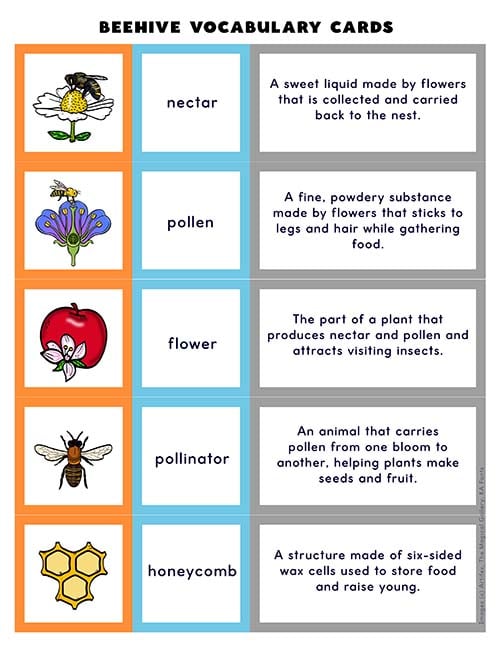
Bee Pollination, Honey & Hive Vocabulary Cards
These vocabulary cards cover key terms from pollination, honey making, and hive life, including nectar, pollen, honeycomb, and queen bee. A versatile matching resource for science learning centers.
Teaching Bee Pollination, Honey Making & Hive Life
Bees do far more than buzz around the garden — they pollinate flowers, make honey, and live together in a busy, organized colony. As a bee visits a flower for nectar, pollen sticks to its legs and rubs off at the next bloom, helping plants make seeds and fruit. Back at the hive, worker bees pass that nectar to one another until it thickens into honey, which is stored in honeycomb cells made of beeswax. Every hive relies on its queen bee to lay eggs, its worker bees to gather food and build the nest, and its drones to help the colony continue into the next generation.
Vocabulary Bank: nectar, pollen, flower, pollinator, honeycomb, beeswax, honey, queen bee, worker bee, drone, hive, colony
Bee Science Experiments for Kids
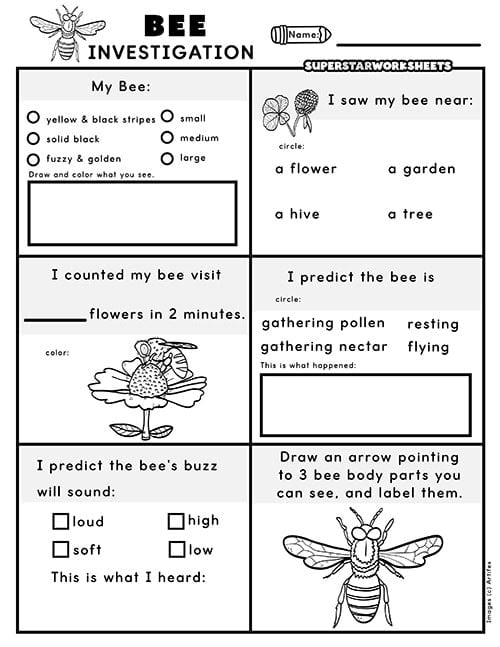
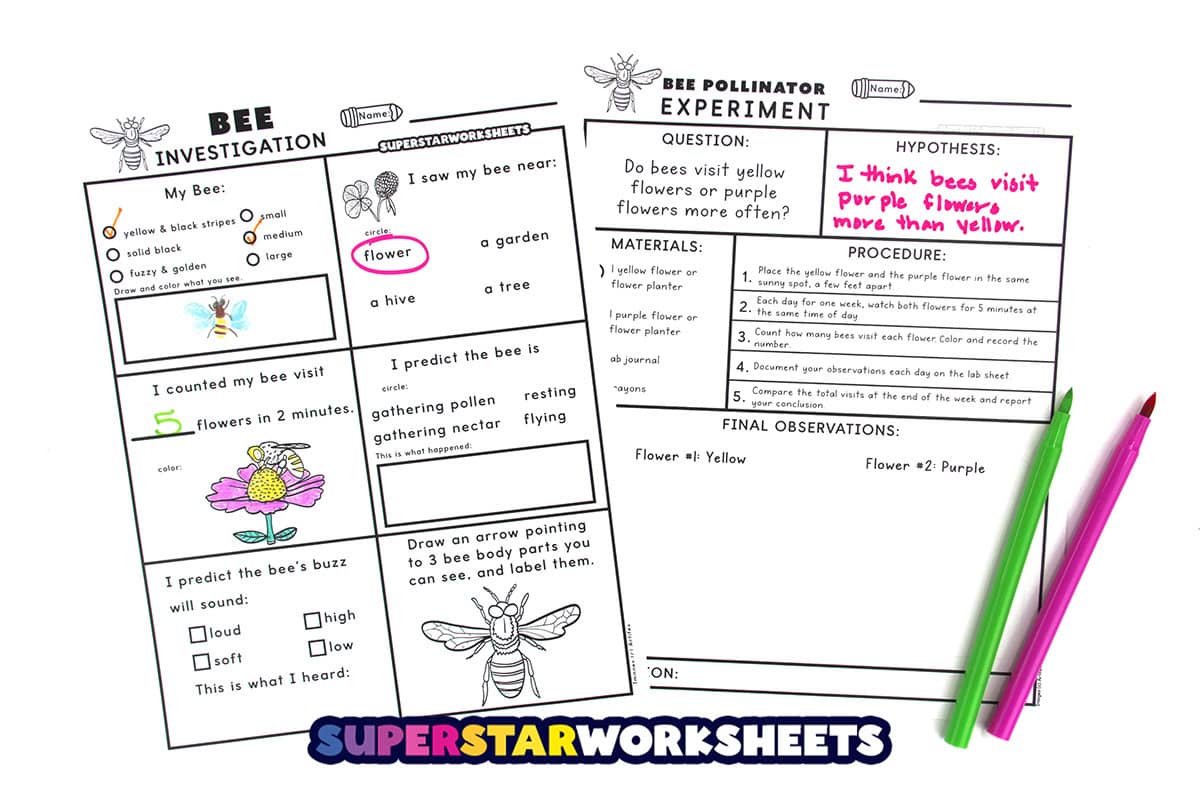
This hands-on bee investigation sheet invites students to observe a real or pictured bee and record its color, size, behavior, and sounds. This is a great open-ended activity for science journals or outdoor learning.
Bee Pollinator Preference Experiment
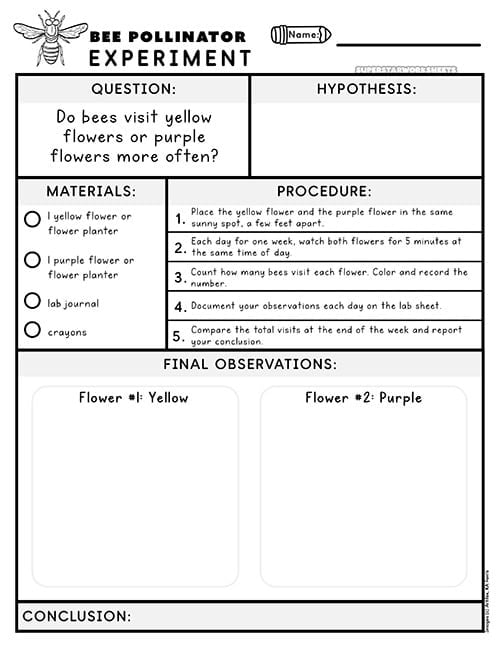
In this simple science experiment, students test whether bees prefer yellow or purple flowers. Includes a hypothesis, materials list, procedure, and a journal for tracking observations over several days.
Bee Science Facts for Kids
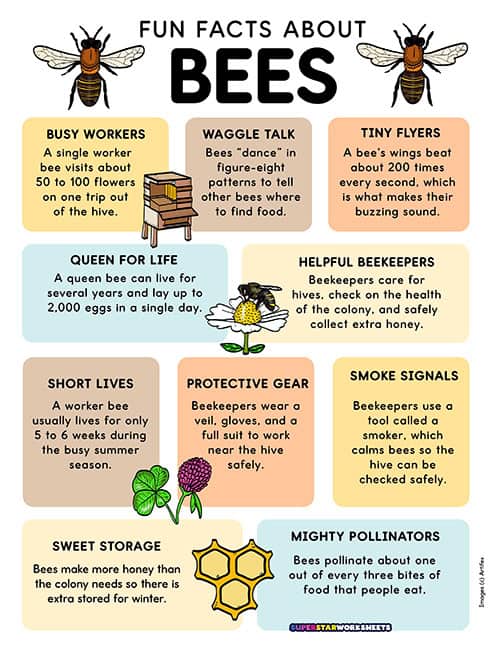
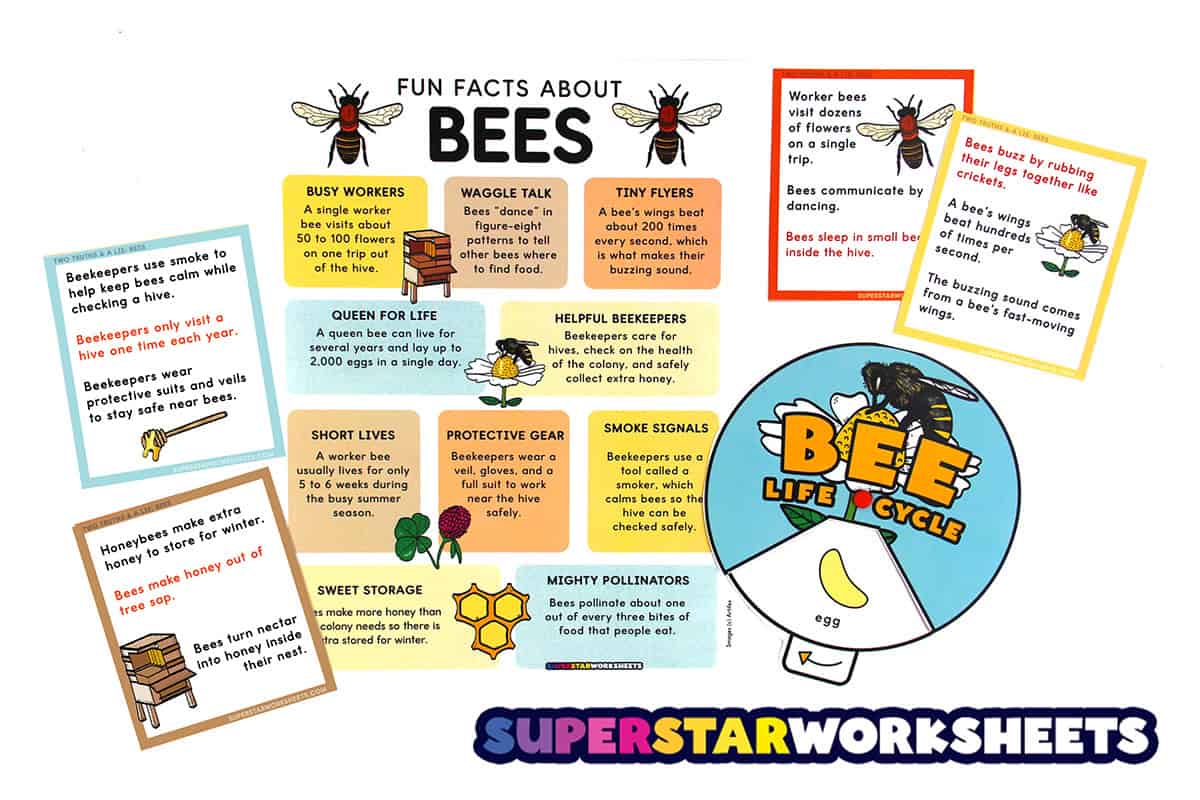
This colorful fact chart shares fun and surprising facts about bees, from their busy flower visits to their waggle dance communication.
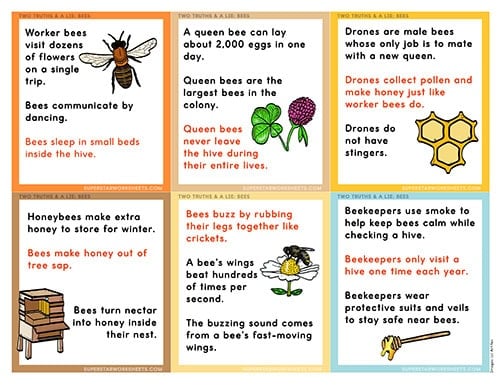
Put your students’ bee knowledge to the test with this fun two truths and a lie game. Each card features three bee-related statements, and kids must figure out which one is the lie. Teachers read each statement, and students figure out which one is a lie.
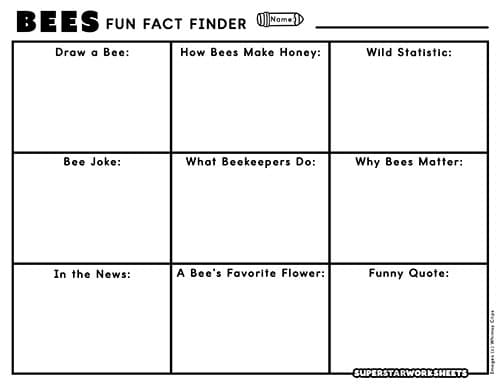
This bee research activity invites students to explore and record fun facts, including what beekeepers do and how bees make honey. Teachers! Continue learning with our FREE Flower Worksheets here!
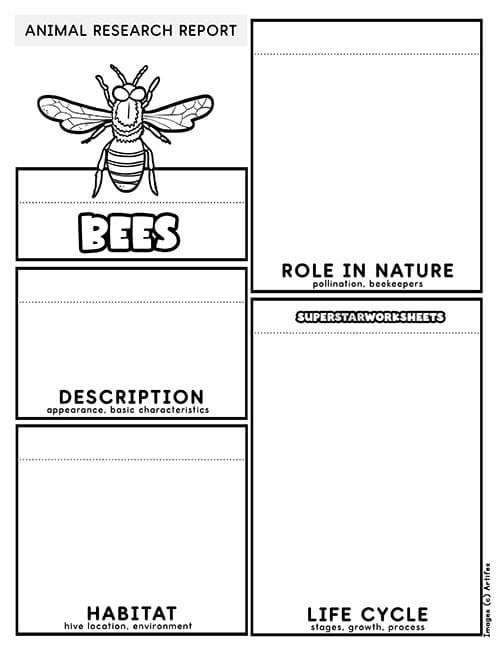
Students research and record facts about bees in this simple animal research report booklet, with sections for description, habitat, role in nature, and life cycle.
Amazing Bee Facts
Bees are full of surprises, from their fast-beating wings to their important role in feeding the world. A single worker bee can visit dozens of flowers on one trip, and bees even communicate the location of good flowers to each other through a special waggle dance. Beekeepers play an important role too, caring for hives and using tools like smokers to check on the colony safely. These fun facts are a great way to spark curiosity before a bee research project.
Leave a Reply