
Free printable Sea Turtle Worksheets for elementary science classrooms. Download and print PDF sea turtle life cycle charts, parts diagrams, adaptations activities, migration maps, conservation printables, and fun fact pages for young learners. These worksheets help kids build reading comprehension, vocabulary, and scientific observation skills while exploring how sea turtles grow, survive, and travel across the ocean. Perfect for classroom science centers, homeschool lessons, or small group activities, this collection covers everything from labeling a sea turtle’s body parts to understanding real conservation efforts to protecting these incredible animals.
Parts of a Sea Turtle Worksheets
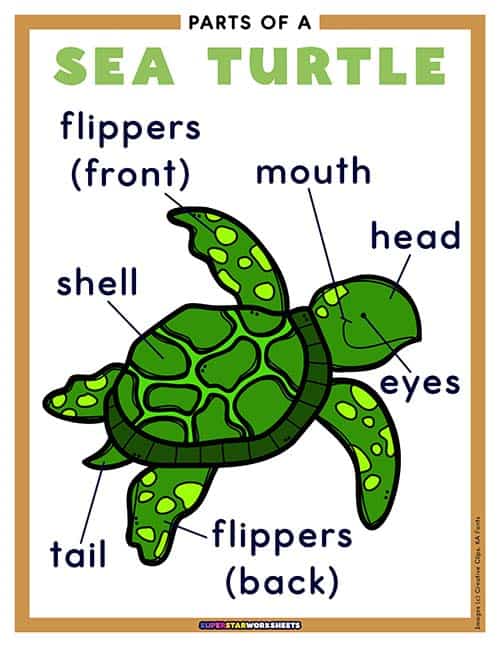
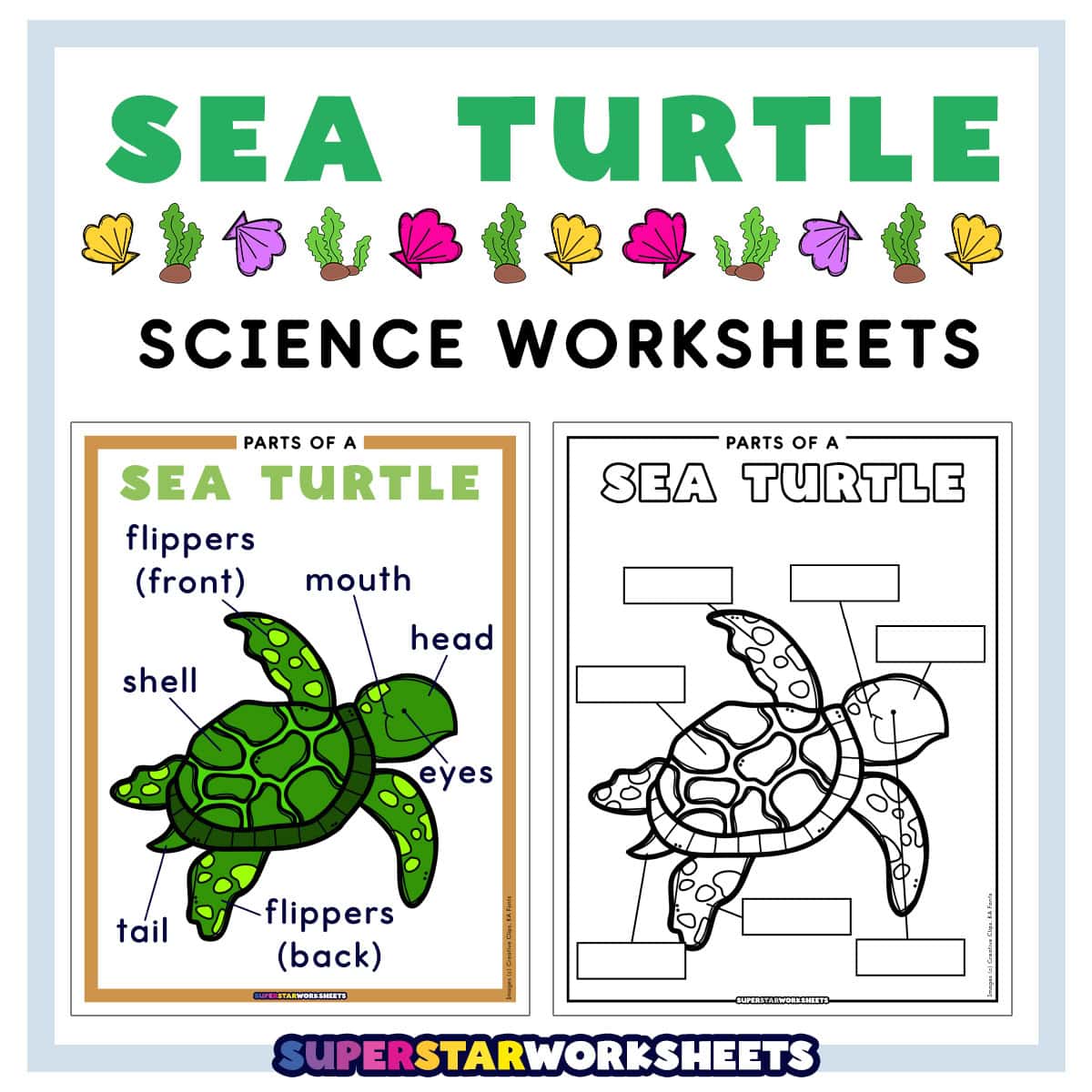
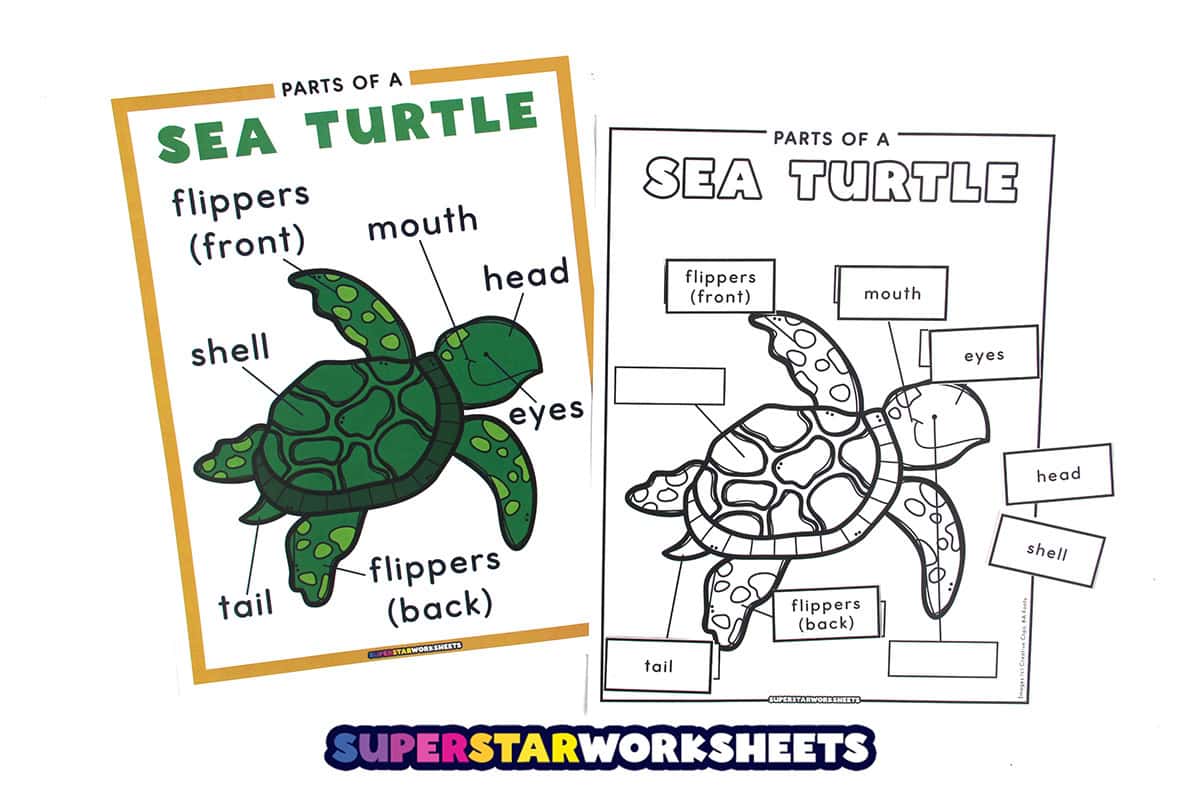
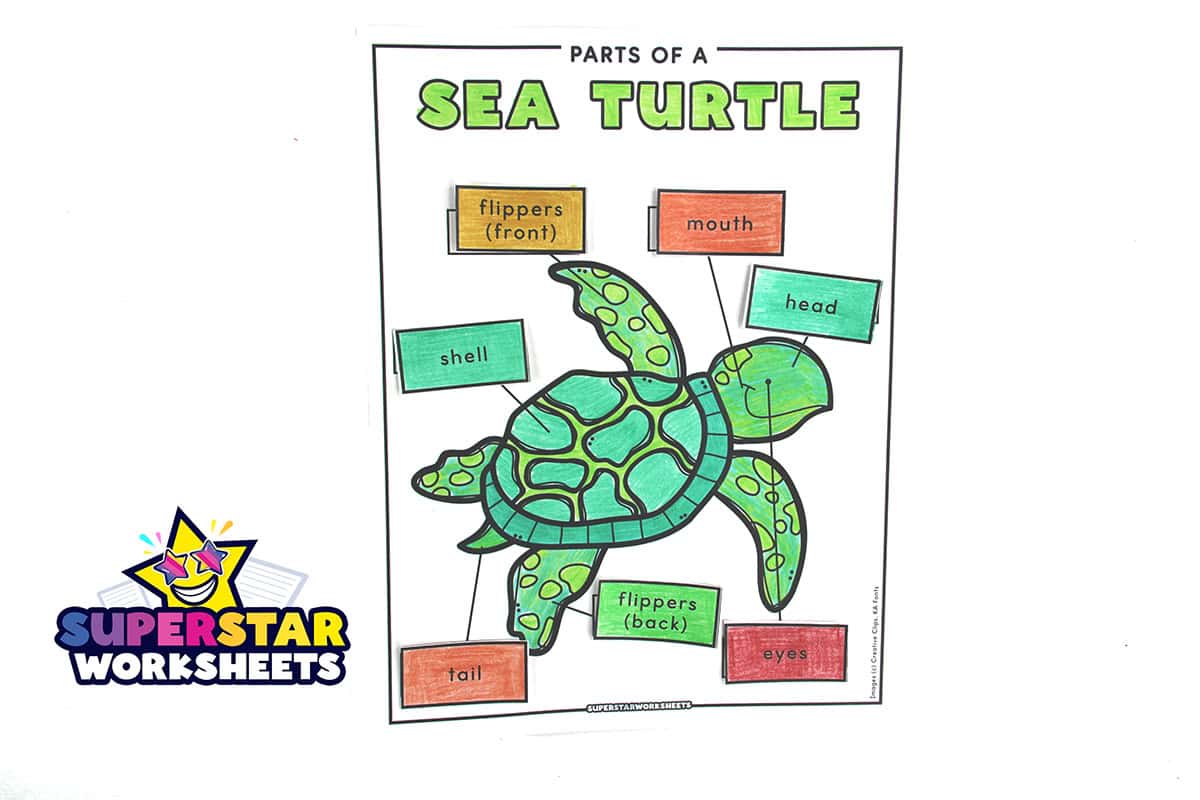
This full-color labeled diagram introduces young learners to the external parts of a sea turtle, including its shell, flippers, and tail. It makes an excellent anchor chart for an early elementary science unit.
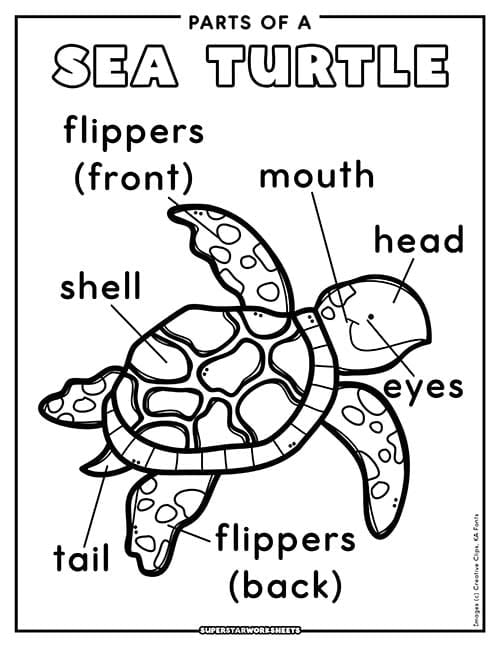
Parts of a Sea Turtle Coloring Page
Young learners can color and label this simple black-and-white diagram of a sea turtle. It is a great low-prep activity for preschool and kindergarten science centers.
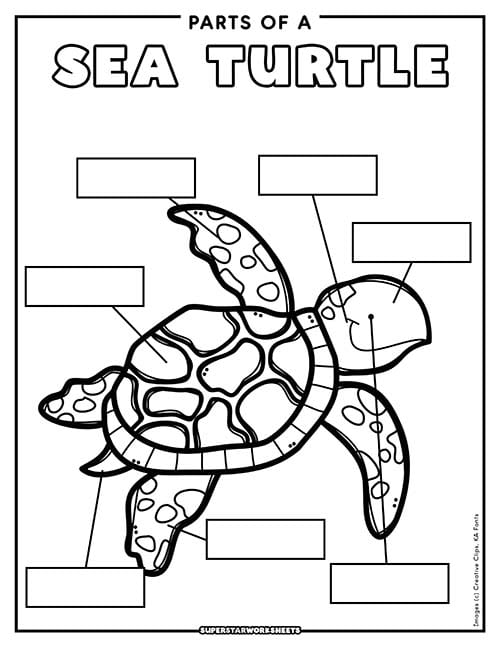
Parts of a Sea Turtle Cut & Paste Worksheet
Students cut out labels and paste each one onto the correct body part of a sea turtle. This activity builds fine motor skills alongside early reading and labeling practice. For more FREE printables, take a look at our Earth Day Worksheets!
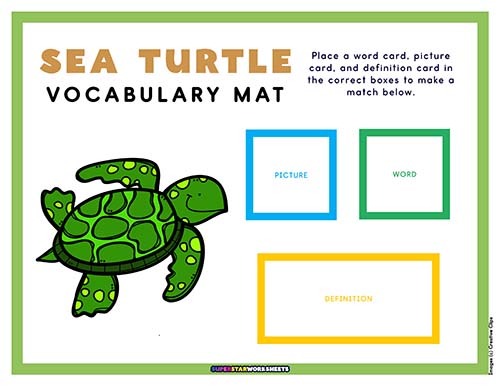
Students practice matching picture, word, and definition cards from any of the sea turtle arcs on this reusable learning mat. It works well as a rotating science center throughout the entire sea turtle unit.
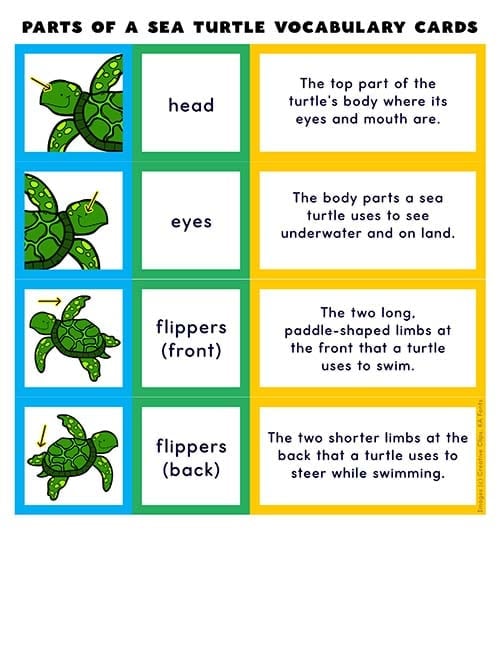
Parts of a Sea Turtle Vocabulary Cards
These picture, word, and definition cards help students learn the names and functions of each sea turtle body part. Pair them with the Vocabulary Mat for an interactive matching activity.
Teaching the Parts of a Sea Turtle
When introducing the parts of a sea turtle to your students, it’s important to use language and vocabulary terms they are familiar with. Here are our recommended definitions for each part of the sea turtle. Each description provides a visual description as well as a purpose and how each part helps the sea turtle live in the ocean.
shell: the hard, smooth covering on a sea turtle’s back and belly. It is attached to the turtle’s bones and protects its body like a suit of armor, so a sea turtle can never crawl out of its shell!
head: the front part of a sea turtle’s body that sticks out from the shell. Unlike many land turtles, sea turtles can’t pull their heads inside their shells to hide!
eyes: two dark eyes on the sides of the head. They help sea turtles see clearly underwater, and sometimes it looks like sea turtles are crying, but those “tears” are just extra salt from the ocean water leaving their bodies!
mouth: the part of the head a sea turtle uses to eat. Sea turtles don’t have teeth! Instead, they have a hard, sharp beak for biting and munching on seagrass, jellyfish, and other ocean food!
front flippers: the two long, flat flippers near the head. Sea turtles flap them up and down like wings to swim through the water!
back flippers: the two smaller flippers near the tail. They help the sea turtle steer while it swims, and mother sea turtles use them to dig nests in the sand for their eggs!
tail: the short, pointy part at the very back of the shell. Boy sea turtles have long tails, and girl sea turtles have short tails, which is one way scientists can tell them apart!
Sea Turtle Life Cycle Printables
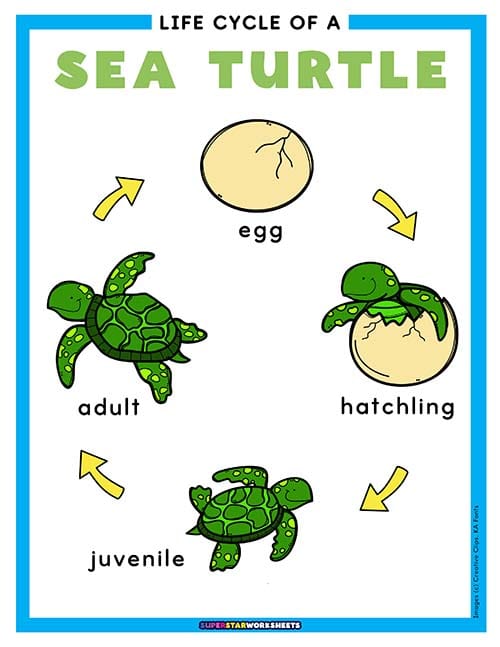
Download and print this full-color PDF poster chart showing the four stages of a sea turtle life cycle. This anchor chart is a wonderful classroom reference tool or a helpful visual for science journals. For more FREE printable turtle worksheets, check out our How to Draw a Turtle printables!
Sea Turtle Life Cycle Cut & Paste Worksheet
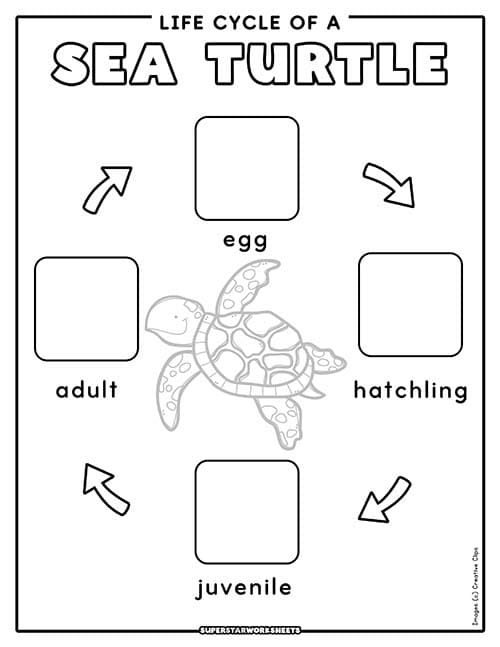
Students cut out each stage of the sea turtle life cycle and paste it into the correct order on this printable worksheet. It is a hands-on way to reinforce sequencing skills while learning the life cycle stages.
Sea Turtle Life Cycle Coloring Page
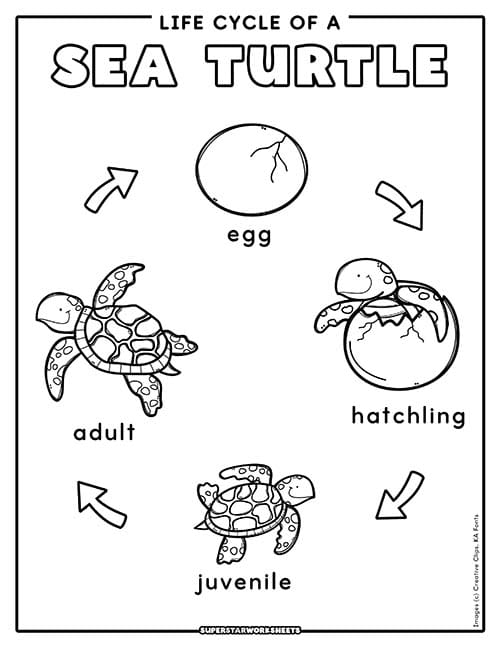
This black and white life cycle chart lets students color each stage from egg to adult. It pairs nicely with the full color chart as a hands-on companion activity.
Sea Turtle Life Cycle Vocabulary Cards
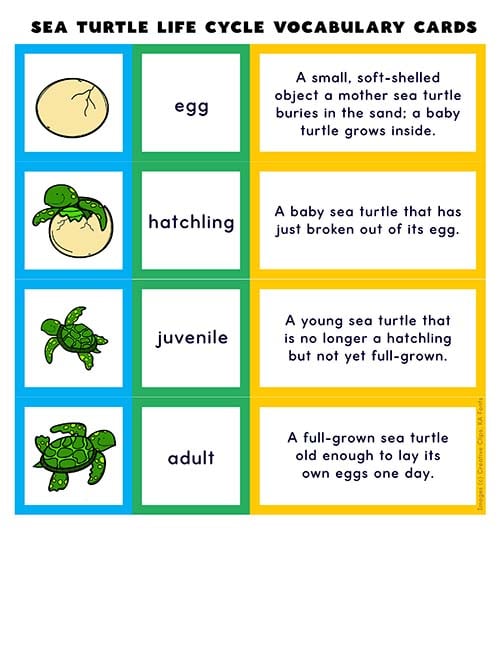
Students match the correct picture to each stage of the sea turtle life cycle along with its vocabulary term and definition. This is a great resource for learning centers, memory match, or small group review.
Teaching the Life Cycle of a Sea Turtle
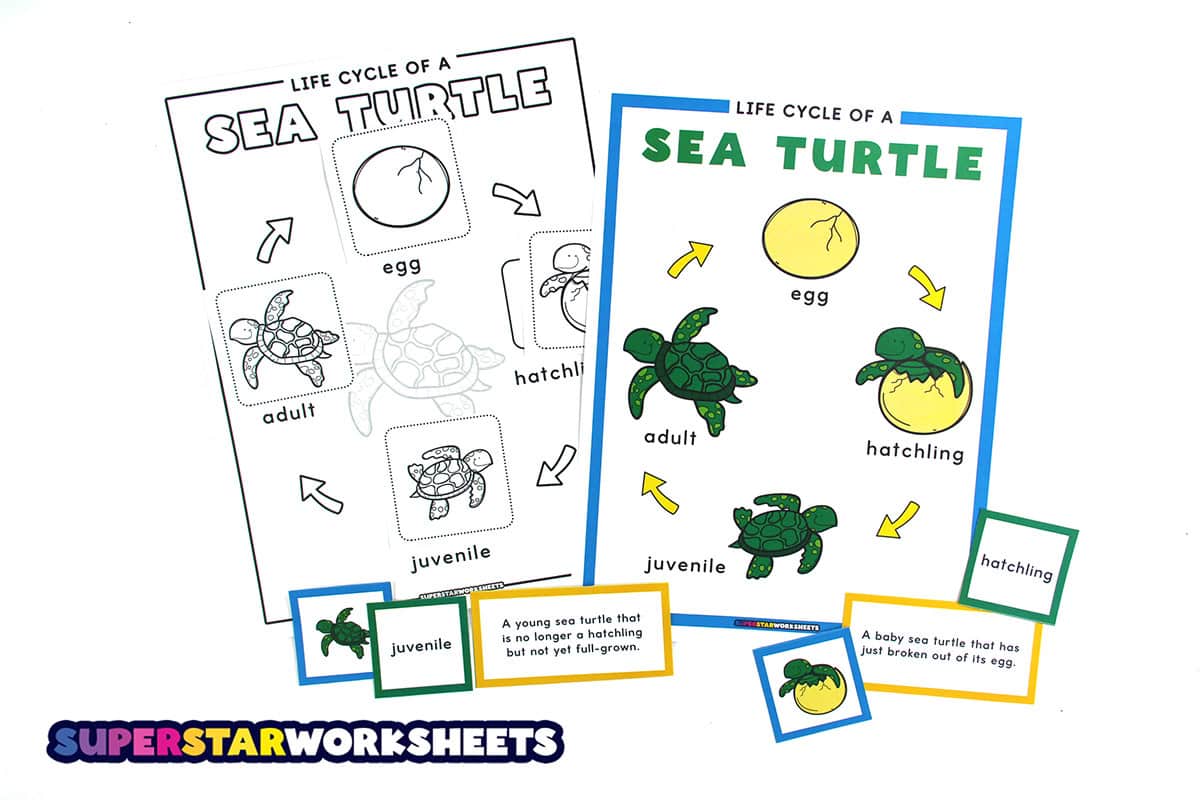
Since raising sea turtles in the classroom isn’t possible, the best way for students to learn about their life cycle is through photos, videos, and live nest cams from sea turtle rescue centers! Encourage students to notice how a tiny hatchling grows into a giant ocean traveler. Help students learn that some stages have more than one name they can use interchangeably (i.e. hatchling and baby turtle, or juvenile and young turtle).
egg: a round, white, leathery egg about the size of a ping-pong ball. A mother sea turtle crawls onto the beach, digs a deep hole in the sand with her back flippers, and lays about 100 eggs before covering them up and heading back to the ocean. The eggs stay warm in the sand for about two months!
hatchling: a tiny baby sea turtle that has just hatched from its egg. Hatchlings dig their way out of the sand together, usually at night, and race toward the bright, shiny water to start their life in the ocean!
juvenile: a young sea turtle that is still growing. Juveniles spend years drifting and swimming in the ocean, often hiding in floating seaweed where they can find food and stay safe from predators!
adult sea turtle: a fully grown sea turtle with a big, strong shell and powerful flippers. It can take 20 years or more to become an adult! Then mother sea turtles swim back to the very same beach where they hatched to lay eggs of their own!
Sea Turtle Fun Facts and Research Printables
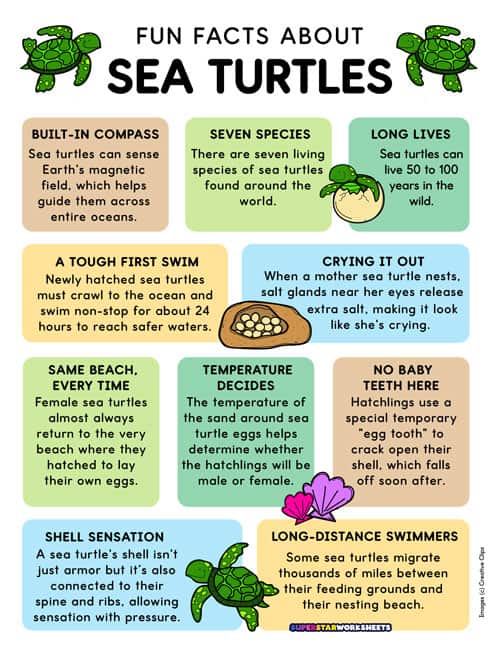
This colorful sea turtle facts chart is packed with amazing information kids will love sharing with friends and family. Perfect for a science bulletin board or reading corner, it makes a great reference for fun facts about sea turtles all year long.
Two Truths and a Lie: Sea Turtles
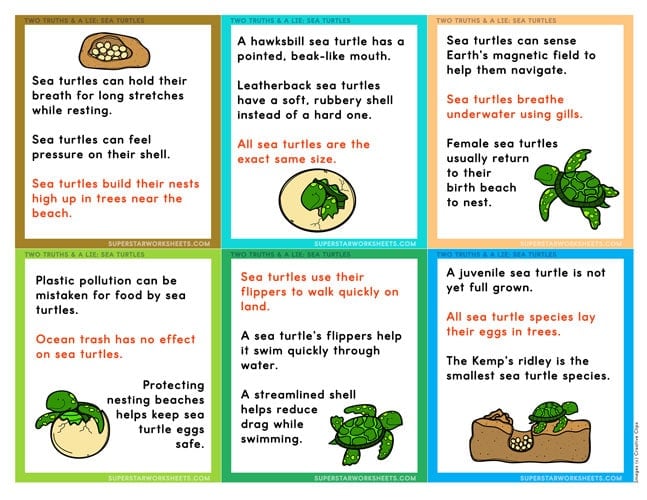
Challenge students with this fun sea turtle facts game featuring six sets of statements. Teachers read 3 statements out loud. Kids use their research and critical thinking skills to recognize which statement in each set is the lie.
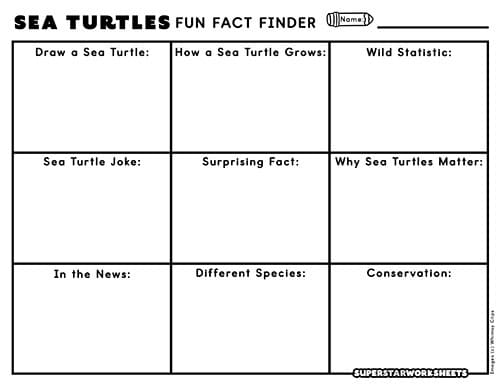
This research-based scavenger hunt gets kids digging for sea turtle facts, jokes, and surprising statistics. It is a fun way to build research skills while learning about these fascinating ocean animals.
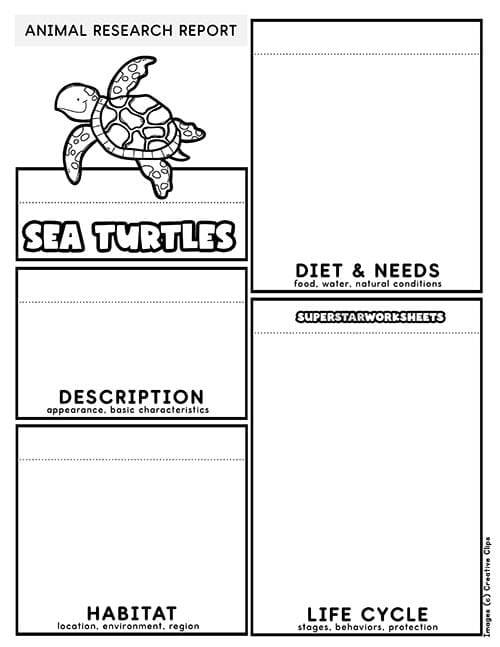
Students combine everything they have learned into this simple layered flip book, covering description, habitat, diet, and life cycle. It is a great culminating project for a sea turtle research unit.
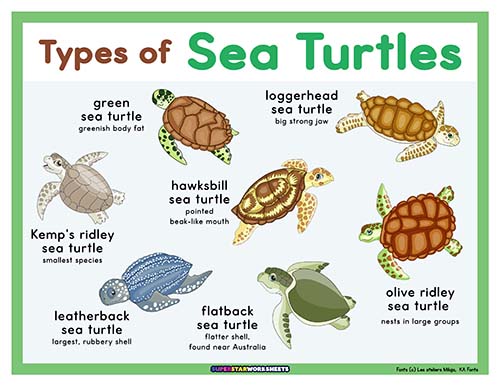
Introduce students to all seven species of sea turtles with this engaging picture and label poster. Each turtle includes one fun identifying detail, helping young learners compare and recognize different sea turtles by sight.
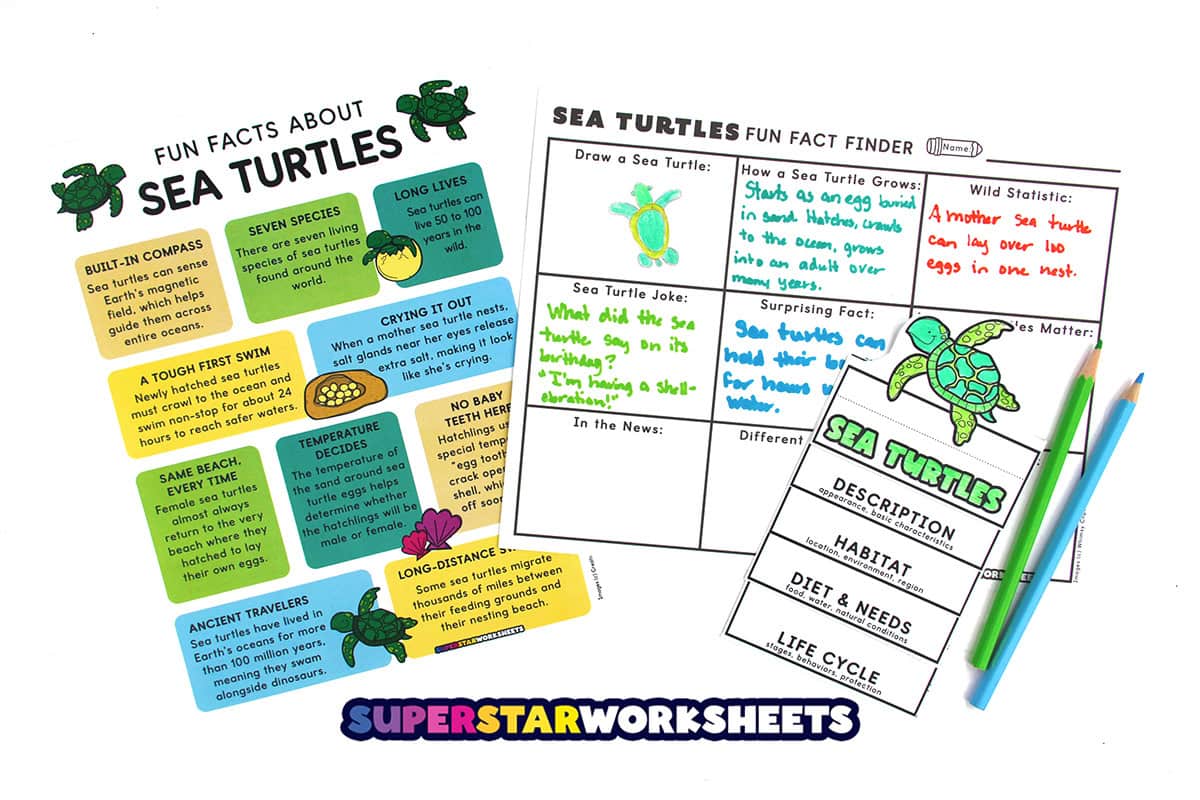
Amazing Sea Turtle Facts
Seven Kinds: There are seven species of sea turtles: green, loggerhead, leatherback, hawksbill, Kemp’s ridley, olive ridley, and flatback.
Giant Swimmers: Leatherbacks are the biggest sea turtles in the world and can weigh up to 2,000 pounds, about as much as a small car!
Ancient Ocean Travelers: Sea turtles have been swimming in the ocean for over 100 million years, since the time of the dinosaurs.
Warm Sand, Girl Turtles: The temperature of the sand decides whether a baby turtle will be a boy or a girl. Warmer sand makes more girls, and cooler sand makes more boys!
Long Breath Holders: When they are resting or sleeping, some sea turtles can stay underwater for several hours without coming up for air.
Deep Divers: Leatherbacks can dive more than 4,000 feet deep in search of jellyfish to eat.
Not So Green: Green sea turtles aren’t named for their shells. They get their name from the greenish color of the fat under their shells, which comes from eating seagrass and algae!
Long Lives: Sea turtles can live for 50 years or more, and some may even live to be 100.
Sea Turtle Adaptations Worksheets
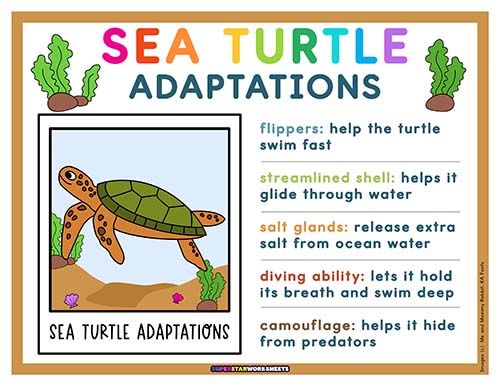
This chart highlights five ways a sea turtle’s body helps it survive in the ocean, from its streamlined shell to its salt glands. It gives students a clear, visual introduction to the idea of adaptations.
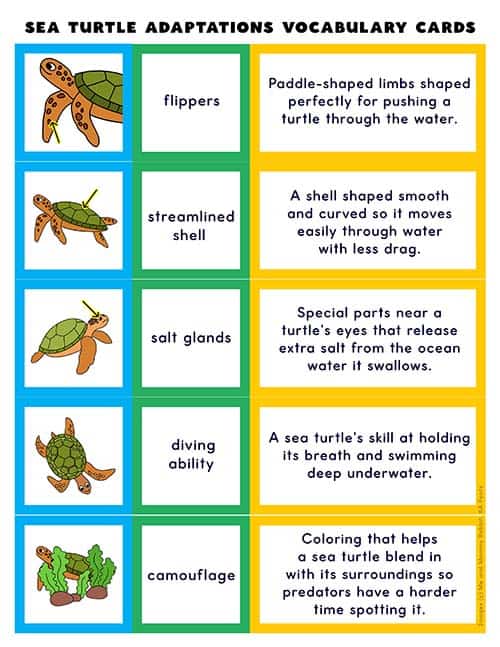
Sea Turtle Adaptations Vocabulary Cards
These vocabulary cards pair each adaptation with a picture and simple definition, helping students connect body structure to function. They work well alongside the Adaptations Chart for a guided lesson.
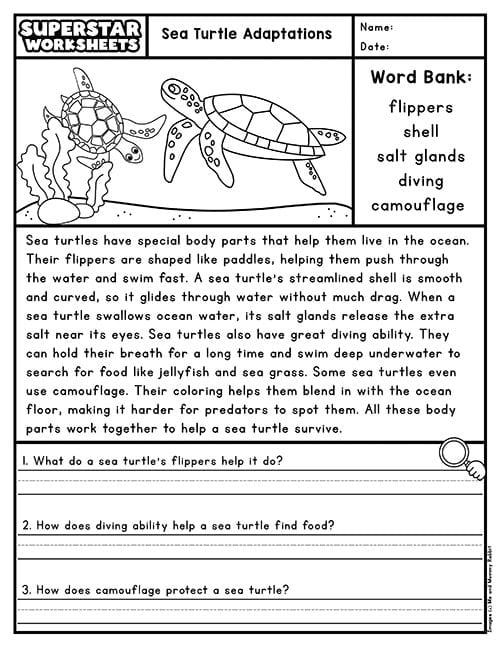
How Sea Turtles Survive in the Ocean Reading Passage
Students read a short nonfiction passage about sea turtle adaptations and answer comprehension questions. A teacher copy with answer key is included for easy grading.
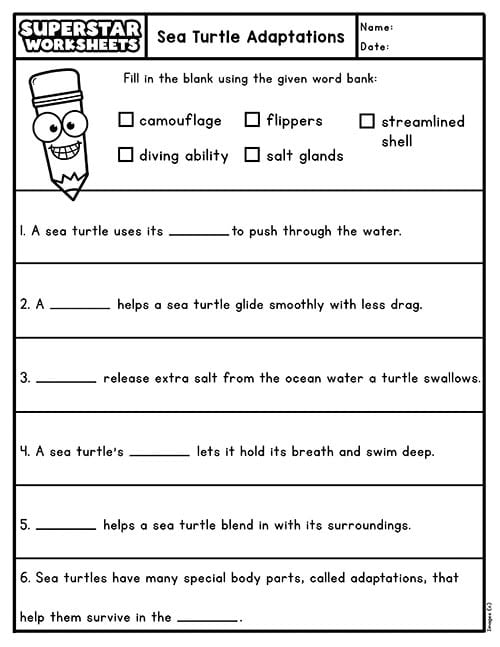
Sea Turtle Adaptations Fill in the Blank
This fill-in-the-blank worksheet reinforces adaptation vocabulary using context clues. A teacher copy with answer key is included.
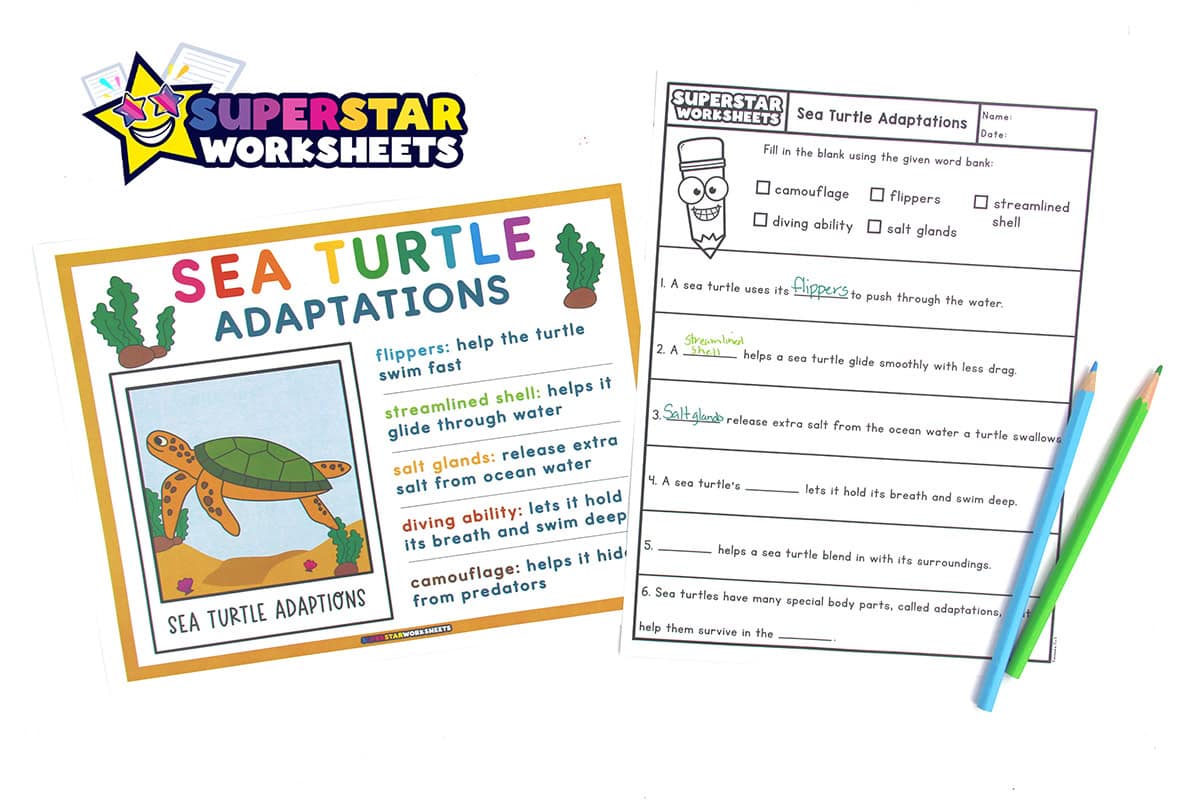
How Sea Turtles Survive in the Ocean
When introducing sea turtle adaptations to your students, it’s important to use language and vocabulary terms they are familiar with. Here are our recommended definitions for each term, along with how each one helps the sea turtle survive in the ocean.
flippers: the long, flat, paddle-shaped limbs a sea turtle uses instead of feet. The front flippers flap like wings to push the turtle through the water, and the back flippers help it steer, making sea turtles strong, graceful swimmers!
streamlined shell: a smooth, flat, rounded shell that lets water slide easily over the turtle’s body. Just like a swimmer wearing a cap and goggles, this shape helps sea turtles glide quickly through the ocean!
salt glands: special body parts near a sea turtle’s eyes that get rid of extra salt from the ocean water it swallows. When the salt leaves its body, it can look like the sea turtle is crying!
diving ability: being able to swim deep underwater and stay there for a long time. Sea turtles can slow down their heartbeat to save air, which helps them hold their breath while they search for food or rest!
camouflage: colors or patterns that help an animal blend in with its surroundings. A sea turtle’s dark shell blends in with the deep water when seen from above, and its lighter belly blends in with the bright sunny surface when seen from below, helping it hide from predators!
Sea Turtle Migration & Navigation Worksheets
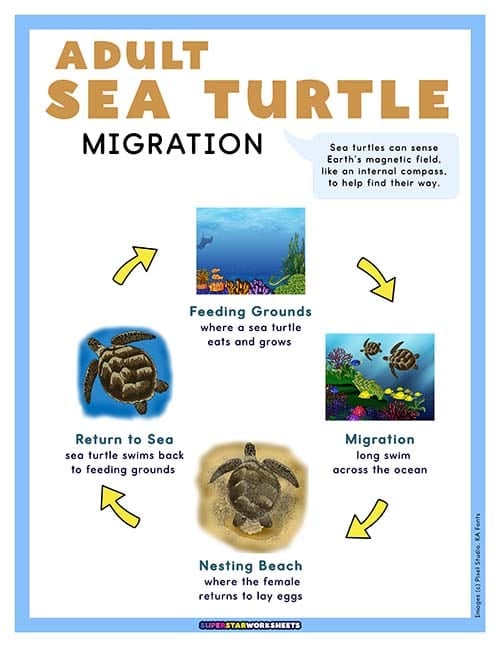
This chart walks students through the migration journey of a sea turtle, from feeding grounds to nesting beach and back again. It introduces the idea that sea turtles can sense Earth’s magnetic field to help them navigate.
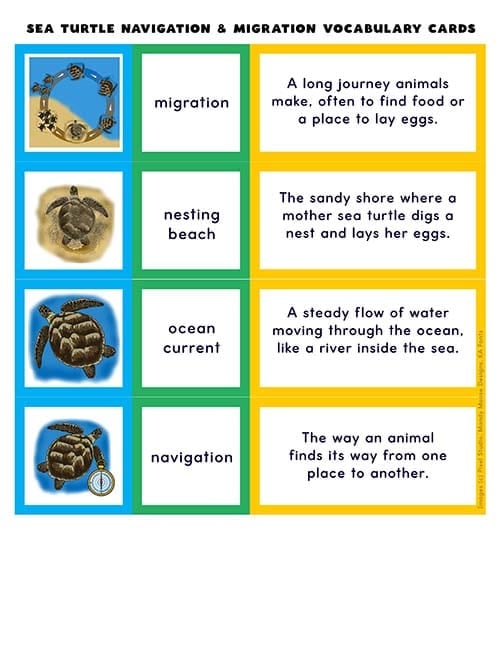
Sea Turtle Navigation & Migration Vocabulary Cards
These vocabulary cards cover key migration terms like ocean current and navigation, each paired with a picture and definition. They give students the vocabulary they need before tackling the migration map activity.
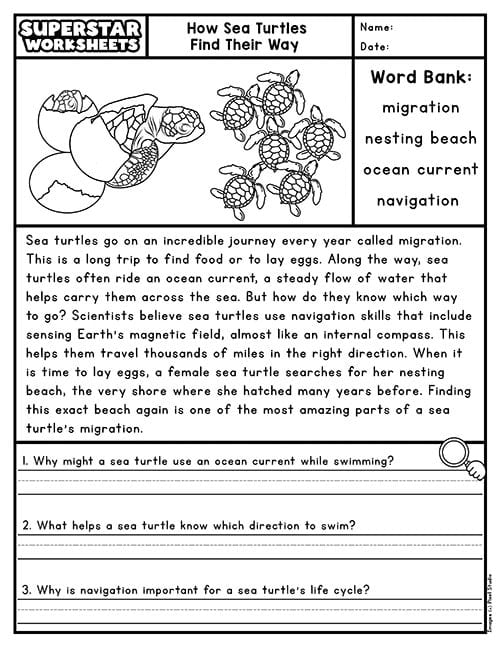
How Sea Turtles Find Their Way Reading Passage
This nonfiction passage explains how sea turtles migrate and navigate using ocean currents and their senses. A teacher copy with answer key is included.
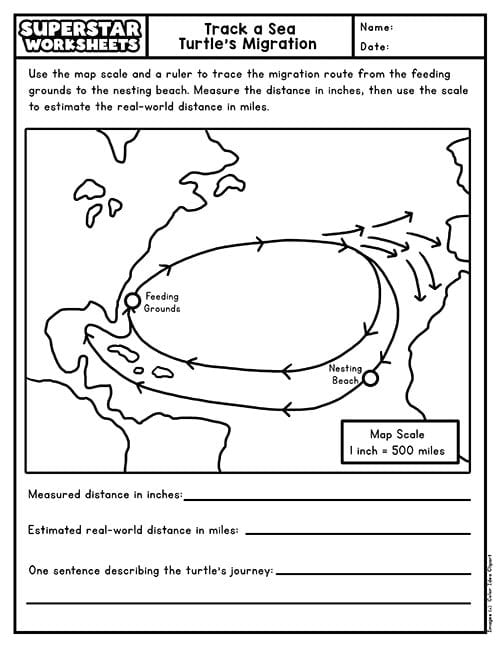
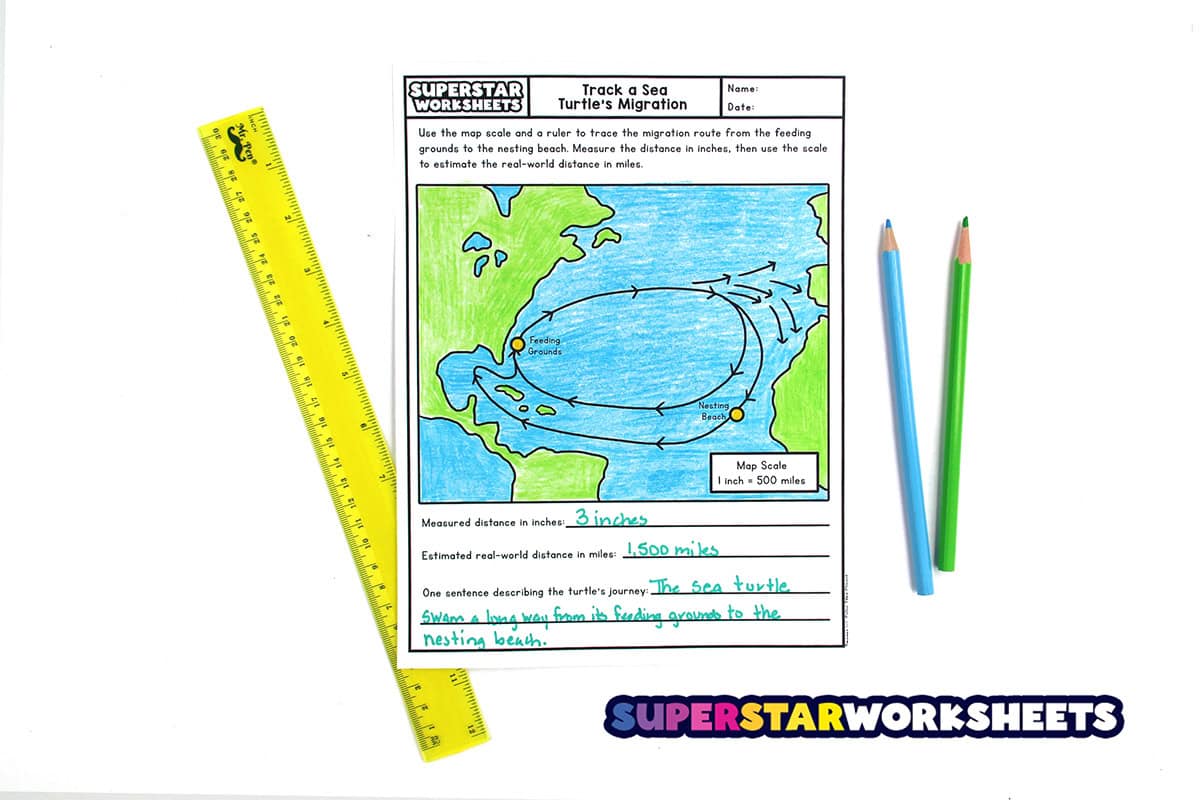
Track a Sea Turtle’s Migration Map Activity
Students trace a sea turtle’s migration route on a simplified world map and use the map scale to estimate the real distance traveled. This hands-on activity connects science and math skills in one engaging worksheet.
How Sea Turtles Navigate the Ocean
When introducing sea turtle migration to your students, it’s important to use language and vocabulary terms they are familiar with. Here are our recommended definitions for each term, along with how each one helps sea turtles find their way across the ocean.
migration: a long trip that animals take from one place to another, usually at the same time each year. Sea turtles migrate between the places where they eat and the beaches where they lay their eggs, and some swim thousands of miles to get there!
nesting beach: the sandy beach where a mother sea turtle digs a nest and lays her eggs. Amazingly, most mother sea turtles return to the very same beach where they hatched, even if it’s been 20 years or more!
ocean current: a giant stream of moving water that flows through the ocean like a river. Baby sea turtles ride ocean currents far out to sea, and adult turtles use them like a water highway to save energy on long trips!
navigation: finding your way from one place to another. Scientists believe sea turtles can sense Earth’s magnetic field, which works like a built-in compass to help them know which way to swim!
Sea Turtle Conservation Worksheets
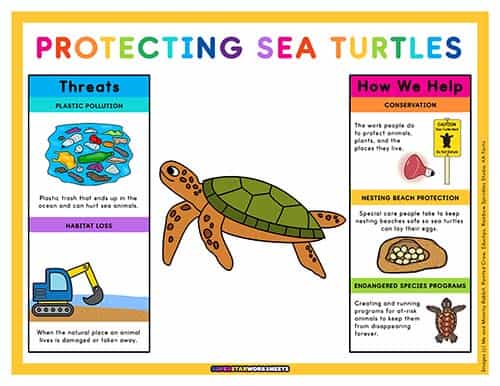
This chart introduces students to the threats sea turtles face, like plastic pollution and habitat loss, alongside the ways people are helping to protect them. It is a gentle, age-appropriate introduction to conservation.
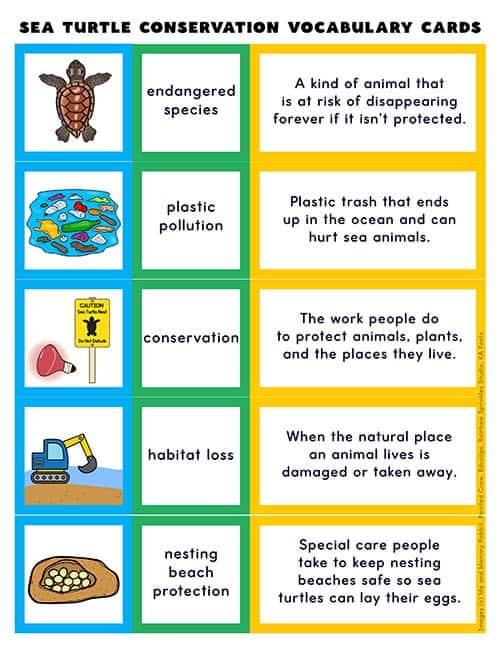
Sea Turtle Conservation Vocabulary Cards
These vocabulary cards cover key conservation terms including endangered species and habitat loss. They help students build the vocabulary needed to discuss real conservation topics.
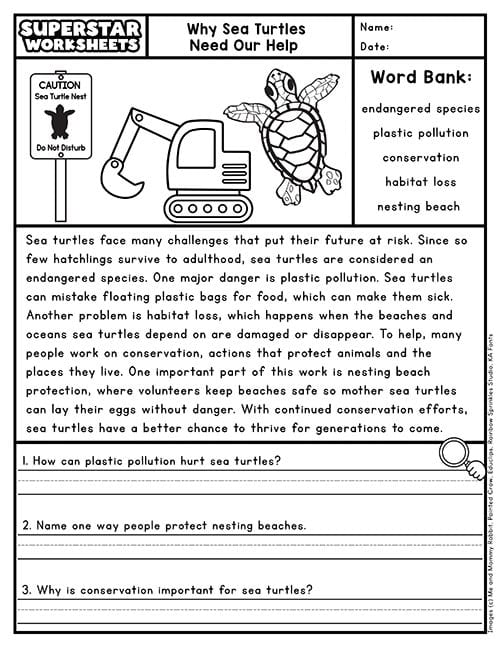
Why Sea Turtles Need Our Help Reading Passage
This nonfiction passage explains why sea turtles are considered an endangered species and what people are doing to help. A teacher copy with answer key is included.
Sea Turtle Conservation Poster Activity
Students choose one way people can help protect sea turtles and design their own awareness poster. This open ended activity encourages creativity alongside conservation learning.
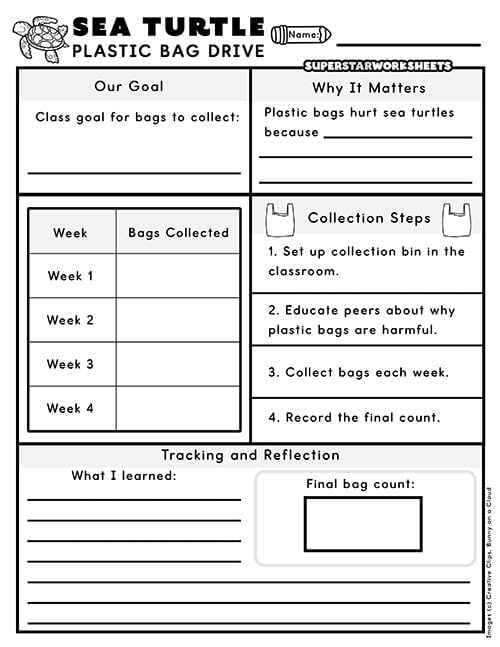
This classroom project sheet guides students through planning and tracking a plastic bag collection drive. It is a hands-on way to turn conservation learning into a real community action project.
Protecting Sea Turtles for the Future
When introducing sea turtle conservation to your students, it’s important to use language and vocabulary terms they are familiar with. Here are our recommended definitions for each term, along with how each one connects to the ways people are helping sea turtles today.
endangered species: a kind of plant or animal that is at risk of disappearing forever because there are so few of them left. Most kinds of sea turtles are endangered or threatened, which is why so many people are working hard to protect them!
plastic pollution: plastic trash like bags, bottles, and straws that ends up in the ocean. Floating plastic bags can look a lot like jellyfish, so sea turtles sometimes eat them by mistake. Recycling and using less plastic helps keep the ocean clean!
habitat loss: when an animal’s home is damaged or taken away. When beaches are covered with buildings or ocean plants and coral reefs are harmed, sea turtles have fewer safe places to nest, eat, and live!
conservation: protecting and taking care of nature and the animals that live in it. Thanks to conservation, some sea turtle populations are growing again, and kids can help too by picking up trash and spreading the word!
nesting beach protection: keeping beaches safe for mother sea turtles and their eggs. Volunteers mark nests so people don’t step on them, and beach towns turn off bright lights at night so hatchlings can find their way to the ocean!
Comment (1)
I love ALL of the information for sea turtles. As we begin our research project in 3rd grade, these will serve as a great model for students. Thank you so much!