
Free printable Sea Turtle Worksheets for elementary science classrooms. Download and print PDF sea turtle life cycle charts, parts diagrams, adaptations activities, migration maps, conservation printables, and fun fact pages for young learners. These worksheets help kids build reading comprehension, vocabulary, and scientific observation skills while exploring how sea turtles grow, survive, and travel across the ocean. Perfect for classroom science centers, homeschool lessons, or small group activities, this collection covers everything from labeling a sea turtle’s body parts to understanding real conservation efforts to protecting these incredible animals.
Sea Turtle Fun Facts and Research Printables
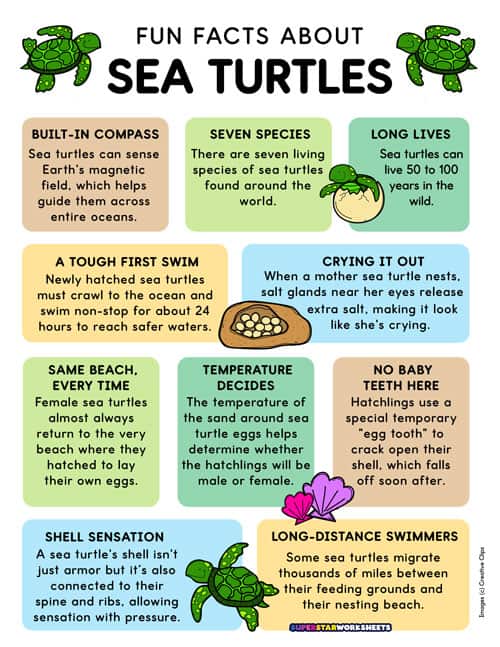
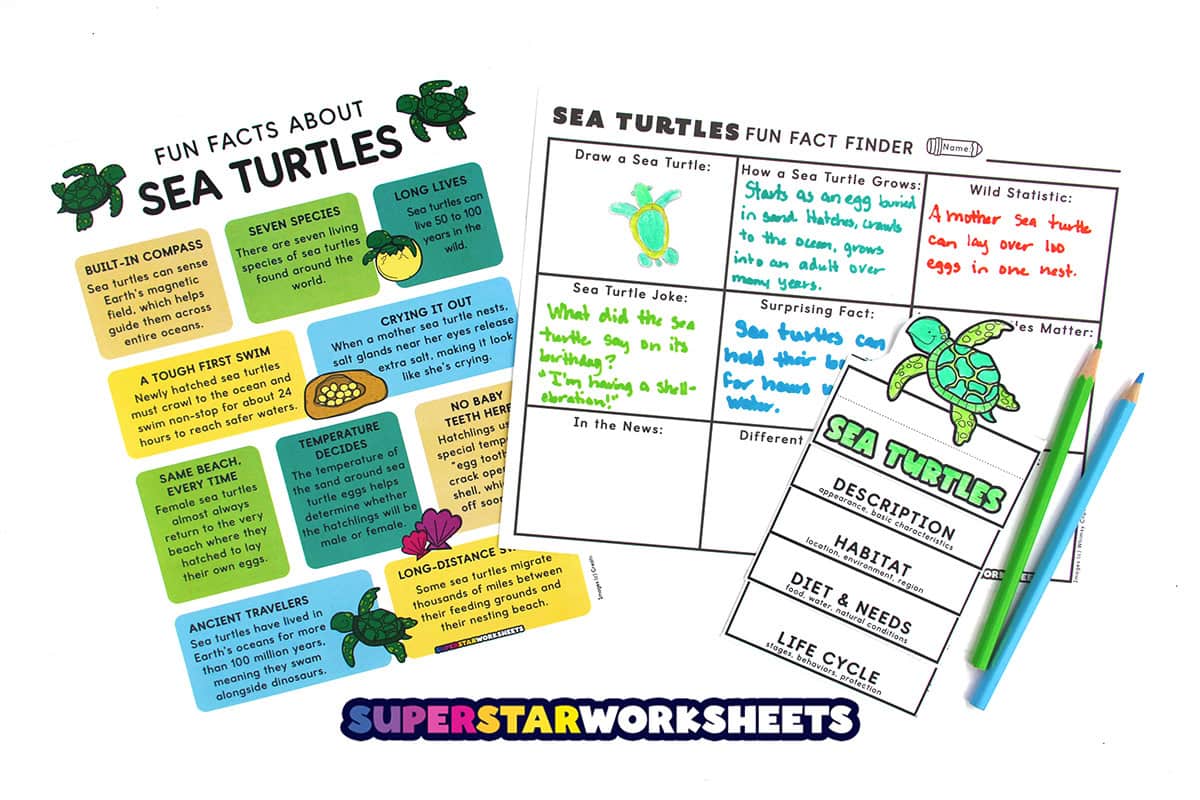
This colorful sea turtle facts chart is packed with amazing information kids will love sharing with friends and family. Perfect for a science bulletin board or reading corner, it makes a great reference for fun facts about sea turtles all year long.
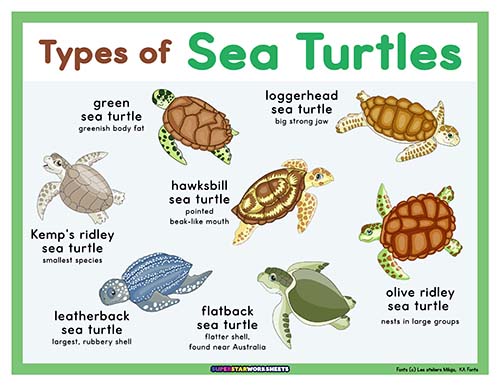
Introduce students to all seven species of sea turtles with this engaging picture and label poster. Each turtle includes one fun identifying detail, helping young learners compare and recognize different sea turtles by sight.
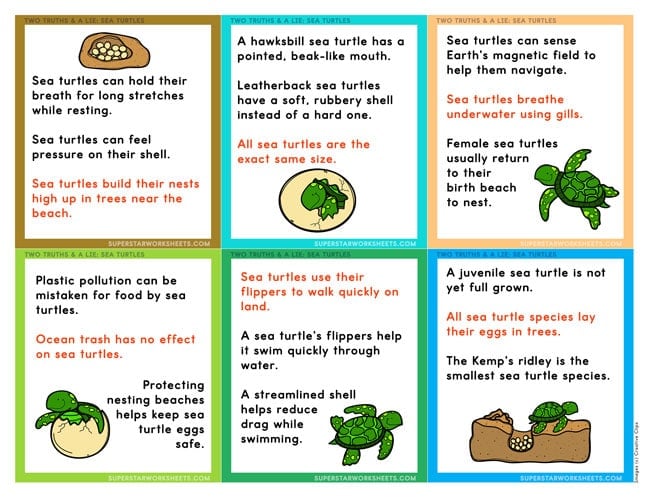
Two Truths and a Lie: Sea Turtles
Challenge students with this fun sea turtle facts game featuring six sets of statements. Teachers read 3 statements out loud. Kids use their research and critical thinking skills to recognize which statement in each set is the lie.
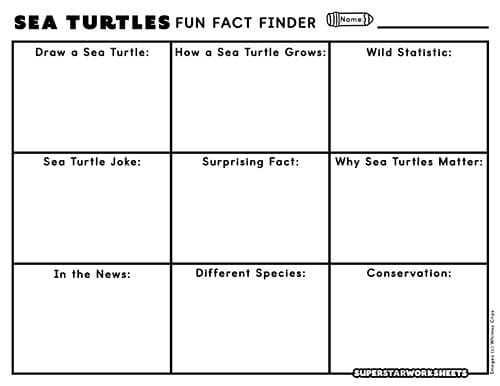
This research-based scavenger hunt gets kids digging for sea turtle facts, jokes, and surprising statistics. It is a fun way to build research skills while learning about these fascinating ocean animals.
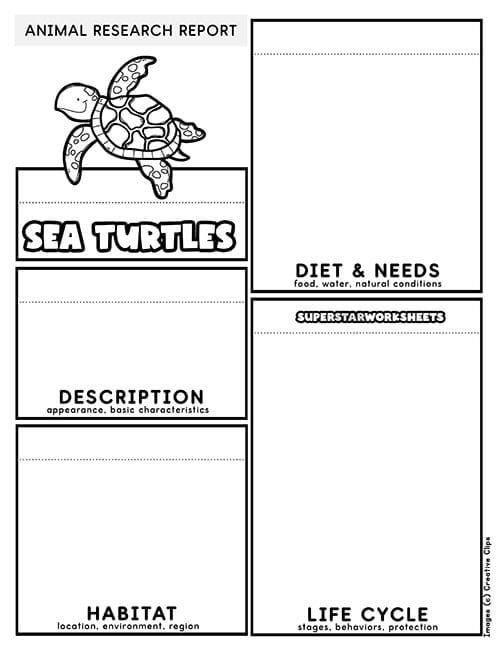
Students combine everything they have learned into this simple layered flip book, covering description, habitat, diet, and life cycle. It is a great culminating project for a sea turtle research unit.
Teaching Sea Turtle Facts
The Fun Facts chart and Species chart work well together as an introduction to a sea turtle unit or as a stand-alone reading center. Start by reading the Fun Facts chart aloud as a class, pausing to let students react to the most surprising facts. Then bring out the Species chart and have students pick a favorite species to research further using the Fact Finder or Research Report. Displaying both charts side by side gives students a quick visual reference to return to throughout the unit.
Sea Turtle Life Cycle Printables
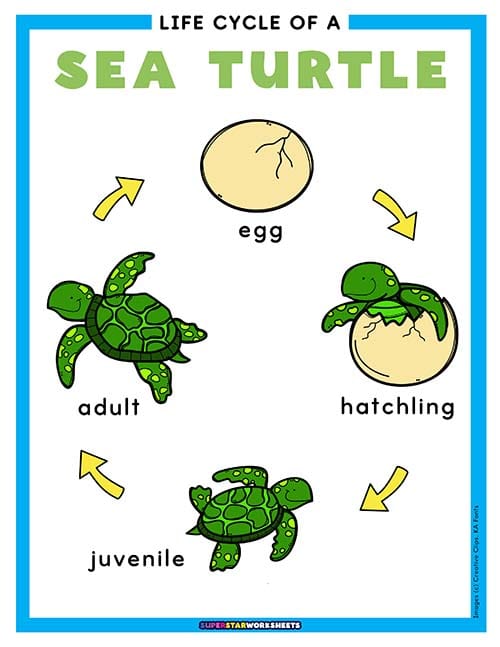
Download and print this full-color PDF poster chart showing the four stages of a sea turtle life cycle. This anchor chart is a wonderful classroom reference tool or a helpful visual for science journals. For more FREE printable turtle worksheets, check out our How to Draw a Turtle printables!
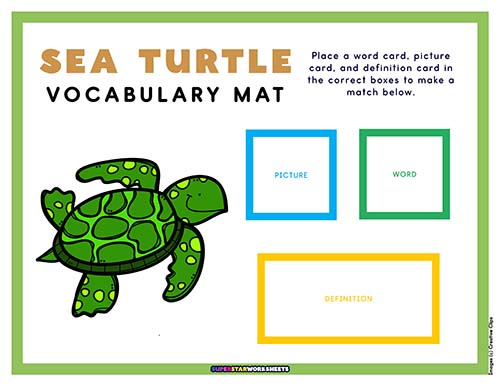
Students practice matching picture, word, and definition cards from any of the sea turtle arcs on this reusable learning mat. It works well as a rotating science center throughout the entire sea turtle unit.
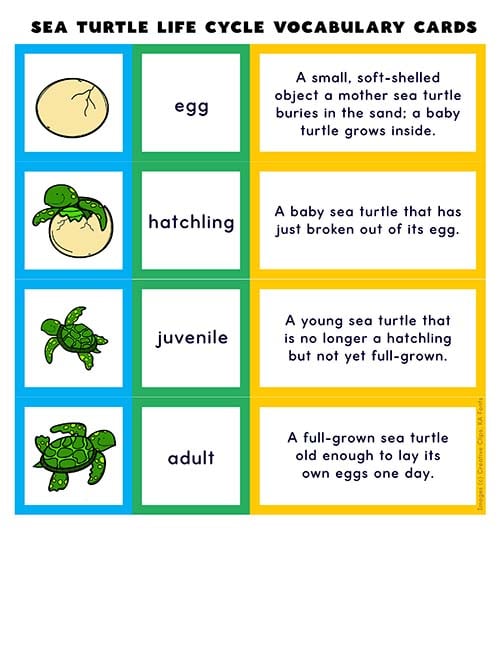
Sea Turtle Life Cycle Vocabulary Cards
Students match the correct picture to each stage of the sea turtle life cycle along with its vocabulary term and definition. This is a great resource for learning centers, memory match, or small group review.
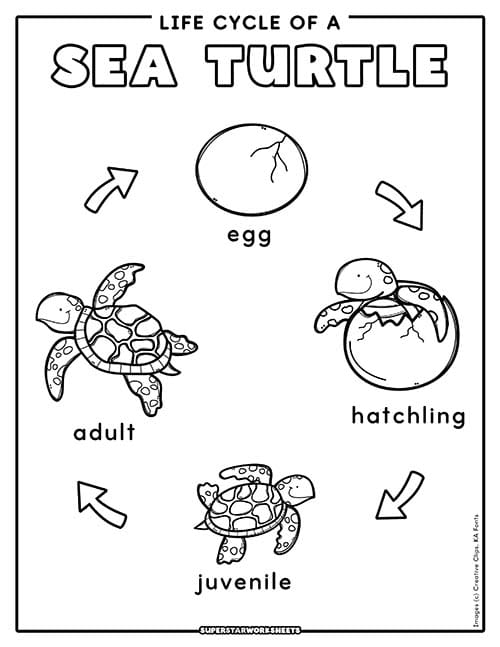
Sea Turtle Life Cycle Coloring Page
This black and white life cycle chart lets students color each stage from egg to adult. It pairs nicely with the full color chart as a hands-on companion activity.
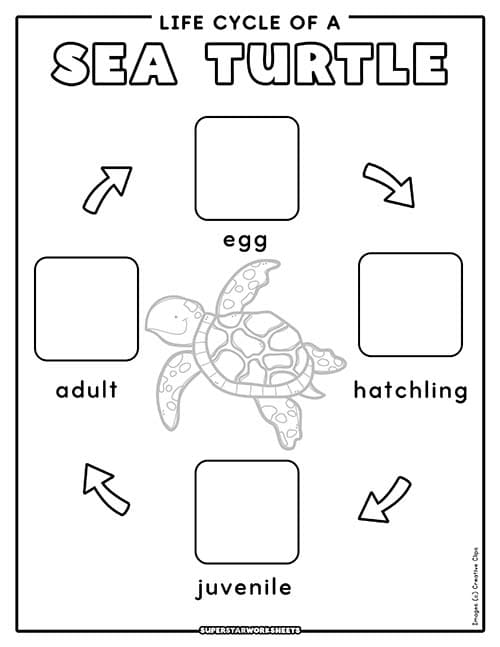
Sea Turtle Life Cycle Cut & Paste Worksheet
Students cut out each stage of the sea turtle life cycle and paste it into the correct order on this printable worksheet. It is a hands-on way to reinforce sequencing skills while learning the life cycle stages.
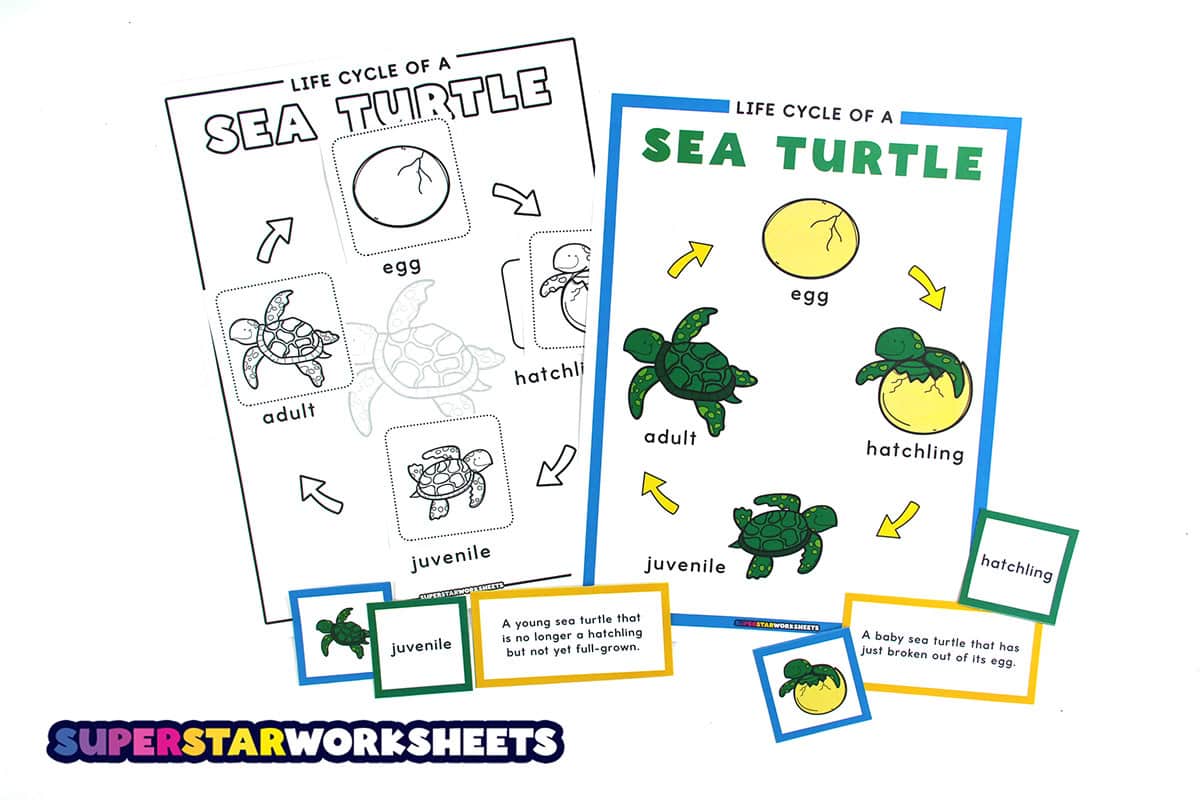
Teaching the Life Cycle of a Sea Turtle
Introduce the life cycle chart first so students see the full picture before breaking it into individual stages. Many teachers pair this topic with a discussion of nesting beaches, since that is where the cycle both begins and ends. The cut-and-paste worksheet works well as an independent check for understanding after a whole-group lesson.
Vocabulary Bank – egg, hatchling, juvenile, adult
Parts of a Sea Turtle Worksheets
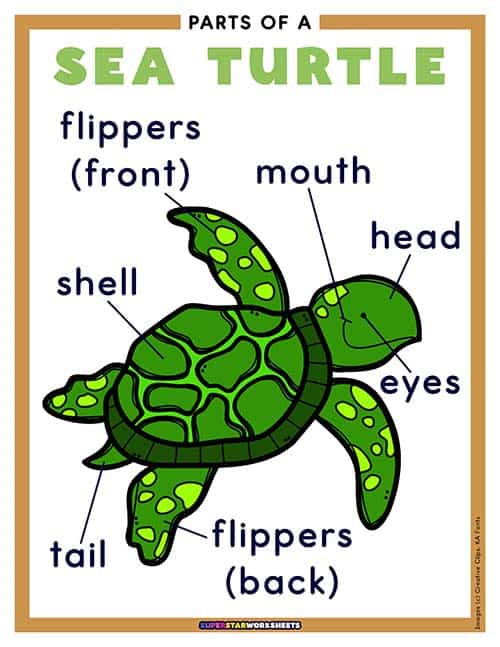
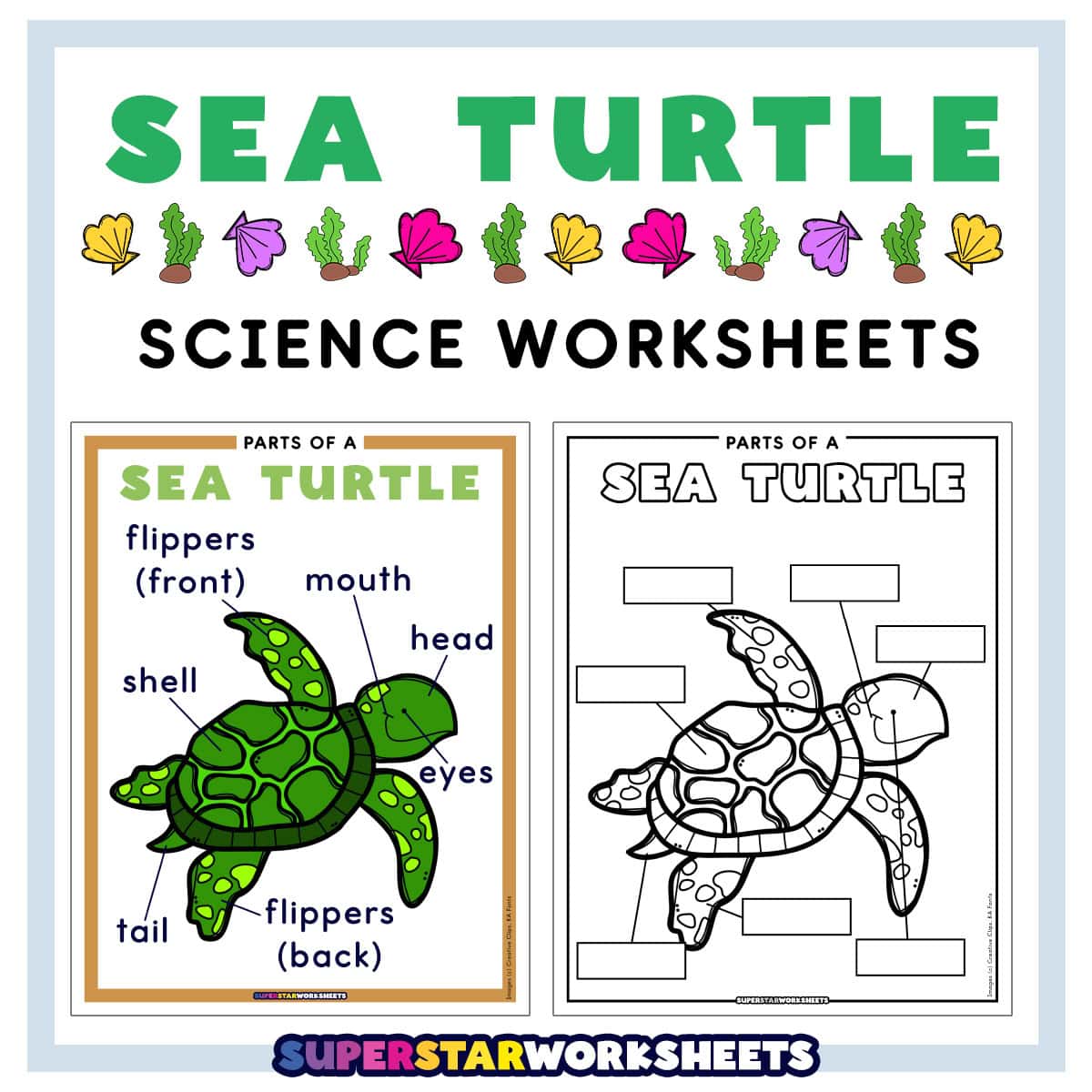
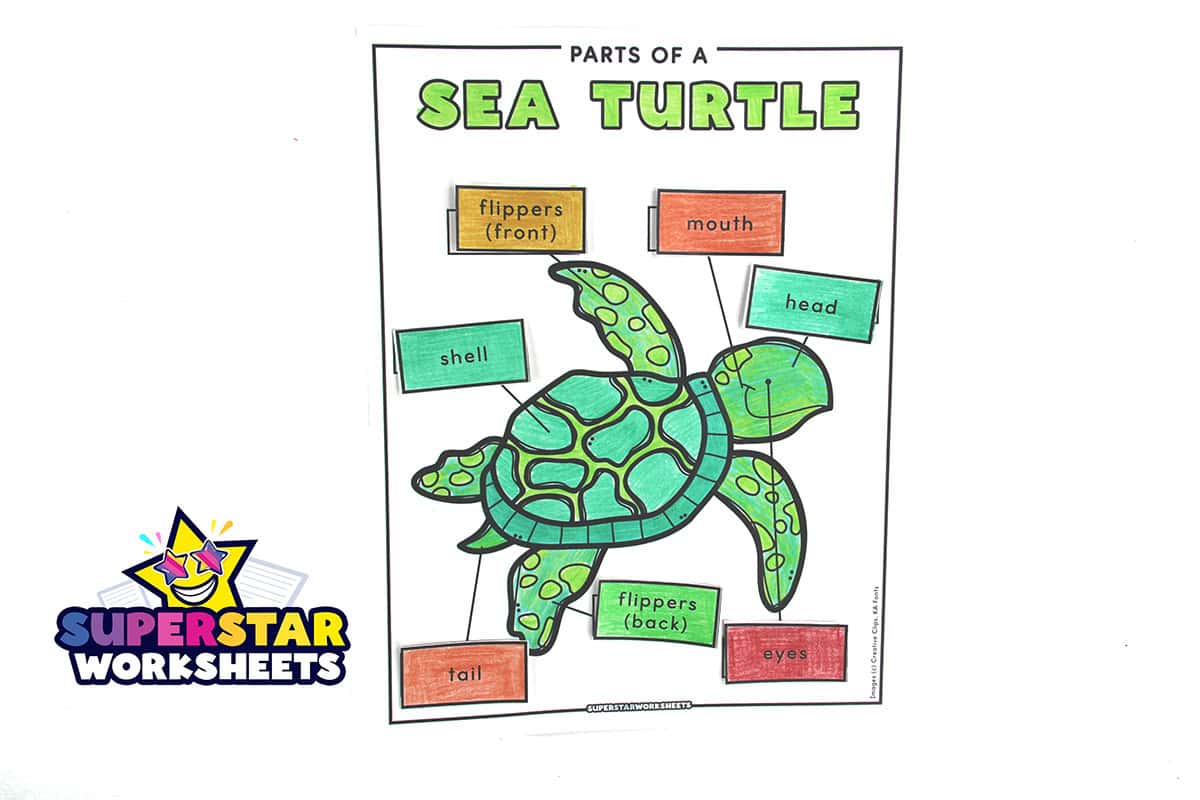
This full-color labeled diagram introduces young learners to the external parts of a sea turtle, including its shell, flippers, and tail. It makes an excellent anchor chart for an early elementary science unit.
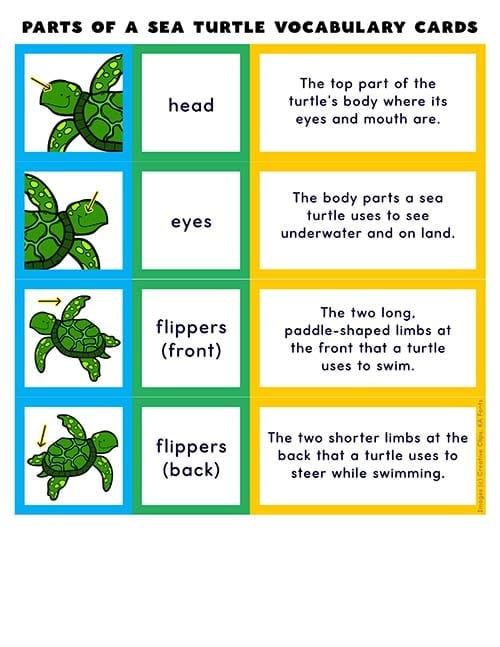
Parts of a Sea Turtle Vocabulary Cards
These picture, word, and definition cards help students learn the names and functions of each sea turtle body part. Pair them with the Vocabulary Mat for an interactive matching activity.
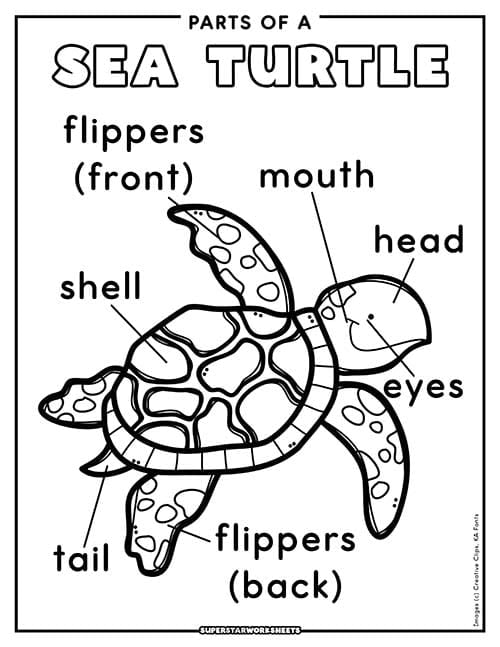
Parts of a Sea Turtle Coloring Page
Young learners can color and label this simple black-and-white diagram of a sea turtle. It is a great low-prep activity for preschool and kindergarten science centers.
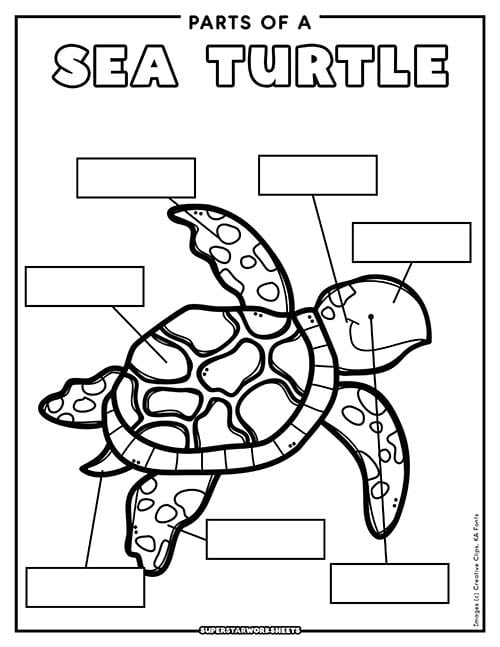
Parts of a Sea Turtle Cut & Paste Worksheet
Students cut out labels and paste each one onto the correct body part of a sea turtle. This activity builds fine motor skills alongside early reading and labeling practice. For more FREE printables, take a look at our Earth Day Worksheets!
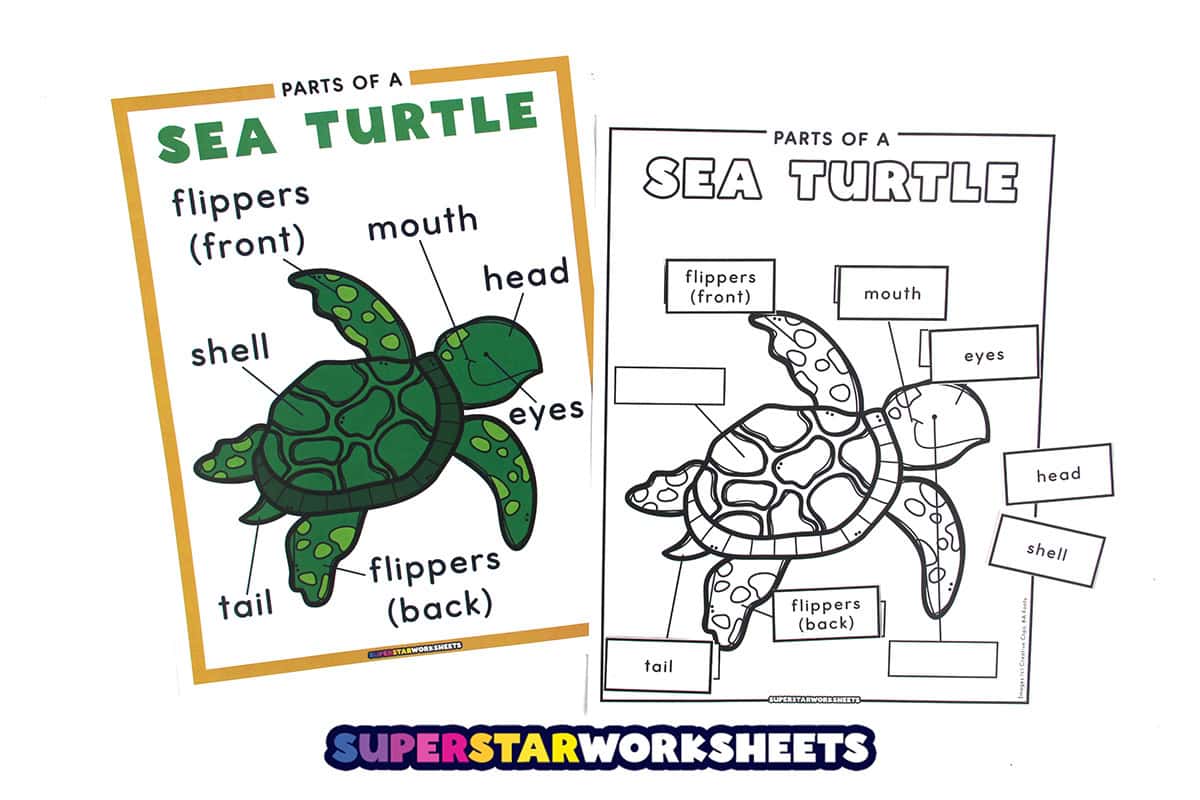
Teaching the Parts of a Sea Turtle
This topic works well as the very first lesson in a sea turtle unit, since naming the body parts gives students the vocabulary they will use throughout the rest of the unit. Start with the full color chart, then move to the coloring page or cut-and-paste worksheet for independent practice. Encourage students to point to each part on a stuffed animal or picture book as an extra hands-on connection.
Vocabulary Bank – shell, head, eyes, flippers (front), flippers (back), tail, mouth
Sea Turtle Adaptations Worksheets
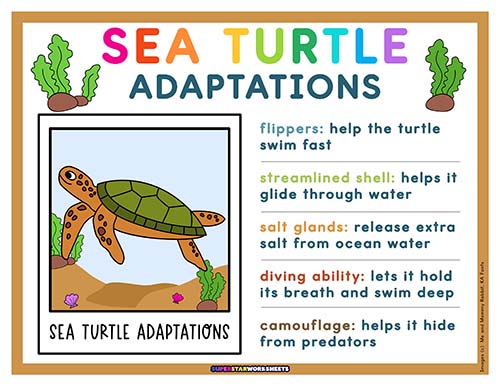
This chart highlights five ways a sea turtle’s body helps it survive in the ocean, from its streamlined shell to its salt glands. It gives students a clear, visual introduction to the idea of adaptations.
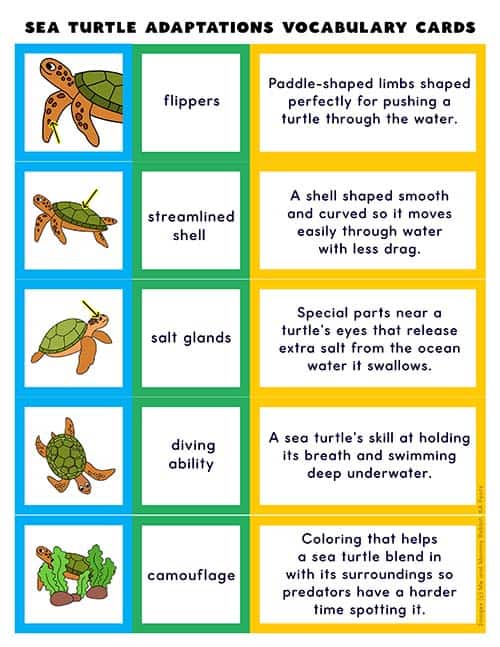
Sea Turtle Adaptations Vocabulary Cards
These vocabulary cards pair each adaptation with a picture and simple definition, helping students connect body structure to function. They work well alongside the Adaptations Chart for a guided lesson.
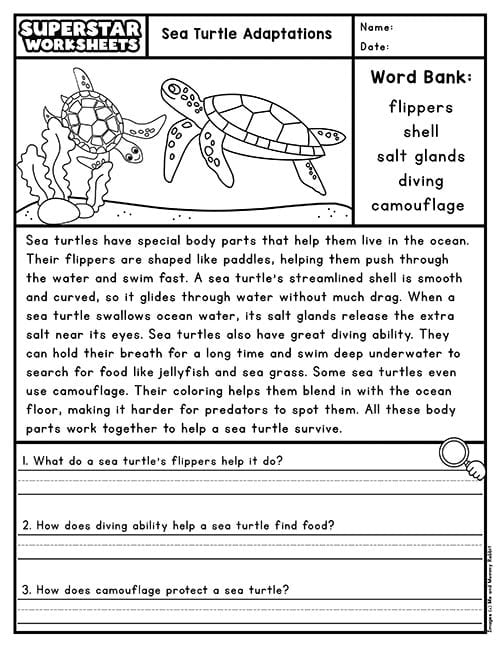
How Sea Turtles Survive in the Ocean Reading Passage
Students read a short nonfiction passage about sea turtle adaptations and answer comprehension questions. A teacher copy with answer key is included for easy grading.
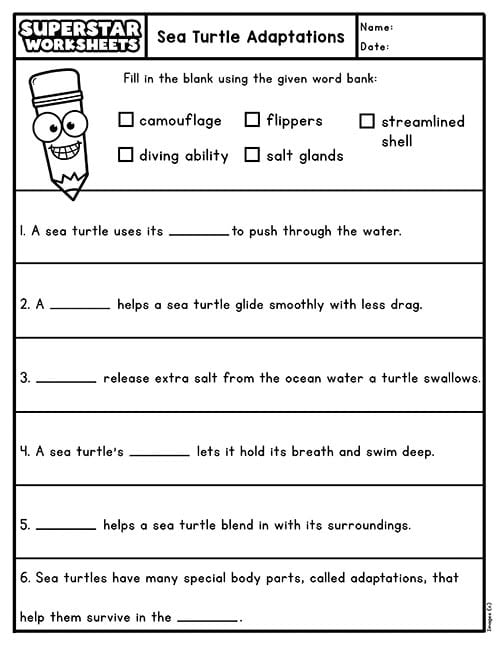
Sea Turtle Adaptations Fill in the Blank
This fill-in-the-blank worksheet reinforces adaptation vocabulary using context clues. A teacher copy with answer key is included.
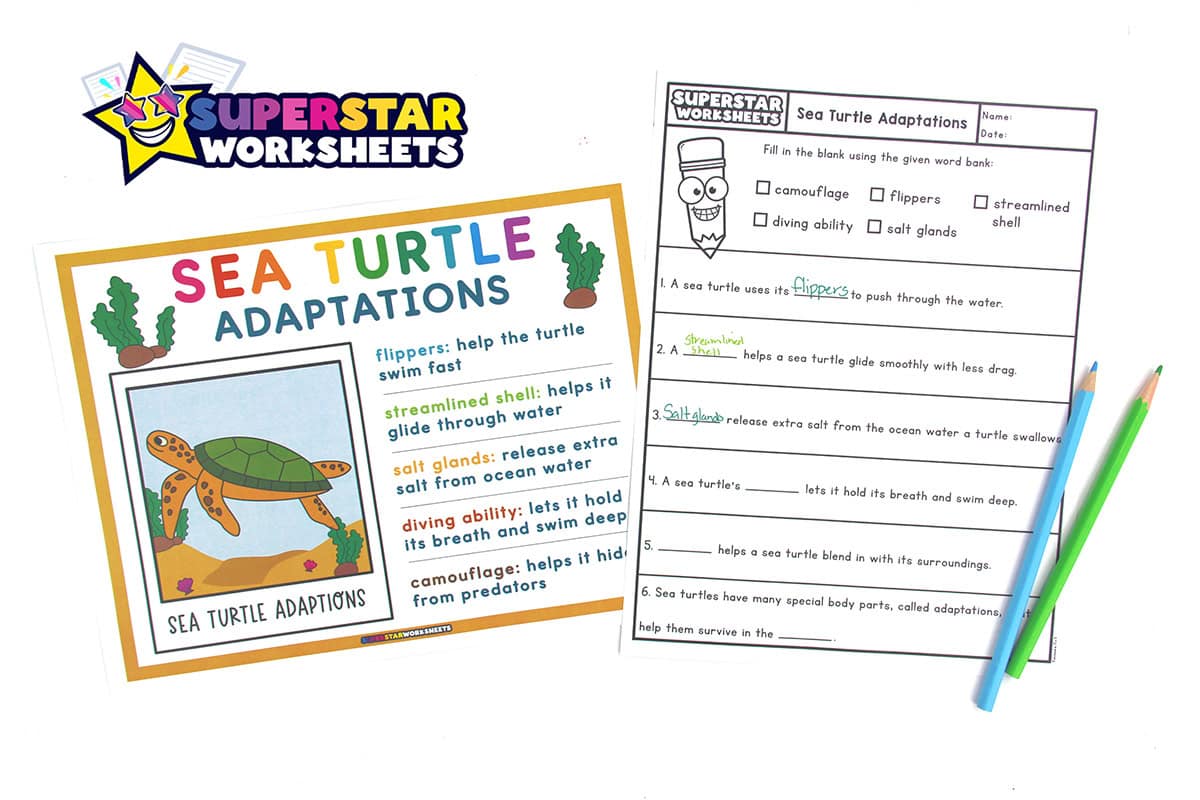
How Sea Turtles Survive in the Ocean
Adaptations can be a tricky concept for elementary students, so it helps to connect each one back to something familiar. For example, compare a sea turtle’s streamlined shell to how a swimmer wears a smooth cap and goggles to move faster through water. The reading passage and fill-in-the-blank worksheet work well as a two-day sequence, with the passage introducing the vocabulary and the fill-in-the-blank reinforcing it the next day.
Vocabulary Bank – flippers, streamlined shell, salt glands, diving ability, camouflage
Sea Turtle Migration & Navigation Worksheets
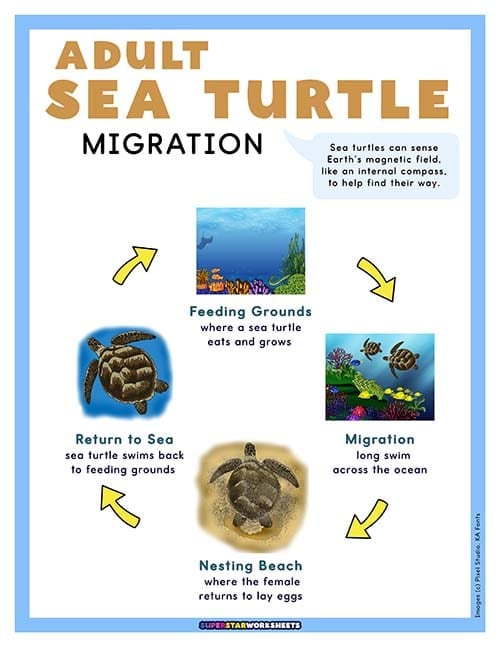
This chart walks students through the migration journey of a sea turtle, from feeding grounds to nesting beach and back again. It introduces the idea that sea turtles can sense Earth’s magnetic field to help them navigate.
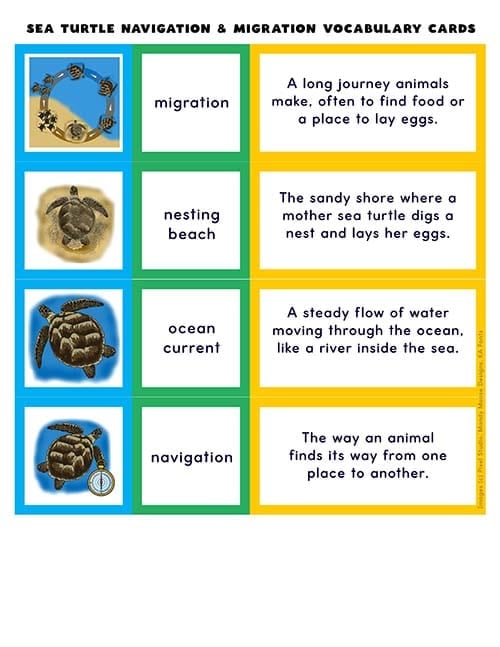
Sea Turtle Navigation & Migration Vocabulary Cards
These vocabulary cards cover key migration terms like ocean current and navigation, each paired with a picture and definition. They give students the vocabulary they need before tackling the migration map activity.
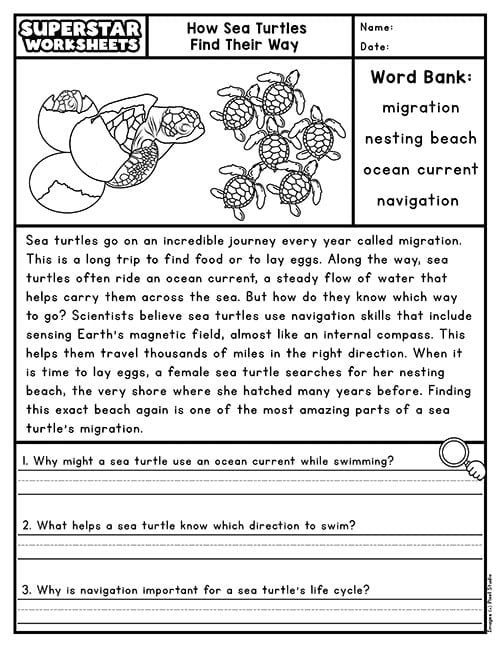
How Sea Turtles Find Their Way Reading Passage
This nonfiction passage explains how sea turtles migrate and navigate using ocean currents and their senses. A teacher copy with answer key is included.
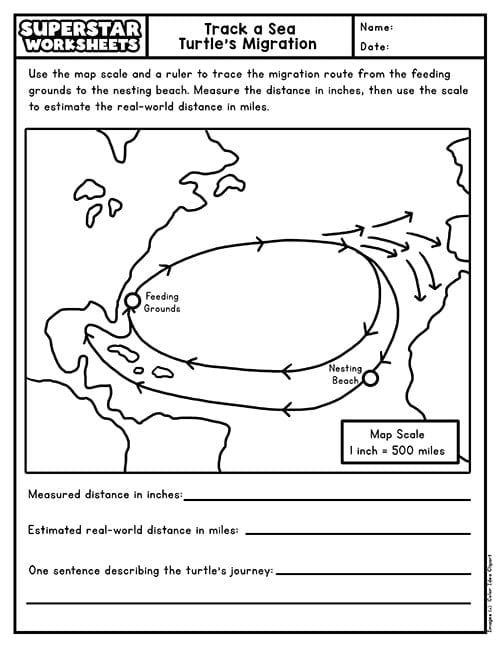
Track a Sea Turtle’s Migration Map Activity
Students trace a sea turtle’s migration route on a simplified world map and use the map scale to estimate the real distance traveled. This hands-on activity connects science and math skills in one engaging worksheet.
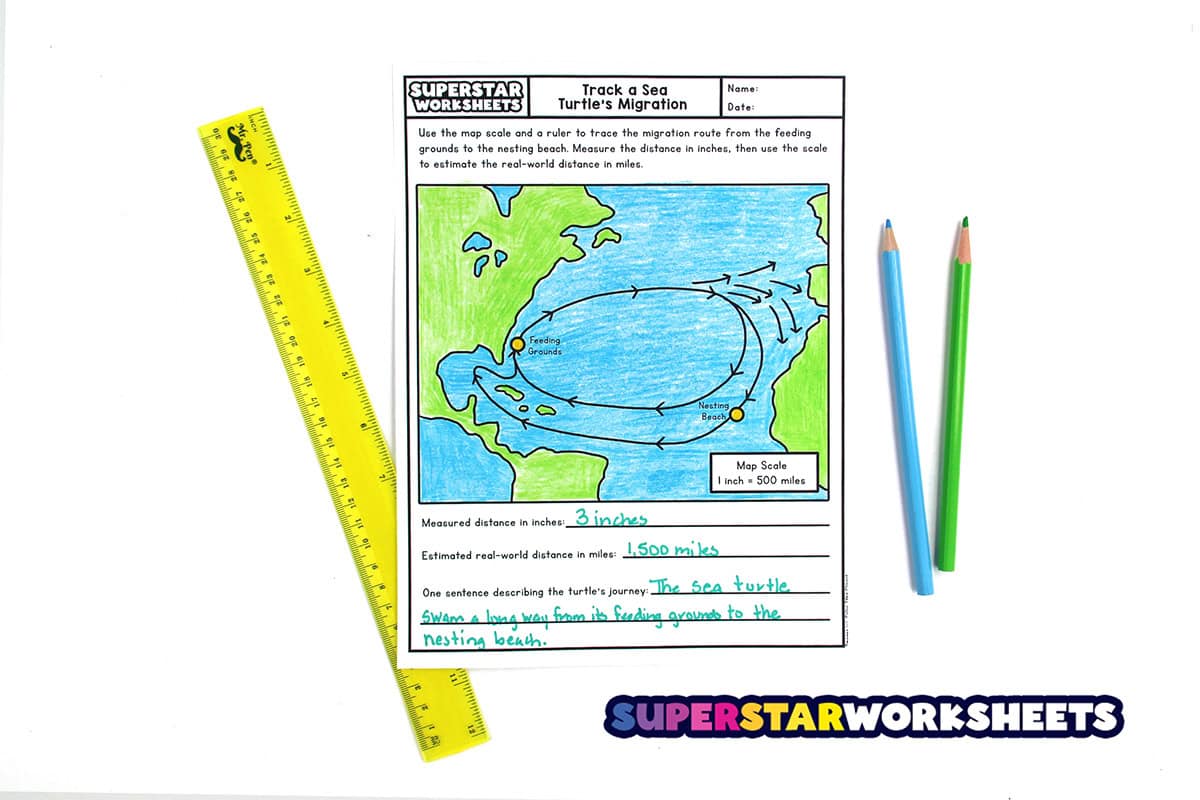
How Sea Turtles Navigate the Ocean
This topic naturally extends the life cycle and adaptations lessons, since migration is closely tied to nesting behavior. The map activity works especially well for upper elementary students who are ready to combine measurement skills with a science topic. Consider pairing this lesson with a real-world map or globe so students can see just how far a sea turtle’s journey really is.
Vocabulary Bank – migration, nesting beach, ocean current, navigation
Sea Turtle Conservation Worksheets
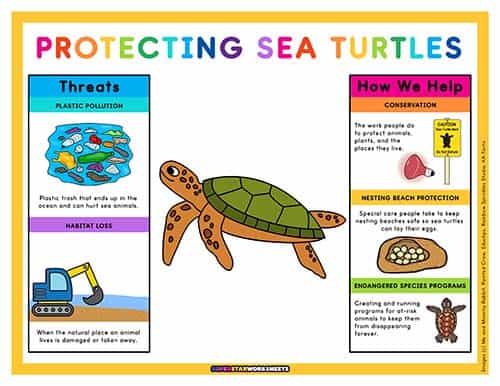
This chart introduces students to the threats sea turtles face, like plastic pollution and habitat loss, alongside the ways people are helping to protect them. It is a gentle, age-appropriate introduction to conservation.
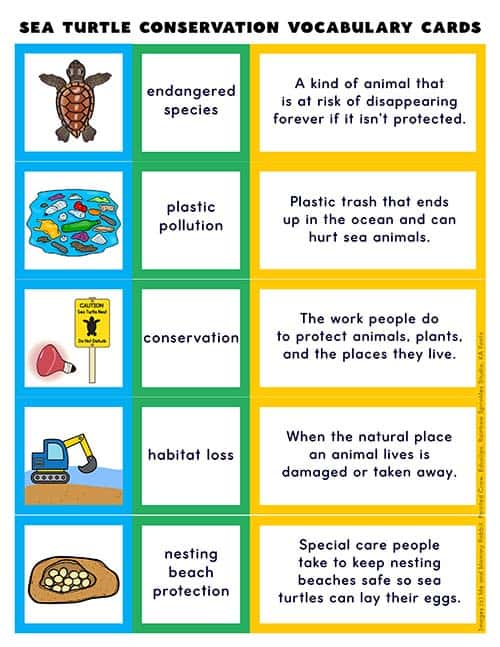
Sea Turtle Conservation Vocabulary Cards
These vocabulary cards cover key conservation terms including endangered species and habitat loss. They help students build the vocabulary needed to discuss real conservation topics.
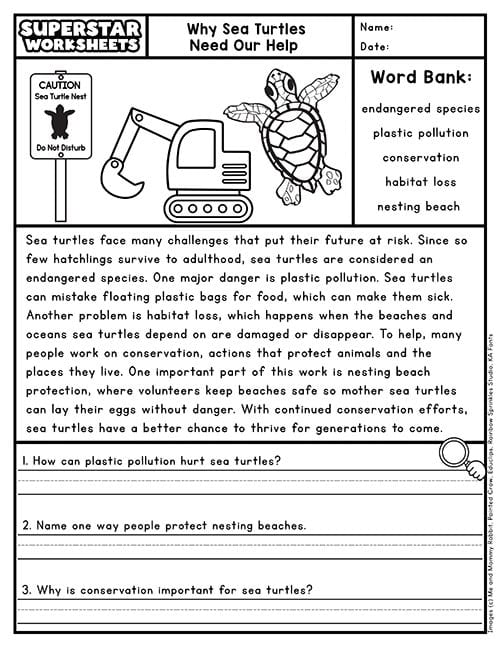
Why Sea Turtles Need Our Help Reading Passage
This nonfiction passage explains why sea turtles are considered an endangered species and what people are doing to help. A teacher copy with answer key is included.
Sea Turtle Conservation Poster Activity
Students choose one way people can help protect sea turtles and design their own awareness poster. This open ended activity encourages creativity alongside conservation learning.
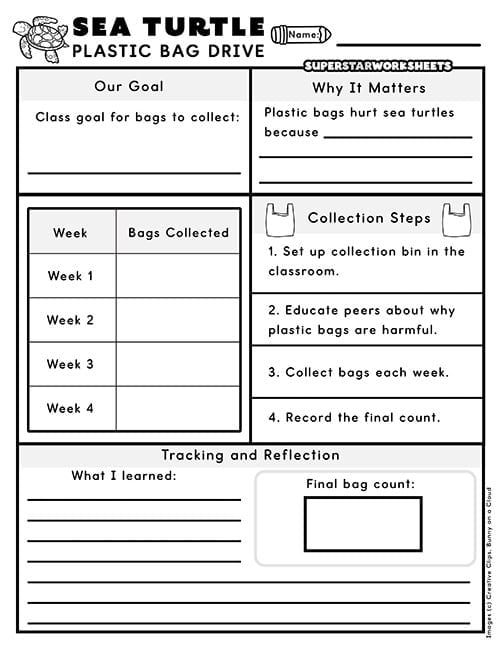
This classroom project sheet guides students through planning and tracking a plastic bag collection drive. It is a hands-on way to turn conservation learning into a real community action project.
Protecting Sea Turtles for the Future
Conservation topics can bring up big feelings, so keep the tone hopeful and focused on what students themselves can do. The poster activity and plastic bag drive both work well as a culminating project at the end of a sea turtle unit, giving students a way to apply everything they have learned. Consider connecting this lesson to a local beach cleanup or recycling initiative if one is available in your area.
Vocabulary Bank – endangered species, plastic pollution, conservation, habitat loss, nesting beach protection
Leave a Reply