
Free Printable Circulatory System Worksheets help kids explore how the heart, blood vessels, and blood work together to keep the body going. Download and print PDF diagrams, labeling worksheets, blood flow charts, fill-in-the-blank pages, quizzes, puzzles, and hands-on research activities that cover the parts and functions of the circulatory system. These science printables build body system vocabulary and help young learners trace how blood carries oxygen and nutrients through pulmonary and systemic circulation. Teachers and parents can use them for middle school science lessons, homeschool units, science centers, and small group review.
Circulatory System Worksheets
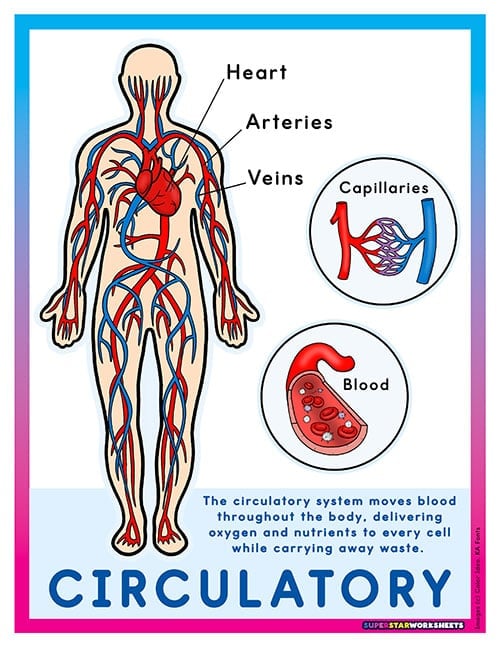
This colorful circulatory system diagram shows the heart, arteries in red, and veins in blue across the whole body, with close-up views of capillaries and blood. Major vessels like the aorta, vena cava, and carotid artery are clearly labeled, making it a strong anchor chart for any circulatory system unit.
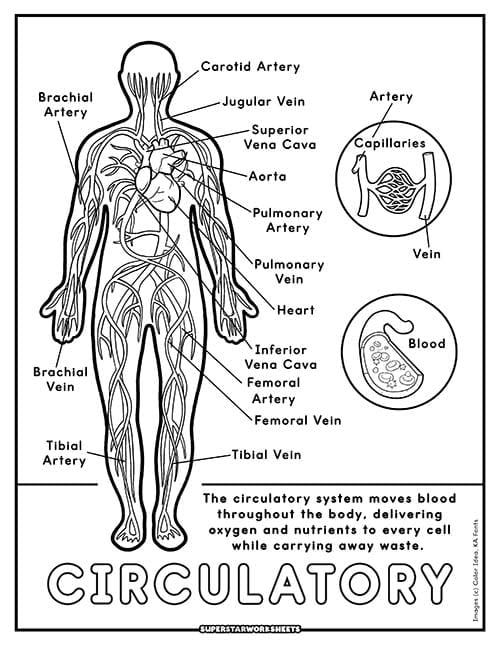
Circulatory System Diagram Coloring Page
Students can color this black and white circulatory system diagram while reviewing every labeled vessel and organ. Coloring arteries red and veins blue reinforces how blood moves away from and back to the heart.
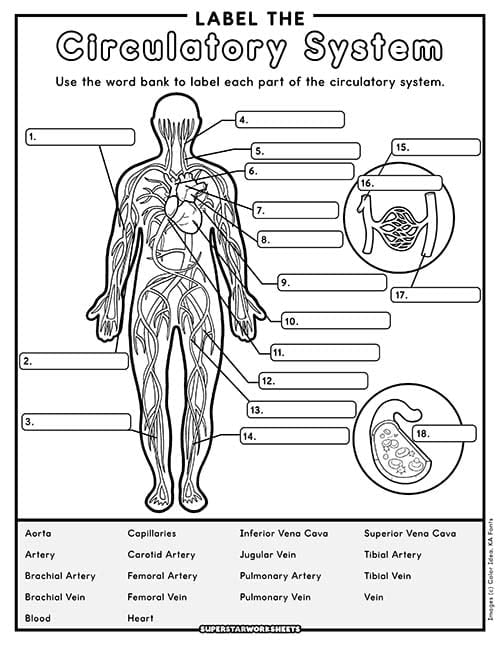
Label the Circulatory System Worksheet
Kids use a word bank to label the parts of the circulatory system on a full body diagram. This labeling worksheet builds confidence with named blood vessels such as the femoral artery, brachial vein, and pulmonary artery.
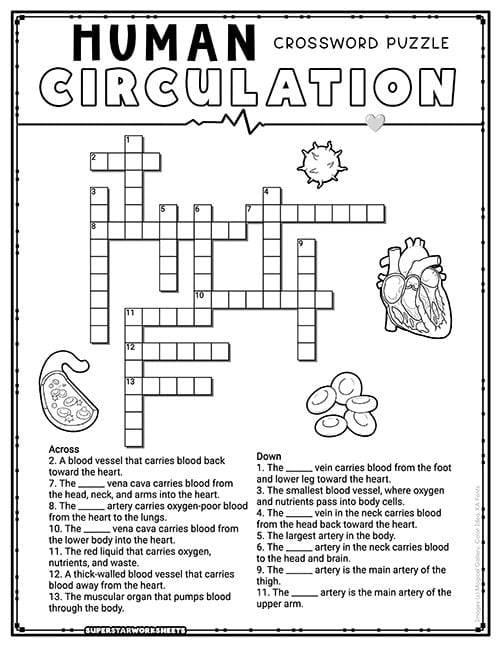
Circulatory System Crossword Puzzle
Clue by clue, students recall key circulatory system vocabulary like artery, capillary, aorta, and jugular. The answer key makes this crossword easy to use for independent review or early finisher work.
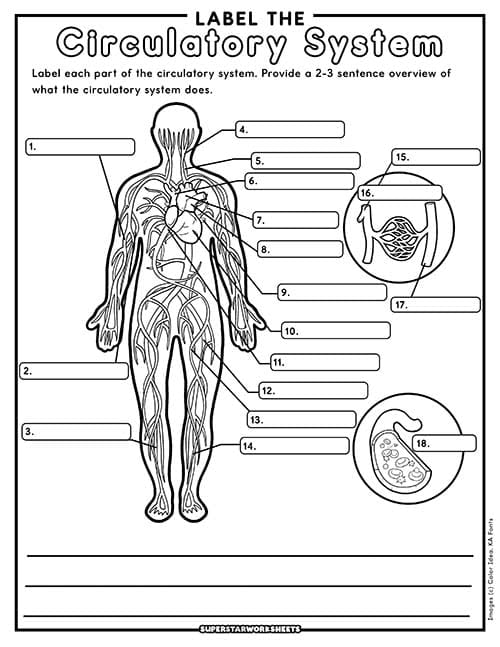
Circulatory System Labeling Quiz
Without a word bank, students label the circulatory system from memory and write a short overview of what the system does. This quiz is a great way to check understanding of circulatory system structure before moving on.
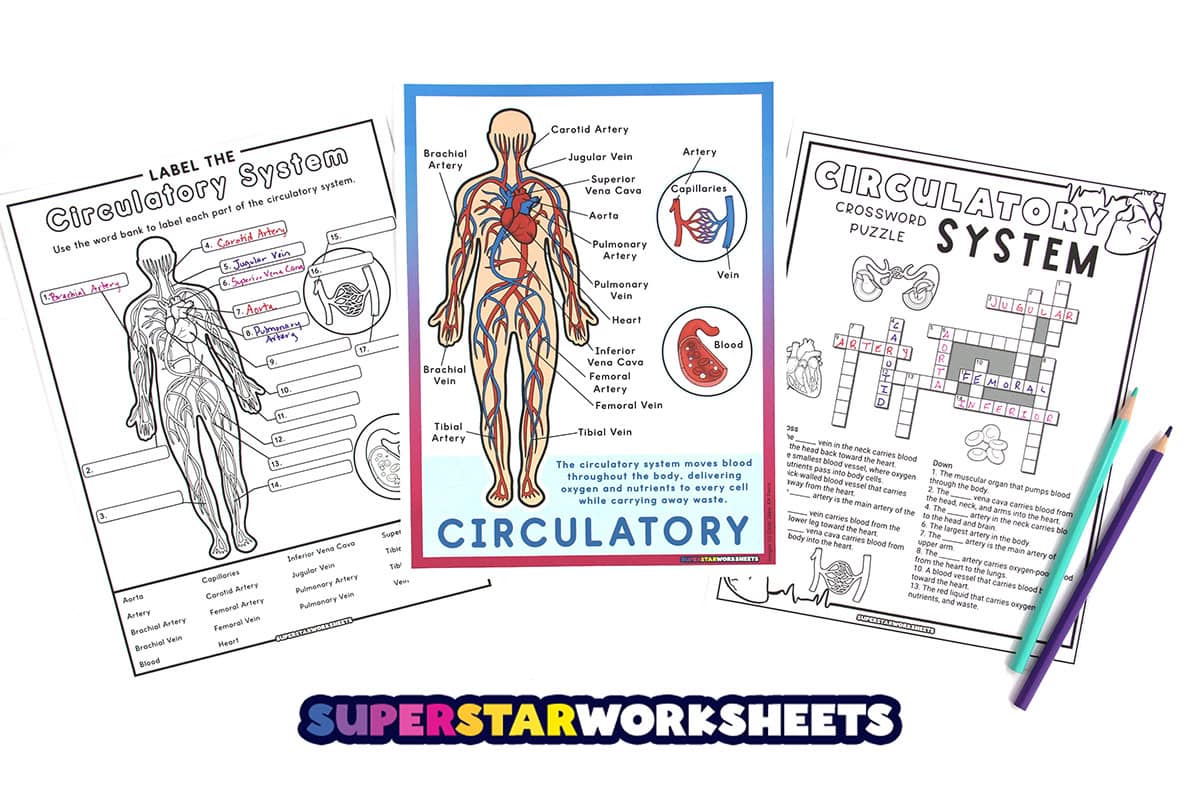
Teaching the Parts of the Circulatory System
Start with the color circulatory system diagram and have students trace the path from the heart out through the arteries and back through the veins. Point out that the vessel names often tell you where they are, like the femoral artery in the thigh or the jugular vein in the neck. Use the black and white version as a coloring review, then move to the labeling worksheet and crossword for practice. Save the labeling quiz for the end of the lesson as a quick check.
Vocabulary Bank: Circulatory System, Heart, Blood, Blood Vessel, Artery, Vein, Capillary, Aorta, Superior Vena Cava, Inferior Vena Cava, Pulmonary Artery, Pulmonary Vein, Carotid Artery, Jugular Vein, Brachial Artery, Brachial Vein, Femoral Artery, Femoral Vein, Tibial Artery, Tibial Vein
Functions of the Circulatory System Worksheets
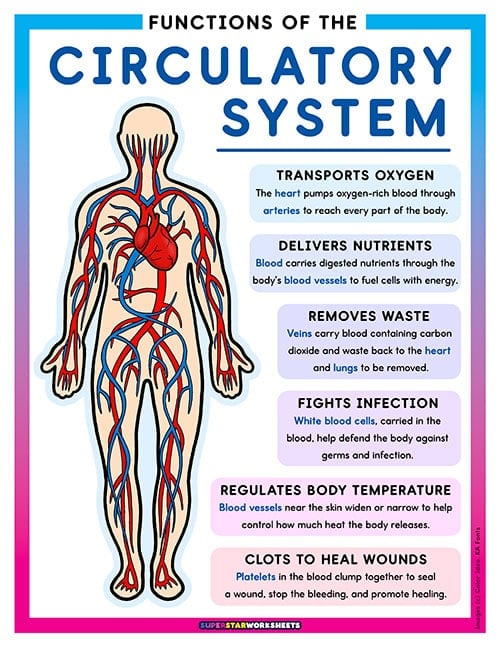
Functions of the Circulatory System Chart
This functions of the circulatory system chart explains how the body transports oxygen, delivers nutrients, removes waste, fights infection, regulates body temperature, and clots to heal wounds. Key body parts are highlighted in each box so students can connect every job to the structure that does it.
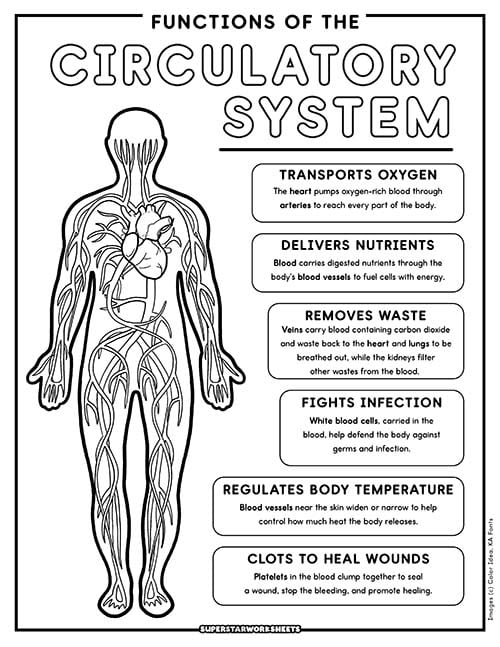
Functions of the Circulatory System Coloring Page
The black and white version of the circulatory system functions chart keeps all of the text in place for coloring and note taking. It works well in science notebooks or as a take-home reference.
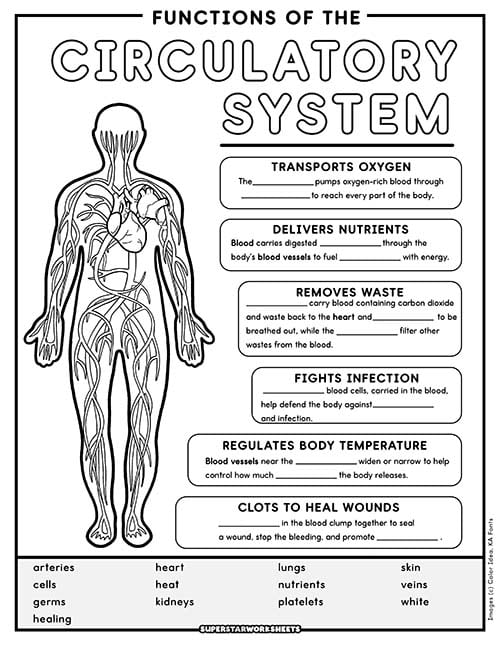
Circulatory System Functions Fill in the Blank
Students complete each function description with words like heart, platelets, and kidneys. This fill-in-the-blank worksheet helps kids explain the jobs of the circulatory system in their own reading and writing.
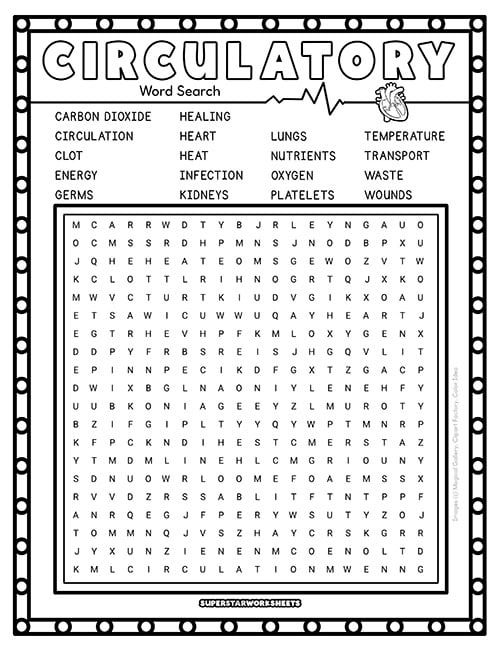
Circulatory System Word Search
Hidden in this circulatory system word search are function words such as oxygen, nutrients, infection, and temperature. It makes a fun vocabulary warm-up, and the answer key is included.
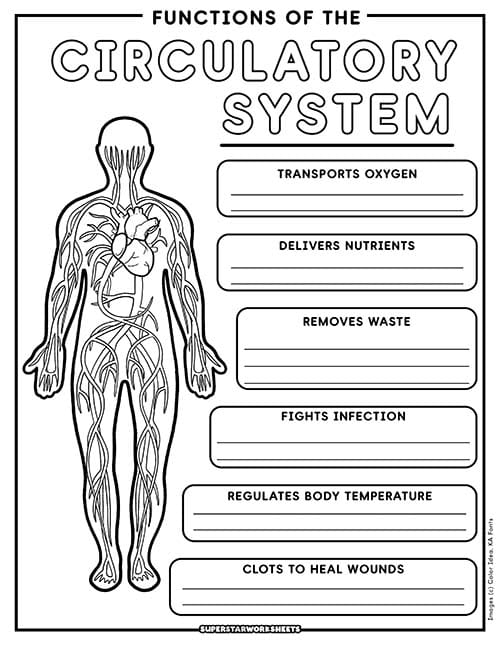
Functions of the Circulatory System Quiz
With only the function headings as a guide, students write how the circulatory system carries out each job. This quiz asks kids to explain, not just recall, the functions of the circulatory system.
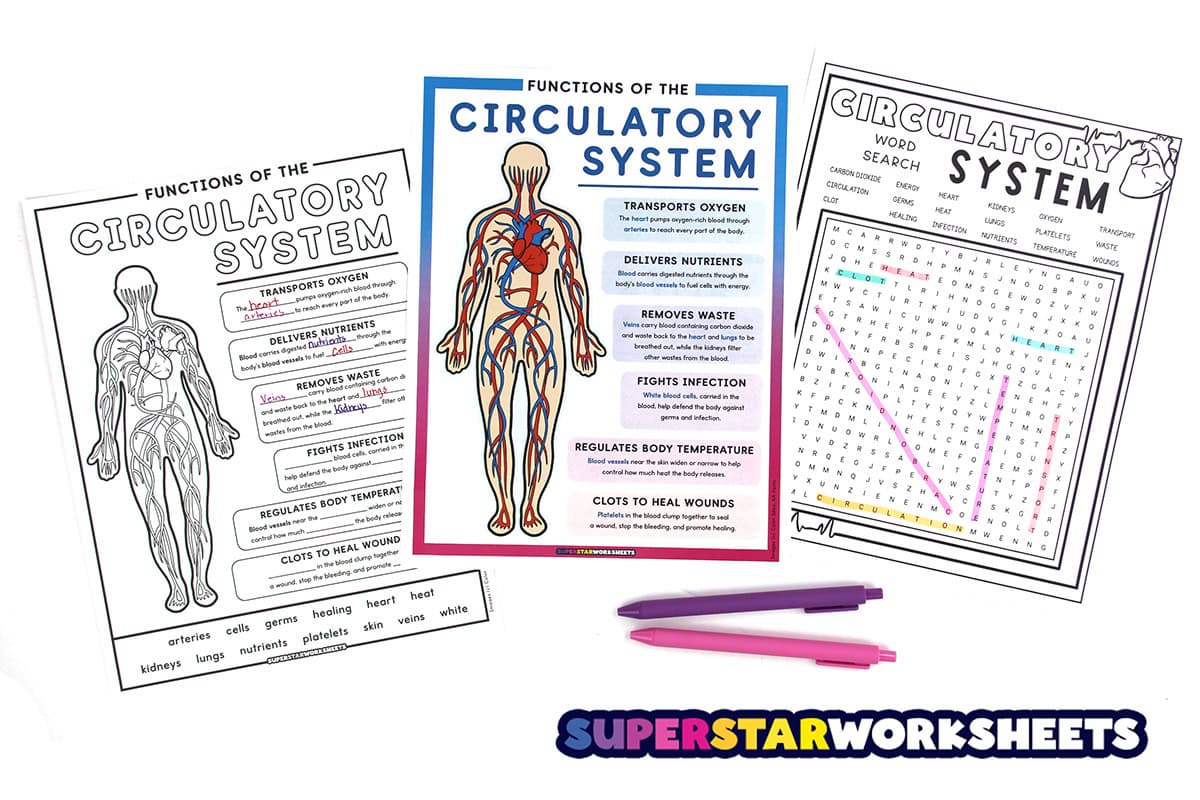
Teaching the Functions of the Circulatory System
Introduce the functions chart by asking students what would happen if blood stopped moving, then connect each answer to one of the functions on the chart. Emphasize that each job depends on a specific body part, such as white blood cells fighting infection or platelets clotting a wound. Use the fill-in-the-blank page and word search to practice the vocabulary. Finish with the quiz so students can explain each function in their own words.
Vocabulary Bank: Circulation, Oxygen, Carbon Dioxide, Nutrients, Waste
Heart Blood Flow Worksheets

Blood Flow Through the Heart Diagram
This blood flow through the heart diagram uses arrows and color to show how blood enters, moves through the chambers, and leaves the heart. It helps students see the heart as the pump at the center of the circulatory system.
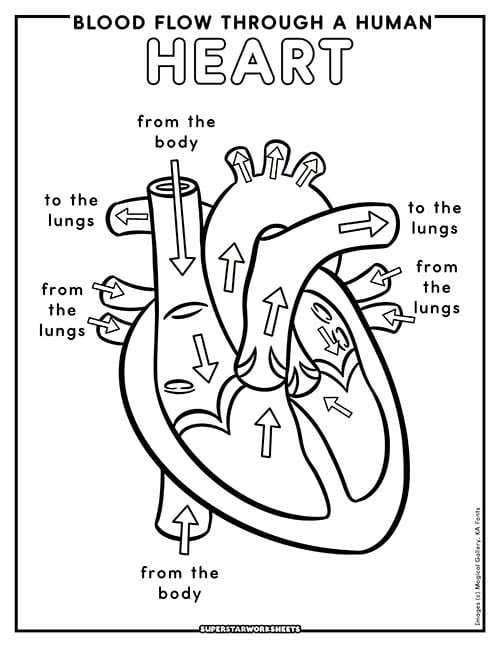
Blood Flow Through the Heart Coloring Page
Kids can color this black-and-white heart blood flow diagram while following each arrow from chamber to chamber. It is a helpful companion to the color chart for review and notebooks. For more heart realated activities, check out our Heart Worksheets today!

In this hands-on heart blood flow craft, students place labels on a heart diagram to show where blood travels. It turns heart anatomy into an interactive activity that sticks.
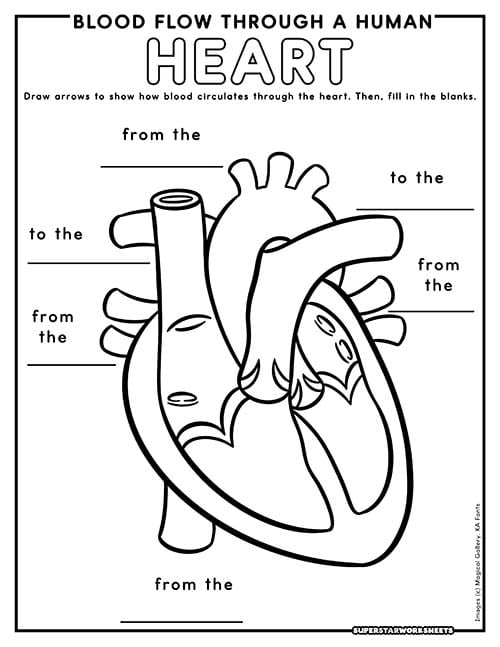
Blood Flow Through the Heart Quiz
Students draw arrows to show how blood circulates through the heart and then fill in the blanks along the path. This quiz checks whether kids can trace blood flow through the heart on their own.

Teaching Blood Flow Through the Heart
Walk students through the blood flow diagram one arrow at a time, starting where blood returns from the body. Have them notice that the right side of the heart sends blood to the lungs and the left side sends it to the rest of the body. The craft gives hands-on practice placing each part, and the black and white chart makes a good coloring review. Use the quiz to see if students can trace the full path without help.
Vocabulary Bank: Right Atrium, Left Atrium, Right Ventricle, Left Ventricle, Septum, Valve, Tricuspid Valve, Pulmonary Valve, Mitral Valve, Aortic Valve
Blood Vessels Worksheets
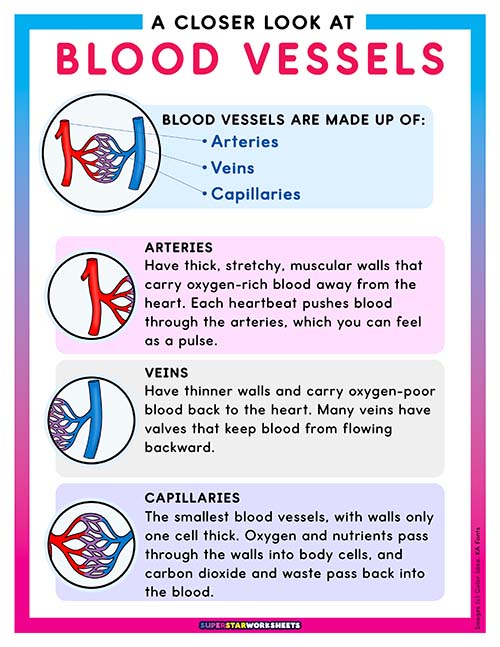
A Closer Look at Blood Vessels Chart
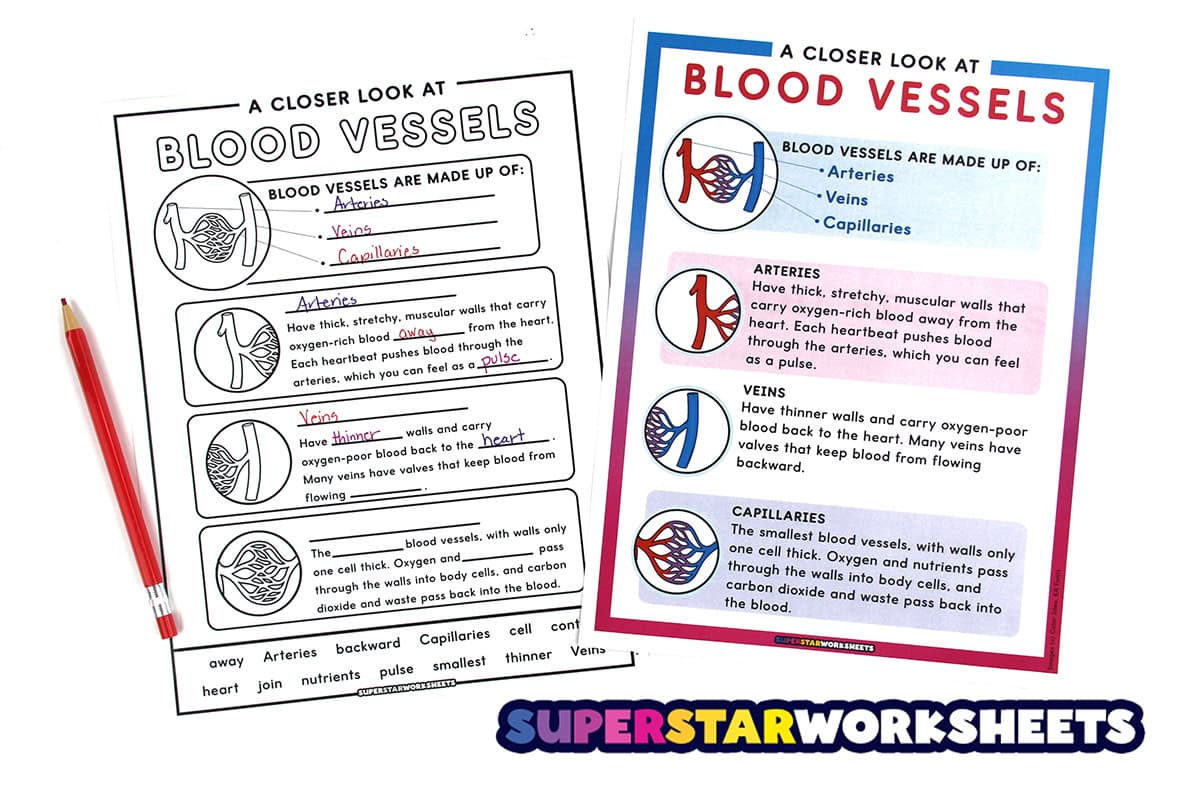
This blood vessels chart compares arteries, veins, and capillaries with a zoomed view of blood flowing from an artery through a capillary bed into a vein. Short descriptions explain how each vessel is built for its job, from thick artery walls to tiny capillaries.
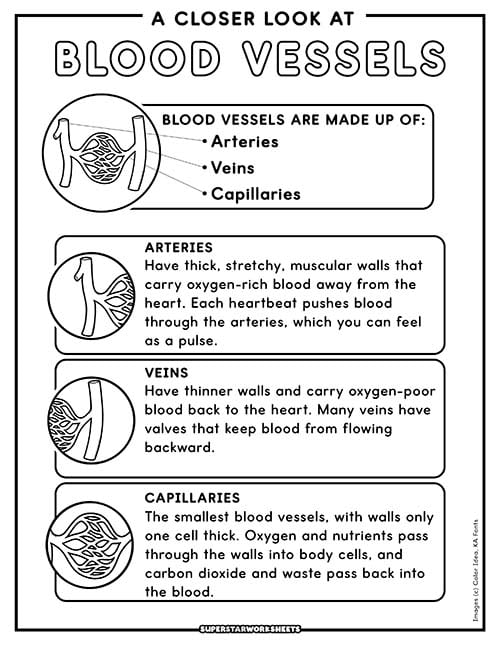
The black and white blood vessels chart keeps every description in place so students can color and study at the same time. Coloring arteries red and veins blue helps kids remember which way blood is flowing.
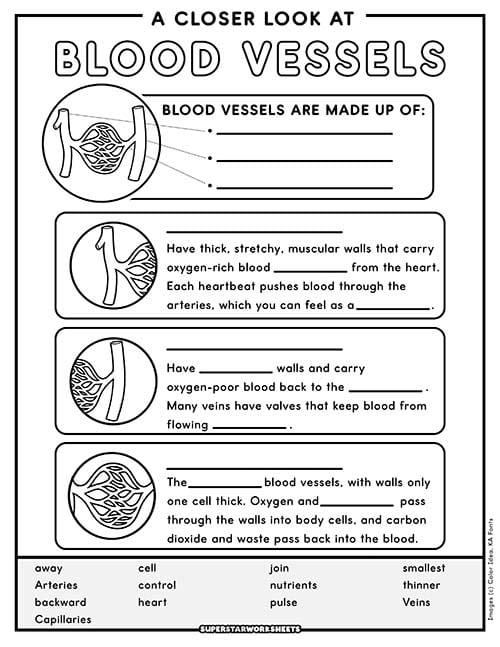
Blood Vessels Fill in the Blank
Using a word bank, students label arteries, veins, and capillaries and complete each description. This blood vessels worksheet reinforces how structure and function go together.
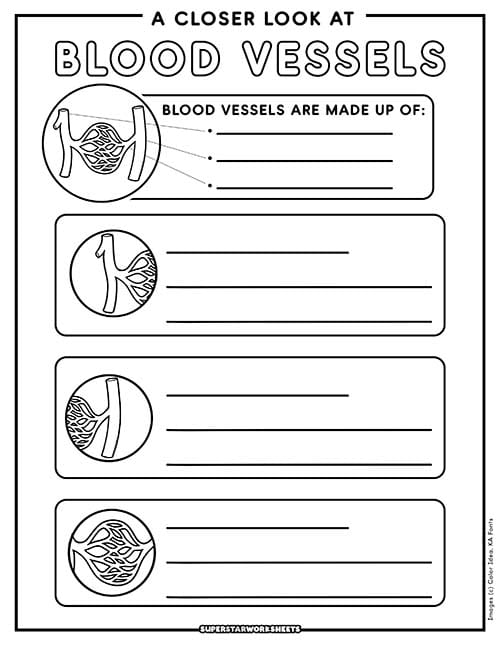
Students label the blood vessel diagram and write a description for each type of vessel. This quiz shows whether kids can explain the difference between arteries, veins, and capillaries. Teachers! Take a look at our human Lung Worksheets here!
Teaching About Blood Vessels
Begin by asking students why the body might need different kinds of blood vessels. Use the chart to show that arteries have thick walls to handle strong pushes from the heart, while capillaries are thin enough for oxygen and nutrients to pass through. Have students feel their pulse to connect the chart to their own arteries. Follow up with the fill-in-the-blank page and finish with the quiz.
Vocabulary Bank: Artery, Vein, Capillary
Parts of Blood Worksheets
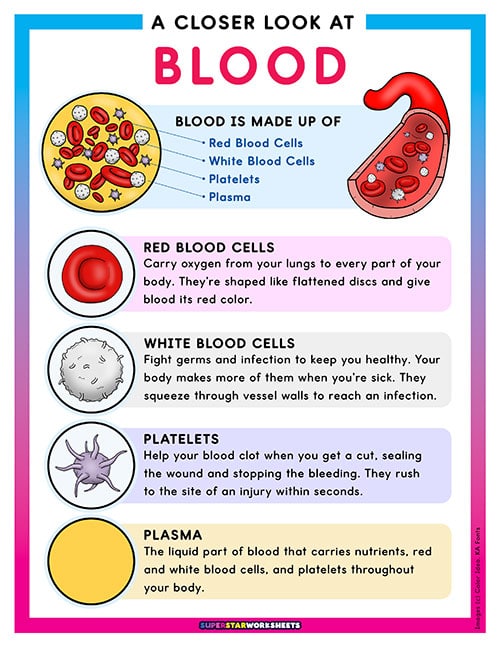
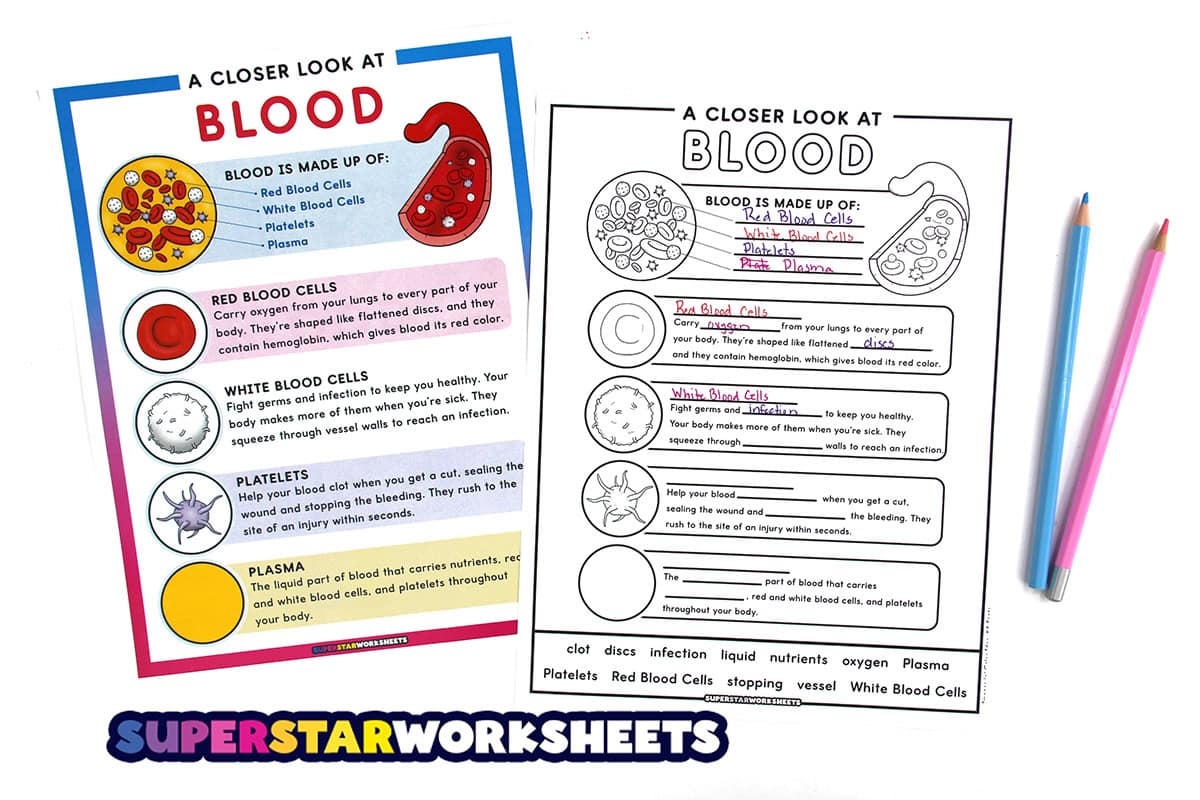
This parts of blood chart introduces red blood cells, white blood cells, platelets, and plasma with a zoomed view of blood inside a vessel. Each section explains the job of that component, from carrying oxygen to stopping bleeding.
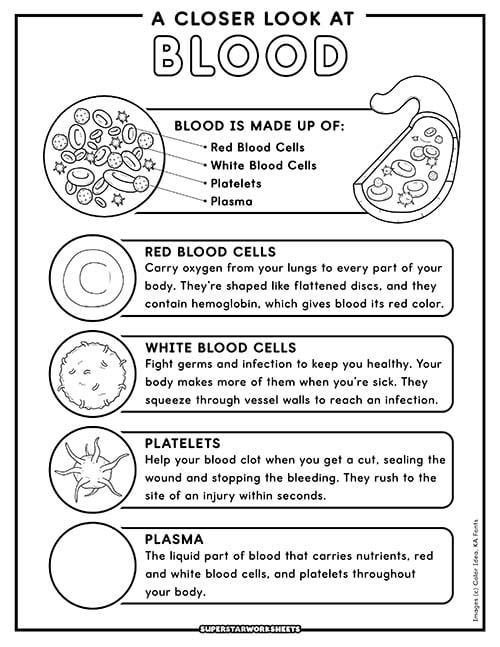
Students can color this black and white blood chart while reviewing what each blood component does. It pairs well with the color version for notebooks and study guides.
Parts of Blood Fill in the Blank
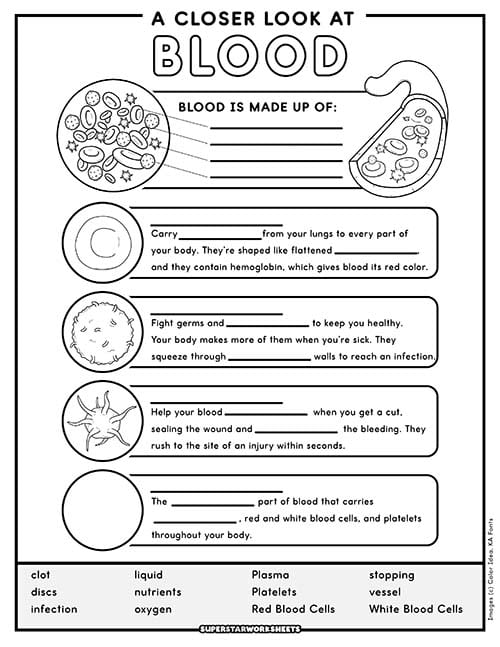
Kids use a word bank to label the parts of blood and fill in key words in each description. This blood cells worksheet builds vocabulary like plasma, platelet, and clot.
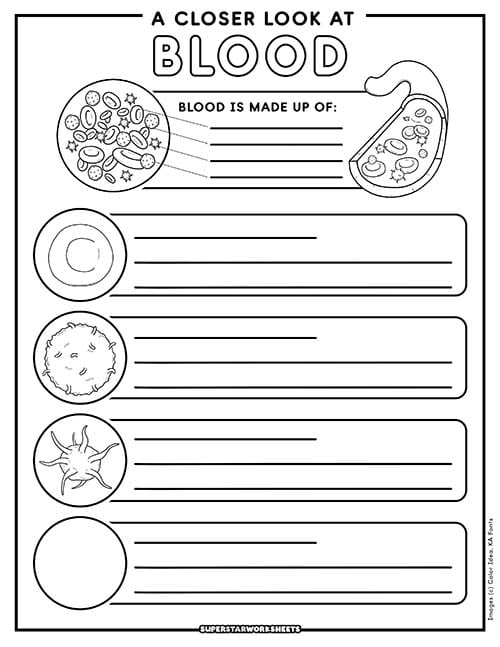
Students label the blood components and describe the job of each one in writing. This quiz is a clear way to assess understanding of what blood is made of.
Teaching the Parts of Blood
Ask students what they think blood is made of before showing the chart, then compare their ideas to the four components. Connect each part to real life, such as a scab forming when platelets clot a cut or white blood cells fighting a cold. Use the fill-in-the-blank page for guided practice. The quiz works well as an exit ticket or end-of-lesson check.
Vocabulary Bank: Plasma, Red Blood Cell, White Blood Cell, Platelet, Hemoglobin, Clot, Bone Marrow
Blood Circulation Worksheets
Pulmonary & Systemic Circulation Diagram
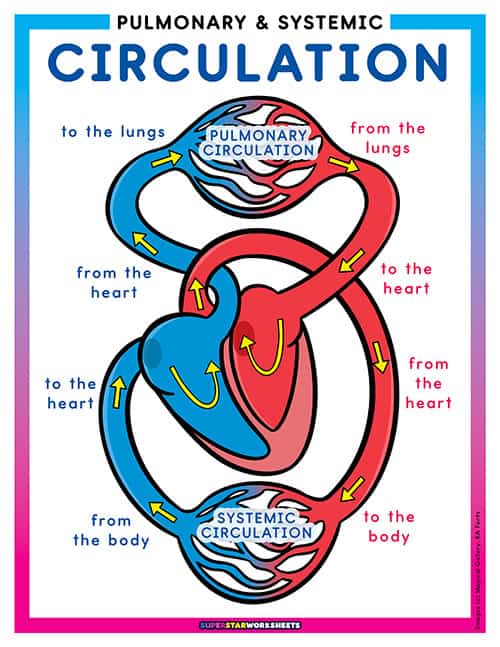
This blood circulation diagram shows how blood travels from the heart to the lungs and back, then out to the body and back again. Red and blue coloring and yellow arrows make oxygen-rich and oxygen-poor blood easy to follow.
Blood Circulation Coloring Page
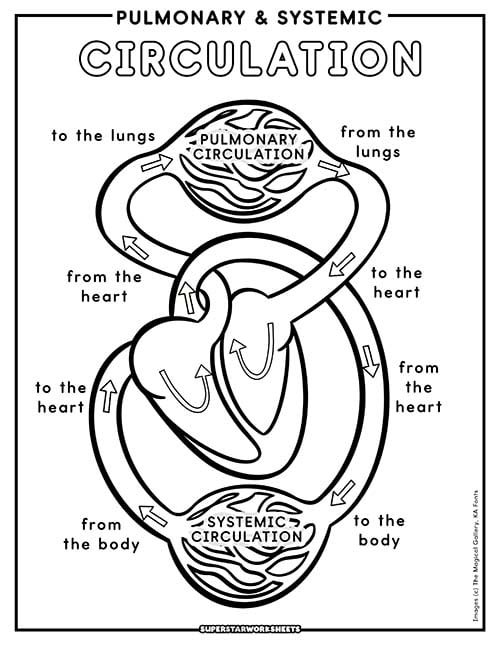
Students can color the black and white circulation diagram to show oxygen-rich and oxygen-poor blood. It is a simple way to review pulmonary and systemic circulation.
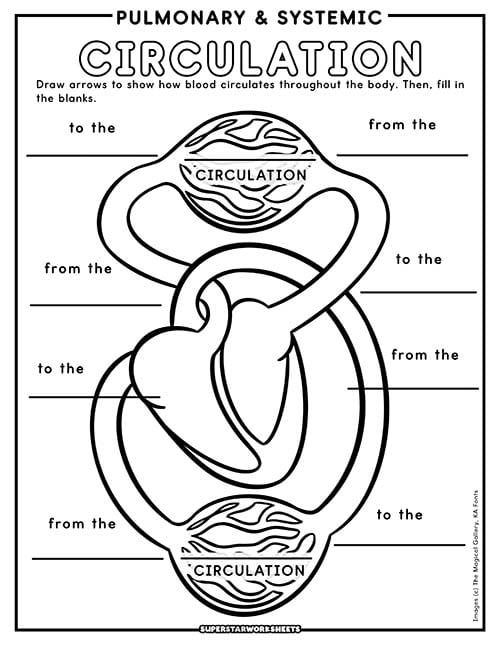
Kids draw arrows to show how blood circulates through the body and fill in the blanks along each loop. This blood circulation worksheet helps students put the heart, lungs, and blood vessels together into one pathway.
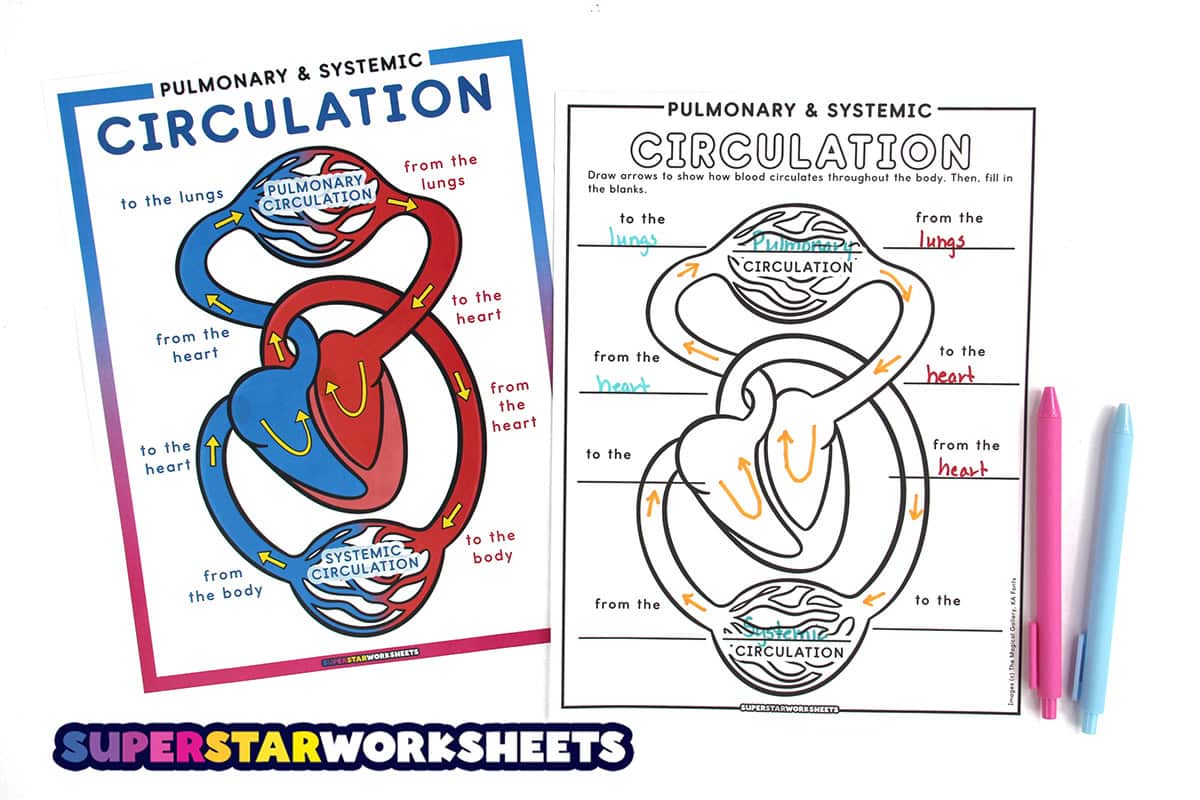
Teaching Pulmonary and Systemic Circulation
Use the circulation diagram to show that blood makes two trips: one to the lungs to pick up oxygen and one to the body to deliver it. Have students trace each loop with a finger and name where the blood changes from oxygen-poor to oxygen-rich. Remind them that real blood is never blue, only darker red. The practice page lets students map the full pathway on their own.
Vocabulary Bank: Pulmonary Circulation, Systemic Circulation, Oxygen-Rich Blood, Oxygen-Poor Blood
Circulatory System Fun Facts & Research
Fun Facts About the Circulatory System
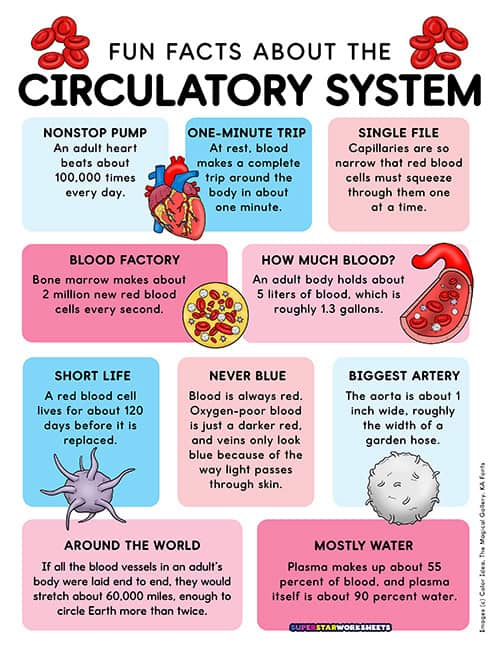
This colorful fun facts poster shares surprising circulatory system facts, like how far blood vessels would stretch and why blood is never blue. It is a great discussion starter for science class.
Circulatory System Two Truths and a Lie
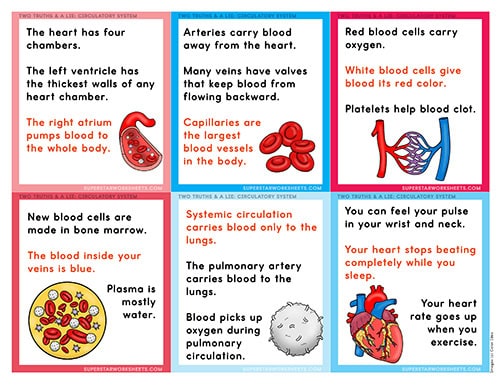
Students read each card and decide which circulatory system statement is false. This game gets kids talking, reasoning, and correcting common misconceptions.
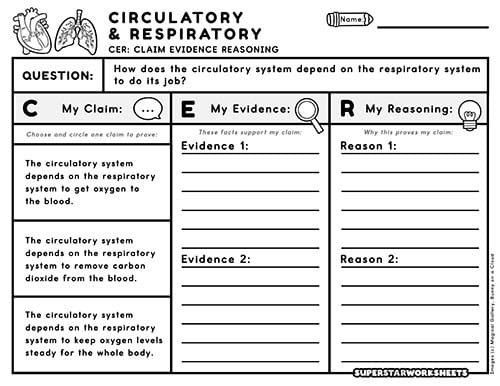
Circulatory System CER Worksheet
Students choose a true claim about the circulatory system and support it with evidence and reasoning. This claim evidence reasoning worksheet builds scientific writing and argument skills.
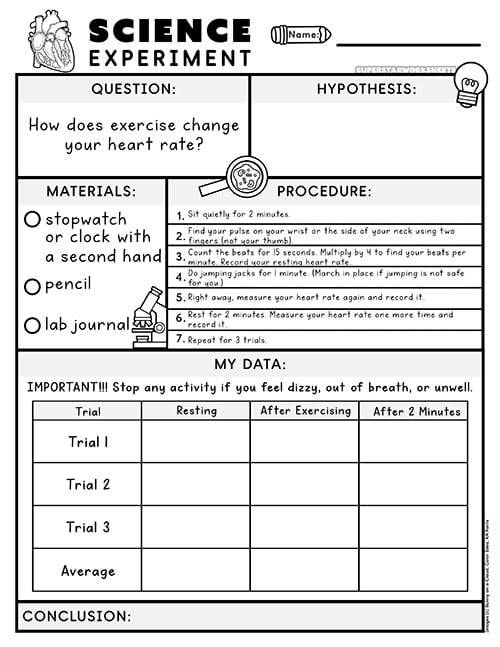
In this heart rate experiment, students measure their pulse at rest, after exercise, and after resting, then record their data. It turns the circulatory system into a real investigation with results kids can see and feel.
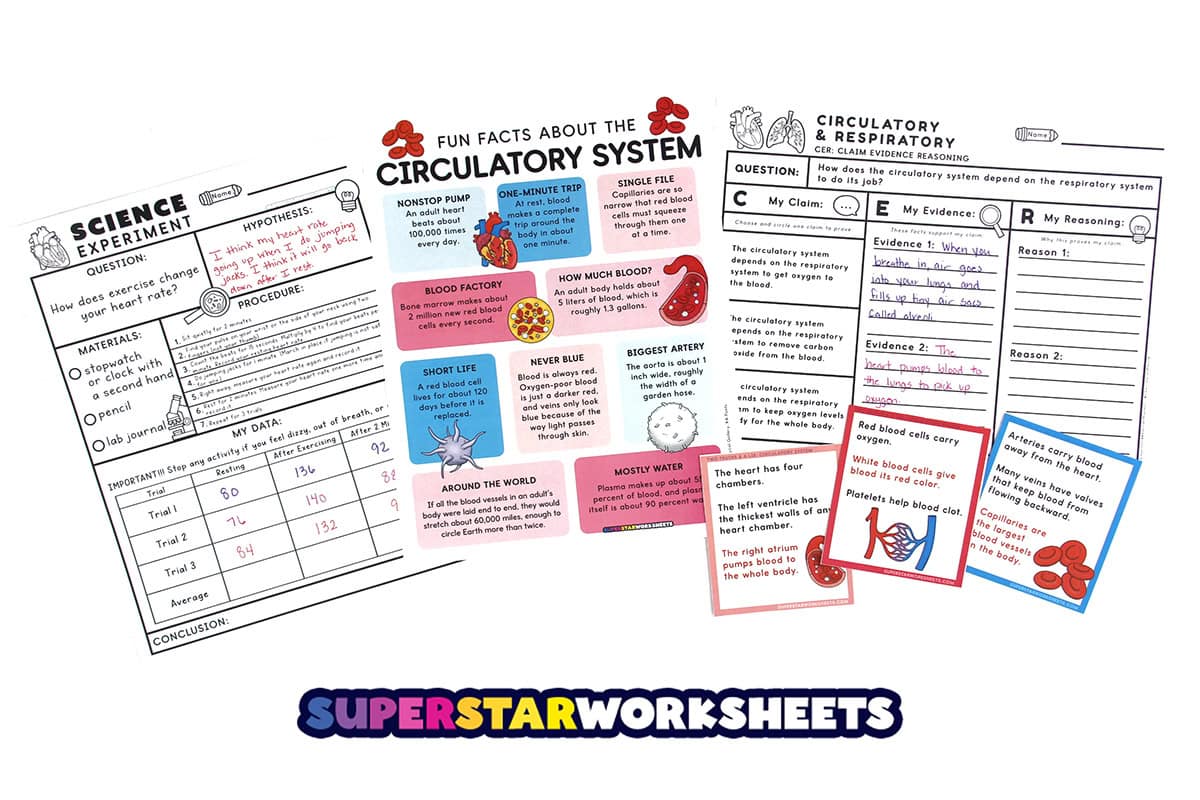
Teaching with Circulatory System Fun Facts & Research
Kick off this section with the fun facts poster and let students share which fact surprised them most. Use the Two Truths and a Lie cards in small groups to spark discussion and clear up misconceptions. The heart rate experiment gives students real data, which they can use as evidence on the CER worksheet. Remind students to stop any activity if they feel dizzy or unwell.
Leave a Reply