
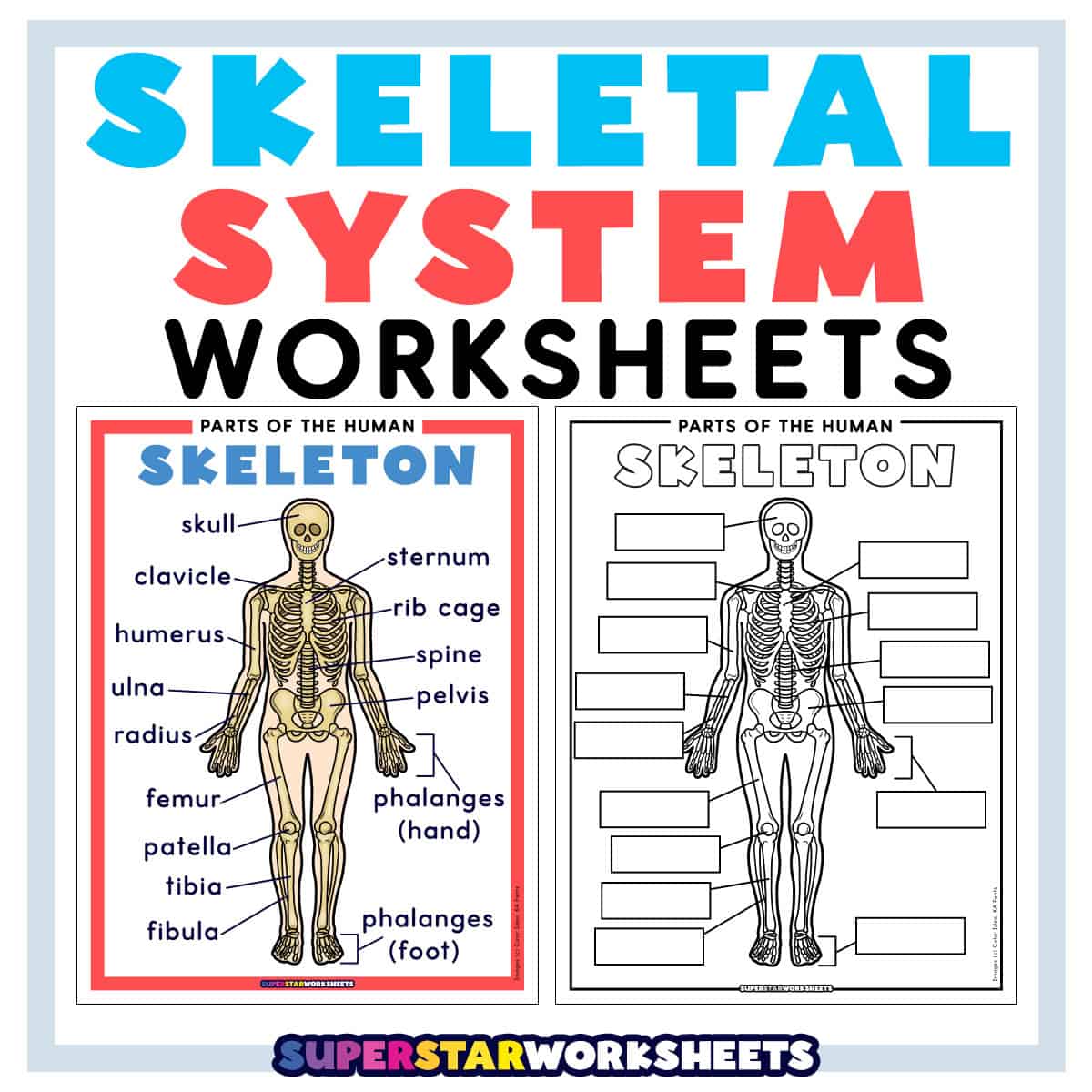
Free Printable Skeletal System Worksheets help kids learn the bones of the human body, how they fit together, and the important jobs the skeleton does every day. Download and print PDF skeletal system diagrams, labeling worksheets, flash cards, bone structure and joints charts, fill-in-the-blank pages, quizzes, puzzles, and hands-on research activities. These science printables build body system vocabulary and help young learners explain how bones, connective tissues, and joints work with muscles to create movement. Teachers and parents can use them for elementary and middle school science lessons, homeschool units, science centers, and small group review.
Simple Skeletal System Diagram Worksheets
Parts of the Human Skeleton Diagram
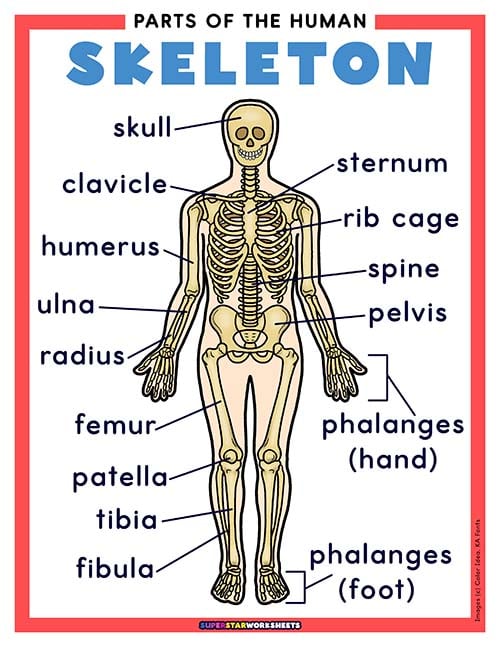
This simple skeletal system diagram shows a colorful human skeleton inside a body outline, with each main bone labeled using its correct scientific name. Kids can see where the skull, humerus, femur, and phalanges are found, making it a friendly first look at the human skeleton.
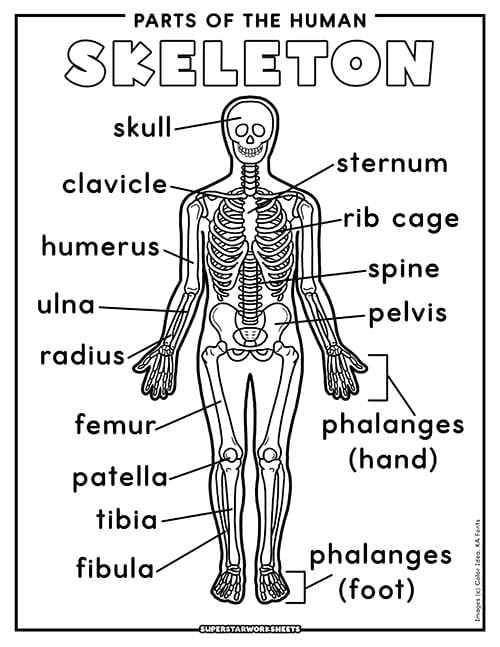
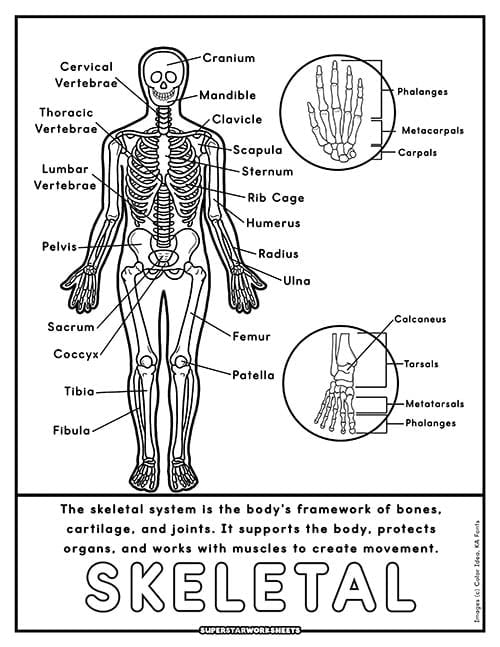
Students can color this black-and-white human skeleton diagram while reviewing the name of every labeled bone. It works well as a coloring page, a notebook reference, or a quick review before labeling.
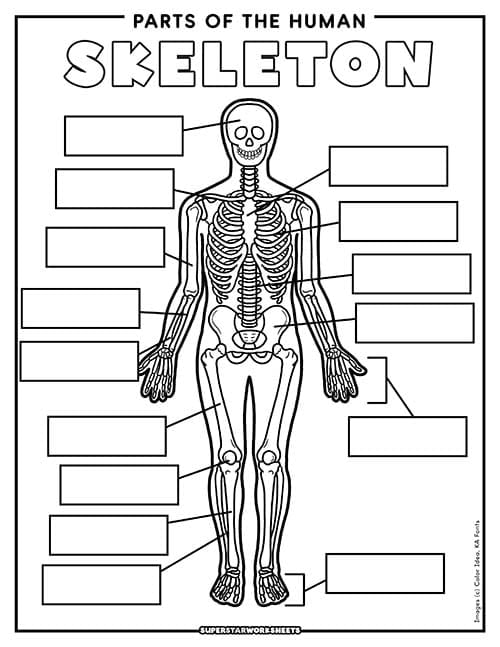
Label the Human Skeleton Worksheet
Kids cut out the bone labels and glue each one into the matching box on the skeleton. This cut and paste labeling worksheet builds confidence with scientific bone names like clavicle, sternum, and tibia.
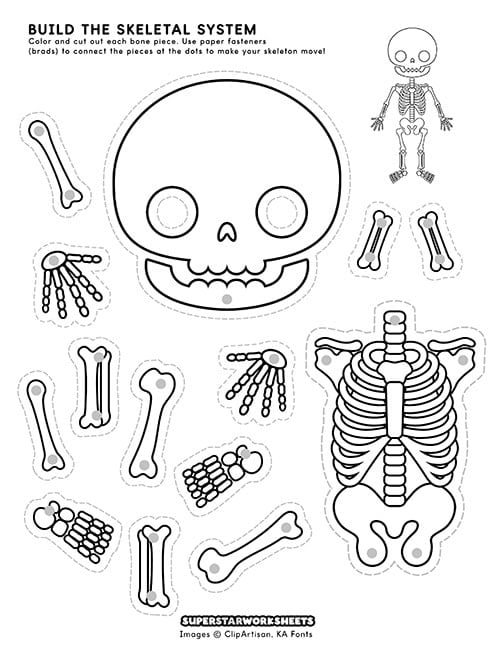
Students cut out the skeleton pieces and connect them with brads at the joints to build a skeleton that really moves. This hands-on skeletal system craft shows kids how bones meet at joints so the body can bend and turn.
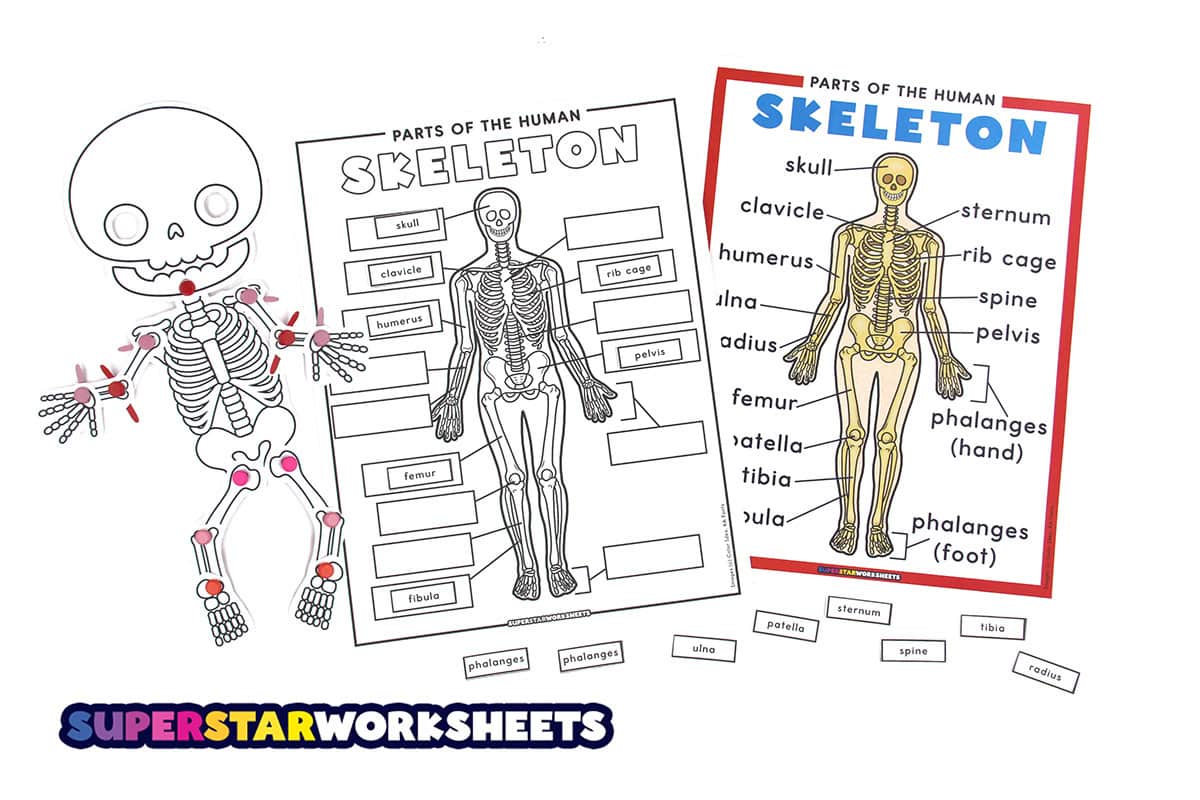
Teaching the Parts of the Human Skeleton
Start with the color diagram and have kids point to the same bone on their own bodies as you read each label together. Explain that scientists use special names for bones, so the upper arm bone is called the humerus and the thigh bone is called the femur. Use the coloring page for review, then move to the cut-and-paste labeling worksheet for practice. Finish with the skeleton craft so students can see how joints let the skeleton move.
Vocabulary Bank: Skull, Clavicle, Sternum, Rib Cage, Spine, Humerus, Radius, Ulna, Phalanges, Pelvis, Femur, Patella, Tibia, Fibula
Skeletal System Labeling Worksheets
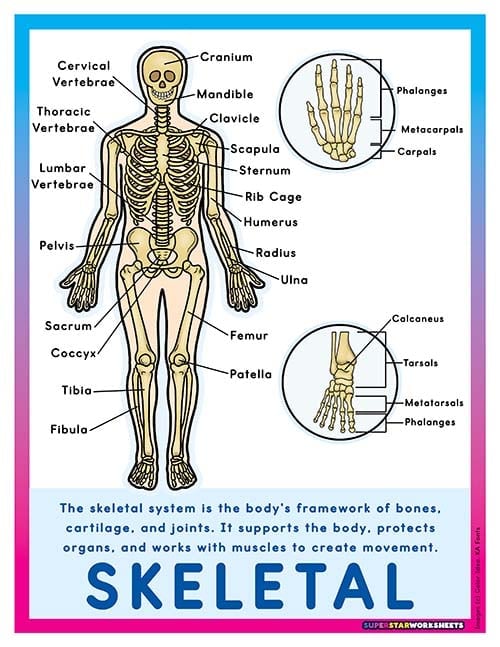
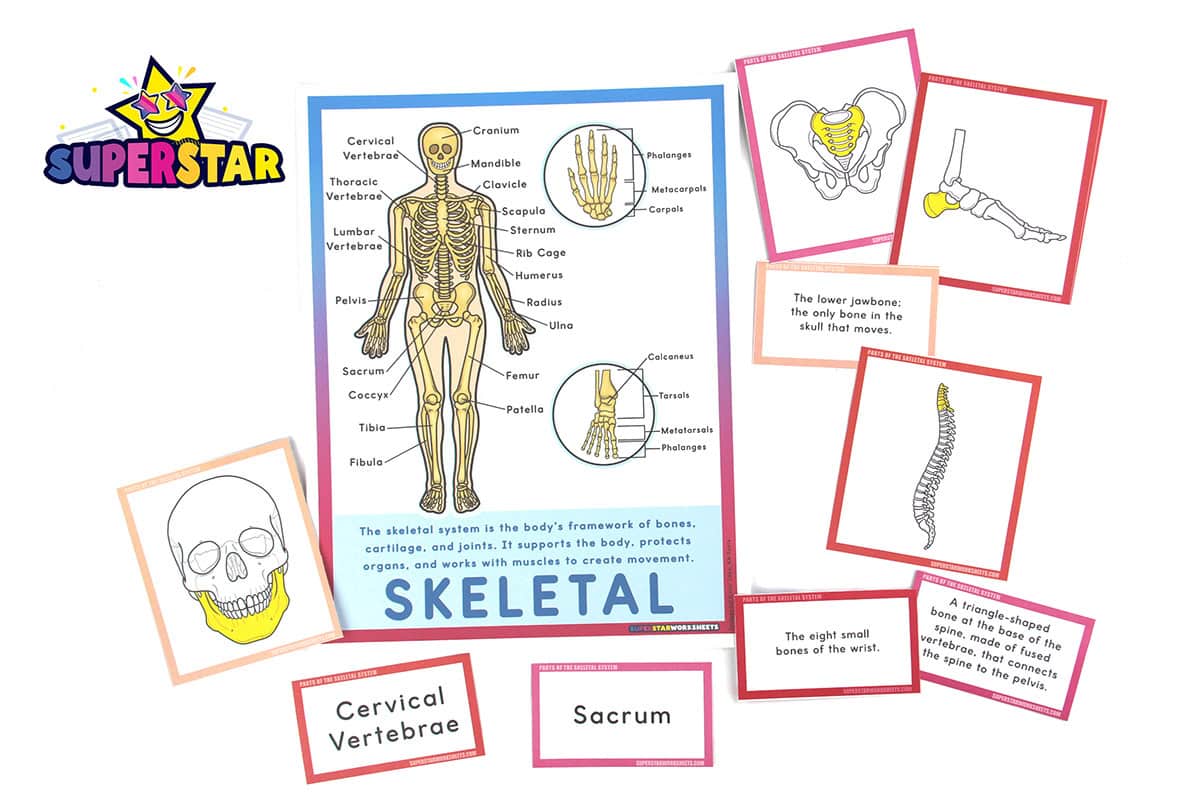
This labeled skeletal system diagram shows the major bones of the human body, from the cranium and mandible down to the metatarsals and phalanges. Close-up views of the hand and foot make small bones like the carpals and tarsals easy to see, so the chart works as an anchor for any skeletal system unit.
Skeletal System Diagram Coloring Page
The black and white skeletal system diagram keeps every label and close-up view in place for coloring and study. Students can color each region of the skeleton while reviewing the bone names.
Parts of the Skeletal System Flash Cards
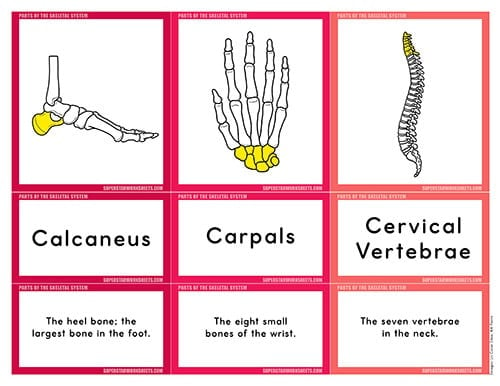
These skeletal system flash cards pair a highlighted bone picture with its name and definition. Kids can match the picture, word, and definition cards on the vocab mat, play memory games, or use them for quick bone name review.
Label the Skeletal System Worksheet
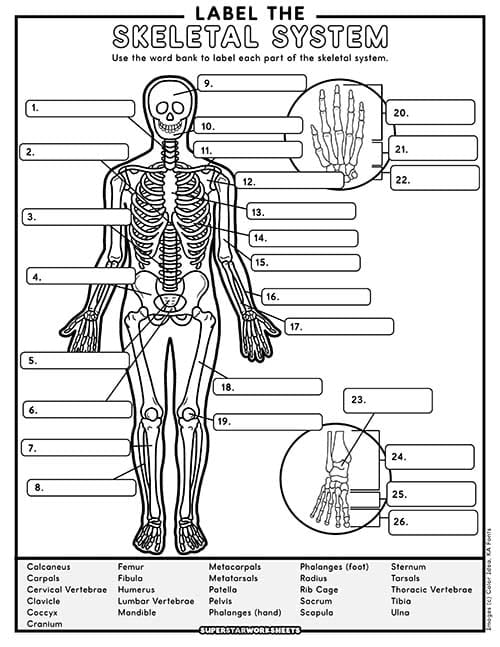
Students use a word bank to label the bones of the skeletal system on a full body diagram. This skeletal system labeling worksheet reinforces bone names like the scapula, sacrum, and calcaneus.
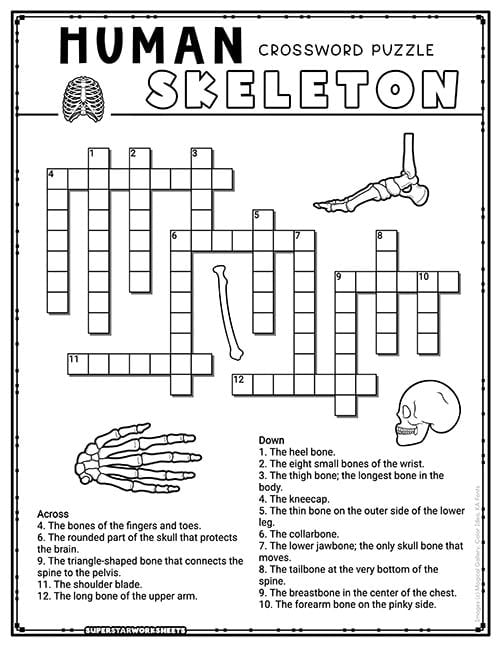
Skeletal System Crossword Puzzle
Clue by clue, kids recall bone names such as femur, clavicle, and coccyx to complete this skeletal system crossword. The answer key makes it easy to use for independent review or early finisher work.
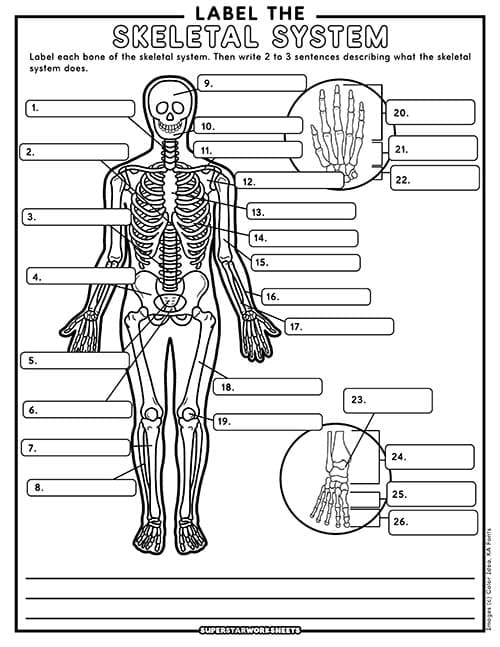
Without a word bank, students label the skeletal system from memory and write a short description of what it does. This quiz is a great check for understanding before moving on to how the skeleton works.
Teaching the Bones of the Skeletal System
Begin with the color skeletal system diagram and work from head to toe, pointing out how the skull, spine, and rib cage form the center of the body while the arms and legs branch out from it. Show students that the spine is divided into cervical, thoracic, and lumbar vertebrae, and use the hand and foot close-ups to sort out the carpals, metacarpals, tarsals, and metatarsals. The flash cards and labeling worksheet give plenty of practice with the bone names, and the crossword makes a fun review. Save the labeling quiz for the end as a quick check.
Vocabulary Bank: Skeletal System, Skeleton, Bone, Cranium, Mandible, Scapula, Cervical Vertebrae, Thoracic Vertebrae, Lumbar Vertebrae, Sacrum, Coccyx, Carpals, Metacarpals, Tarsals, Metatarsals, Calcaneus
Functions of the Skeletal System Worksheets
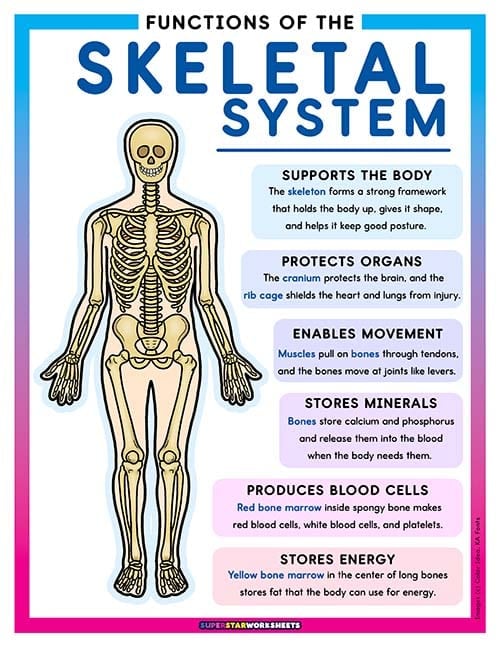
Functions of the Skeletal System Chart
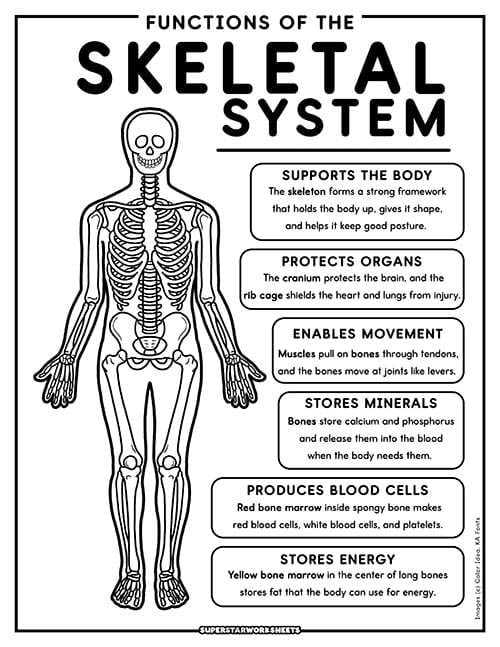
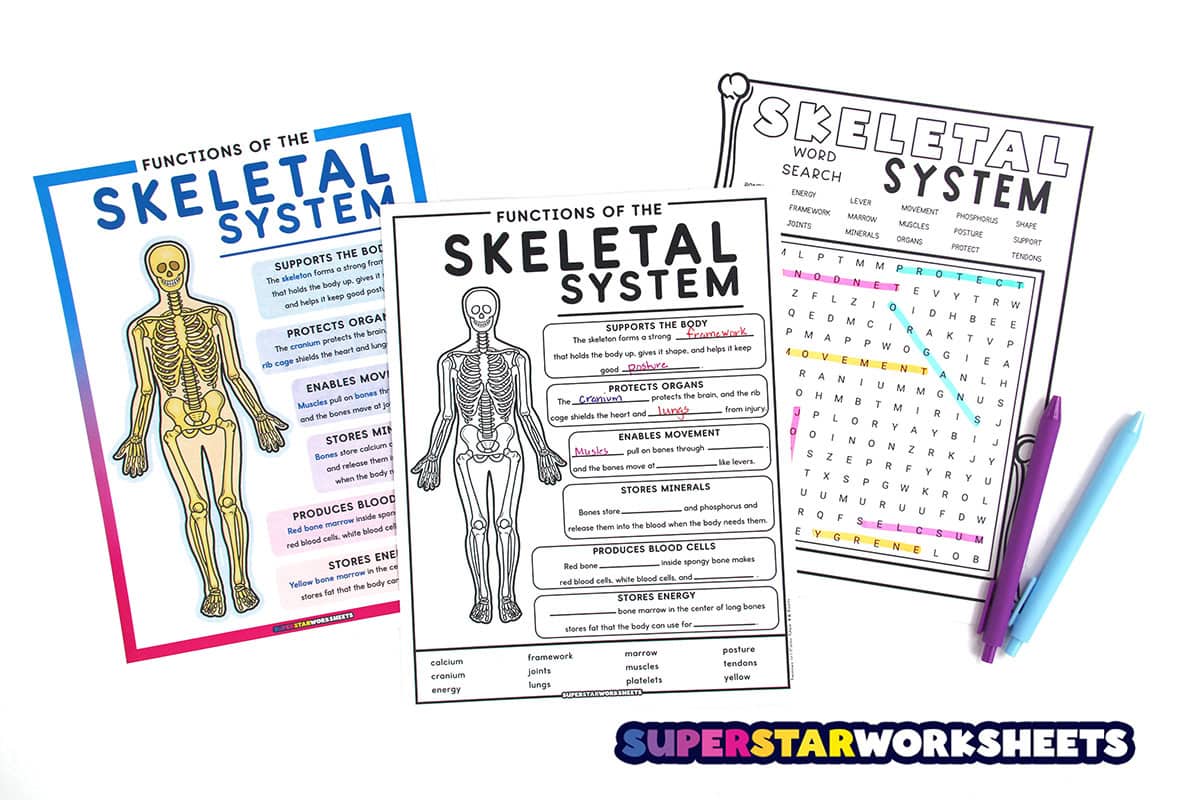
This functions of the skeletal system chart explains how the skeleton supports the body, protects organs, enables movement, produces blood cells, stores minerals, and stores energy. Key body parts are highlighted in each box so students can connect every job to the structure that does it.
Functions of the Skeletal System Coloring Page
The black and white version of the skeletal system functions chart keeps all of the text in place for coloring and note taking. It makes a handy reference in science notebooks or a take-home study page.
Skeletal System Functions Fill in the Blank
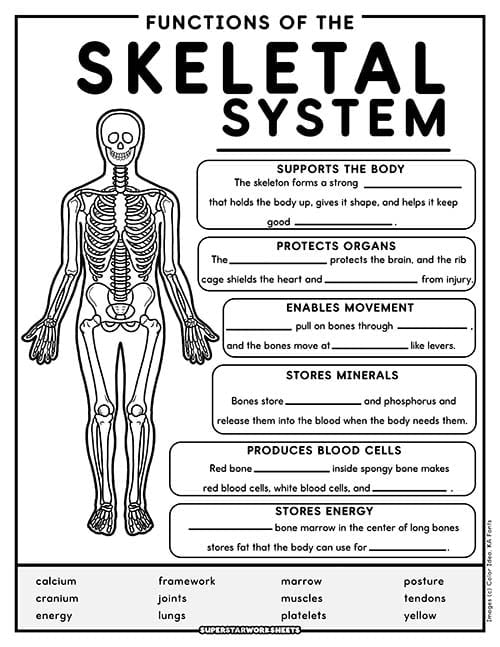
Students complete each function description with words like cranium, marrow, and tendons from the word bank. This fill-in-the-blank worksheet helps kids explain the jobs of the skeletal system in their own reading and writing.
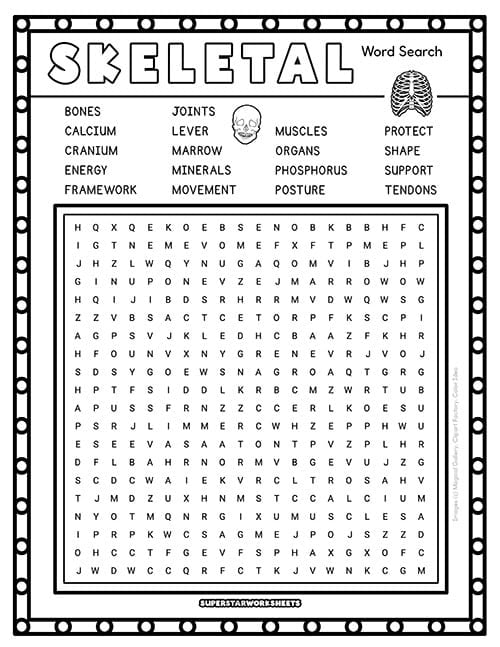
Hidden in this skeletal system word search are function words such as calcium, framework, posture, and phosphorus. It makes a fun vocabulary warm-up, and the answer key is included. For more FREE human science worksheets, take a look at our Circulatory System Worksheets!
Functions of the Skeletal System Quiz
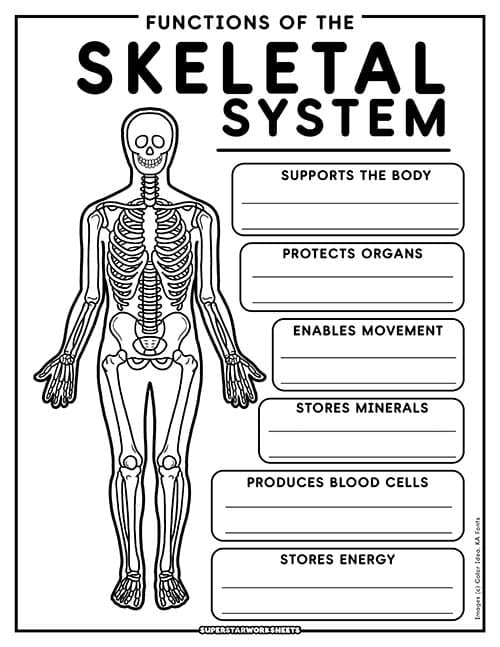
With only the function headings as a guide, students write how the skeletal system carries out each job. This quiz asks kids to explain, not just recall, what the skeleton does for the body.
Teaching the Functions of the Skeletal System
Introduce the functions chart by asking students what their body would be like without a skeleton, then connect each answer to one of the functions on the chart. Emphasize that bones do much more than hold us up, since red bone marrow makes blood cells and bones store calcium the body can use later. Use the fill-in-the-blank page and word search to practice the vocabulary. Finish with the quiz so students can explain each function in their own words.
Vocabulary Bank: Calcium, Mineral, Posture, Phosphorus, Lever
Bone Structure Worksheets
A Closer Look at Bone Structure Chart
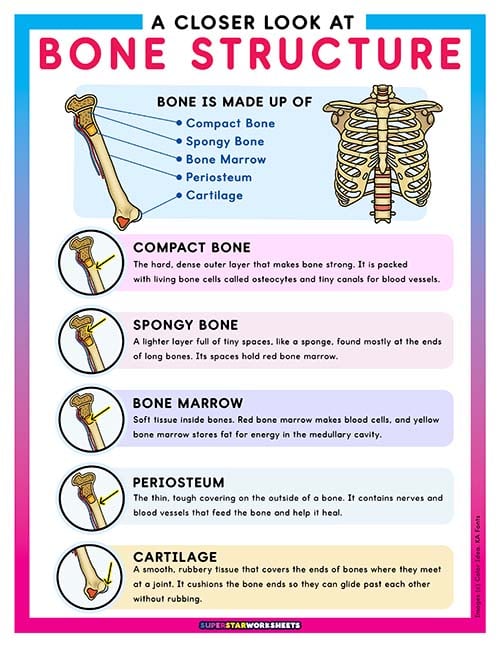
This bone structure chart shows the inside of a long bone and explains compact bone, spongy bone, bone marrow, periosteum, and cartilage. Short descriptions help students see that bones are living organs with layers that each have a job.
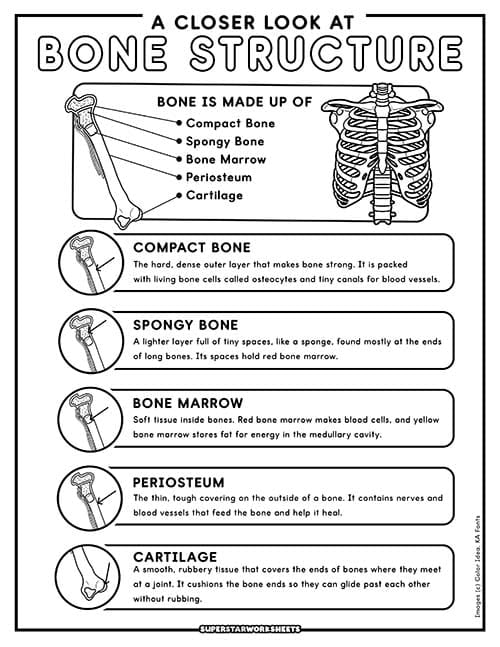
Students can color this black and white bone structure chart while reviewing each layer of a bone. It pairs well with the color version for notebooks and study guides.
Bone Structure Fill in the Blank
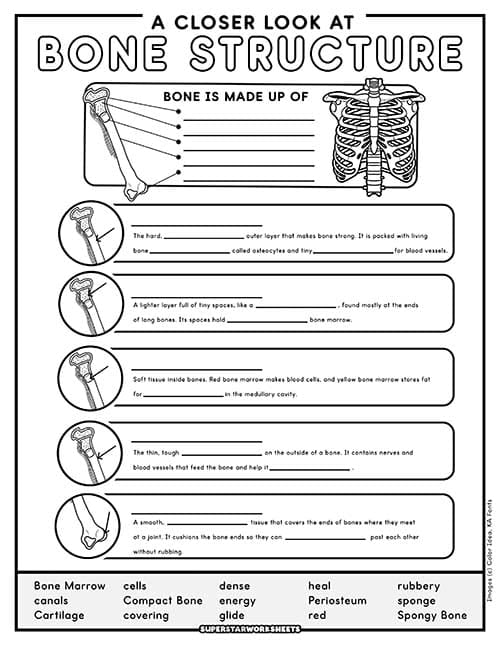
Using a word bank, students label the parts of a bone and fill in key words in each description. This bone structure worksheet builds vocabulary like periosteum, spongy bone, and marrow.
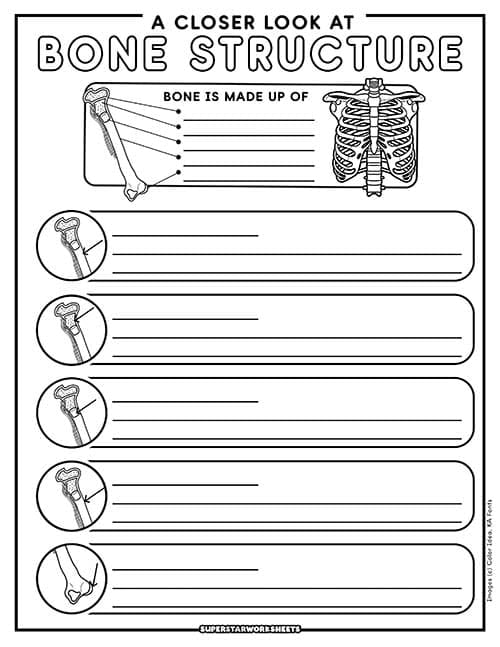
Students label the parts of a bone and describe the job of each layer in writing. This quiz is a clear way to check understanding of what bones are made of.
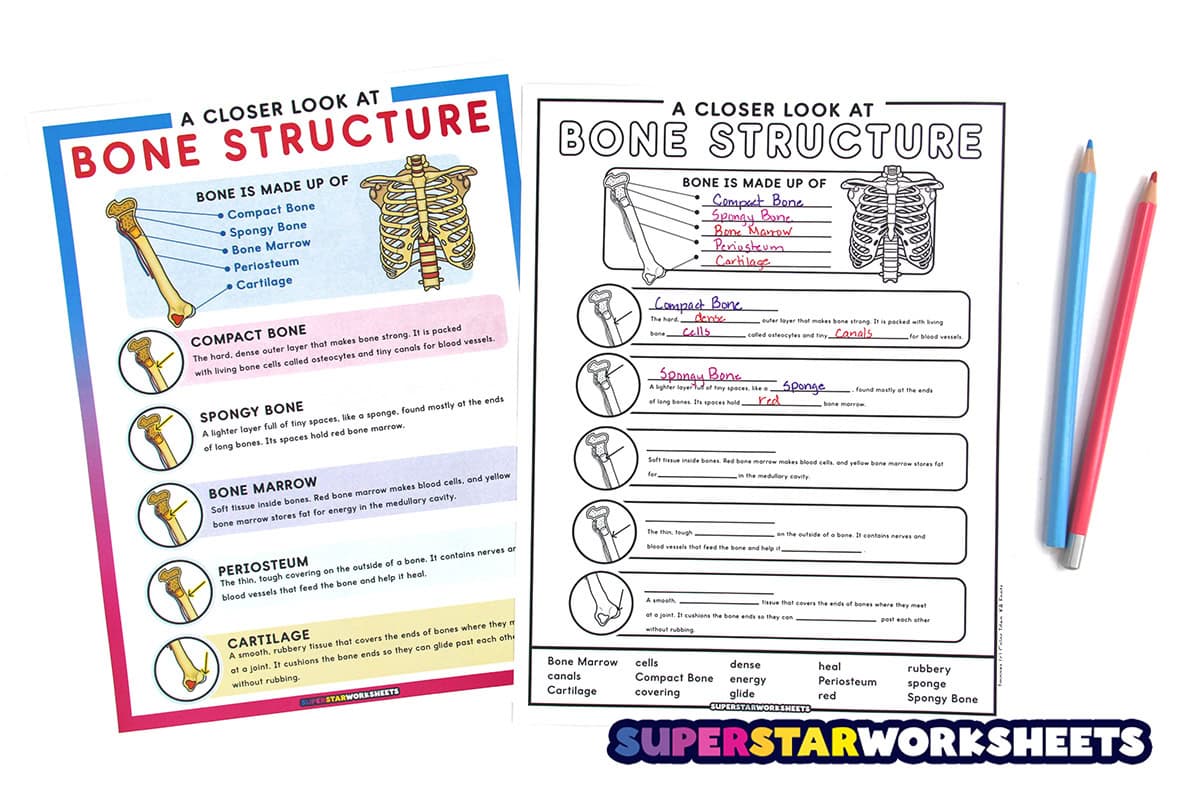
Teaching Bone Structure
Ask students whether they think bones are solid all the way through before showing the chart, then compare their ideas to the layers inside a long bone. Point out that compact bone makes the outside strong, spongy bone keeps bones light, and marrow fills the spaces inside. Remind students that bones are alive, with blood vessels, nerves, and bone cells that help them grow and heal. Use the fill-in-the-blank page for guided practice and the quiz as an exit ticket.
Vocabulary Bank: Compact Bone, Spongy Bone, Bone Marrow, Red Bone Marrow, Yellow Bone Marrow, Periosteum, Medullary Cavity, Osteocyte, Epiphysis, Diaphysis
Connective Tissue Worksheets
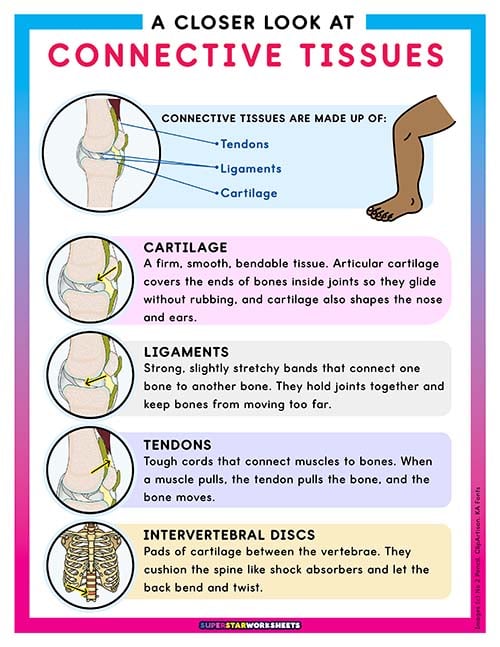
A Closer Look at Connective Tissues Chart
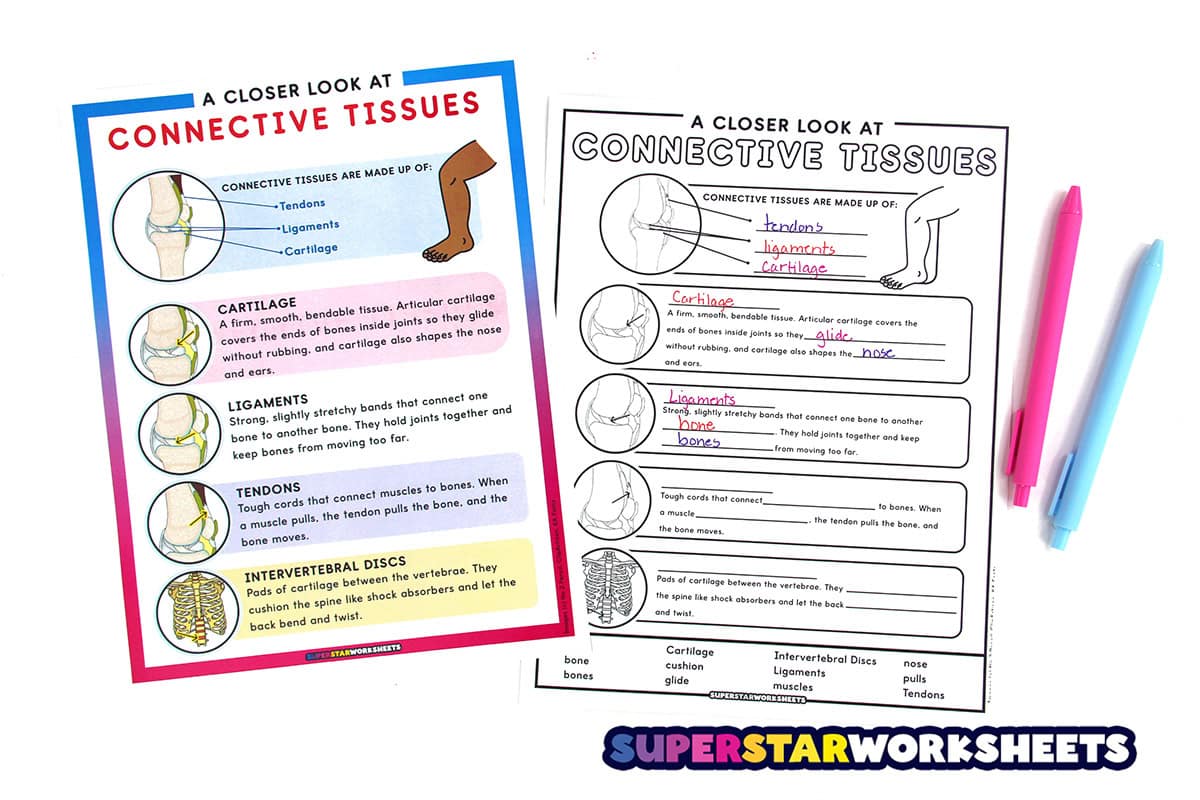
This connective tissue chart uses a view of the knee to show how cartilage, ligaments, and tendons hold the skeleton together. Each section explains one tissue, including the intervertebral discs that cushion the spine.
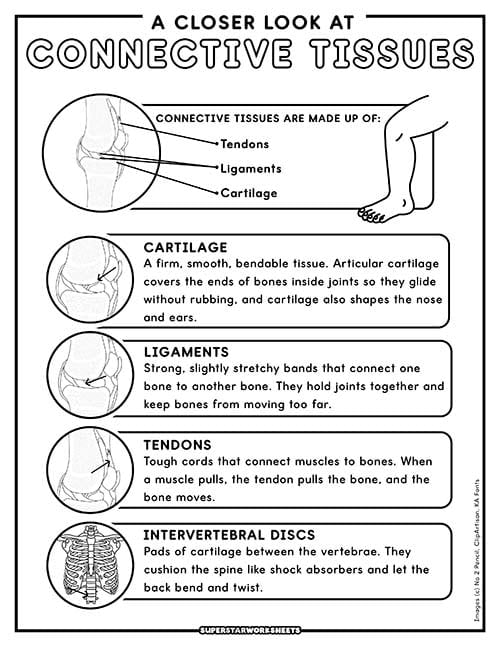
Connective Tissues Coloring Page
The black and white connective tissues chart keeps every description in place for coloring and review. It gives students a simple way to study cartilage, ligaments, and tendons side by side.
Connective Tissues Fill in the Blank
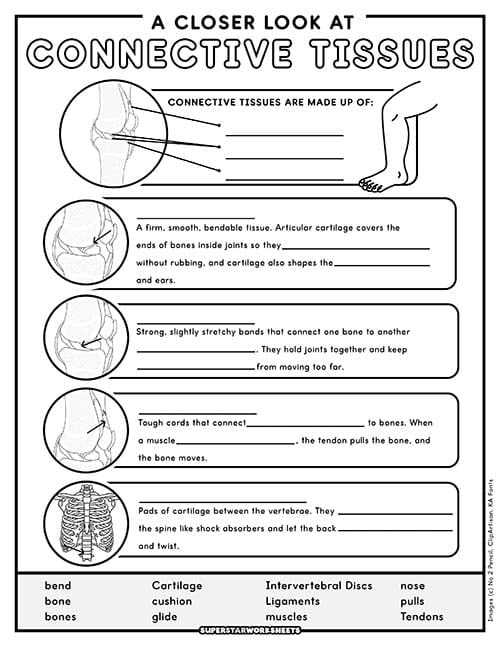
Kids use a word bank to name each connective tissue and complete its description. This worksheet helps students remember that ligaments connect bone to bone while tendons connect muscle to bone.
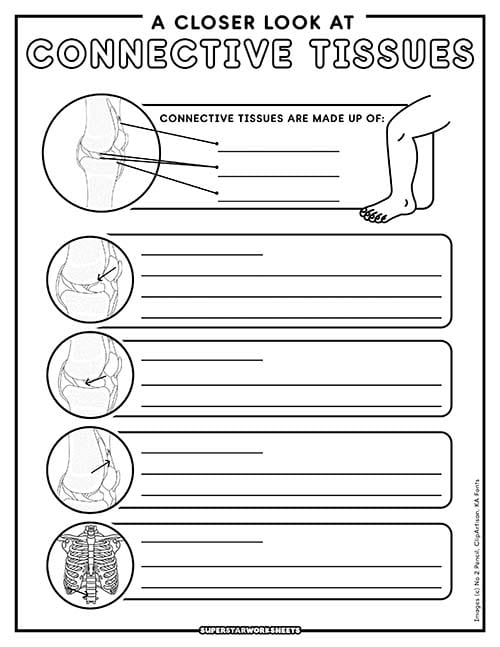
Students write the name and job of each connective tissue from memory. This quiz checks whether kids can explain how cartilage, ligaments, and tendons work together at a joint.
Teaching Cartilage, Ligaments, and Tendons
Have students bend and straighten a knee while you walk through the knee view on the chart, so they can connect each tissue to a movement they can feel. A simple memory trick helps here: ligaments link bone to bone, and tendons tie muscle to bone. Point out that cartilage shows up in the knee, the nose, the ears, and between the vertebrae. The fill-in-the-blank page gives guided practice, and the quiz makes a strong end-of-lesson check.
Vocabulary Bank: Connective Tissue, Cartilage, Ligament, Tendon, Articular Cartilage, Intervertebral Disc
Types of Joints Worksheets
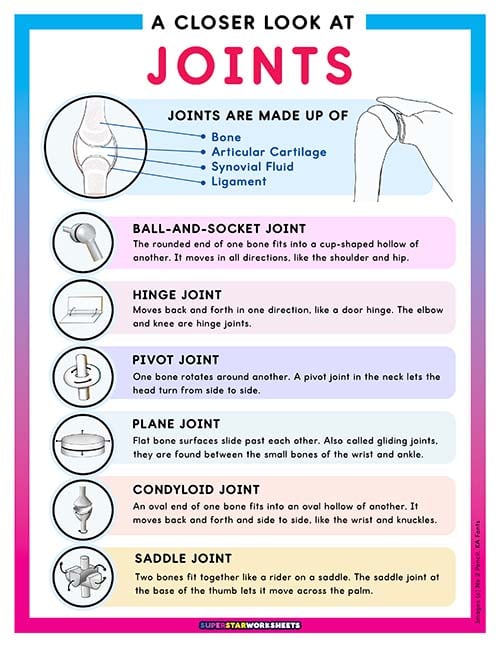
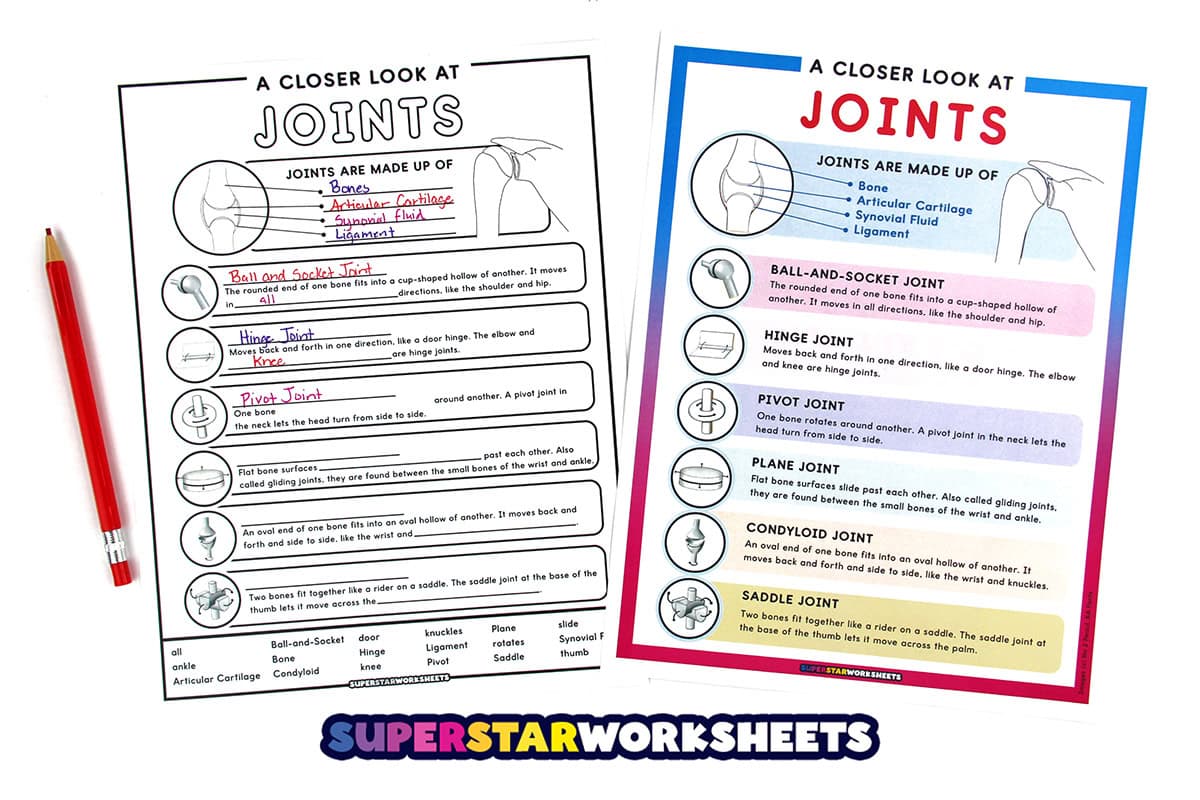
This types of joints chart explains ball-and-socket, hinge, pivot, plane, condyloid, and saddle joints with a picture and real-life example for each. A close-up view shows the bone, articular cartilage, synovial fluid, and ligament found in a movable joint.
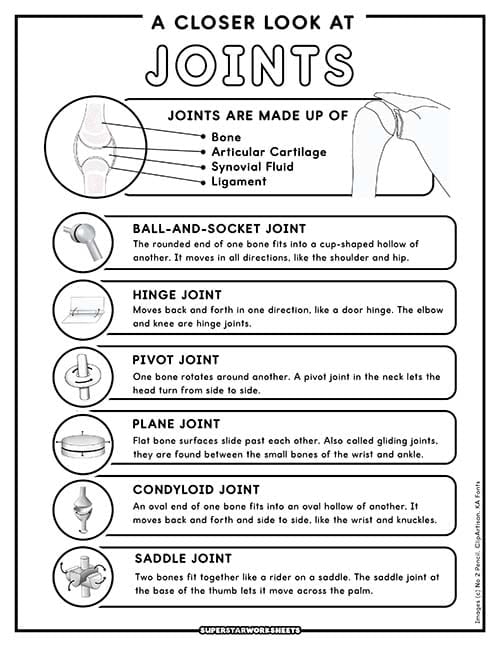
Students can color the black-and-white joints chart while reviewing how each joint moves. It is a helpful companion to the color chart for review and notebooks. Check out our Parts of the Body Worksheets today!
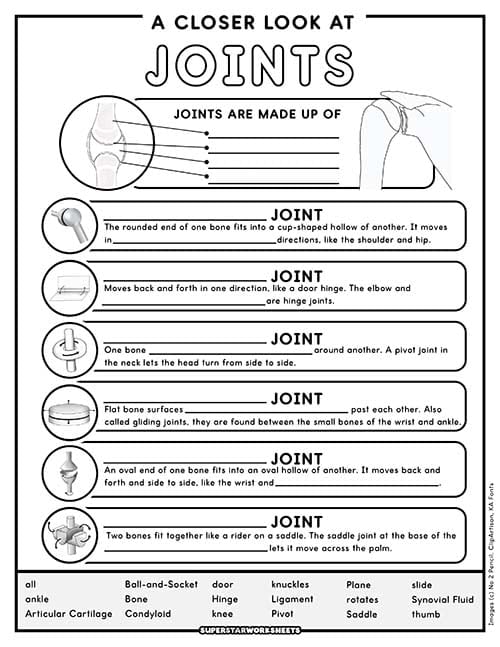
Types of Joints Fill in the Blank
With a word bank as support, students name each type of joint and fill in where it is found. This joints worksheet connects each joint type to familiar body parts like the shoulder, knee, and thumb.
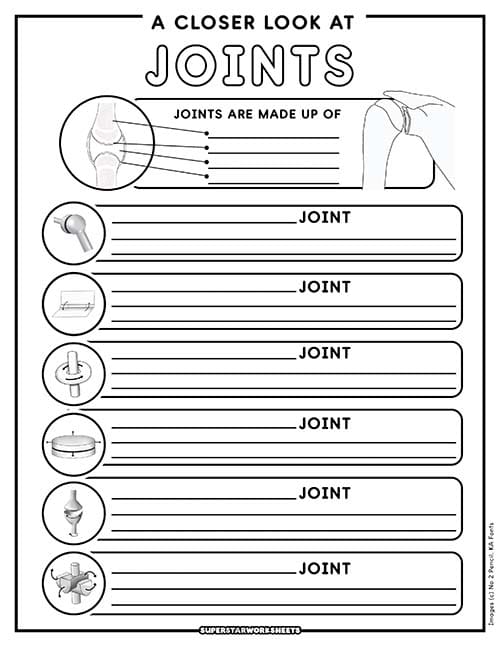
Students label the parts of a joint and describe how each joint type moves. This quiz shows whether kids can tell the difference between hinge, pivot, and ball-and-socket joints on their own.
Teaching the Types of Joints
Turn the joints chart into a movement lesson by having students test each joint on their own bodies: circle a shoulder, bend an elbow, turn the head, and wiggle a thumb across the palm. Ask them to describe the movement before naming the joint type, which helps the vocabulary stick. Mention that some joints, like those in the cranium, do not move at all. Follow up with the fill-in-the-blank page and finish with the quiz.
Vocabulary Bank: Joint, Ball-and-Socket Joint, Hinge Joint, Pivot Joint, Plane Joint, Condyloid Joint, Saddle Joint, Synovial Fluid, Fixed Joint
Skeletal System Fun Facts & Research
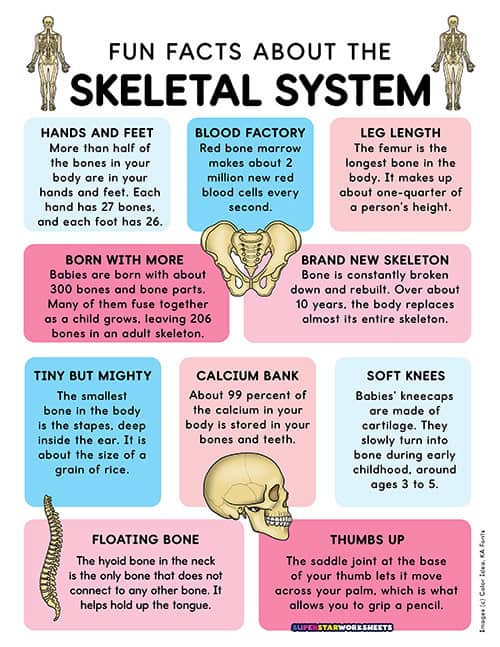
Fun Facts About the Skeletal System
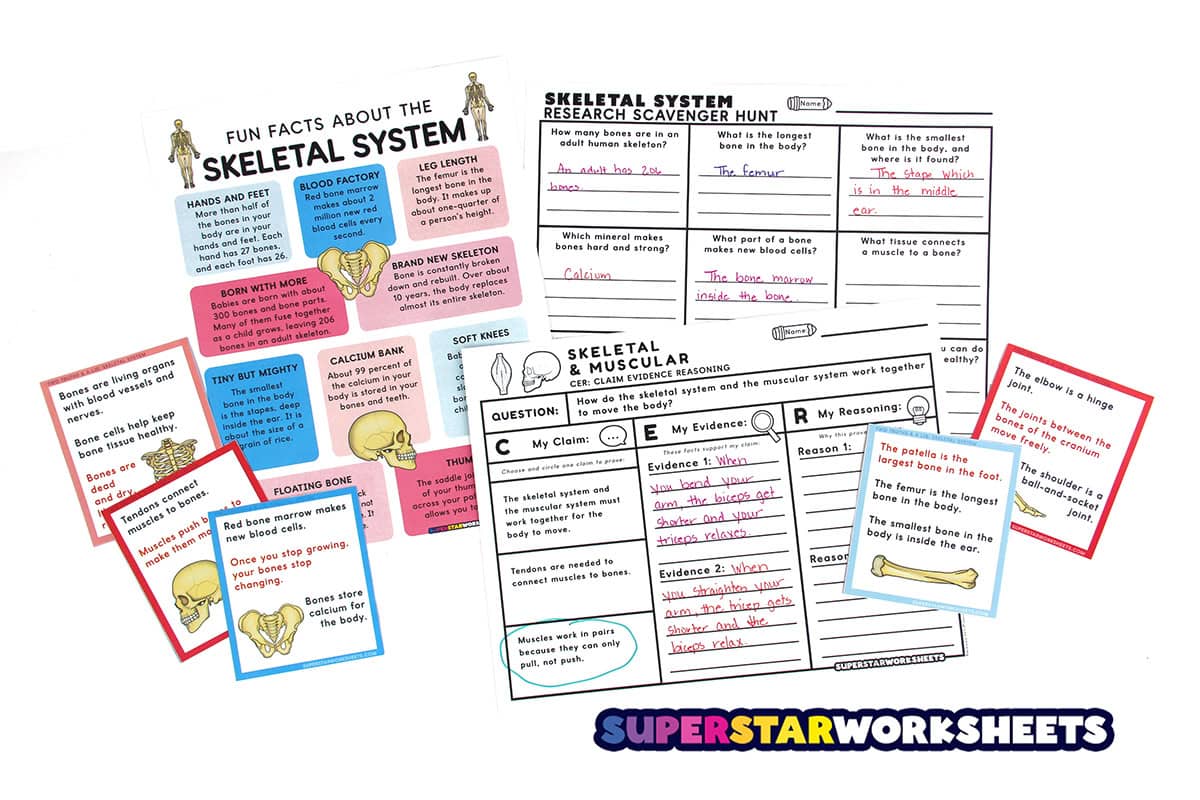
This colorful fun facts poster shares surprising skeletal system facts, like why babies have more bones than adults and where the smallest bone is hiding. It is a great discussion starter for science class.
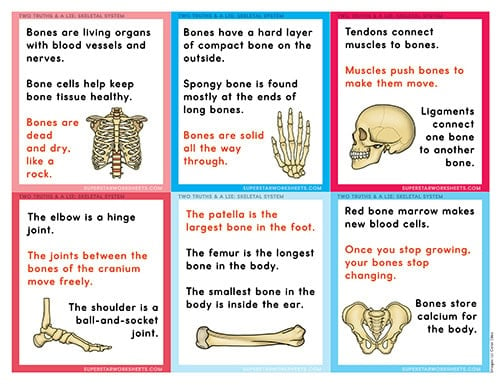
Skeletal System Two Truths and a Lie
Teachers read each card to students and decide which skeletal system statement is false. This game gets kids talking, reasoning, and correcting common misconceptions about bones and joints.
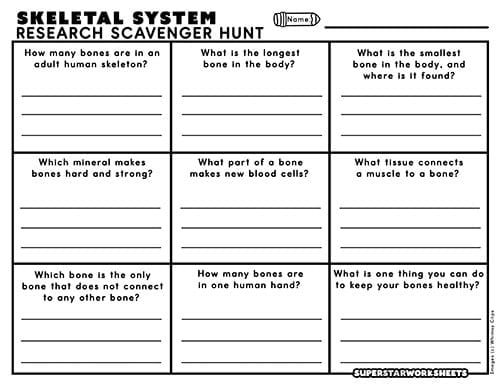
Skeletal System Research Scavenger Hunt
Kids use books and websites to find answers about bones, marrow, and tendons, then record where they found each fact. This research scavenger hunt builds real research skills while adding surprising facts to the unit.
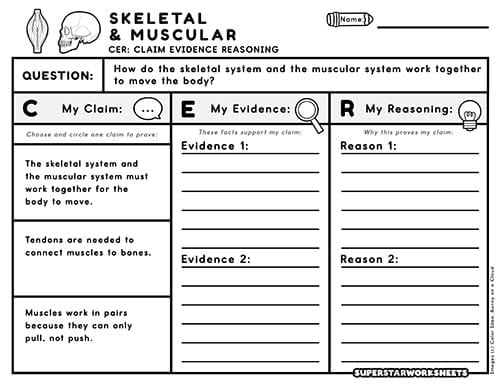
Skeletal and Muscular System CER Worksheet
Students choose a true claim about how the skeletal and muscular systems work together and support it with evidence and reasoning. This claim evidence reasoning worksheet builds scientific writing skills while showing how muscles and bones depend on each other.
Teaching with Skeletal System Fun Facts & Research
Kick off this section with the fun facts poster and let students share which fact surprised them most. Use the Two Truths and a Lie cards in small groups to spark discussion and clear up misconceptions, such as the idea that muscles push bones. The scavenger hunt gives students practice finding and citing information, and those facts can become evidence on the CER worksheet. The CER ties the whole unit together by showing how the skeletal and muscular systems depend on each other.
Leave a Reply