Free Printable 5 Senses Worksheets help young learners explore sight, hearing, smell, taste, and touch through hands-on charts, diagrams, and activities. Download and print PDF worksheets that cover everything from basic labeling pages to fun facts, research projects, and simple investigations. These resources build vocabulary, observation skills, and an understanding of how each sense organ works, all through kid-friendly visuals and activities. Whether you are planning a classroom science center, a homeschool unit, or a small group lesson, this collection gives elementary students an engaging way to learn about their five senses.
Five Senses Chart and Labeling Printables
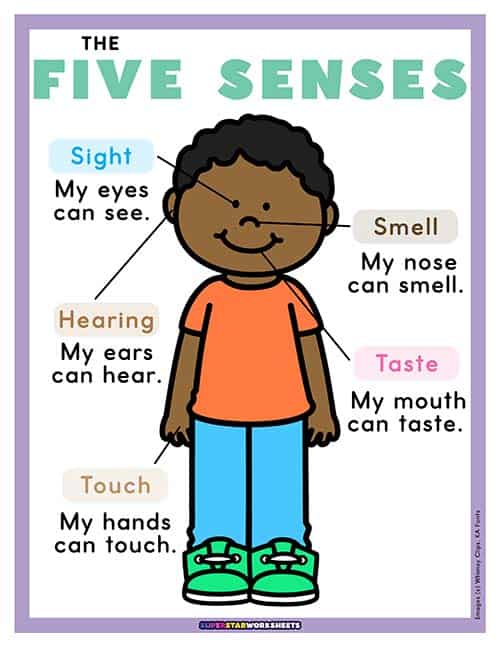
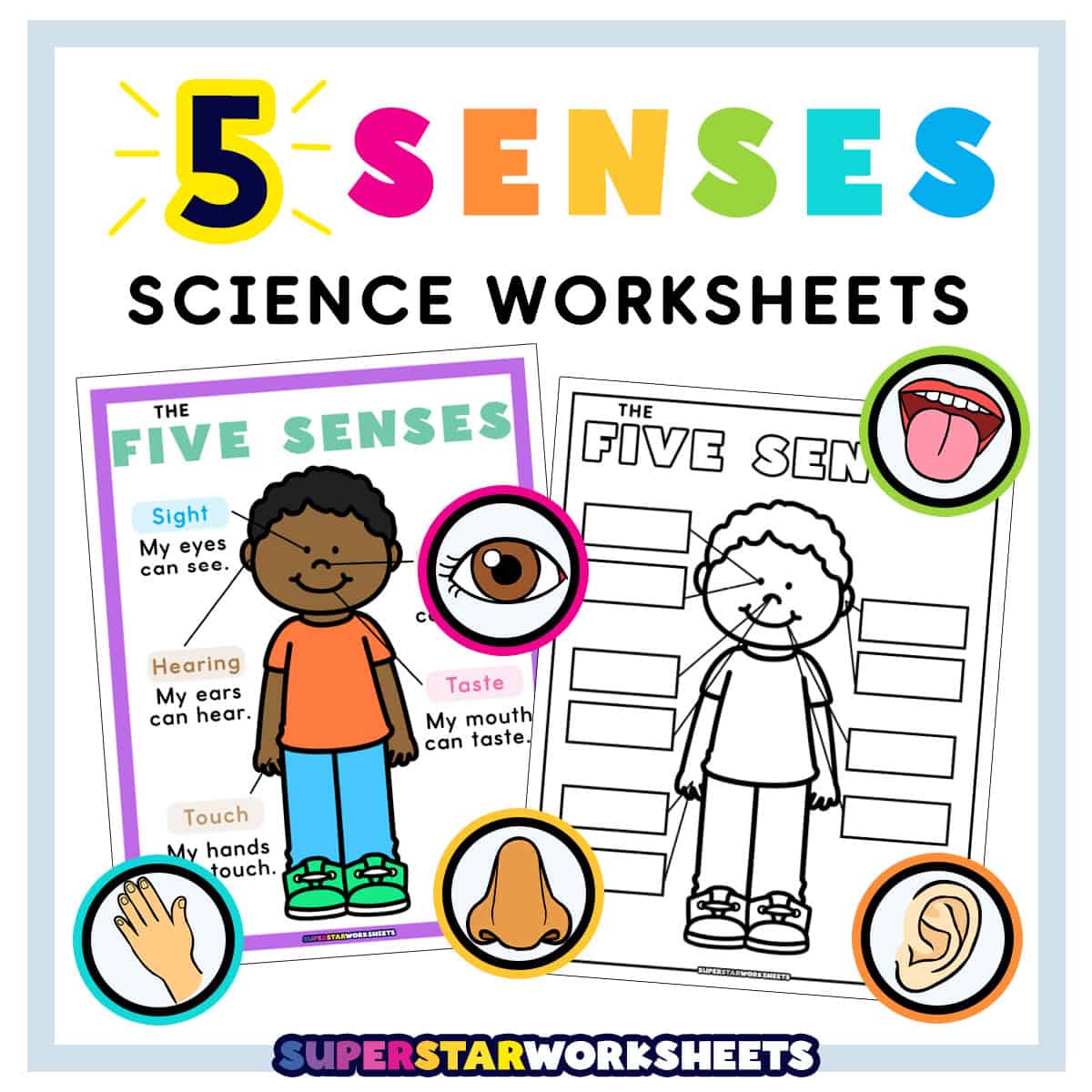
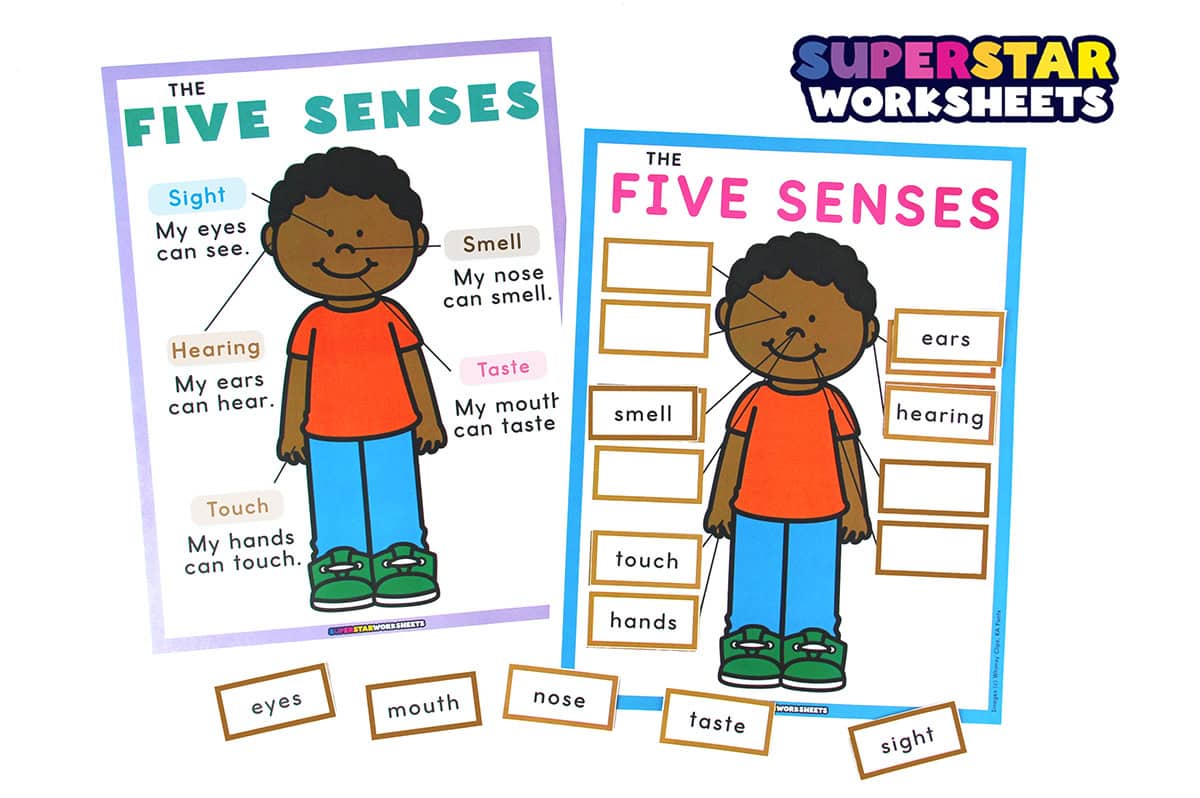
This five senses chart introduces the five senses, sight, hearing, smell, taste, and touch, alongside the matching body part for each one. Bright, friendly illustrations make it easy for young learners to see exactly which body part goes with which sense.
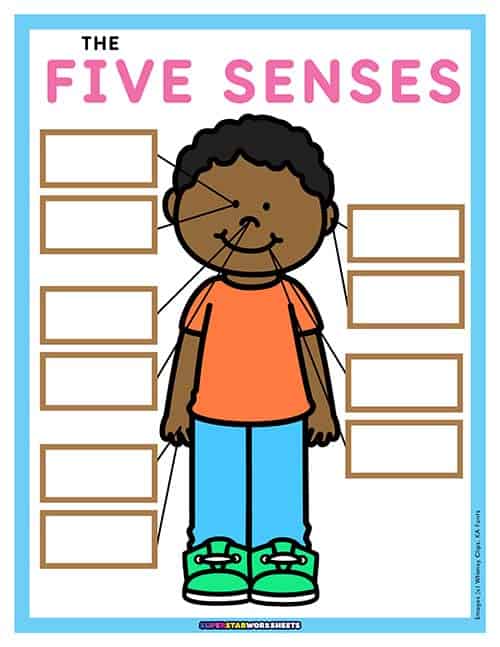
Kids practice matching each sense to its body part with this hands-on five senses learning mat and label cards. Reusable labels let students build the same connections again and again, making this a great fit for a science center or small group activity.
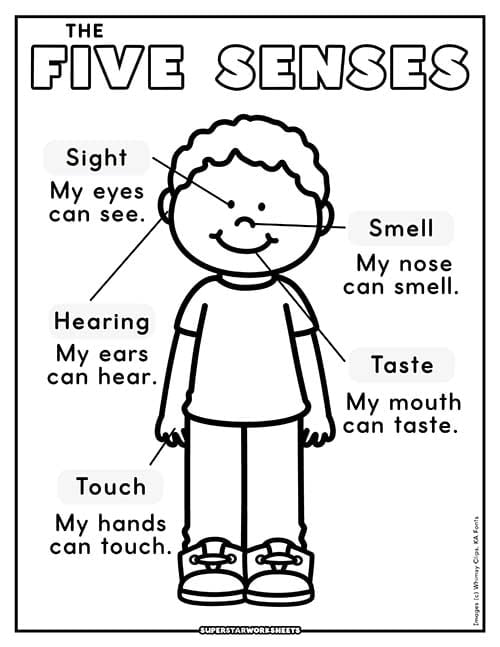
Five Senses Black and White Chart
This black and white version of the five senses chart gives students a coloring page while they identify each sense organ. It is a simple, no-prep way to reinforce the five senses after the full color chart has been introduced.
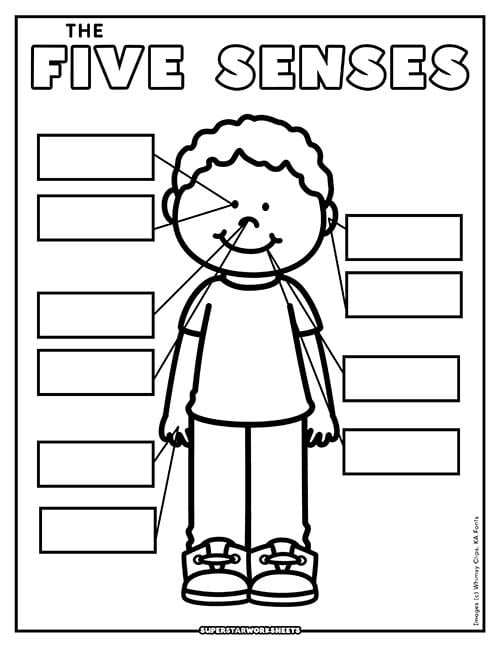
Students recall and apply what they have learned by labeling each sense organ on this five senses cut and paste worksheet. It is a quick way to check whether students can independently match each body part to its sense.
Teaching the 5 Senses
Understanding the five senses, sight, hearing, smell, taste, and touch, is one of the first science concepts young learners explore. These worksheets introduce each sense and its matching body part through simple, colorful charts and labeling activities that build a strong foundation for later lessons on how the body works.
Individual Five Senses Charts and Practice Worksheets
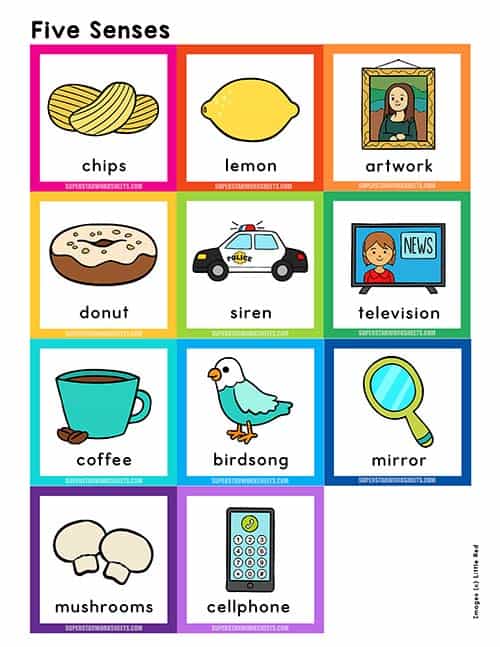
These five senses sorting cards ask students to decide which sense they would use to notice a variety of everyday items, from a ringing phone to a slice of pizza. Sorting by sense builds critical thinking skills while reinforcing sensory vocabulary in a hands-on, game-like format.
A Closer Look at the Five Senses
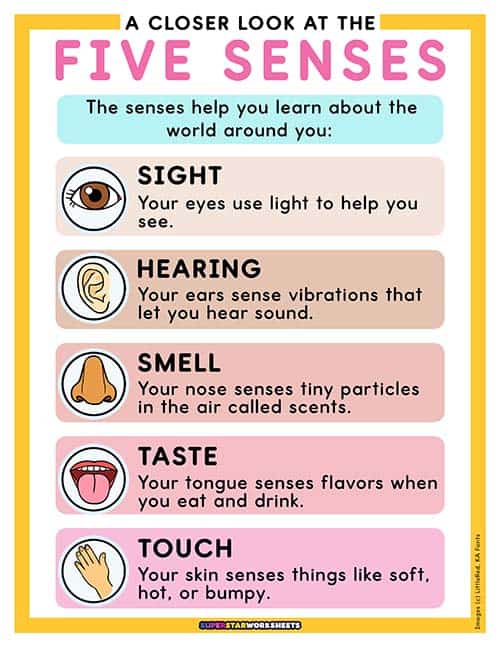
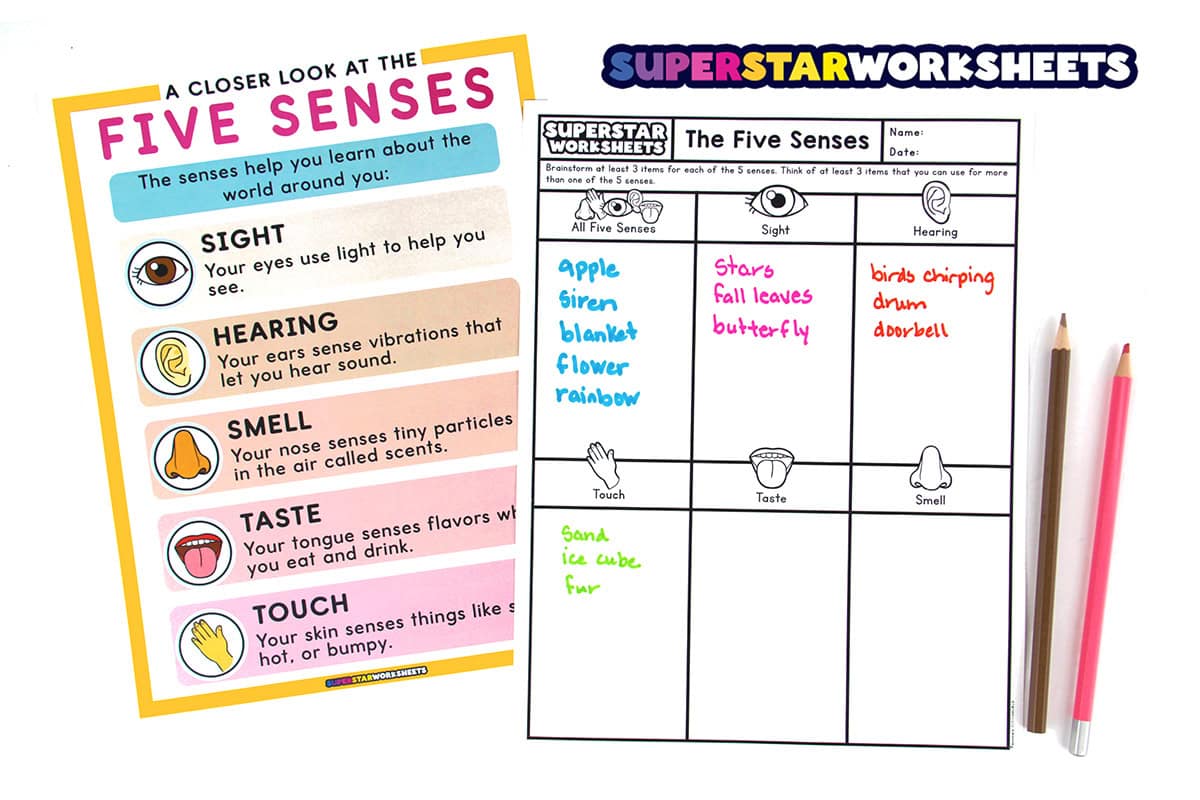
This overview chart takes a closer look at how each of the five senses works, pairing a simple one sentence explanation with an icon for sight, hearing, smell, taste, and touch. It is the perfect bridge between simply naming the senses and understanding how each one functions. For more human science worksheets, take a look at our Parts of The Body Worksheets!
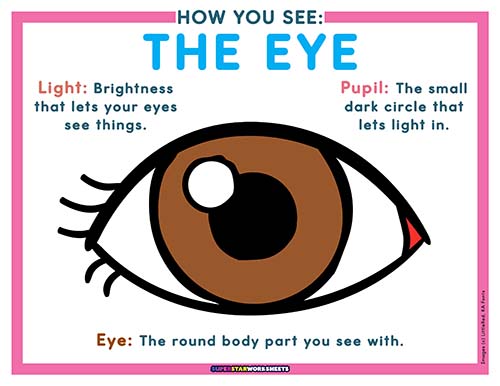
This labeled diagram introduces the eye, the pupil, and the role light plays in helping us see. Simple definitions make it easy for early learners to connect each new vocabulary word to the correct part of the eye.
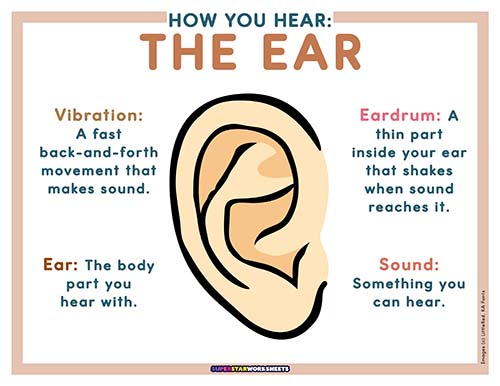
This diagram breaks down how the ear works, including the eardrum, sound, and vibration. Students see exactly how sound waves travel and cause the eardrum to move, connecting a new vocabulary word to each part.
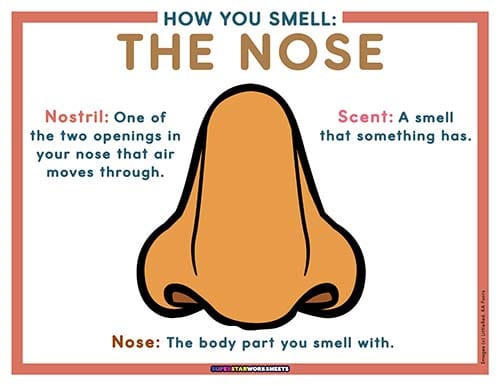
This nose diagram introduces the nostril and the concept of scent, helping students understand how smell reaches the brain. Clear labels and definitions make this a strong companion to the other individual sense diagrams.
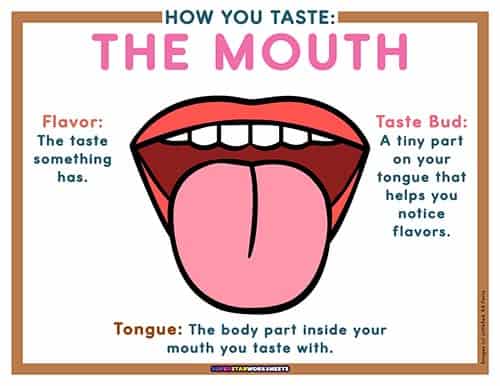
This mouth and tongue diagram introduces taste buds and flavor, showing students how the tongue helps detect different tastes. It pairs naturally with the other sense diagrams to round out a full unit on how the senses work.
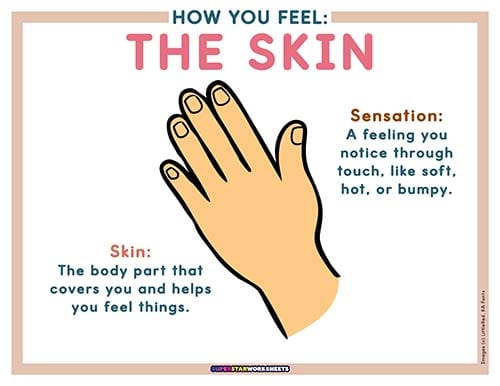
This skin diagram introduces sensation and shows how touch helps us notice things like soft, hot, or bumpy textures. It completes the set of individual sense diagrams alongside sight, hearing, smell, and taste.
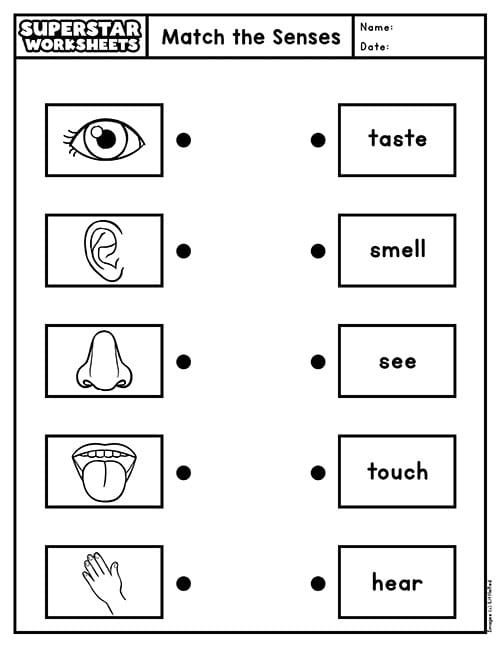
In this matching activity, students connect each sense organ image to the correct sense, reinforcing vocabulary from the individual sense diagrams. It is a simple, engaging way to check understanding after introducing all five senses.
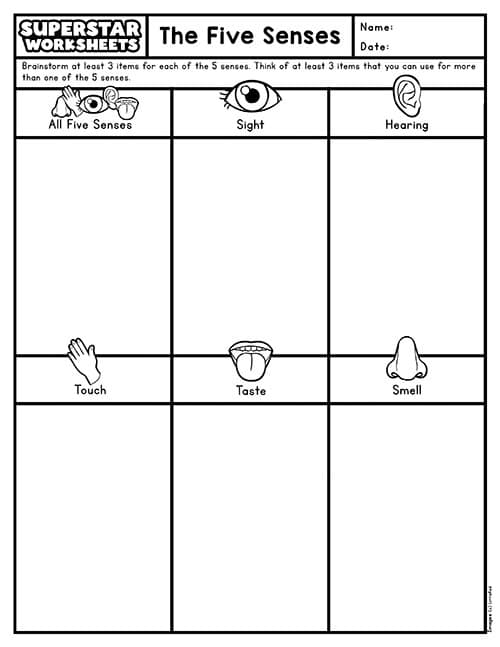
Five Senses Brainstorming Worksheet
Students brainstorm real-world items connected to each of the five senses in this open-ended worksheet. The activity also challenges students to think of items that could belong to more than one sense, encouraging deeper thinking about how the senses overlap.
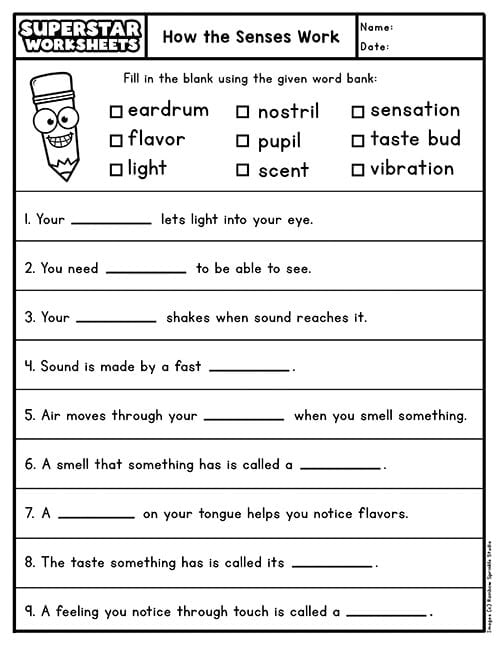
How the Senses Work Vocabulary Worksheet
This fill in the blank worksheet reinforces key vocabulary from across the five senses unit, including words like pupil, eardrum, and taste bud. A word bank supports students as they apply new vocabulary in context.
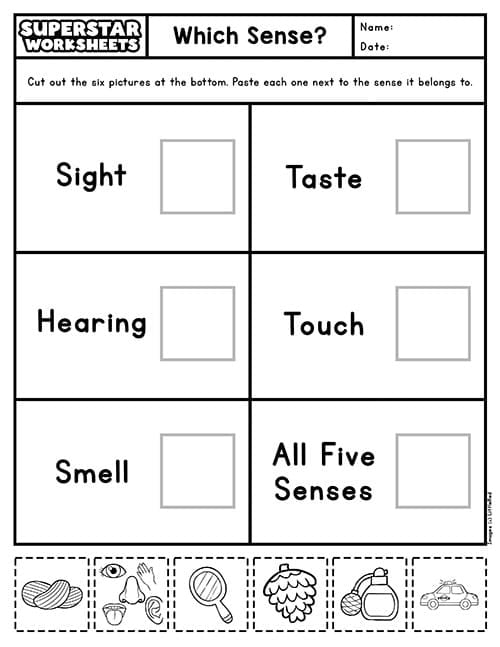
Which Sense? Cut and Paste Sorting
Students cut and paste pictures under the correct sense in this hands-on sorting worksheet. It is a fun, low prep way to review vocabulary and reinforce which sense goes with which everyday object.
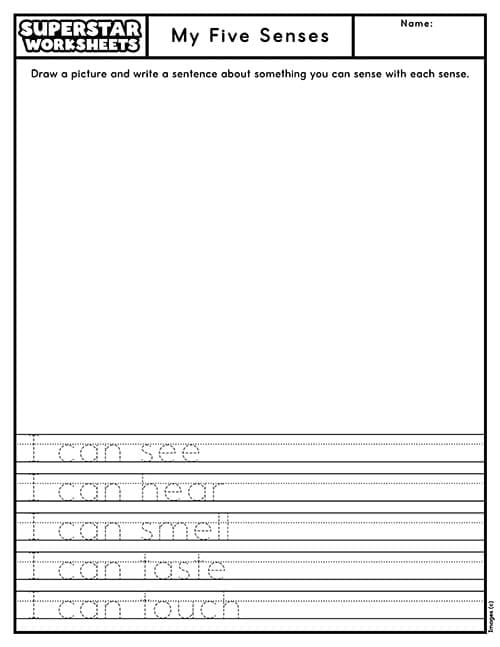
My Five Senses Writing Activity
This writing activity invites students to draw and write about something they can sense with each of their five senses. Sentence starters make it easy for early writers to express their own sensory experiences.
How the Individual Senses Work
Once students can identify the five senses, they are ready to dig a little deeper into how each one actually works. This section walks through the eyes, ears, nose, mouth, and skin one at a time, pairing simple diagrams with hands-on matching, sorting, and writing activities that reinforce new vocabulary along the way.
Senses Fun Facts and Research
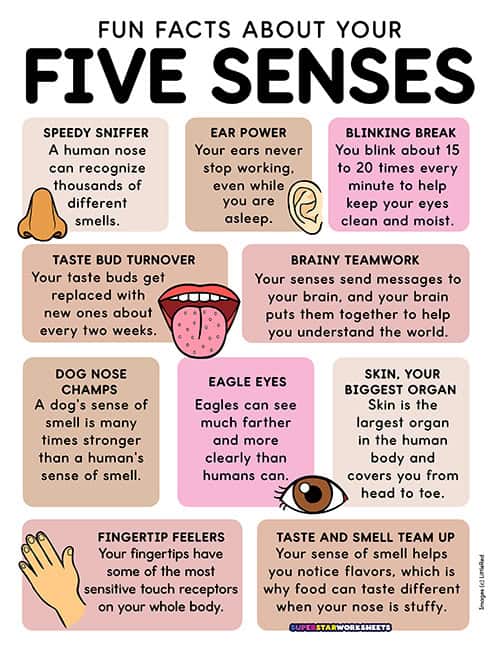
Fun Facts About Your Five Senses
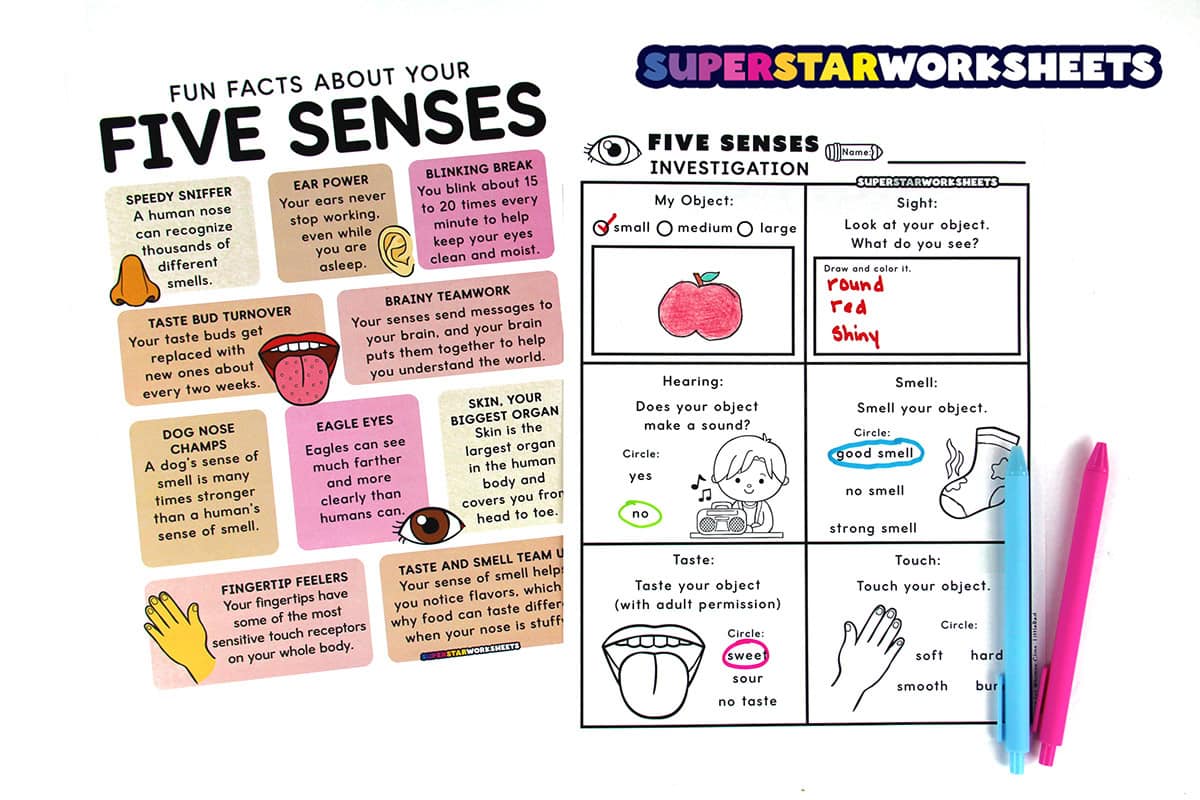
This colorful poster shares fun, surprising facts about the five senses, from how often people blink to how animals like dogs and eagles use their senses. It is an engaging way to spark curiosity before diving into research and investigation activities.
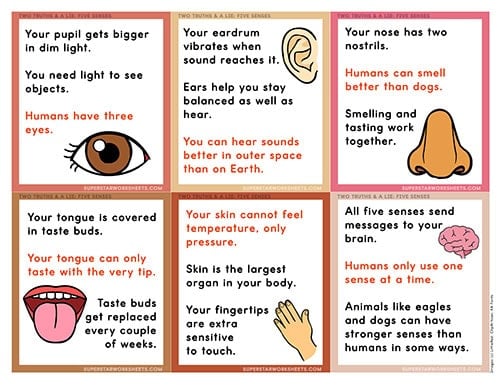
Two Truths and a Lie: Five Senses
Students evaluate true and false statements about the five senses in this two truths and a lie card game. It is a playful way to build critical thinking skills while reinforcing facts learned earlier in the unit.
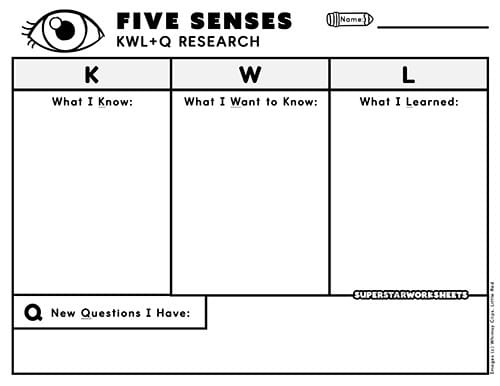
Five Senses KWLQ Research Chart
This KWLQ chart helps students organize what they already know, what they want to learn, what they learned, and any new questions about the five senses. It is a great tool for launching an independent or small group research project. Check out our FREE Heart Worksheets here!
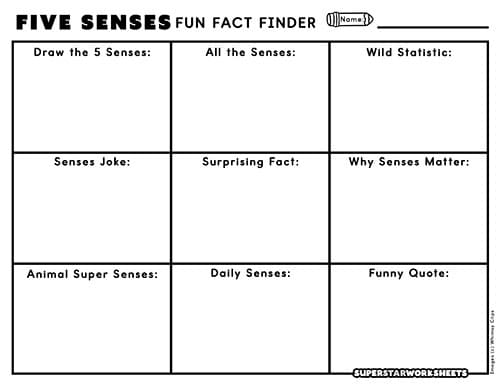
Students dig deeper into the topic with this guided fact finder, which includes prompts for drawing, writing jokes, and recording surprising facts about the five senses. It is a flexible research tool that works well for independent work or small group research stations.
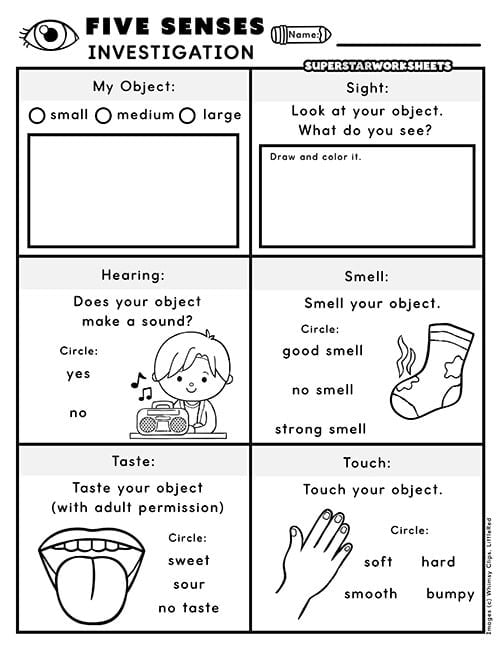
In this simple investigation, students choose an object and use their senses to observe, predict, and record what they notice about it. The activity introduces basic investigation skills like observing and recording results in a way that is accessible for young scientists.
Fun Facts
Kids love a good fact, and the five senses are full of them. This section rounds out the unit with fun facts, a two truths and a lie game, guided research pages, and a simple investigation activity that let students apply what they have learned about their senses in a more independent way.