
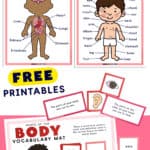
Free Printable Parts of the Body Worksheets give young learners a hands-on introduction to their own bodies through learning mats, vocabulary cards, coloring pages, and body organ activities. Download and print PDF worksheets that help kids identify external body parts, name major organs, and explore body systems like the skeletal and digestive systems. These activities build early science vocabulary and observation skills while keeping little hands busy with cutting, coloring, and matching. Perfect for preschool and kindergarten classrooms, homeschool science lessons, or small group centers.
Parts of the Body Worksheets
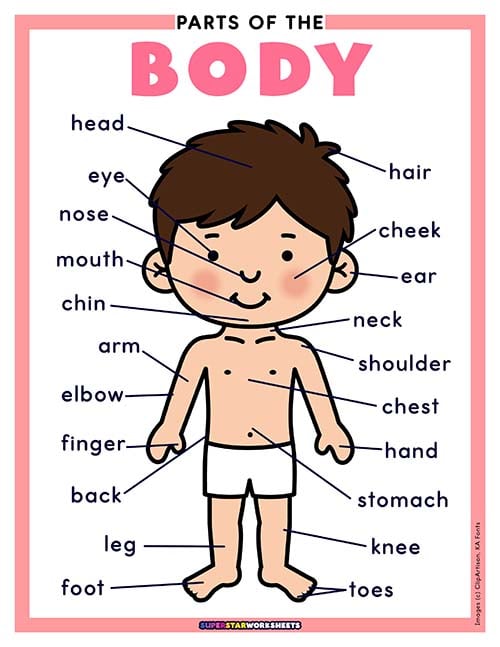
This colorful parts of the body chart introduces PK-1 learners to major external body parts, from head and hands to knees and toes. Bright, friendly clipart pairs each labeled part with its name, making it an easy first reference for circle time or a science center wall. It’s a simple starting point before moving into hands-on labeling and matching activities.
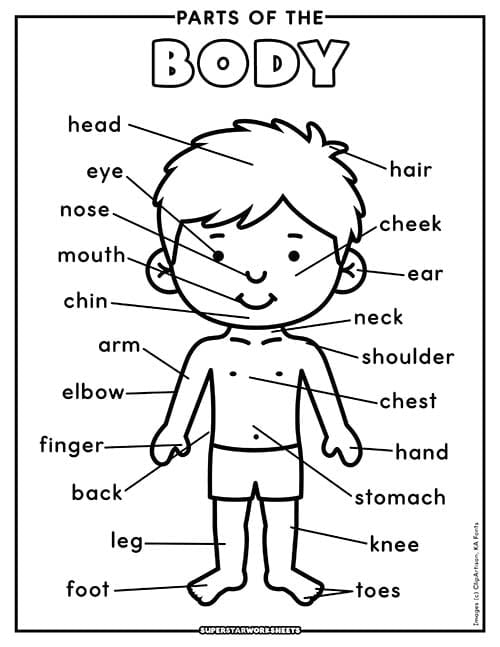
Parts of the Body Chart Black and White
This printable body parts chart is perfect for preschool, kindergarten, and early elementary learners. It features 21 labeled body parts, including head, hair, eye, nose, mouth, cheek, ear, chin, neck, shoulder, arm, elbow, chest, hand, finger, stomach, back, leg, knee, foot, and toes.
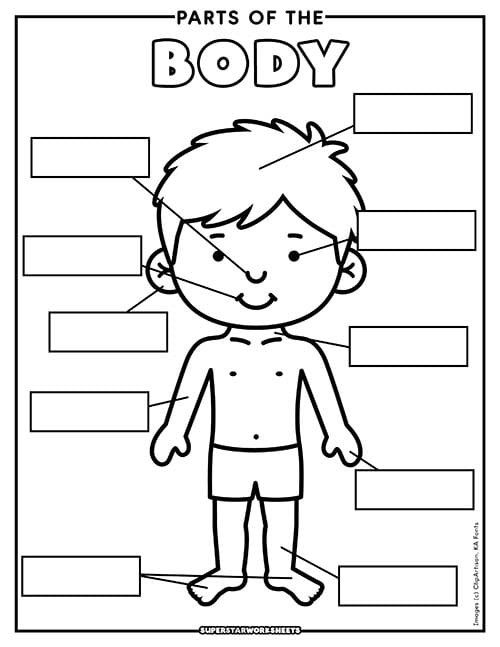
Parts of the Body Learning Mat and Label Cards
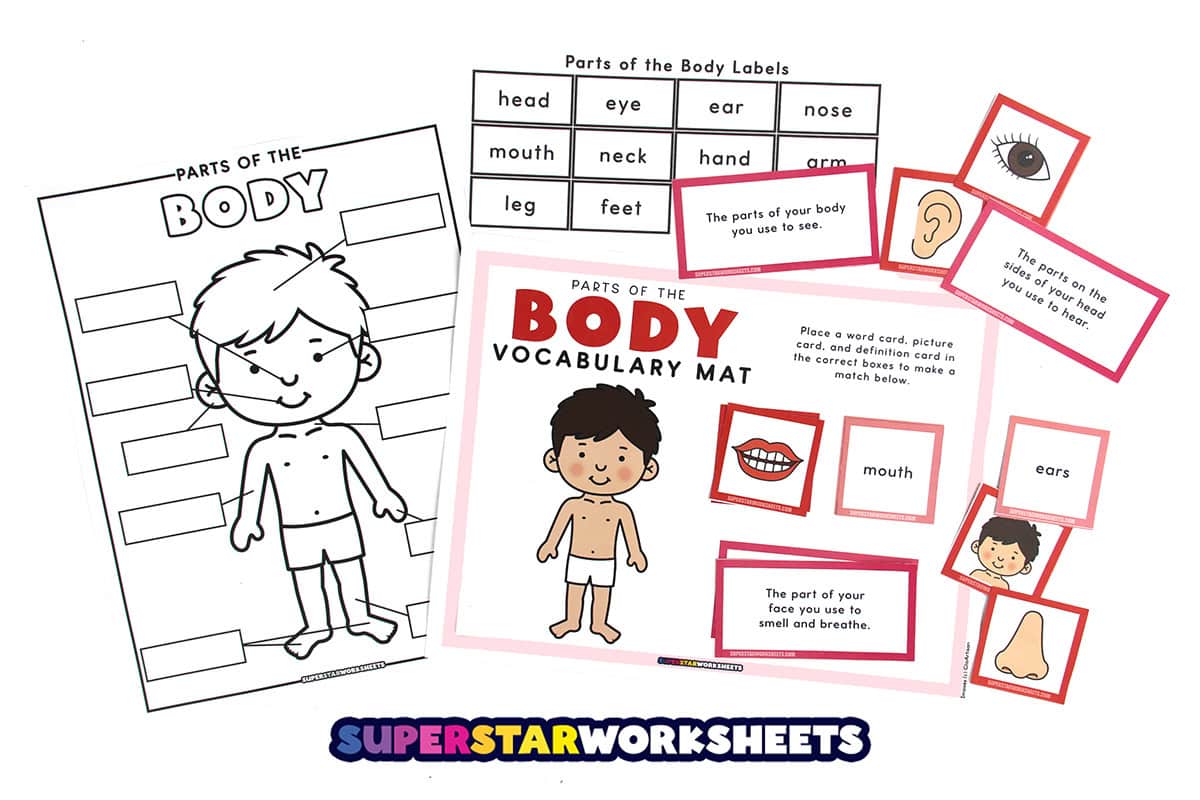
This reusable body parts learning mat lets kids practice placing labeled cutout pieces onto a body outline in the correct spots. Precut by a parent or teacher, the thick outline and matching label cards turn body part vocabulary into a hands on matching game. It’s a great fit for small group centers or one on one practice.
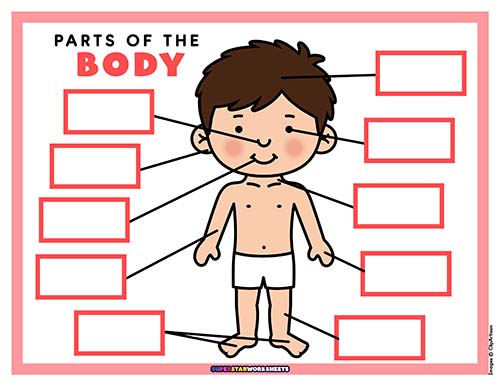
Parts of the Body Vocabulary Mat and Cards
These vocabulary mats and cards help kids connect a picture, word, and simple definition for each body part. Kids place the matching picture, word, and definition card into the correct boxes on the mat, building both vocabulary and reading readiness. The set covers core body parts like head, eyes, hands, and feet.
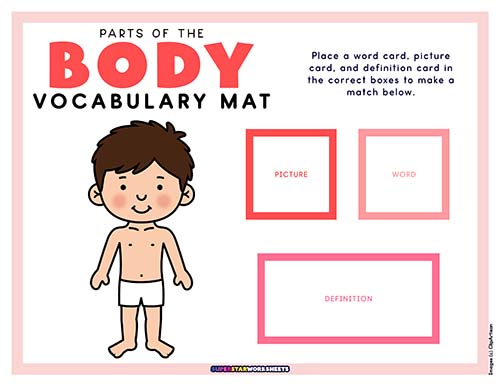
Parts of the Body Coloring Chart
In this labeling worksheet, kids glue pre-cut word labels onto the matching blank boxes to identify ten core body parts. It’s a natural next step after the learning mat, letting kids show what they’ve learned with a cut-and-paste labeling activity. Word labels can also be reused as a lower-prep write-in alternative for older students.
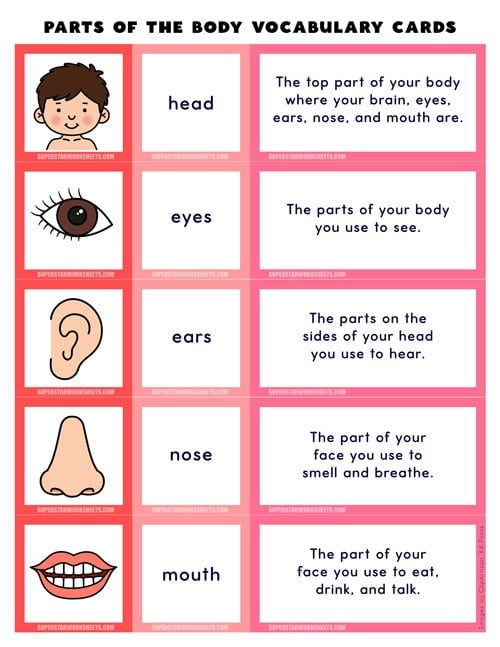
Label the Parts of the Body Worksheet
These colorful vocabulary cards help kids connect body parts to what they do. Each set has three matching pieces: a picture card, a word card, and a simple definition card.
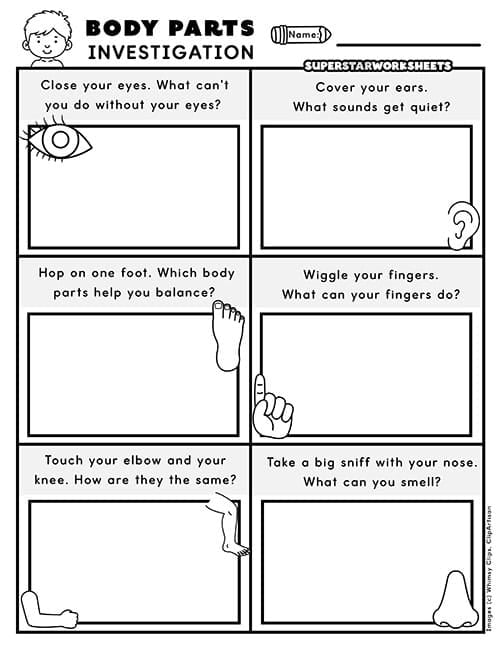
Parts of the Body Investigation
This simple investigation gets kids moving and observing what their own body parts can do, from covering their ears to wiggling their fingers. Kids draw or write what they notice in each box, connecting body part vocabulary to real, hands-on observation. It’s an easy way to wrap up the parts of the body unit with a bit of movement.
Teaching Parts of the Body to PK-1 Students
At the preschool and kindergarten level, body parts are best taught through repetition, songs, and hands-on matching rather than worksheets alone. Pairing a learning mat with simple vocabulary cards gives kids multiple ways to encounter the same words, from pointing and naming to gluing and labeling. Rotating between the model chart, learning mat, and investigation keeps young learners engaged while building toward independent labeling.
Human Body Organs Worksheets
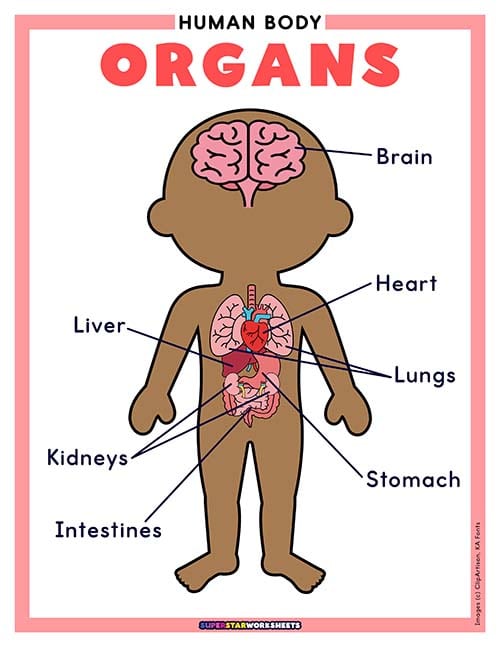
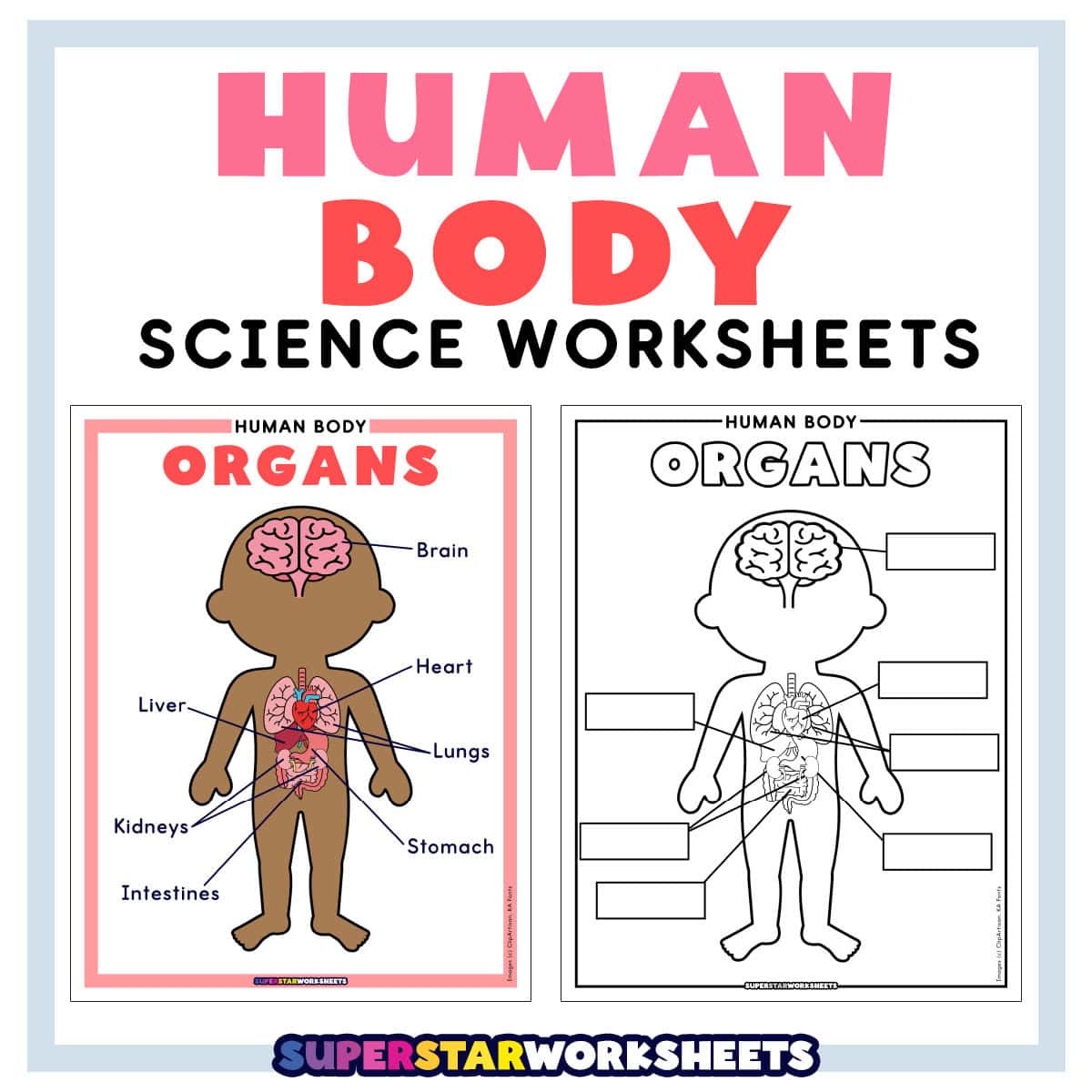
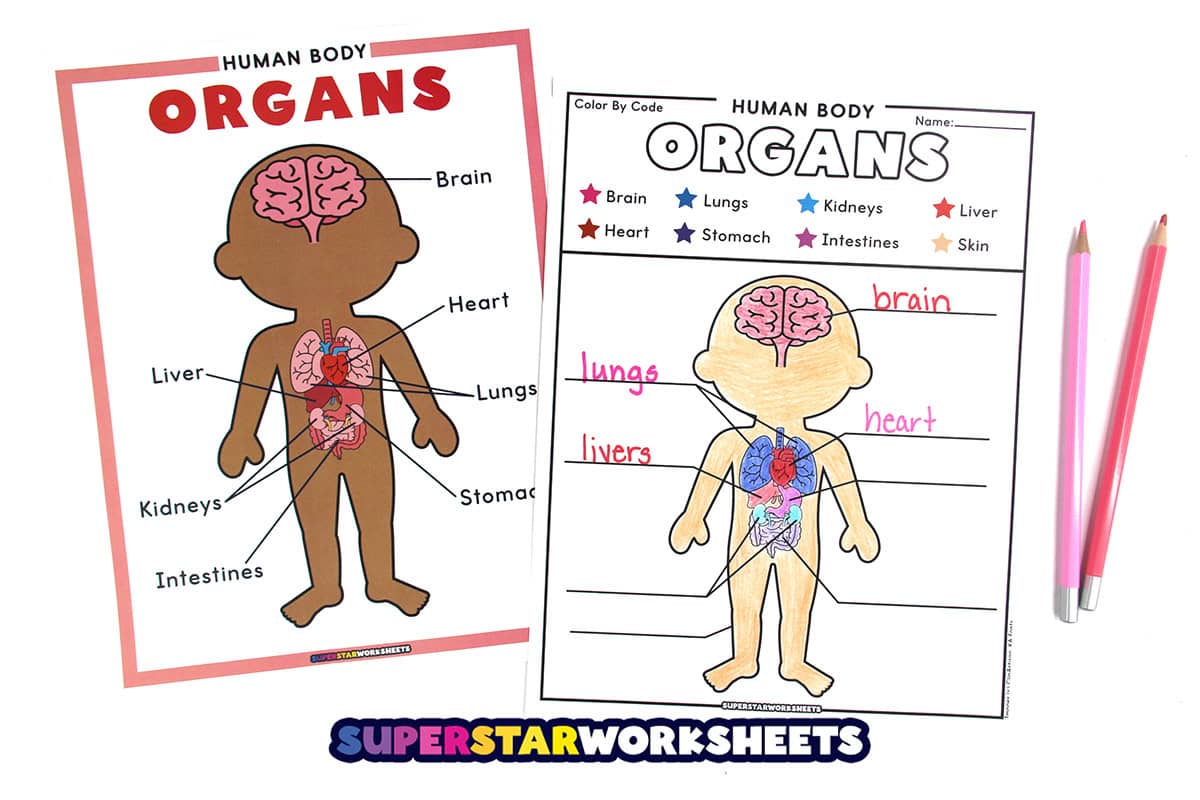
This human body organs chart gives young learners a simple, see through look at where the brain, heart, lungs, stomach, kidneys, intestines, and liver sit inside the body. Clear labels and friendly illustrations make it an approachable first introduction to internal organs. It works well as a classroom poster or a lead in to the hands on organ activities that follow.
Body Organs Learning Mat and Label Cards
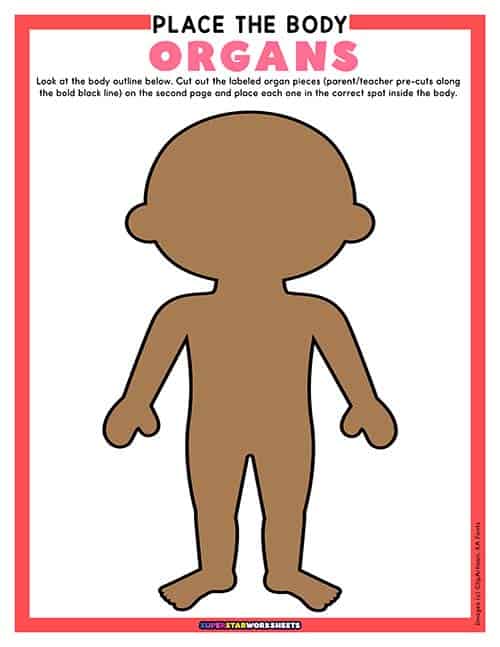
Kids place labeled organ cutouts onto a body outline in this hands on body organs learning mat. The matching activity reinforces where each organ belongs inside the body while practicing early reading skills through the printed labels. It pairs naturally with the body organs vocabulary cards for a full organ matching center. Take a look at our FREE Lung Worksheets here!
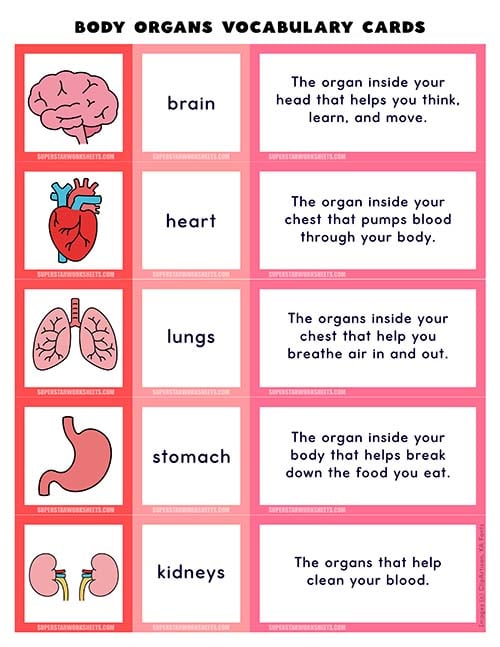
Body Organs Vocabulary Mat and Cards
This vocabulary mat and card set helps kids match a picture, word, and simple definition for each major body organ. Definitions are written in short, kid-friendly language so even reference-level organs like kidneys and intestines stay approachable. It’s an easy way to build organ vocabulary before moving into labeling worksheets.
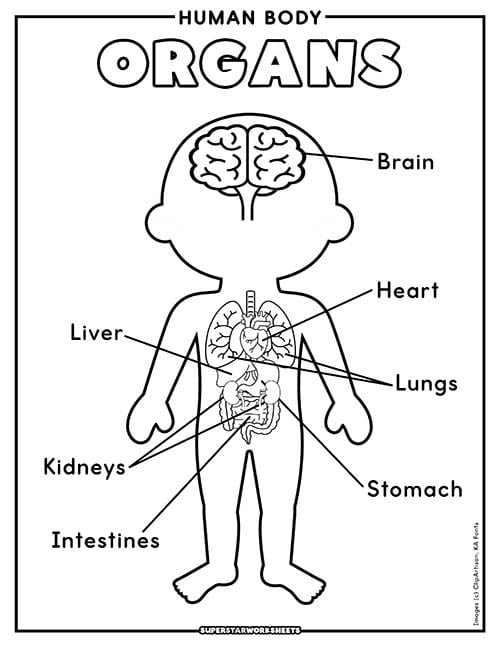
Human Body Organs Coloring Chart
This black-and-white version of the body organs chart lets kids color each organ while reinforcing the same labels and locations. It’s an easy independent practice activity that keeps organ vocabulary fresh through repetition. A great low-prep option for morning work or a science center.
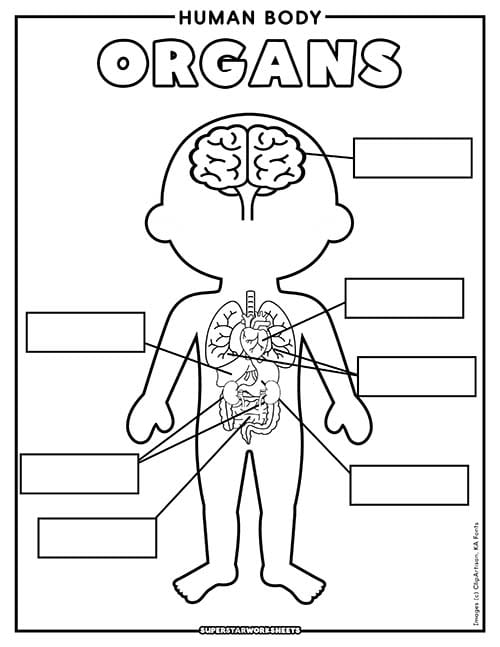
Label the Human Body Organs Worksheet
Kids glue pre-cut labels onto the matching blank boxes to identify seven major body organs in this hands-on labeling worksheet. It builds on the body organs learning mat, giving kids a chance to show what they’ve learned in a slightly more independent format. Cutout labels also make this activity naturally self-checking.
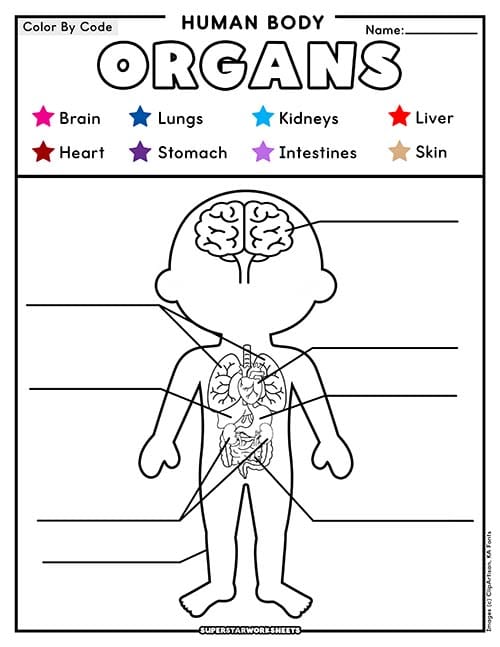
Human Body Organs Color by Code
This body organs color by code activity has kids match each organ to its assigned color, from a pink brain to a dark red heart. It’s a fun way to reinforce organ names and locations while building color recognition and following directions skills. A great wrap-up activity for the body organs unit.
Teaching Body Organs to PK-1 Students
Internal organs are a bigger leap for young learners than external body parts, so keeping definitions short and concrete matters most at this age. Simple phrases like your heart pumps blood or your lungs help you breathe give kids a functional understanding without overwhelming detail. Color by code and matching activities help make invisible organs feel more real and memorable for PK-1 students.
Body Systems Overview Worksheets
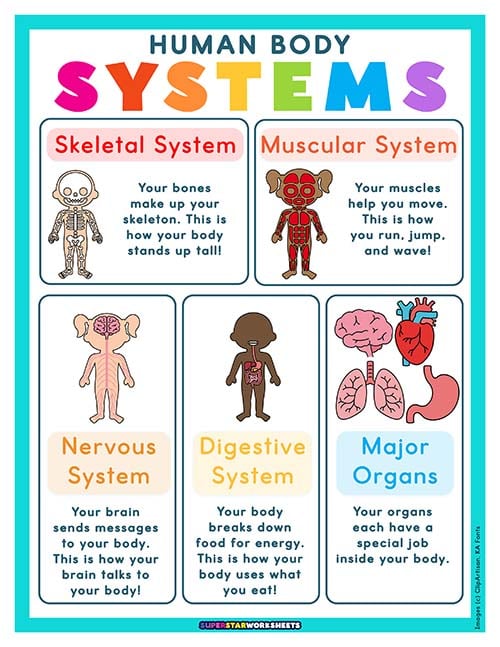
This body systems overview chart introduces the skeletal, muscular, nervous, and digestive systems alongside a major organs panel, all in one colorful reference chart. Each panel uses a short, discussion style sentence to frame the system’s job in a way young learners can talk through together. It’s designed as an exposure level introduction rather than a hands on worksheet.
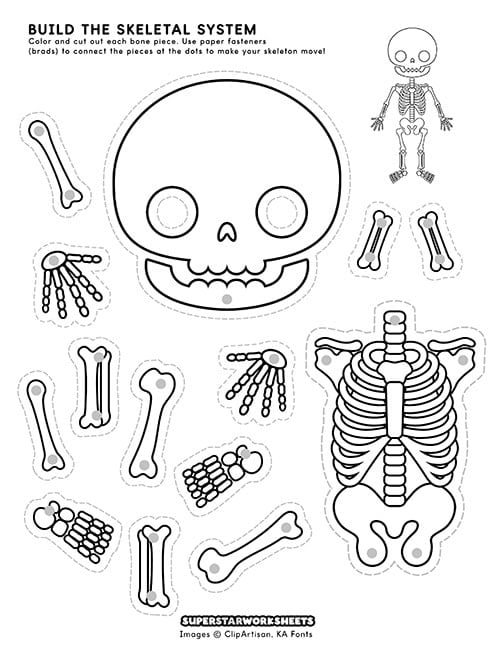
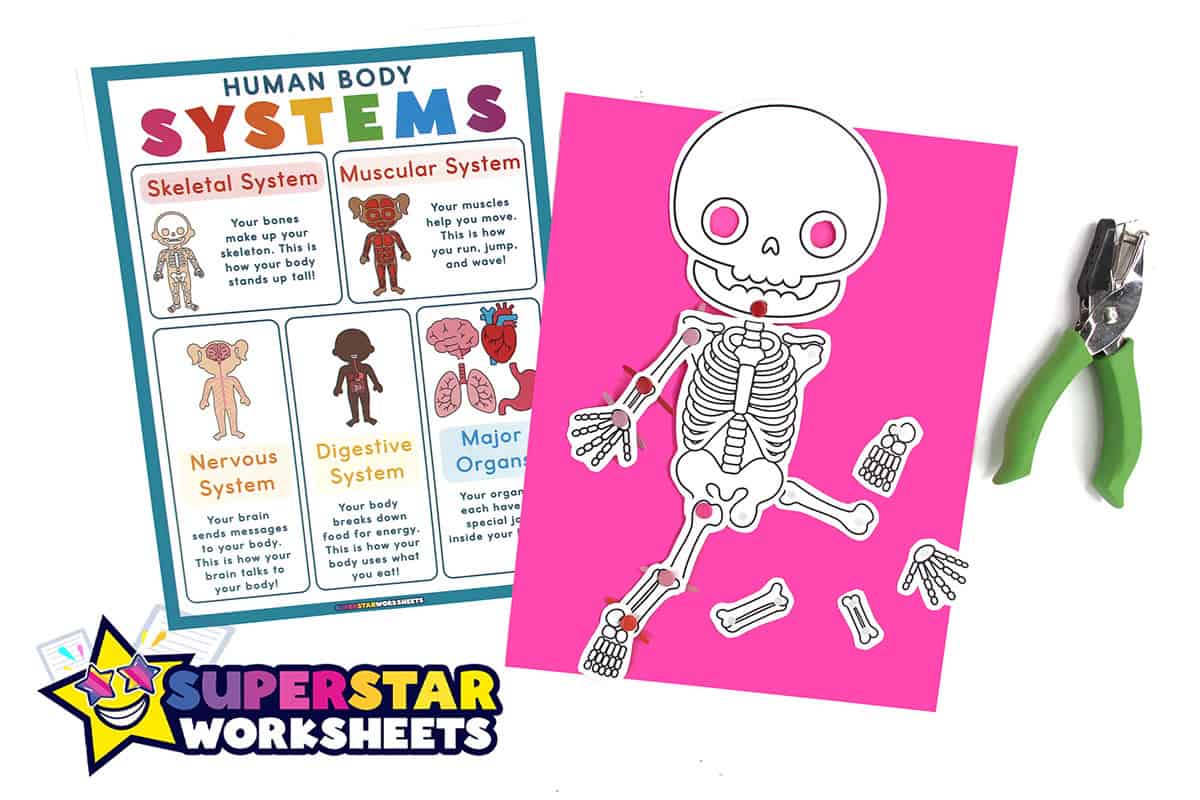
In this hands-on skeletal system craft, kids color, cut, and assemble bone pieces with paper fasteners to build a moving skeleton model. Jointed elbows, hips, and knees let kids see how bones connect and move together. It’s a memorable, hands-on way to make the skeletal system feel real after the body systems overview chart. For more FREE human science printables, take a look at our Heart Worksheets!
Introducing Body Systems to PK-1 Students
Body systems are best introduced as simple, big picture ideas at the PK-1 level, saved mostly for discussion rather than detailed worksheets. Framing each system around a question, like how your brain talks to your body, keeps the concept concrete and conversational. Following up the overview chart with a hands-on skeleton craft gives kids one system to explore more deeply while the rest stay at an exposure level.
Leave a Reply