
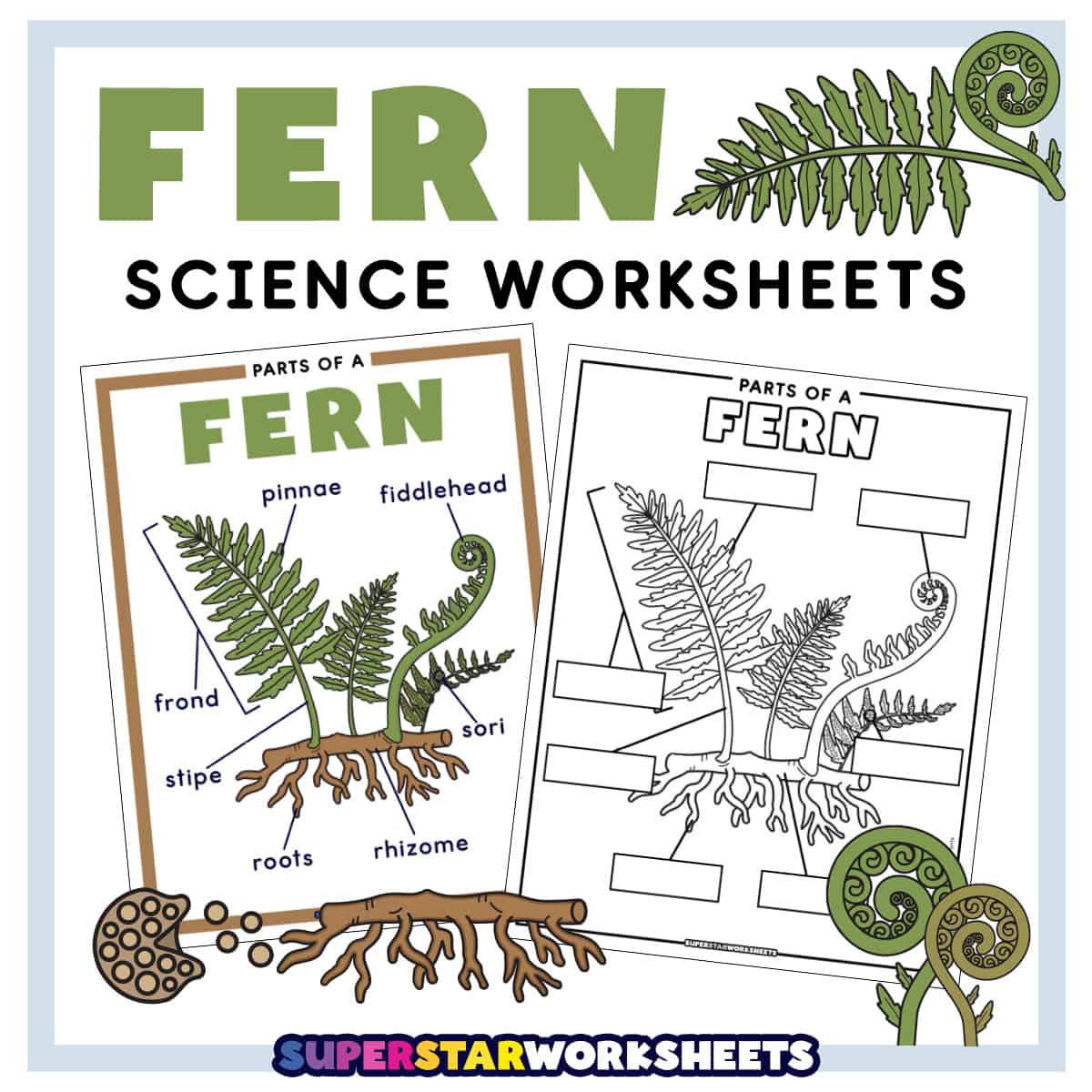
Free printable Fern Worksheets bring the fascinating world of ferns straight to your classroom or homeschool table. This full set of fern science activities covers everything from labeling the parts of a fern to exploring its unique two-stage life cycle, comparing spores and seeds, and investigating fern habitats and adaptations. Download and print PDF diagrams, vocabulary cards, life cycle crafts, reading passages, and a hands-on frond print investigation designed for young learners. Along the way, kids build vocabulary, practice scientific observation, and strengthen reading comprehension skills. Perfect for science centers, small group instruction, or independent homeschool science lessons.
Parts of a Fern Printables
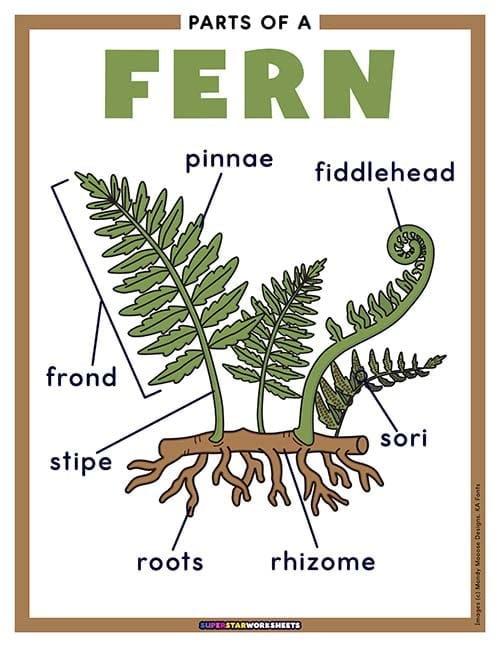
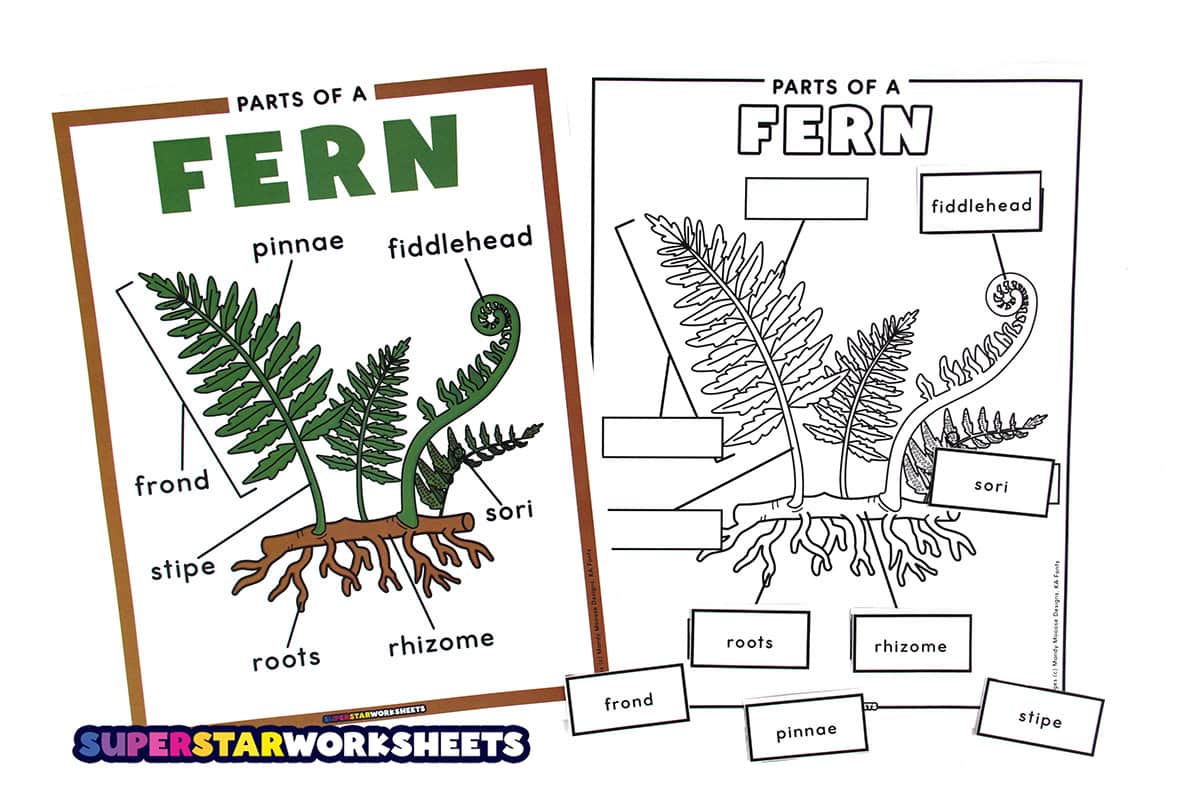
This colorful parts of a fern chart introduces young learners to fern anatomy, from the frond and fiddlehead to the rhizome and sori. Bright labels and simple definitions make this an ideal fern science reference for a classroom wall or science center.
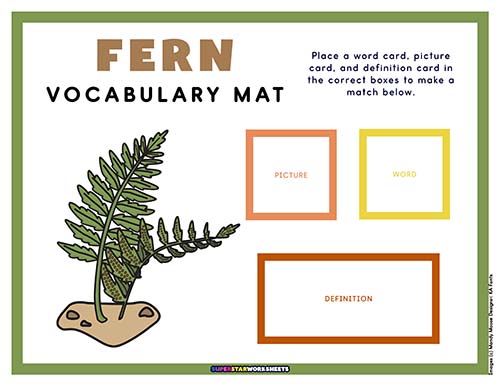
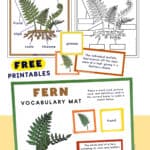
This hands-on fern vocabulary mat pairs picture, word, and definition cards so kids can practice fern anatomy terms independently. It’s a reusable learning center activity that works with both the parts and life cycle vocabulary card sets.
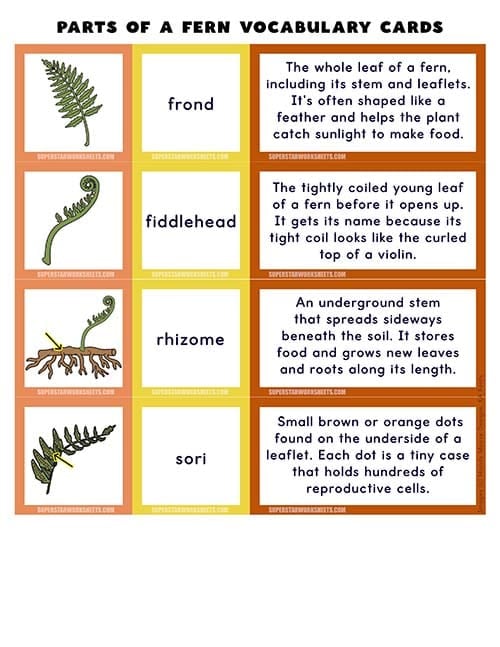
Parts of a Fern Vocabulary Cards
These three-part matching cards help kids connect fern vocabulary words with pictures and definitions. Core terms like frond, fiddlehead, rhizome, and sori are included alongside extended anatomy terms for older learners.
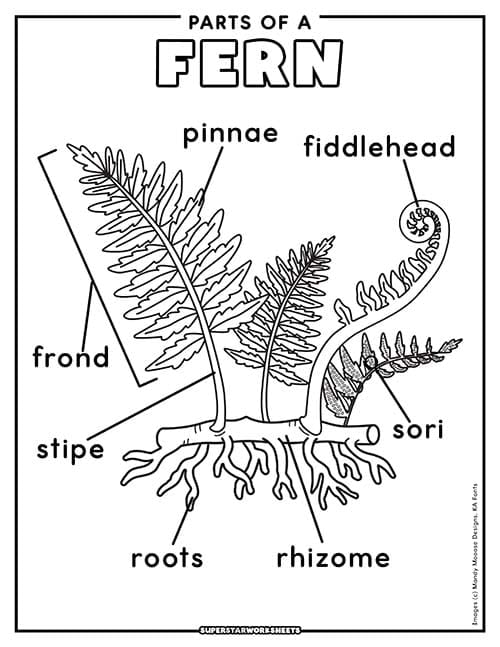
Parts of a Fern Coloring & Labeling Page
This black and white parts of a fern worksheet doubles as a coloring page and vocabulary review. Kids color the diagram while reinforcing fern anatomy terms like pinnae, stipe, and rhizome.
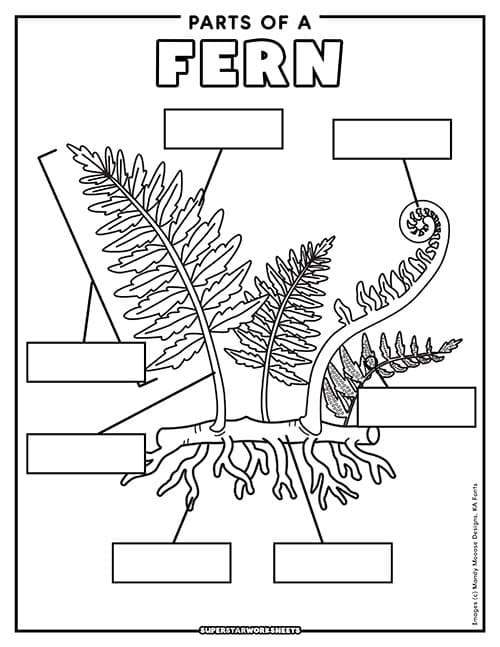
Parts of a Fern Cut and Paste Activity
This independent parts of a fern cut and paste worksheet challenges kids to apply fern vocabulary without a word bank. It’s a great formative check after introducing fern anatomy vocabulary.
Teaching the Parts of a Fern
A fern’s leaf is called a frond, and it usually starts out as a tightly coiled fiddlehead before slowly opening up. Underground, a fern spreads through a rhizome, an underground stem that stores food and grows new fronds and roots along its length. Zoom in on the underside of a leaflet, and you’ll spot small brown or orange dots called sori, these are the fern’s spore cases. Each frond is made up of smaller leaflets called pinnae, all connected to a central stalk called the stipe. Together, these parts help a fern survive, grow, and make new ferns without ever producing a single flower or seed.
Teaching Tip: Bring in a real or artificial fern frond and have students find each part with a magnifying glass.
Fern Life Cycle Printables
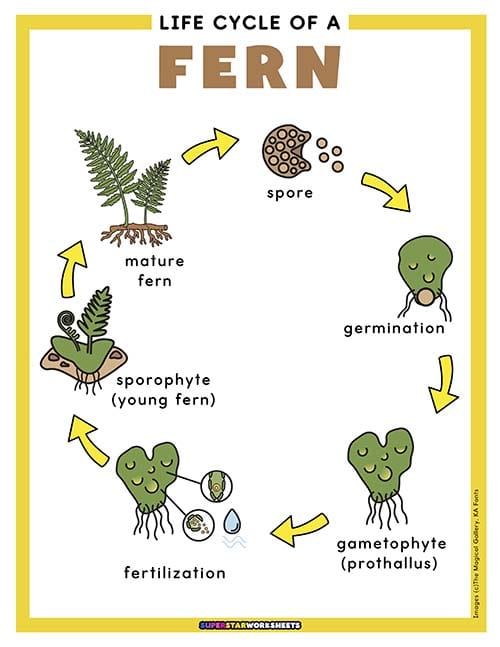
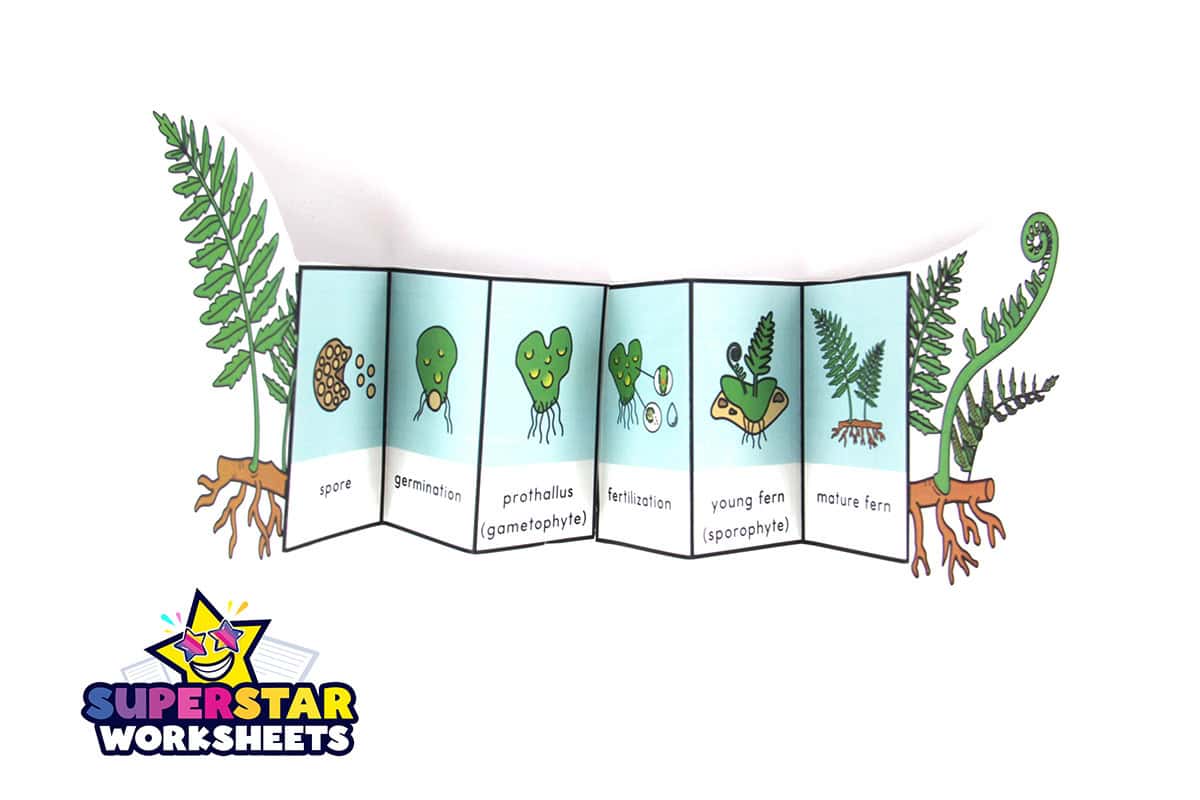
This fern life cycle chart walks kids through every stage of a fern’s unique two-part life cycle, from spore to mature fern. It’s an eye-catching reference for teaching how ferns reproduce differently than flowering plants.
Fern Life Cycle Vocabulary Cards
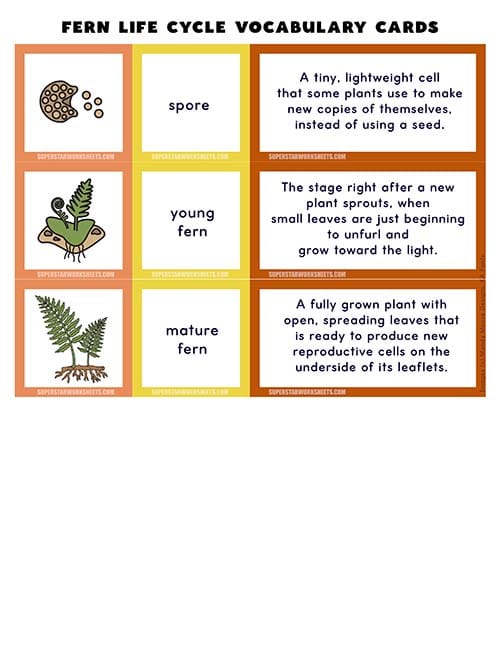
These fern life cycle vocabulary cards pair pictures, words, and definitions for each stage of the cycle. Core terms are included alongside extended vocabulary like prothallus and fertilization for older learners.
Fern Life Cycle Coloring & Labeling Page
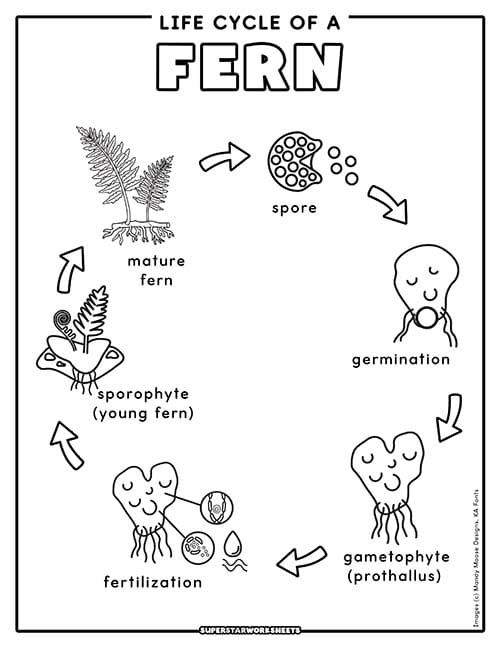
This fern life cycle worksheet lets kids color and label each stage of the cycle. It reinforces sequencing skills alongside fern life cycle vocabulary. For more FREE printables, take a look at our Plant Worksheets!
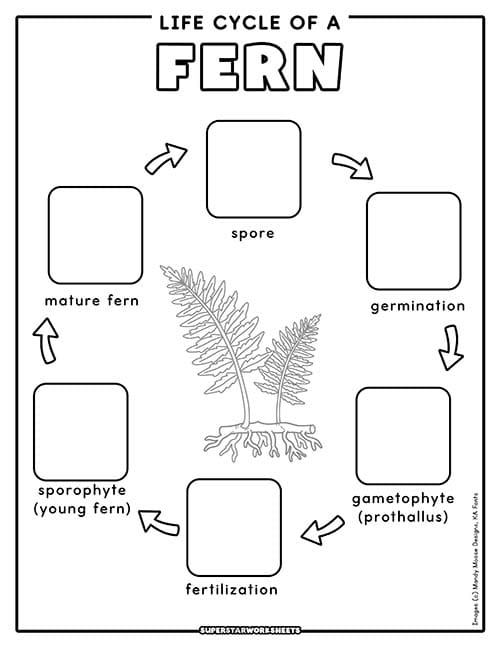
Fern Life Cycle Cut and Paste Activity
In this hands-on fern life cycle activity, kids cut out and sequence each stage of the cycle in the correct order. It’s a fun way to practice sequencing and review life cycle vocabulary.
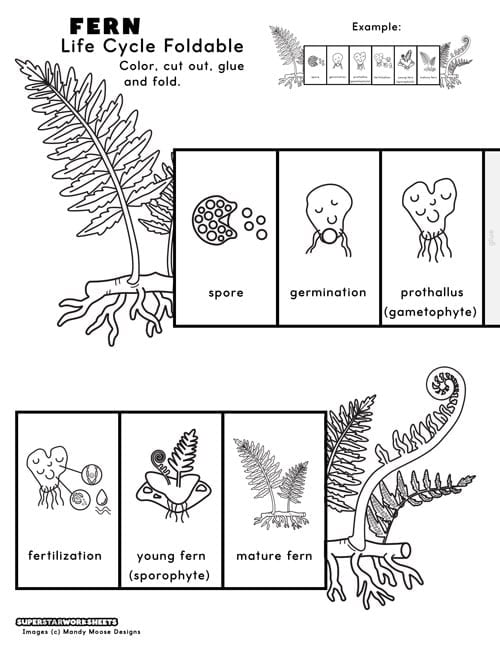
Fern Life Cycle Foldable Craft
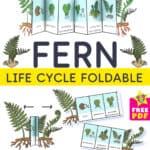
This fern life cycle foldable craft lets kids build a hands-on model of the complete fern life cycle. Perfect for an interactive science notebook or a life cycle bulletin board display.
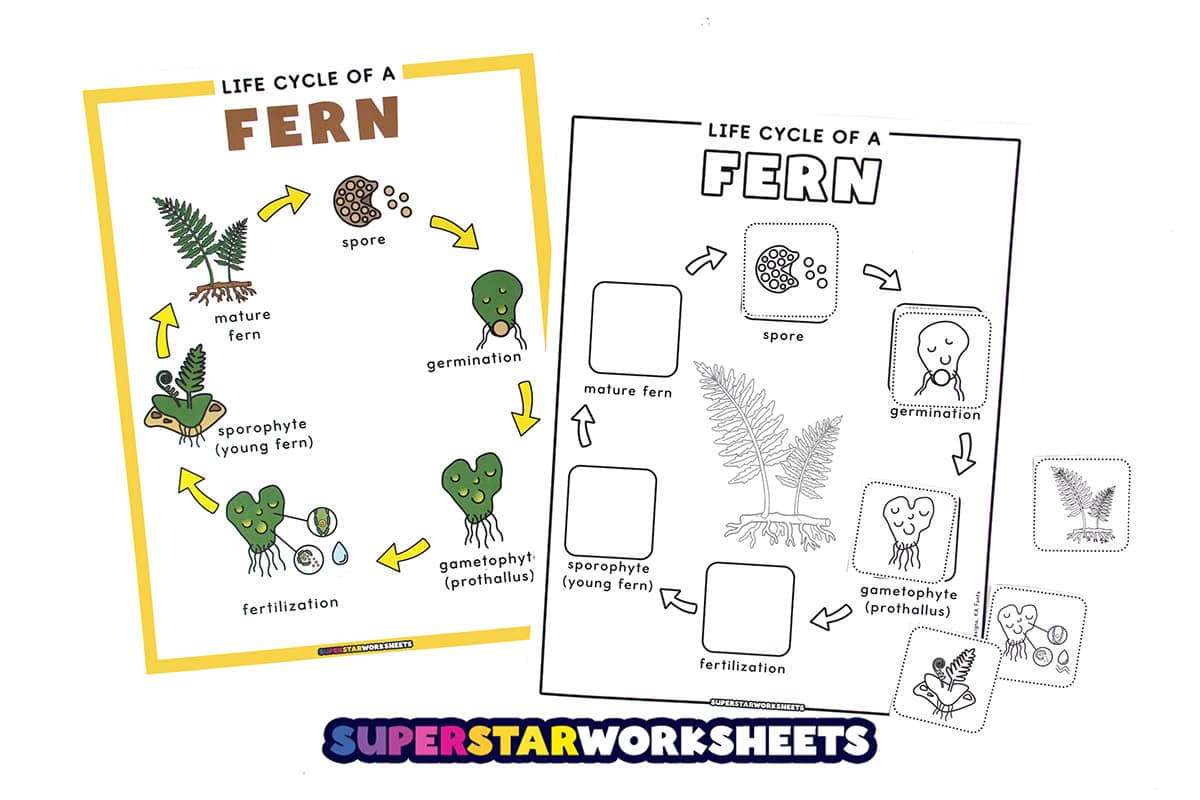
Teaching the Fern Life Cycle
Unlike flowering plants, a fern doesn’t grow from a seed, it begins as a tiny spore. When conditions are right, that spore goes through germination and grows into a small, heart-shaped structure called a prothallus, also known as the gametophyte stage. This tiny plant produces the cells needed for fertilization, when a male cell and female cell join together. From there, a young fern, or sporophyte, begins to grow, eventually becoming a mature fern with fronds of its own, ready to produce spores and start the cycle again.
[ PHOTO PLACEHOLDER: fern life cycle diagram or fiddlehead emerging from soil ]
Teaching Tip: Compare the fern life cycle side-by-side with a flowering plant’s life cycle so students can see just how different spore-based reproduction really is.
Spores vs. Seeds Printables
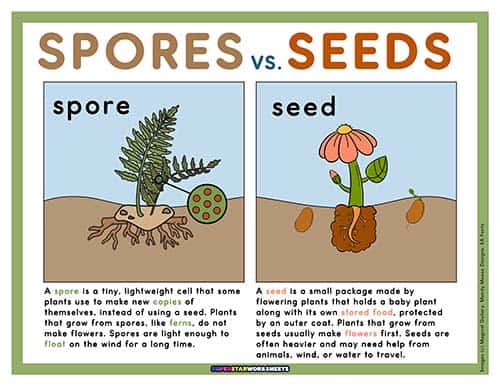
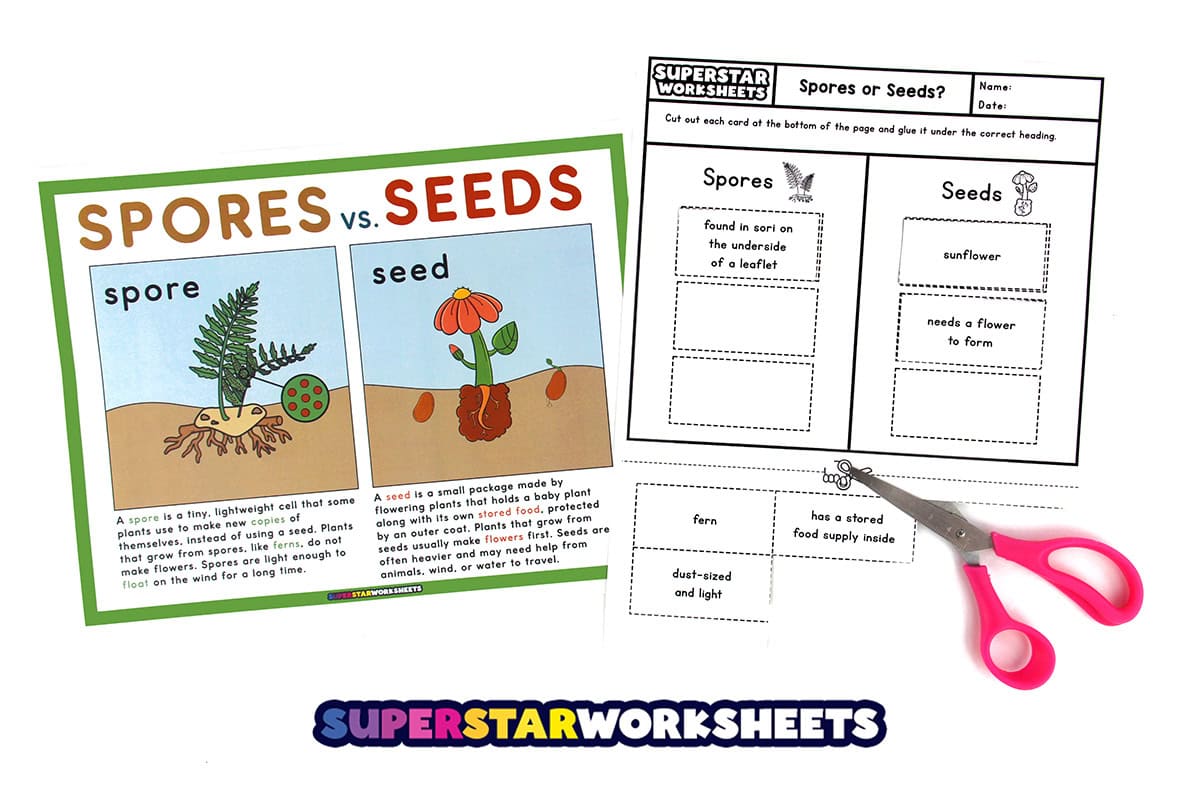
This spores vs. seeds chart compares how ferns and flowering plants reproduce side by side. It’s a simple visual that helps kids see the differences between spore-based and seed-based plant reproduction.
Spores or Seeds Sorting Activity
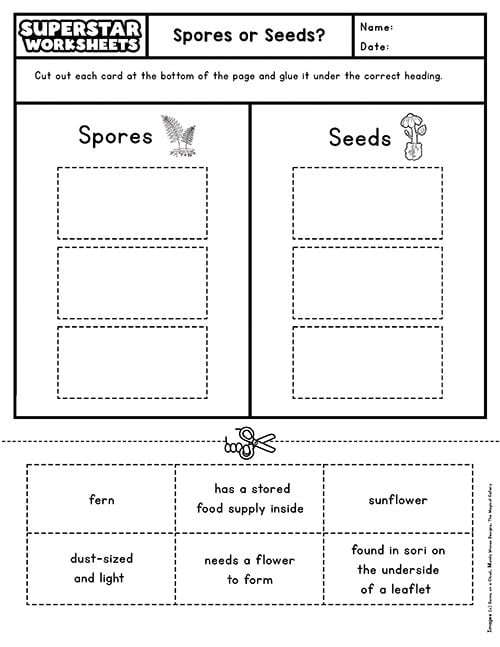
In this spores vs. seeds sorting activity, kids classify facts and pictures under the correct heading. It’s a hands-on way to reinforce the differences between these two types of plant reproduction.
Spores vs. Seeds Reading Comprehension
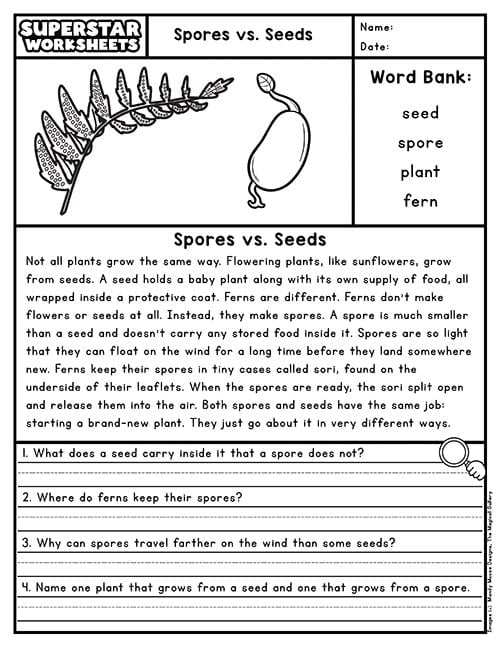
This spores vs. seeds reading passage and question set builds nonfiction reading comprehension while reinforcing plant science vocabulary. A teacher answer key is included.
Teaching Spores vs. Seeds
A seed is a small package made by flowering plants that holds a baby plant along with its own stored food supply, all wrapped inside a protective coat. A spore, on the other hand, is much smaller and carries no food supply of its own. Ferns don’t make flowers or seeds. Instead, they release thousands of tiny spores that can travel on the wind for long distances before settling somewhere new. Both spores and seeds do the same job of starting a new plant, but they go about it in very different ways.
Teaching Tip: Have students sort pictures of familiar plants into a “grows from a seed” or “grows from a spore” chart to check their understanding before moving on to habitats.
Fern Habitats & Adaptations Printables
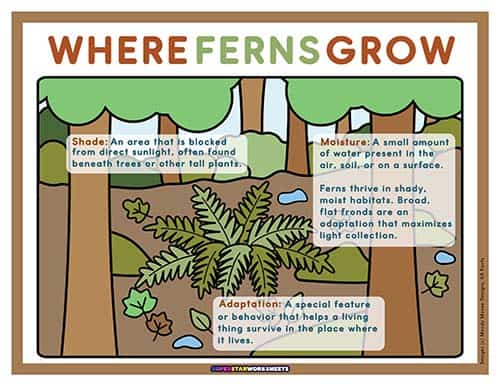
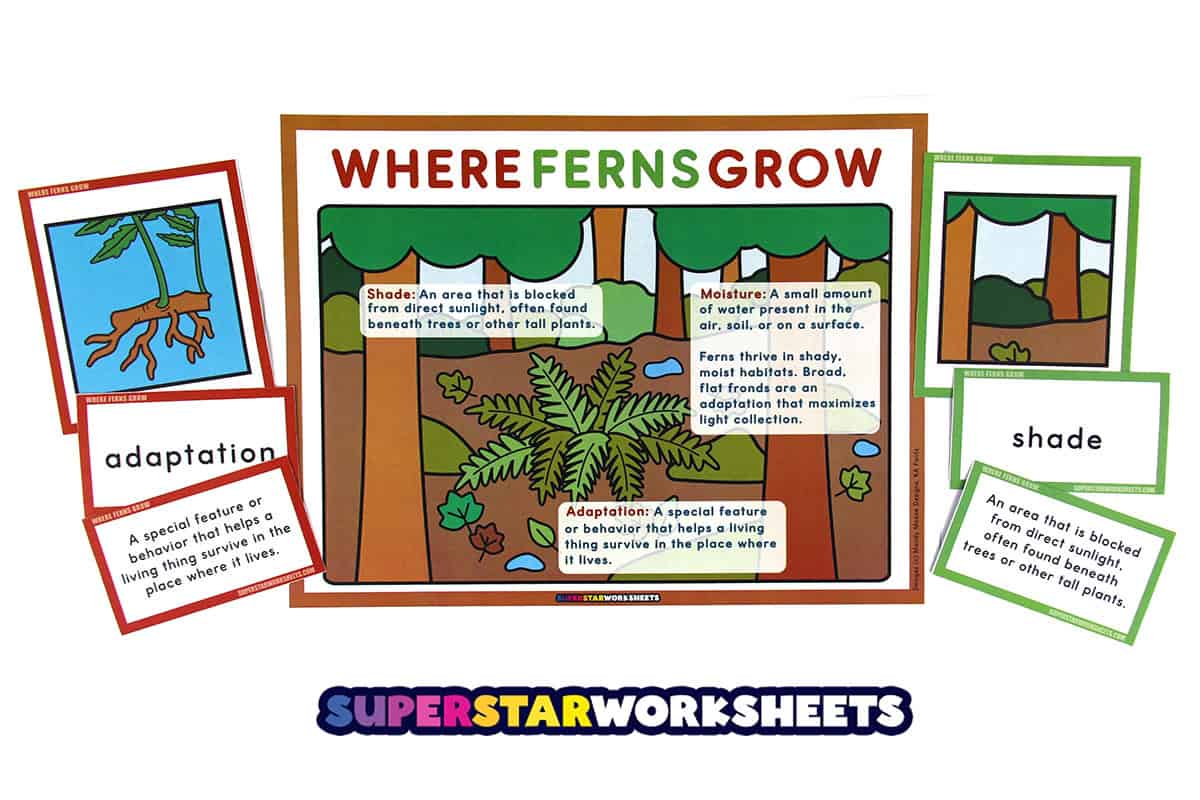
This fern habitats chart shows exactly why ferns thrive in shady, moist places like forest floors. It highlights the adaptations that help ferns survive where many flowering plants cannot. Teachers! If you are needing more free science printables check out our Mushroom Worksheets!
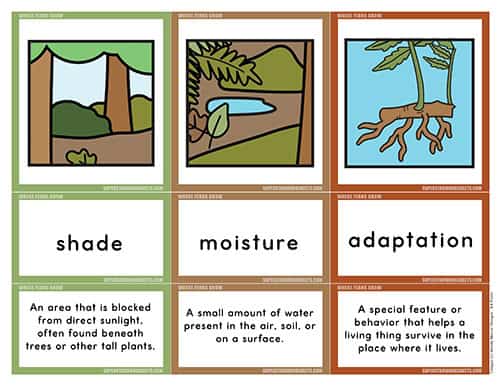
These three-part matching cards reinforce fern habitat vocabulary like shade, moisture, and adaptation. Zoomed-in visuals connect each term back to the Fern Habitats Chart.
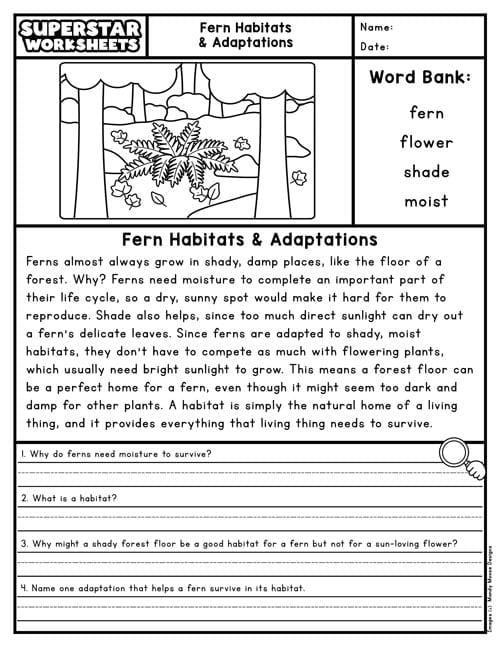
Fern Habitats & Adaptations Reading Comprehension
This nonfiction reading passage explains why ferns are so well-adapted to shady, damp habitats. Comprehension questions and a teacher answer key are included.
Teaching Fern Habitats & Adaptations
A habitat is the natural home of a living thing, and it provides everything that organism needs to survive. Ferns are especially well-adapted to habitats that offer shade and moisture, like the floor of a forest, where tall trees block out direct sunlight and fallen leaves keep the soil damp. This adaptation works in the fern’s favor: since most flowering plants need bright sunlight to thrive, ferns face far less competition in a shady, moist habitat than they would out in the open.
Teaching Tip: Take a nature walk (or a virtual one) and have students spot signs of shade and moisture in different habitats to predict where ferns might be growing nearby.
Fiddleheads Printables
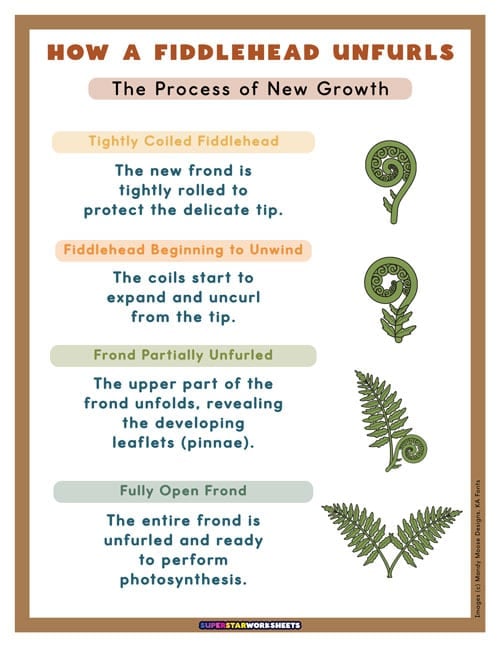
How a Fiddlehead Unfurls Chart
This fiddlehead chart shows the fascinating process of a coiled fern leaf slowly unfurling into a full frond. It’s a great visual for introducing the science behind this unique plant structure.
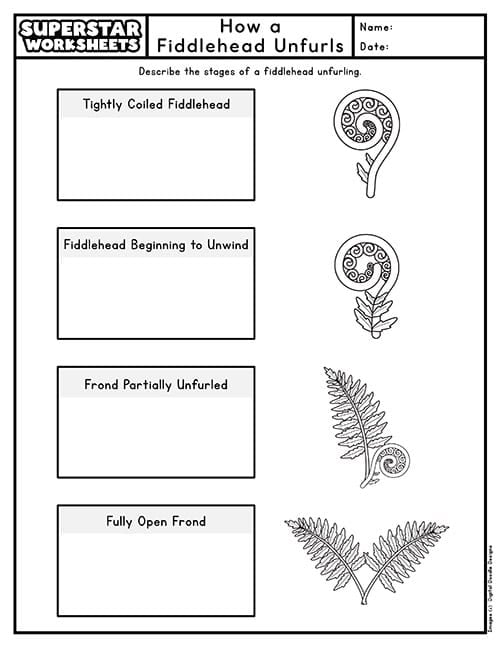
Fiddlehead Unfurling Labeling Worksheet
In this fiddlehead worksheet, kids label each stage of a frond unfurling using key vocabulary. It reinforces sequencing skills alongside fern-specific science terms.
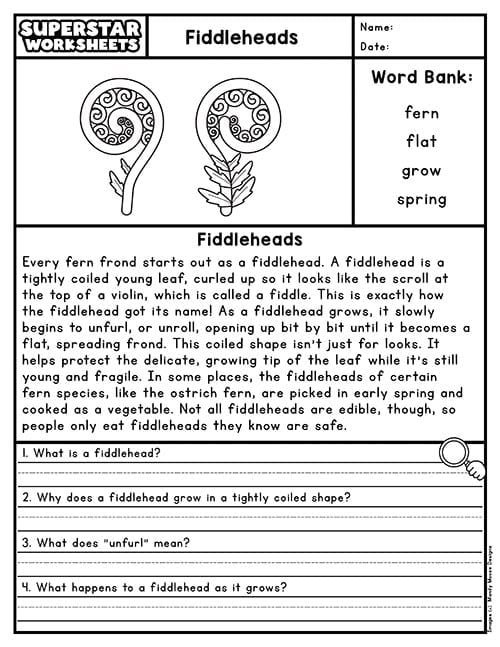
Fiddleheads Reading Comprehension
This nonfiction reading passage explores how fiddleheads get their name and why they grow in a tight coil. Comprehension questions and a teacher answer key are included.
Teaching Fiddleheads
A fiddlehead is a fern’s tightly coiled, or spiraled, young leaf, named for its resemblance to the curled scroll at the top of a violin. As the fiddlehead grows, it begins to unfurl, slowly unrolling until it becomes a fully open frond. This coiled shape isn’t just for looks it helps protect the delicate, growing tip of the leaf while it’s still young. Some fiddleheads, like those of the ostrich fern, are even considered edible and are cooked as a springtime vegetable in certain regions, though not every fiddlehead is safe to eat.
Teaching Tip: Have students trace the spiral shape of a fiddlehead with their finger and connect it to other spirals in nature, like a snail shell or a nautilus, for a fun cross-curricular math tie-in.
Fern Research & Fun Facts Printables
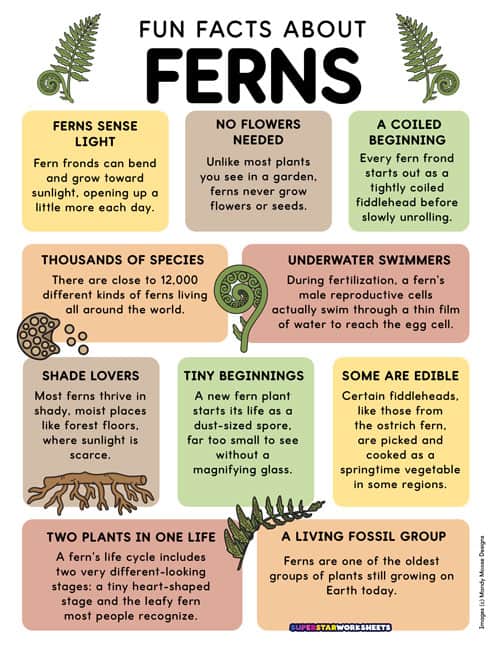
This fun facts about ferns poster shares surprising highlights, from how old ferns are as a plant group to how they grow and reproduce. It’s a great conversation starter before diving into a fern research project.
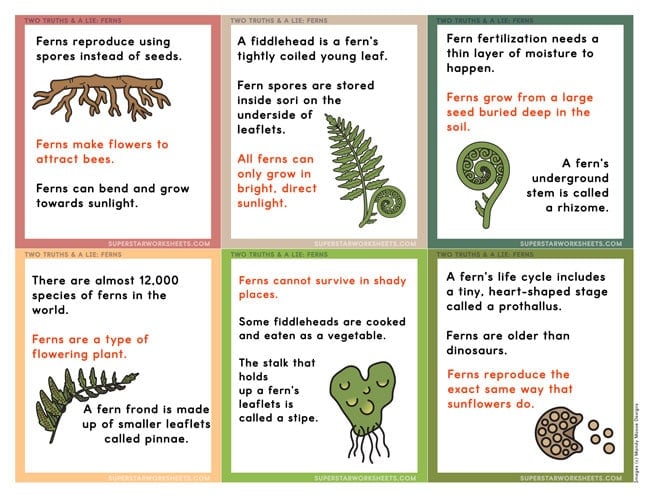
This two truths and a lie fern game challenges kids to spot the false fern fact among true statements. It’s a fun small group or whole-class review activity for any fern unit.
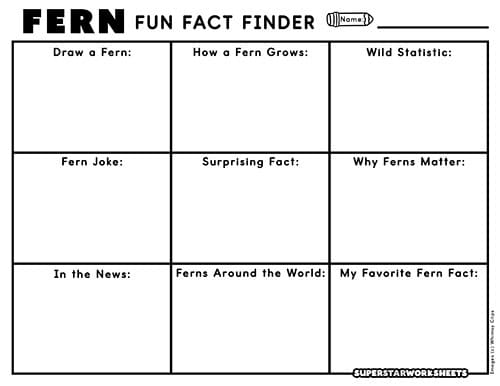
Fern Fun Fact Finder Research Worksheet
This fern research worksheet gives kids nine open-ended prompts to explore and record fun fern facts. It’s an engaging way to build research skills around a nature topic.
Fern Frond Print Investigation
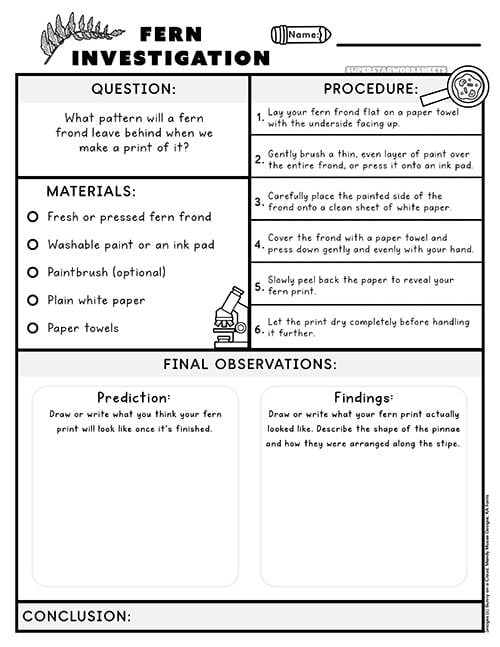
Fern Frond Print Investigation
This fern frond print investigation invites kids to predict, observe, and record the pattern a real fern frond leaves behind. It’s a simple, hands-on way to connect fern anatomy to real scientific observation.
Teaching the Fern Frond Print Investigation
Materials: A fresh or pressed fern frond, washable paint or an ink pad, a paintbrush (optional), plain white paper, paper towels
Procedure Overview: Students brush a thin layer of paint (or press the frond onto an ink pad), place the painted side onto clean paper, press evenly, and peel back the paper to reveal the print.
Expected Results: Prints typically reveal the repeating pattern of pinnae branching off the central stipe, mirroring the frond’s real structure.
Science Connection: This branching pattern is the same structure that helps a real fern spread its leaf surface out to capture as much sunlight as possible.
Teaching Tip: Press extra fronds ahead of time as backups, since fresh fronds can tear easily during printing, and pair this activity with the Parts of a Fern Chart so students can identify the pinnae and stipe in their finished print.
Leave a Reply