
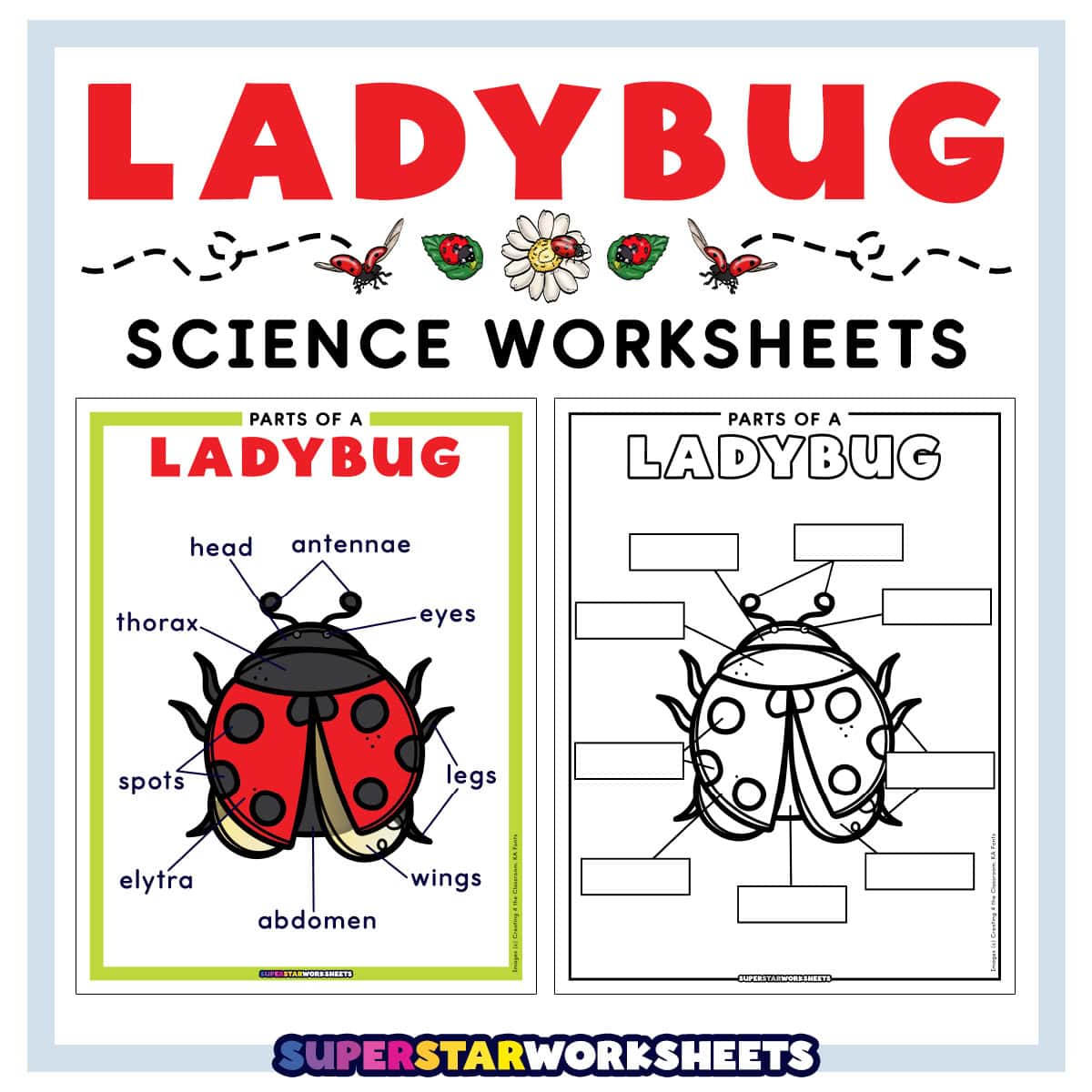
Free printable Ladybug Worksheets for elementary students, featuring parts of a ladybug charts, life cycle diagrams, vocabulary cards, and fun science reading passages. Download and print PDF activities covering ladybug anatomy, complete metamorphosis, warning coloration and defenses, and the garden food chain. These engaging, hands-on resources help young learners build science vocabulary, reading comprehension, and observation skills. Perfect for classroom science centers, homeschool nature study, or a spring garden unit studies.
Parts of a Ladybug Printables
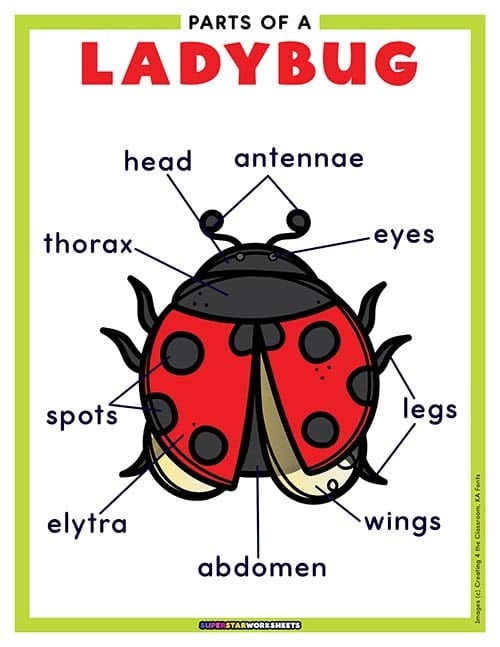
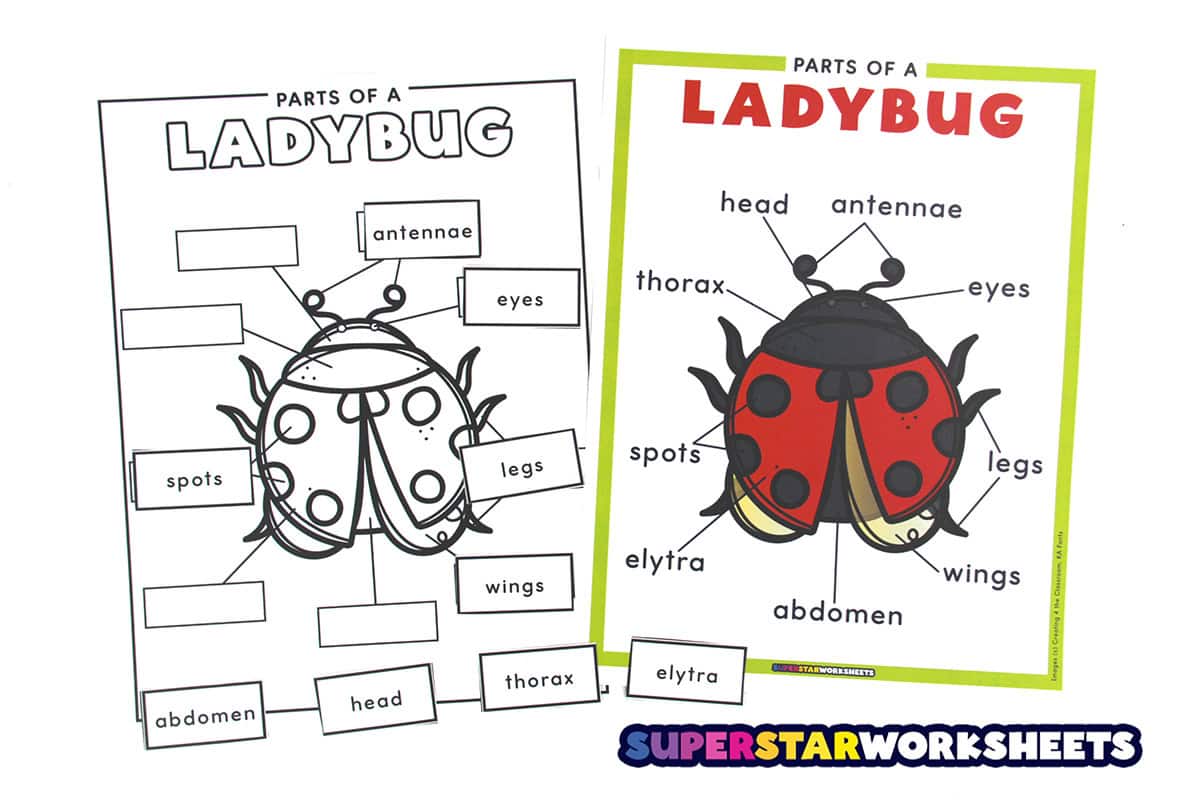
Download and print this full color Parts of a Ladybug chart to show students the external body parts of this helpful garden insect. This classroom-ready poster works great as a labeling anchor chart for science centers or nature journals. Use it to introduce vocabulary like antennae, elytra, thorax, and abdomen.
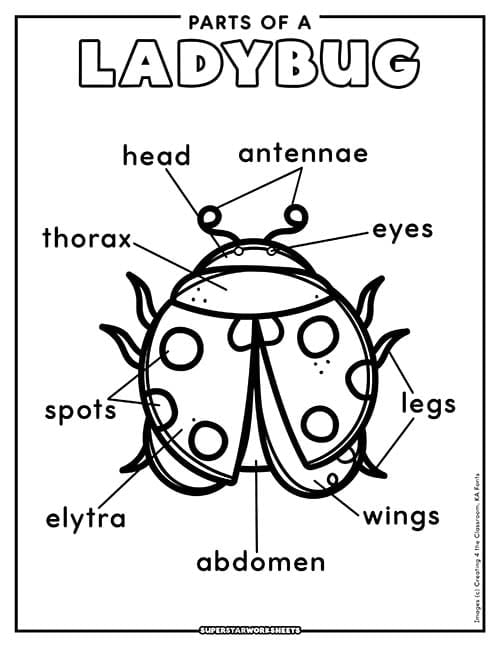
Parts of a Ladybug Coloring Page
Free printable parts of a ladybug coloring page featuring labeled body parts for early readers. Students color the ladybug while reading and reviewing each vocabulary term. A great low-prep companion to the full color reference chart.
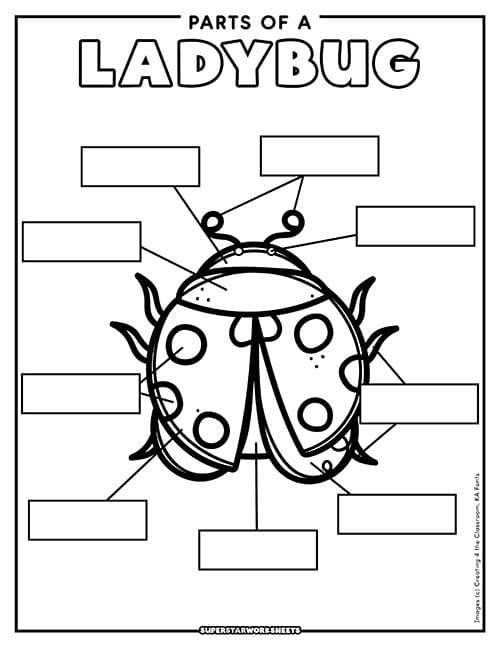
Label the Parts of a Ladybug Worksheet
Free blank printable ladybug parts labeling worksheet for students to identify each body part on their own. This set includes cut and paste labels for younger students, plus a blank version older students can label by writing in each term.
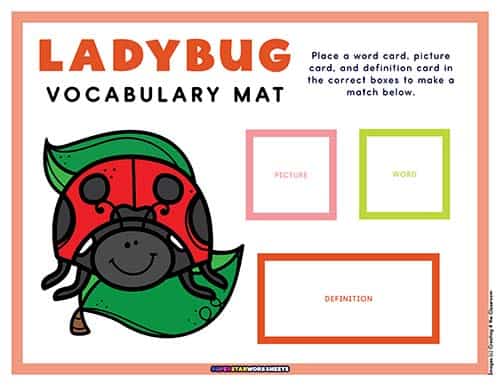
Ladybug Vocabulary Learning Mat
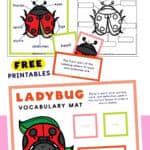
Students practice matching ladybug vocabulary with this reusable learning mat featuring pictures, words, and definitions. Laminate this non-consumable mat for a hands-on science center students can use again and again all season long.
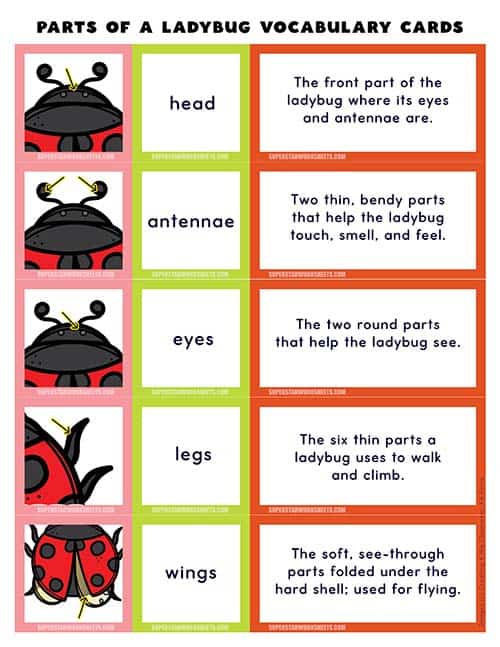
Parts of a Ladybug Vocabulary Cards
These ladybug parts vocabulary cards include visuals, terminology, and simple definitions to help students learn ladybug anatomy. Use them with the learning mat above for matching games, concentration, or independent review.
Teaching the Parts of a Ladybug
When introducing the parts of a ladybug to your students, it’s important to use language and vocabulary terms they are familiar with. Here are our recommended definitions for each part of the ladybug. Each description provides a visual description as well as a purpose and how each part helps the ladybug survive.
head: the small front part of a ladybug’s body. It holds the ladybug’s eyes, antennae, and mouth, which it uses to munch on tiny bugs called aphids!
antennae: two short feelers on top of the head. Ladybugs use them to touch, smell, and even taste the world around them!
eyes: two small, dark eyes on the sides of the head. Ladybugs can’t see very well, but their eyes help them tell light from dark and spot movement!
thorax: the middle part of a ladybug’s body, just behind the head. It is where the legs and wings are attached!
legs: the six short legs attached to the thorax. They have tiny hooks on the ends that help the ladybug climb up leaves and stems!
abdomen: the back part of a ladybug’s body, tucked under its shell. It holds the stomach for digesting food, and it has tiny holes along the sides that help the ladybug breathe!
elytra: the hard, shiny, spotted shell on the ladybug’s back. It is actually a pair of tough wing covers that open up and protect the soft flying wings underneath!
wings: the thin, see-through wings hidden under the elytra. When it’s time to fly, the ladybug unfolds them and flaps them very fast!
spots: the black dots on the elytra. Their bright colors warn birds and other animals that ladybugs taste yucky and should be left alone!
Ladybug Life Cycle Printables
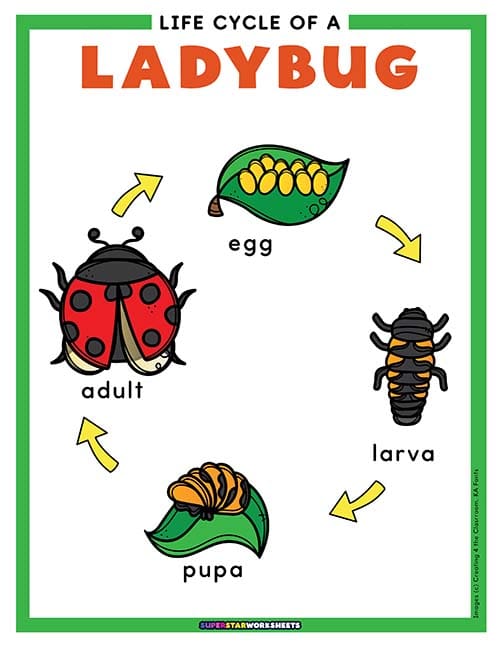
Download and print this full color ladybug life cycle poster showing the four stages of complete metamorphosis. This anchor chart is a wonderful reference tool for science journals or classroom walls during a bug or garden unit.
Ladybug Life Cycle Cut and Paste Worksheet
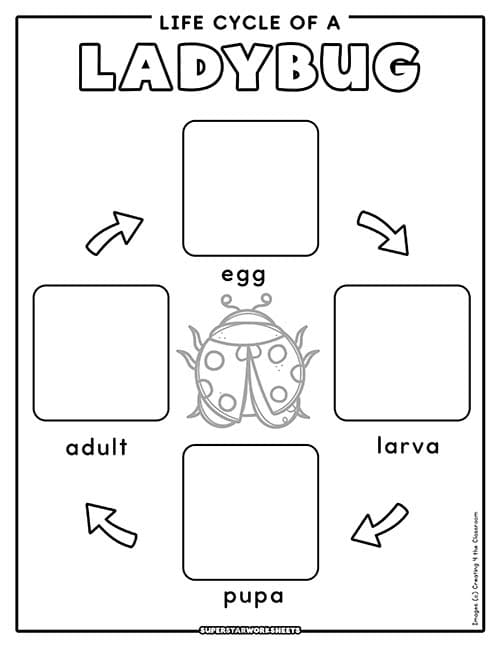
Free printable ladybug life cycle cut and paste activity for students to put each stage in the correct order. This early learning worksheet builds sequencing skills alongside fine motor practice.
Label the Ladybug Life Cycle Worksheet
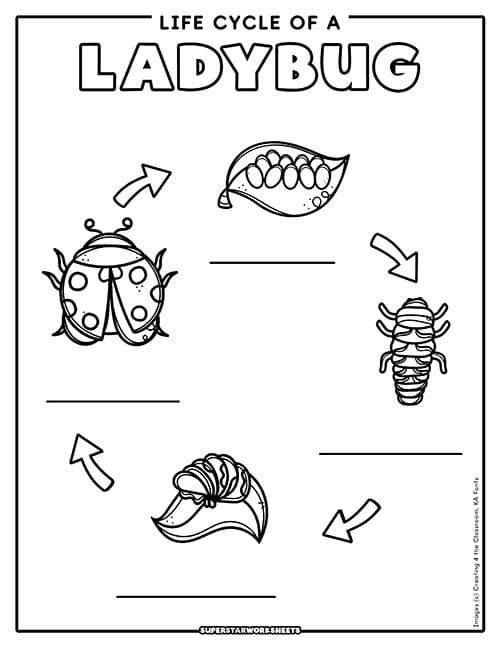
Free printable ladybug life cycle labeling worksheet for students to write in the correct term for each stage of development. A helpful next step after the cut and paste activity for building independent vocabulary recall.
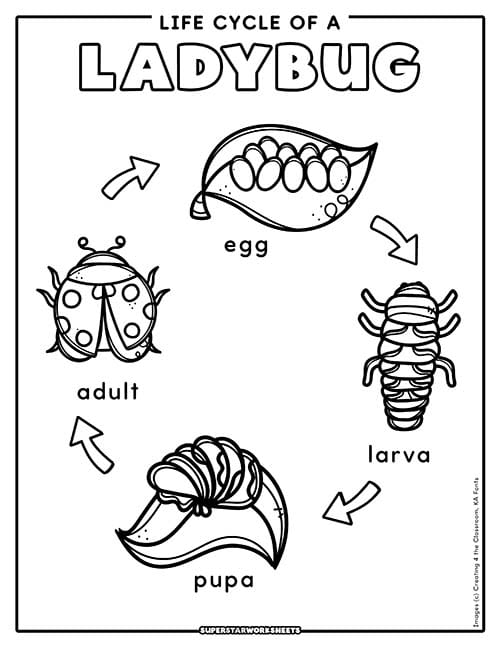
Ladybug Life Cycle Coloring Page
This simple black and white ladybug life cycle coloring sheet lets students review all four stages of development while they color. Appropriate for spring science units, garden studies, and insect life cycle lessons.
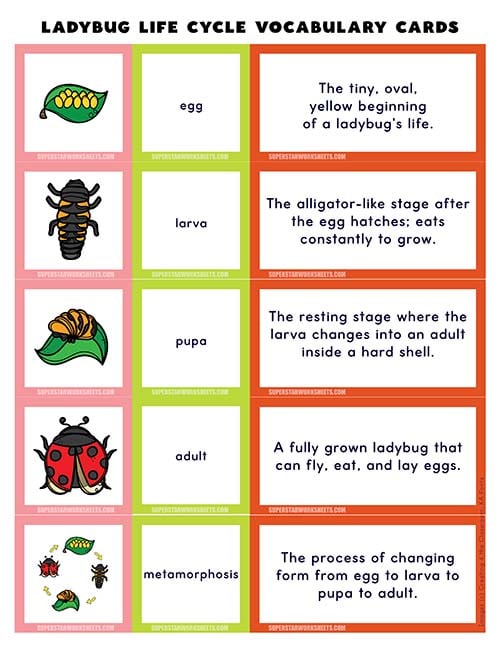
Ladybug Life Cycle Vocabulary Cards
Students match the correct stage of the ladybug life cycle to its vocabulary term and definition with these picture-based cards. A great learning center activity for memory match or concentration games. For more FREE science printables take a look at our Plant Worksheets!
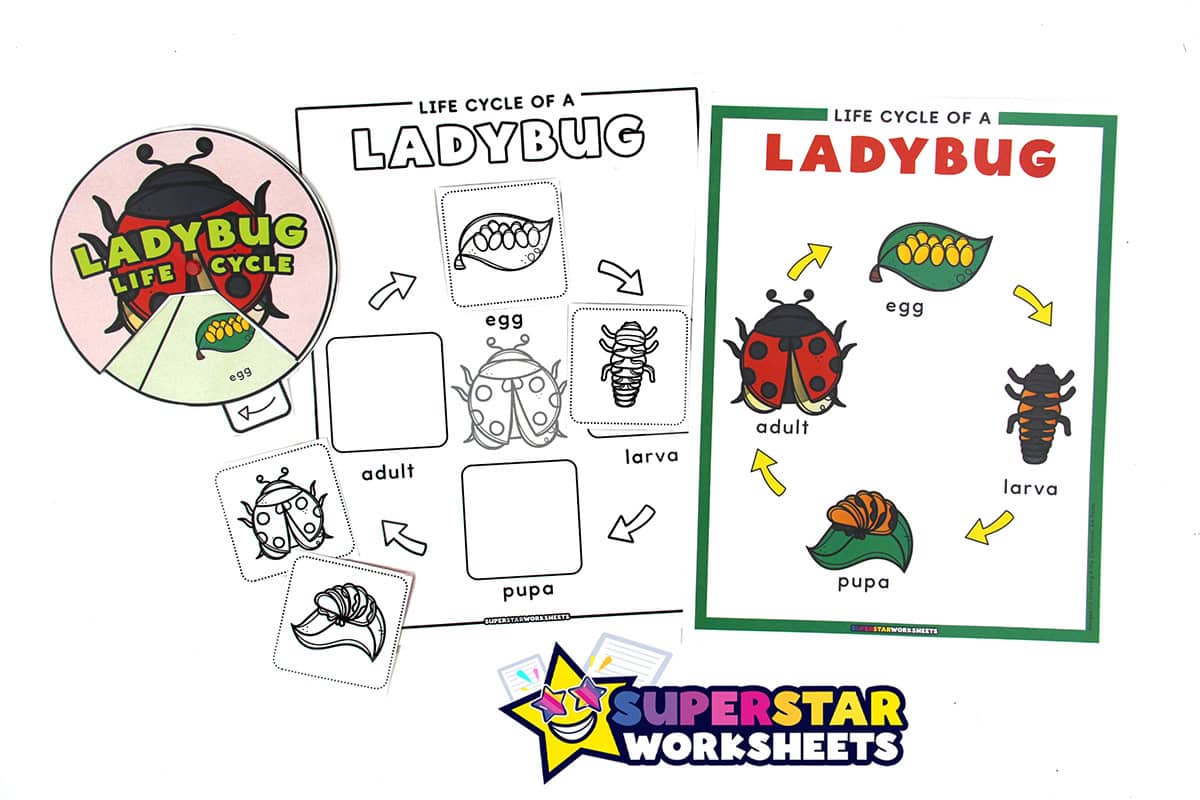
Teaching the Ladybug Life Cycle
The best way for students to learn about the ladybug life cycle is to watch it happen! Ladybug growing kits make it easy to raise larvae in the classroom and see each stage up close in just a few weeks. Encourage students to notice how the ladybug changes in shape, size, and color as it grows.
egg: a tiny, yellow, oval egg about the size of a pinhead. A mother ladybug lays a cluster of eggs on the underside of a leaf, close to aphids so her babies will have food. After about 3 to 5 days, they hatch!
larva: a long, spiky baby ladybug that looks like a tiny black and orange alligator. It eats lots and lots of aphids and grows so fast that it sheds its skin several times!
pupa: the resting stage when the larva attaches itself to a leaf and stays very still. Inside, its body is changing into an adult ladybug, which takes about a week!
adult ladybug: a round beetle with a hard, shiny shell, six legs, and two antennae. When it first comes out, it is pale yellow with no spots, but its color and spots appear within a few hours. Then it’s ready to fly, eat, and lay eggs of its own!
Ladybug Life Cycle Crafts & Activities for Kids
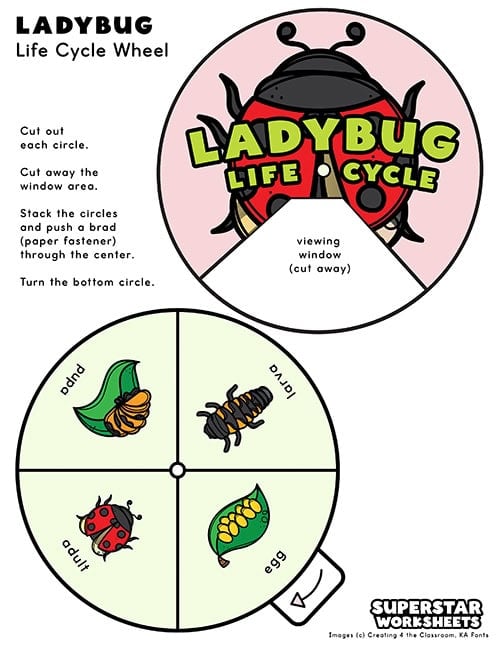
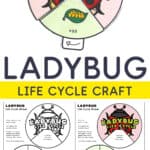
Printable ladybug life cycle wheel featuring all four stages of growth and development. Students color, cut, and assemble the wheel, then turn it to reveal each stage along with its vocabulary term — a fun take-home project for retelling the life cycle.
Ladybug Fun Facts & Research
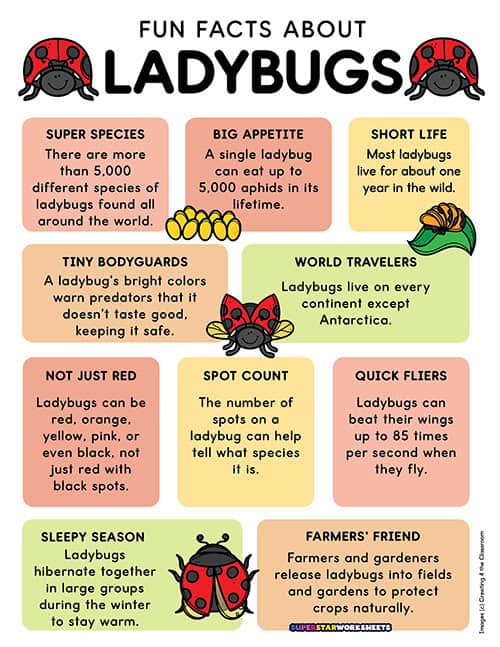
Download this printable reference poster packed with fun and surprising ladybug facts for kids. Hang it near your science center or research station for students to read and enjoy.
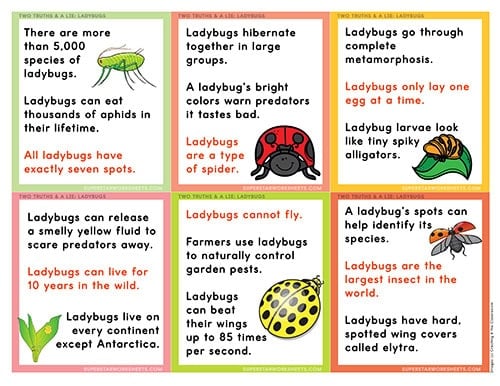
Two Truths and a Lie: Ladybug Science
Challenge students with this fun ladybug facts game featuring two truths and a lie on each card. Teachers read card and have to guess the lie. A playful way to review science facts while building critical thinking skills.
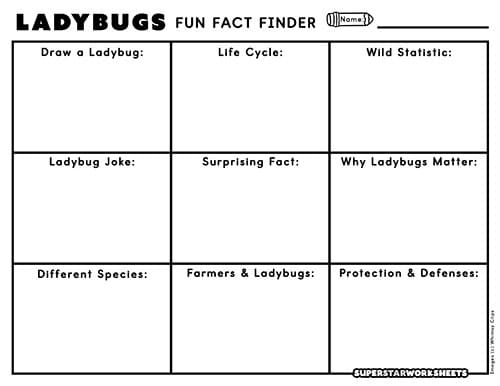
Ladybug Fact Finder Research Worksheet
Students use books or trusted websites to research and record interesting facts about ladybugs in this simple graphic organizer. A great first step before writing a research report.
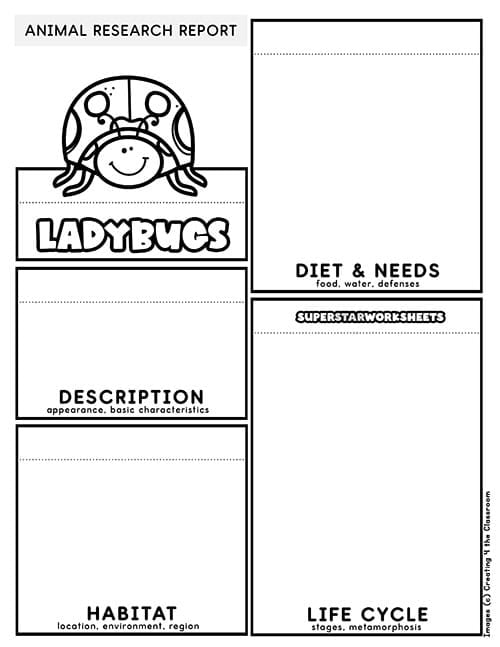
Ladybug Research Report Booklet
This printable research booklet lets students write and illustrate what they learned about ladybugs. A perfect culminating project for a ladybug or garden science unit.
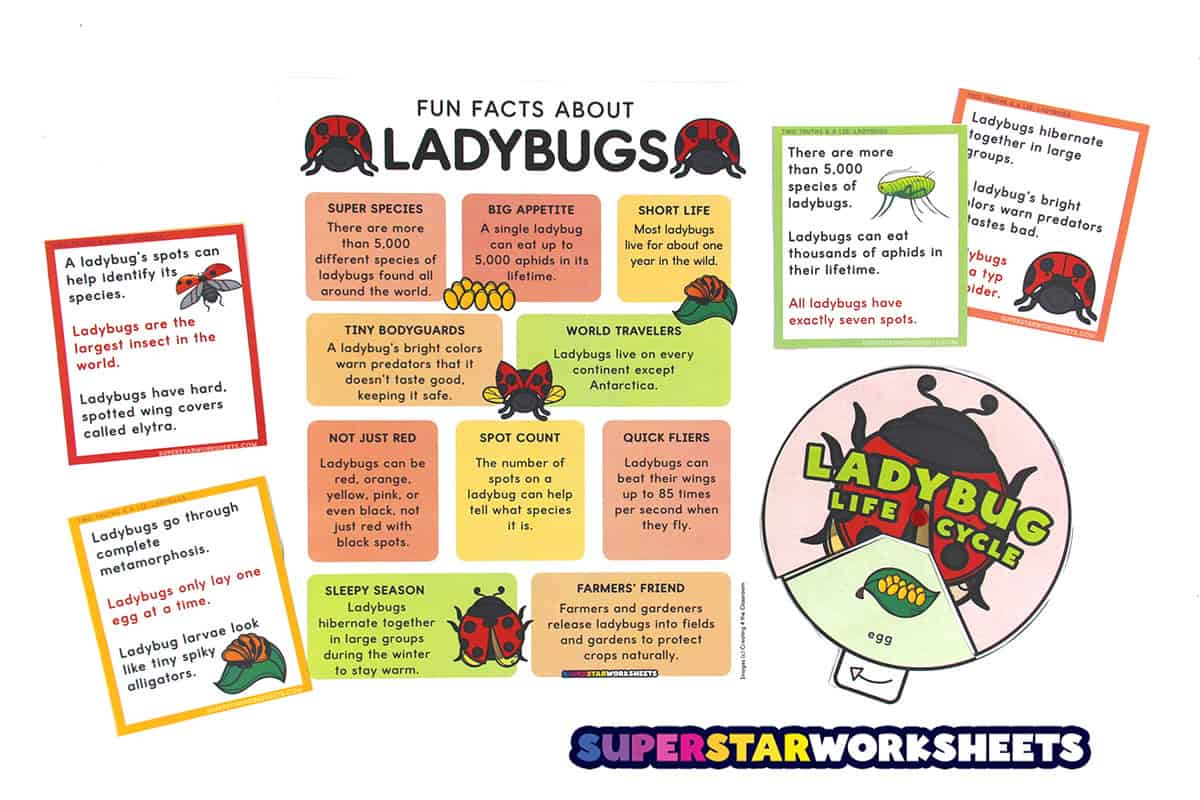
Amazing Ladybug Facts
Not Always Red: Ladybugs can be red, orange, yellow, pink, black, or even white, and some have no spots at all!
Spots Don’t Tell Age: A ladybug’s spots don’t show how old it is. The number and pattern of spots depend on what kind of ladybug it is.
Big Appetites: One ladybug can eat about 50 aphids a day, which adds up to around 5,000 in its lifetime.
Yucky Defense: When a ladybug feels scared, it squeezes out a smelly yellow liquid from its leg joints that tastes terrible to birds and other predators.
Speedy Fliers: Ladybugs flap their wings about 85 times per second when they fly.
Garden Helpers: Farmers and gardeners love ladybugs because they eat the pests that damage crops and flowers.
Cozy Crowds: In the winter, thousands of ladybugs huddle together under logs, rocks, or tree bark to stay warm.
State Symbol: The ladybug is the official state insect of several U.S. states, including Delaware, Massachusetts, and Ohio.
Ladybug Adaptations Printables
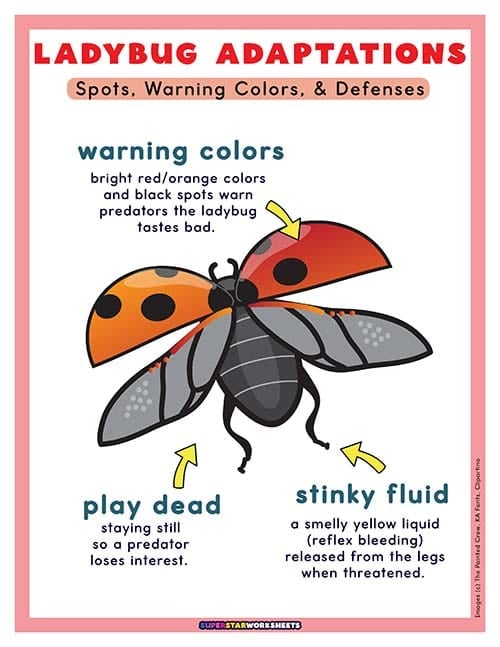
This ladybug adaptations reference chart shows three clever ways ladybugs protect themselves from predators. Use it to introduce students to warning coloration and other simple animal defense mechanisms.
Ladybug Adaptations Vocabulary Cards
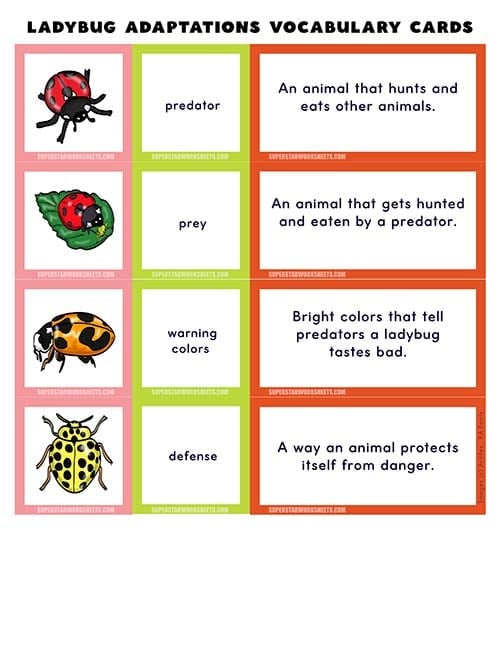
These vocabulary cards help students learn key terms related to ladybug defenses, including predator, prey, and warning colors. Pair with the defenses chart for a complete adaptations learning center.
Ladybug Defenses Reading Passage
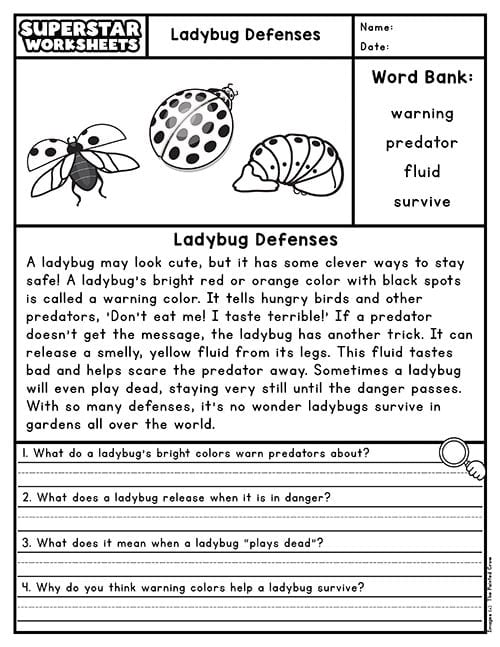
This short nonfiction reading passage explains how a ladybug’s bright colors and clever tricks help it stay safe from predators. Comprehension questions below check understanding of key vocabulary and main ideas.
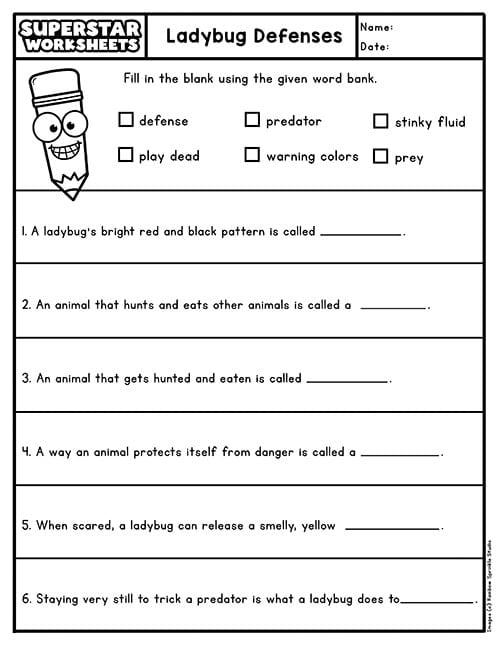
Ladybug Defenses Fill in the Blank
Students practice using ladybug defense vocabulary in context with this fill in the blank worksheet. A great follow-up activity after reading about warning colors, predators, and prey.
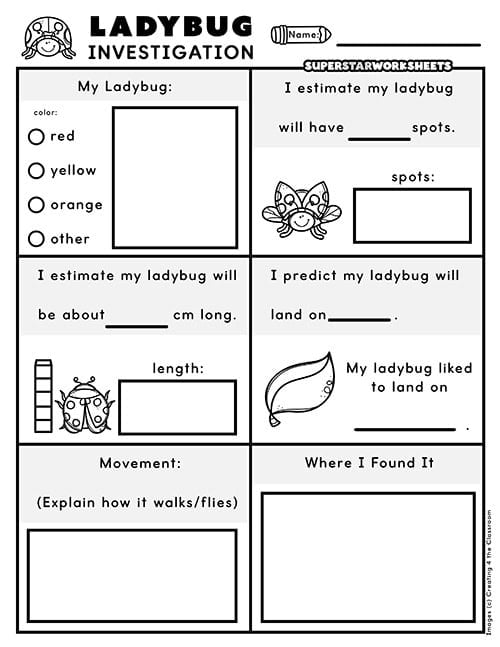
Ladybug Observation Investigation Worksheet
This hands-on ladybug investigation worksheet invites students to observe a real ladybug and record what they notice about its color, spots, size, and movement. A wonderful spring science activity for outdoor exploration or a classroom ladybug release.
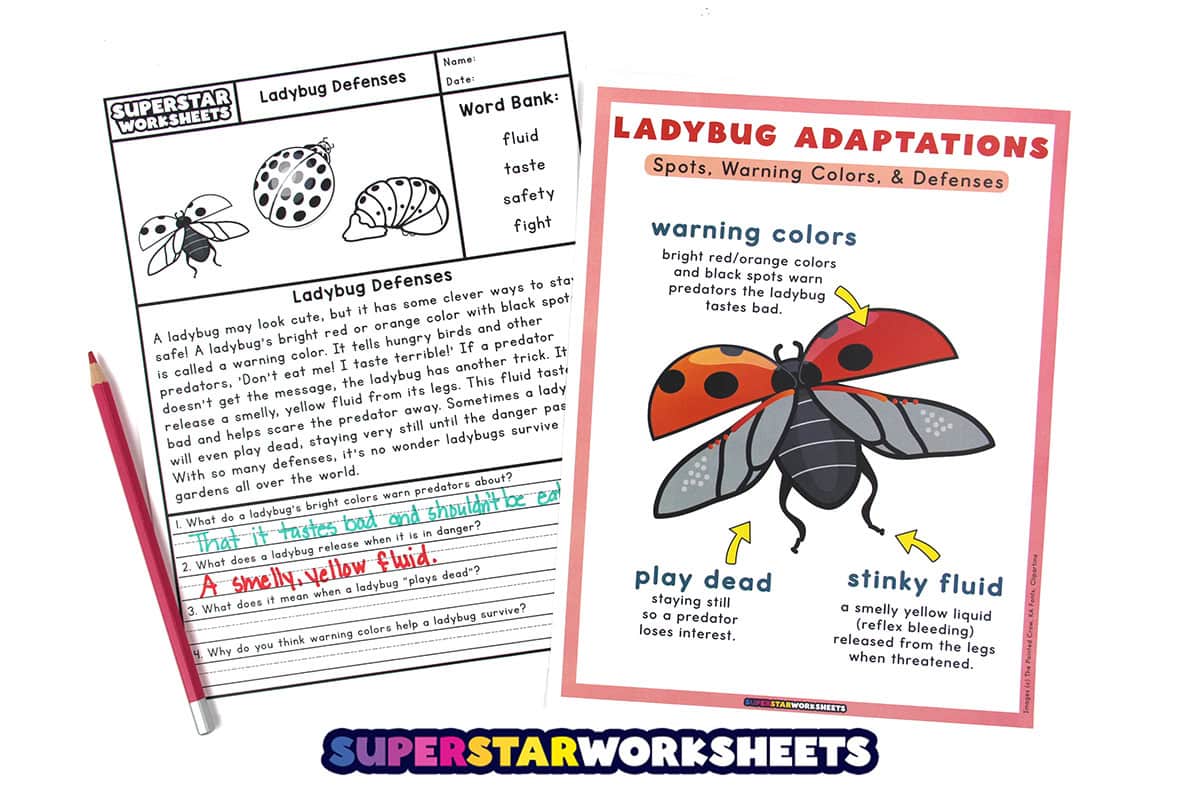
Teaching Ladybug Adaptations
When introducing ladybug adaptations to your students, it’s important to use language and vocabulary terms they are familiar with. Here are our recommended definitions for each term, along with how each one helps the ladybug stay safe and survive.
bright colors: the bold red, orange, or yellow color of a ladybug’s shell. These colors make ladybugs easy to spot on green leaves, and that’s exactly what they want!
warning colors: bright colors and patterns that tell other animals to stay away. A ladybug’s colorful shell and black spots send a message to hungry animals: “I taste yucky, don’t eat me!”
predator: an animal that hunts and eats other animals. Birds, spiders, frogs, and dragonflies are some of the predators that might try to eat a ladybug!
prey: an animal that is hunted and eaten by another animal. Ladybugs are prey for birds, but they are also predators themselves, because they hunt and eat tiny bugs called aphids!
defense: a special way an animal protects itself from danger. Ladybugs have several defenses, like warning colors, stinky fluid, and playing dead!
stinky fluid: a smelly yellow liquid that a ladybug squeezes out from its leg joints when it feels scared. It tastes terrible, so predators quickly spit the ladybug out and leave it alone!
play dead: when an animal stays perfectly still to trick a predator. A ladybug will tuck in its legs, flip over, and freeze until the danger passes!
Ladybugs in the Garden Printables
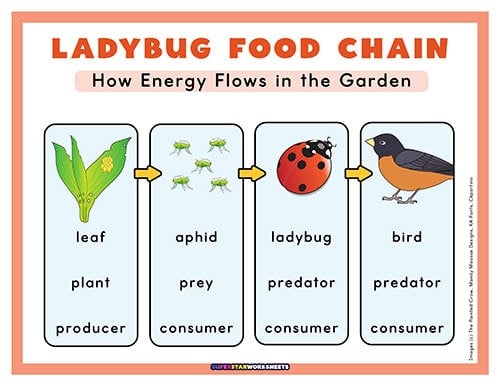
Ladybug Garden Food Chain Chart
This food chain reference chart shows how energy moves from plants to aphids to ladybugs in a simple garden ecosystem. A helpful visual for introducing producers, consumers, and predator and prey relationships.
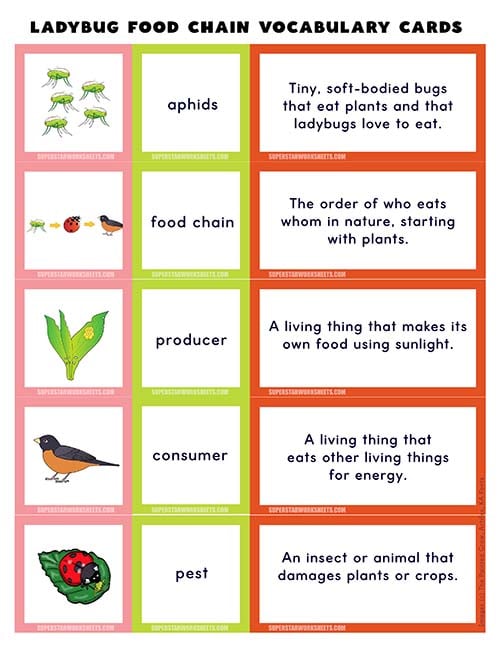
Ladybug Food Chain Vocabulary Cards
Students learn key food chain vocabulary including producer, consumer, and beneficial insect with these picture-based cards. Use alongside the food chain chart for a hands-on ecosystem learning center.
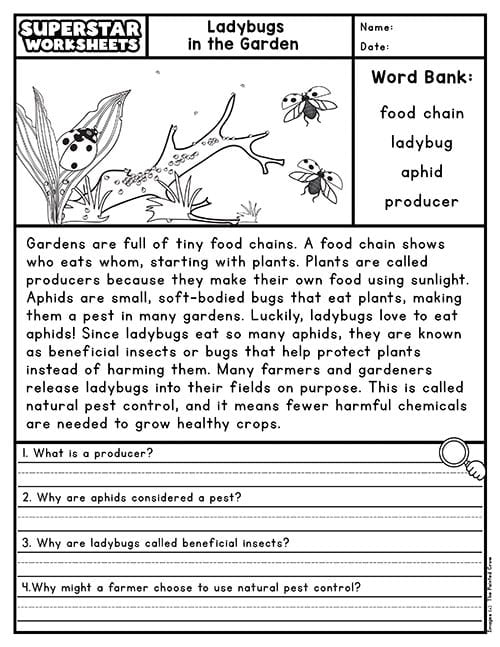
Ladybugs in the Garden Reading Passage
This nonfiction reading passage explains why ladybugs are considered beneficial insects and how they help farmers and gardeners naturally. Comprehension questions reinforce key vocabulary and main ideas from the passage.
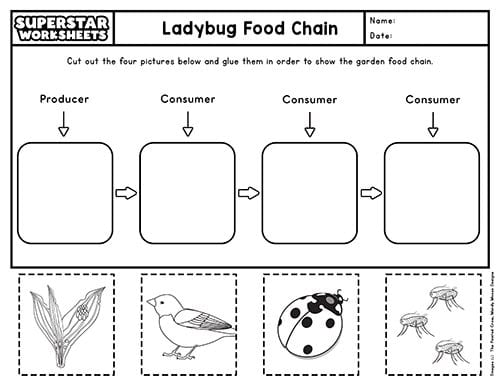
Students cut and paste pictures to put a simple garden food chain in the correct order. A hands-on way to reinforce how plants, aphids, and ladybugs are all connected. Teachers! If you are needing more free printables, take a look at our Leaf Worksheets!
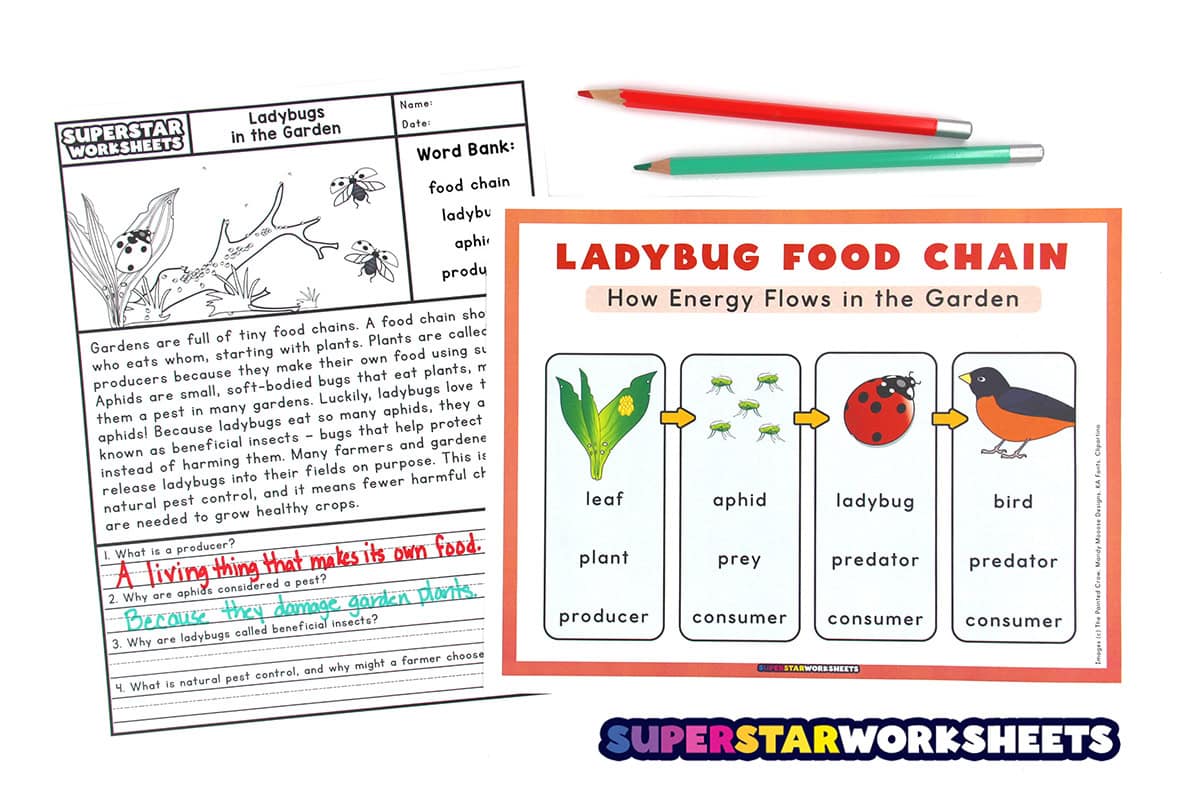
Teaching the Garden Food Chain
When introducing the garden food chain to your students, it’s important to use language and vocabulary terms they are familiar with. Here are our recommended definitions for each term, along with how each one connects to the ladybug’s important job in the garden.
food chain: the path that shows who eats what in nature. In the garden, plants are eaten by aphids, and aphids are eaten by ladybugs!
producer: a living thing that makes its own food. Plants are producers because they use sunlight, water, and air to make food, and they are the first link in every food chain!
consumer: a living thing that gets its energy by eating other living things. Aphids are consumers because they eat plants, and ladybugs are consumers because they eat aphids!
aphids: tiny, soft-bodied bugs that are often green, black, or white. They suck the juice out of leaves and stems, which can make plants weak and sick!
pest: a bug or animal that causes harm to plants, food, or people. Aphids are garden pests because they damage the plants we work so hard to grow!
beneficial insect: a helpful bug that does good things for plants and people. Ladybugs are beneficial insects because they eat the pests that harm gardens!
natural pest control: using nature, instead of chemical sprays, to get rid of pests. Farmers and gardeners sometimes release ladybugs into their fields so the ladybugs can gobble up the aphids for them!
Leave a Reply