
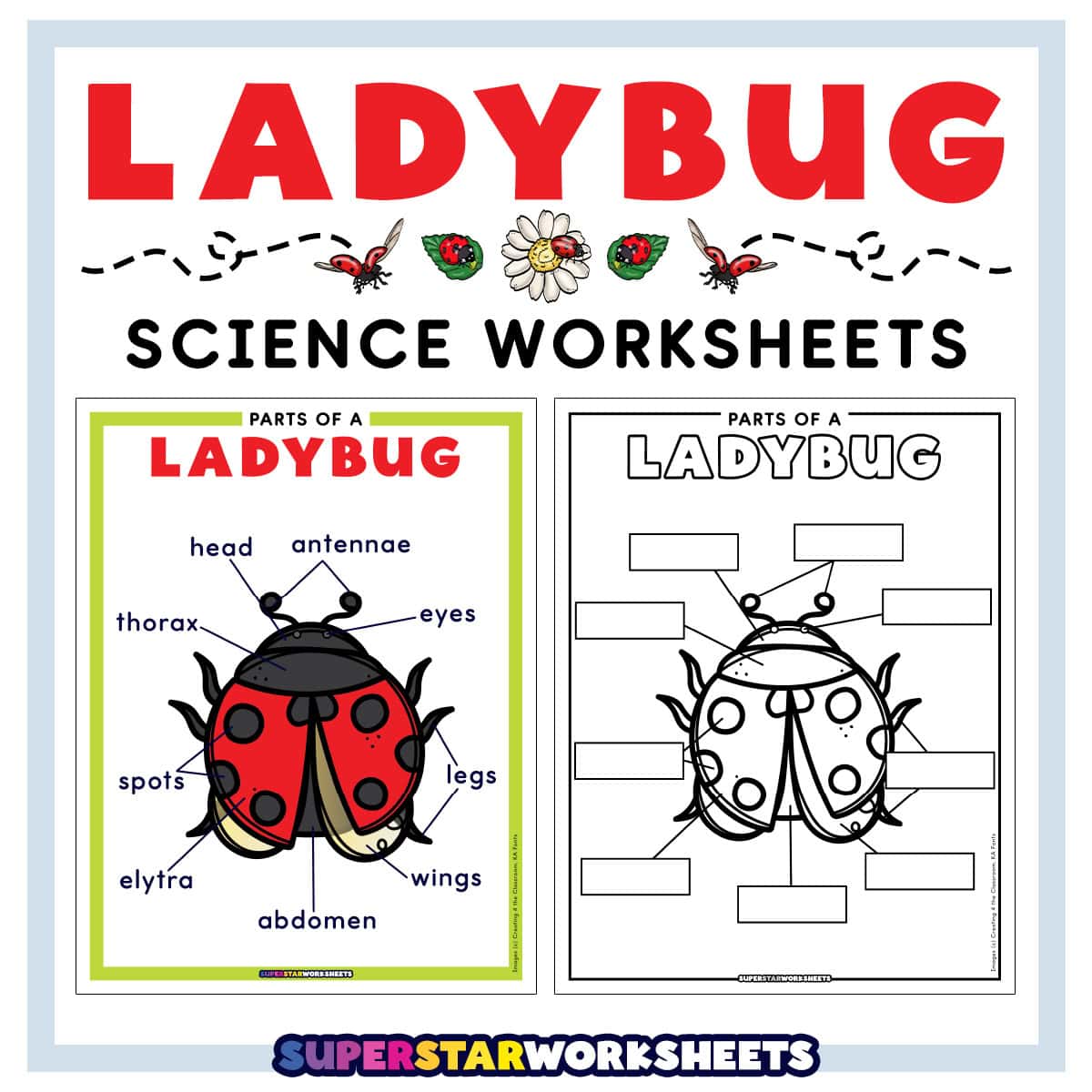
Free printable Ladybug Worksheets for elementary students, featuring parts of a ladybug charts, life cycle diagrams, vocabulary cards, and fun science reading passages. Download and print PDF activities covering ladybug anatomy, complete metamorphosis, warning coloration and defenses, and the garden food chain. These engaging, hands-on resources help young learners build science vocabulary, reading comprehension, and observation skills. Perfect for classroom science centers, homeschool nature study, or a spring garden unit studies.
Parts of a Ladybug Printables
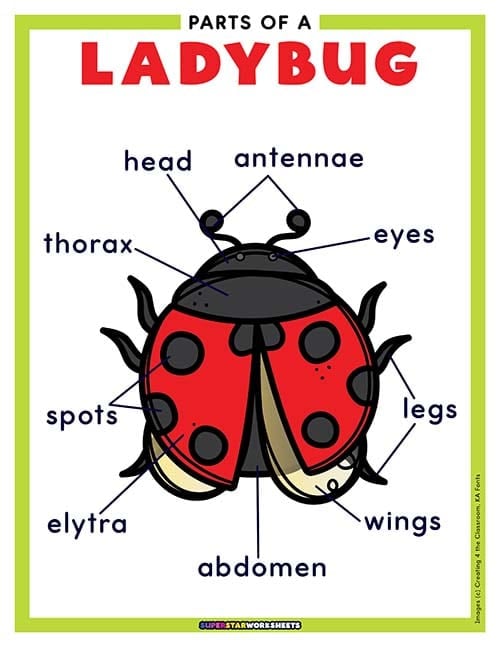
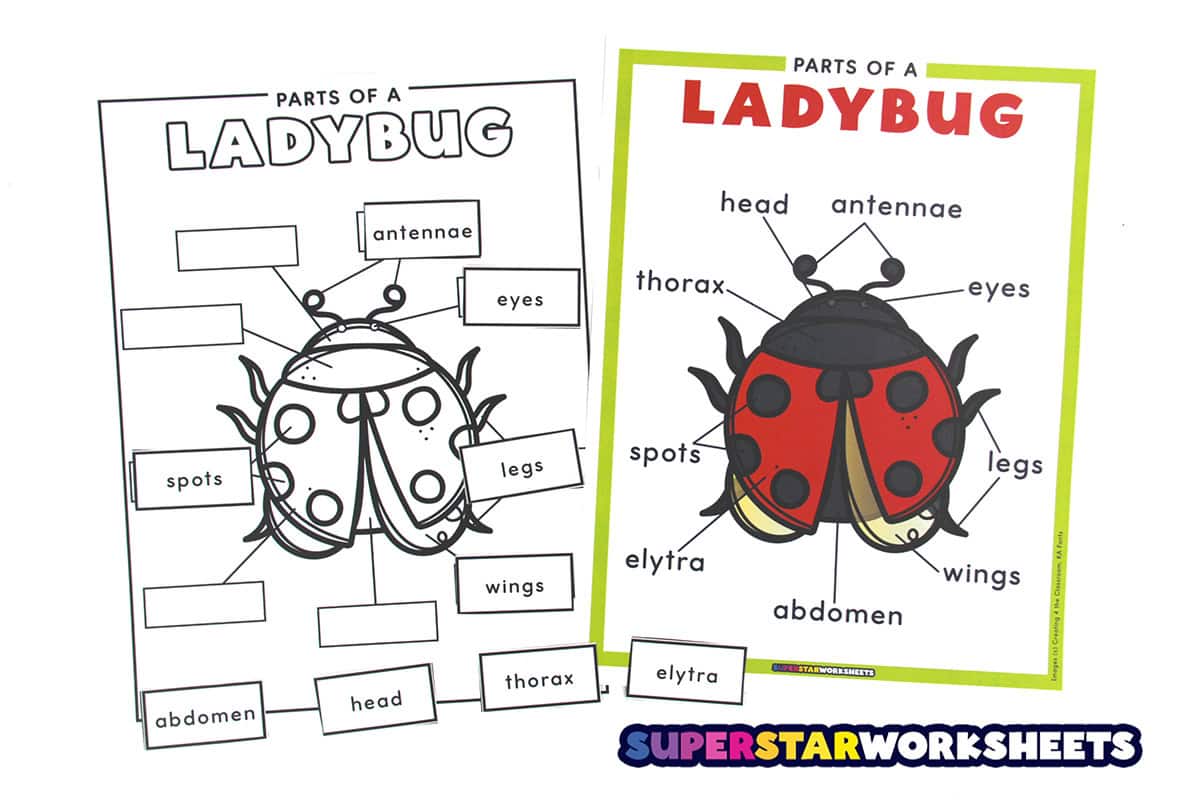
Download and print this full color Parts of a Ladybug chart to show students the external body parts of this helpful garden insect. This classroom-ready poster works great as a labeling anchor chart for science centers or nature journals. Use it to introduce vocabulary like antennae, elytra, thorax, and abdomen.
Parts of a Ladybug Coloring Page
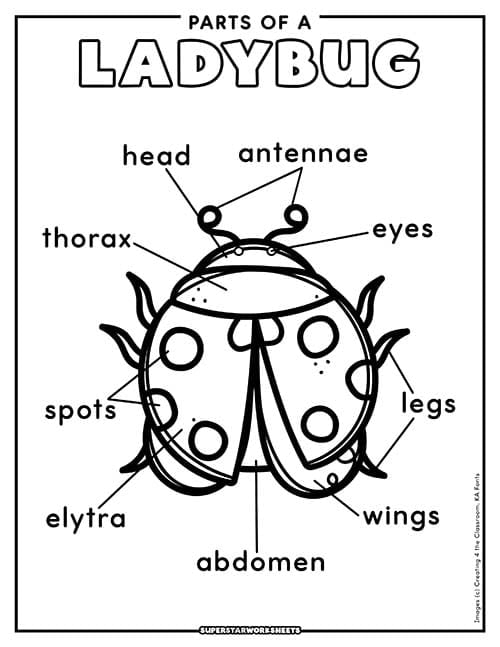
Free printable parts of a ladybug coloring page featuring labeled body parts for early readers. Students color the ladybug while reading and reviewing each vocabulary term. A great low-prep companion to the full color reference chart.
Label the Parts of a Ladybug Worksheet
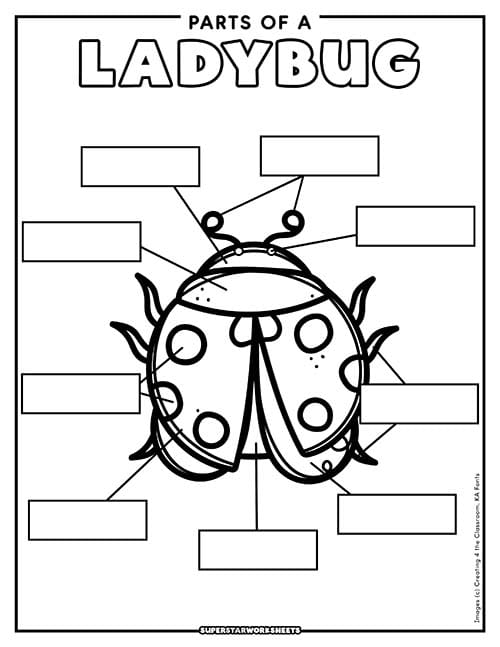
Free blank printable ladybug parts labeling worksheet for students to identify each body part on their own. This set includes cut and paste labels for younger students, plus a blank version older students can label by writing in each term.
Ladybug Vocabulary Learning Mat
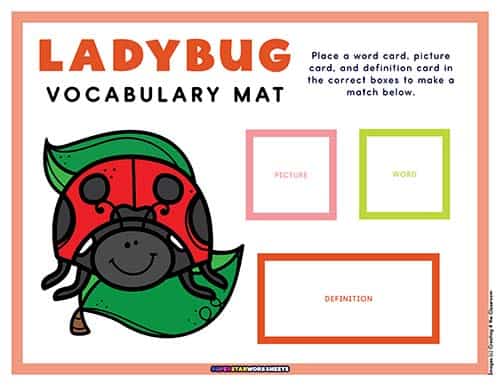
Students practice matching ladybug vocabulary with this reusable learning mat featuring pictures, words, and definitions. Laminate this non-consumable mat for a hands-on science center students can use again and again all season long.
Parts of a Ladybug Vocabulary Cards
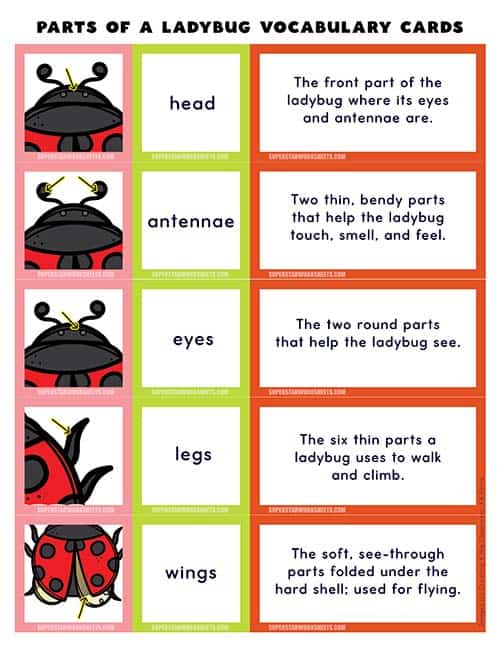
These ladybug parts vocabulary cards include visuals, terminology, and simple definitions to help students learn ladybug anatomy. Use them with the learning mat above for matching games, concentration, or independent review.
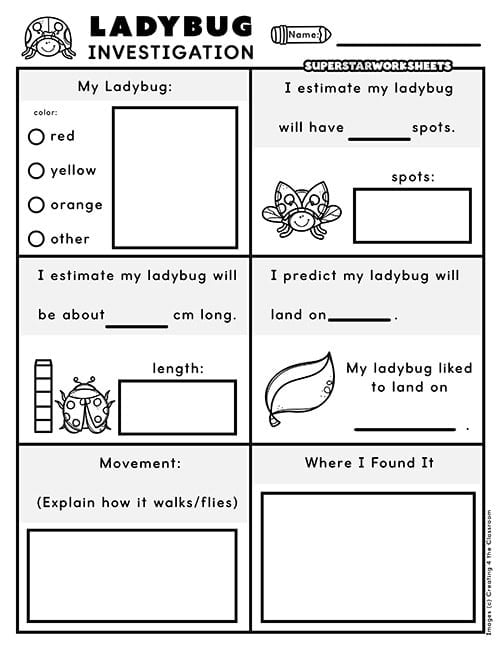
Ladybug Observation Investigation Worksheet
This hands-on ladybug investigation worksheet invites students to observe a real ladybug and record what they notice about its color, spots, size, and movement. A wonderful spring science activity for outdoor exploration or a classroom ladybug release.
Teaching the Parts of a Ladybug
Every ladybug shares a few key body parts that help it survive. A ladybug’s head holds its eyes and antennae, which it uses to see and to touch and smell the world around it. The middle section, called the thorax, is where the ladybug’s six legs and wings attach. Its back section, the abdomen, holds the parts it needs to breathe and digest food. Perhaps the most recognizable feature is the elytra, the hard, spotted shell that protects its delicate flying wings underneath. Encourage students to look closely at a ladybug picture (or a real one!) and point out each of these parts.
Vocabulary: head, antennae, eyes, legs, wings, spots, thorax, abdomen, elytra
Ladybug Life Cycle Printables
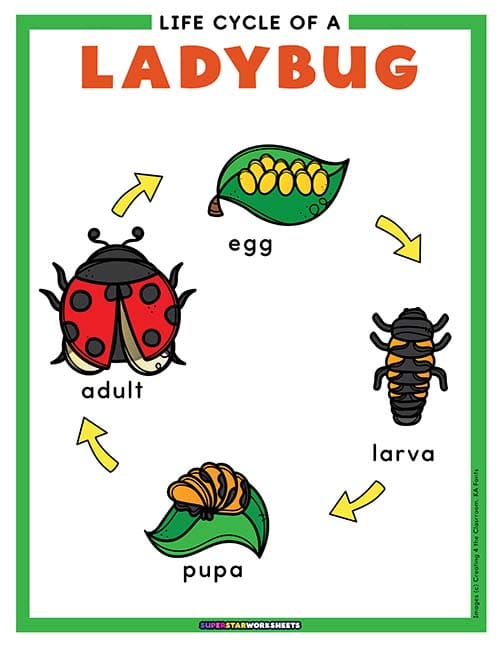
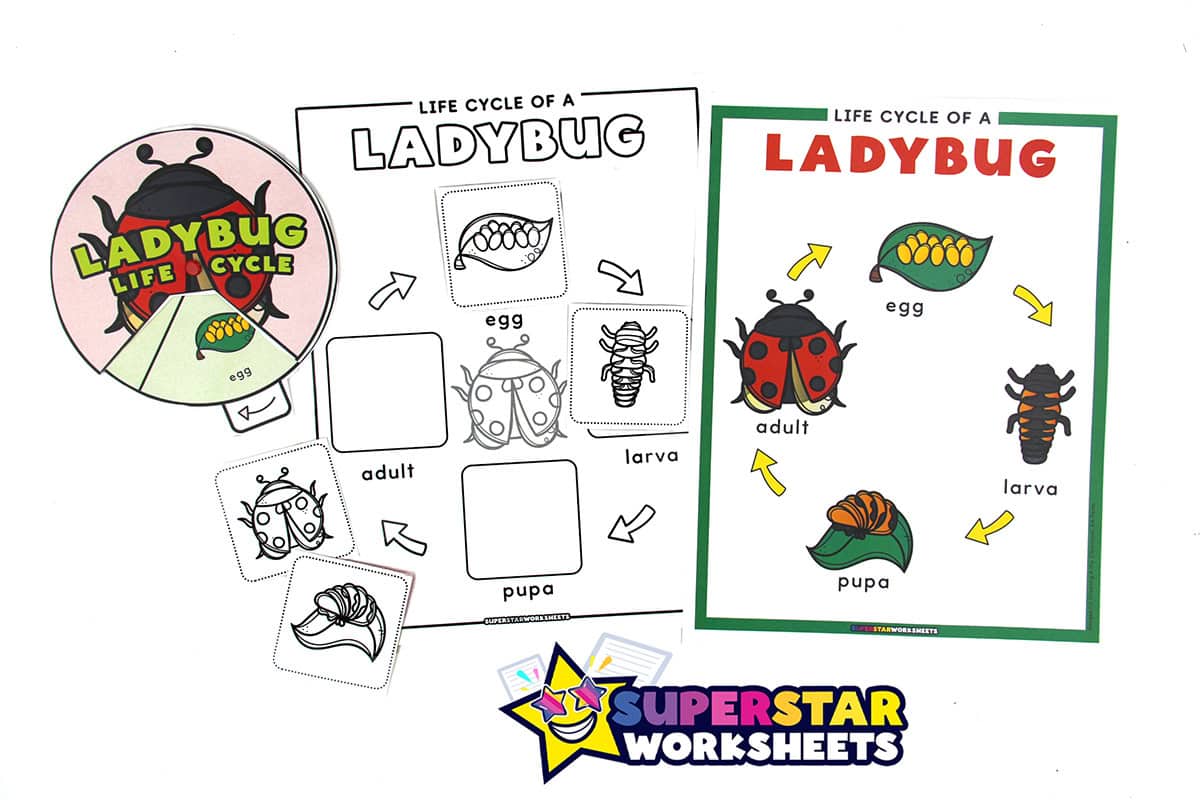
Download and print this full color ladybug life cycle poster showing the four stages of complete metamorphosis. This anchor chart is a wonderful reference tool for science journals or classroom walls during a bug or garden unit.
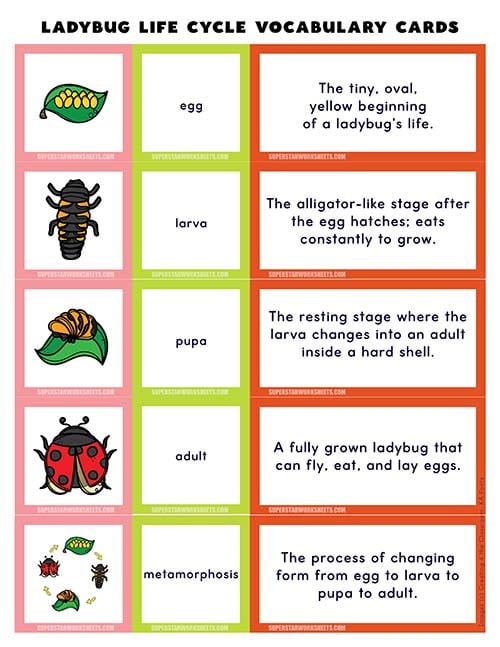
Ladybug Life Cycle Vocabulary Cards
Students match the correct stage of the ladybug life cycle to its vocabulary term and definition with these picture-based cards. A great learning center activity for memory match or concentration games. For more FREE science printables take a look at our Plant Worksheets!
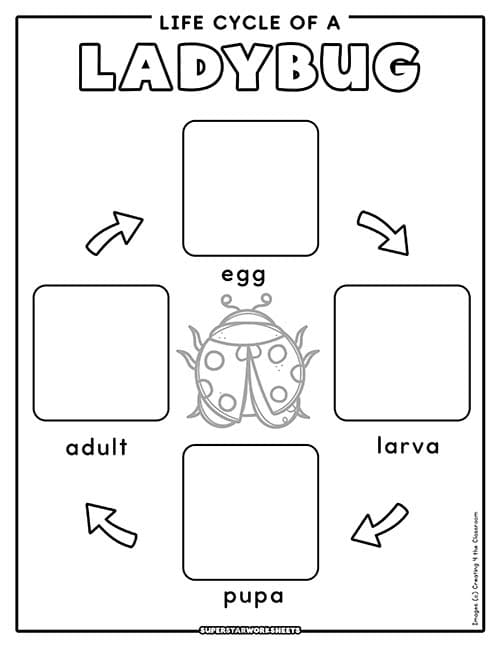
Ladybug Life Cycle Cut and Paste Worksheet
Free printable ladybug life cycle cut and paste activity for students to put each stage in the correct order. This early learning worksheet builds sequencing skills alongside fine motor practice.
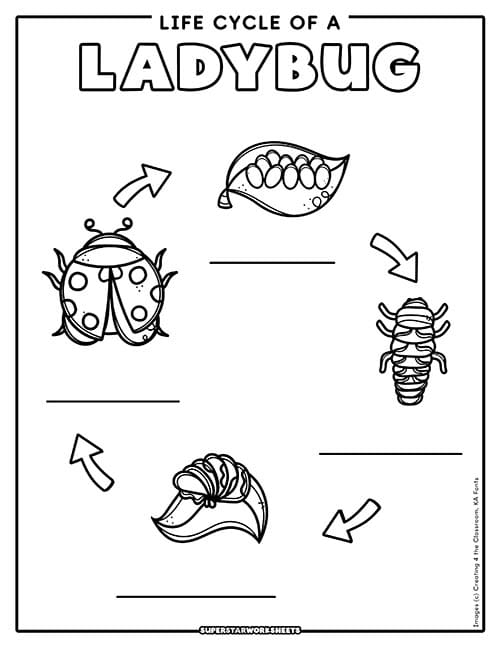
Label the Ladybug Life Cycle Worksheet
Free printable ladybug life cycle labeling worksheet for students to write in the correct term for each stage of development. A helpful next step after the cut and paste activity for building independent vocabulary recall.
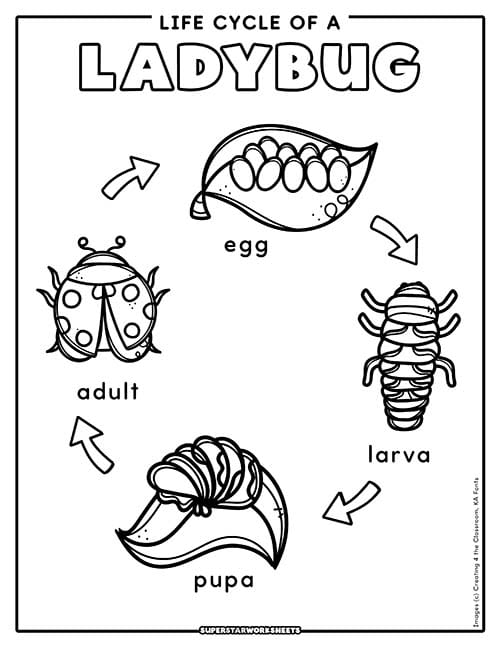
Ladybug Life Cycle Coloring Page
This simple black and white ladybug life cycle coloring sheet lets students review all four stages of development while they color. Appropriate for spring science units, garden studies, and insect life cycle lessons.
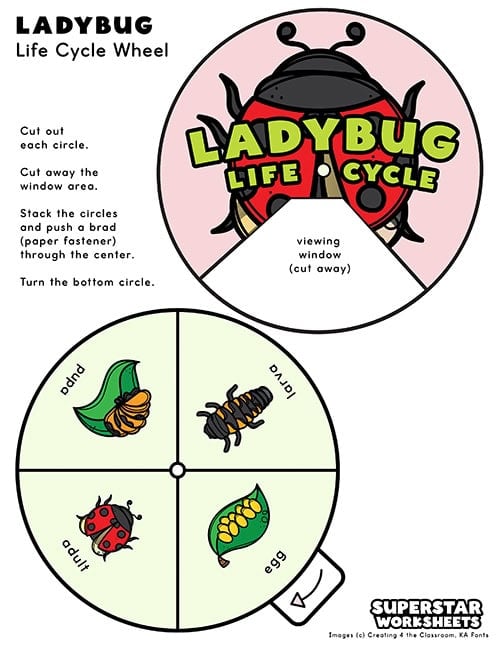
Printable ladybug life cycle wheel featuring all four stages of growth and development. Students color, cut, and assemble the wheel, then turn it to reveal each stage along with its vocabulary term — a fun take-home project for retelling the life cycle.
Teaching the Ladybug Life Cycle
Ladybugs go through complete metamorphosis, meaning they look completely different at each stage of their life. It all begins with a tiny egg, usually laid in a cluster on the underside of a leaf near a food source like aphids. Once hatched, the larva looks a bit like a spiky, colorful alligator and spends its time eating as much as it can to grow. When it’s ready, the larva enters the pupa stage, resting inside a hard shell while its body changes completely. Finally, an adult ladybug emerges, ready to fly, eat, and lay eggs of its own. This whole process is called metamorphosis, and it’s one of the most fascinating transformations in the insect world.
Vocabulary: egg, larva, pupa, adult, metamorphosis
Ladybug Adaptations Printables
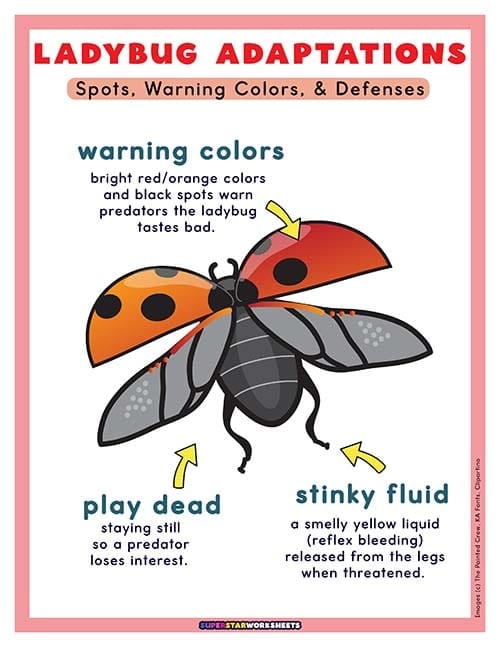
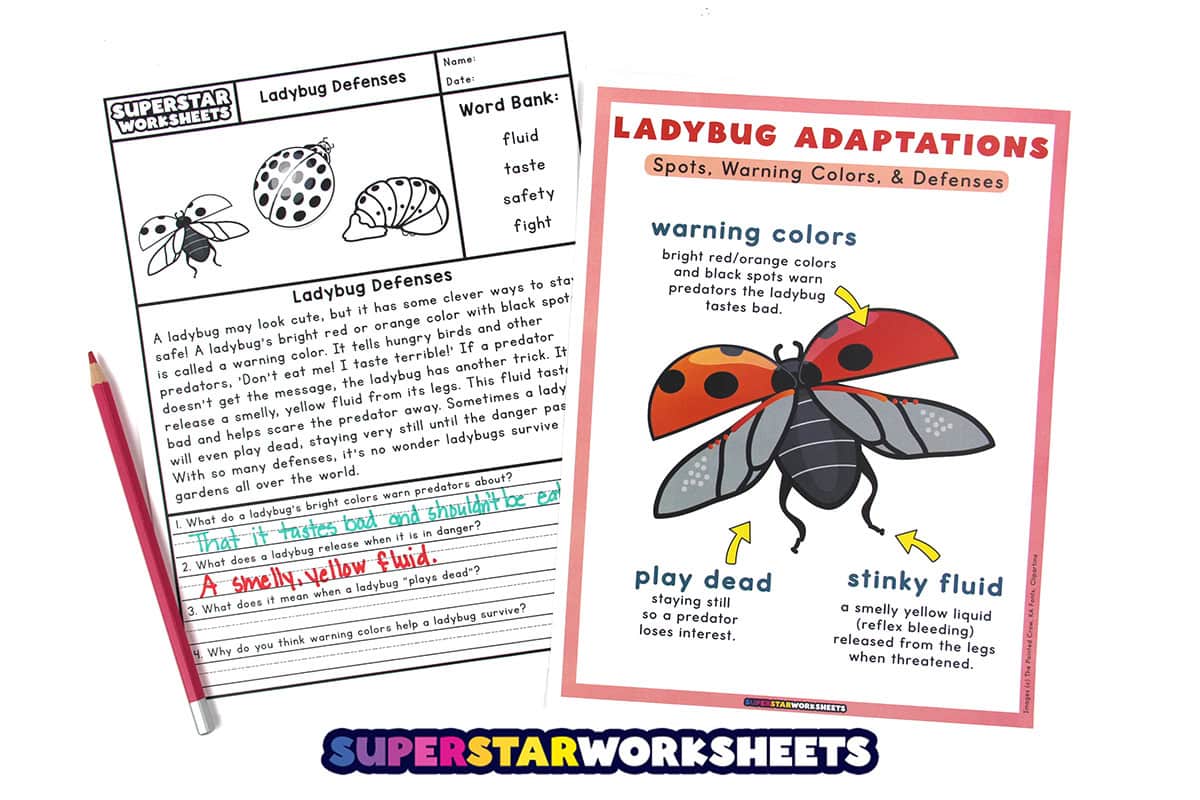
This ladybug adaptations reference chart shows three clever ways ladybugs protect themselves from predators. Use it to introduce students to warning coloration and other simple animal defense mechanisms.
Ladybug Adaptations Vocabulary Cards
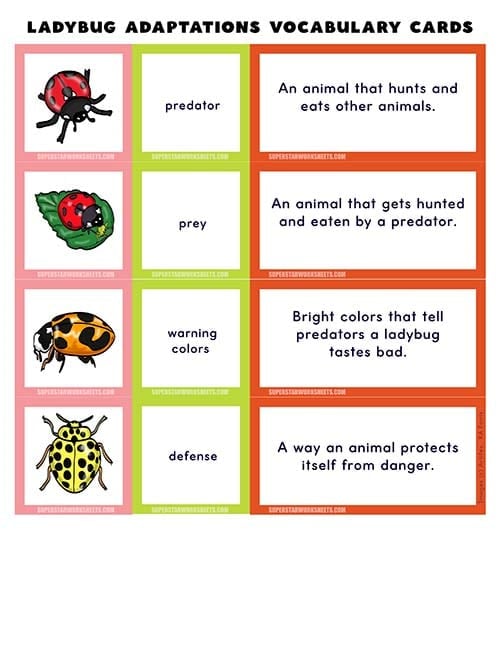
These vocabulary cards help students learn key terms related to ladybug defenses, including predator, prey, and warning colors. Pair with the defenses chart for a complete adaptations learning center.
Ladybug Defenses Reading Passage
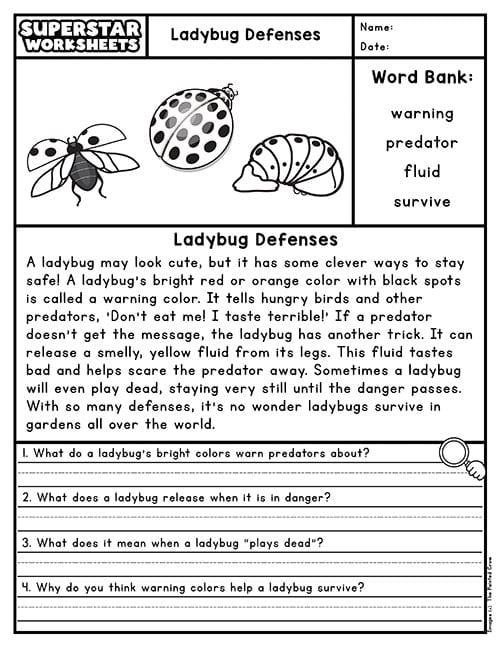
This short nonfiction reading passage explains how a ladybug’s bright colors and clever tricks help it stay safe from predators. Comprehension questions below check understanding of key vocabulary and main ideas.
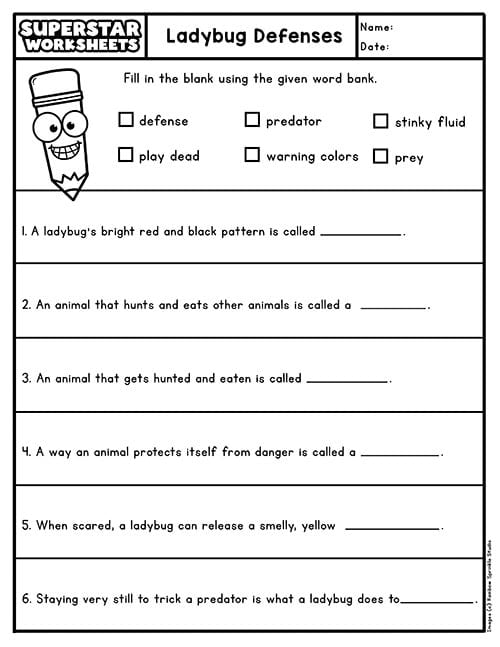
Ladybug Defenses Fill in the Blank
Students practice using ladybug defense vocabulary in context with this fill in the blank worksheet. A great follow-up activity after reading about warning colors, predators, and prey.
Teaching Ladybug Adaptations
A ladybug’s bright red or orange color covered in black spots isn’t just for looks — it’s called a warning color, and it tells predators to stay away. This bright pattern warns birds and other predators that a ladybug doesn’t taste good, so most learn to leave it alone. If a predator doesn’t get the message, a ladybug has a backup plan: it can release a smelly, yellow fluid from its legs that tastes terrible. Some ladybugs will even play dead, staying perfectly still until the danger passes. These clever adaptations help ladybugs survive in gardens, fields, and forests all over the world.
Vocabulary: warning colors, bright colors, predator, prey, defense, stinky fluid, play dead
Ladybugs in the Garden Printables
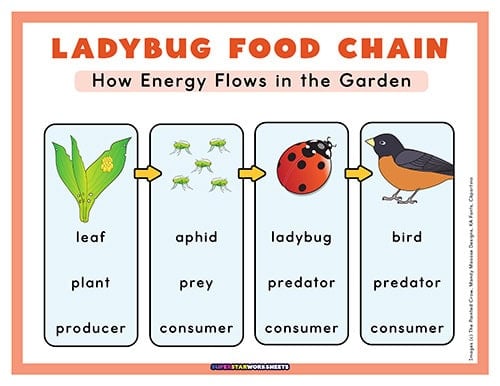
Ladybug Garden Food Chain Chart
This food chain reference chart shows how energy moves from plants to aphids to ladybugs in a simple garden ecosystem. A helpful visual for introducing producers, consumers, and predator and prey relationships.
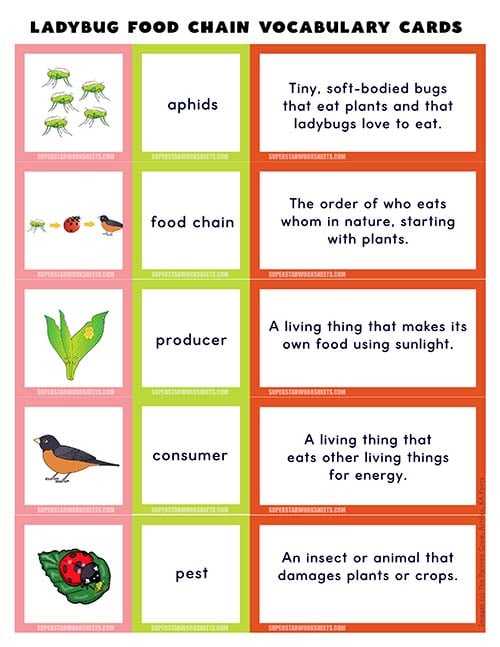
Ladybug Food Chain Vocabulary Cards
Students learn key food chain vocabulary including producer, consumer, and beneficial insect with these picture-based cards. Use alongside the food chain chart for a hands-on ecosystem learning center.
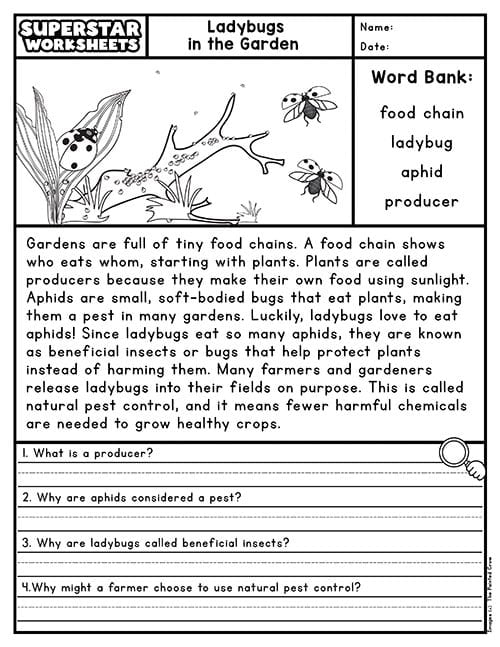
Ladybugs in the Garden Reading Passage
This nonfiction reading passage explains why ladybugs are considered beneficial insects and how they help farmers and gardeners naturally. Comprehension questions reinforce key vocabulary and main ideas from the passage.
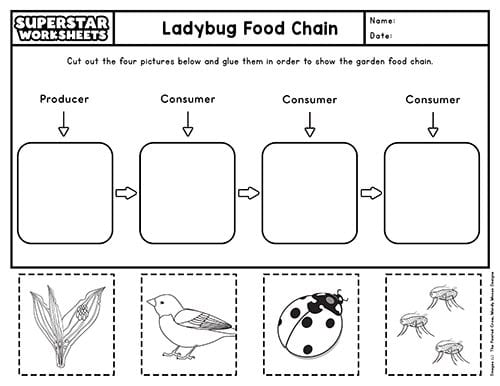
Students cut and paste pictures to put a simple garden food chain in the correct order. A hands-on way to reinforce how plants, aphids, and ladybugs are all connected. Teachers! If you are needing more free printables, take a look at our Leaf Worksheets!
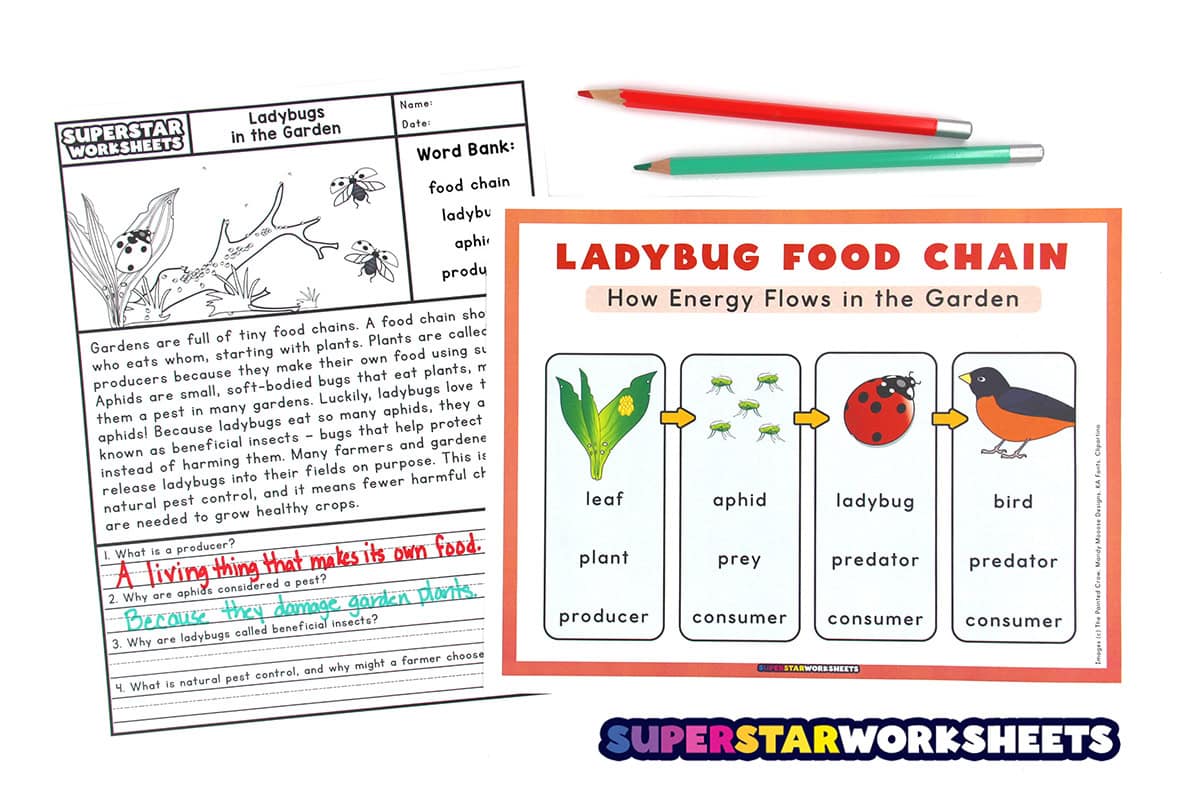
Teaching the Garden Food Chain
Every garden is full of tiny food chains, and ladybugs play an important role in keeping them balanced. It all starts with plants, which are called producers because they make their own food using sunlight. Aphids are small, soft-bodied insects that feed on plants, which makes them a common garden pest. Luckily, ladybugs love to eat aphids, earning them the nickname beneficial insects because they help protect plants instead of harming them. Many farmers and gardeners even release ladybugs into their fields on purpose as a form of natural pest control, cutting down on the need for chemical treatments.
Vocabulary: aphids, food chain, producer, consumer, pest, beneficial insect, natural pest control
Ladybug Fun Facts & Research
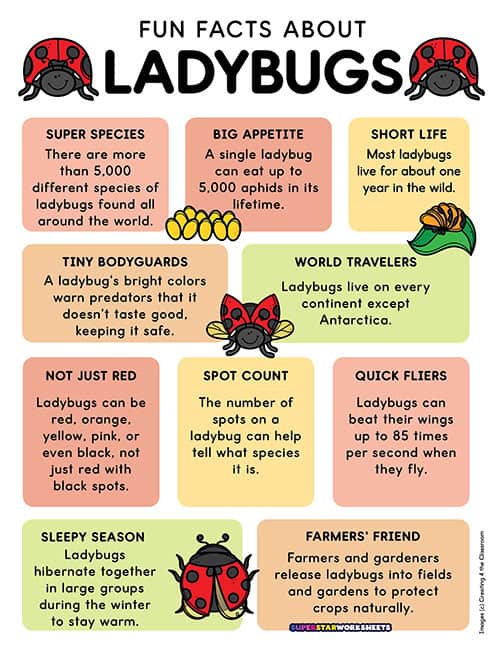
Download this printable reference poster packed with fun and surprising ladybug facts for kids. Hang it near your science center or research station for students to read and enjoy.
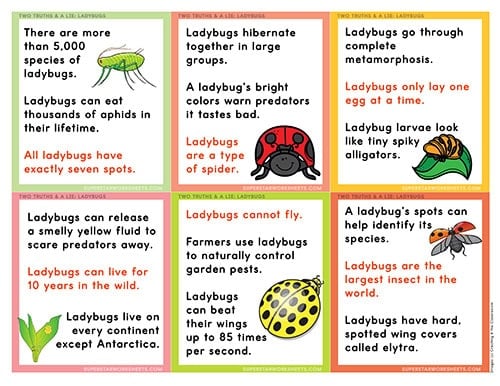
Two Truths and a Lie: Ladybug Science
Challenge students with this fun ladybug facts game featuring two truths and a lie on each card. Teachers read card and have to guess the lie. A playful way to review science facts while building critical thinking skills.
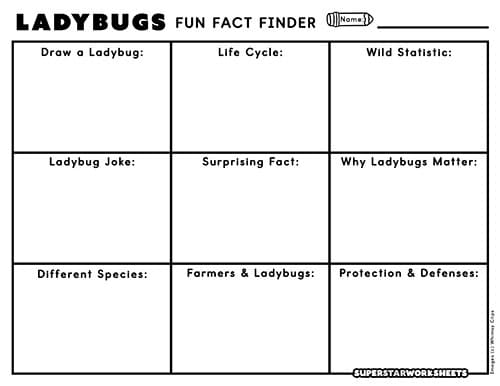
Ladybug Fact Finder Research Worksheet
Students use books or trusted websites to research and record interesting facts about ladybugs in this simple graphic organizer. A great first step before writing a research report.
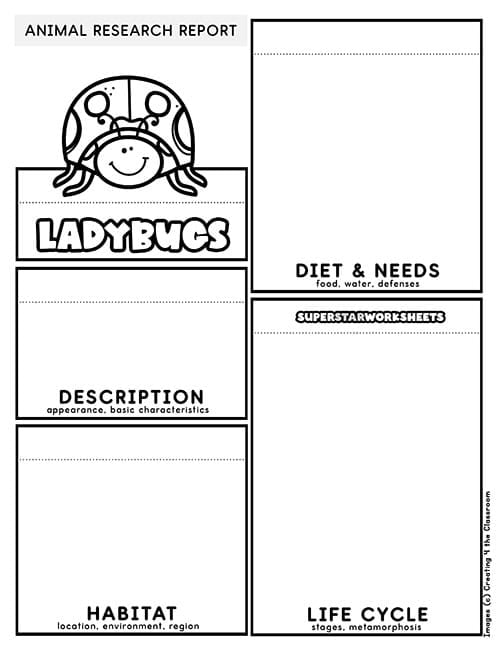
Ladybug Research Report Booklet
This printable research booklet lets students write and illustrate what they learned about ladybugs. A perfect culminating project for a ladybug or garden science unit.
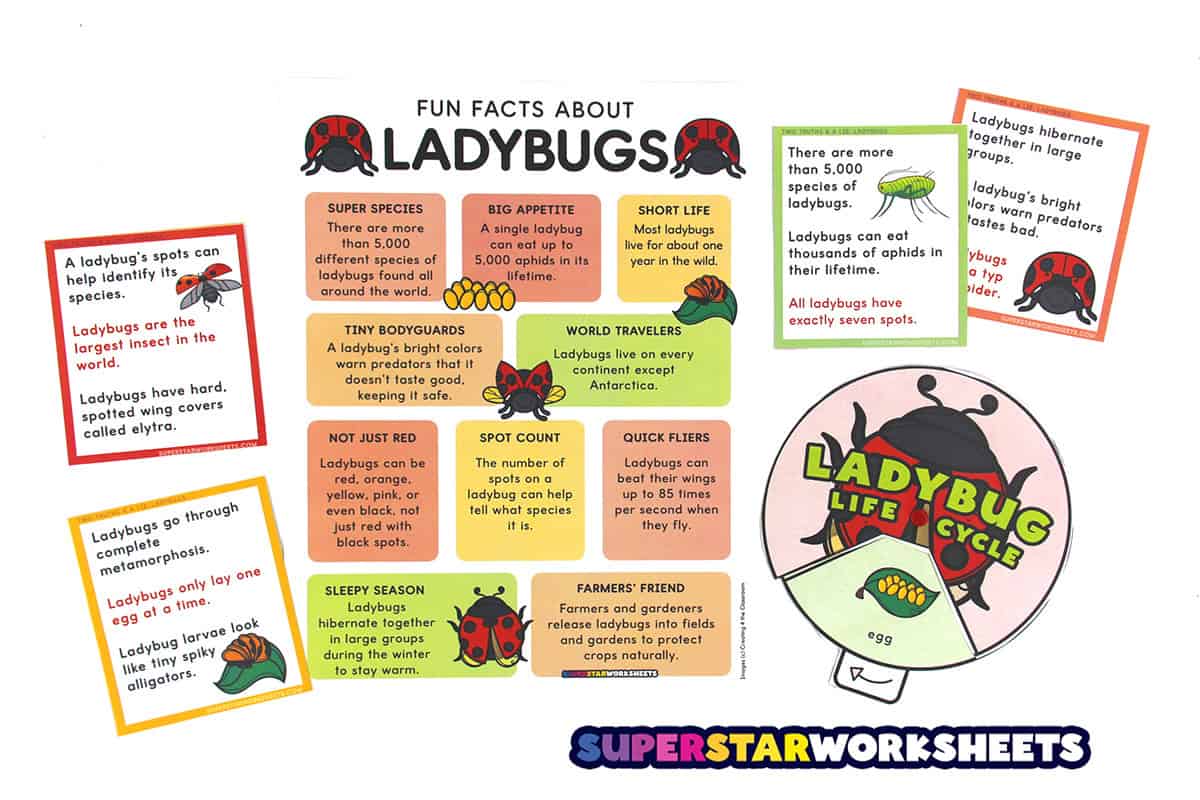
Amazing Ladybug Facts
Ladybugs are full of surprises! Did you know there are more than 5,000 different species of ladybugs found all over the world? Or that a single ladybug can eat thousands of aphids in its lifetime? Ladybugs even hibernate together in large groups to stay warm through the winter. Use these fun facts to spark curiosity and encourage students to dig deeper with their own ladybug research.
Vocabulary: species, overwintering, lifespan, habitat range
Leave a Reply