
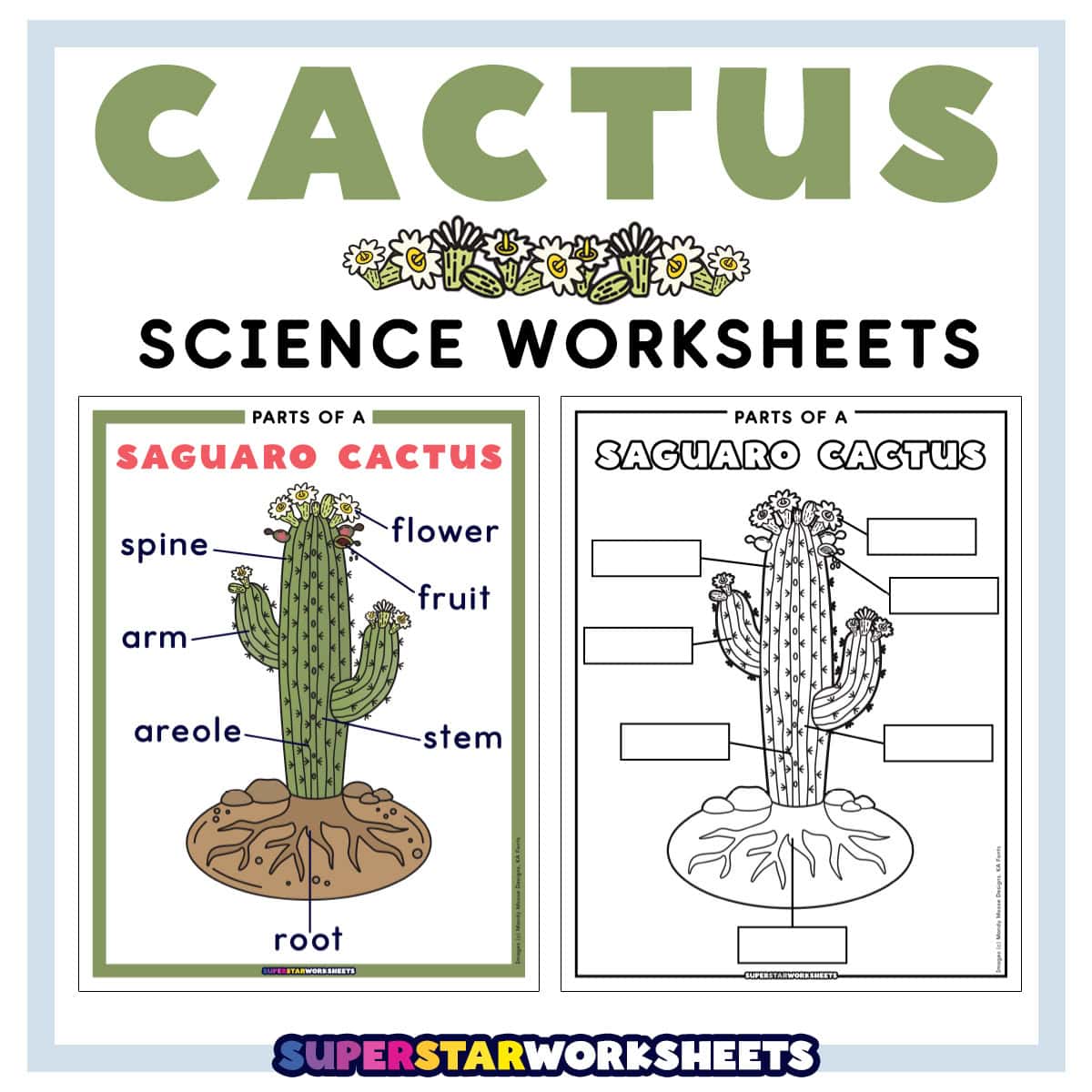
Free Printable Cactus Worksheets make it easy to bring the desert into your classroom! This growing collection includes parts of a cactus diagrams, a saguaro life cycle chart, adaptations and water storage activities, desert food web practice, and a hands-on water loss experiment. These are all ready to download, print as a PDF, and use right away. Perfect for elementary science units, small group work, or desert biome lessons, these worksheets help kids build vocabulary, practice labeling and sequencing, and understand how plants survive in extreme environments. Whether you’re planning a full desert unit or just need one quick printable for science centers, this collection has you covered.
Parts of a Cactus Printables
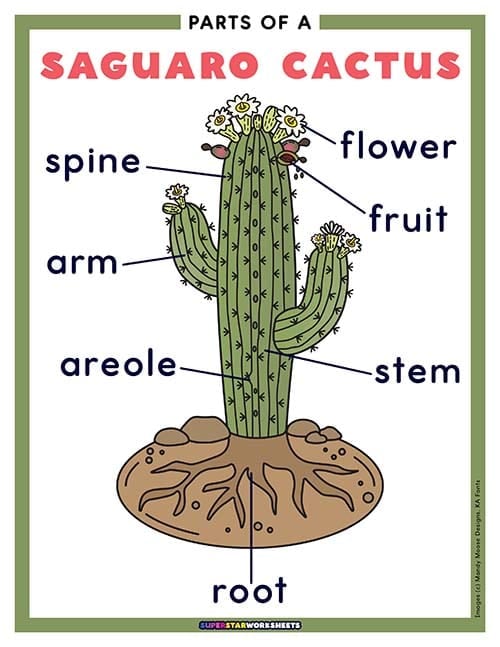
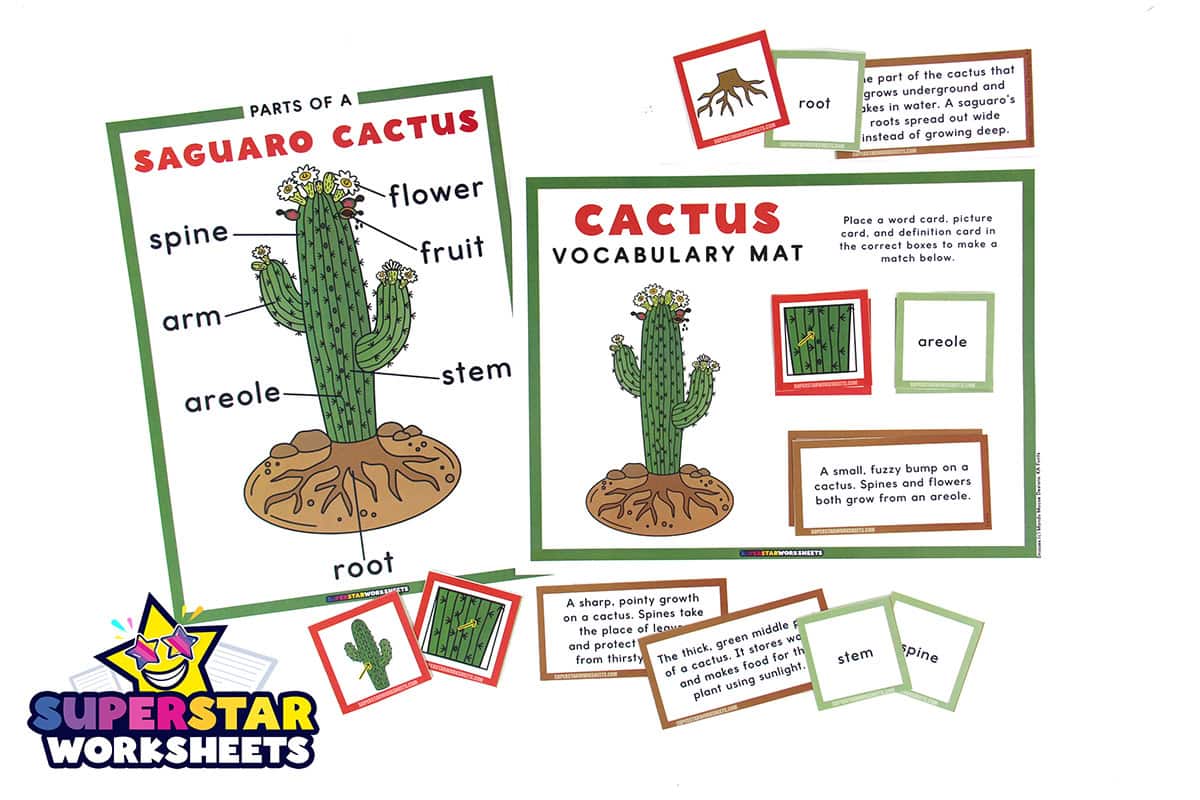
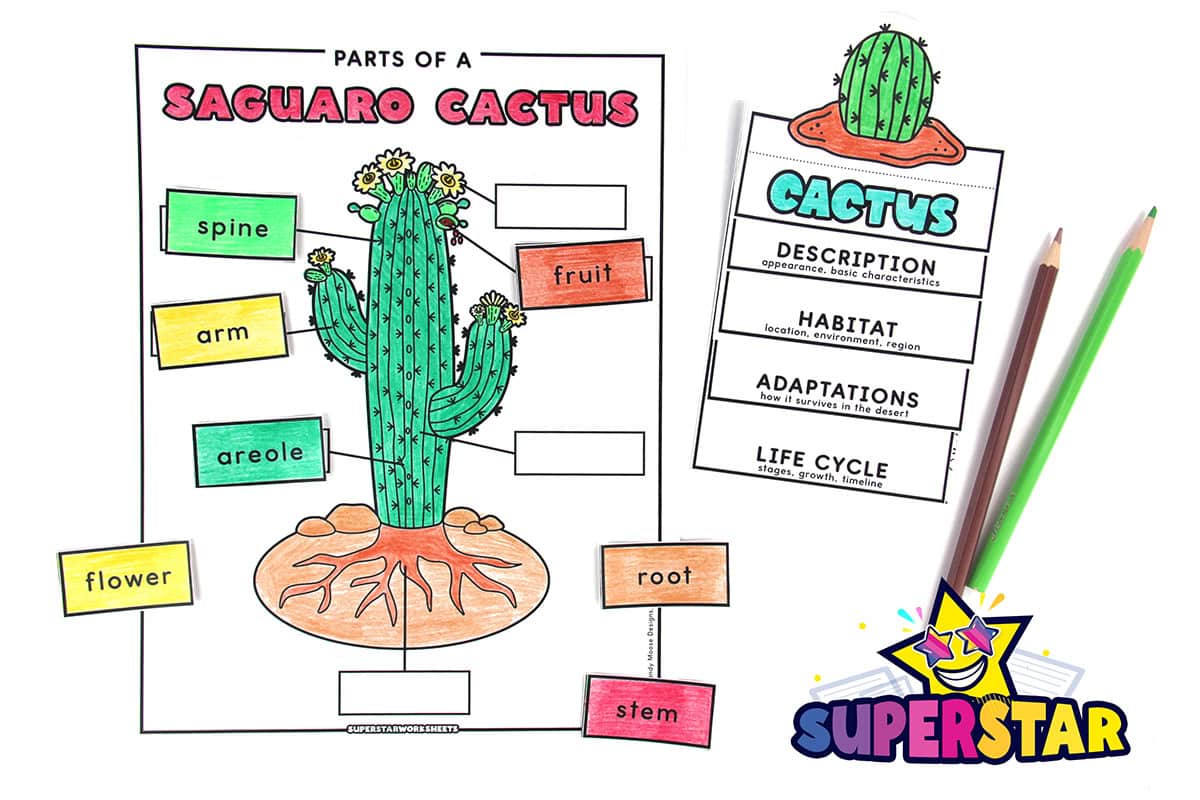
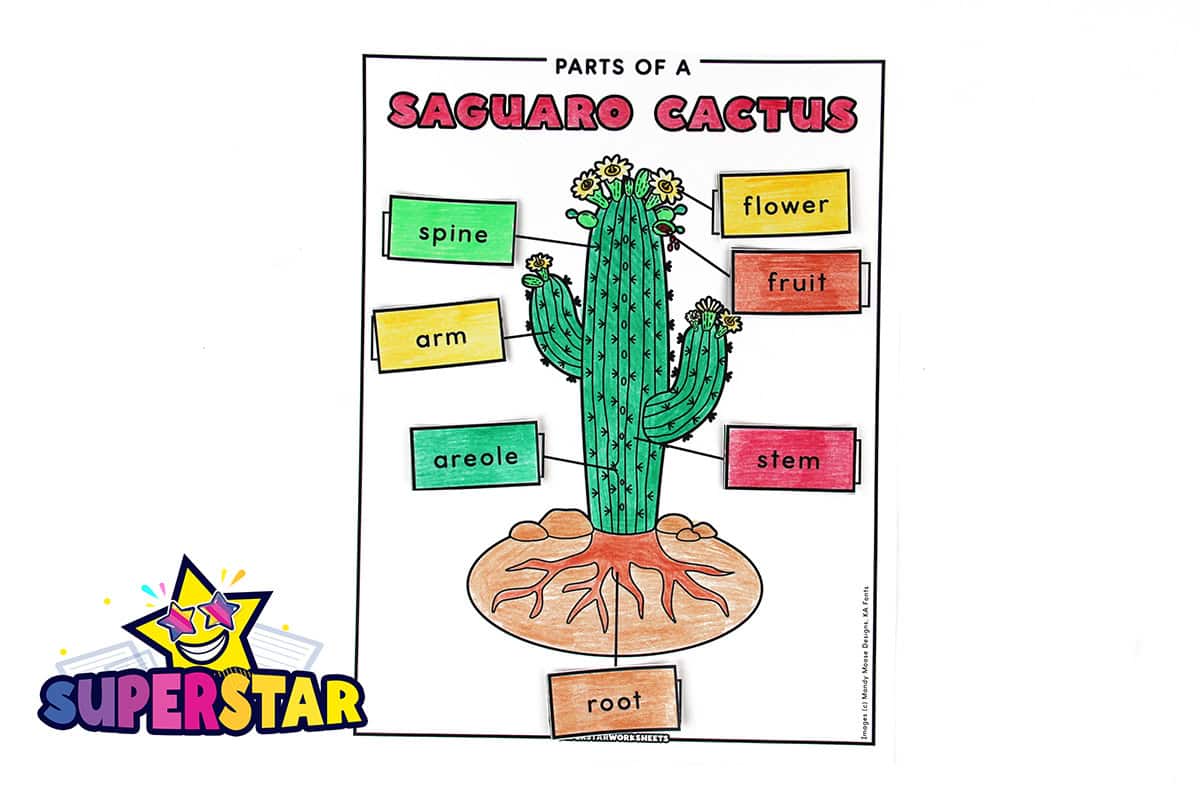
This colorful parts of a cactus chart introduces young learners to the saguaro’s key structures, including its spine, stem, areole, root, arm, flower, and fruit. Bright labels and simple lines make it an easy introduction to plant anatomy for early learners. It’s a perfect anchor visual for a desert science unit or a cactus-themed circle time lesson.
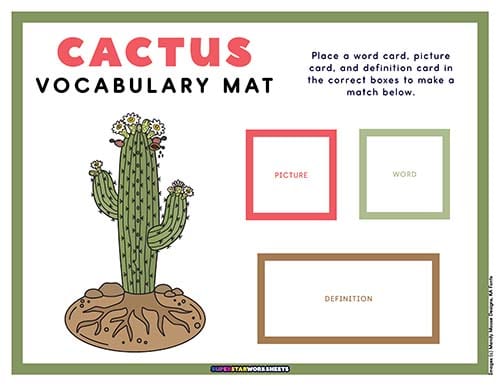
This reusable cactus vocabulary mat gives kids a hands-on way to match pictures, words, and definitions for every vocabulary term in this collection. Students place cards into labeled columns to build matching and sorting skills while reinforcing plant science vocabulary. Because it’s reusable across every topic in this set, it becomes a go-to center activity all unit long.
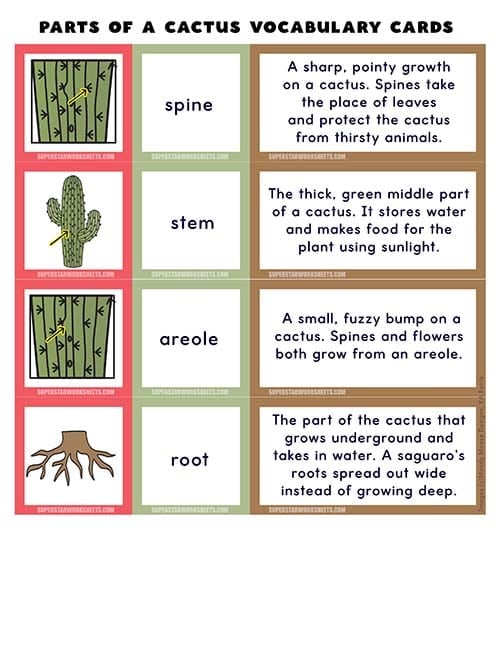
Parts of a Cactus Vocabulary Cards
These parts of a cactus vocabulary cards pair with the Cactus Vocabulary Mat to help kids practice matching pictures, words, and definitions for spine, stem, areole, root, arm, flower, and fruit. The picture-word-definition format builds vocabulary and reading skills at the same time. Use them for independent practice, small group work, or a quick vocabulary review game.
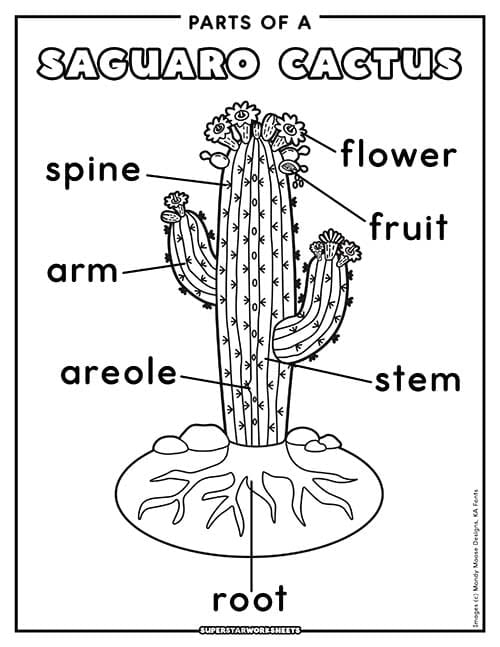
Parts of a Cactus Coloring & Labeling Page
This black and white parts of a cactus worksheet gives students a chance to color and review the same labeled structures from the anchor chart. It’s a simple, low-prep way to reinforce cactus vocabulary after the introductory lesson. Great for early finishers, homework, or independent science journals.
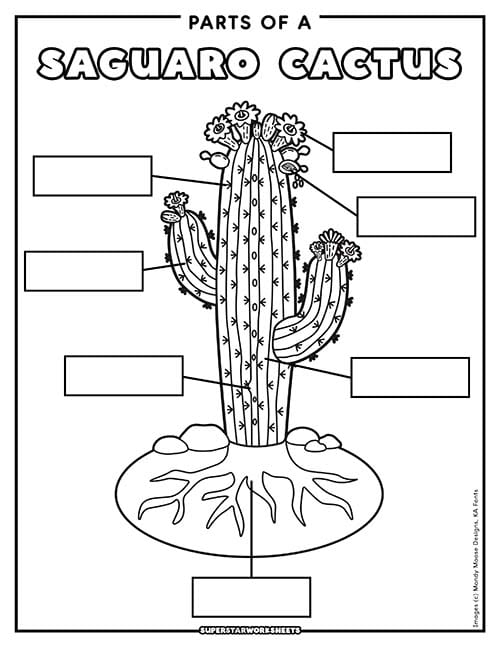
Parts of a Cactus Cut and Paste Activity
In this cut and paste parts of a cactus activity, kids match vocabulary labels to the correct part on an unlabeled saguaro diagram. The hands-on format is perfect for kinesthetic learners and makes a great informal assessment after the introductory lesson. It works well for whole group instruction, literacy centers, or independent practice.
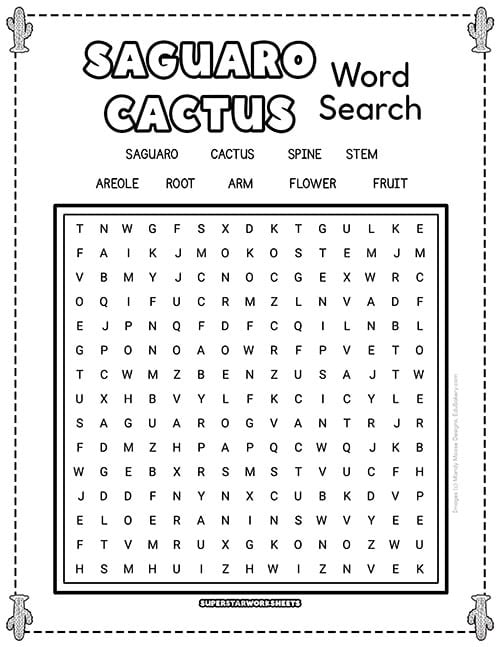
This cactus word search challenges students to find key vocabulary words hidden in a letter grid, including cactus part names like spine, stem, and areole. It’s an easy way to reinforce spelling and vocabulary recognition after a cactus science lesson. Perfect for early finishers, morning work, or a fun way to wrap up a desert unit. For more FREE science printables, take a look at our Plant Worksheets!
Teaching the Parts of a Cactus
A cactus doesn’t look like most other plants, and that’s exactly the point! Instead of leaves, a cactus grows sharp spines that protect it from hungry desert animals. Its thick, green stem stores water and makes food using sunlight, working like both a trunk and a leaf all in one. Look closely and you’ll spot small, fuzzy bumps called areoles, these are where spines and flowers both grow from. Underground, a saguaro’s root system spreads out wide instead of growing deep, helping it catch rain quickly. As a saguaro gets older, it may grow an arm branching off its main stem, along with a flower that blooms for just a short time and eventually becomes fruit.
Teaching Tip: Have students compare a saguaro’s parts to a tree’s parts, they may already know same basic categories (stem, root, flower, fruit), but very different shapes and jobs!
Types of Cacti Printables
Types of Cacti Reading Comprehension
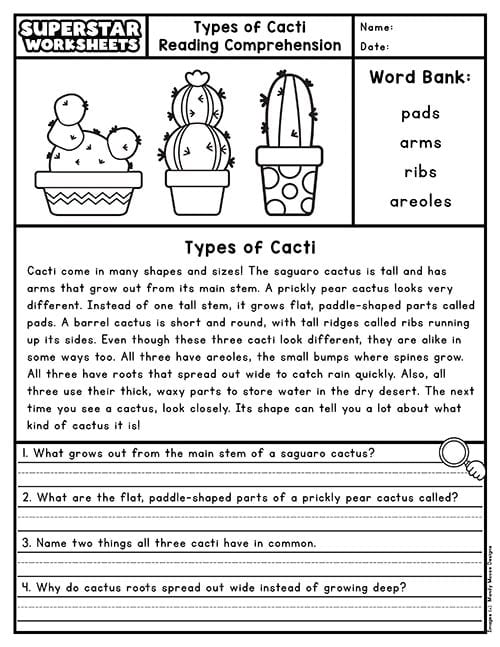
This types of cacti reading passage compares the saguaro, prickly pear, and barrel cactus, helping students see how cactus shapes can differ while sharing common survival features. Comprehension questions check understanding of key details and encourage close reading. It’s an excellent nonfiction pairing for a desert plants unit or reading center.
Types of Cacti Research Activity
This types of cacti research activity invites students to explore five different cactus varieties: saguaro, prickly pear, barrel cactus, cholla, and hedgehog cactus. Kids practice research skills while building a deeper understanding of cactus diversity. Use it alongside nonfiction books or a guided internet research session.
Teaching Types of Cacti
Not every cactus looks like a saguaro! A prickly pear cactus grows flat, paddle-shaped pads instead of one tall stem. A barrel cactus is short and round, with tall ridges called ribs running up its sides. A cholla is spiny and branching, some kinds are even nicknamed “jumping cactus” because their spiny segments detach so easily. A hedgehog cactus stays small and round, growing in clusters with bright spring flowers. Even with all these different shapes, every cactus shares a few things in common: spines, areoles, and the ability to store water.
Teaching Tip: Set out photos of each cactus type and have students sort them by shape before labeling. This is a great way to build observation skills before introducing the vocabulary.
Cactus Life Cycle Printables
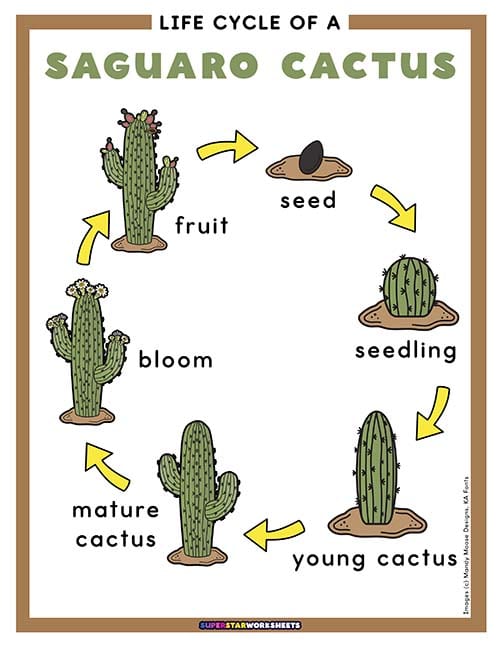
This saguaro cactus life cycle chart walks students through every stage of growth, from seed to seedling to a fully mature, blooming cactus. The colorful circular diagram makes an ideal visual anchor for teaching life cycles in the desert biome. It pairs perfectly with hands-on sequencing and vocabulary activities.
Cactus Life Cycle Vocabulary Cards
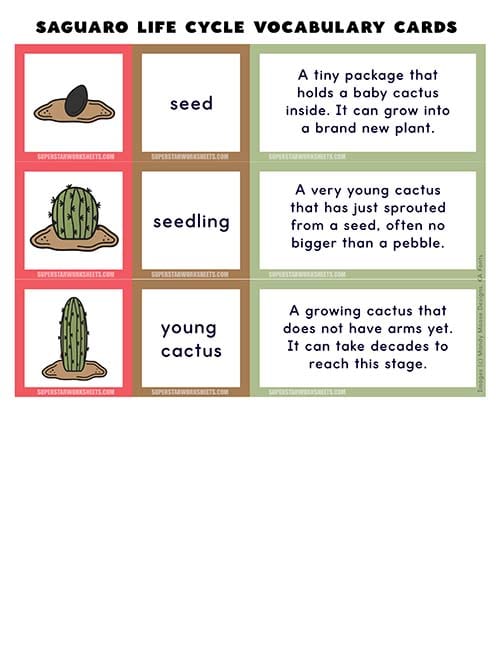
These cactus life cycle vocabulary cards help students match pictures, words, and definitions for each stage of the saguaro’s growth. They’re designed to be used with the reusable Cactus Vocabulary Mat for hands-on practice. A great center activity for reinforcing life cycle vocabulary all week long.
Cactus Life Cycle Cut and Paste Activity
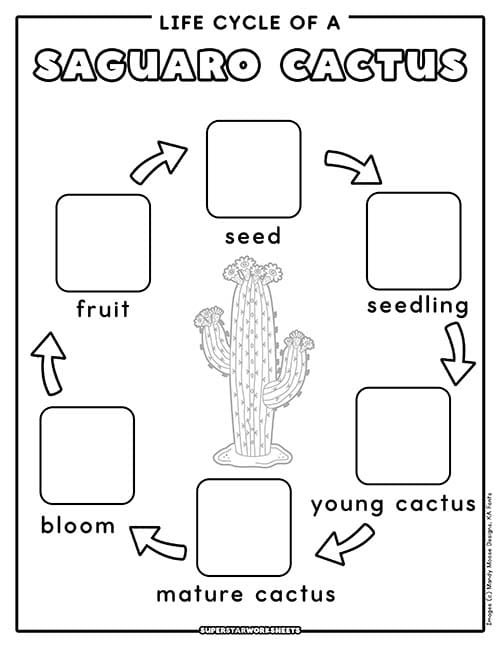
In this cactus life cycle cut and paste worksheet, students put the stages of a saguaro’s growth back in the correct order. The hands-on sequencing format helps reinforce the life cycle concept after the initial lesson. It’s a great option for science journals, small groups, or independent practice.
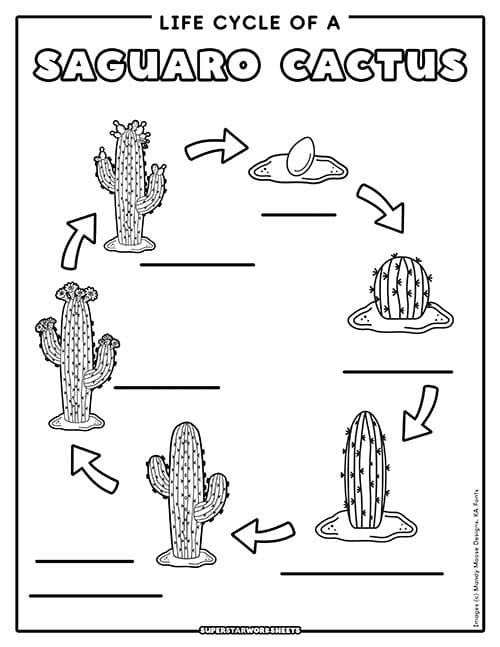
Cactus Life Cycle Coloring & Labeling Page
This black and white cactus life cycle worksheet lets students color and label each growth stage, from seed to bloom to fruit. It reinforces sequencing and vocabulary in a low-prep, easy-to-use format. Perfect for review, homework, or independent science journals.
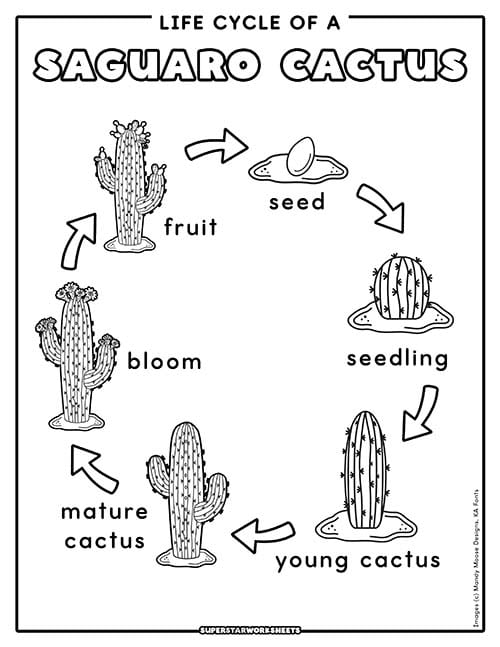
Saguaro Life Cycle Chart Full BW
Here is a free printable black and white life cycle of a saguaro cactus. This life cycle shows the different stages that a cactus will go through. For more free cactus printables, take a look at our Cactus Templates.
Teaching the Cactus Life Cycle
A cactus’s life cycle starts small and moves slowly. It all begins with a tiny seed, which sprouts into a seedling barely bigger than a pebble. Over many years, that seedling grows into a young cactus without any arms yet. Eventually, it becomes a mature cactus old enough to grow a flower that only opens for a single day or night. Once that flower is pollinated, it becomes fruit, which holds the seeds that will start the cycle all over again.
Teaching Tip: Emphasize just how slow this process is! A saguaro can take decades to reach each new stage. It’s a great way to introduce the idea that not all living things grow at the same pace.
Cactus Adaptations & Water Storage Printables
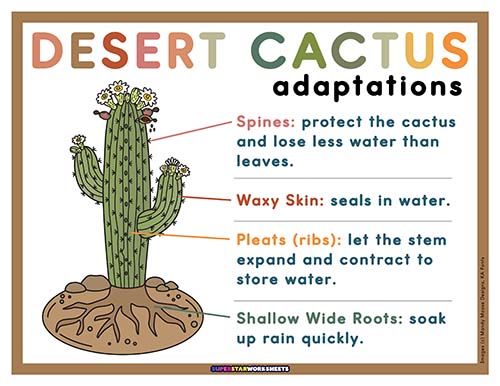
This desert cactus adaptations chart shows how a saguaro’s spines, waxy skin, shallow wide roots, and pleated stem all work together to help it survive with very little water. It’s an ideal visual anchor for teaching plant adaptations and desert survival. Use it to introduce the concept before moving into hands-on adaptation activities.
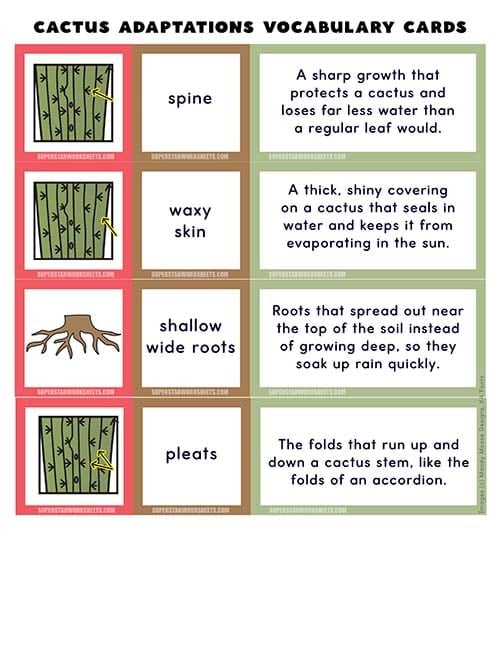
Cactus Adaptations Vocabulary Cards
These cactus adaptations vocabulary cards help students match pictures, words, and definitions for terms like waxy skin, shallow wide roots, and pleats. They pair with the reusable Cactus Vocabulary Mat for hands-on vocabulary practice. A great way to reinforce adaptation vocabulary before or after the matching activity.
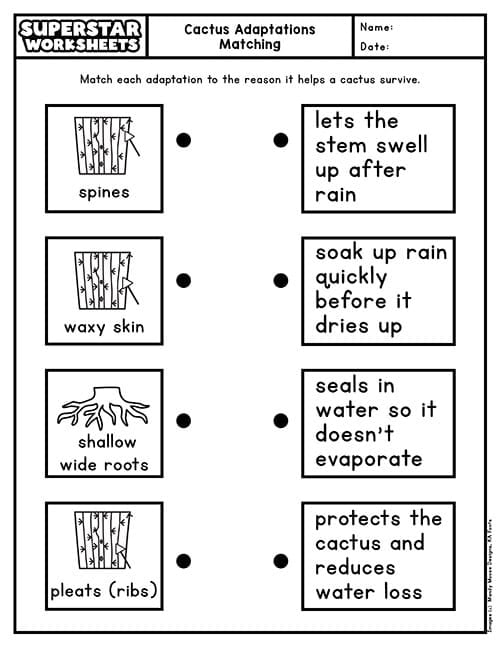
Cactus Adaptations Matching Worksheet
This cactus adaptations matching worksheet asks students to connect each adaptation to the reason it helps a cactus survive in the desert. It’s a quick, effective way to check understanding of cause-and-effect relationships in plant adaptations. Great for independent practice or a quick formative assessment.
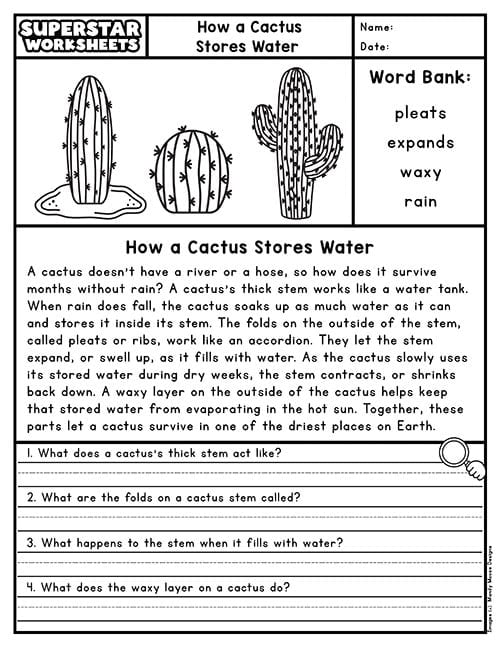
How a Cactus Stores Water Reading Passage
This how a cactus stores water reading passage explains why a cactus’s pleated stem and waxy skin let it survive months without rain. Comprehension questions reinforce key vocabulary and check understanding of the water storage process. A strong nonfiction pairing for a desert adaptations unit.
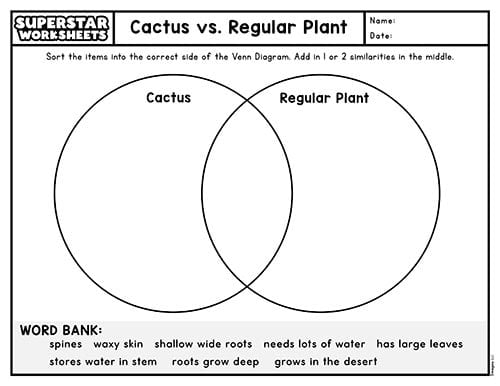
Cactus vs. Regular Plant Venn Diagram
This cactus vs. regular plant Venn diagram asks students to sort adaptations and needs into the correct category, then find a few similarities in the overlap. It’s a hands-on way to reinforce compare-and-contrast thinking around plant adaptations. Perfect for wrapping up an adaptations lesson or as an informal assessment.
Teaching Cactus Adaptations & Water Storage
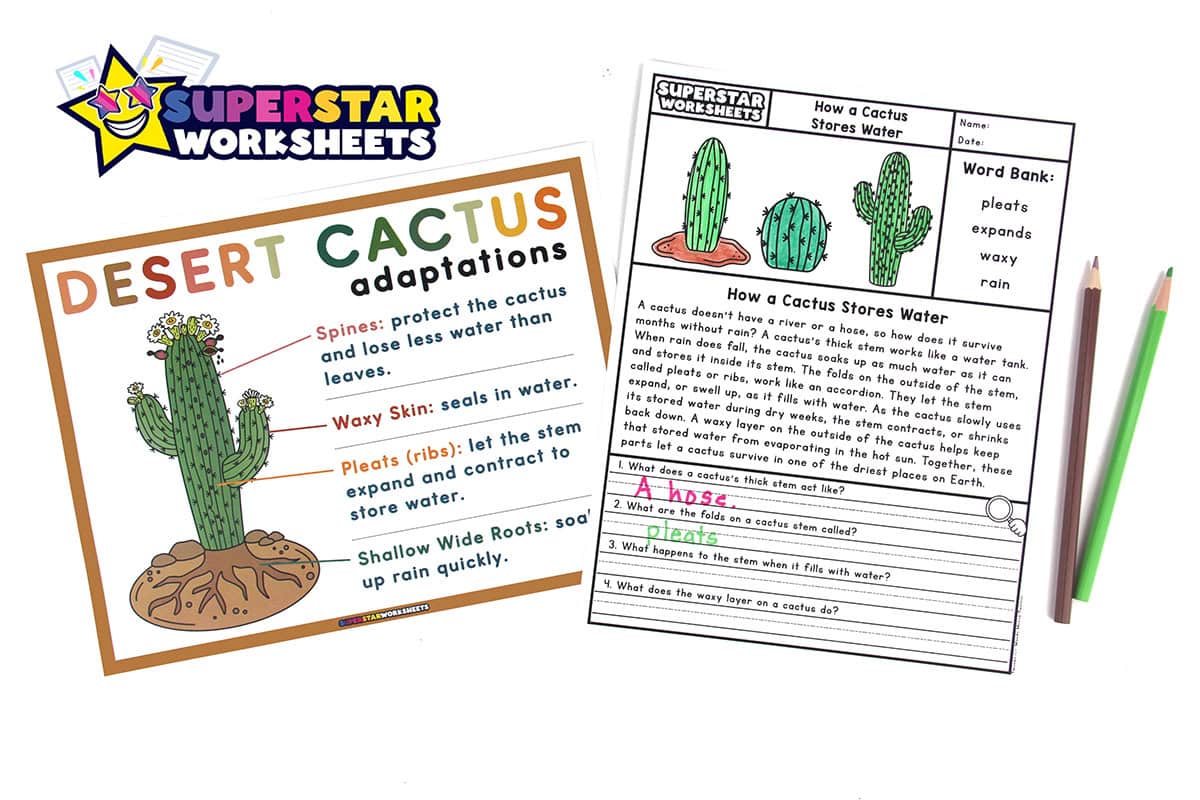
A cactus has some clever ways of surviving without much rain. Its spines take the place of leaves, which means the plant loses far less water than it would with big, flat leaves. A layer of waxy skin seals in whatever water the cactus already has, keeping it from evaporating in the hot sun. Below the ground, shallow wide roots spread out just under the surface so the cactus can soak up rain quickly before it dries up. And inside the stem, folds called pleats (ribs) let the cactus expand after it rains and slowly contract as it uses up its stored water. All of this makes a cactus a true succulent, a plant built for storing water.
Teaching Tip: Try the accordion comparison: fold a piece of paper into pleats and show how it expands and contracts, just like a cactus stem does with water.
Cactus Facts & Food Web Printables
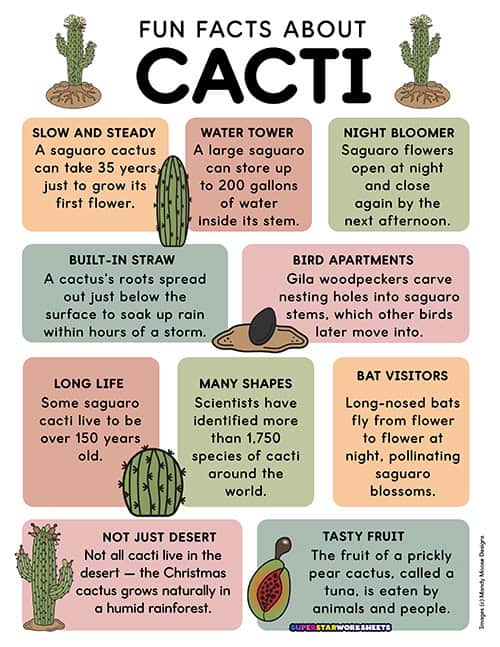
This fun facts about cacti chart is packed with surprising details about cactus growth, water storage, and the animals that depend on them. It’s an engaging way to spark curiosity before diving into deeper research activities. A great addition to a classroom word wall or science center.
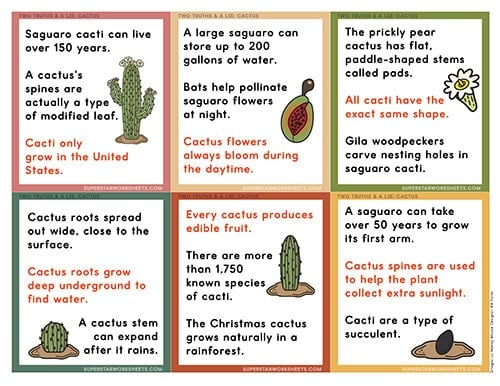
Two Truths and a Lie: Cactus Science
This two truths and a lie cactus science game challenges students to use critical thinking as they figure out which cactus fact is false in each set. It’s a fun, low-prep way to review facts about cacti, their adaptations, and the animals that rely on them. Great for a whole group warm-up for teachers to read to students.
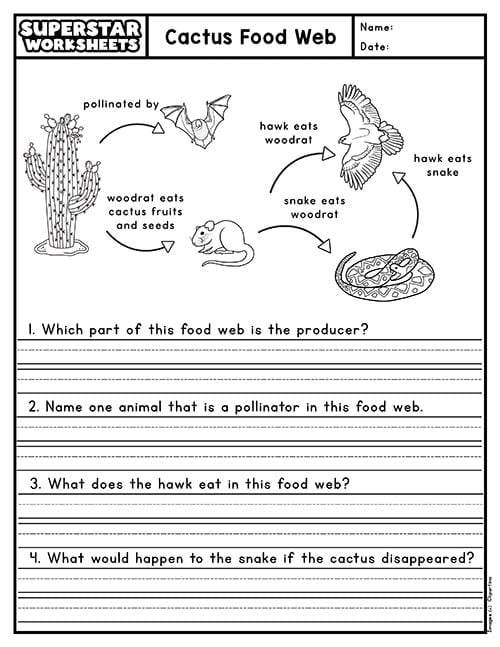
This cactus food web worksheet shows students how a cactus supports life in the desert, from pollinators to the animals that eat its fruit and seeds. Short-answer questions help kids identify producers, consumers, and predator-prey relationships within the food web. A great way to connect plant science to broader ecosystem concepts.
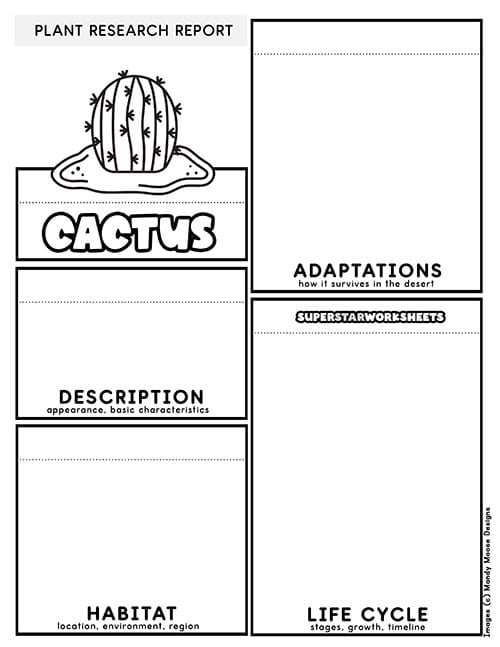
This cactus research report gives students a structured format for recording what they’ve learned about a cactus’s description, habitat, adaptations, and life cycle. It’s a great culminating project for a desert plants unit or an independent research assignment. Pairs well with nonfiction books or online research.
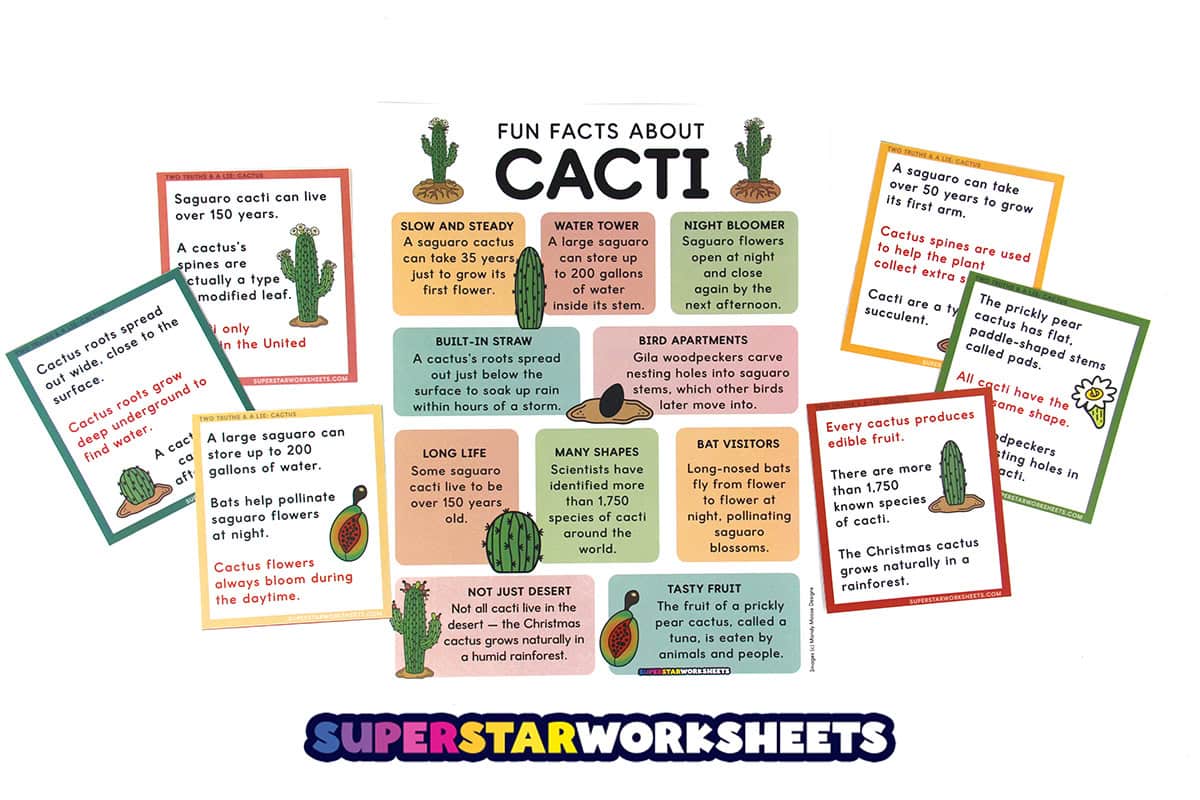
Teaching Cactus Facts & the Desert Food Web
A cactus does more than just survive the desert, it helps other living things survive too. As a producer, a cactus makes its own food using sunlight, which makes it the starting point for many desert food webs. Different consumers rely on the cactus in different ways: some animals eat its fruit and seeds, while others use it for shelter. A pollinator, like a bat, helps the cactus make seeds by carrying pollen from flower to flower at night. And just like anywhere else in nature, every desert food web has its predator and prey relationships, connecting the cactus to the wider ecosystem around it.
Teaching Tip: Have students draw their own simple desert food web starting with the cactus as the producer. It’s a great way to reinforce vocabulary while practicing food web concepts.
Cactus Experiment: Water Loss Investigation Printables
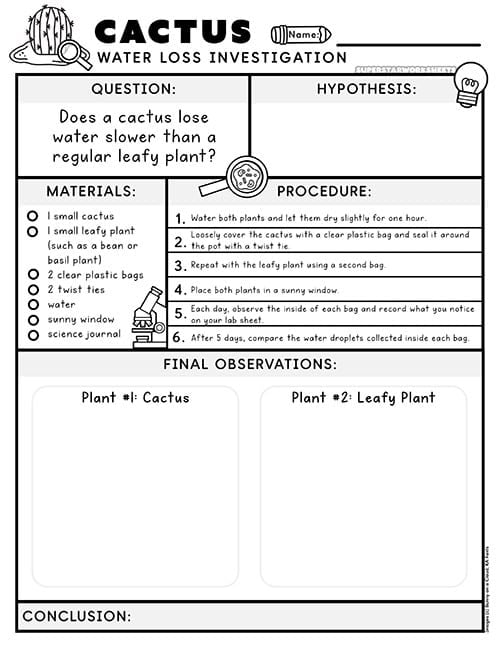
Cactus Water Loss Investigation
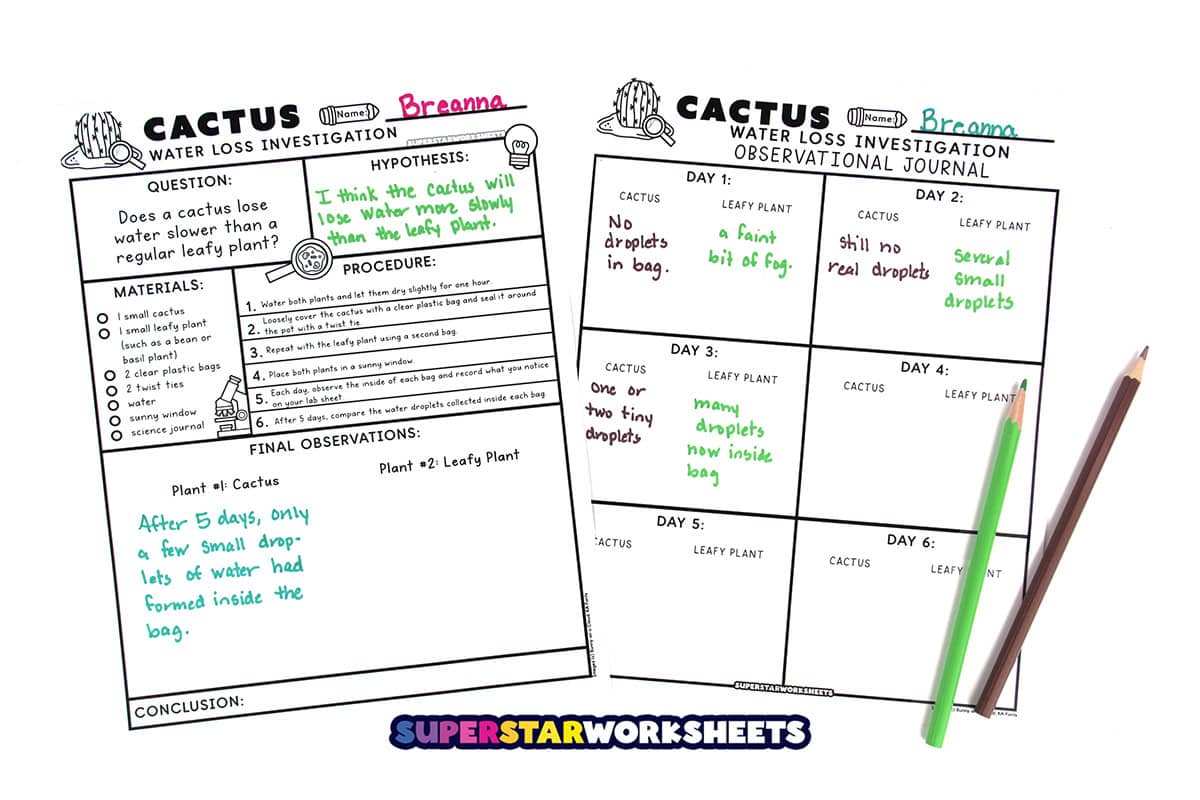
In this cactus water loss investigation, students compare how much water a cactus loses compared to a regular leafy plant using a simple, hands-on setup. It’s a great introduction to scientific investigations, hypotheses, and variables for young scientists. Perfect for a science center, small group lab, or whole-class demonstration.
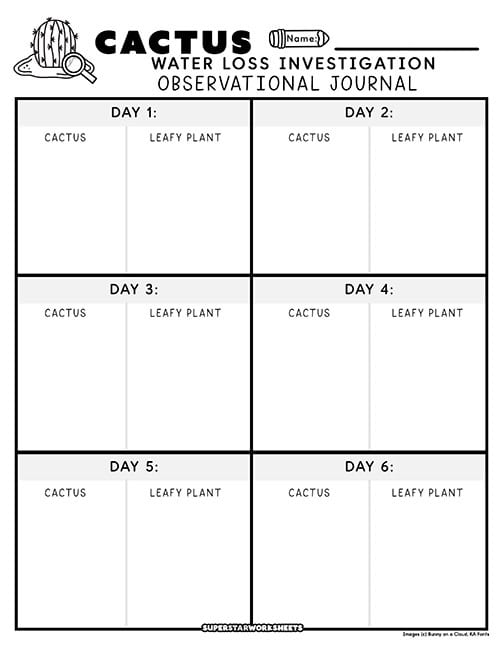
Cactus Water Loss Observation Journal
This cactus water loss observation journal gives students a place to record what they see each day during the water loss investigation. Daily observation boxes build data collection and comparison skills over the course of the experiment. Use it alongside the investigation worksheet for a complete science experience.
Teaching the Cactus Water Loss Experiment
Why can a cactus survive so much longer without water than most other plants? It all comes down to transpiration. Transpiration is the process of a plant losing water through its surface. A regular leafy plant has lots of surface area on its leaves, so it loses water quickly. A cactus’s waxy skin and reduced surface area mean it loses water much more slowly. Before starting the investigation, have students write a hypothesis predicting which plant will lose more water, then let the experiment show them what really happens.
Teaching Tip: Let students revisit their hypothesis after the five days are up and discuss whether their prediction matched the results. This builds strong scientific reasoning skills.
Leave a Reply