
Free Printable Muscular System Worksheets help kids learn the major muscles of the human body and how they work together to move, breathe, and stay strong. Download and print PDF muscle diagrams, labeling worksheets, learning mats, color-by-code pages, muscle types and antagonistic pairs charts, fill-in-the-blank pages, quizzes, puzzles, and research activities. These anatomy printables build science vocabulary and help young learners explain how muscles, bones, and nerves work together as a body system. Teachers and parents can use them for elementary and middle school science lessons, homeschool units, science centers, and small group review.
Simple Muscular System Diagram Worksheets
Parts of the Muscular System Diagram
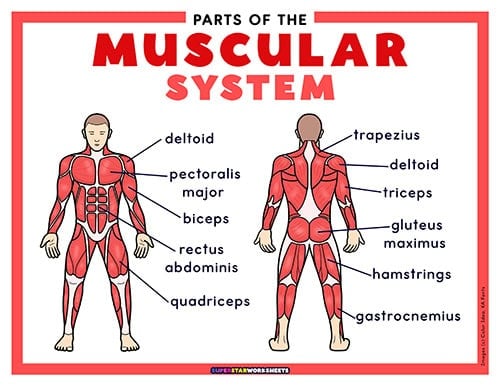
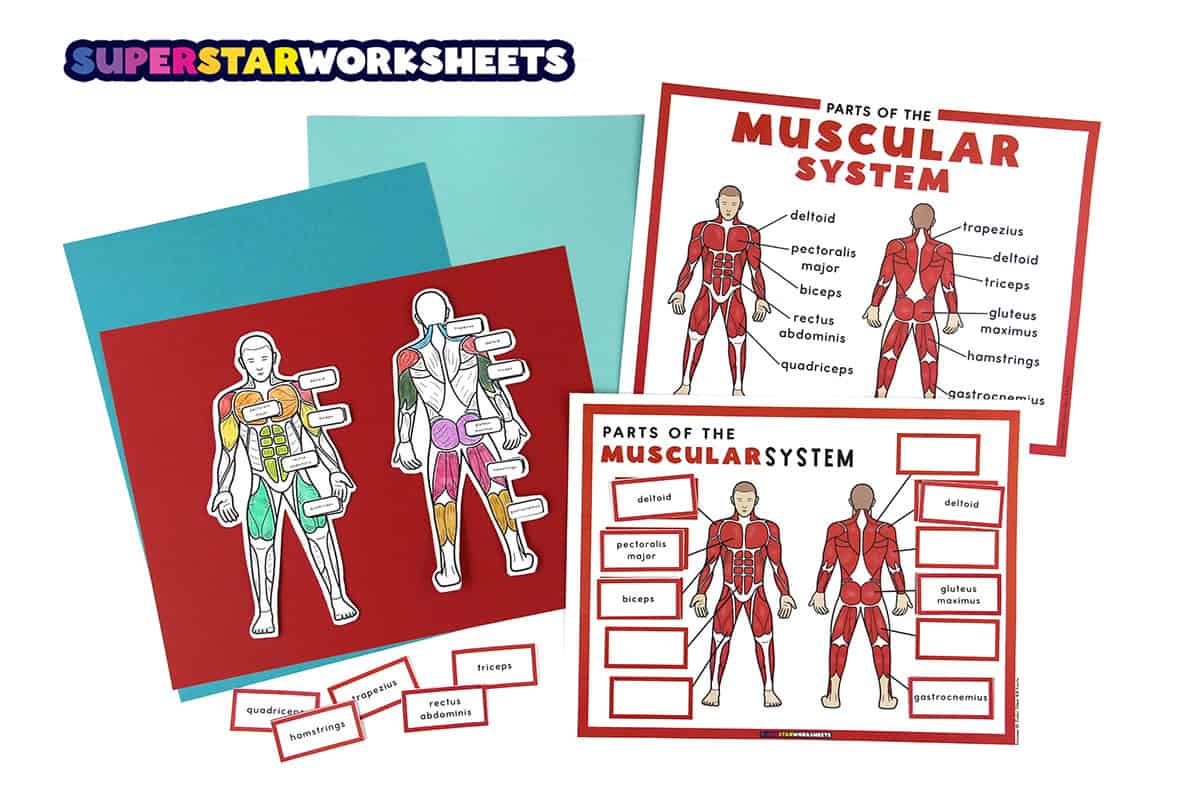
This simple muscular system diagram shows the front and back of the body with the main muscles labeled using their correct scientific names. Kids can see where the biceps, quadriceps, hamstrings, and other major muscles sit, and the chart doubles as a reference for the other worksheets on muscles.
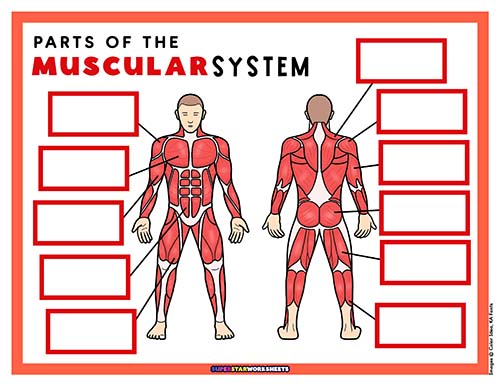
Parts of the Muscular System Learning Mat
Students place label cards on this reusable learning mat to match each muscle name to its spot on the body. It turns muscle vocabulary practice into a hands-on activity that works well in science centers or small groups.
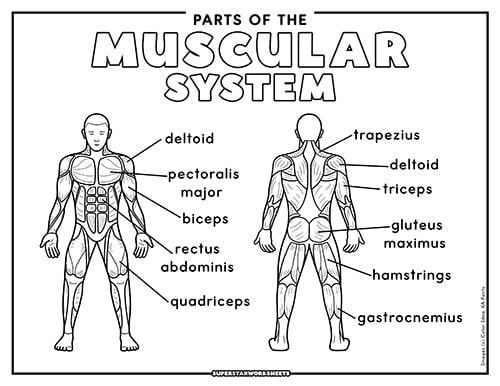
Parts of the Muscular System Coloring Page
This black and white muscular system diagram keeps every label in place so kids can color each muscle as they learn its name. It makes a calm, low-prep review page for elementary science lessons.
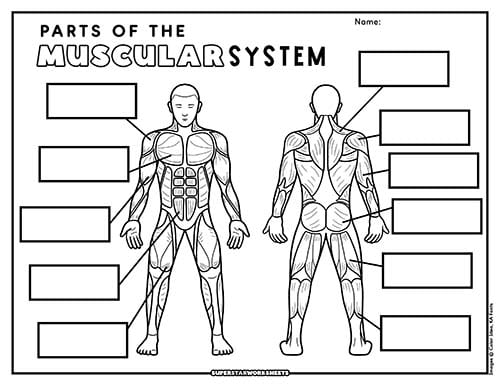
Muscular System Cut and Paste Labeling Worksheet
Kids cut out the muscle labels and glue each one into the correct box on the front and back figures. This muscular system labeling worksheet checks what students remember while building fine motor skills.
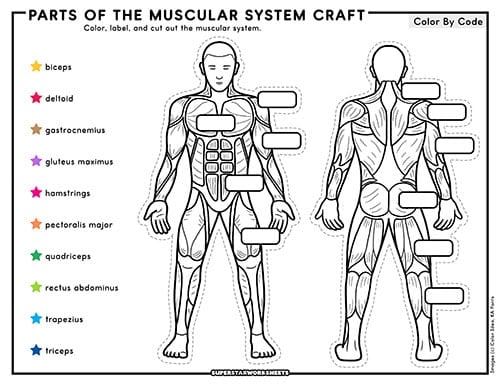
Students follow a color key to fill in each major muscle on the front and back of the body. The color by code page reinforces muscle names and locations in a creative way that kids enjoy.
Teaching the Main Muscles of the Body
Start with the color diagram and have kids find each muscle on their own body as you say its name, such as flexing the biceps or tightening the quadriceps. Point out that the front view and back view show different muscles, and that the deltoid can be seen from both sides. Use the learning mat for repeated practice before moving to the cut and paste labeling page. Save the color by code page for review, since it works well as a quiet independent activity.
Vocabulary Bank: Deltoid, Pectoralis Major, Biceps, Rectus Abdominis, Quadriceps, Trapezius, Triceps, Gluteus Maximus, Hamstrings, Gastrocnemius
Anterior Muscular System Labeling Worksheets
Anterior Muscular System Diagram
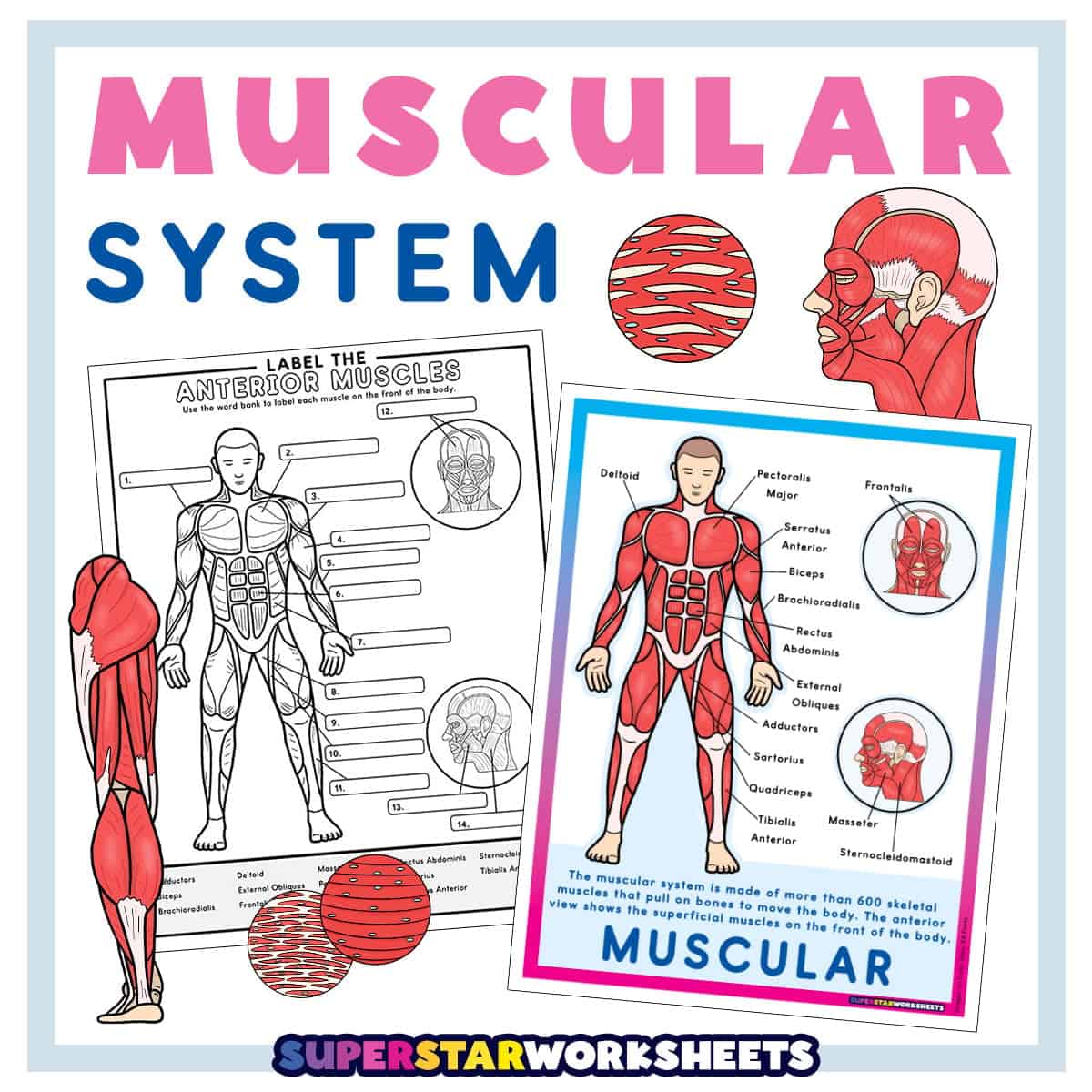
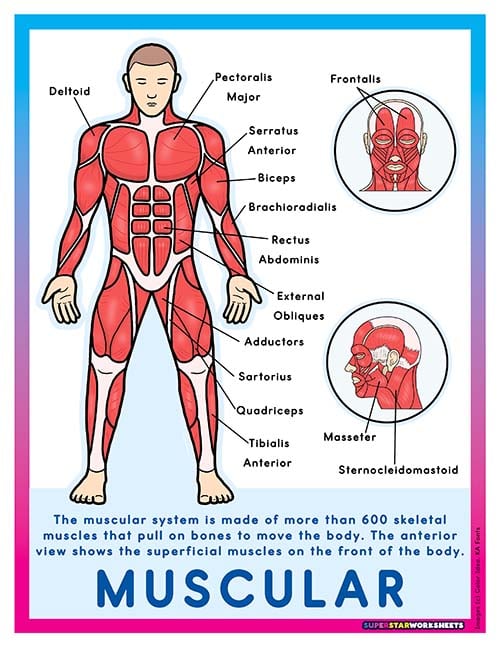
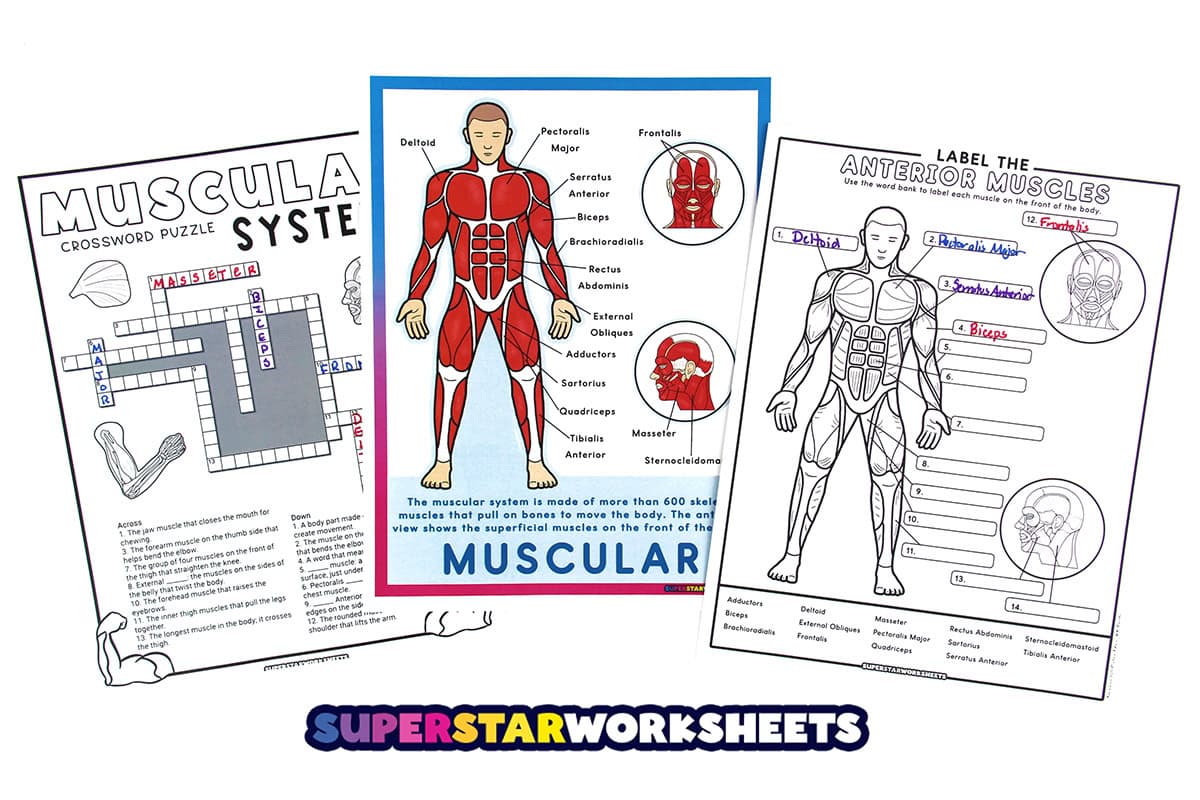
This anterior muscular system diagram shows the superficial muscles on the front of the body, from the frontalis on the forehead to the tibialis anterior on the shin. A short description explains how skeletal muscles pull on bones to move the body.
Anterior Muscular System Diagram Black and White
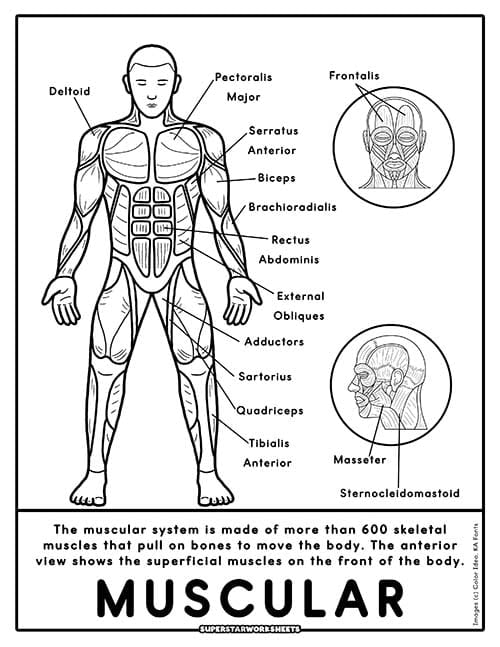
The black and white anterior chart keeps every label and the description in place for easy printing. Students can color it as a study tool before the labeling practice.
Label the Anterior Muscles Worksheet
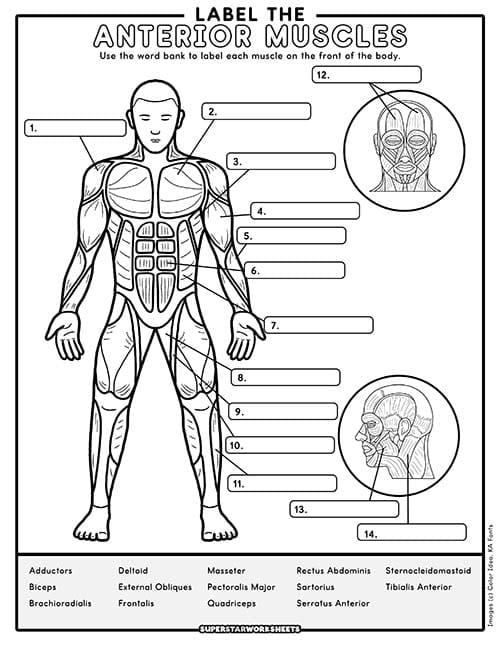
Students use a word bank to label each muscle on the front of the body. This label the muscular system worksheet builds confidence with longer anatomy terms like sternocleidomastoid and brachioradialis.
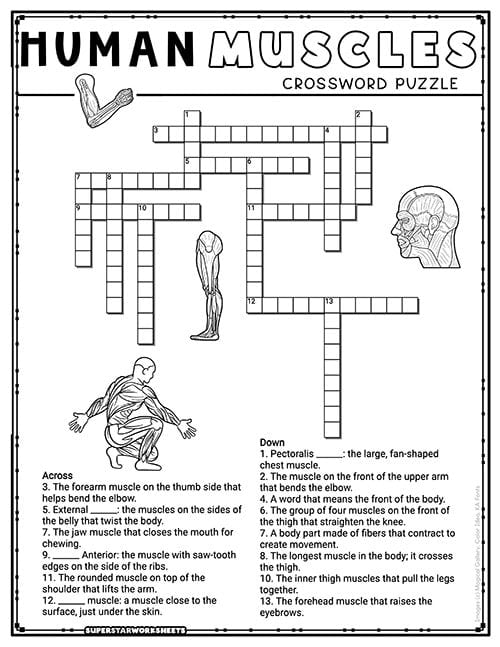
Muscular System Crossword Puzzle
Kids read clues about muscle locations and jobs to fill in the crossword grid. The puzzle reviews anterior muscle names along with key words like superficial and anterior.
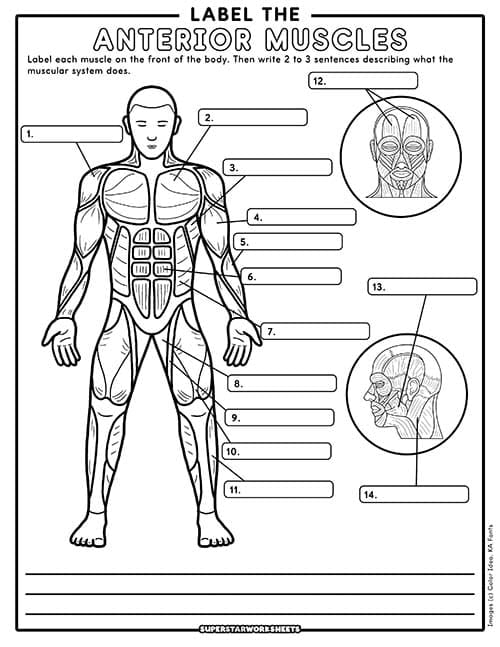
Label the Anterior Muscles Quiz
With the word bank removed, students label the front muscles from memory and write a short answer describing what the muscular system does. It works as an end-of-lesson check or a quick assessment.
Teaching the Anterior Muscles
Introduce the word anterior first so students know the chart shows the front of the body. Work through the labels from head to toe, and connect each muscle to a movement students can try, like raising the eyebrows with the frontalis or chewing with the masseter. Break the longer names into chunks so they are easier to pronounce and remember. Use the crossword for review the day before the labeling quiz.
Vocabulary Bank: Muscular System, Muscle, Anterior, Superficial Muscle, Frontalis, Masseter, Sternocleidomastoid, Serratus Anterior, Brachioradialis, External Obliques, Adductors, Sartorius, Tibialis Anterior
Posterior Muscular System Labeling Worksheets
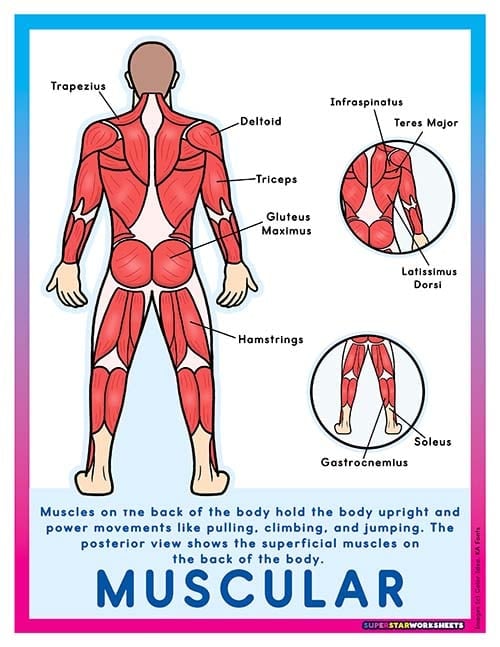
Posterior Muscular System Diagram
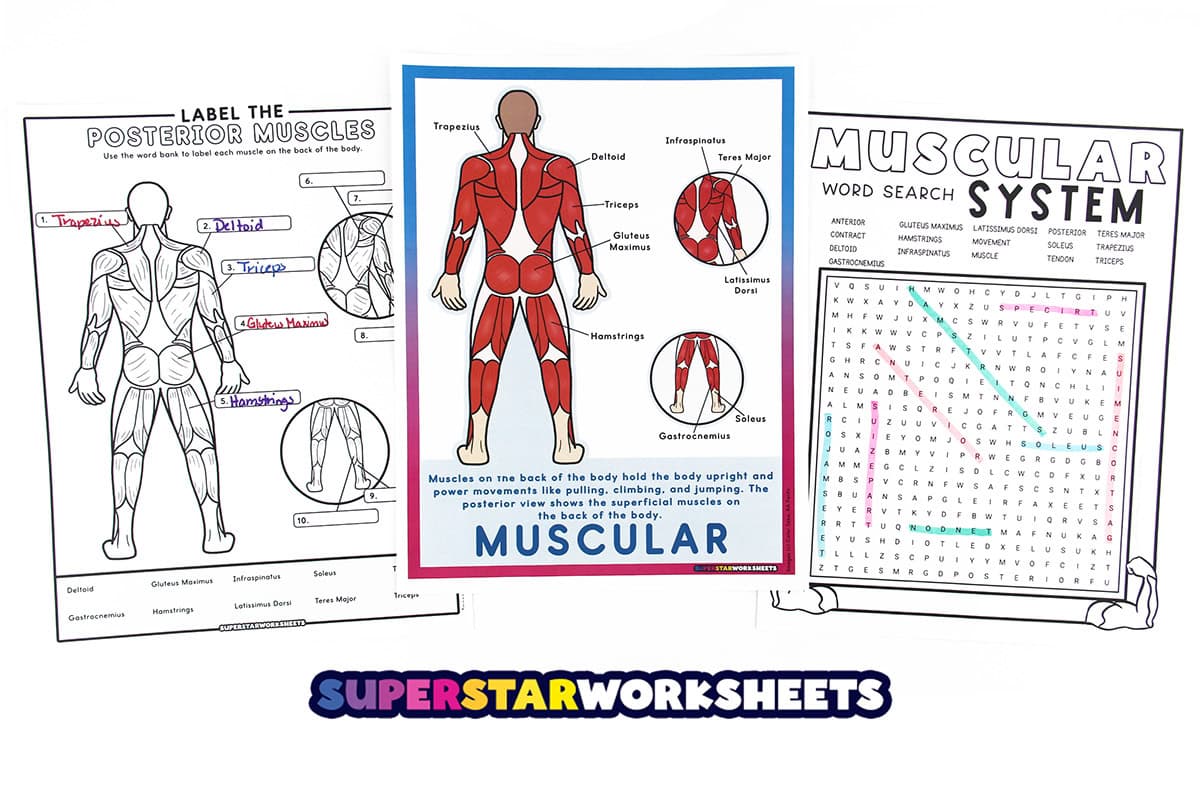
This posterior muscular system diagram labels the superficial muscles on the back of the body, including the trapezius, latissimus dorsi, and calf muscles. Close-up insets help students see smaller muscles like the infraspinatus and soleus.
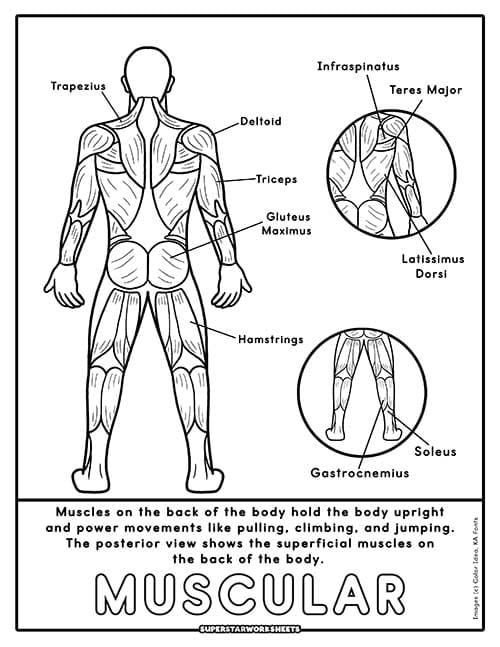
Posterior Muscular System Diagram Black and White
The black and white posterior chart has all of the labels and the description in place. It doubles as a coloring page that helps students study the back muscles. For more free human science worksheets, check out our Skeletal System Worksheets today!
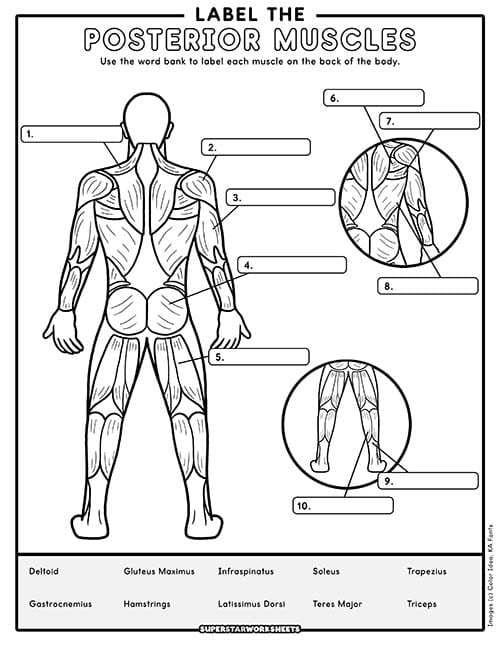
Label the Posterior Muscles Worksheet
Students label each back muscle using a word bank. This muscular system labeling worksheet pairs with the anterior page so kids can compare the front and back of the body.
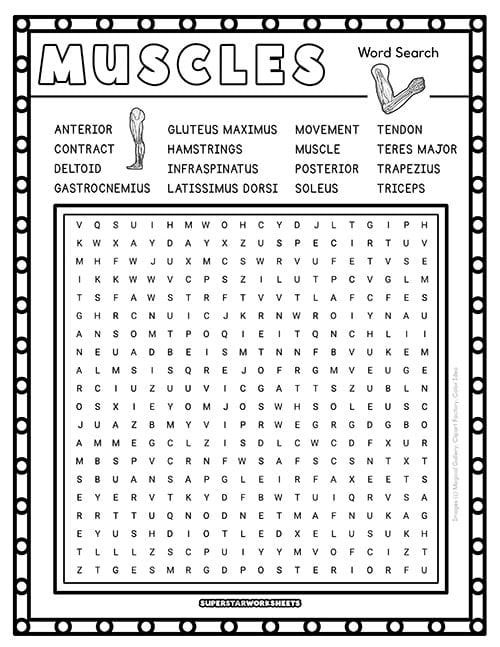
Kids hunt for back muscle names and muscular system vocabulary hidden in the grid. It is a fun, low-stress way to practice spelling before a quiz.
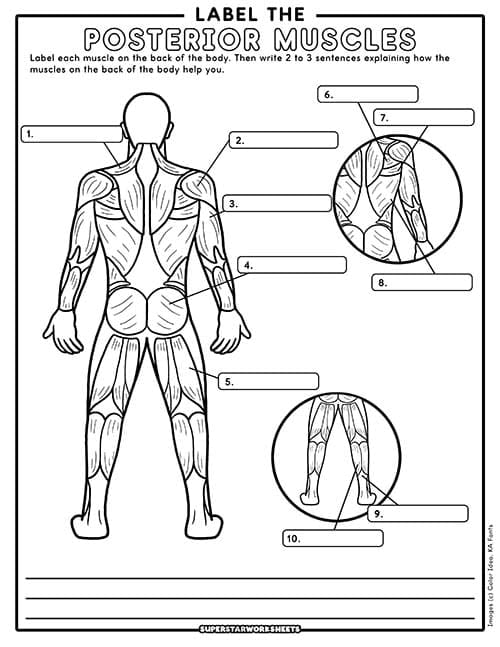
Label the Posterior Muscles Quiz
Students label the back muscles from memory and then explain how these muscles help the body. The short answer section asks kids to connect muscle names to everyday actions like standing and climbing.
Teaching the Posterior Muscles
Have students stand and feel the muscles on their back and legs as you introduce the word posterior. Compare the front and back charts side by side so kids notice that the deltoid appears on both views. Talk about how back and leg muscles hold good posture and power movements like pulling, climbing, and jumping. The word search makes a good warm-up before students try the posterior labeling quiz.
Vocabulary Bank: Posterior, Trapezius, Infraspinatus, Teres Major, Latissimus Dorsi, Soleus
Muscular System Functions Worksheets
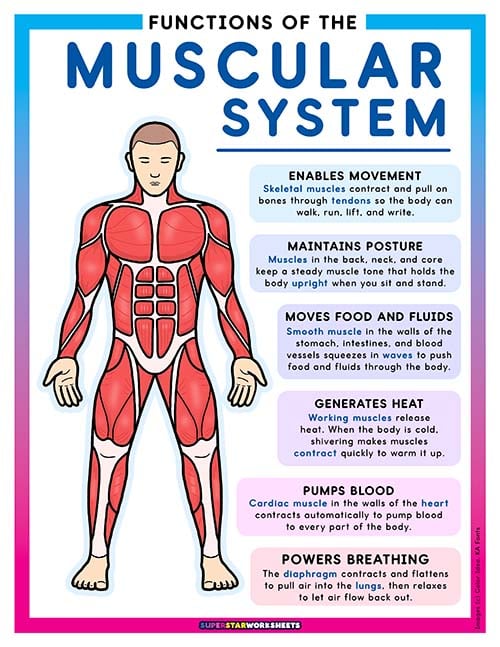
Functions of the Muscular System Chart
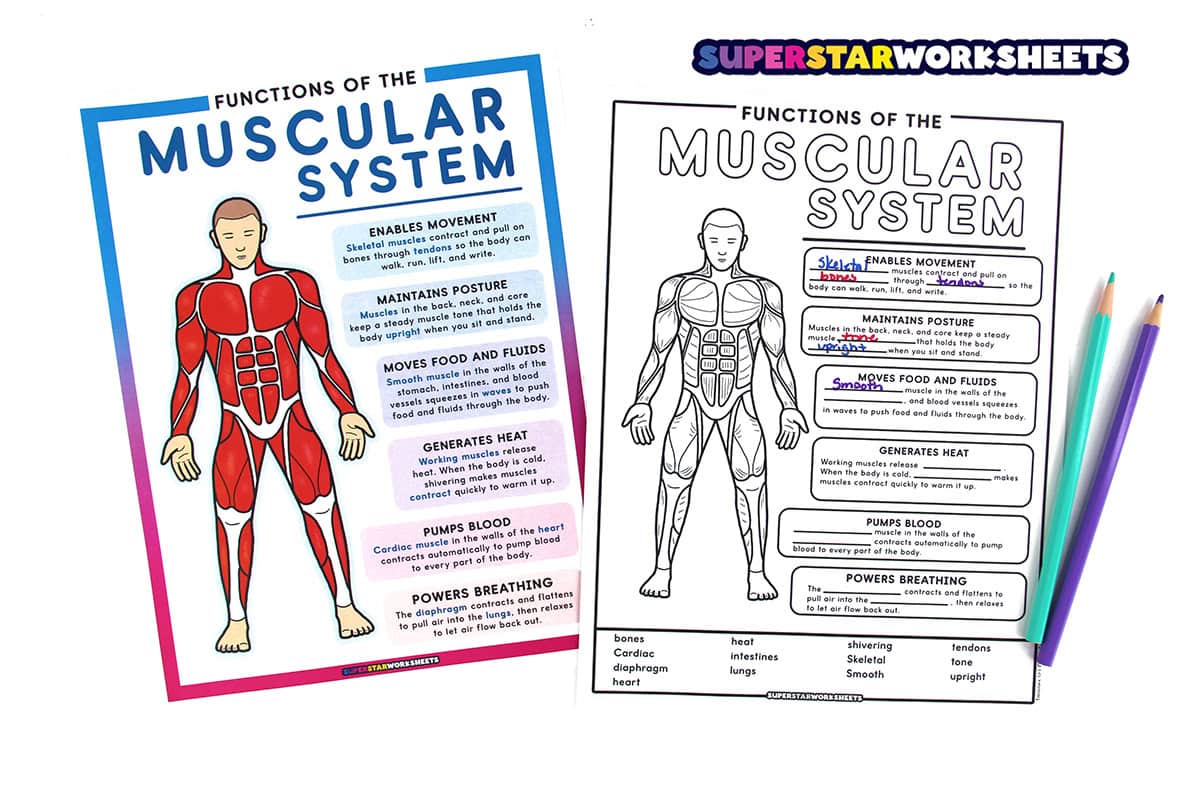
This chart explains the main jobs of the muscular system, from enabling movement and maintaining posture to pumping blood and powering breathing. Key body parts are highlighted so students can see which muscles carry out each function.
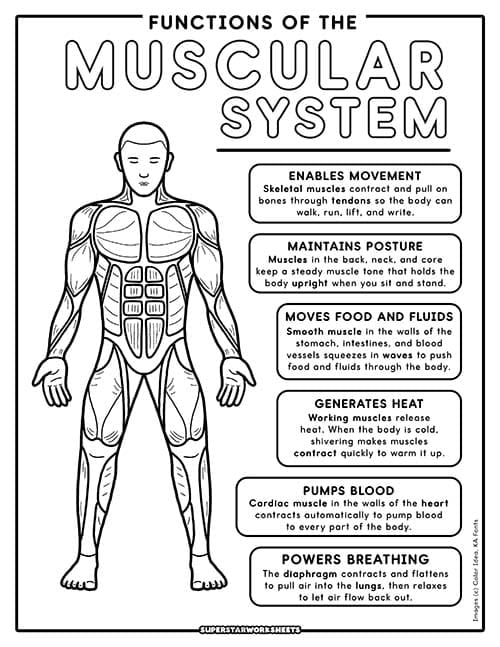
Functions of the Muscular System Chart Black and White
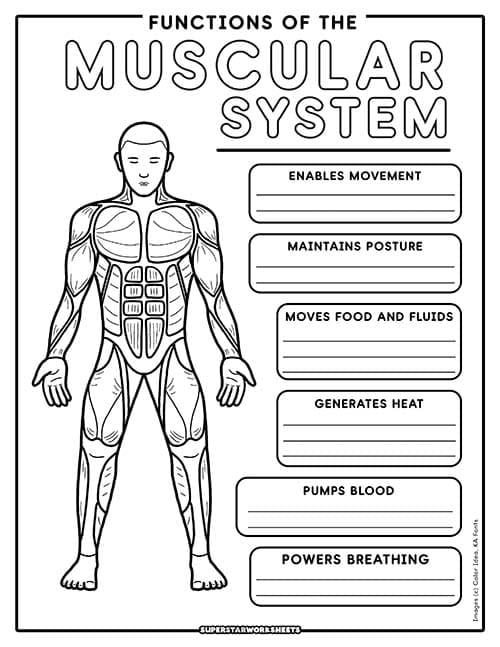
The black and white functions chart keeps all of the text in place for easy printing. Students can color it and keep it in a science notebook for reference.
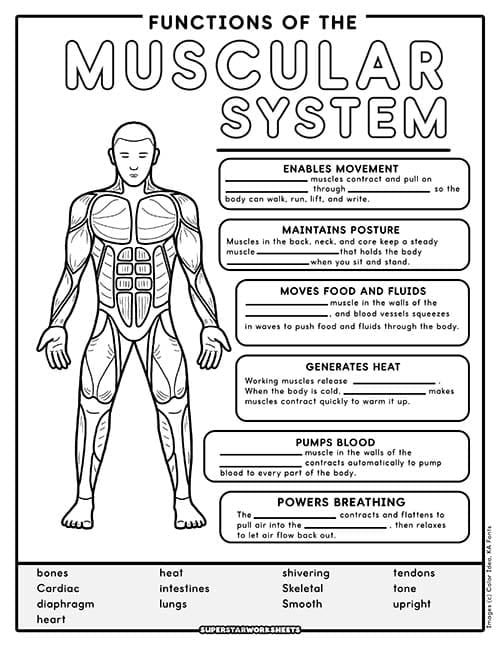
Muscular System Functions Fill in the Blank
Students use a word bank to complete each function description on this worksheet on the muscular system. It reinforces how skeletal, smooth, and cardiac muscle each help the body. Teachers! Check out our free Circulatory System Worksheets here!
Functions of the Muscular System Quiz
Each function heading is followed by lines where students explain how the muscles carry out that job. This quiz checks real understanding instead of simple recall.
Teaching the Functions of the Muscular System
Ask students to list everything their muscles did today, then sort their ideas into the functions on the chart. Many kids are surprised to learn that muscles help with breathing, digestion, and keeping the body warm. Connect each function to another body system, such as the diaphragm and the lungs or cardiac muscle and the heart. Have students complete the fill-in-the-blank page with the chart nearby before trying the quiz on their own.
Vocabulary Bank: Contraction, Relaxation, Posture, Muscle Tone, Diaphragm, Shivering, Peristalsis
Types of Muscles Worksheets
A Closer Look at Muscle Types Chart
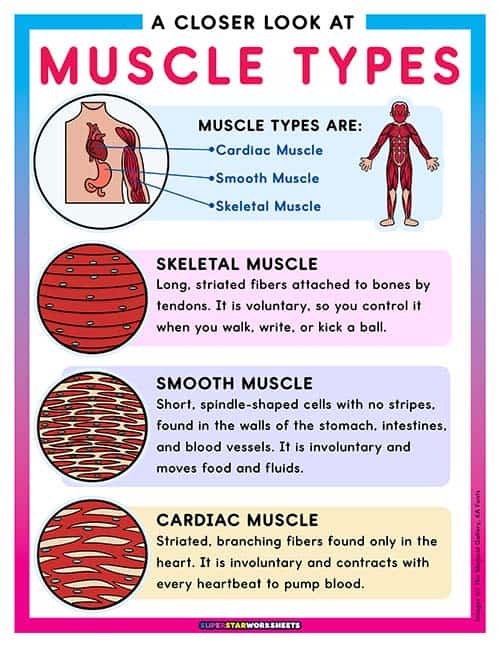
This chart compares skeletal, smooth, and cardiac muscle and shows where each type is found in the body. Microscope-view images help students see the difference between striped and smooth muscle cells.
A Closer Look at Muscle Types Chart Black and White
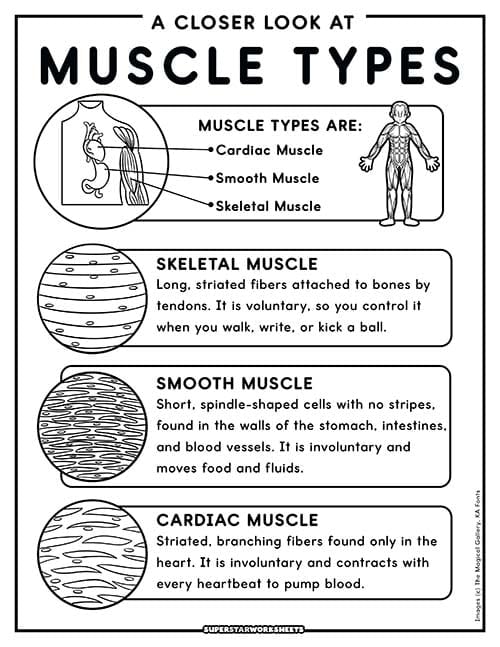
The black and white muscle types chart includes all of the text so students can color and study each type. It makes a handy reference for notebooks and review folders.
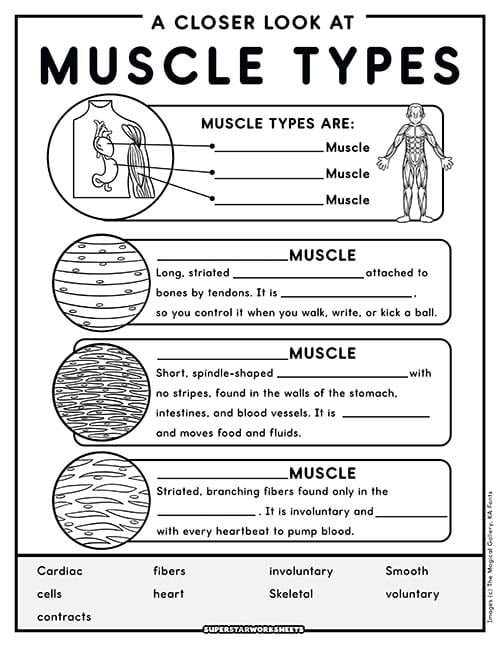
Muscle Types Fill in the Blank
Students complete the muscle type names and descriptions using a word bank. This type of muscles worksheet reinforces the difference between voluntary and involuntary muscles.
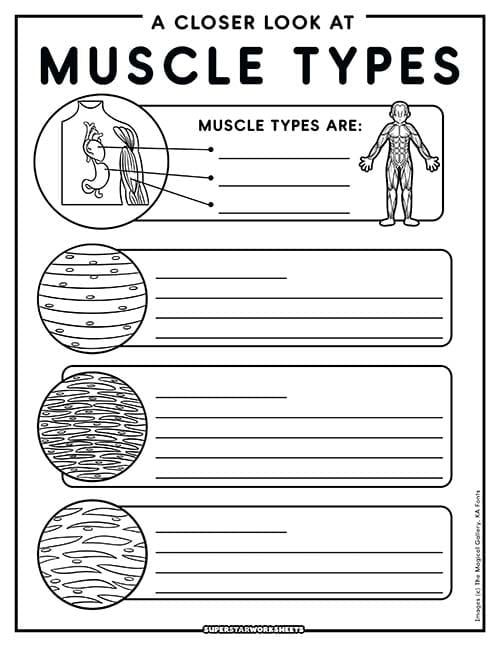
Students label the muscle types from memory and describe the structure and control of each one. It is a great way to check understanding before moving on to muscle structure. Check out our FREE Respiratory System Worksheets here!
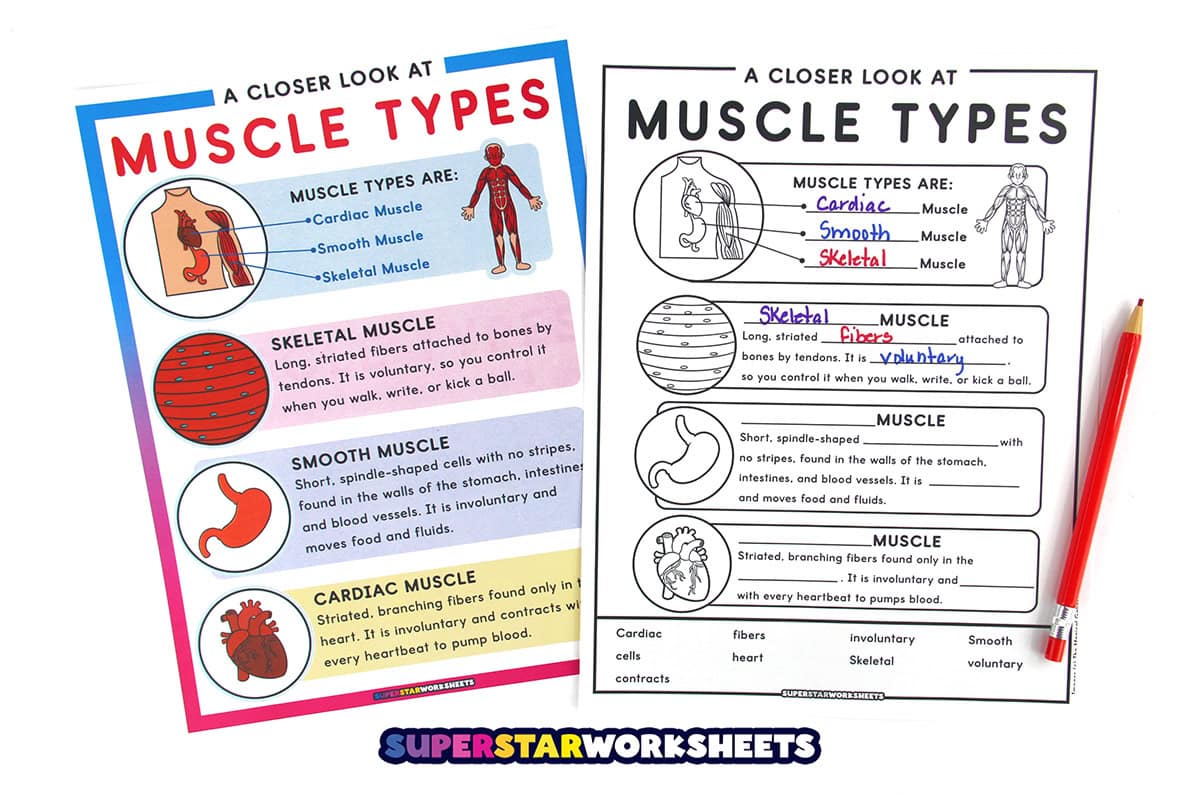
Teaching the Types of Muscles
Begin by asking students which muscles they can control and which work on their own, which leads naturally into voluntary and involuntary muscle. Use the microscope images to point out that skeletal and cardiac muscle are striated, while smooth muscle is not. Remind students that skeletal muscle is muscle tissue and is different from the skeletal system, which is made of bones. Pair this section with the circulatory and digestive system pages to show where cardiac and smooth muscle do their work.
Vocabulary Bank: Skeletal Muscle, Smooth Muscle, Cardiac Muscle, Voluntary Muscle, Involuntary Muscle, Striated
Muscle Structure Worksheets
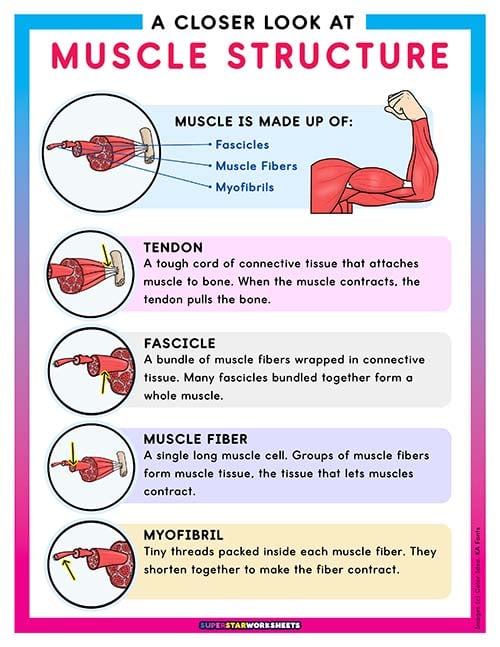
A Closer Look at Muscle Structure Chart
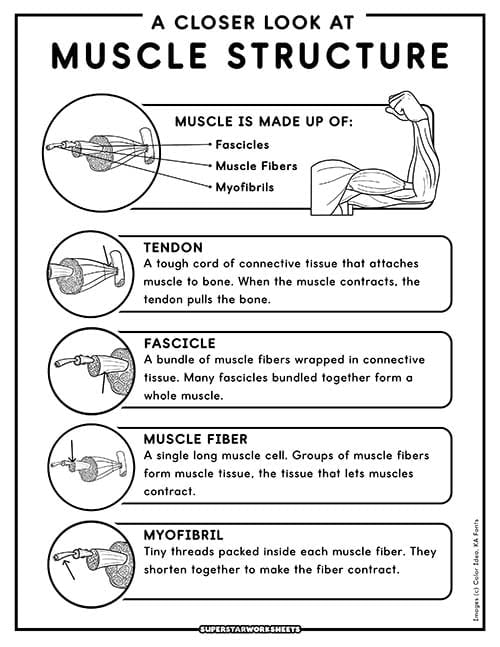
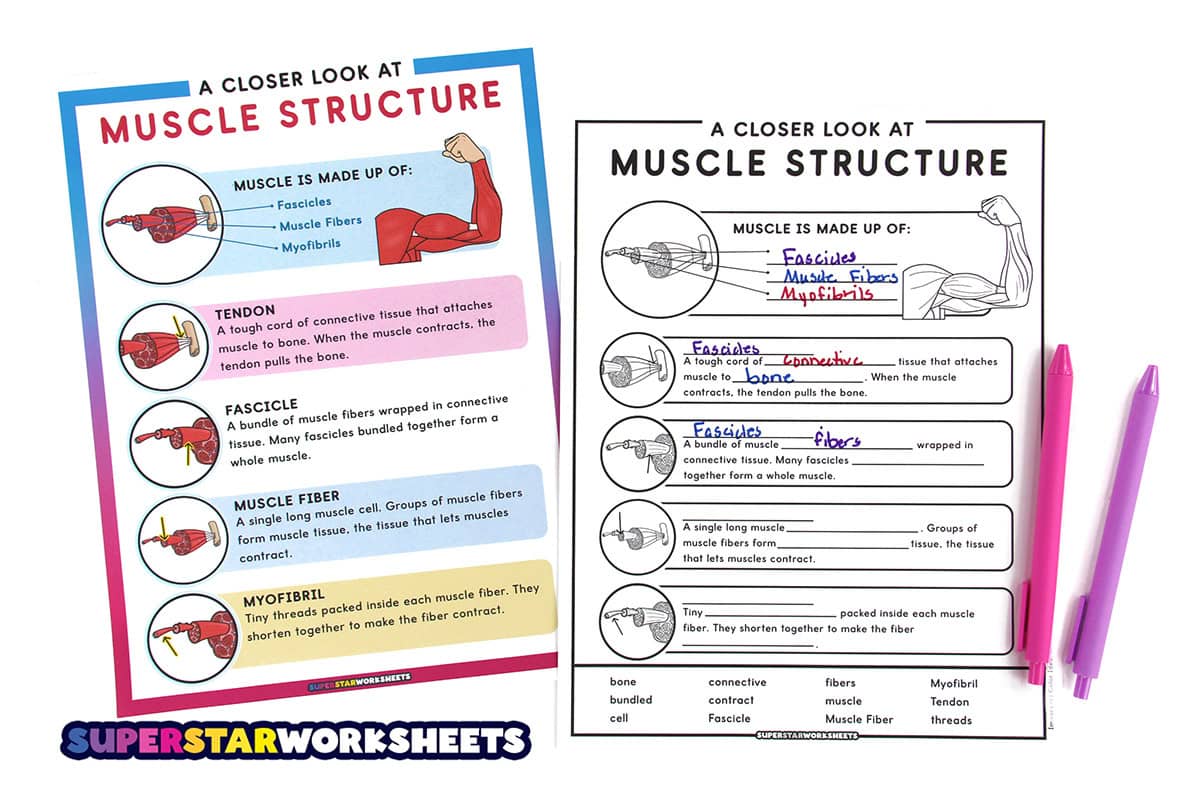
This muscle structure chart shows how a skeletal muscle attaches to bone and how it is built from fascicles, muscle fibers, and myofibrils. Students see how cells form tissue and tissue forms a whole muscle.
A Closer Look at Muscle Structure Chart Black and White
All of the labels and text stay in place on this black and white chart. Students can color the nested layers to remember their order from largest to smallest.
Muscle Structure Fill in the Blank
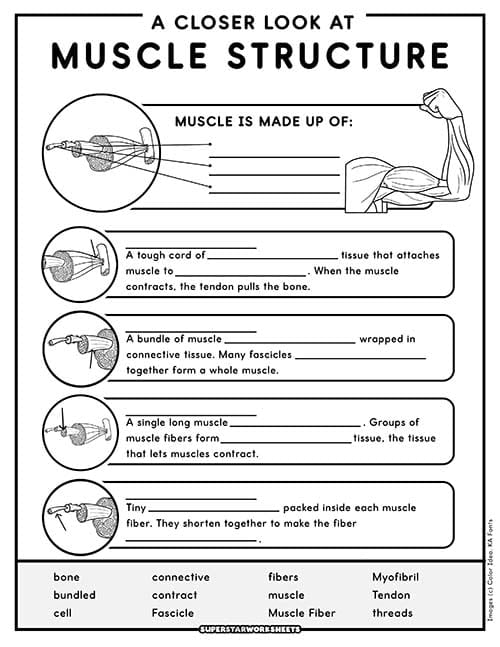
Students use a word bank to complete the parts of a muscle and their descriptions. This muscle anatomy worksheet builds understanding of tendons, fascicles, muscle fibers, and myofibrils.
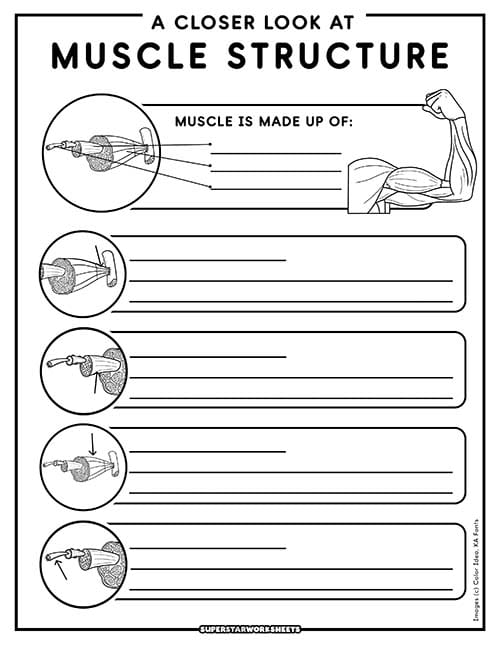
Students label muscle structures from memory and explain the job of each part. The quiz connects muscle fibers as cells to the tissue and organ levels of the body.
Teaching Muscle Structure
Compare a muscle to a rope made of smaller and smaller strands, where each layer is wrapped inside a larger one. Walk through the levels from the whole muscle to the fascicle, the muscle fiber, and the myofibril. Explain that a muscle fiber is a single cell, which shows how cells build tissues and tissues build organs. Use the biceps to point out the origin and insertion so students see which bone stays still and which bone moves.
Vocabulary Bank: Muscle Tissue, Muscle Fiber, Tendon, Fascicle, Myofibril, Origin, Insertion
Antagonistic Muscle Pairs Worksheets
A Closer Look at Antagonistic Pairs Chart
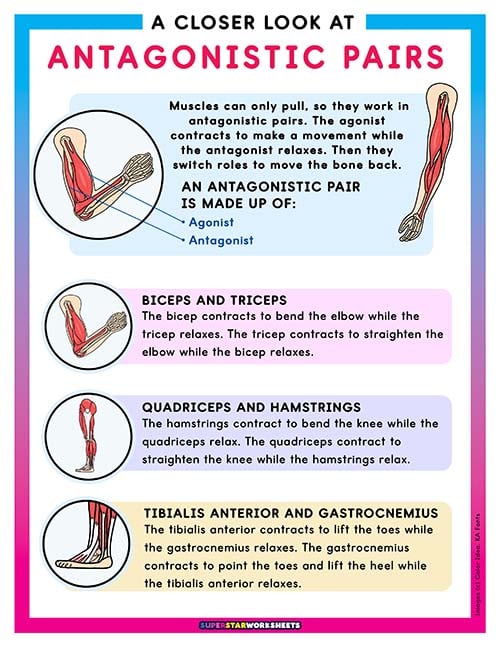
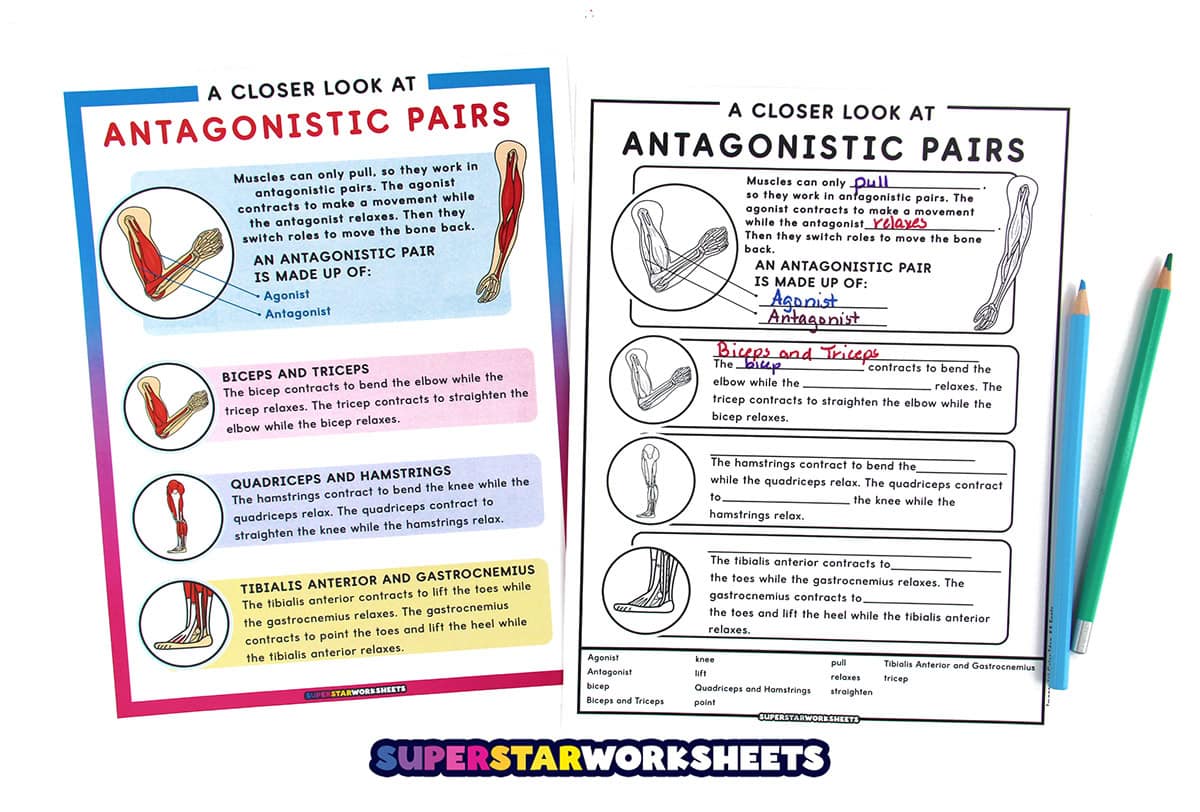
This chart explains why muscles work in antagonistic pairs and shows how the biceps and triceps move the elbow. It also covers the quadriceps and hamstrings at the knee and the tibialis anterior and gastrocnemius at the ankle.
A Closer Look at Antagonistic Pairs Chart Black and White
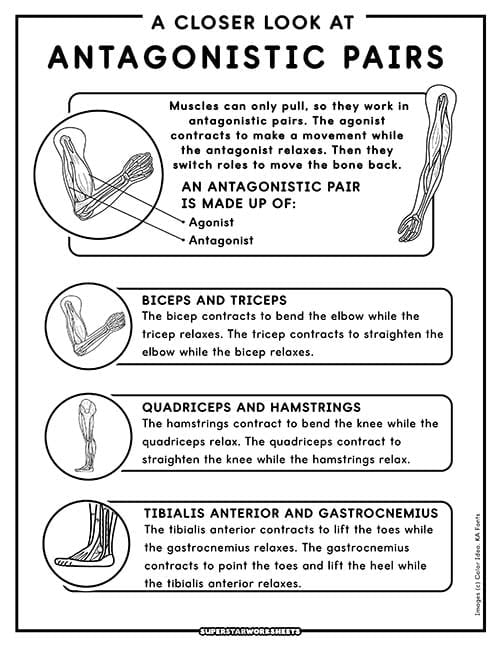
The black and white antagonistic pairs chart includes all of the text for easy printing and coloring. Students can shade the contracting muscle in each pair to show how the movement works.
Antagonistic Pairs Fill in the Blank
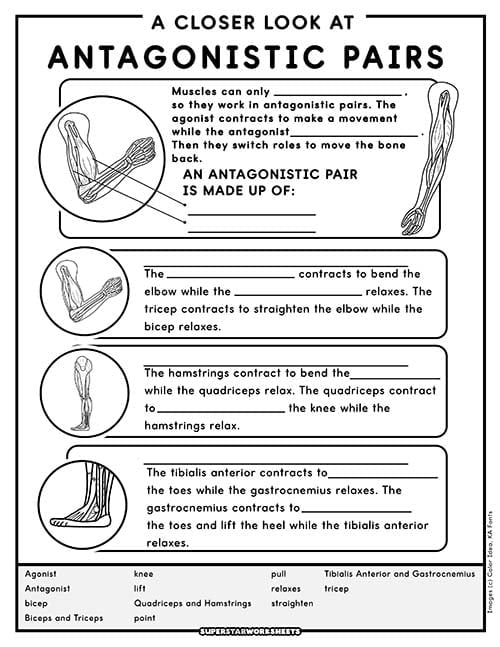
Students use a word bank to complete the overview and each muscle pair description. This antagonistic muscles worksheet helps kids explain which muscle contracts and which relaxes during each movement.
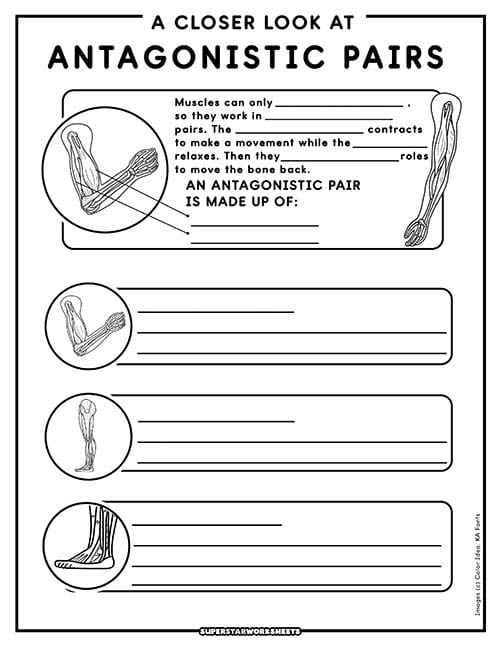
Students fill in key ideas about agonists and antagonists, then name each pair and explain how it moves a joint. It works well as a final check on how muscles and bones work together.
Teaching Antagonistic Muscle Pairs
Have students place one hand on the biceps and the other on the triceps while bending and straightening the elbow, so they can feel one muscle tighten as the other relaxes. Explain that muscles can only pull, so a second muscle is needed to move the bone back. Introduce flexion and extension as the names for bending and straightening a joint. Then try the same test with the knee and ankle to connect all of the pairs on the chart.
Vocabulary Bank: Antagonistic Pair, Flexion, Extension, Flexor, Extensor, Agonist, Antagonist
Muscular System Fun Facts and Research Activities
Fun Facts About the Muscular System
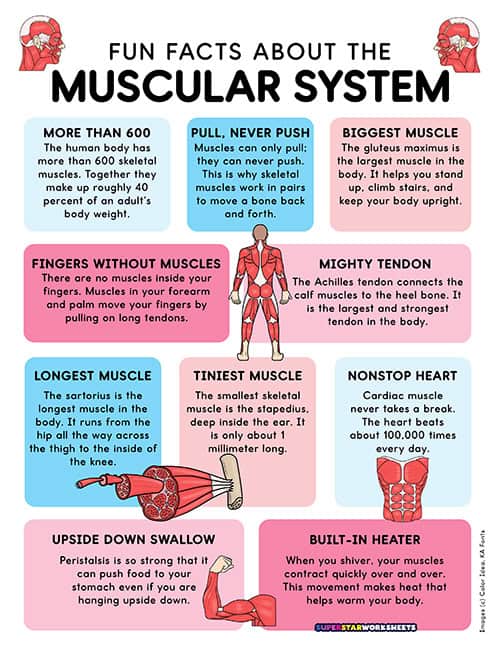
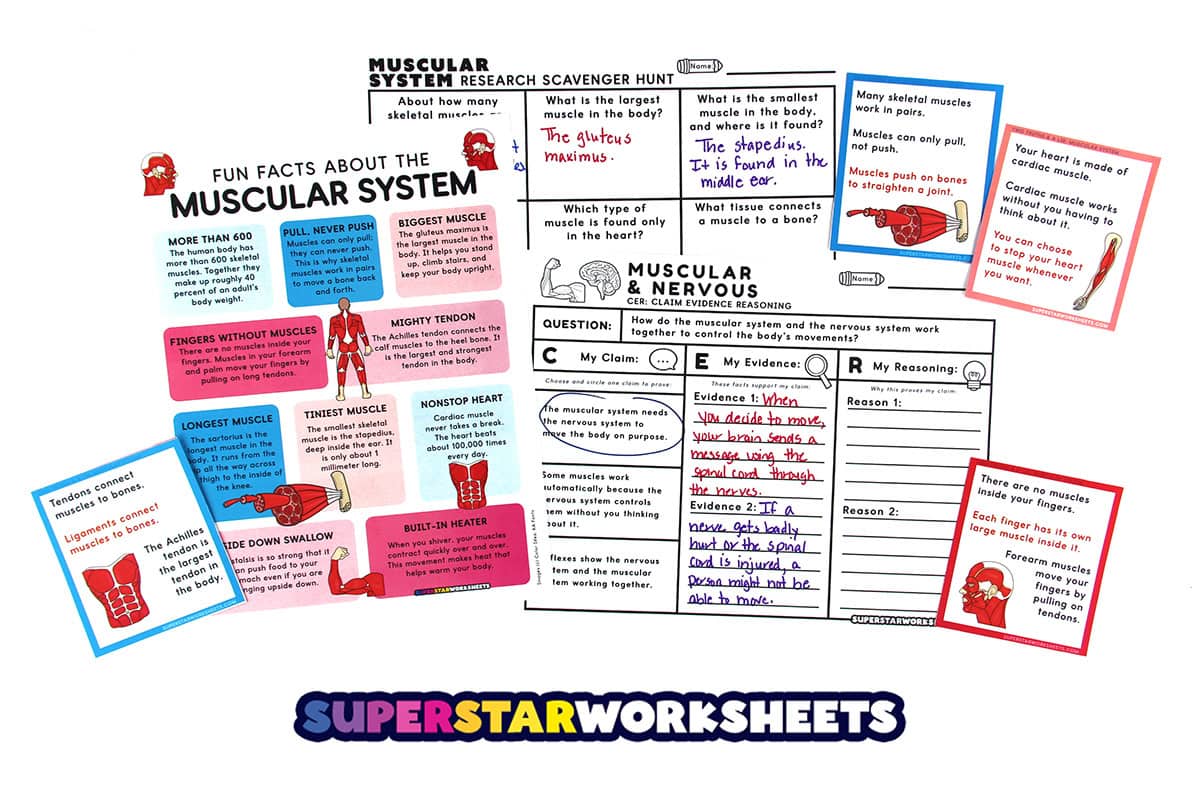
This colorful page shares surprising muscular system facts for kids, like which muscle is the largest and why fingers have no muscles inside them. It makes a great conversation starter at the beginning or end of a unit.
Two Truths and a Lie: Muscular System
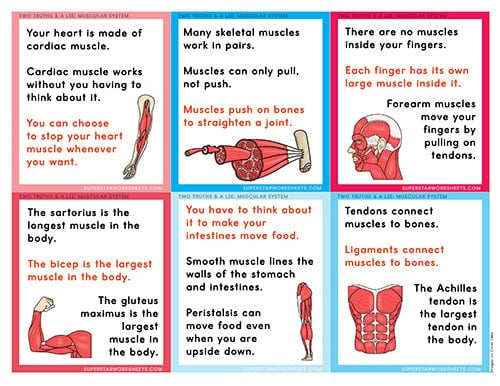
Students read each card and decide which muscle statement is false. The game builds critical thinking while reviewing key ideas about muscle types, tendons, and how muscles move.
Muscular System Research Scavenger Hunt
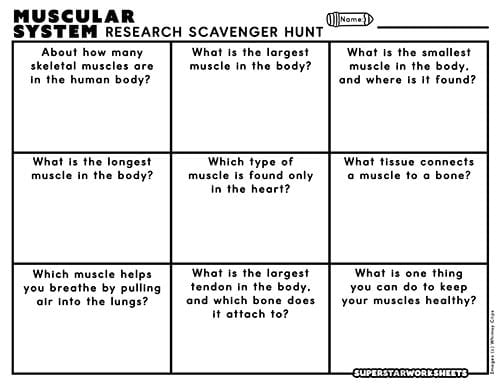
Kids use books or websites to answer questions about the muscular system and record where they found each answer. This research activity builds early research and note-taking skills.
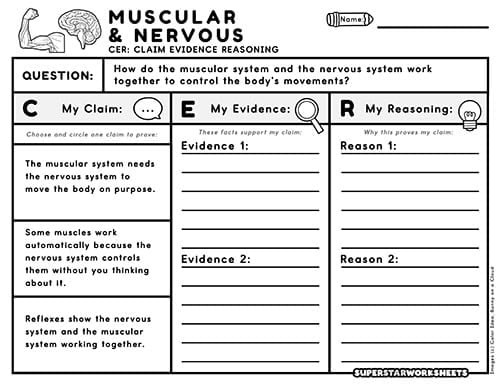
Muscular and Nervous System CER
Students choose a claim about how the muscular and nervous systems work together and support it with evidence and reasoning. The CER activity strengthens scientific writing and shows how body systems interact.
Teaching With Muscular System Research Activities
Start with the fun facts page to spark questions, then let students play Two Truths and a Lie in pairs or small groups. Model how to look up an answer and record a source before students begin the scavenger hunt. For the CER activity, review how the brain sends signals through nerves to tell muscles when to contract. Encourage students to use facts from earlier sections as evidence for their claims.
Leave a Reply