
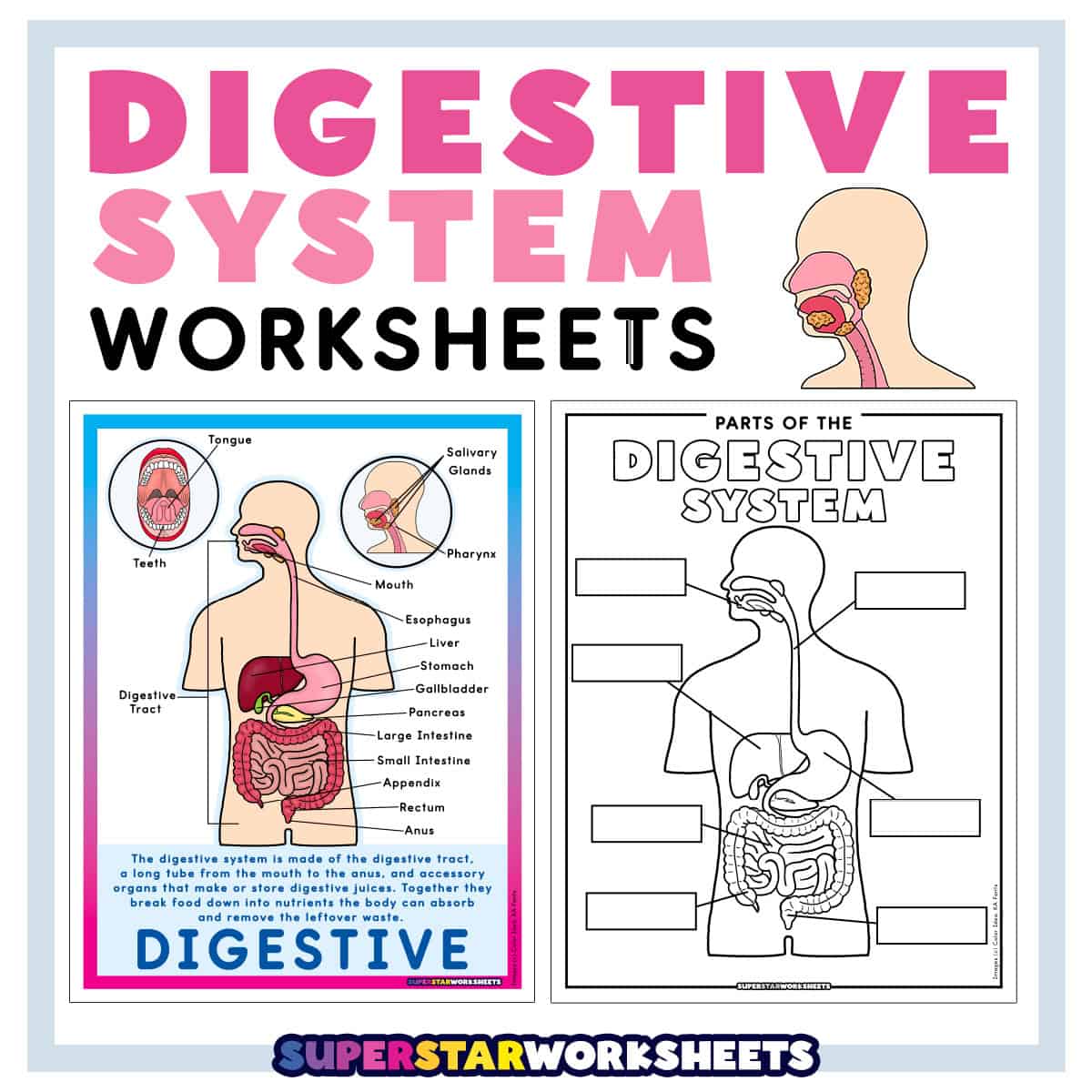
Free Printable Digestive System Worksheets help kids discover what happens to food from the first bite all the way through the body. Download and print PDF digestive system diagrams, labeling worksheets, flash cards, organ charts, fill-in-the-blank pages, quizzes, puzzles, a chemical vs mechanical digestion sort, and hands-on research activities. These science printables build body system vocabulary and help young learners explain how the digestive system breaks food down and delivers nutrients to the blood. Teachers and parents can use them for elementary and middle school science lessons, homeschool units, science centers, and small group review.
Simple Digestive System Diagrams for Kids
Simple Digestive System Diagram for Kids
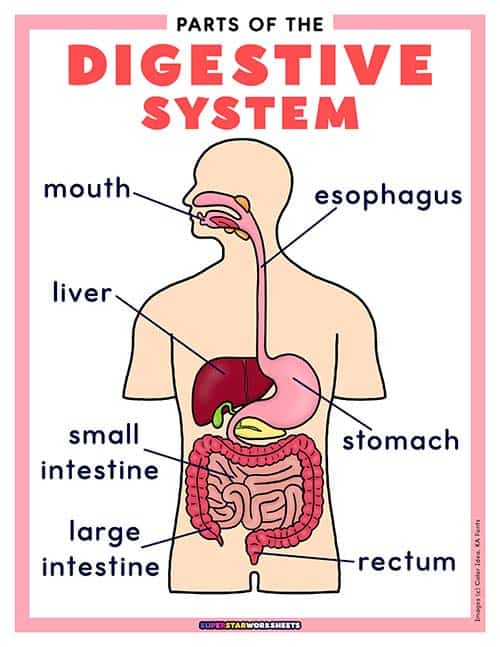
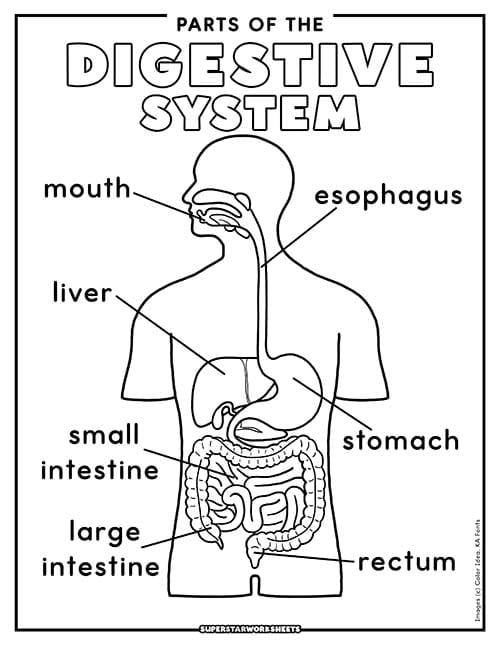
This simple digestive system diagram for kids shows the main parts of the digestive system, from the mouth all the way to the rectum. Friendly clipart and clear labels make it an easy first look at how food travels through the body.
Digestive System Coloring Page
Kids can color this black and white digestive system diagram while they learn each labeled part. It works well as a coloring page, a notebook insert, or a quick review sheet.
Digestive System Cut and Paste Worksheet
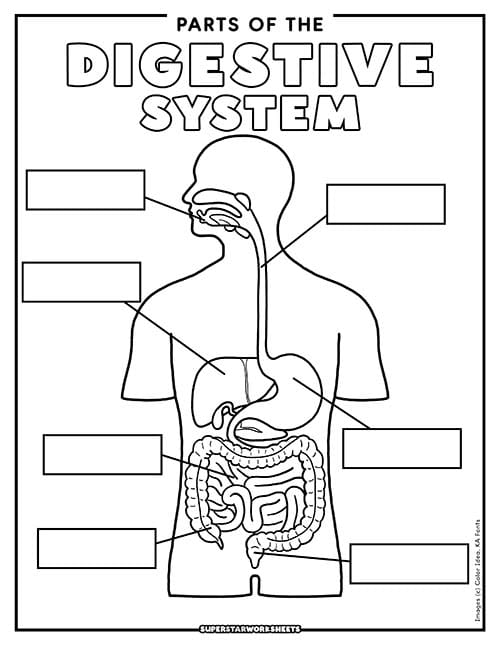
In this digestive system cut and paste worksheet, students cut out the labels and glue each one onto the correct part of the diagram. The hands-on format helps young learners remember where the stomach, liver, and intestines are found.
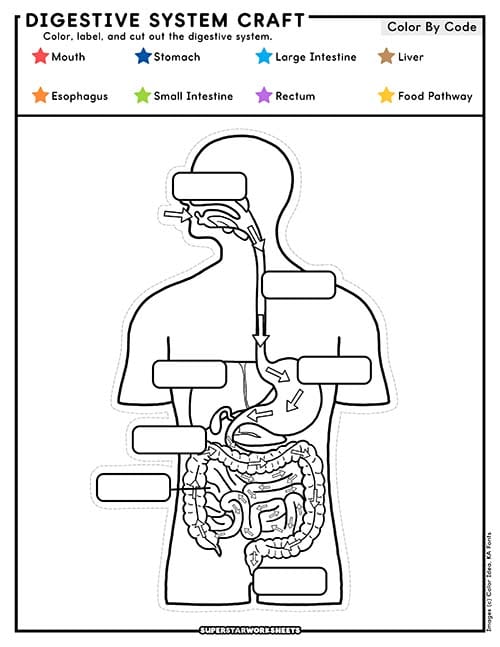
Students color the digestive system by code, follow the path of food with arrows, and then cut out and label their own model. This digestive system craft turns the journey of food into a colorful activity kids can display.
Teaching the Digestive System to Kids
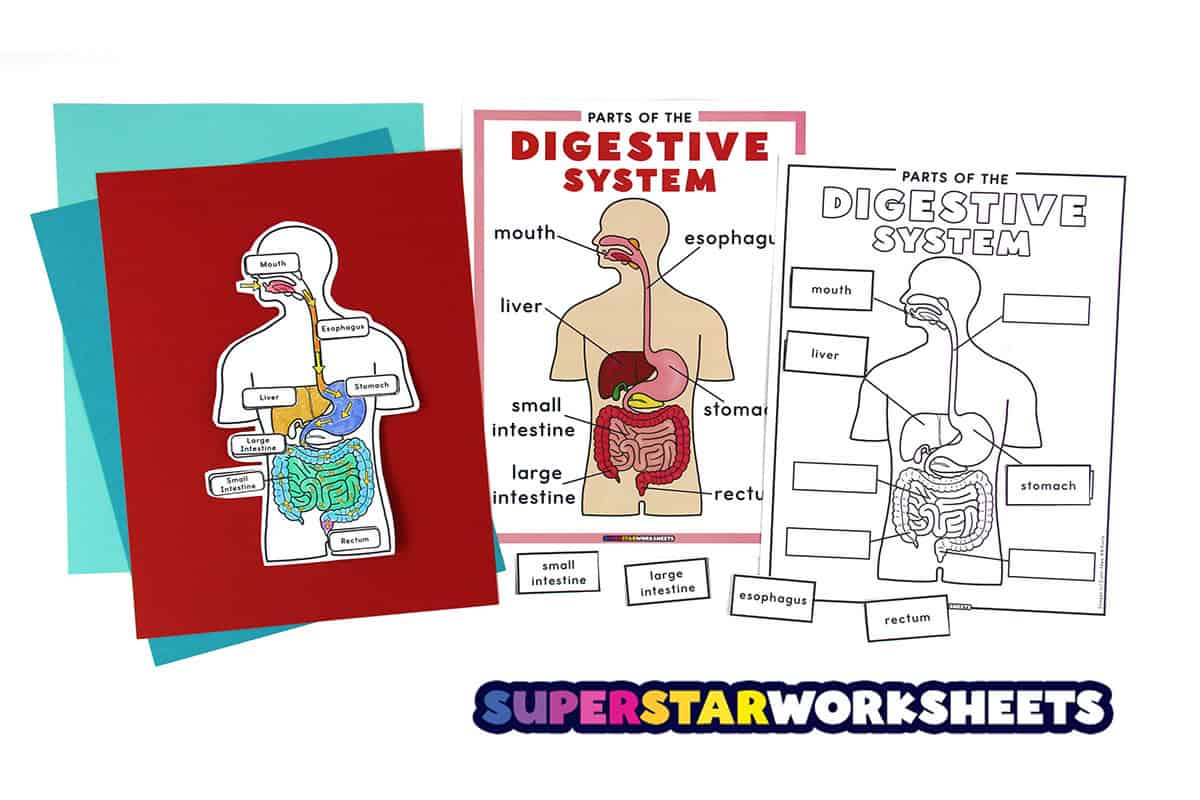
Begin by asking kids where they think their lunch goes after they swallow it, then follow the path on the simple diagram from the mouth to the rectum. Point out that the liver is a helper organ, so food never passes through it, even though it sits right next to the stomach. Use the coloring page and the cut and paste worksheet for practice, and save the color by code craft as a fun way to wrap up the lesson.
Vocabulary Bank: Mouth, Esophagus, Stomach, Liver, Small Intestine, Large Intestine, Rectum, Digestion, Nutrients, Saliva
Human Digestive System Diagram & Labeling Worksheets
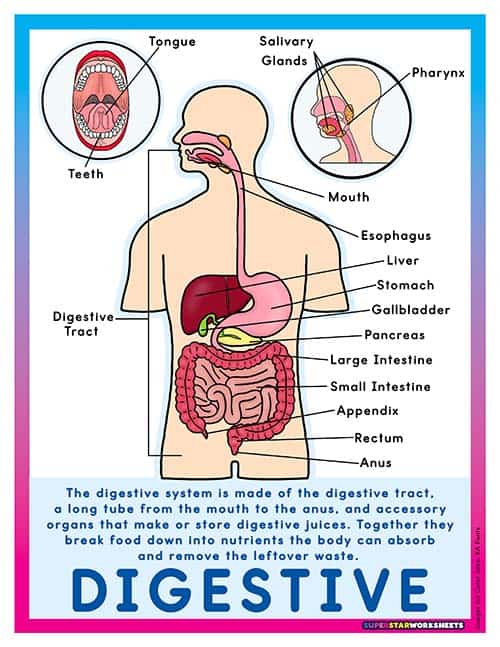
Human Digestive System Diagram
This labeled human digestive system diagram shows the full digestive tract along with the accessory organs, plus a close-up view of the mouth and throat. Parts like the pharynx, gallbladder, pancreas, and appendix are clearly marked, making it a strong anchor chart for any digestive system unit.
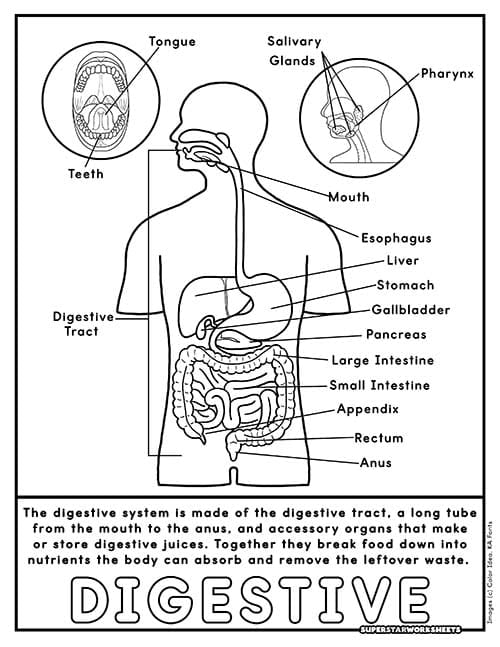
Human Digestive System Coloring Page
The black and white version of the human digestive system diagram keeps every label in place for coloring and study. Coloring the digestive tract and accessory organs in different colors helps students see how the two groups work together.
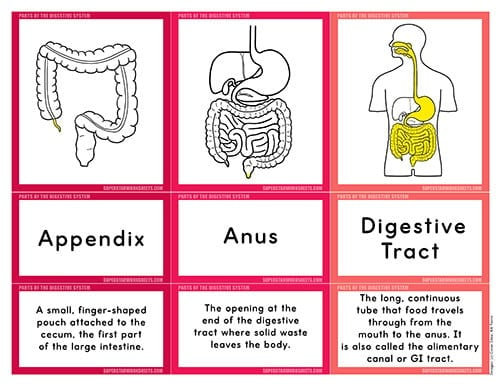
Parts of the Digestive System Flash Cards
Students match picture, word, and definition cards for each part of the digestive system, using the learning mat as a guide. These digestive system flash cards make vocabulary review hands-on and self-checking
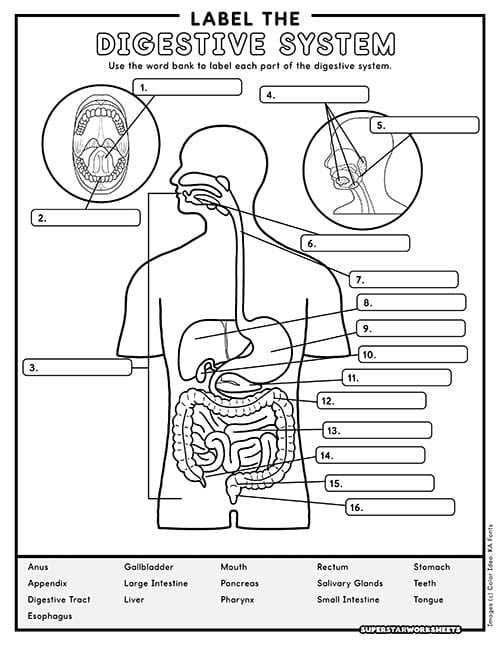
Label the Digestive System Worksheet
With a word bank for support, kids label each part of the digestive system on a full body diagram. This labeling worksheet builds confidence with organs from the teeth and tongue down to the rectum and anus.
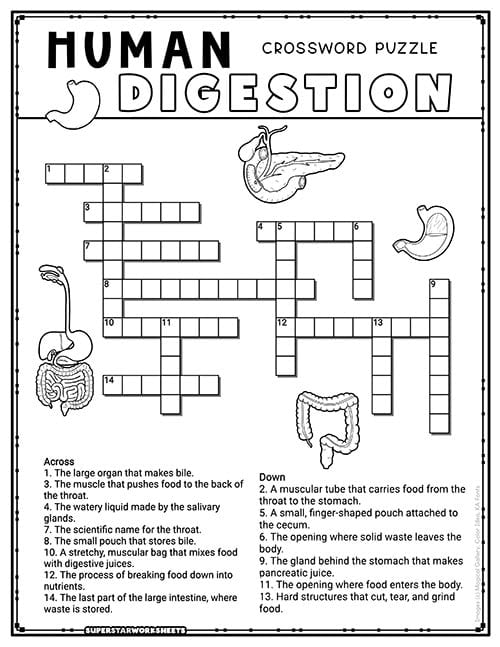
Digestive System Crossword Puzzle
Clue by clue, students recall digestive system vocabulary like esophagus, gallbladder, and pharynx. An answer key is included, so this crossword is easy to use for independent review or early finishers.
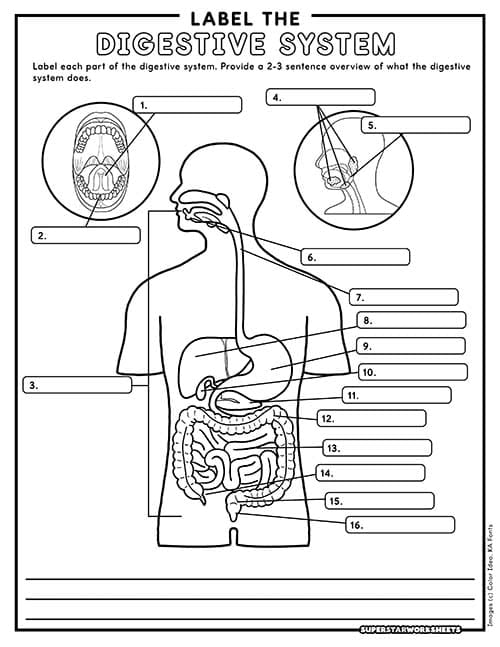
Unlabeled Digestive System Quiz
Using an unlabeled digestive system diagram, students name each part from memory and write a short overview of what the digestive system does. It is a quick way to check understanding of digestive system structure before moving on.
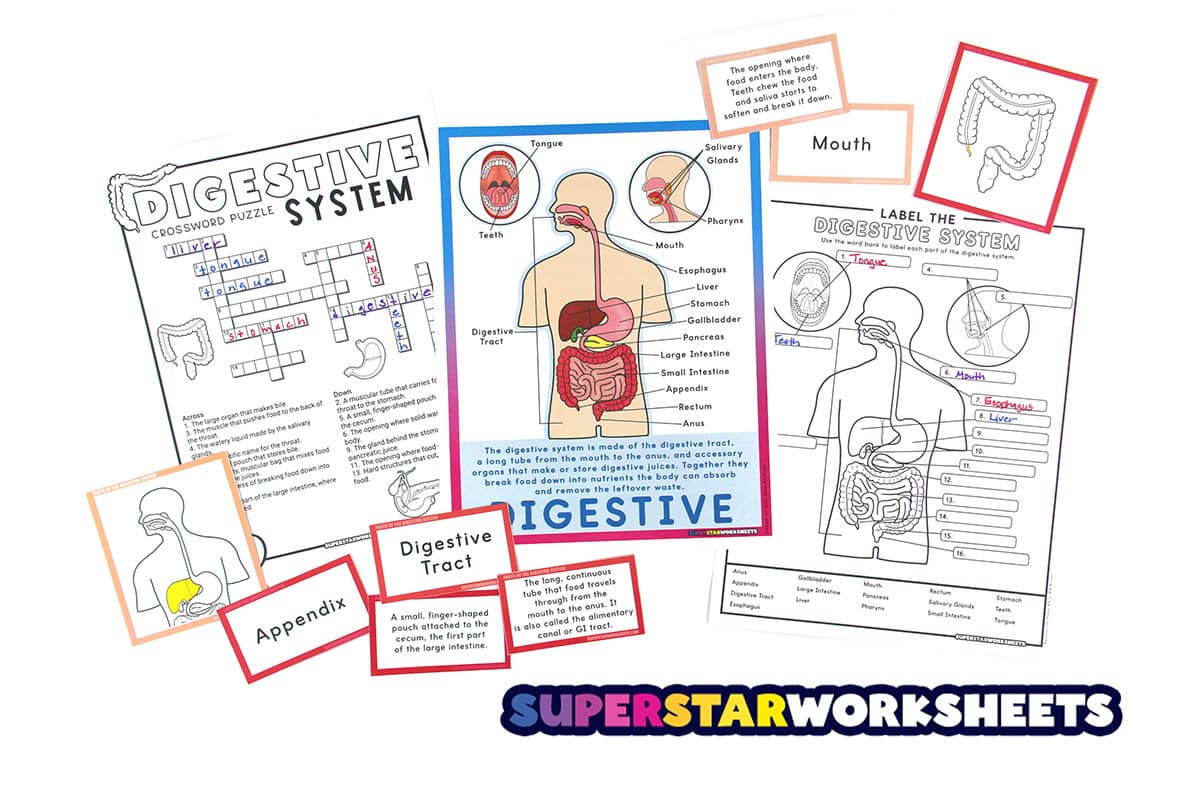
Teaching the Parts of the Digestive System
Start with the color diagram and have students trace one continuous tube from the mouth to the anus, which is the digestive tract. Then point out the accessory organs, like the liver, gallbladder, and pancreas, and explain that they make or store digestive juices without food ever passing through them. Use the flash cards and labeling worksheet for practice, add the crossword for vocabulary review, and finish with the unlabeled quiz as a quick check.
Vocabulary Bank: Digestive Tract, Mouth, Teeth, Tongue, Salivary Glands, Pharynx, Esophagus, Stomach, Liver, Gallbladder, Pancreas, Small Intestine, Large Intestine, Appendix, Rectum, Anus
Functions of the Digestive System Worksheets
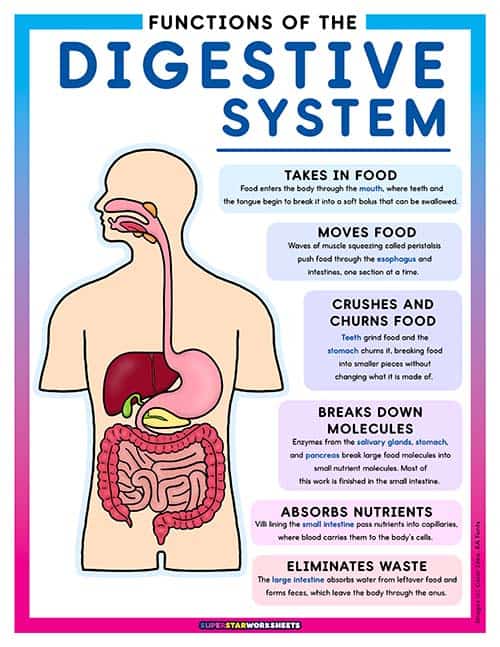
Functions of the Digestive System Chart
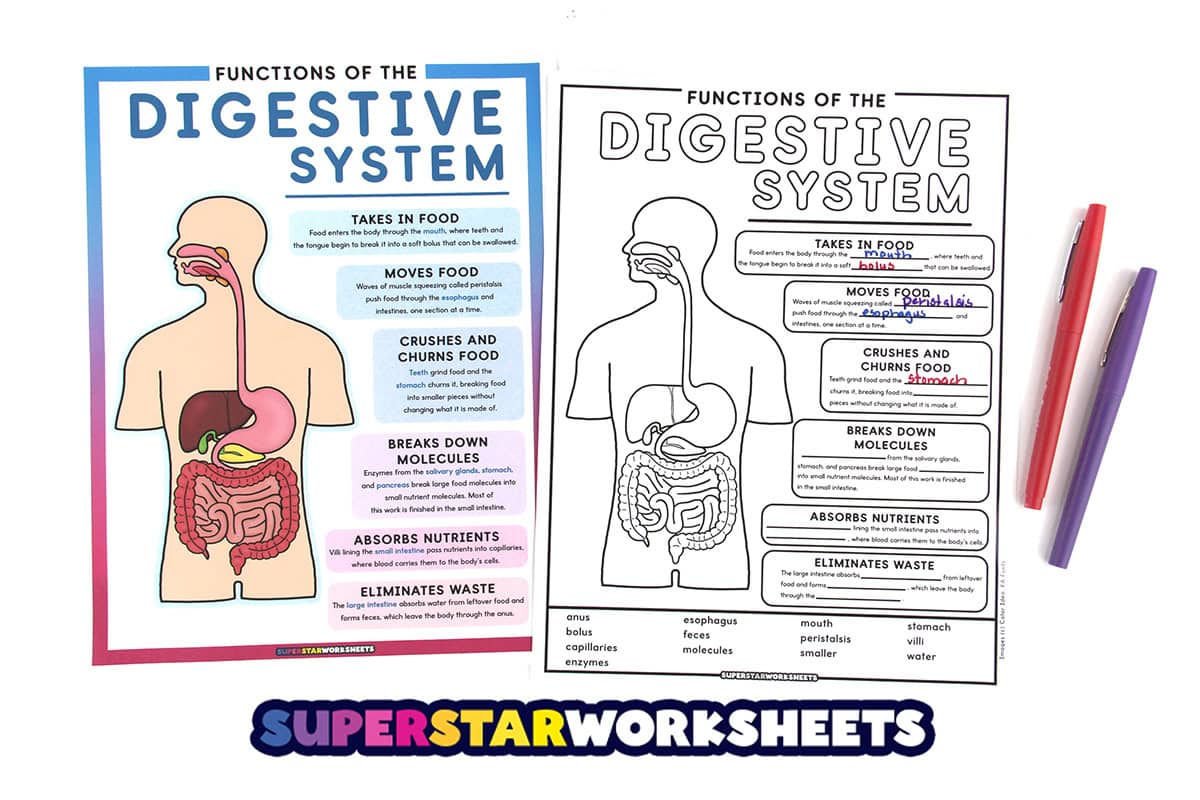
This functions of the digestive system chart explains how the body takes in food, moves it along, crushes and churns it, breaks down molecules, absorbs nutrients, and eliminates waste. Key body parts are highlighted in each box so students can connect every job to the organ that does it.
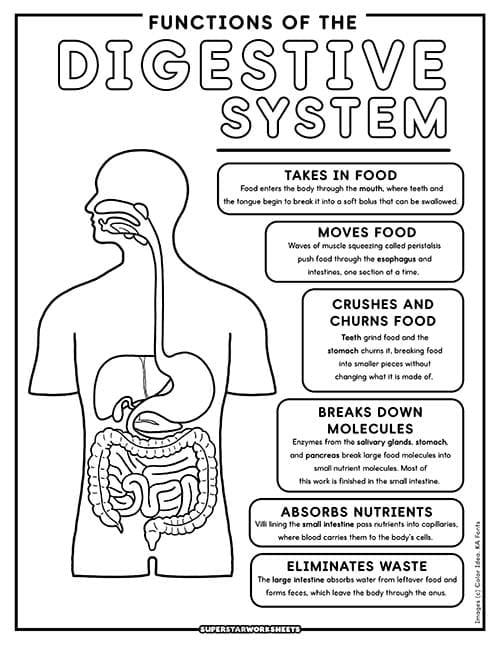
Functions of the Digestive System Coloring Page
Students can color this black-and-white digestive system functions chart while reviewing each step of digestion. It fits neatly into science notebooks or works as a take-home reference.
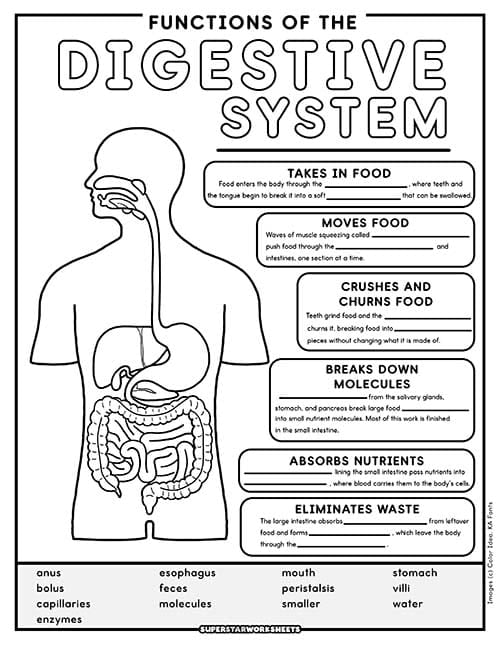
Digestive System Functions Fill in the Blank
Words like peristalsis, villi, and enzymes complete each function on this fill-in-the-blank worksheet. It helps kids explain how digestion works using real science vocabulary.
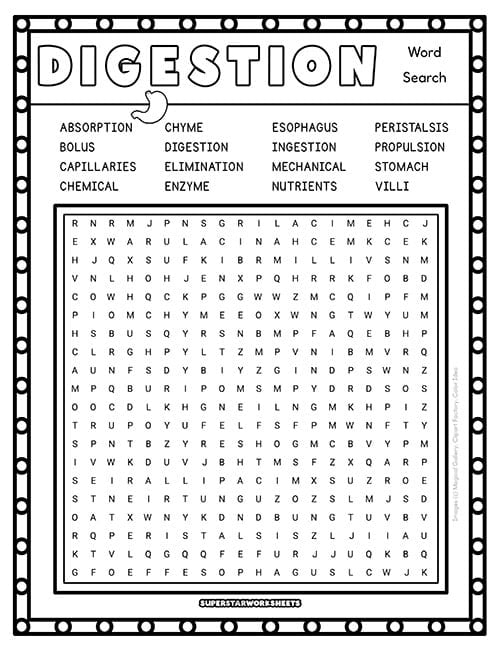
Hidden in this digestive system word search are terms such as absorption, chyme, and propulsion. It makes a fun vocabulary warm-up, and the answer key is included.
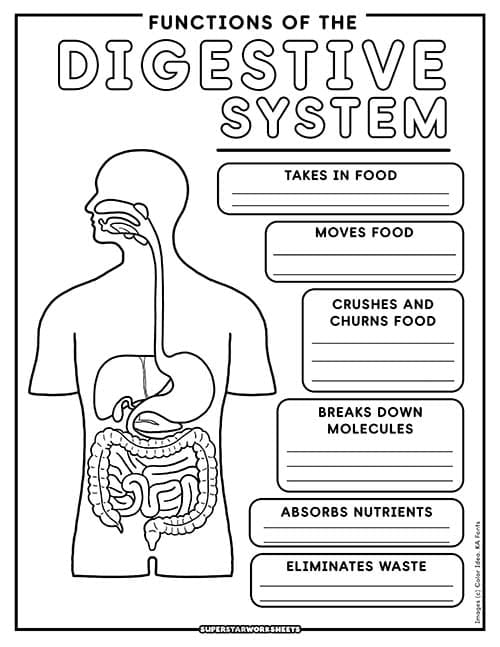
Functions of the Digestive System Quiz
With only the function headings as a guide, students explain how the digestive system carries out each job. This quiz asks kids to describe the process of digestion, not just name the parts.
Teaching the Functions of the Digestive System
Introduce the functions chart by having students follow a bite of food in order, from the moment it enters the mouth to the moment waste leaves the body. Emphasize that peristalsis moves food but does not break it down, and that most nutrients are absorbed in the small intestine rather than the stomach. Use the fill-in-the-blank page and word search to practice the vocabulary, then let students explain each function in their own words on the quiz.
Vocabulary Bank: Ingestion, Propulsion, Peristalsis, Mechanical Digestion, Chemical Digestion, Absorption, Elimination, Nutrients, Bolus, Chyme, Feces, Capillaries
Digestive Tract Organs Worksheets
A Closer Look at Digestive Tract Organs
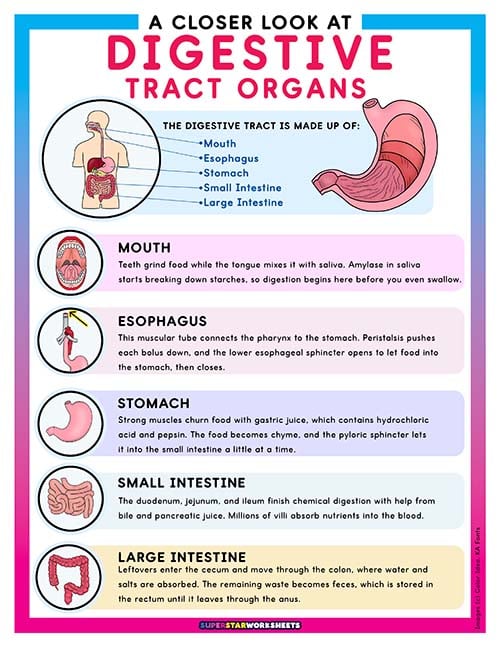
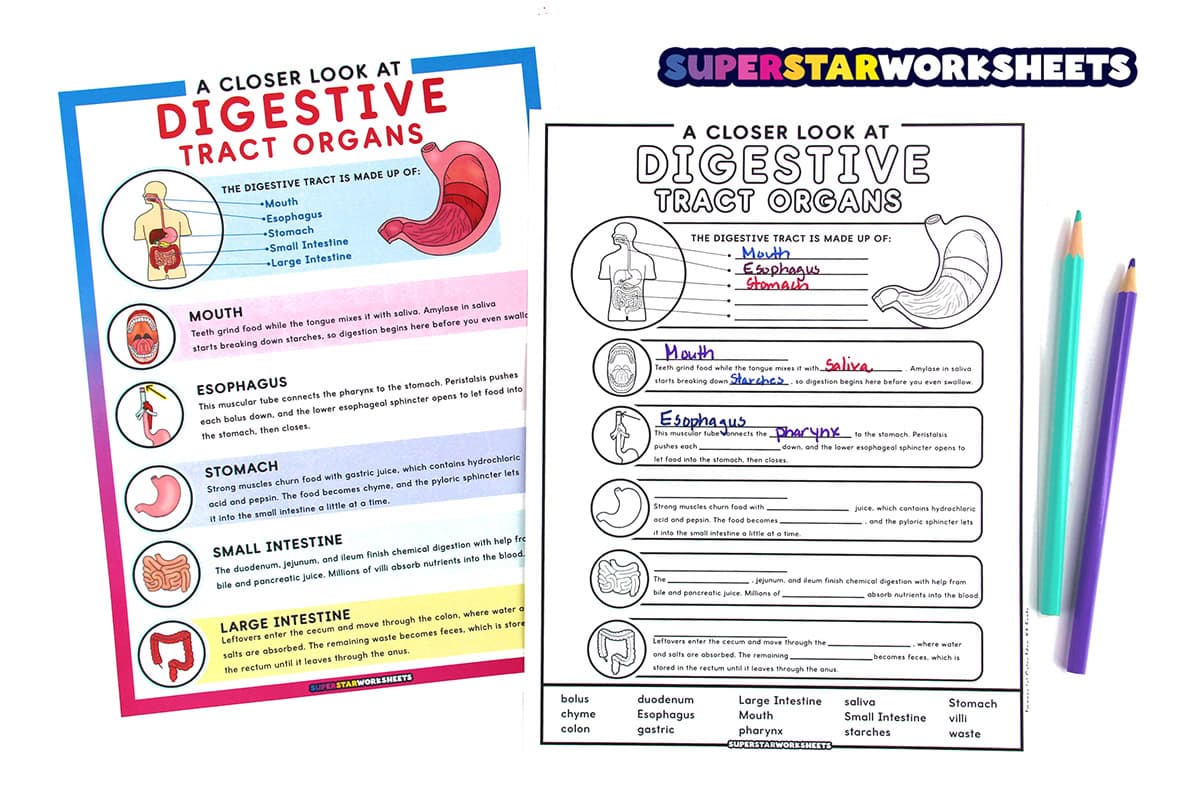
This digestive tract chart takes a closer look at the mouth, esophagus, stomach, small intestine, and large intestine. A zoomed view and short descriptions explain how each organ moves and breaks down food.
Digestive Tract Organs Coloring Page
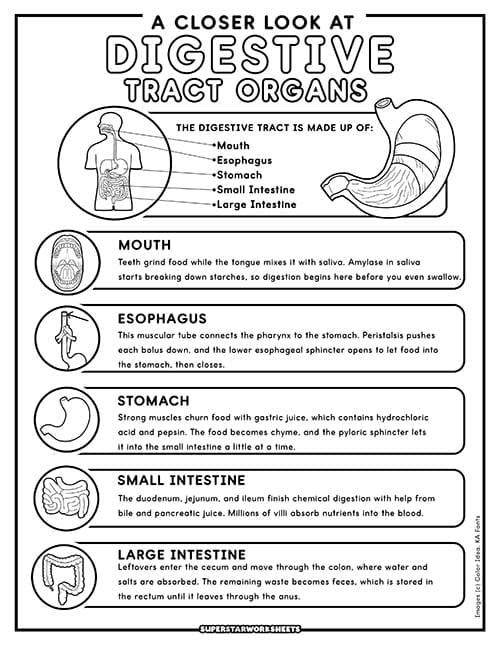
Every description stays in place on this black and white digestive tract chart, so students can color and study at the same time. It pairs well with the color version for review.
Digestive Tract Organs Fill in the Blank
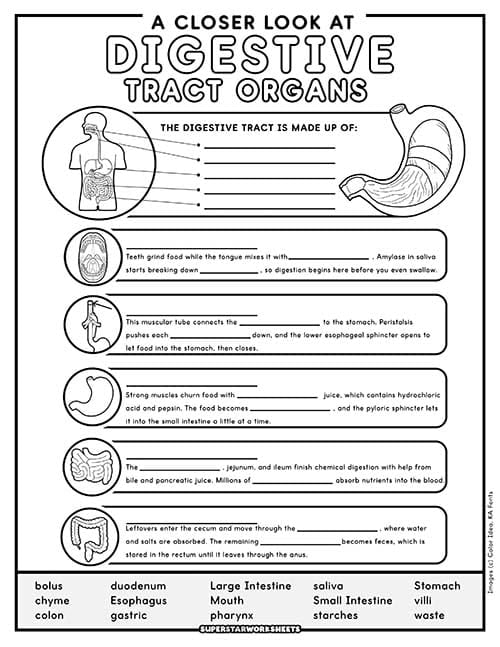
Using a word bank, students label the digestive tract and complete each organ description with terms like bolus, chyme, and duodenum. This digestive tract worksheet reinforces how each organ is built for its job.
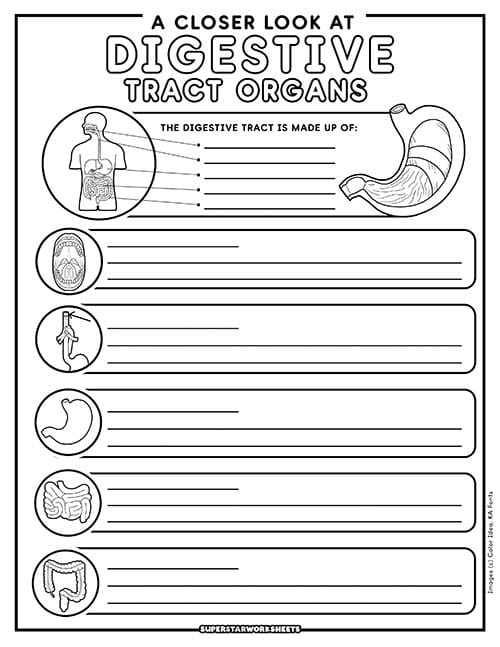
Students label the digestive tract and write about the job of each organ without a word bank. This quiz shows whether kids can explain what happens to food at every stop along the way.
Teaching the Organs of the Digestive Tract
Have students imagine they are a bite of food and narrate what happens at each organ on the chart. Highlight how the stomach turns food into chyme and how the pyloric sphincter lets it into the small intestine a little at a time. Use the zoomed villi view to show how the small intestine absorbs nutrients, then move to the fill-in-the-blank page and finish with the quiz.
Vocabulary Bank: Mouth, Esophagus, Stomach, Small Intestine, Large Intestine, Sphincter, Gastric Juice, Duodenum, Jejunum, Ileum, Villi, Cecum, Colon
Accessory Organs of the Digestive System
A Closer Look at Accessory Organs
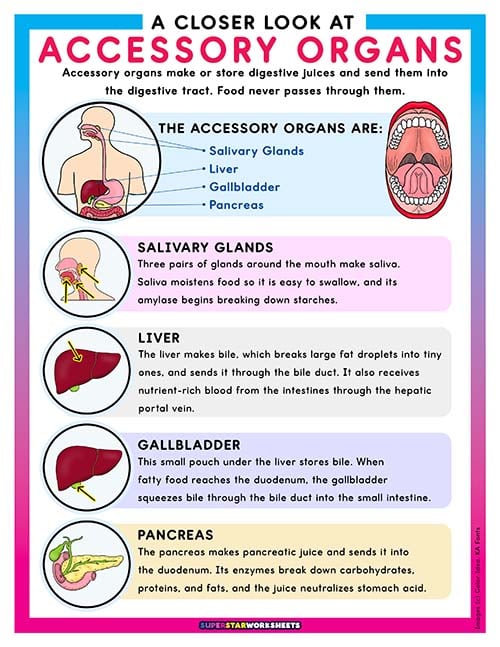
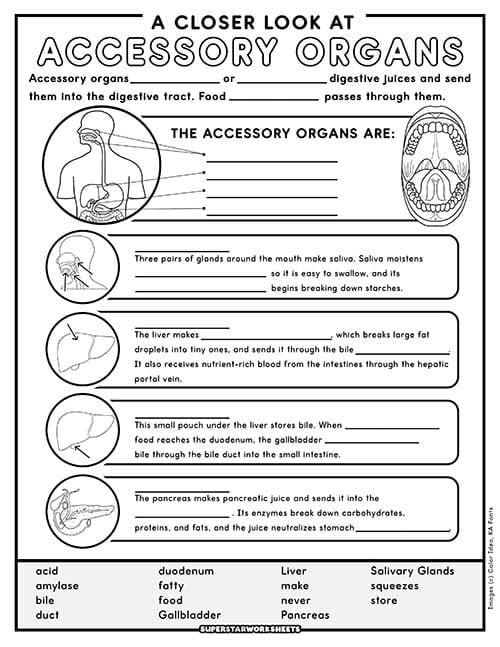
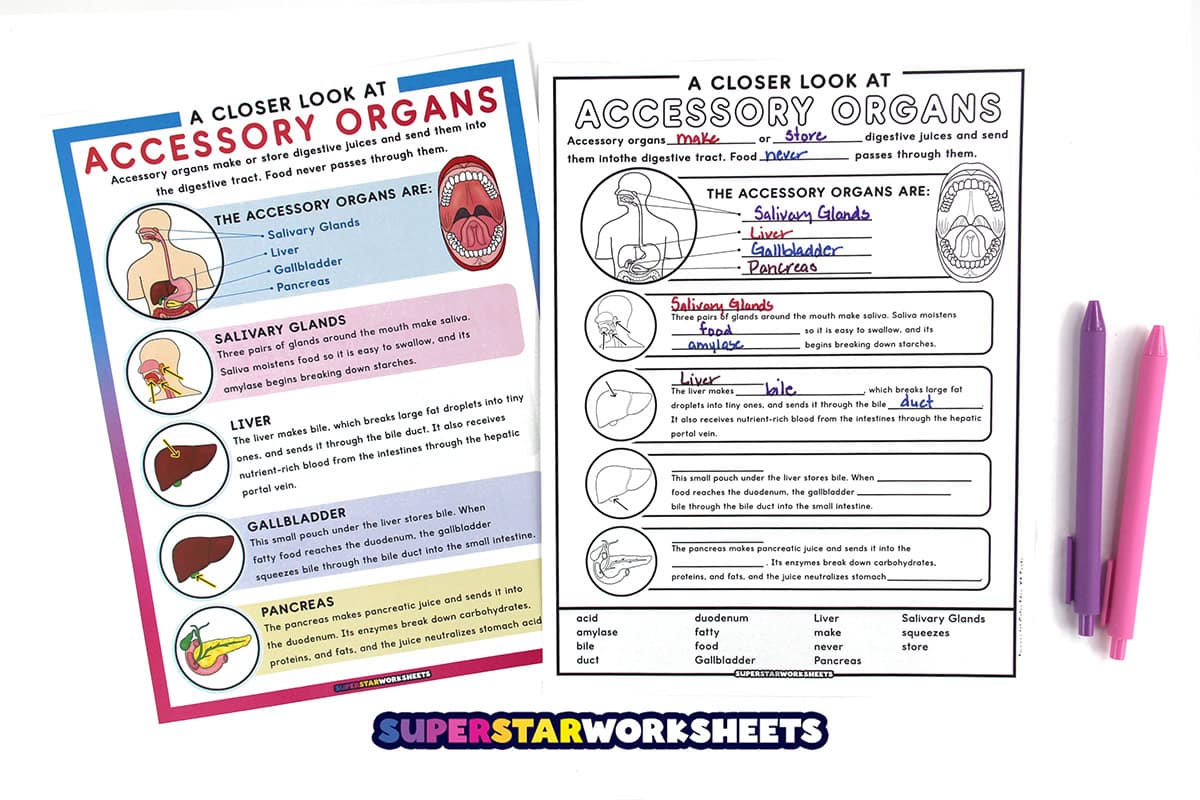
This accessory organs chart explains how the salivary glands, liver, gallbladder, and pancreas help digestion without food ever passing through them. Ducts and blood vessels are shown so students can see how digestive juices reach the small intestine.
Accessory Organs Coloring Page
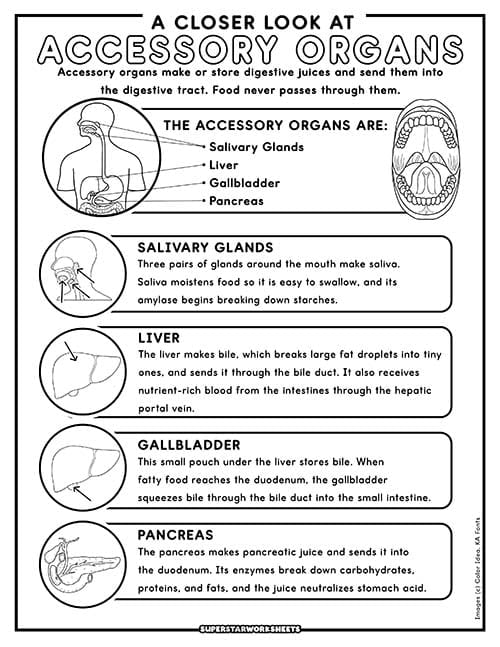
Students can color this black and white accessory organs chart while reviewing what each organ makes or stores. It is a helpful companion to the color chart for notebooks and study guides.
Accessory Organs Fill in the Blank
Kids complete each description of the accessory organs with words like bile, amylase, and duodenum. This worksheet builds a clear picture of how the liver, gallbladder, and pancreas support digestion.
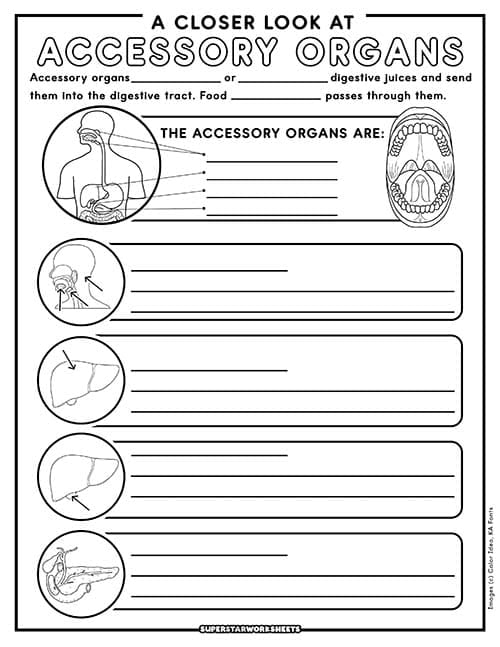
Without a word bank, students explain how each accessory organ helps the digestive system. The quiz works well as an exit ticket or an end-of-lesson check.
Teaching the Accessory Organs
Start by asking students whether food goes through the liver, then use the chart to show that accessory organs only send digestive juices into the digestive tract. Clear up a common mix-up by explaining that the liver makes bile, the gallbladder stores it, and bile breaks up fat without using enzymes. Practice with the fill-in-the-blank page and use the quiz to check understanding.
Vocabulary Bank: Accessory Organ, Salivary Glands, Saliva, Liver, Gallbladder, Pancreas, Bile, Bile Duct, Pancreatic Juice, Hepatic Portal Vein
Chemical vs. Mechanical Digestion Worksheets
Chemical vs. Mechanical Digestion Chart
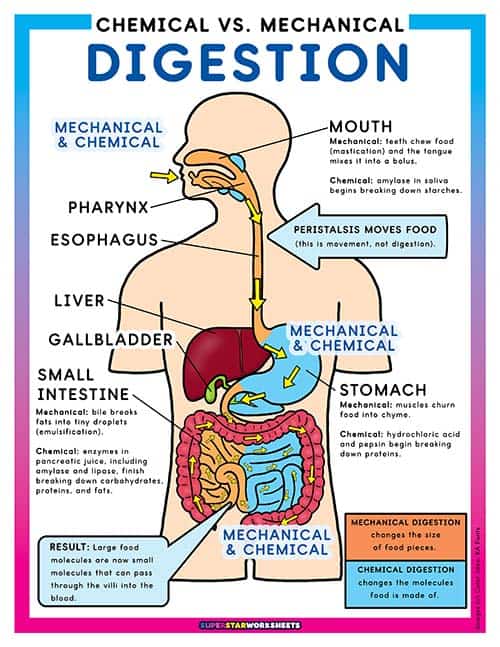
This chemical vs. mechanical digestion chart shows where each type of digestion happens in the mouth, stomach, and small intestine. Color coding and step-by-step notes explain how chewing and churning change the size of food while enzymes change the molecules it is made of.
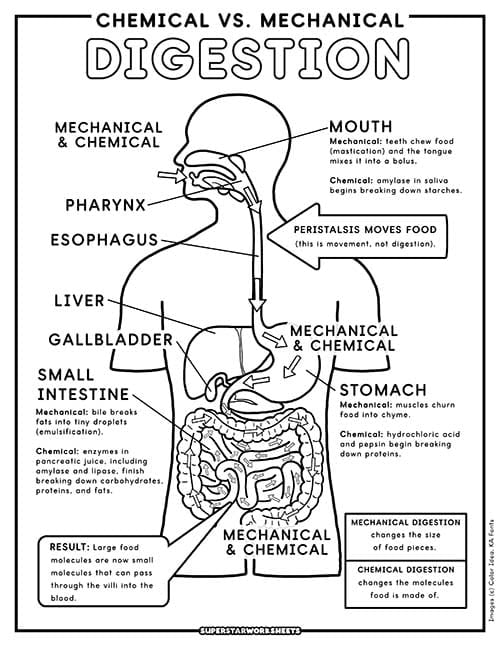
Chemical vs. Mechanical Digestion Coloring Page
The black and white version of the chart keeps all of the notes in place for coloring and review. Students can shade mechanical and chemical digestion in different colors to make the difference easy to see.
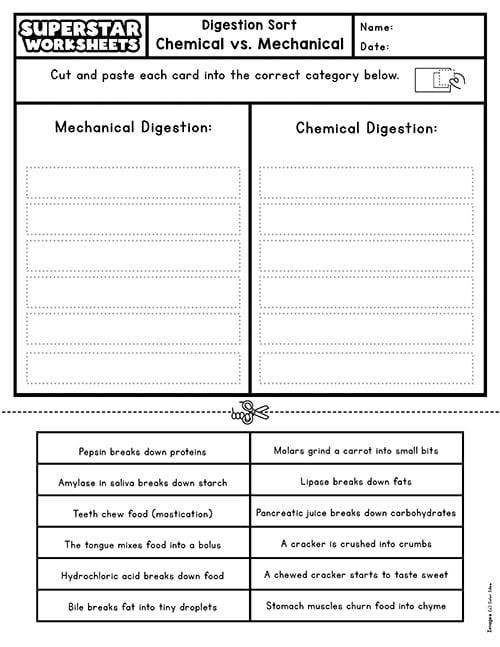
Chemical vs. Mechanical Digestion Sort
Students cut out each card and sort examples like teeth chewing food or pepsin breaking down proteins into mechanical or chemical digestion. This sorting activity gets kids thinking about what really happens to food.
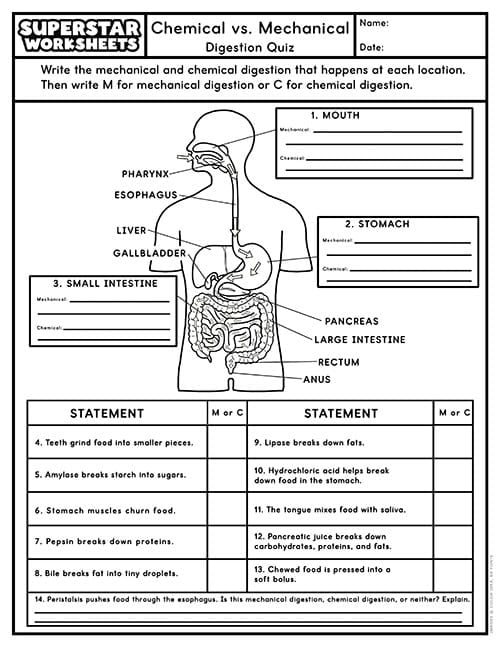
Chemical vs. Mechanical Digestion Quiz
In this quiz, students describe the digestion that happens at each location and then classify statements as mechanical or chemical. A final question about peristalsis checks whether they understand that moving food is not the same as digesting it.
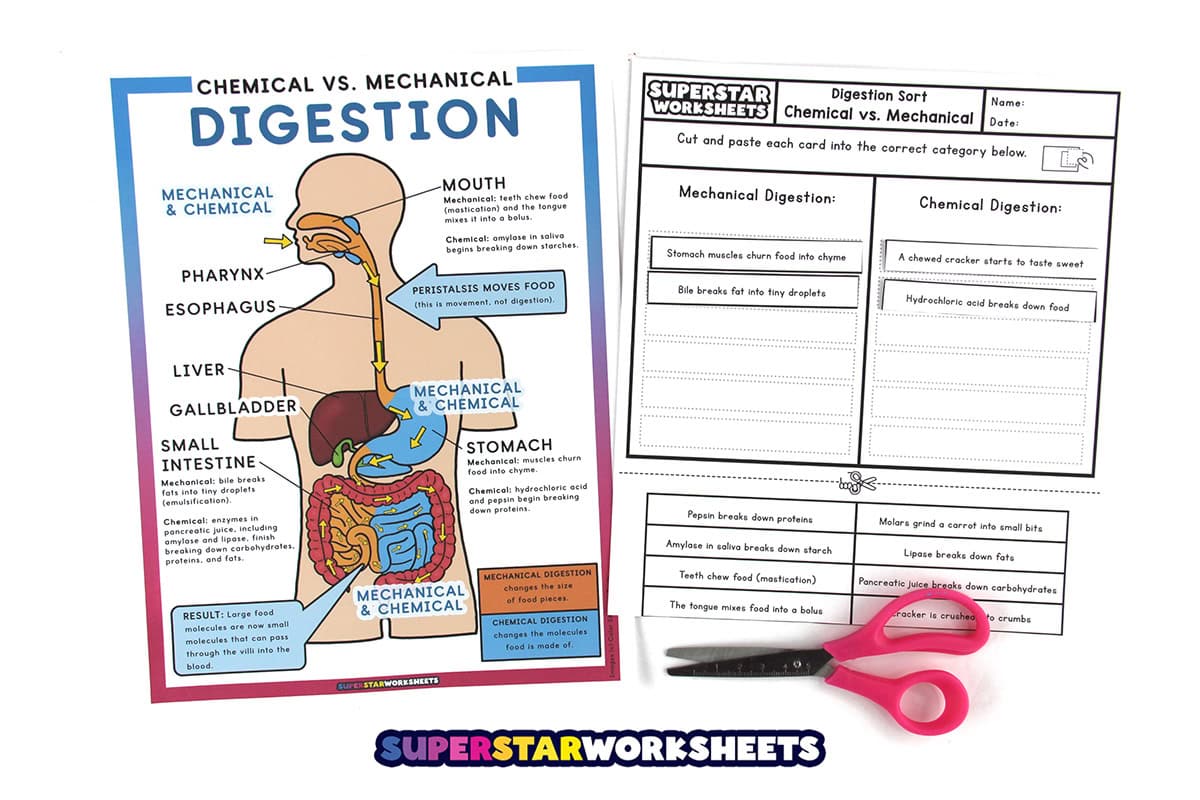
Chemical vs. Mechanical Digestion Worksheets
Use a cracker to make this lesson memorable: chewing breaks it into crumbs, which is mechanical digestion, and the sweet taste that appears after a while comes from amylase, which is chemical digestion. Walk through the chart to show that both types happen in the mouth, stomach, and small intestine. Have students work in pairs on the sort, then finish with the quiz.
Vocabulary Bank: Mechanical Digestion, Chemical Digestion, Mastication, Churning, Enzyme, Amylase, Pepsin, Lipase, Hydrochloric Acid, Emulsification, Bile, Saliva, Molecule, Carbohydrates, Proteins, Fats
Digestive System Fun Facts & Research
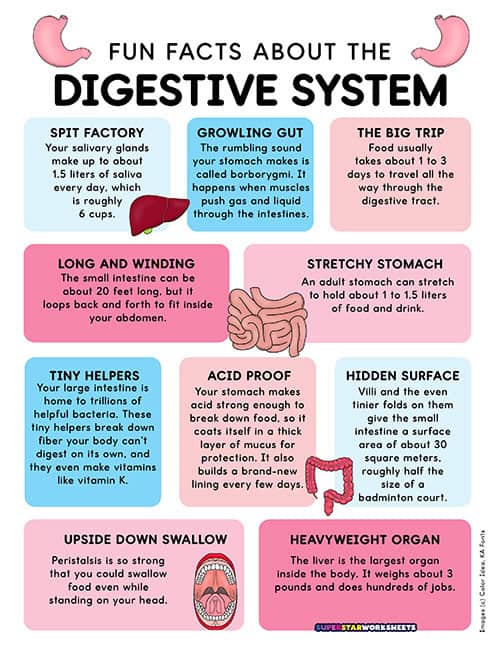
Fun Facts About the Digestive System
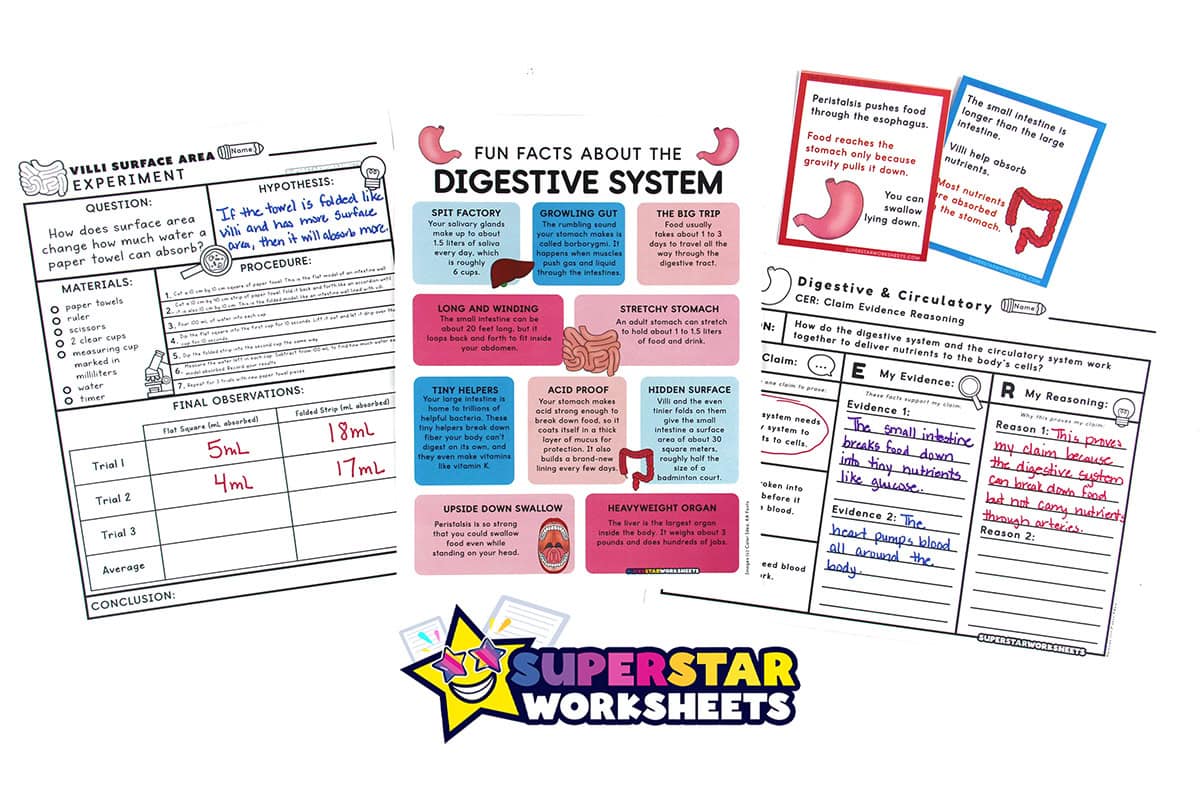
This colorful fun facts poster shares surprising digestive system facts, like how long the small intestine is and why your stomach growls. It is a great discussion starter for science class. For more FREE digestive worksheets, take a look at our Stomach Worksheets!
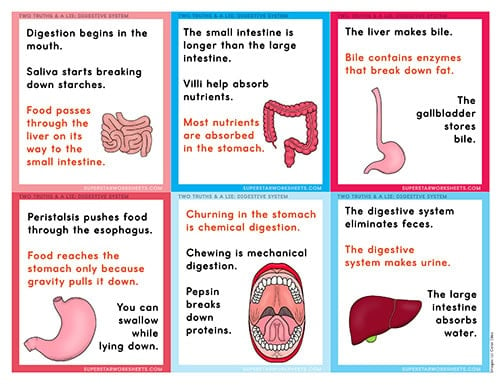
Digestive System Two Truths and a Lie
Students read each card and decide which digestive system statement is false. This game gets kids talking, reasoning, and correcting common misconceptions about digestion.
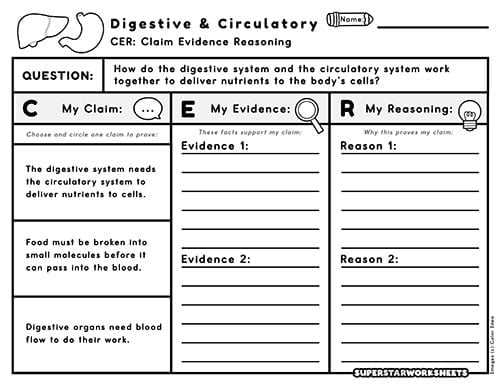
Digestive and Circulatory System CER Worksheet
Students choose a true claim about how the digestive and circulatory systems work together and support it with evidence and reasoning. This claim evidence reasoning worksheet builds scientific writing and argument skills. Teachers check out our Circulatory System Worksheets today!
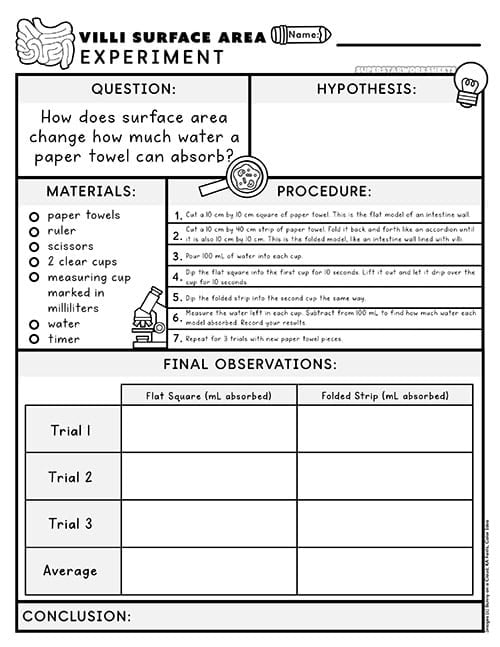
In this villi experiment, students compare how much water a flat and a folded paper towel absorb to model how villi increase surface area. The results give kids real data to use as evidence on the CER worksheet.
Teaching with Digestive System Fun Facts & Research
Kick off this section with the fun facts poster and let students share which fact surprised them most. Use the Two Truths and a Lie cards in small groups to spark discussion and clear up misconceptions. Have students run the villi experiment before the CER worksheet so they can use their own data as evidence for how nutrients reach the blood.
Leave a Reply