
Free Printable Interjections Worksheets are here! Just download, print, and add them to your grammar centers, homework folders, or homeschool lesson plans as a complete set of PDF activities covering strong, mild, and social interjections. This collection includes colorful reference charts, sorting activities, fill-in-the-blank worksheets, flashcards, a picture-matching learning mat, writing pages, and more! Everything young learners need to recognize, classify, and use interjections correctly in their writing. These materials build key punctuation skills to help students understand when to use an exclamation point versus a comma and develop grammar confidence across a range of activity styles designed for elementary classrooms and independent practice.
Free Printable Interjections Charts and Posters
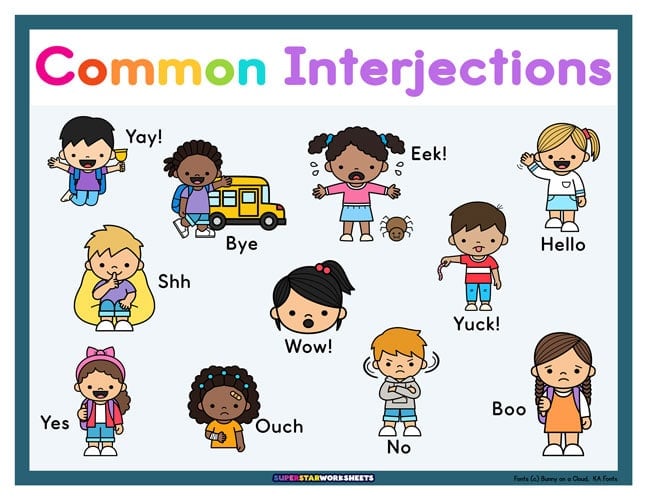
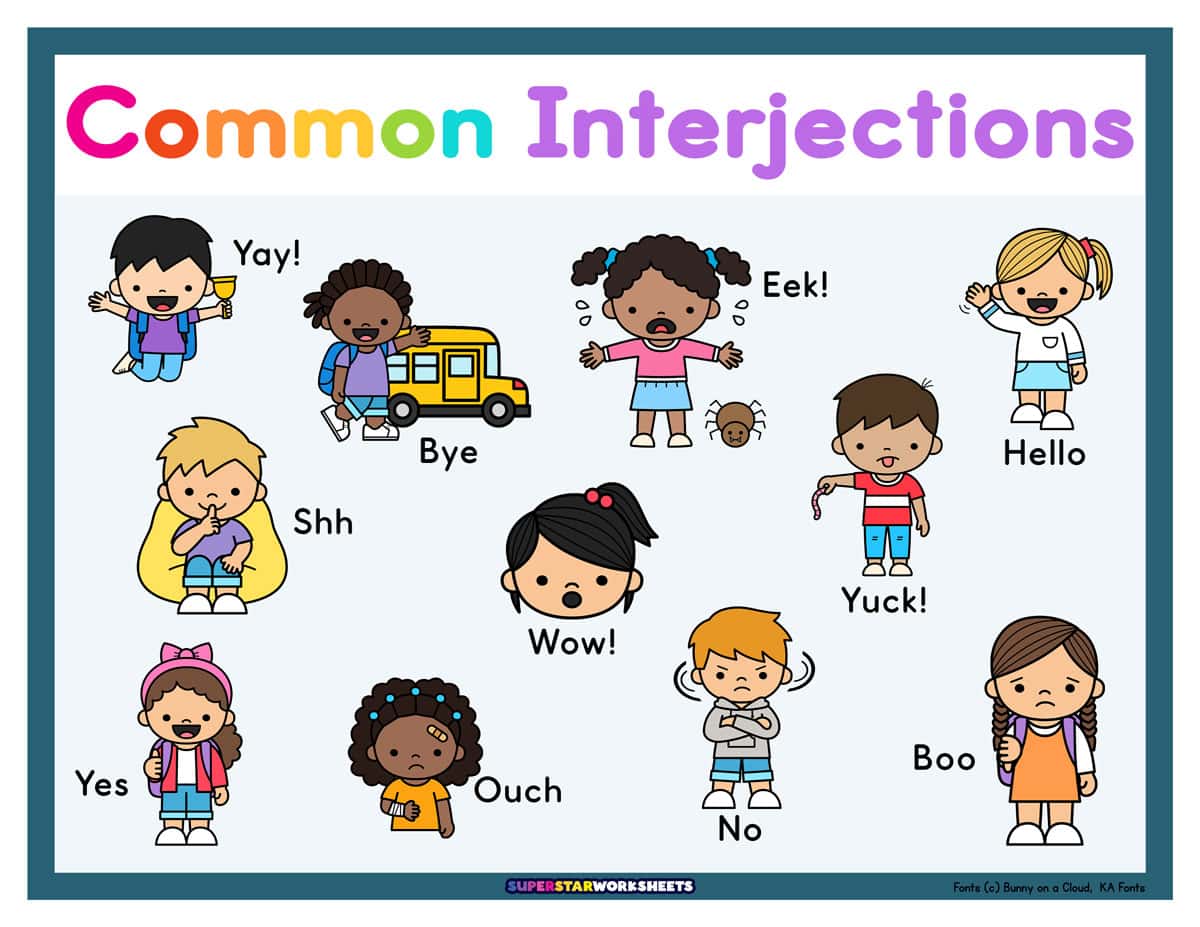
This colorful interjections picture chart introduces twelve of the most common interjections paired with expressive illustrations, making it the perfect visual anchor for any grammar unit. Post it in your classroom word wall, add it to a reading center, or send it home as a reference tool for young learners who are just beginning to explore how interjections work in everyday speech and writing.
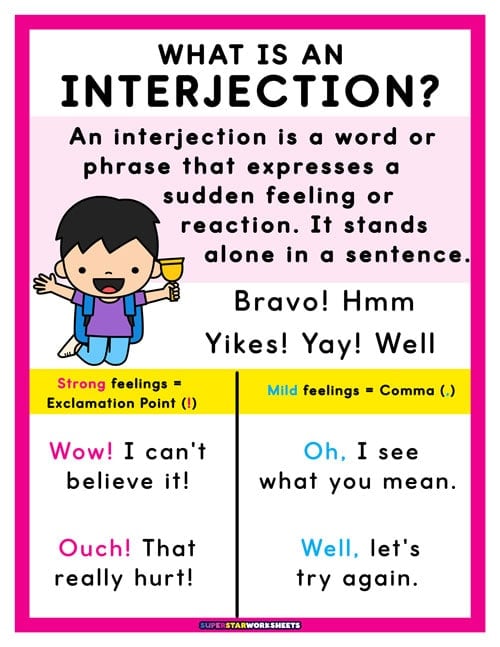
This interjections anchor chart gives students a clear, memorable definition and shows exactly how strong and mild interjections differ in punctuation and tone. Color-coded examples help students visually connect strong feelings to exclamation points and mild reactions to commas. Check out our Punctuation Worksheets!
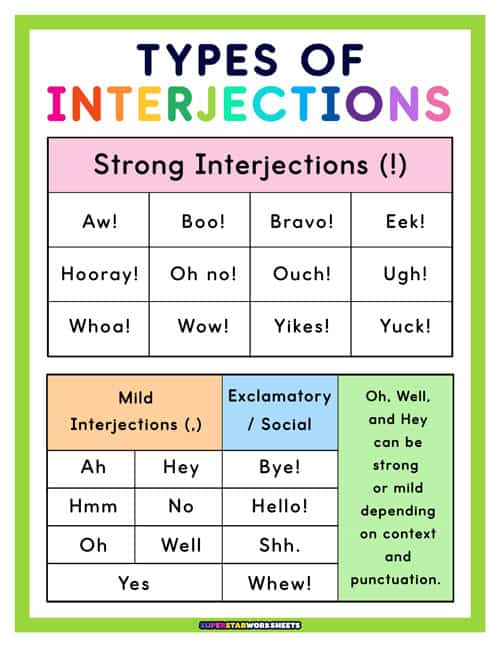
This types of interjection reference chart organizes all three categories into a clean, easy-to-read display. Students can use it alongside sorting activities and worksheets to reinforce classification skills and build familiarity with a wide range of interjection examples across all three types.
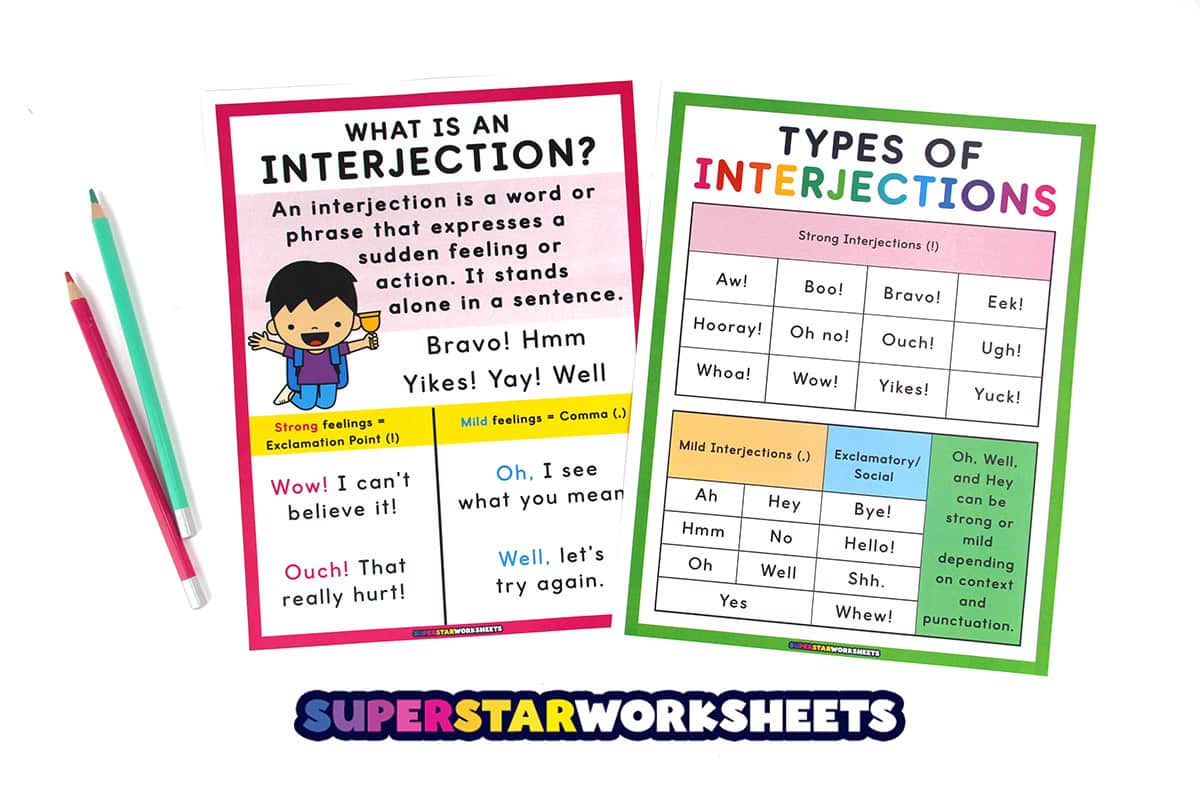
What Is an Interjection?
An interjection is a word or phrase that expresses a sudden feeling or reaction. Unlike most parts of speech, an interjection stands on its own, so it is not connected grammatically to the rest of the sentence. Interjections show up in everyday conversation, stories, and informal writing, making them one of the most fun parts of speech for students to learn. Interjections can be found at the beginning of a sentence, set apart by punctuation. A strong interjection expresses an intense emotion like surprise, excitement, or pain, and is followed by an exclamation point.
“An interjection is a word that expresses a sudden feeling or reaction.”
Exploring Interjections
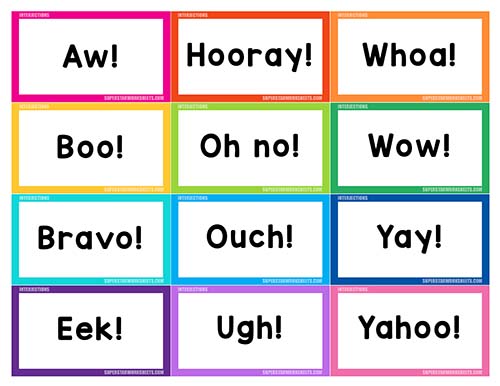
These interjection flashcards give students a hands-on way to practice reading and recognizing many common interjections. Use them for partner review, timed drills, small group warm-ups, or send a set home for extra practice. Each card displays a single interjection with correct punctuation to reinforce proper usage from the start. For more printables to use in English class, check out our How to Write a Sentence printables!
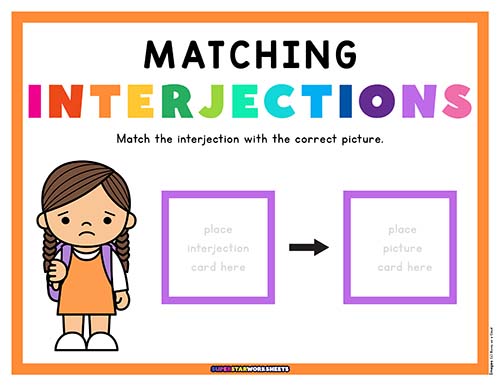
Interjections Matching Mat and Cards
This reusable interjections learning mat pairs with a set of word and picture cards for a hands-on matching activity students can use independently or with a partner. Students match each interjection to the picture that best shows the emotion it expresses, building vocabulary, contextual understanding, and a deeper connection between words and the feelings they convey.
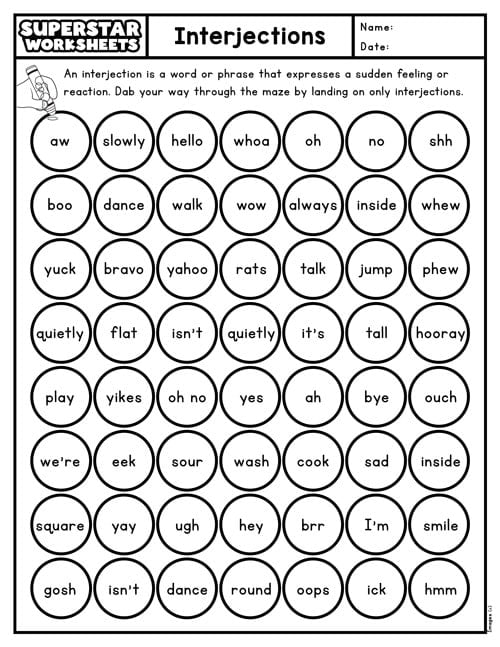
Students dab their way through this interjections maze by identifying and landing only on interjections, avoiding nouns, verbs, and other parts of speech along the way. This engaging practice page reinforces word recognition and helps students distinguish interjections from other vocabulary words in a low-pressure, high-interest format.
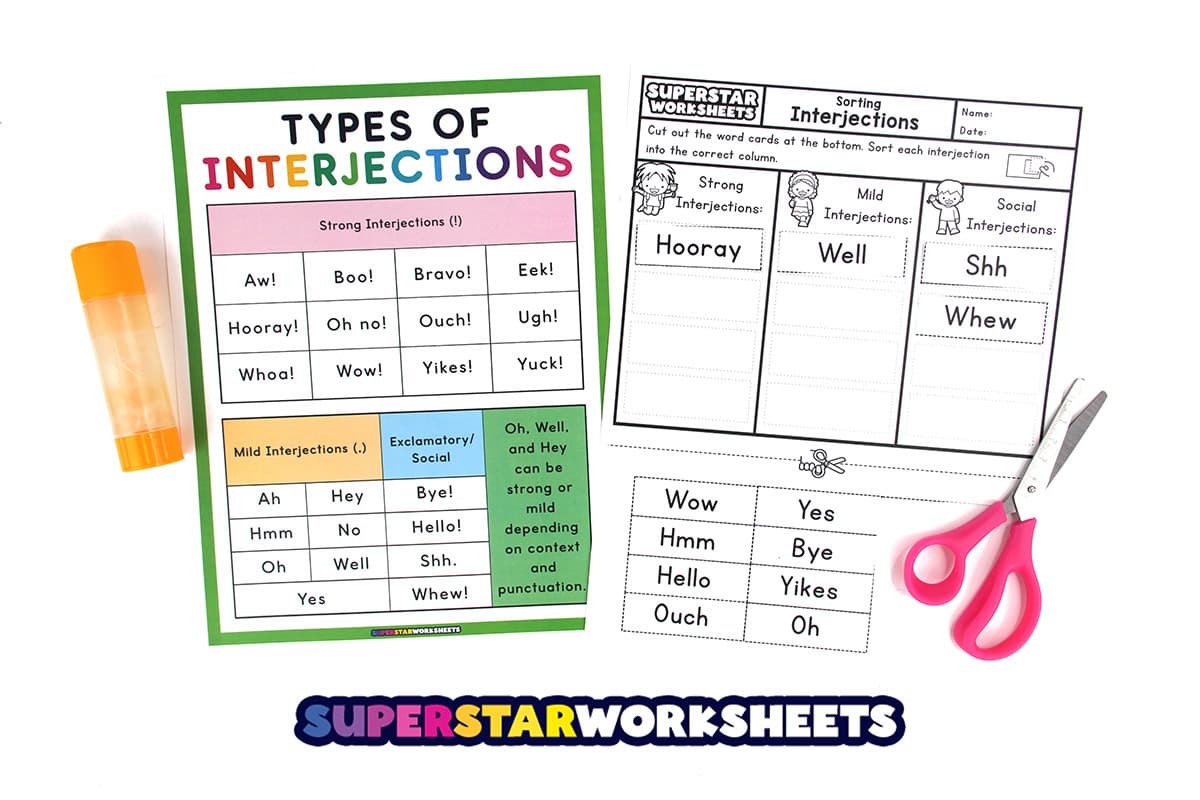
Strong, Mild, and Social Interjections Worksheets and Activities
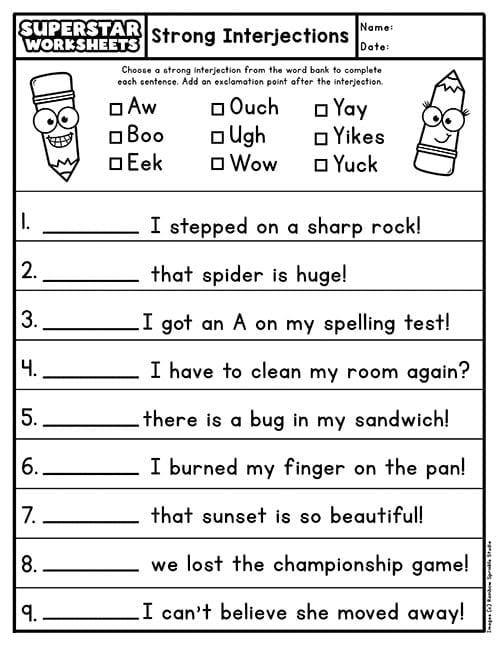
Strong Interjections Fill Blank
Students choose from a word bank of strong interjections to complete nine sentences, then add an exclamation point after each one. This fill-in-the-blank worksheet focuses on the most common strong interjections and gives students meaningful practice connecting interjections to real emotional contexts.
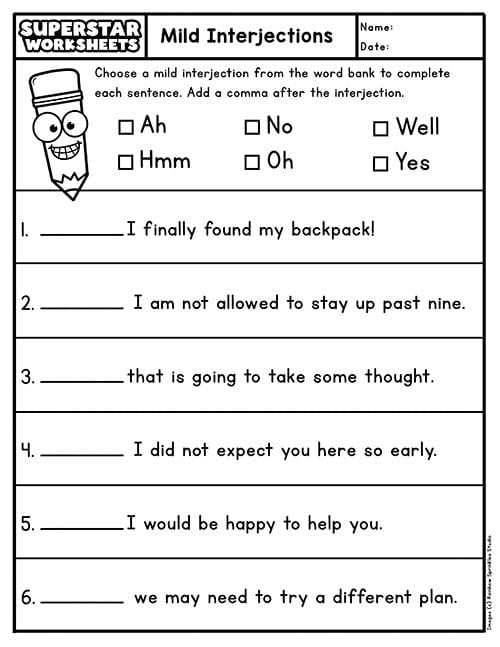
This mild interjections worksheet guides students through six sentence completions using common mild interjections like Ah, Hmm, Oh, and Yes with a comma added after each one. The activity directly supports the L.5.2c standard and helps students understand the difference in tone and punctuation between a mild and a strong interjection.
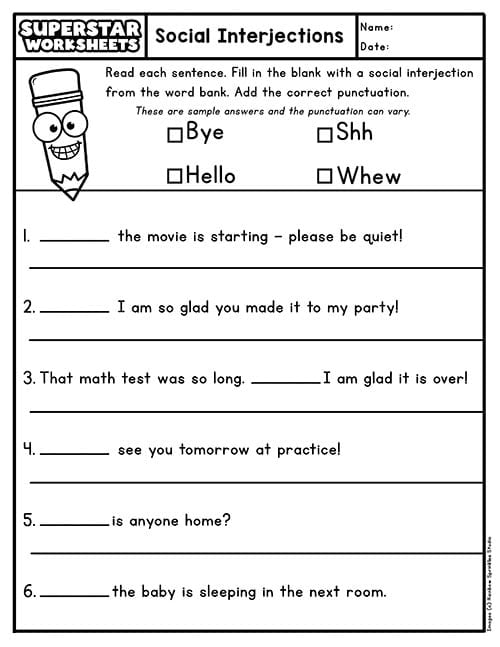
Students complete six sentences using social interjections and apply the correct end punctuation for each context. This focused worksheet helps students understand how social interjections function differently from strong and mild ones, and how context determines the right word and punctuation to use. Kids need to learn prepositions? Try our Preposition Worksheets.
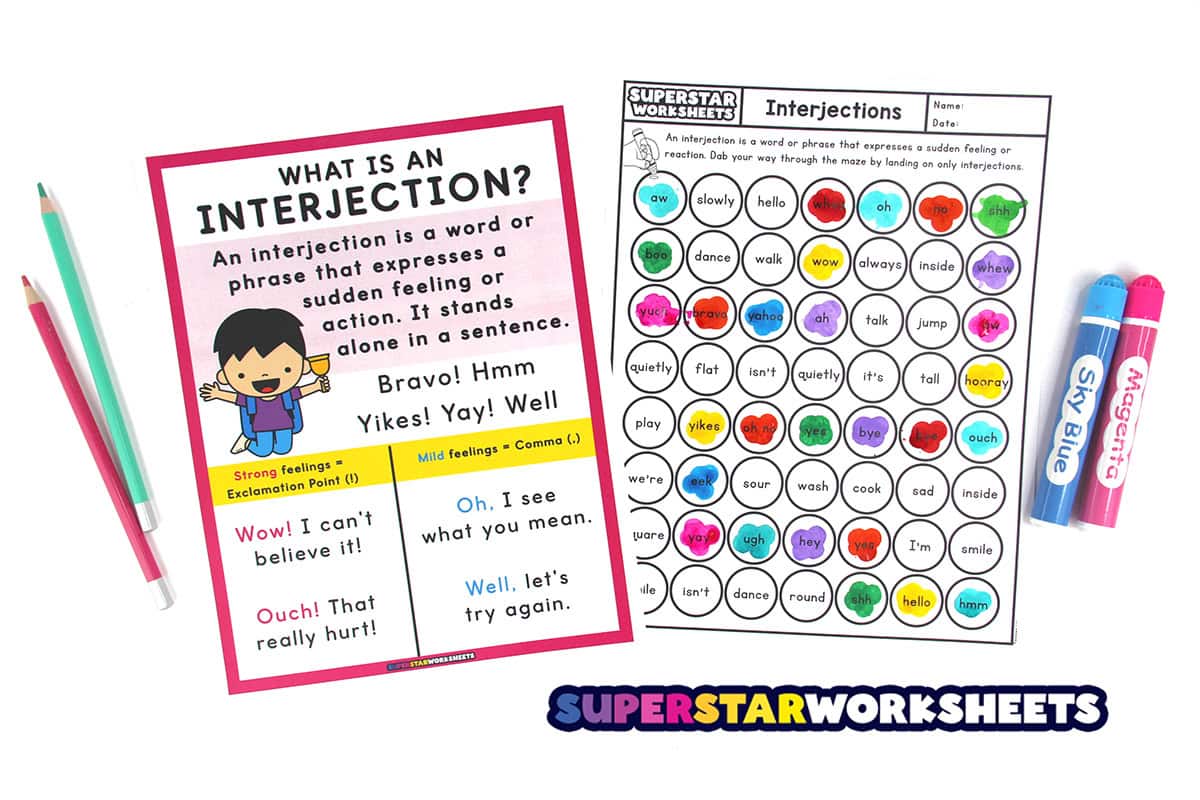
Strong vs. Mild Interjections
Not all interjections are created equal. The two most commonly taught types are strong interjections and mild interjections. The difference comes down to intensity and punctuation. A strong interjection expresses an intense, sudden emotion like surprise, excitement, fear, or pain. It is always followed by an exclamation point, and the next word in the sentence begins with a capital letter. Wow! Ouch! Yikes! are all strong interjections. A mild interjection expresses a gentler reaction like a moment of thought, soft agreement, or quiet realization. It is set off from the rest of the sentence by a comma, and the sentence continues in lowercase. “Well, that makes sense” is an example of a mild interjection used correctly.
“Strong feelings get an exclamation point. Mild feelings get a comma.”
All Interjections Activities
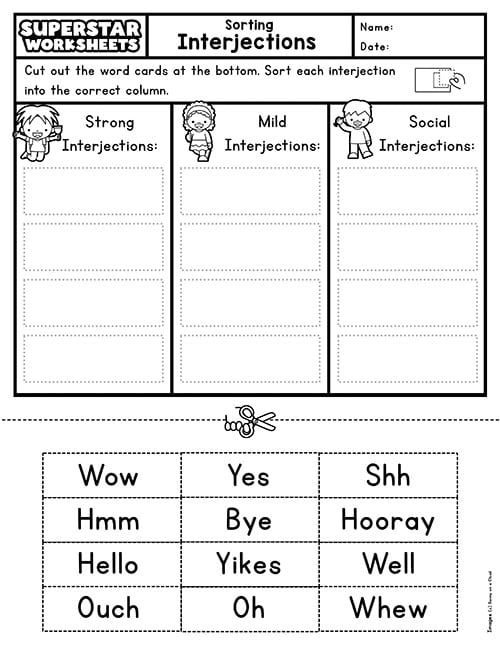
Interjections Sorting Worksheet
Students cut apart twelve interjection word cards and sort them into three columns on this interjections sorting worksheet. With only four spaces per category, students must think carefully about classification before they paste, making this a great formative check for understanding all three interjection types at once.
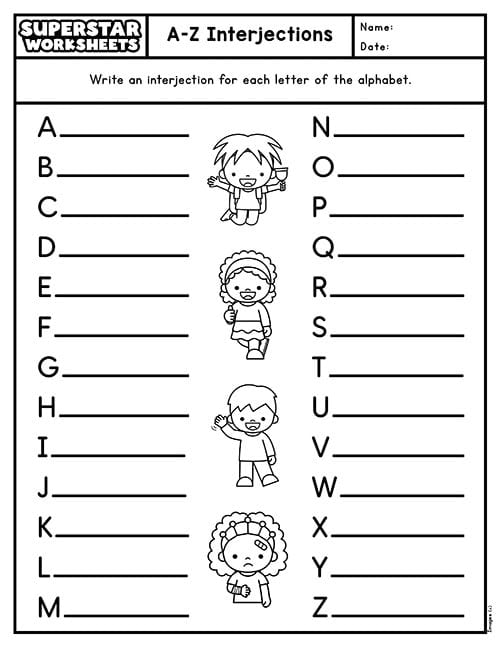
This A-Z interjections activity challenges students to think of an interjection for every letter of the alphabet and is a creative, open-ended task that pushes vocabulary knowledge. Perfect for enrichment, early finishers, or as a whole-class brainstorm, this worksheet encourages students to think like grammarians and explore just how many interjections exist in the English language.
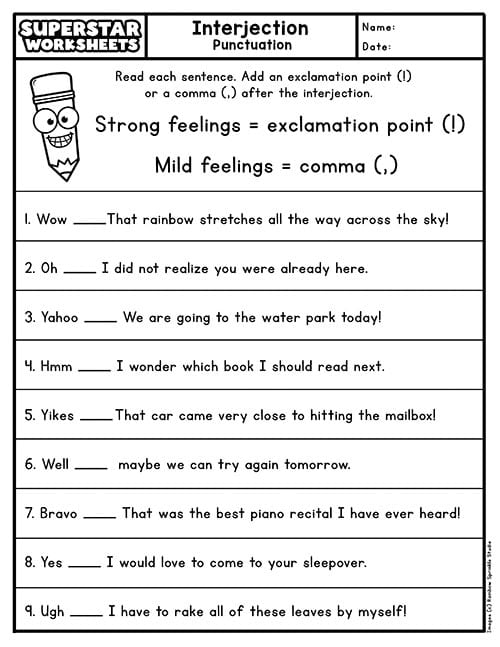
Students read nine sentences and decide whether to add an exclamation point or a comma after the interjection in each one. This targeted punctuation practice directly addresses the L.5.2c standard and helps students move from identifying interjections to punctuating them correctly in context.
Interjection Writing Worksheet
Students draw a picture of a person showing a strong emotion, then write an original sentence containing an interjection to describe their picture. This creative expansion activity builds on prior knowledge to push students toward independent application by having them compose their own interjection sentences with correct punctuation rather than selecting from a word bank.
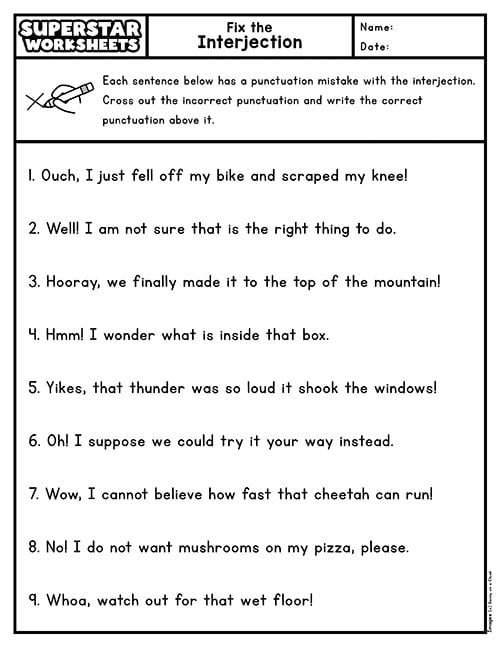
Interjections Fix The Sentence
In this interjections-editing activity, students identify the punctuation mistake in each of the nine sentences. This higher-order practice requires students to apply both their knowledge of interjection types and their understanding of the exclamation point versus comma rule to fix real errors in context.
Leave a Reply