
Free Printable Adverb Worksheets are the perfect resource for building grammar skills in elementary students. Download and print our PDF adverb activities, including anchor charts, sorting worksheets, flash cards, fill-in-the-blank sentences, and comparative adverb activities. Each worksheet is designed for young learners and covers the four key adverb types: how, when, where, and how often. There is an extension set for comparative and superlative adverbs. These resources are ideal for grammar lessons, literacy centers, homeschool instruction, and small group practice, helping students identify, sort, and use adverbs with confidence.
Free Printable Adverb Worksheets and Charts
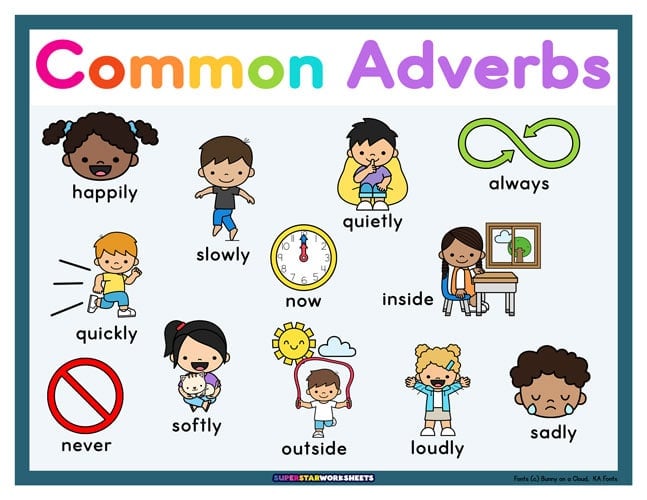
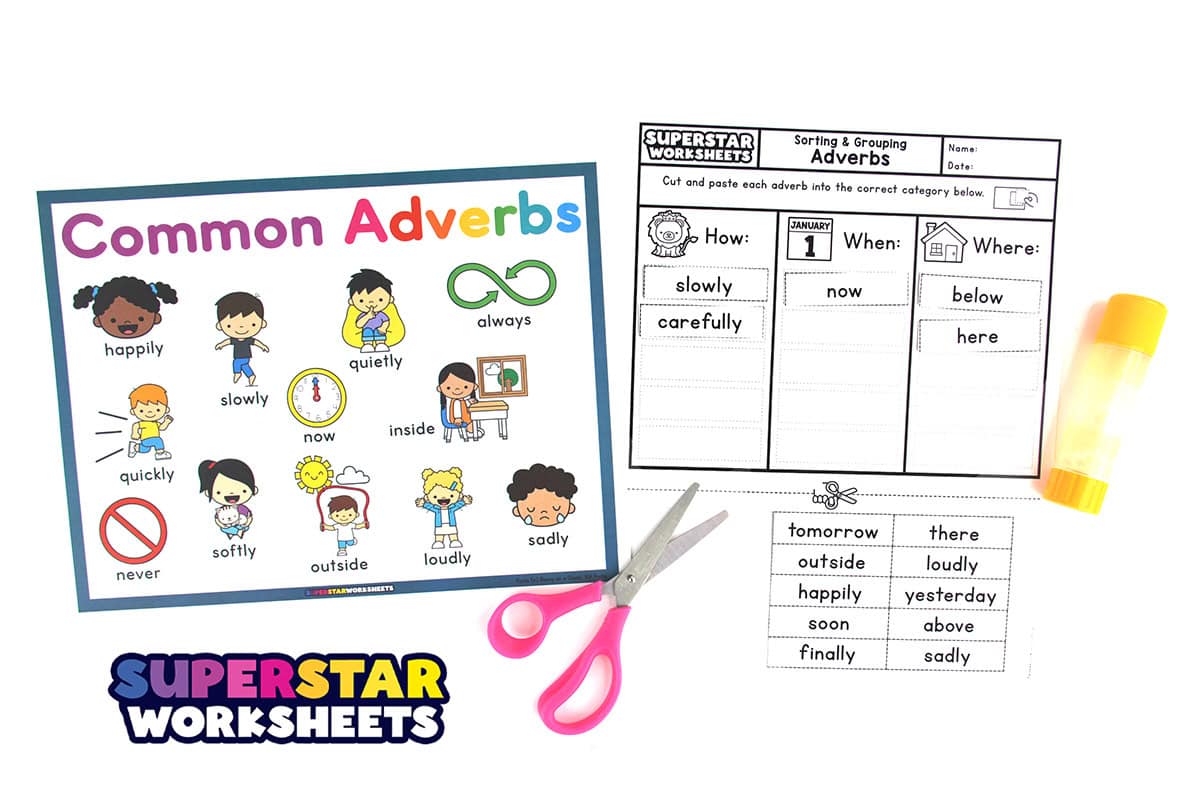
Common Adverbs Word and Picture Chart
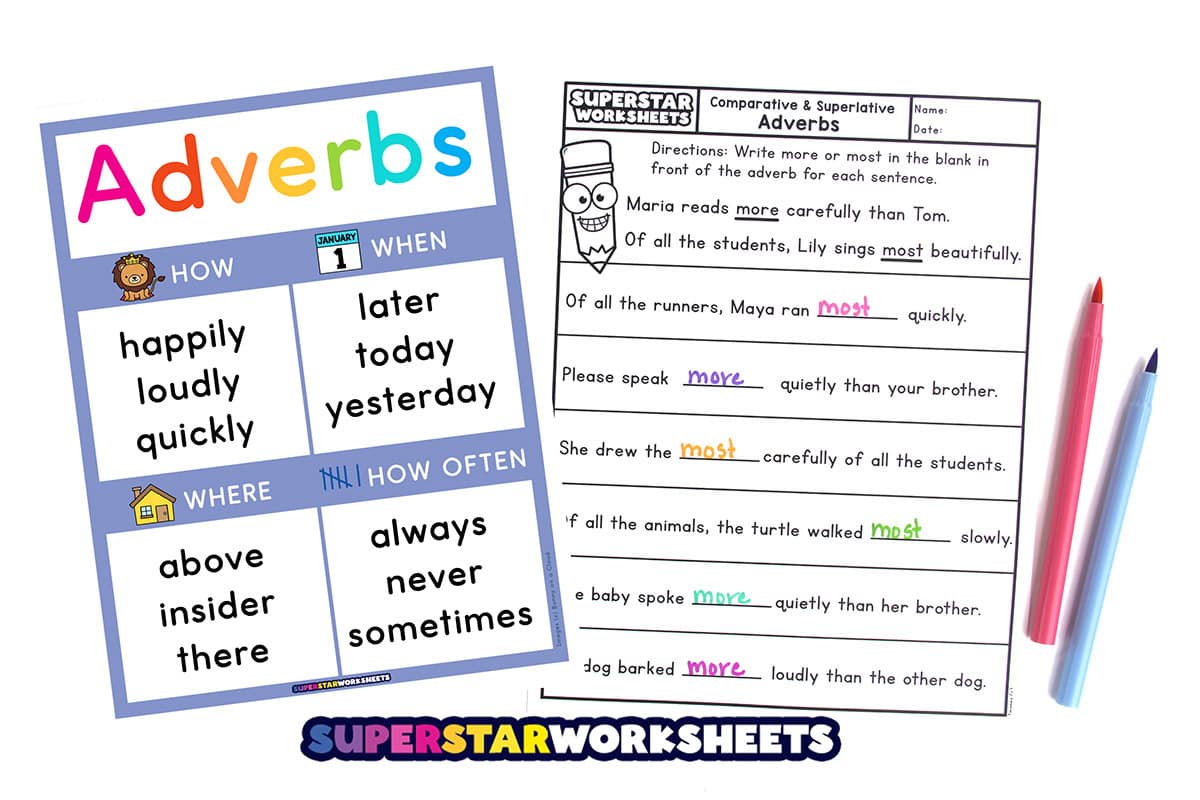
This colorful anchor chart pairs 12 beginner adverbs with clipart images give students an immediate visual connection to each word. It makes an excellent classroom reference for early readers and is designed to be used as a featured resource throughout the unit.
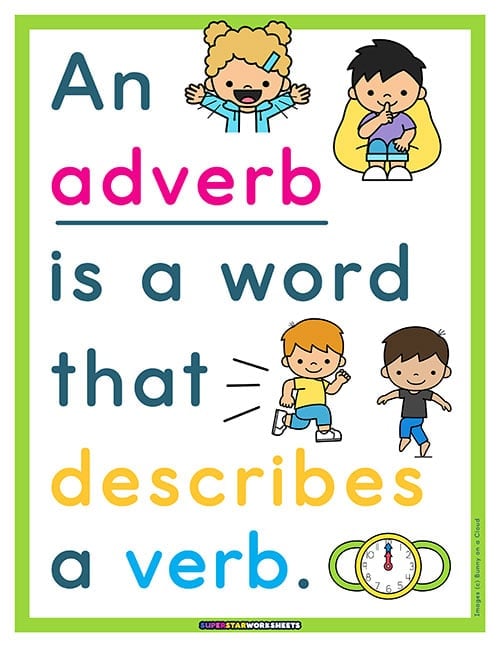
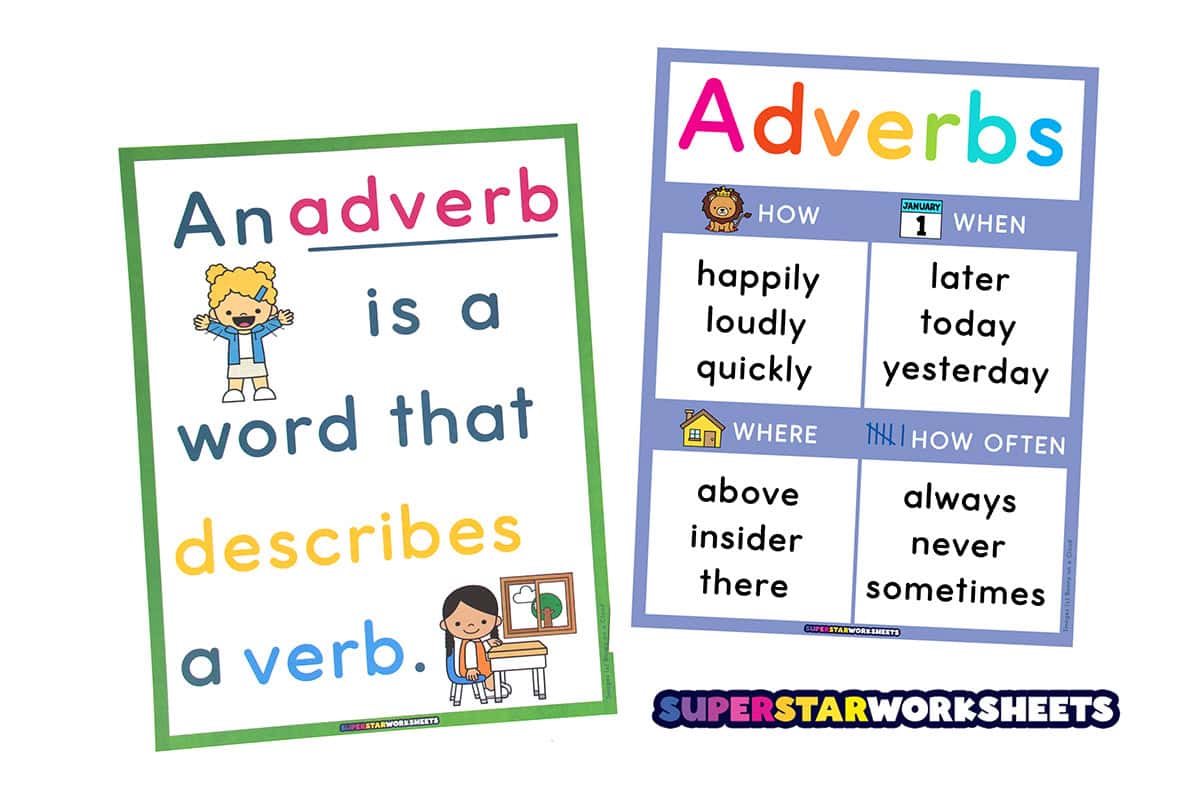
What Is an Adverb? Definition Chart
This definition chart introduces adverbs with a clear, memorable statement and color-coded examples. Students see the key word highlighted and paired with a sample sentence, making the concept easy to understand and refer back to during writing activities.
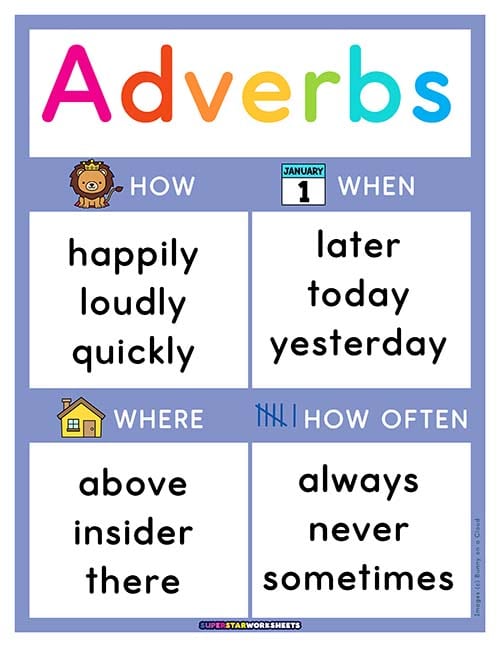
This four-category chart organizes adverbs by type (how, when, where, and how often)with example words and clipart in each section. It is a go-to reference for helping students understand that adverbs answer different questions about a verb.
What Is an Adverb?
An adverb is a word that describes a verb. Adverbs tell us how, when, where, or how often an action happens, adding detail and precision to sentences. Instead of writing “The dog ran,” a student might write “The dog ran quickly” or “The dog ran outside.” Adverbs can describe any action; from the way something moves, to the time it occurs, to how frequently it happens. Most adverbs that describe how something happens end in -ly, which makes them easy to spot.
“An adverb describes a verb.”
Adverb Activities and Flash Cards
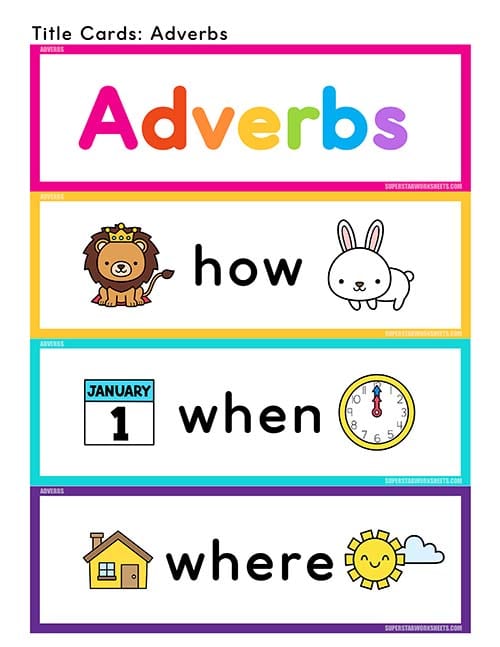
This set of adverb flash cards features 24 words organized by type with subtitle labels on each card. Students can use the cards for rapid word review, partner practice, or sorting activities at a literacy center. Clipart illustrations on the title cards help students connect each category to its meaning. Teachers! For more printables to use in your reading and writing classes, check out our Writing Bundle!
Adverb Worksheets for Practice
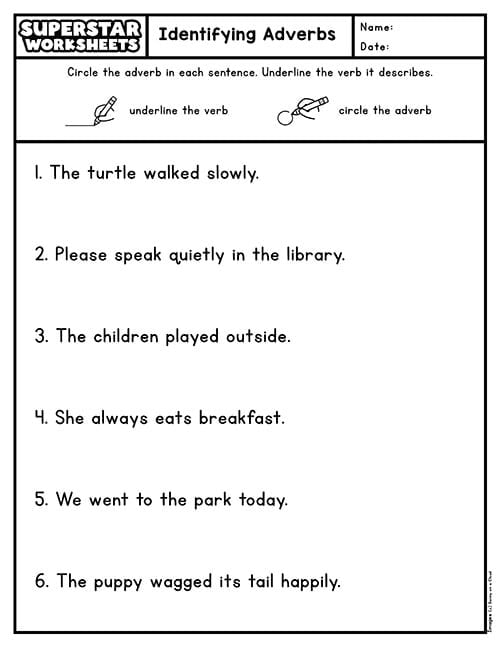
Students read six sentences and circle the adverb in each one, then underline the verb it describes. This activity builds recognition of adverbs in context and reinforces the connection between adverbs and the verbs they modify.
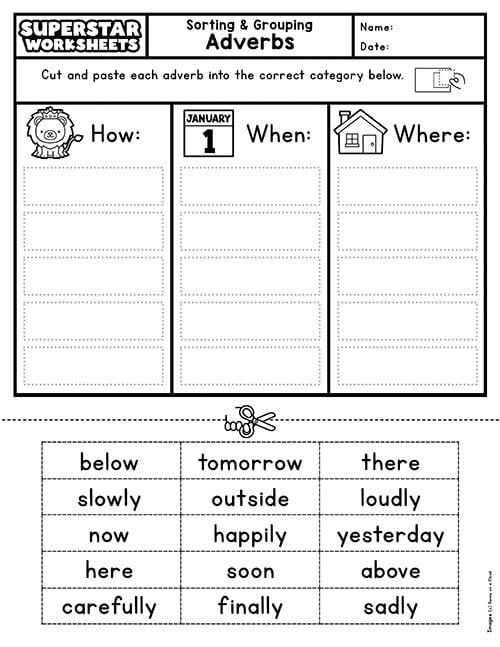
Sorting and Grouping Adverbs Worksheet
This cut-and-paste sorting worksheet asks students to place 15 adverbs into three columns: how, when, and where. The hands-on format works well for kinesthetic learners and provides a clear visual check on categorical understanding. Teachers! If you are looking for more printable activities, go check out our Prepositions Worksheets!
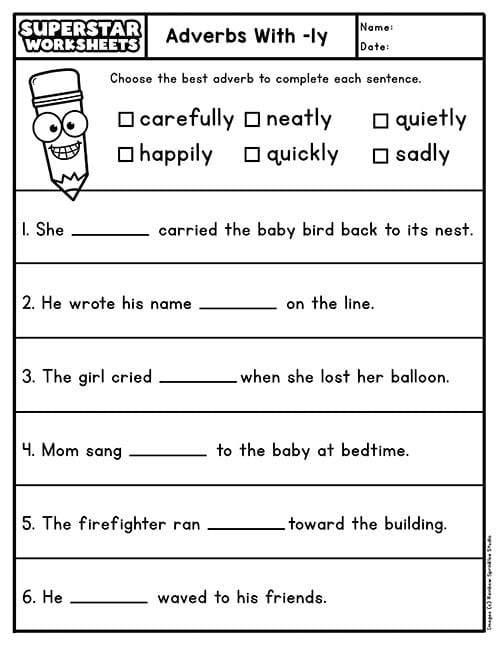
Students choose the best -ly adverb to complete six sentences using a word bank. This activity focuses attention on the most common adverb pattern and gives students guided practice selecting precise words that describe how an action is performed.
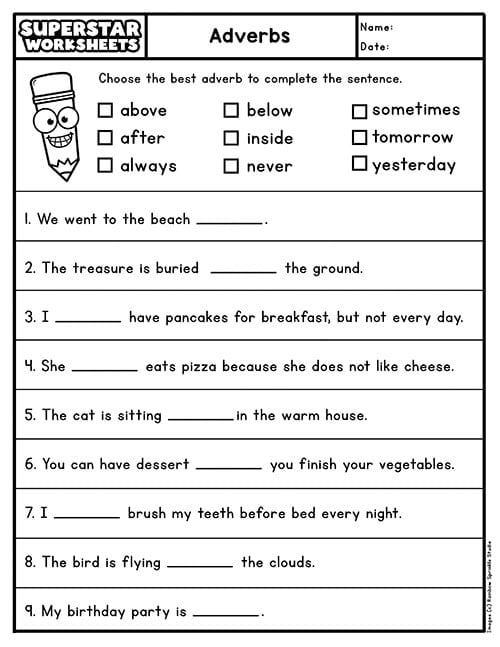
This fill-in-the-blank activity uses a mixed word bank of how, when, where, and how often adverbs across nine sentences. Students apply their understanding of all four adverb types in a single practice page, making it a strong review or assessment tool.
Adverb Writing Activities
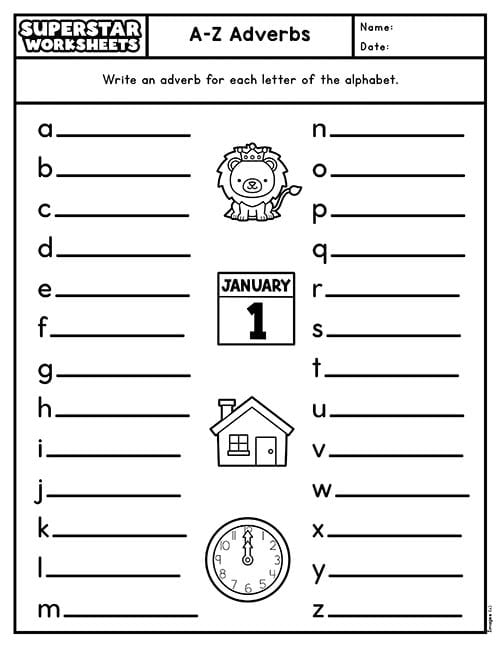
Students challenge themselves to think of an adverb for every letter of the alphabet. This creative brainstorming page builds vocabulary and stretches word knowledge beyond the core word list, while clipart images spark ideas for younger writers.
Word Ideas (for teachers): always, back, carefully, down, early, fast, gently, happily, inside, just, kindly, loudly, maybe, now, often, politely, quietly, really, slowly, today, upstairs, very, well, x-rayly (made-up), yesterday, zigzagly (made-up)
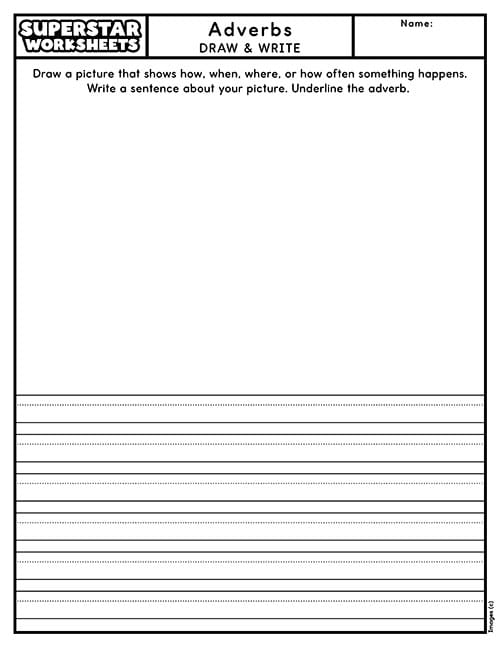
Students draw a picture showing how, when, where, or how often something happens, then write a sentence using an adverb and underline it. This activity connects grammar to personal expression and gives students a meaningful reason to use adverbs in their own writing. For more FREE printable word worksheets, check out our Common Noun Worksheets today!
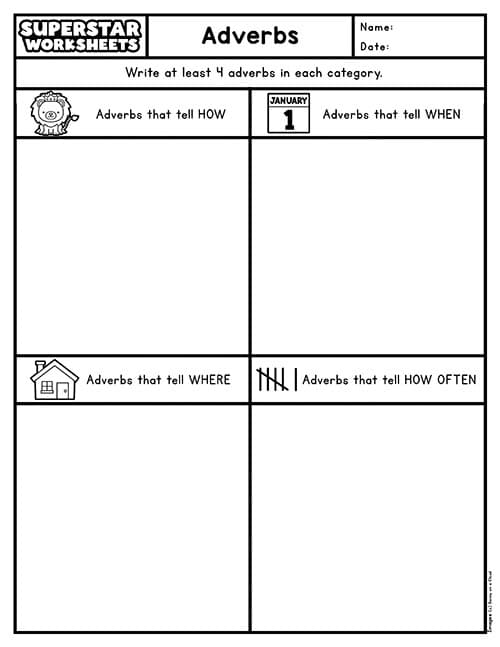
Students brainstorm and record at least four adverbs in each of the four category boxes: how, when, where, and how often. The open-ended format encourages independent thinking and serves as a strong formative assessment for adverb recognition and vocabulary depth.
What Are Comparative and Superlative Adverbs?
Comparative and superlative adverbs are used to compare actions. A comparative adverb compares two actions: for example, “She ran more quickly than her brother.” A superlative adverb compares three or more: for example, “Of all the runners, she ran most quickly.” When an adverb ends in -ly, form the comparative by adding more before it and the superlative by adding most before it. This rule applies to adverbs like carefully, loudly, quietly, and slowly.
Comparative and Superlative Adverb Charts
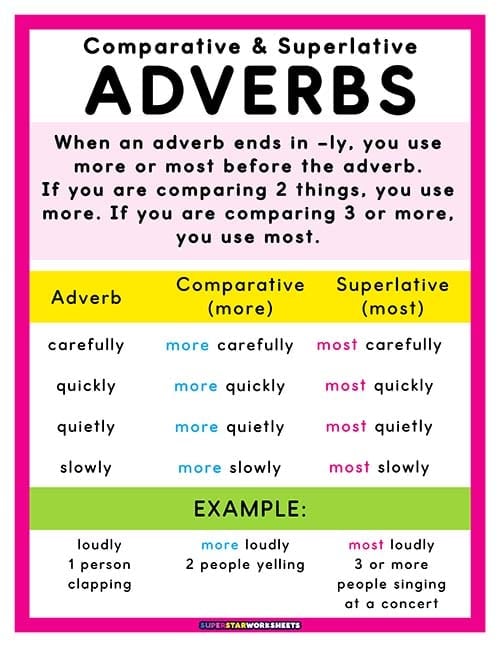
Comparative and Superlative Adverbs Chart
This anchor chart introduces the rule for forming comparative and superlative adverbs ending in -ly, using color-coded “more” and “most” labels and a clear example with three images. A reference word bank at the bottom shows four complete adverb chains for students to study and revisit.
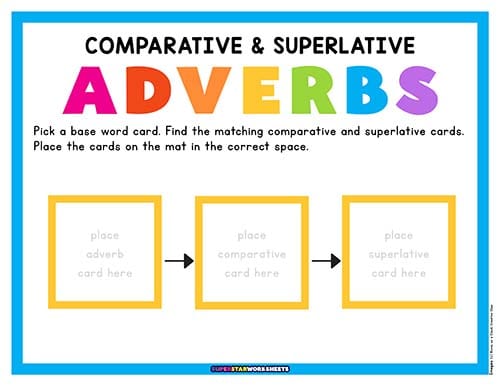
Comparative and Superlative Adverbs Learning Mat
Students select a base word card and then find and place the matching comparative and superlative cards on the reusable learning mat. This center activity reinforces the three-step adverb chain through hands-on, self-checking practice that can be used repeatedly.
Comparative and Superlative Adverb Worksheets
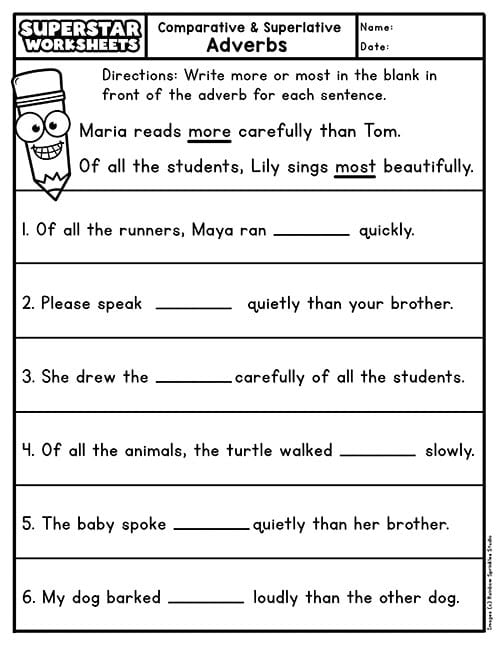
Comparative and Superlative Adverb Worksheet
Students decide whether to write more or most in front of each adverb to complete six sentences. The focused format helps students practice the key decision point in forming comparative and superlative adverbs.
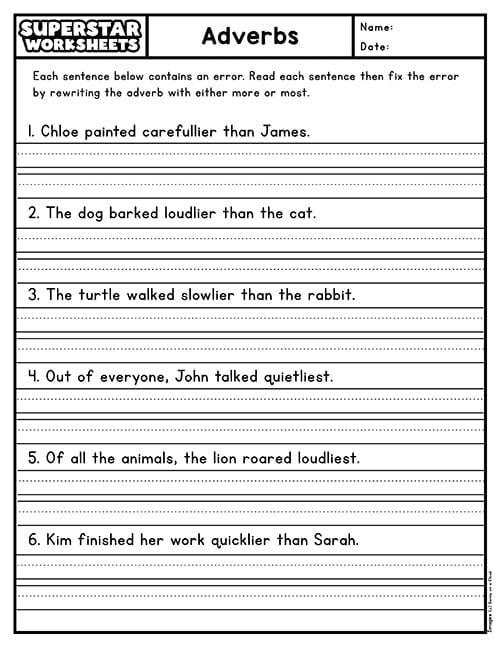
Each sentence contains an incorrectly formed comparative or superlative adverb. Students rewrite the adverb using the correct “more” or “most” pattern. This error-correction format builds critical thinking and reinforces the rule by having students identify and fix real mistakes.
Comment (1)
Thank you so much for making these available for free! Practice is the best teacher!