
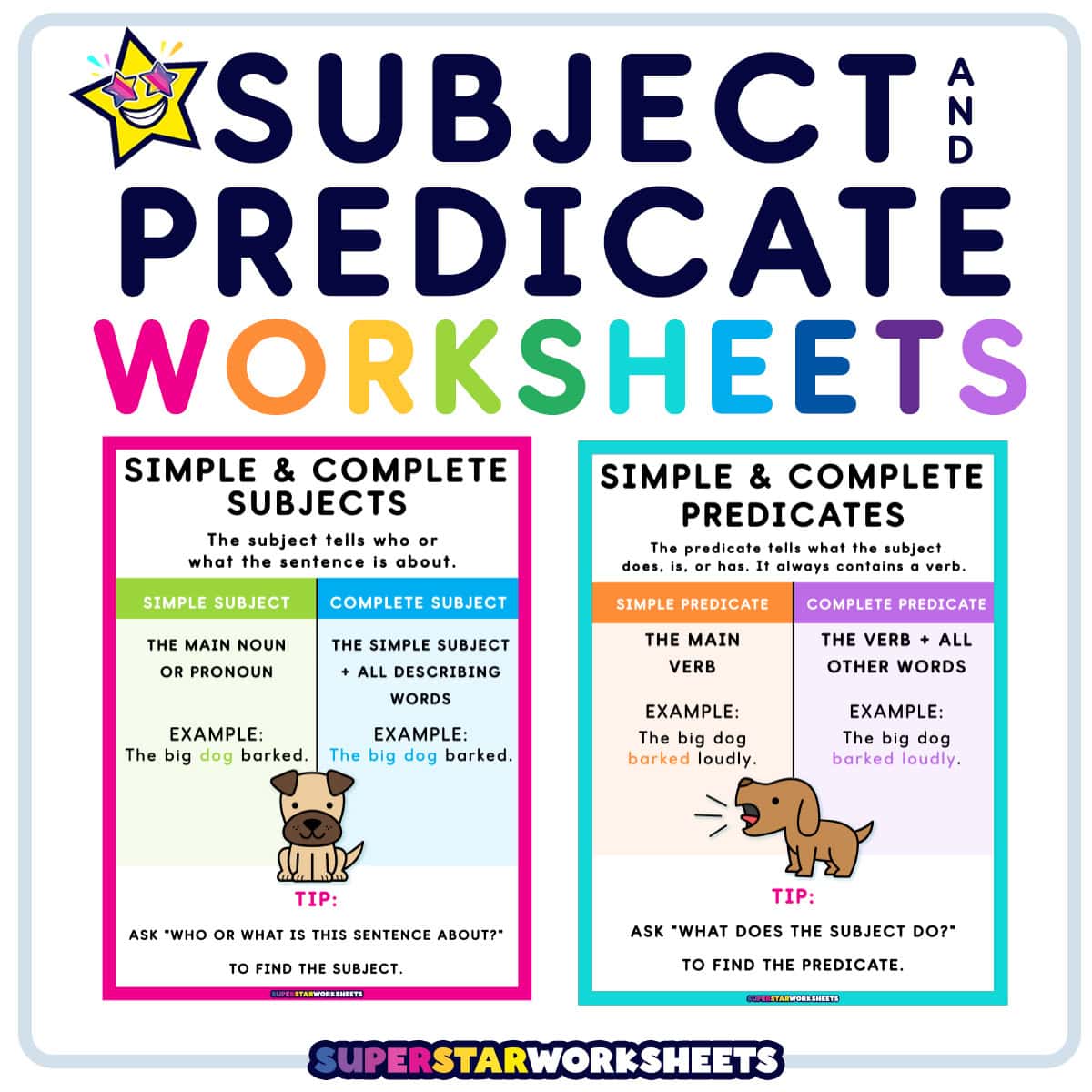
Free Printable Subject and Predicate Worksheets are the perfect way to build strong sentence structure skills in elementary learners. Download and print PDF charts, activities, sorting games, and worksheets covering subjects, predicates, complete sentences, and fragments. This collection includes anchor charts and reference tools to introduce the concepts, plus hands-on practice pages and open-ended writing activities designed for classroom lessons, literacy centers, and homeschool use
Free Printable Subject and Predicate Charts
Simple and Complete Subjects Chart
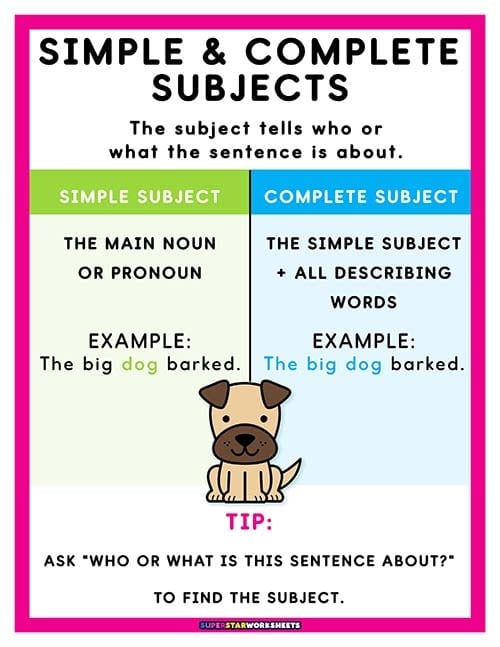
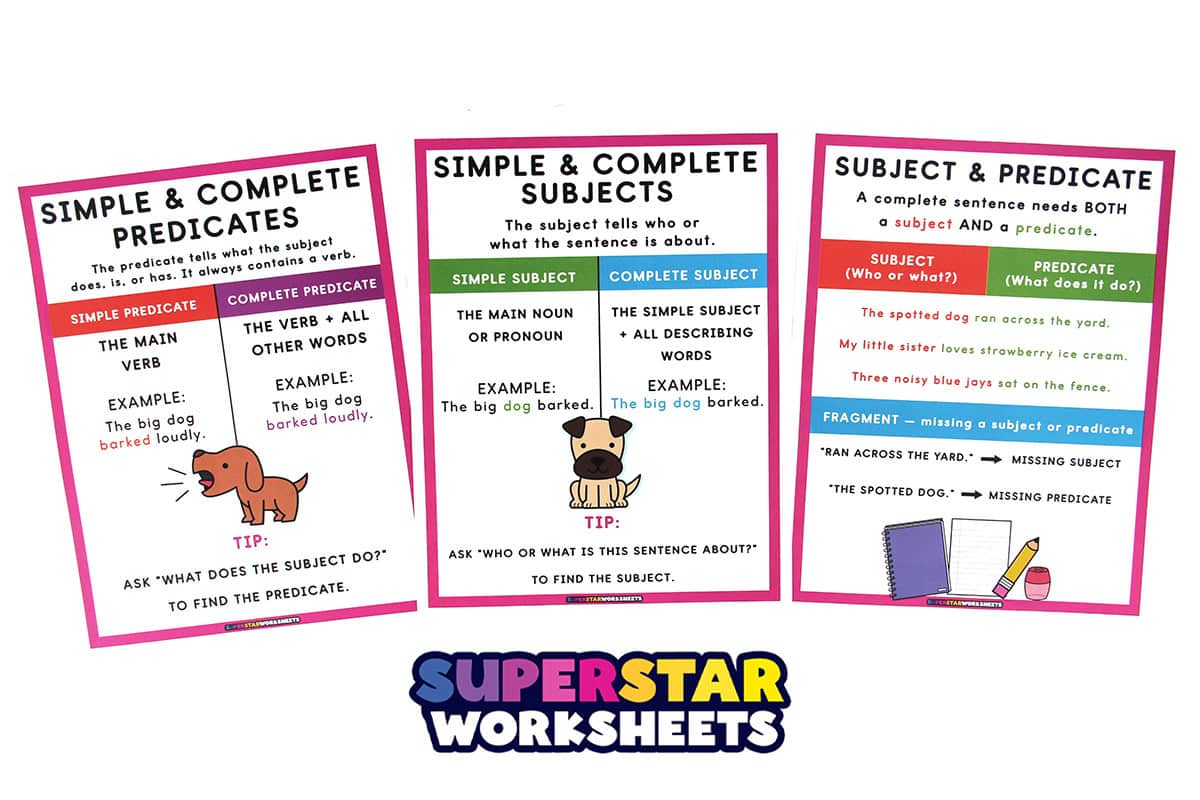
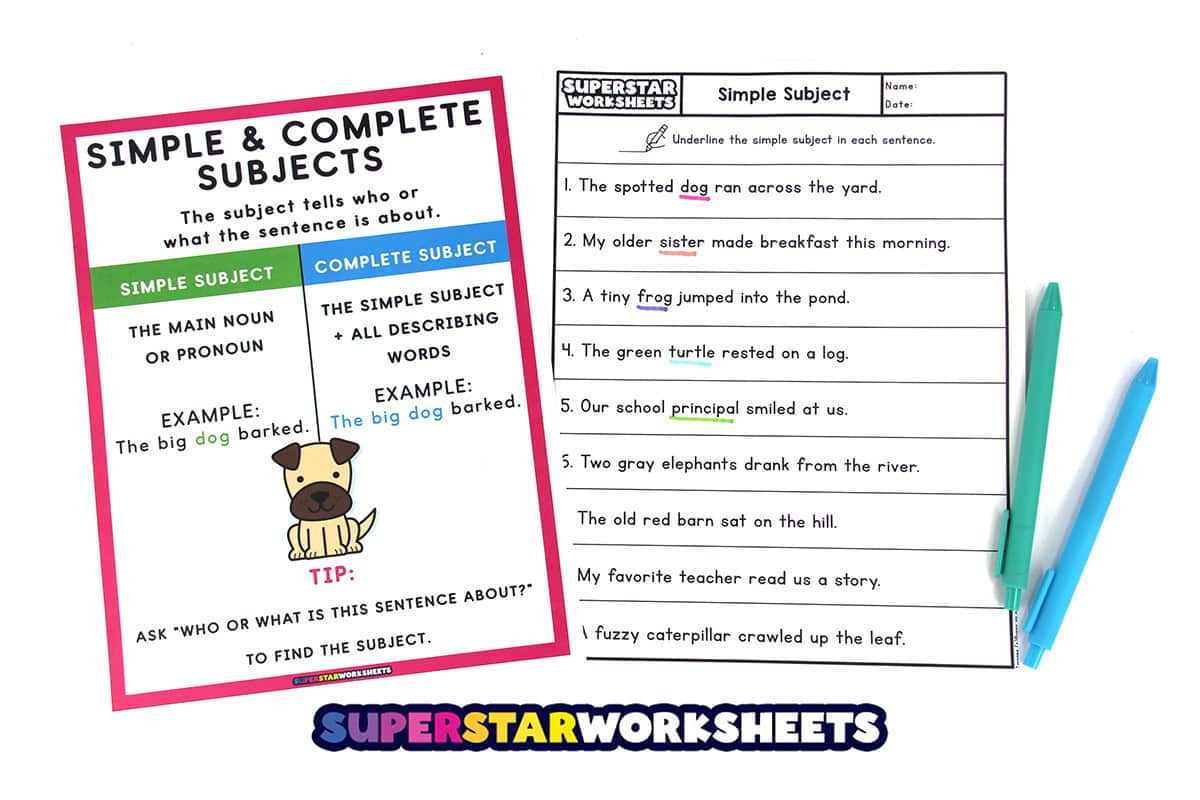
This anchor chart introduces both simple subjects and complete subjects in a clear, visual format. Students learn that the subject tells who or what the sentence is about, with color-coded examples showing the difference between the main noun and the full subject phrase.
Simple and Complete Predicates Chart
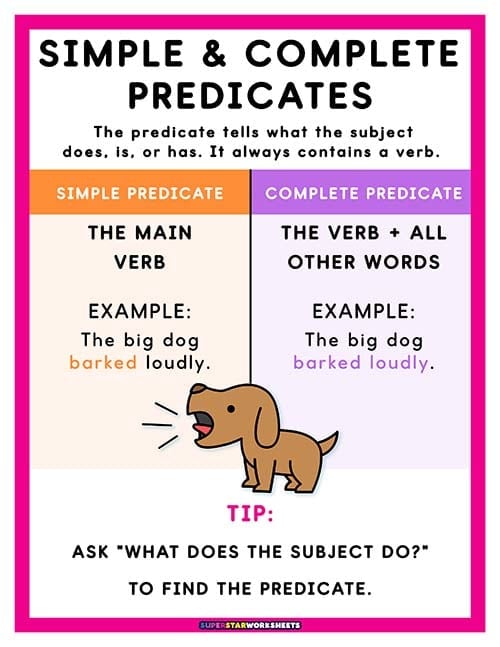
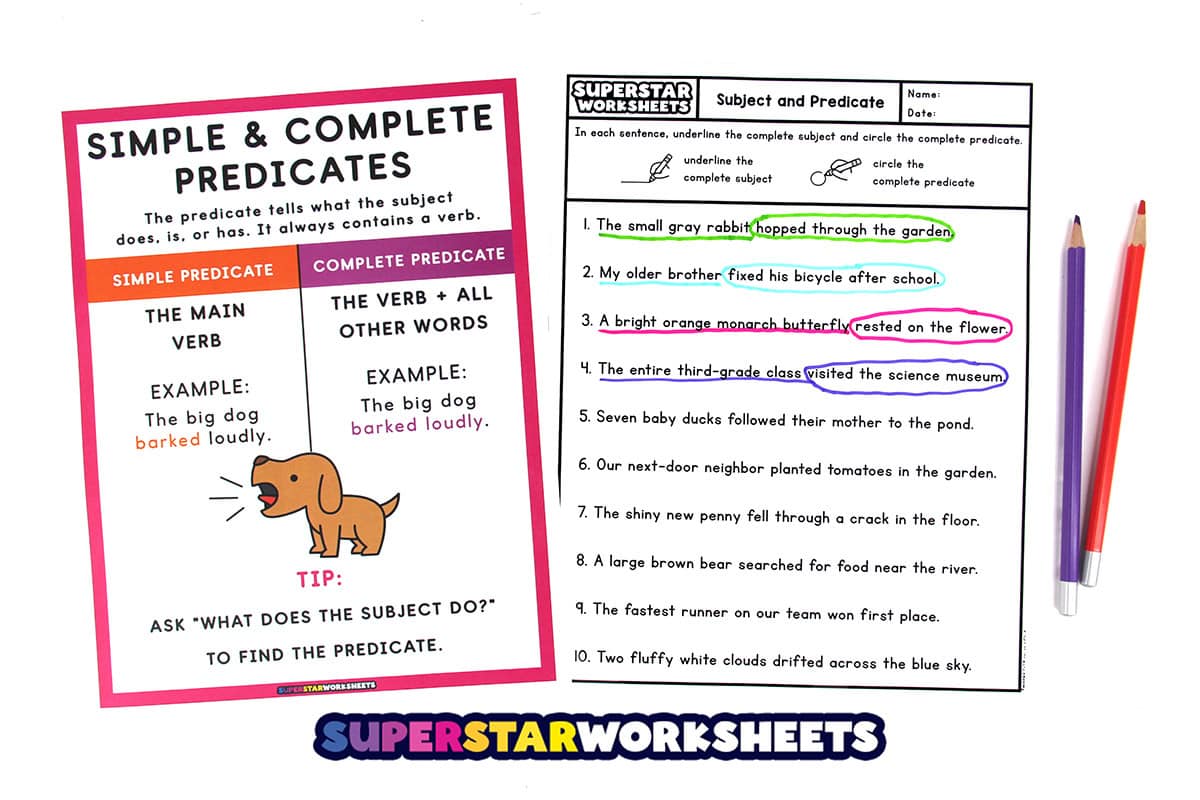
This reference chart introduces simple and complete predicates side by side. Students see that the predicate tells what the subject does and learn to distinguish the main verb from the full predicate phrase using labeled sentence examples.
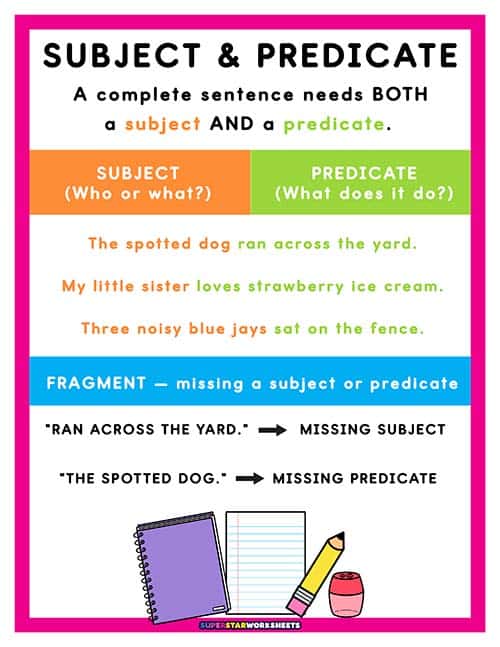
This anchor chart shows how a subject and predicate work together to form a complete sentence. A two-column layout displays matched subject and predicate examples, and a section at the bottom introduces sentence fragments.
Subject vs. Predicate
What is a Subject?
The subject of a sentence tells us who or what the sentence is about. It is usually a noun or pronoun: the person, place, thing, or idea performing the action. The simple subject is the main noun or pronoun, while the complete subject includes all the describing words around it. For example, in the sentence “The big brown dog barked loudly,” the simple subject is dog, and the complete subject is The big brown dog. For more printables to use in your writing class, try out our How to Write a Sentence pack!
“The subject tells who or what the sentence is about.”
What is a Predicate?
The predicate of a sentence tells what the subject does, is, or has. Every predicate contains a verb: the action word or state-of-being word. The simple predicate is the main verb, while the complete predicate includes the verb and all the words that complete or describe the action. In the sentence “The big brown dog barked loudly,” the simple predicate is barked, and the complete predicate is barked loudly.
“The predicate tells what the subject does, is, or has.”
Subject Worksheets
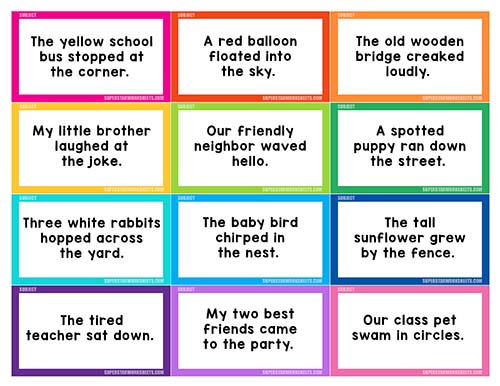
This set of printable flashcards features 12 sentences for identifying the subject. Students read each card and identify who or what the sentence is about, making this a versatile tool for classroom review, partner practice, or literacy centers. Cards can be used to practice both simple and complete subjects.
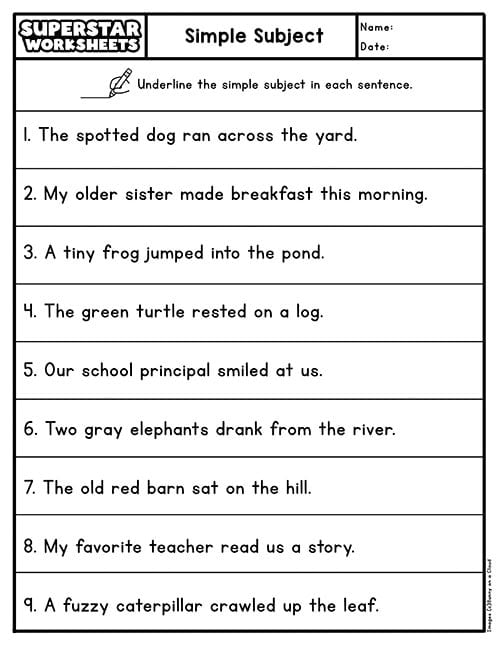
Students practice finding the simple subject by underlining it in each sentence. This worksheet uses clear, accessible sentences that make the concept approachable for beginning learners working on basic sentence structure skills. For more FREE printable grammar activities, check out our Noun Worksheets today!
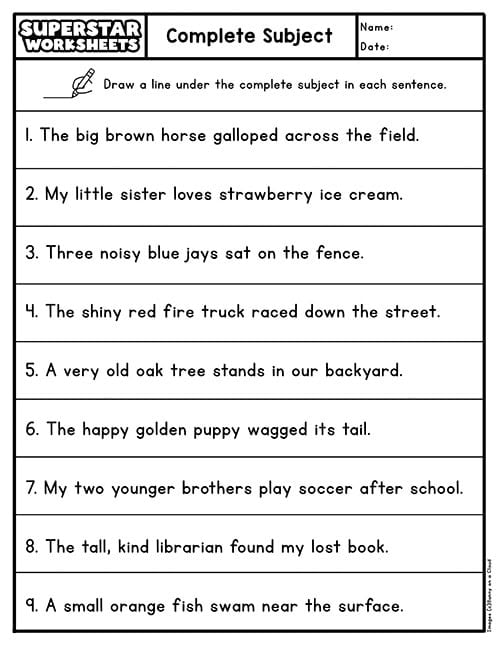
This worksheet builds on simple subject skills by asking students to identify the complete subject in each sentence. Drawing a line under the full subject phrase helps students see how modifiers extend the basic noun.
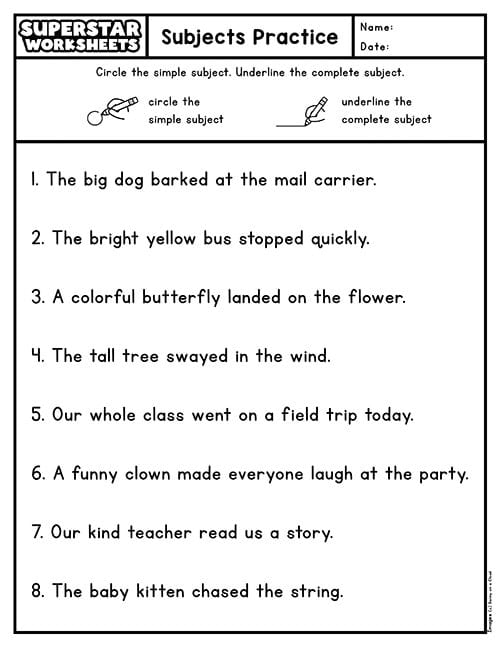
Students apply both skills at once by circling the simple subject and underlining the complete subject in each sentence. This dual-task format reinforces the relationship between the simple and complete subject and strengthens overall sentence analysis skills.
Predicate Worksheets
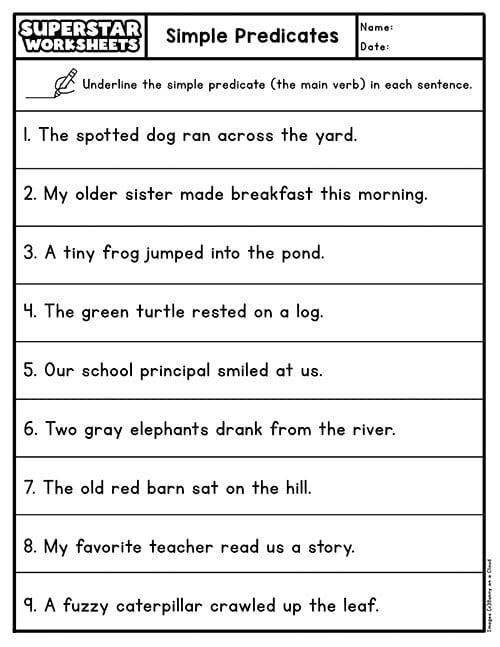
Students identify and underline the simple predicate in each sentence. This focused practice helps young writers recognize the action word that drives every sentence, building the foundation for more complex predicate work.
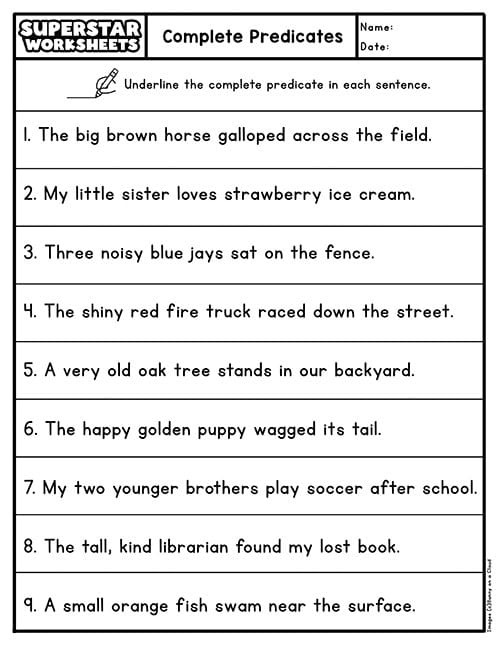
This worksheet asks students to underline the complete predicate in each sentence, identifying the verb plus all the words that follow it. Comparing answers across sentences helps students see how the complete predicate carries the full meaning of the action.
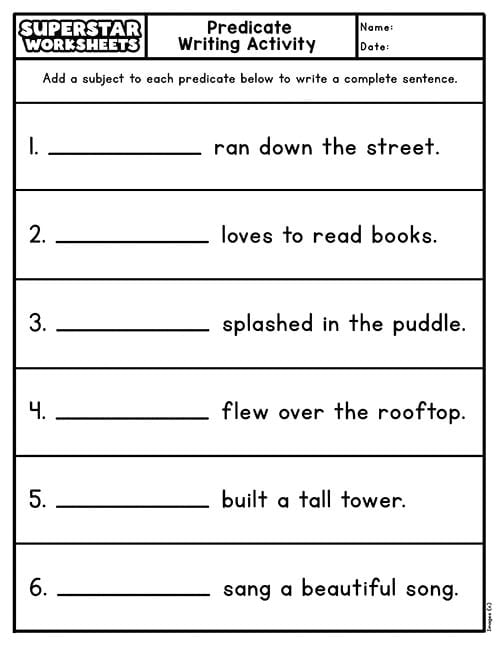
Students complete each sentence by adding their own subject to a given predicate. This open-ended activity reinforces that every predicate needs a subject to form a complete sentence and gives students creative practice constructing their own sentence beginnings. Teachers! If you are needing more free printable writing worksheets, try our Ad Libs Worksheets here!
Subject and Predicate Practice
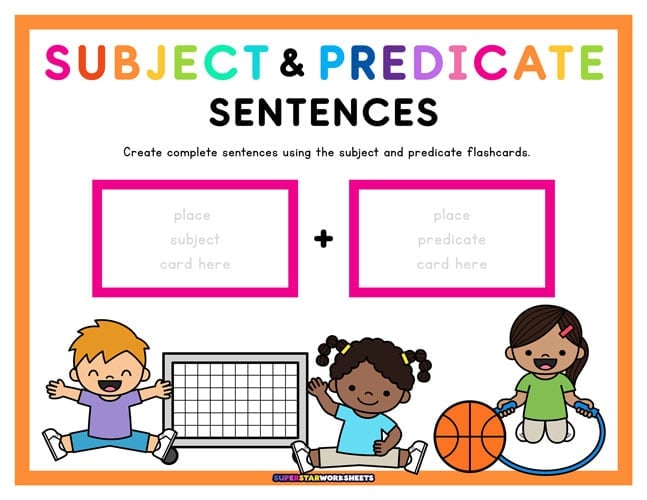
Subject and Predicate Sentences Learning Mat and Flashcards
This hands-on activity set includes a learning mat and two sets of flashcards. Students mix and match cards to build their own complete sentences, making this a perfect addition to literacy centers and small group work
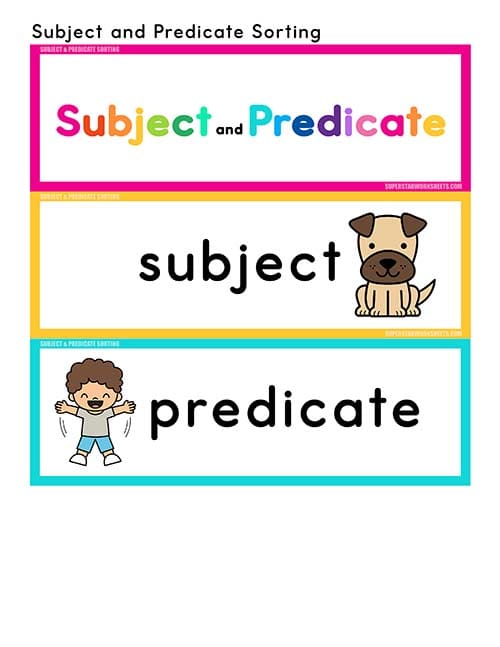
Students sort a set of cards into subject and predicate categories, then use the matched pairs to form complete sentences. This cut-and-sort activity builds recognition of how the two sentence parts work together and works well as a review game or partner activity.
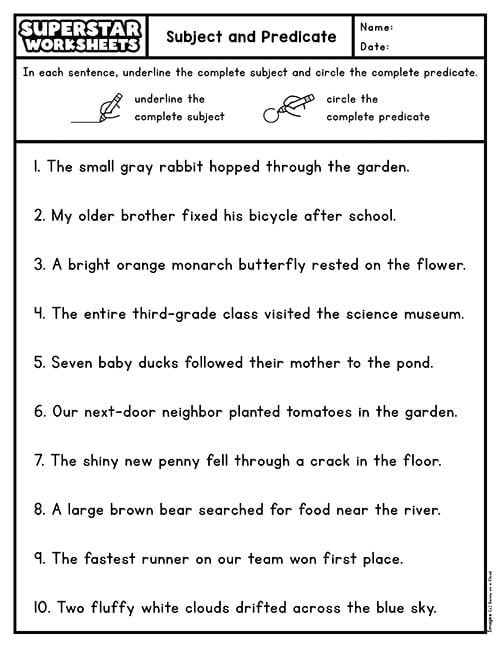
Subject and Predicate Worksheet
This practice worksheet asks students to identify both the complete subject and complete predicate in each sentence by underlining the subject and circling the predicate. With ten sentences of varying complexity, it offers strong reinforcement for students working toward sentence mastery.
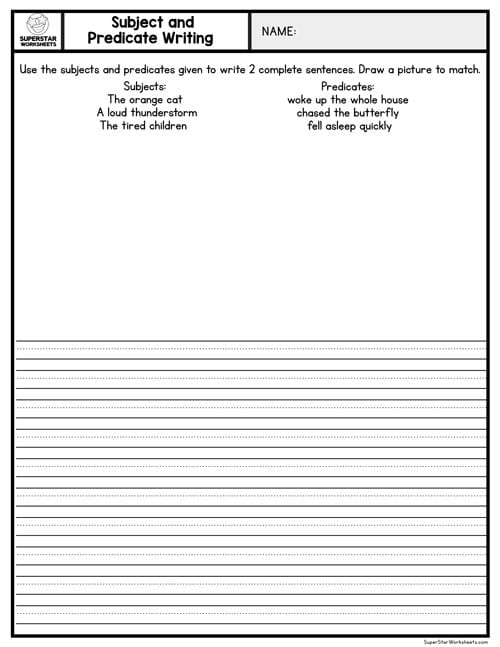
Subject Predicate Draw & Write
Students choose from a set of subjects and predicates to write their own complete sentences, then draw a picture to match. This creative writing extension encourages students to apply what they know about sentence structure in an open-ended, expressive format.
Complete Sentence vs. Fragment
What is a Complete Sentence?
A complete sentence has two essential parts: a subject and a predicate. The subject tells who or what the sentence is about, and the predicate tells what the subject does, is, or has. Together, they express a complete thought. “The spotted dog ran across the yard” is a complete sentence, it has a subject (The spotted dog) and a predicate (ran across the yard).
What is a Sentence Fragment?
A sentence fragment is a group of words that is missing a subject, a predicate, or both and does not express a complete thought. “The fluffy white cat” is a fragment because it has a subject but no predicate. We don’t know what the cat does or is. “Ran across the yard” is a fragment because it has a predicate but no subject. We don’t know who or what ran. Recognizing and fixing fragments is an important writing skill for elementary students.
Complete Sentence and Fragment Worksheets
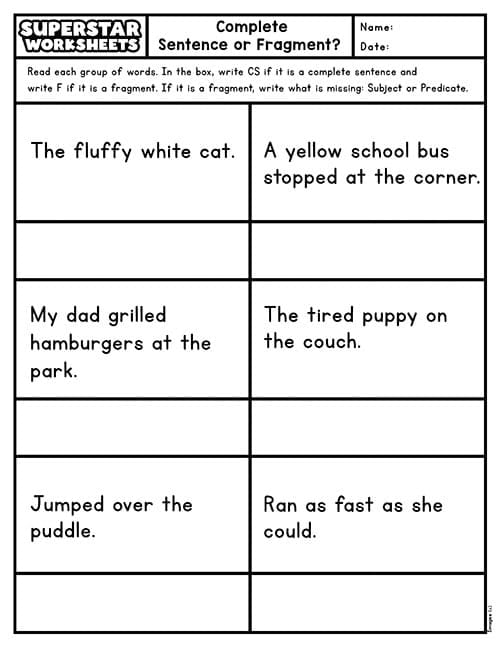
Complete Sentence or Fragment?
Students read each group of words and decide whether it is a complete sentence or a fragment. For each fragment, they write whether it is missing a subject or a predicate. This identifying activity builds the critical reading and grammar skills needed to write strong, complete sentences.
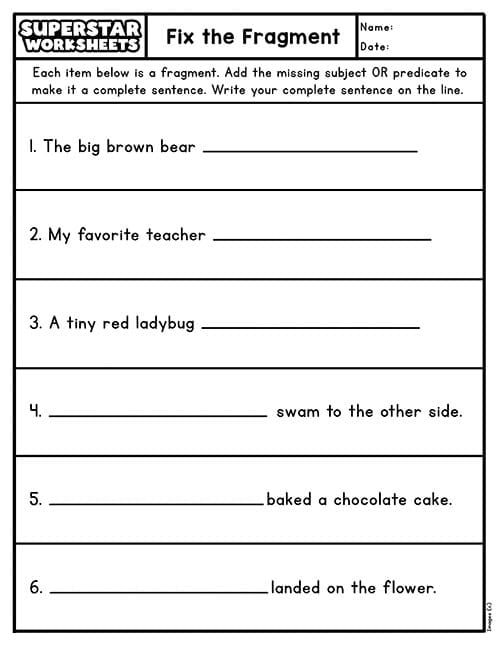
Students correct each sentence fragment by adding the missing subject or predicate to create a complete sentence. The worksheet is divided into two sections giving structured practice with both types of fragments before moving to open-ended fixes.
Leave a Reply