
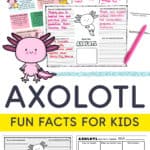
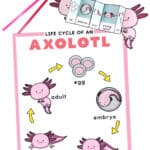
Free printable Axolotl Worksheets bring hands-on science learning to life for elementary students with a full collection of parts charts, life cycle activities, and fun fact printables. Download and print PDF diagrams, vocabulary cards, reading passages, and a Save the Axolotls conservation project that build real understanding of this fascinating amphibian. Kids explore what makes axolotls so unusual, from their permanent gills to their remarkable ability to regrow lost body parts, while practicing labeling, sequencing, and reading comprehension skills along the way. These worksheets are perfect for classroom science centers, homeschool lessons, or small group instruction, giving teachers and parents an easy way to introduce a beloved, unique animal while covering real-life science standards.
Axolotl Life Cycle Printables
Life Cycle of an Axolotl Chart
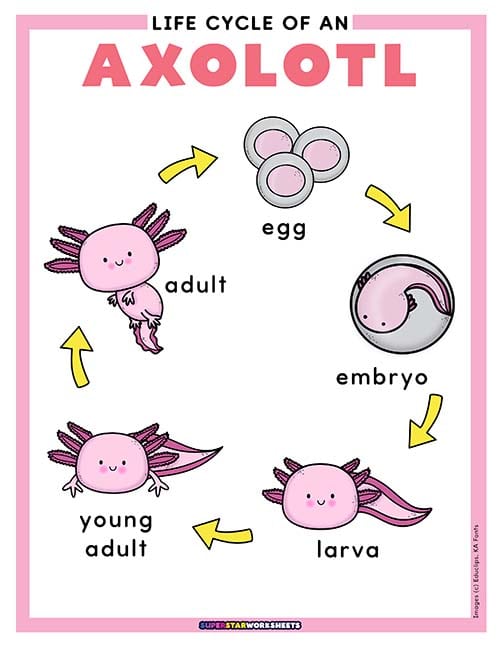
This colorful reference chart walks students through all five stages of the axolotl life cycle, from egg to embryo to larva to young adult to adult. The circular diagram with directional arrows makes the sequence easy to follow for visual learners. Use it as an introduction before diving into the hands-on life cycle activities below. For more FREE axolotl printables, take a look at our Axolotl Coloring Pages!
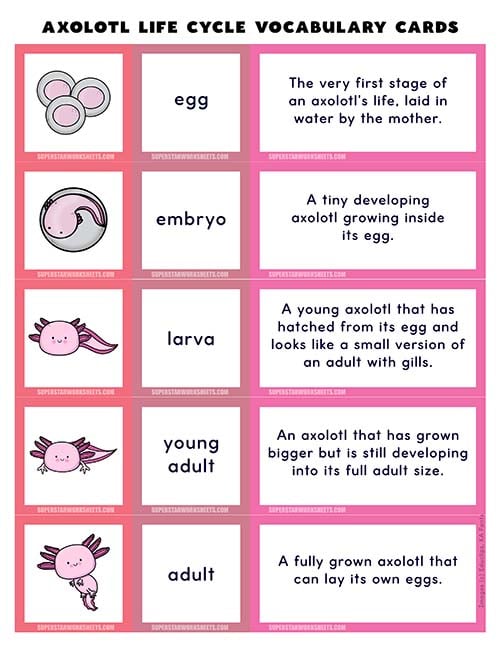
Axolotl Life Cycle Vocabulary Cards
These three-part cards pair a picture, word, and definition for each life cycle stage, giving students a hands-on way to practice new vocabulary. They can be used for matching games, sorting activities, or a simple vocabulary review center. The format supports both independent practice and small group instruction.
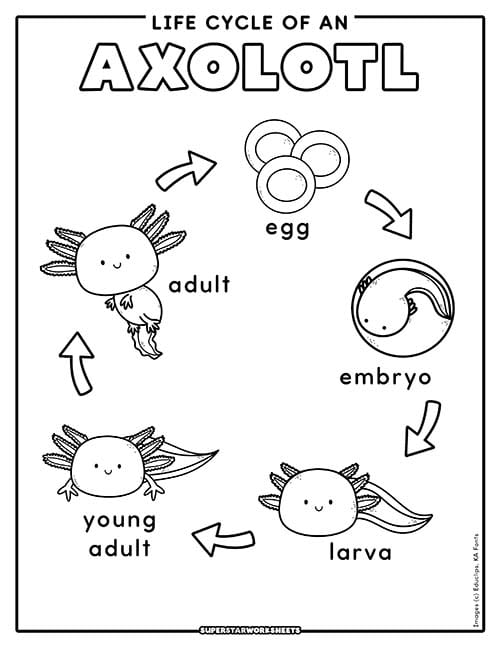
Axolotl Life Cycle Coloring and Labeling Chart
Students color each stage of the axolotl life cycle and then write the correct label beneath each picture. This black-and-white version is budget-friendly for classroom printing while still reinforcing the same key vocabulary as the color chart. It works well as an introductory practice page before more advanced labeling.
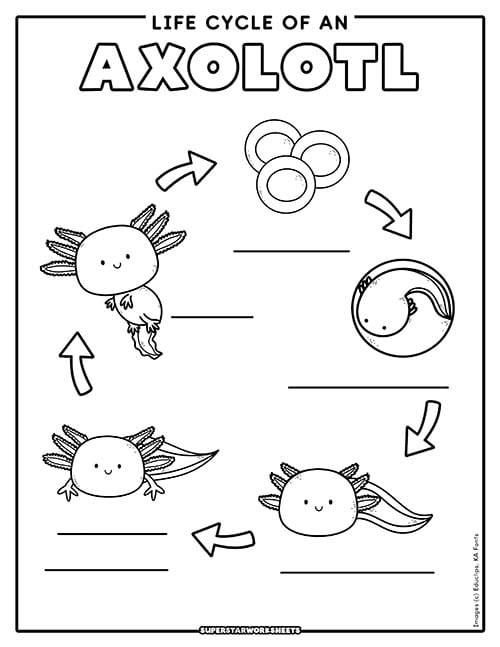
This independent labeling worksheet challenges students to write in each life cycle stage without a word bank for support. It is a great formative assessment to check whether students have mastered the sequence and vocabulary. Perfect for use after the guided coloring and labeling activity.
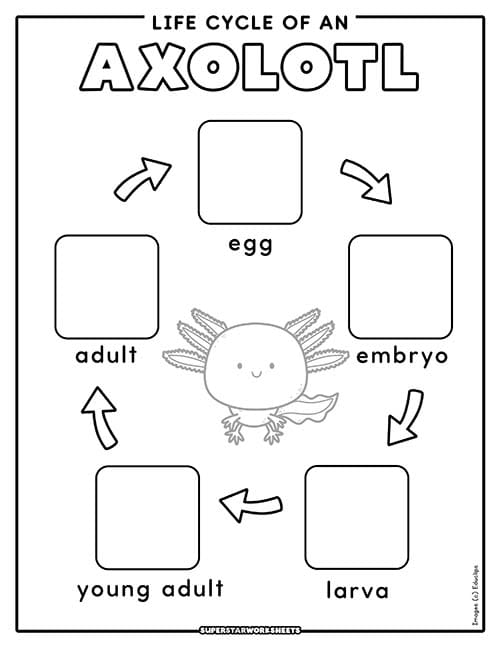
Axolotl Life Cycle Cut and Paste
Students cut out picture cards and paste them in the correct order to show the axolotl life cycle from egg to adult. This hands-on format is ideal for younger learners who benefit from a kinesthetic approach to sequencing. It pairs naturally with the vocabulary cards and chart activities in this set.
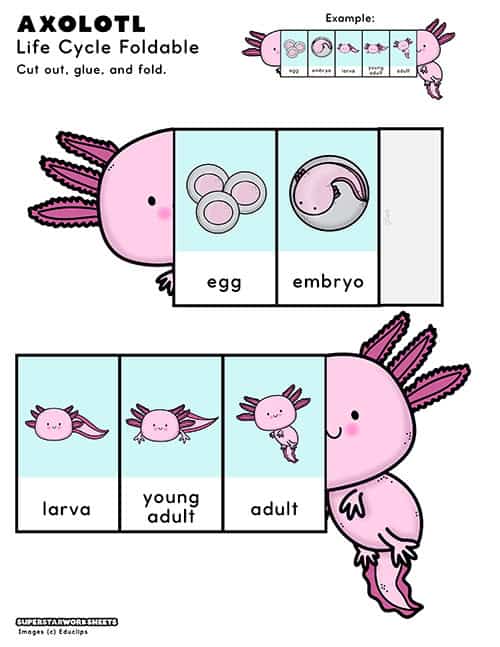
This accordion-style foldable lets students color, cut, and assemble a hands-on model showing every stage of the axolotl life cycle in order. Available in both color and black-and-white versions, it makes a great interactive notebook piece or take-home project. Kids enjoy showing off their finished foldable as a visual summary of what they learned.
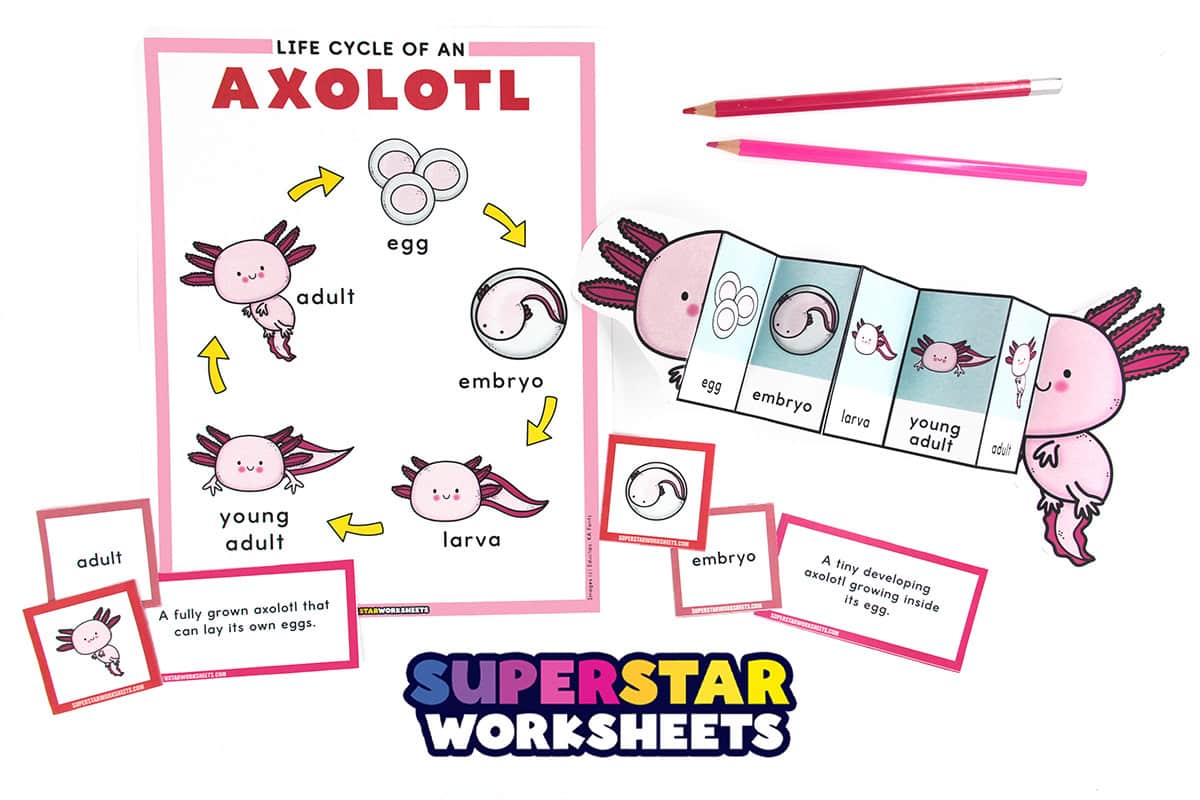
Teaching the Axolotl Life Cycle
Vocabulary Bank: egg, embryo, larva, young adult, adult
The axolotl life cycle offers a great contrast to more familiar life cycles like the frog, since axolotls never fully leave the water. Start with the model chart and vocabulary cards to build background knowledge before moving into the coloring, labeling, and cut-and-paste practice pages. The foldable makes an excellent hands-on wrap-up activity that students can take home to explain what they learned. This progression works well across a single science block or spread across several days.
Parts of an Axolotl Printables
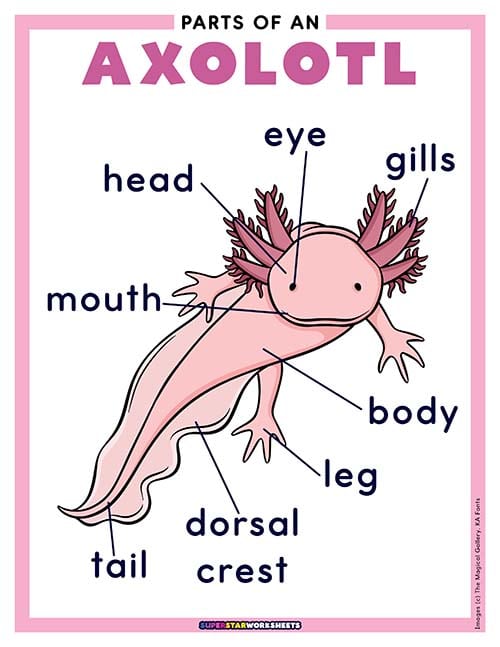
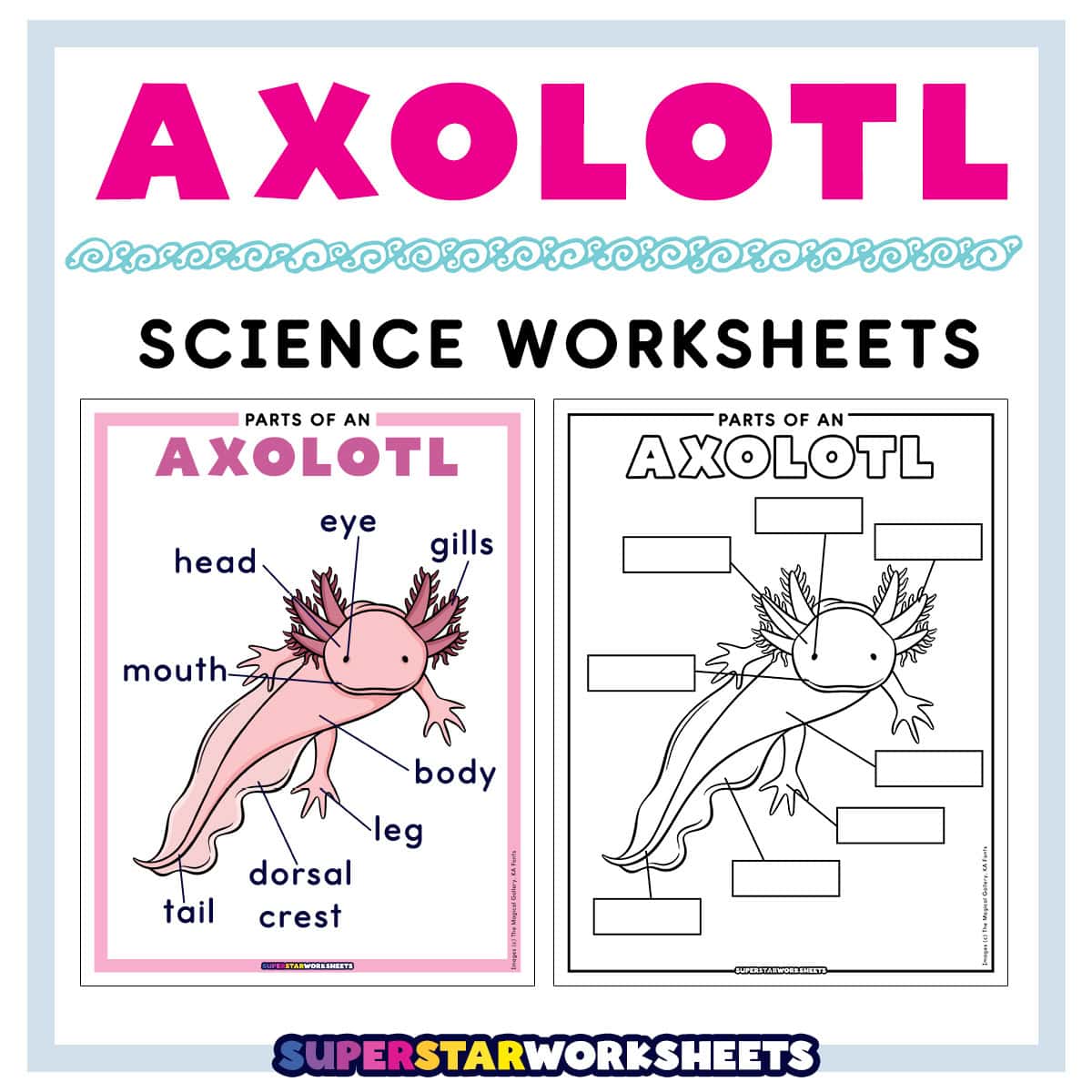
This labeled diagram introduces the eight external parts of an axolotl, including its feathery gills and distinctive dorsal crest. The clear, color illustration makes it an ideal anchor chart for whole group instruction or a science center reference. It sets the foundation for all of the parts-based activities in this collection.
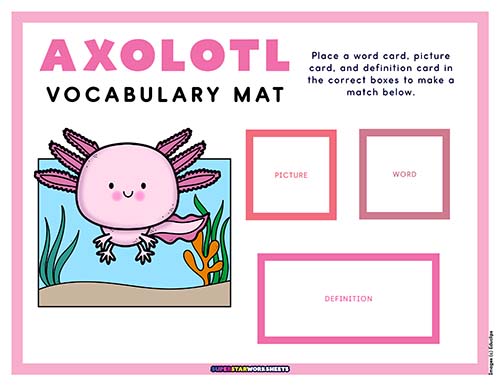
This reusable learning mat gives students a hands-on way to practice matching axolotl vocabulary words, pictures, and definitions. Designed to be used across every topic in this collection, it makes a durable addition to any science center. Simply swap in new vocabulary cards as students move through each new topic.
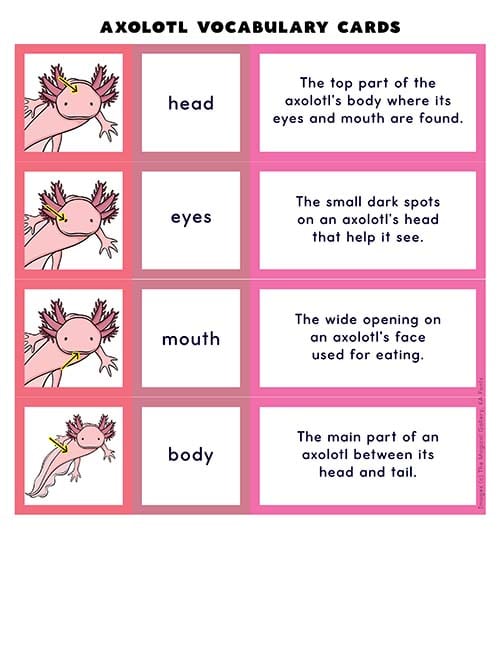
These three-part cards feature a picture, word, and definition for each of the eight axolotl body parts covered in this collection. They pair perfectly with the vocabulary mat for matching games or can be used independently for flashcard style review. The child-friendly definitions make the vocabulary accessible for early readers.
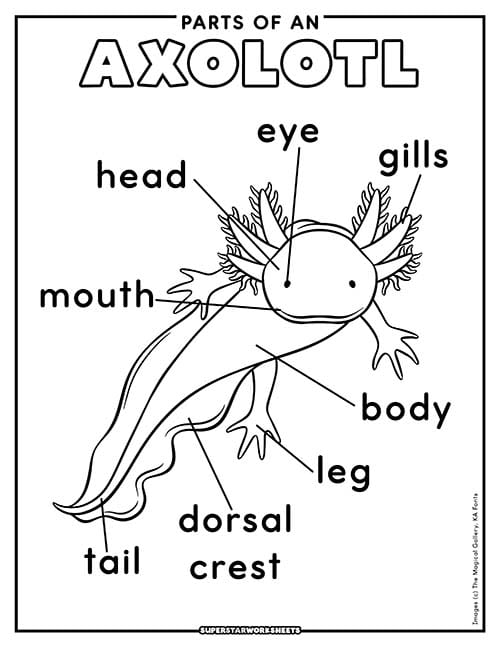
Parts of an Axolotl Coloring and Labeling Page
Students color the axolotl diagram and then write the correct label on each line using the provided word bank. This black-and-white practice page reinforces the vocabulary introduced in the model chart while keeping printing costs low. It is an easy way to check understanding before moving to a more independent labeling task.
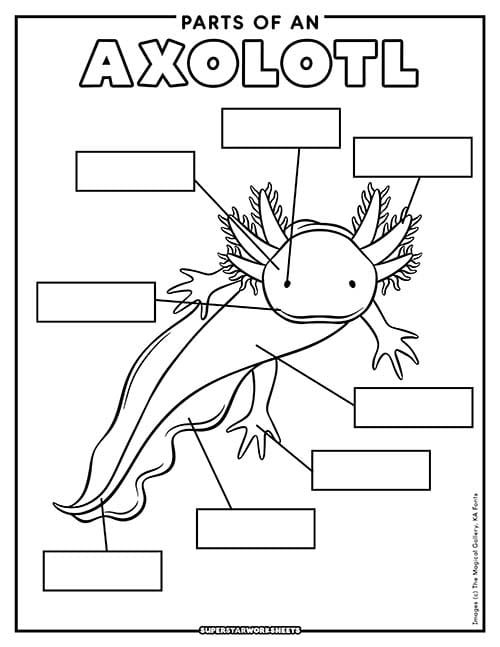
Axolotl Parts Cut and Paste Activity
This two-page hands-on activity has students cut out labels and paste each one next to the matching axolotl body part. It offers a fun, kinesthetic way to demonstrate mastery of parts vocabulary after the initial coloring and labeling practice. The format works well for independent work time or as a partner activity.
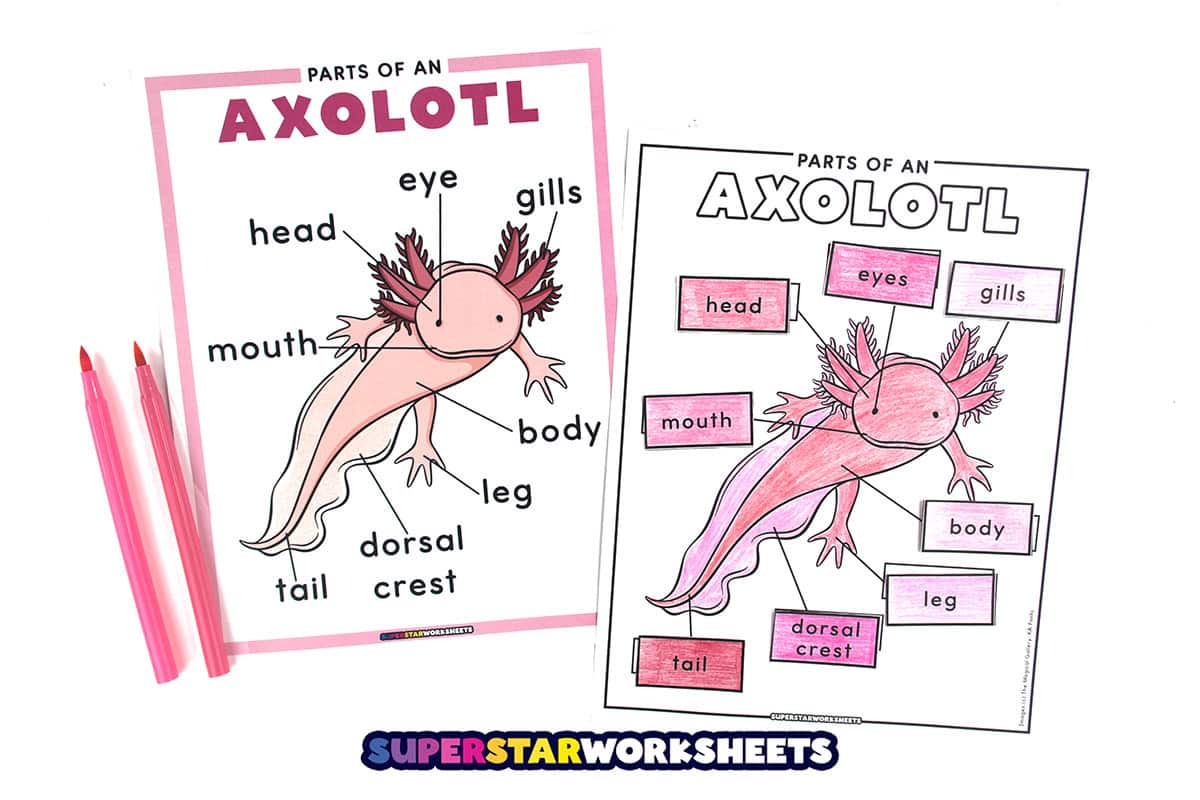
Teaching the Parts of an Axolotl
Starting with the parts of an axolotl gives students a strong vocabulary foundation before exploring more complex topics like the life cycle or regeneration. The reusable vocabulary mat is designed to travel with students through the rest of this collection, so it is worth introducing early. Move from the model chart to the vocabulary cards, then into the coloring and cut-and-paste practice pages for a natural progression. Many teachers find this section works well as the very first lesson in an axolotl unit.
Vocabulary Bank: head, eyes, mouth, body, gills, legs, tail, dorsal crest
Fun Facts and Research About Axolotls Printables
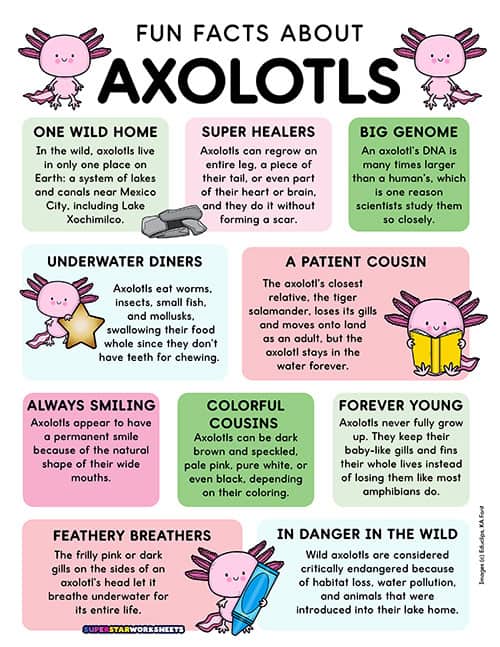
This colorful axolotl facts chart introduces kids to ten amazing facts about these unique aquatic salamanders, from their permanent gills to their surprising diet. Perfect as an anchor chart for science centers or a read-aloud reference before starting research activities. The bold, easy-to-read format makes it accessible for early readers to explore axolotl facts on their own.
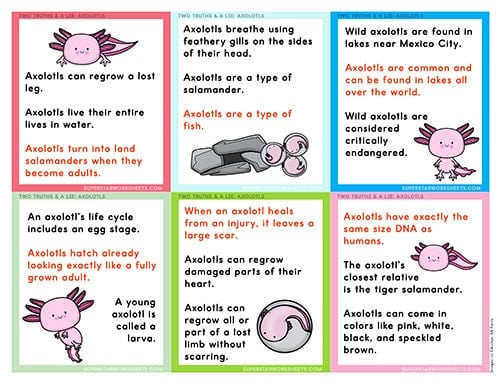
Students sharpen their critical thinking skills by listening to the teacher read out loud six sets of axolotl statements and identifying which one is false in each set. This self-checking game works well for small groups, partners, or a whole class review of axolotl facts. It is a fun, low-prep way to reinforce fact-checking and close reading skills.
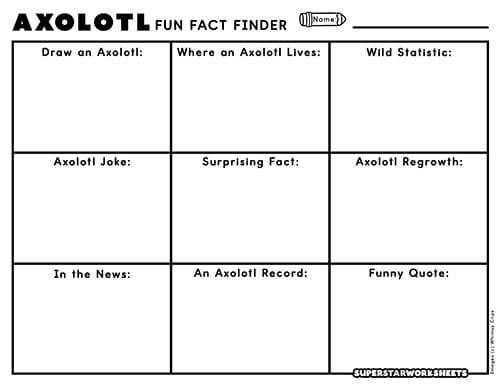
This research-based activity guides students through nine prompts, from drawing an axolotl to finding a wild statistic or a funny axolotl joke. It builds research skills while keeping the process playful and engaging for young learners. Great for independent research time or as a homework extension after learning about axolotls.
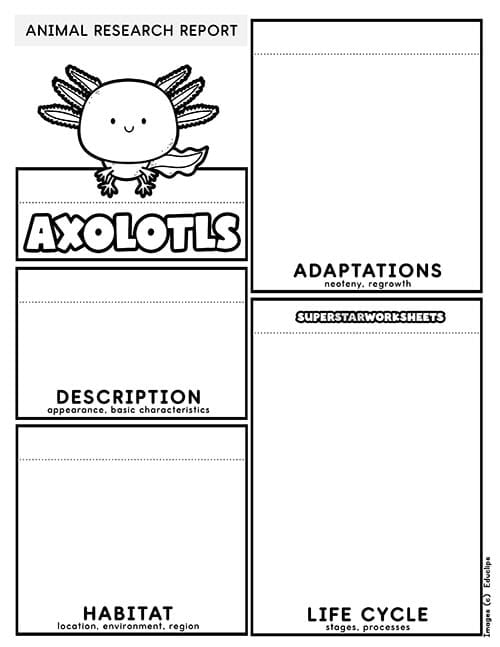
Axolotl Animal Research Report
Students organize everything they have learned about axolotls into a structured report covering description, habitat, adaptations, and life cycle. This four-section format helps young researchers practice summarizing information clearly and completely. It works well as a culminating project after completing the other axolotl printables in this set.
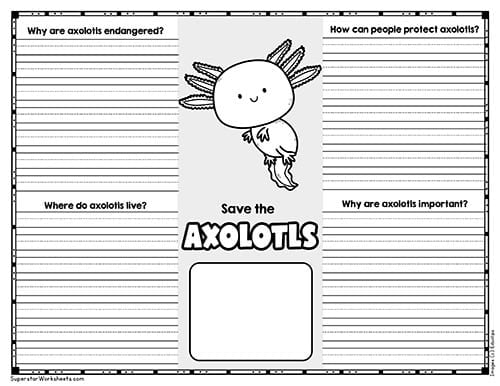
Save the Axolotl Conservation Poster
This two-page conservation project has students research why axolotls are endangered and design their own save the axolotls awareness poster. Kids explore real conservation concepts like habitat loss and invasive species while practicing persuasive communication. It is a meaningful way to connect science content to environmental stewardship.
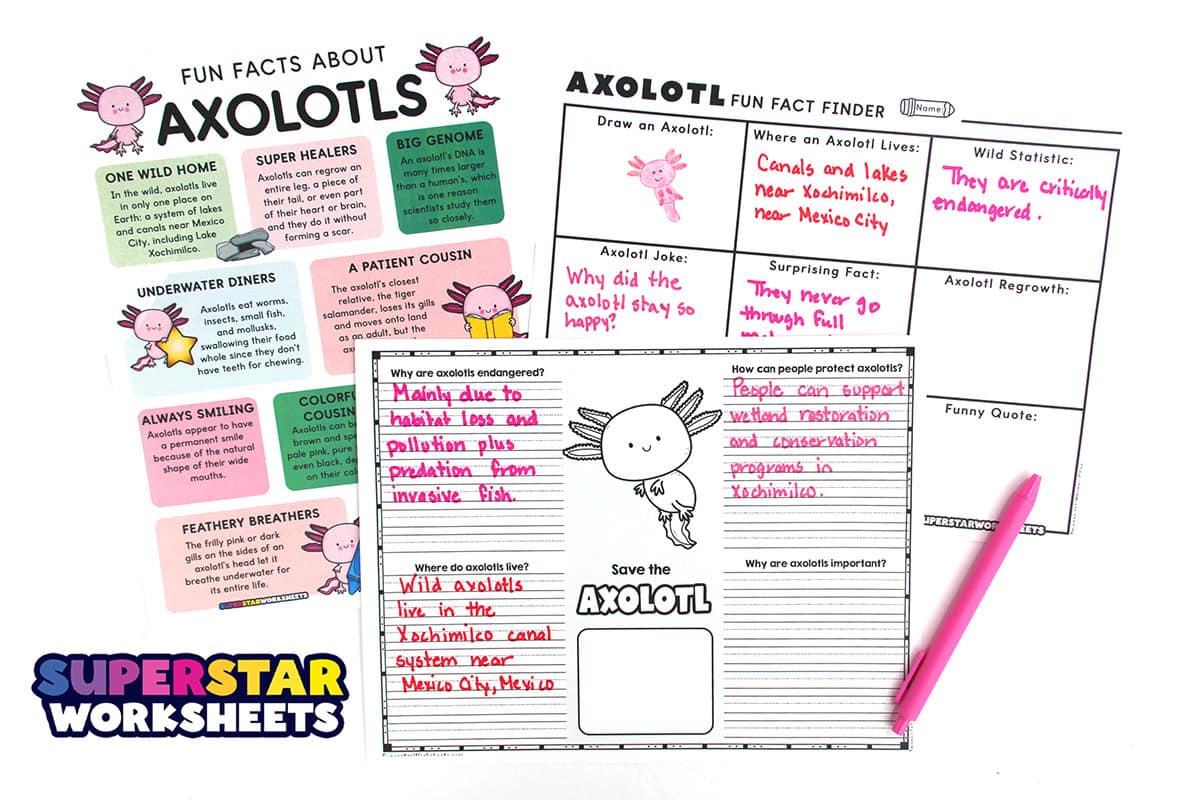
Teaching Axolotl Facts and Research
Axolotls capture kids’ attention instantly, which makes this a wonderful entry point into a broader science unit. Start with the Fun Facts chart as a read aloud, then let students choose their own path through the fact finder and two truths and a lie game. The research report and conservation poster work well as culminating projects once students have explored the rest of this collection. Consider pairing this section with a classroom discussion about why unusual animals like the axolotl matter to scientists.
Axolotl Superpowers: Neoteny and Regeneration Printables
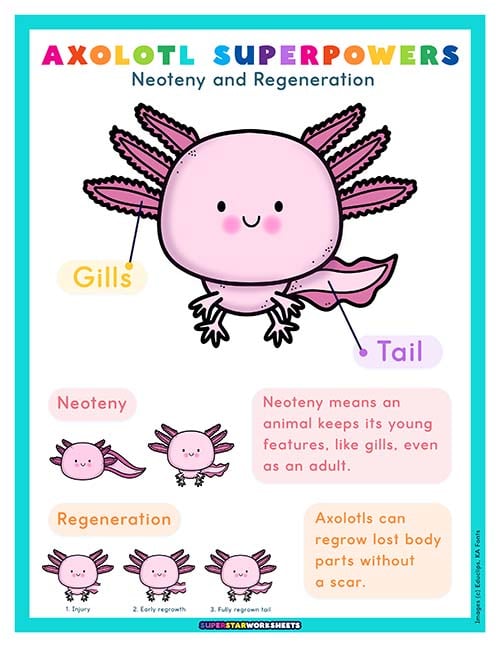
This reference chart introduces two of the axolotl’s most amazing traits, neoteny and regeneration, using simple, easy-to-understand captions and a labeled diagram. It sets the stage for the reading passages and vocabulary work that follow in this section. Kids are consistently fascinated to learn just how unusual this animal really is.
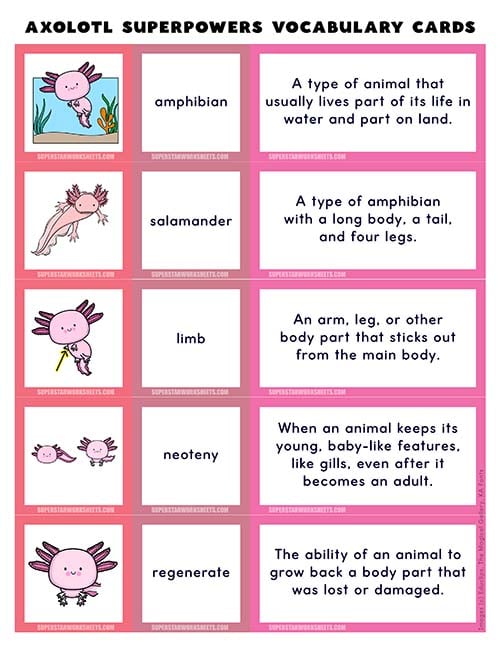
Axolotl Superpowers Vocabulary Cards
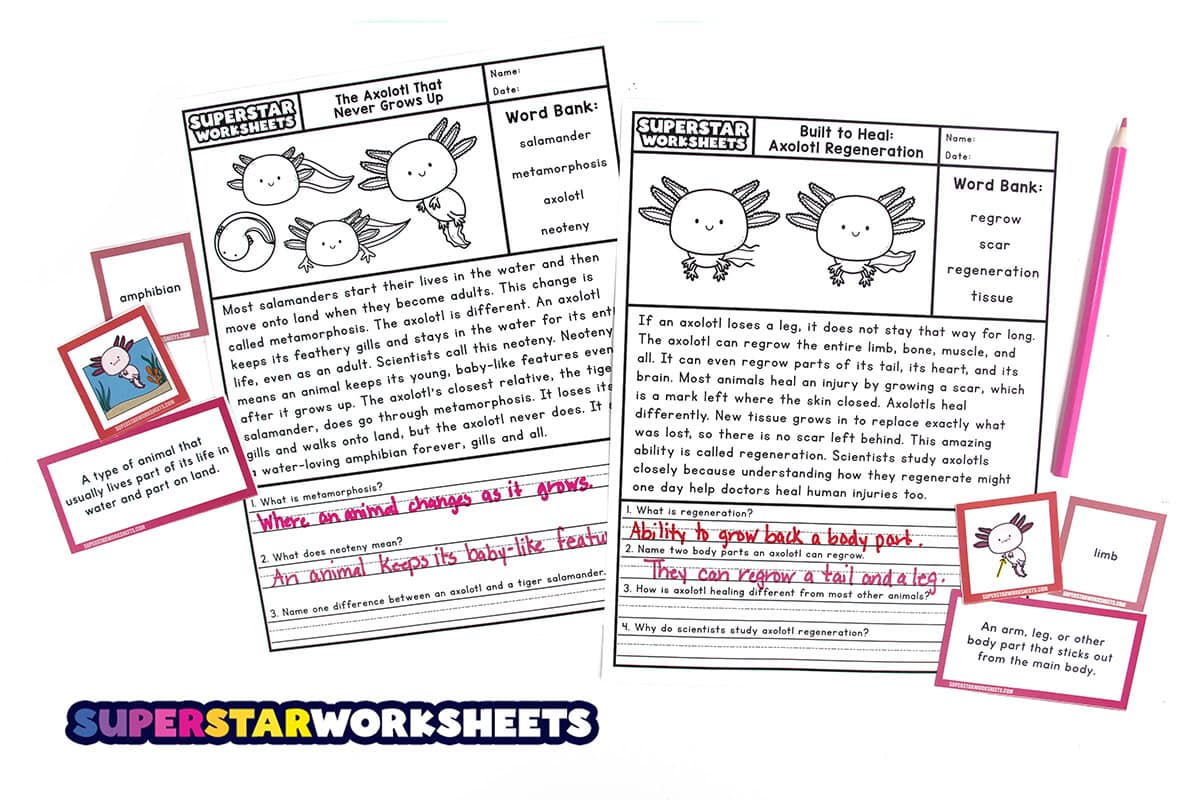
These three-part cards introduce key vocabulary related to neoteny and regeneration, including terms like amphibian, salamander, and regenerate. The picture, word, and definition format supports vocabulary acquisition for a range of learners. Use them for matching games or as a quick review before the reading comprehension passages.
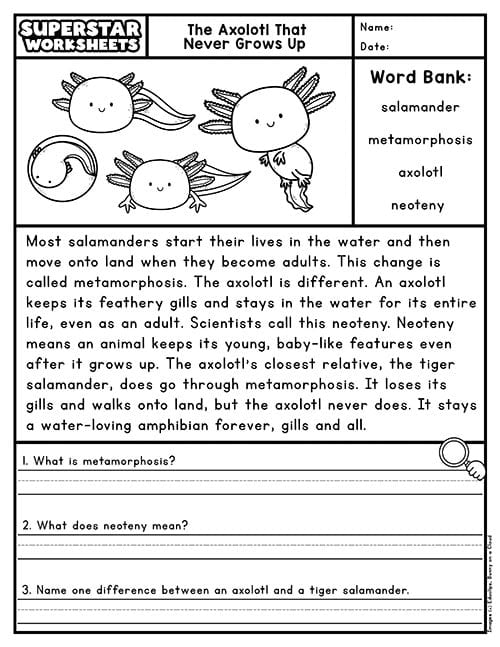
The Axolotl That Never Grows Up Reading Passage
This nonfiction reading passage explains neoteny in accessible language, comparing the axolotl to its land-dwelling relative, the tiger salamander. Comprehension questions check understanding of both the passage and key vocabulary. A teacher copy is included to make grading quick and easy.
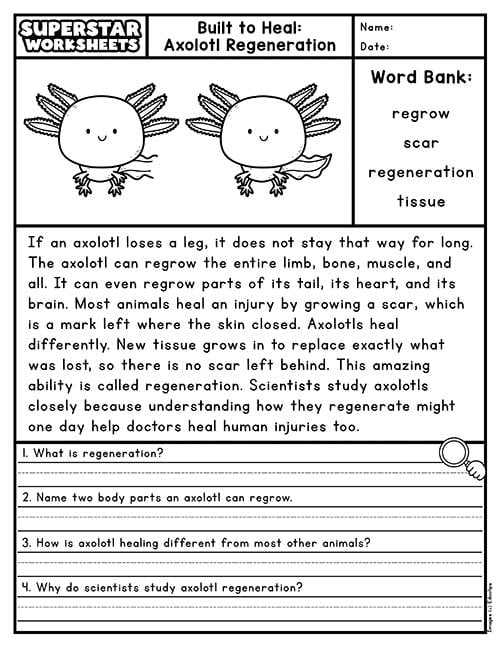
Built to Heal: Axolotl Regeneration Reading Passage
Students read about the axolotl’s remarkable ability to regrow lost limbs and even parts of its heart and brain without scarring. The passage builds background knowledge while comprehension questions reinforce reading for detail. This pairs naturally with the neoteny passage to build a complete picture of axolotl superpowers.
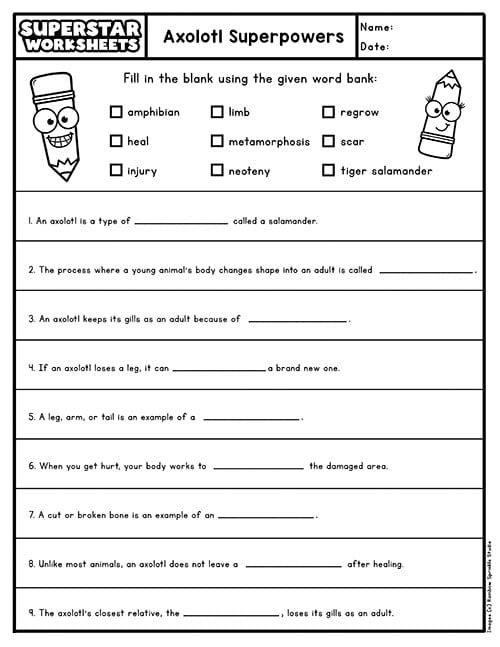
Axolotl Superpowers Fill in the Blank
This vocabulary practice page has students apply neoteny and regeneration terms in context by completing nine sentences using a word bank. It is a great way to check whether students can use new vocabulary correctly, not just define it. A teacher copy with answers is included for quick grading. For more FREE printables, take a look at our Fish Templates!
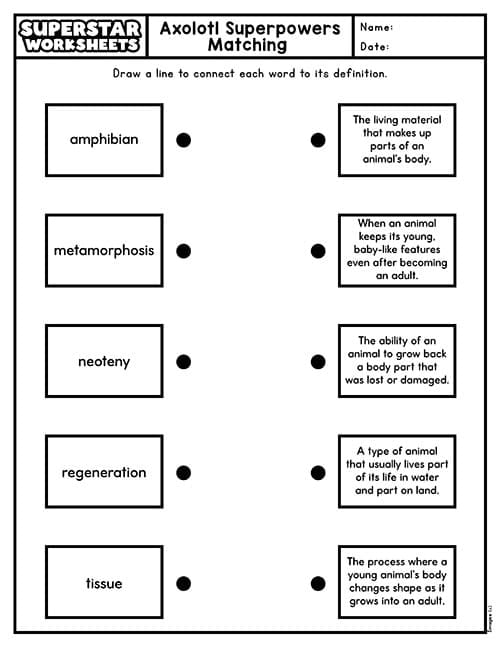
Axolotl Superpowers Matching Activity
Students draw lines to match five key vocabulary words to their correct definitions, reinforcing everything learned about neoteny and regeneration. This quick formative assessment works well as an exit ticket or independent review activity. It is an easy way to wrap up this section of the collection.
Teaching Axolotl Superpowers
Neoteny and regeneration are the two traits that make axolotls truly one of a kind, and this section is often the highlight of the unit for older students. Begin with the superpowers chart and vocabulary cards before assigning the two reading passages, which work well as independent reading or guided reading group material. The fill-in-the-blank and matching activities give students two different ways to demonstrate their understanding of the new vocabulary. This section pairs especially well with a classroom discussion comparing axolotls to other amphibians students may already know.
Vocabulary Bank: amphibian, salamander, neoteny, regenerate, regrow, limb, heal, injury, scar, tissue
Leave a Reply