
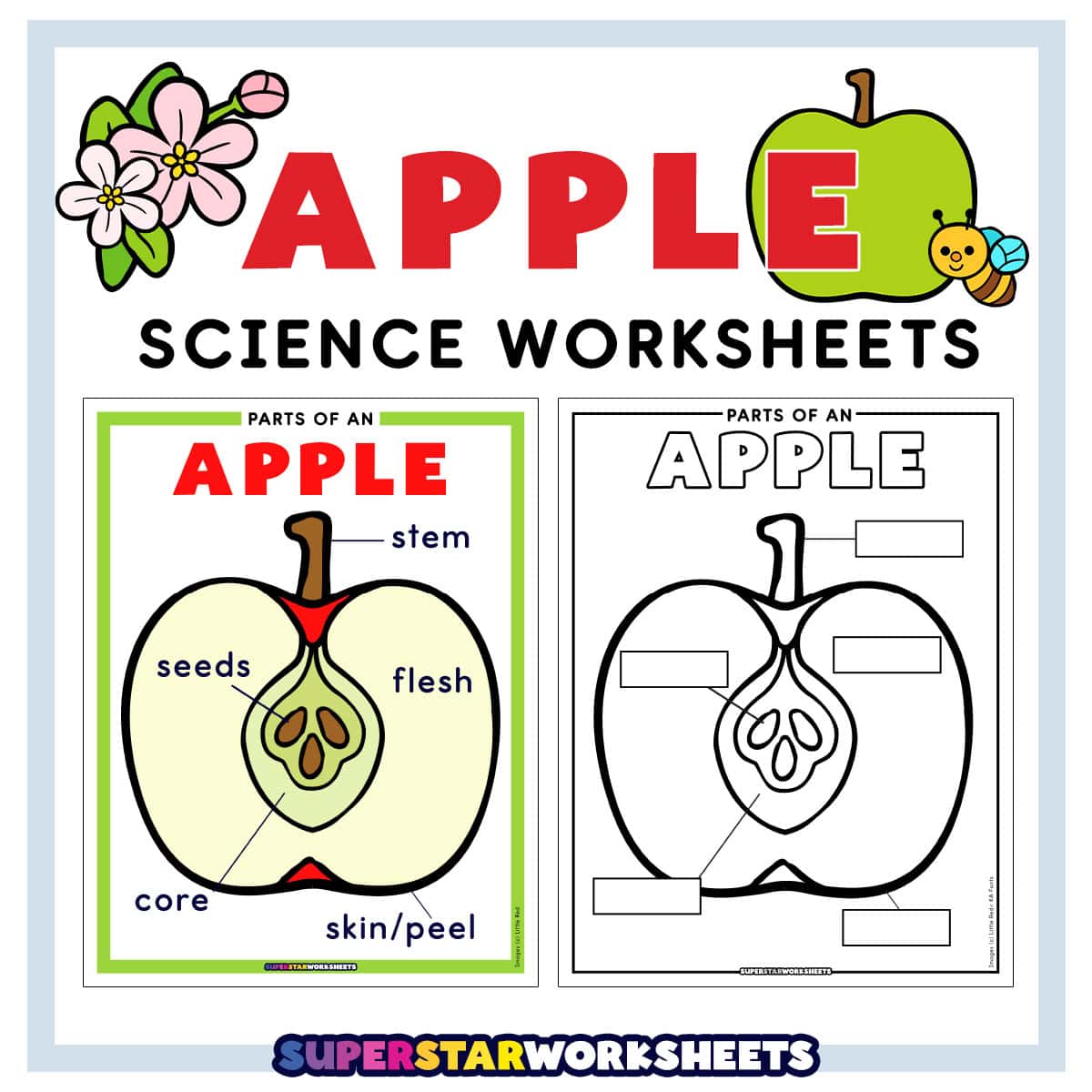
Free Printable Apple Worksheets are the perfect way to bring hands-on science into your classroom or homeschool! Download and print PDF apple activities covering parts of an apple, the apple life cycle, apple science experiments, and fun apple facts. Each printable is designed for elementary learners and includes colorful anchor charts, labeling activities, cut-and-paste worksheets, crafts, and more. Use these apple printables for fall science centers, small group instruction, or whole-class lessons that make learning about plants engaging and memorable.
Parts of an Apple Printables
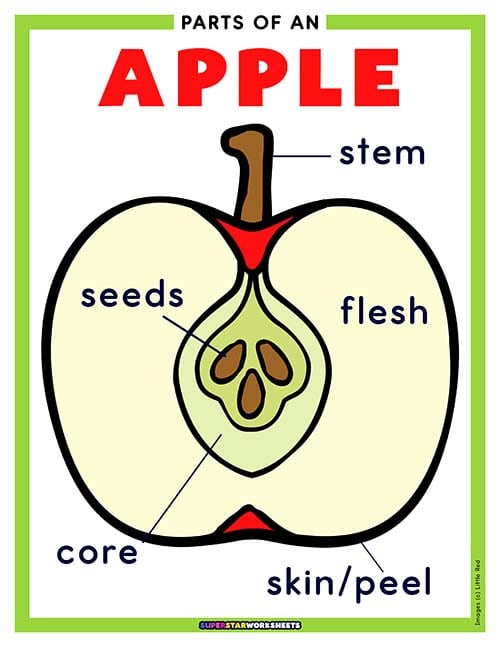
This colorful Parts of an Apple anchor chart is the perfect classroom reference for introducing apple anatomy. Download and print this full-color PDF diagram showing the five main parts of an apple with clear labels.
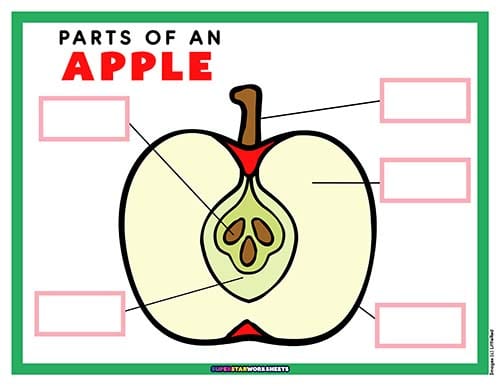
Parts of an Apple Learning Mat
Students match and place word label cards onto a blank apple cross-section diagram with this reusable learning mat. This hands-on apple printable is perfect for science centers and small group work, helping young learners build vocabulary and practice identifying the parts of an apple independently.
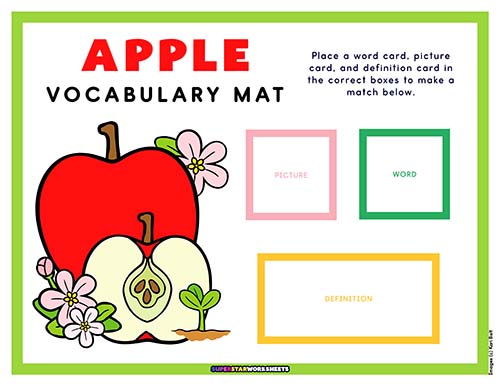
This reusable apple vocabulary mat is designed to be used alongside the vocabulary cards below, giving students a structured way to match picture, word, and definition cards for both apple parts and life cycle stages. A great tool for science word work and literacy integration at the science center.
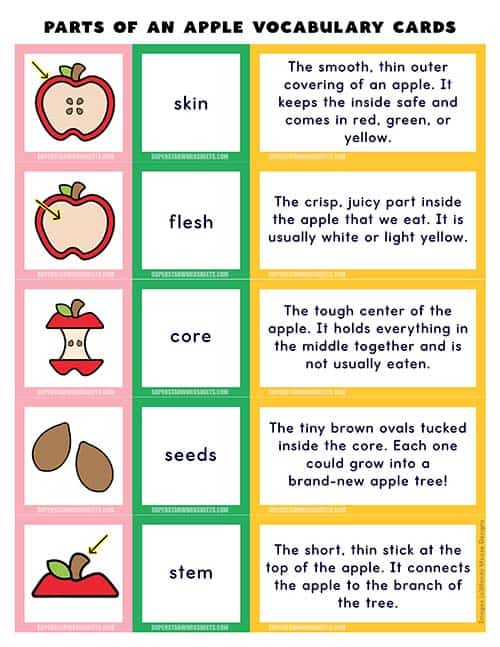
Parts of an Apple Vocabulary Cards
These three-part vocabulary cards help students read, match, and discuss the key parts of an apple. Each set includes a picture card, word card, and definition card for the five main apple parts. Print, laminate, and use repeatedly for matching games, sorting activities, and vocabulary review.
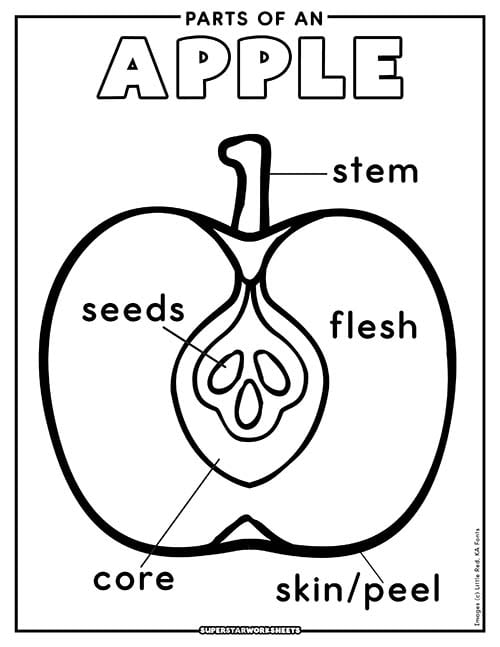
This black and white version of the Parts of an Apple chart is ready to print and color. Students can use it as a coloring reference sheet, a take-home study tool, or a science notebook insert. All five labeled parts are included in a clean, easy-to-read format.
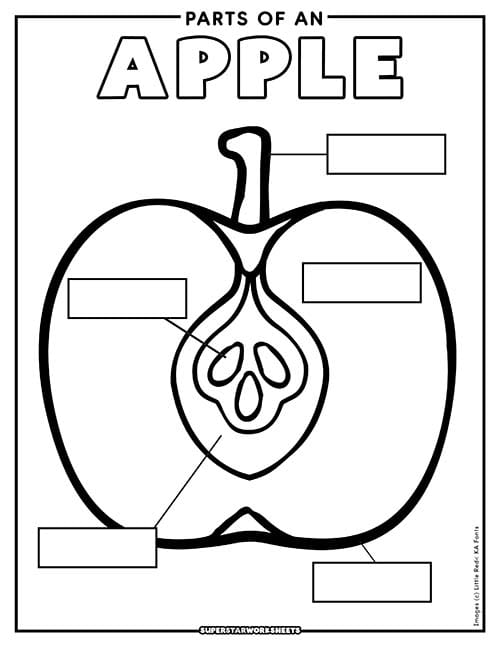
Parts of an Apple Cut and Paste Worksheet
Students cut out label cards and paste them onto a blank apple cross-section diagram with this printable parts of an apple worksheet. This hands-on activity reinforces apple anatomy vocabulary and is perfect for kindergarten and first grade science lessons on plant parts.
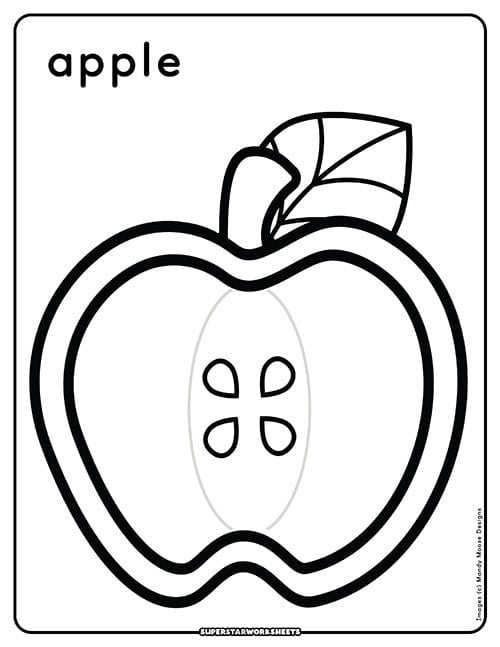
This simple apple cross-section coloring page is designed for preschool and kindergarten students just beginning to explore apple science vocabulary. Bold outlines and a simple layout make it easy for little hands to color while teachers introduce the word “apple” and point to its parts. For more free science coloring pages, check out our Plant Worksheets!
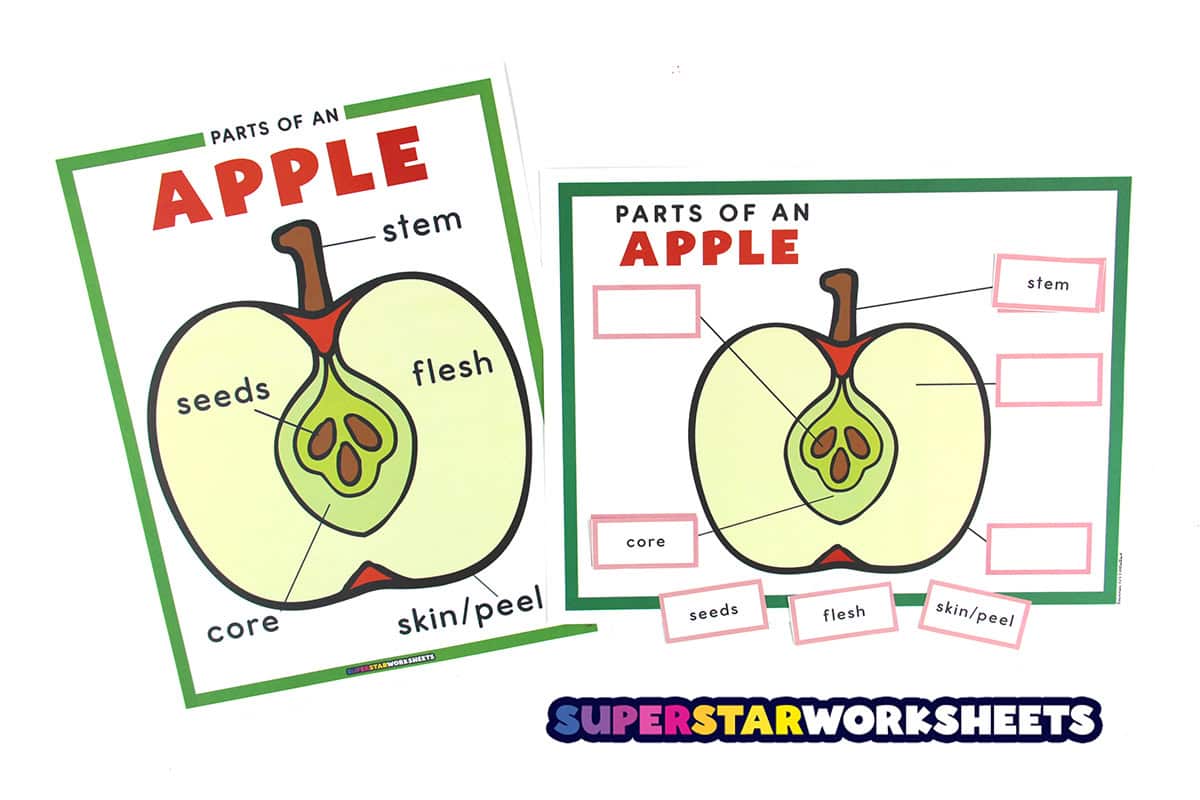
Teaching Parts of an Apple
When introducing the parts of an apple to your students, it’s important to use language and vocabulary terms they are familiar with. Here are our recommended definitions for each part of the apple — each description provides a visual description as well as a purpose and how each part connects within the living system.
skin / peel: The smooth, thin outer covering of an apple. It keeps the inside safe and comes in red, green, or yellow.
flesh: The crisp, juicy part inside the apple that we eat. It is usually white or light yellow.
core: The tough center of the apple. It holds everything in the middle together and is not usually eaten.
seeds: The tiny brown ovals tucked inside the core. Each one could grow into a brand-new apple tree!
stem: The short, thin stick at the top of the apple. It connects the apple to the branch of the tree.
Apple Life Cycle Printables
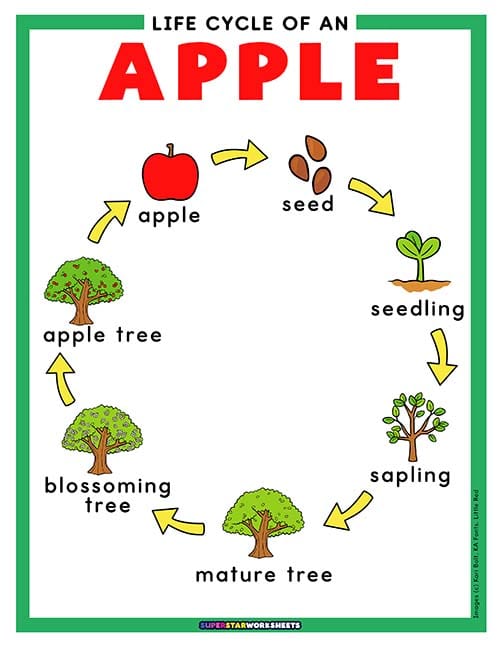
This full-color Apple Life Cycle chart displays all seven stages of an apple tree’s life in a clear circular diagram with Superstar yellow arrows. Download and print this PDF anchor chart to introduce the apple life cycle to your class as a perfect whole-group reference for your plant science unit. For more free printable science worksheets, take a look at our Pumpkin Worksheets today!
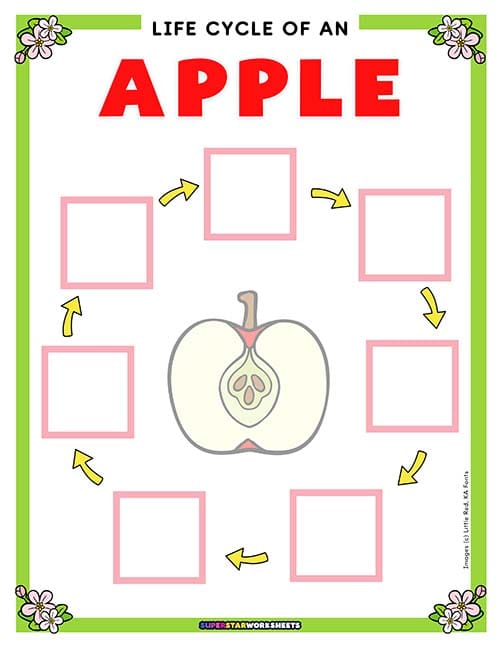
This full-color Apple Life Cycle chart displays all seven stages of an apple tree’s life in a clear circular diagram with Superstar yellow arrows. Download and print this PDF anchor chart to introduce the apple life cycle to your class as a perfect whole-group reference for your plant science unit.
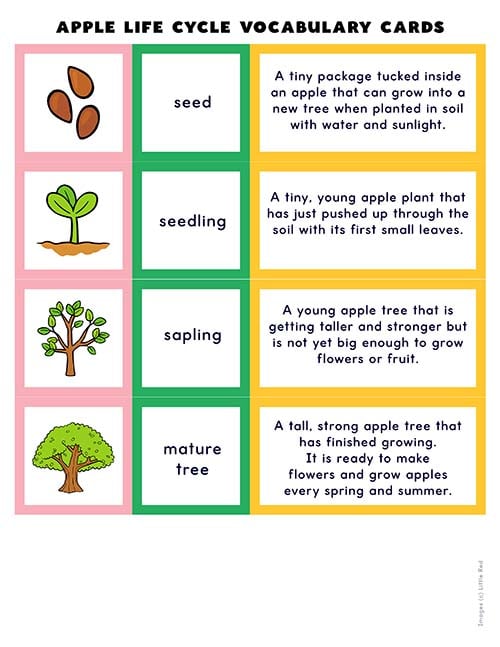
Apple Life Cycle Vocabulary Cards
These three-part vocabulary cards cover all seven apple life cycle stages: seed, seedling, sapling, mature tree, blossoming tree, apple tree, and apple. Each set includes a picture card, word card, and definition card for matching and sorting activities that build science vocabulary and reading fluency.
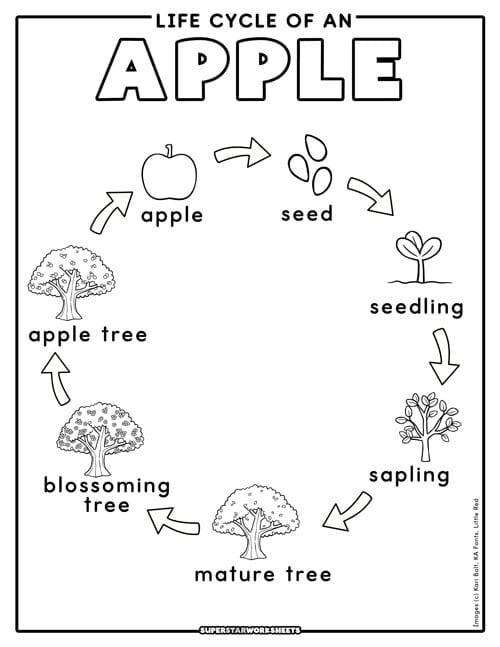
Apple Life Cycle Chart (Black and White)
This black and white apple life cycle diagram is perfect for coloring, science notebooks, and take-home reference sheets. All seven stages are labeled and arranged in a circular layout with connecting arrows, giving students a clear visual of how apples grow from seed to fruit.
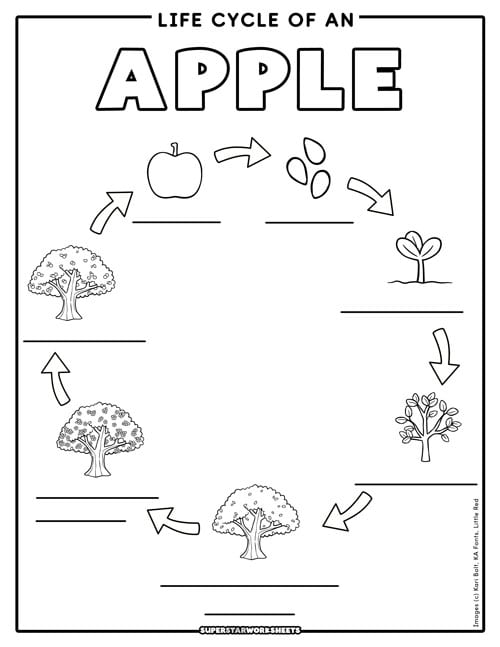
Students label all seven stages of the apple life cycle from memory on this blank circular diagram. This apple life cycle worksheet is a great formative assessment tool for plant science units in kindergarten through third grade and can be used as a science center activity or whole-class practice.
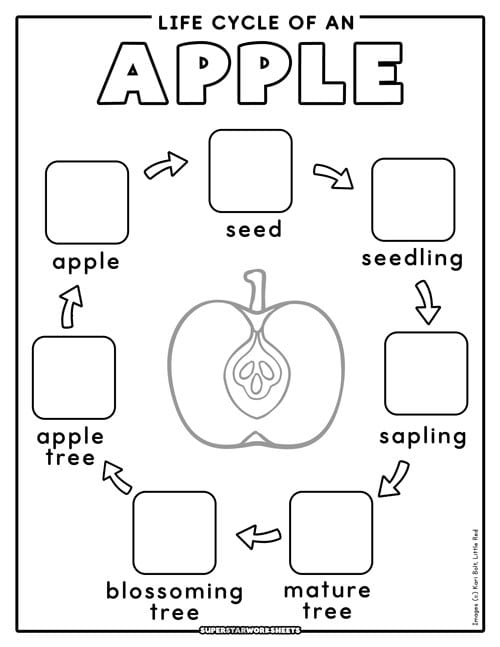
Apple Life Cycle Cut and Paste Worksheet
Students cut out picture cards and paste them into the correct sequence on a circular apple life cycle diagram with this hands-on printable. The teacher-friendly strip format on page two makes it easy to prepare individual sets for every student, perfect for independent practice or guided science lessons. For more free apple themed printables, check out our Apple Coloring Pages!
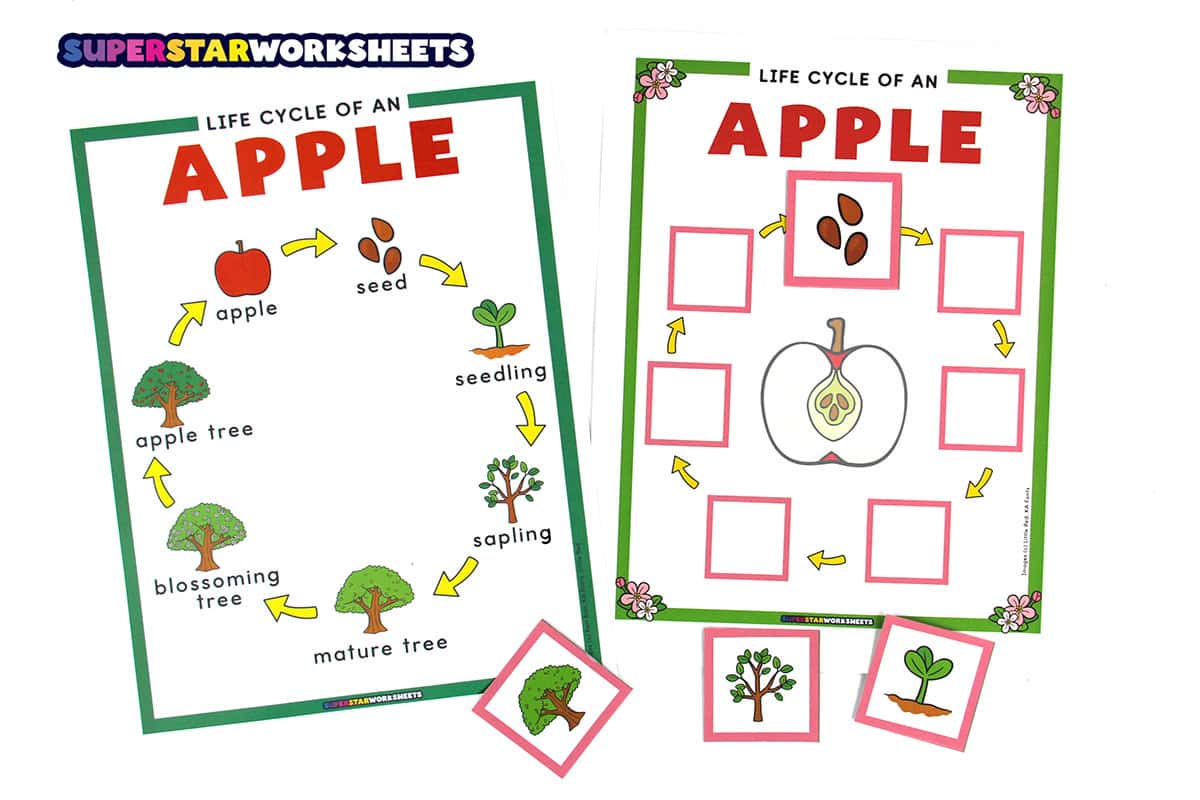
Teaching the Life Cycle of an Apple
The best way for students to learn about apple life cycles is to observe them! Apple trees are a wonderful real-world science example — if you have access to an orchard or even a single apple tree nearby, take students outside to observe the tree at different points in the season and notice the stages as they arrive. Use descriptive and classifying language as you explore the apple growth cycle together. Remember, there are many ways to describe the same stage at various points, so help students learn these different terms and use them interchangeably (e.g., blossom, flower, and blossoming tree, or fruit and apple).
seed: A tiny package tucked inside an apple that can grow into a new tree when planted in soil with water and sunlight.
sprout / seedling: A tiny, young apple plant that has just pushed up through the soil with its first small leaves.
sapling: A young apple tree that is getting taller and stronger but is not yet big enough to grow flowers or fruit.
mature tree: A tall, strong apple tree that has finished growing. It is ready to make flowers and grow apples every spring and summer.
blossoming tree: An apple tree covered in pretty pink and white flowers called blossoms. Bees visit the flowers and help them turn into apples!
apple tree: A tall tree covered in bright red, green, or yellow apples that are ready to pick. It grew all the way from a tiny seed!
apple: A round, colorful fruit that grows where the blossom was and gets bigger all summer long. Inside it holds the seeds that start the whole cycle again!
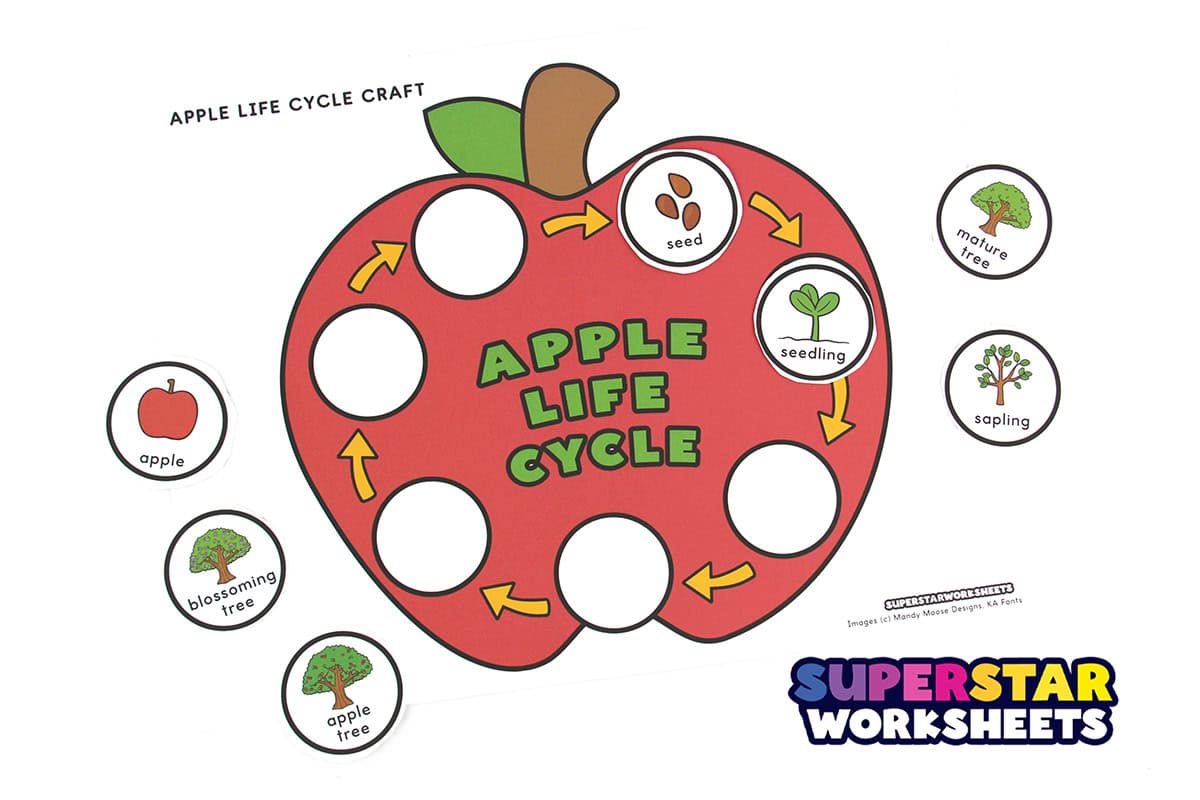
Apple Life Cycle Crafts & Activities for Kids
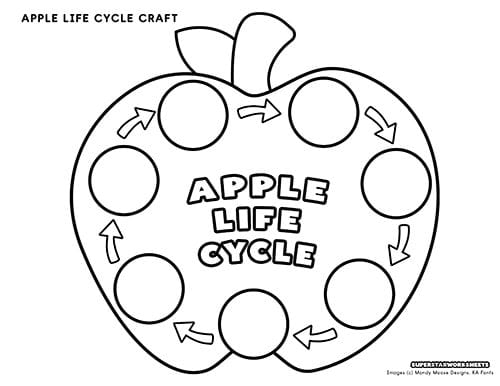
Students color, cut, and paste all seven apple life cycle stages onto a large apple-shaped craft template with this creative science project. This apple life cycle craft is a favorite for fall bulletin boards and makes a beautiful classroom display that reinforces sequencing and plant science vocabulary.
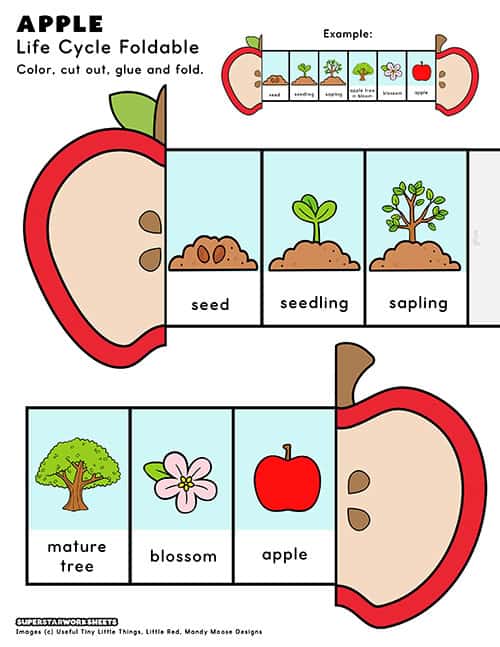
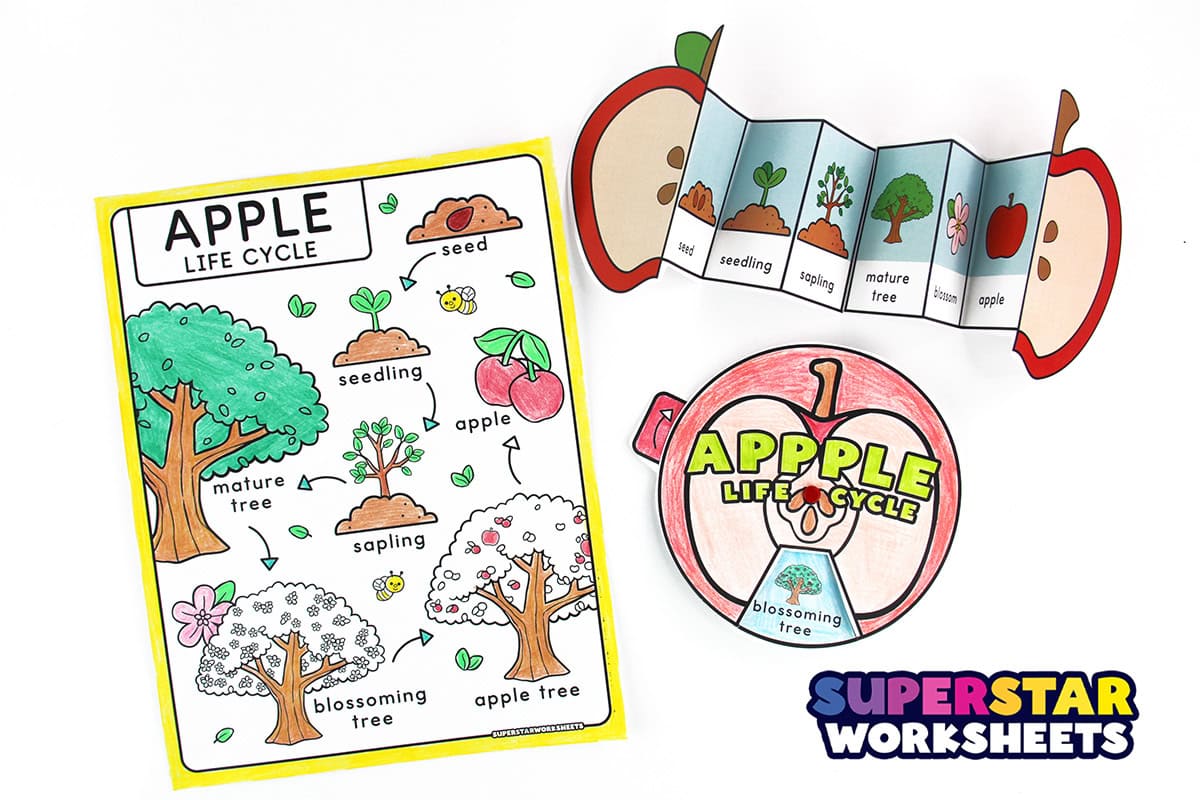
This apple-shaped accordion foldable guides students through the four key phases of the apple life cycle with layered flaps, stage illustrations, and labels. Available in full color and black and white, this printable foldable is a hands-on way to practice sequencing and review life cycle vocabulary.
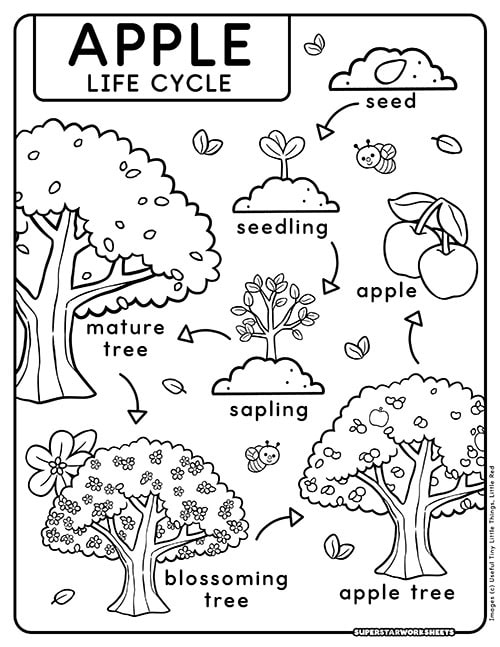
Apple Life Cycle Coloring Page
This detailed apple life cycle coloring page shows all seven stages with connecting arrows and stage labels for students to color and keep. The rich line art includes branch, leaf, and root details that bring each stage to life, making it a great take-home activity or science notebook page. For more FREE printables, take a look at our Tree Worksheets here!
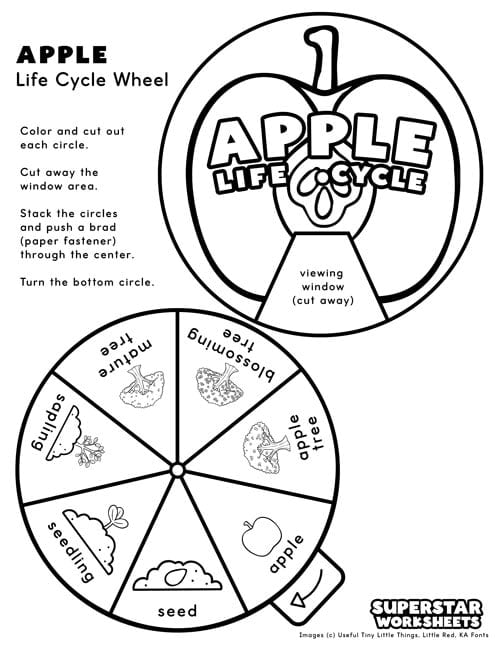
Students assemble this spin wheel by layering two circular pieces and fastening them with a brad, then turning the bottom wheel to reveal each apple life cycle stage one at a time. This interactive reference tool is perfect for independent review, science centers, and vocabulary practice throughout your plant science unit.
Apple Science Experiments for Kids
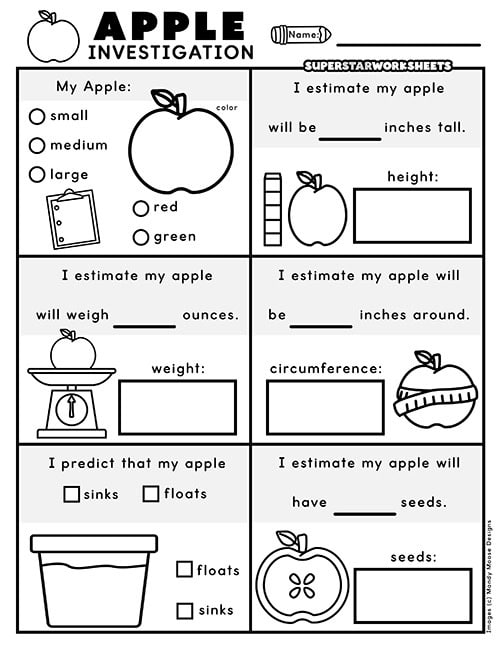
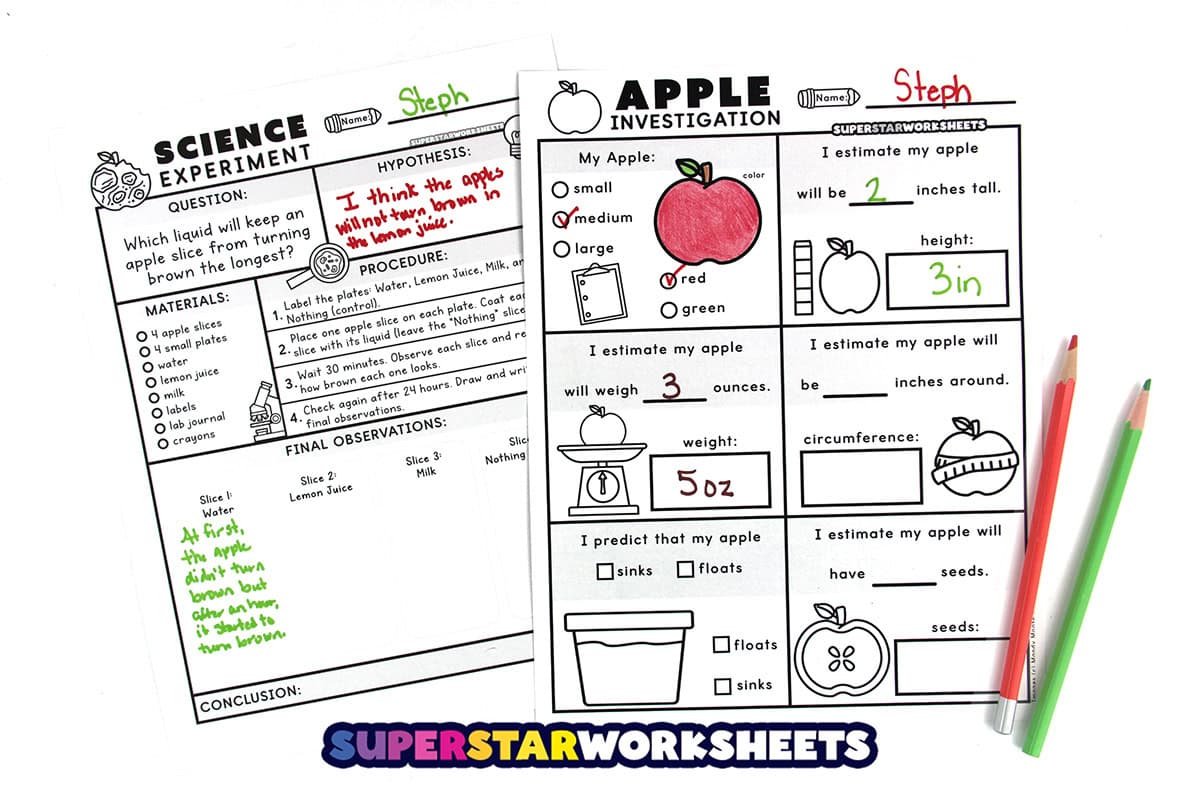
Students make predictions and then measure the height, weight, and circumference of a real apple, record whether it sinks or floats, and count the seeds inside with this hands-on apple investigation sheet. This printable science activity builds observation and measurement skills and works beautifully as a fall science center or whole-class investigation.
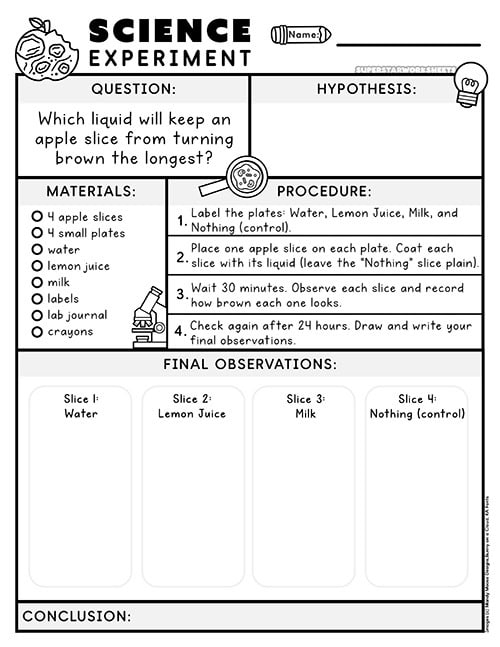
Students test which liquid best prevents an apple slice from turning brown in this easy apple oxidation science experiment. The two-page printable includes a full experiment sheet with question, hypothesis, procedure, and observation boxes, plus a six-session observational lab journal for tracking results over multiple days.
Apple Oxidation Science Experiment
Why do apples turn brown? This experiment teaches kids about oxidation and the chemical process that occurs when the flesh of an apple is exposed to oxygen in the air. Environmental factors like the type of liquid applied to the apple surface can slow or speed up this reaction, making a freshly cut apple the perfect real-world subject to observe these forces in action.
Question: Which liquid will keep an apple slice from turning brown the longest?
Hypothesis: Before starting, ask students to predict which liquid will work best and explain their reasoning in writing.
Materials: 4 apple slices 4 small plates Water Lemon juice Milk Labels Lab journal or observation sheet Crayons or pencils
Procedure: 1. Label the plates: Water, Lemon Juice, Milk, and Nothing (control). 2. Place one apple slice on each plate. Coat each slice with its liquid (leave the “Nothing” slice plain). 3. Wait 30 minutes. Observe each slice and record how brown each one looks. 4. Check again after 24 hours. Draw and write your final observations.
Expected Result: Lemon juice keeps the apple slice the freshest the longest because its citric acid slows the oxidation process. The “Nothing” slice will turn the brownest the fastest.
Apple Science Facts for Kids
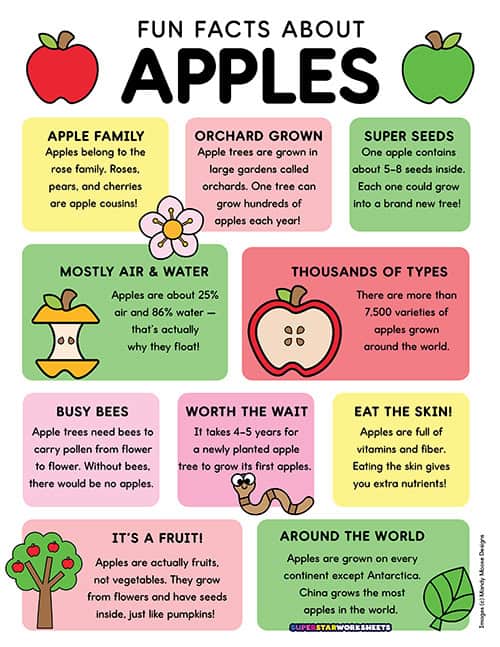
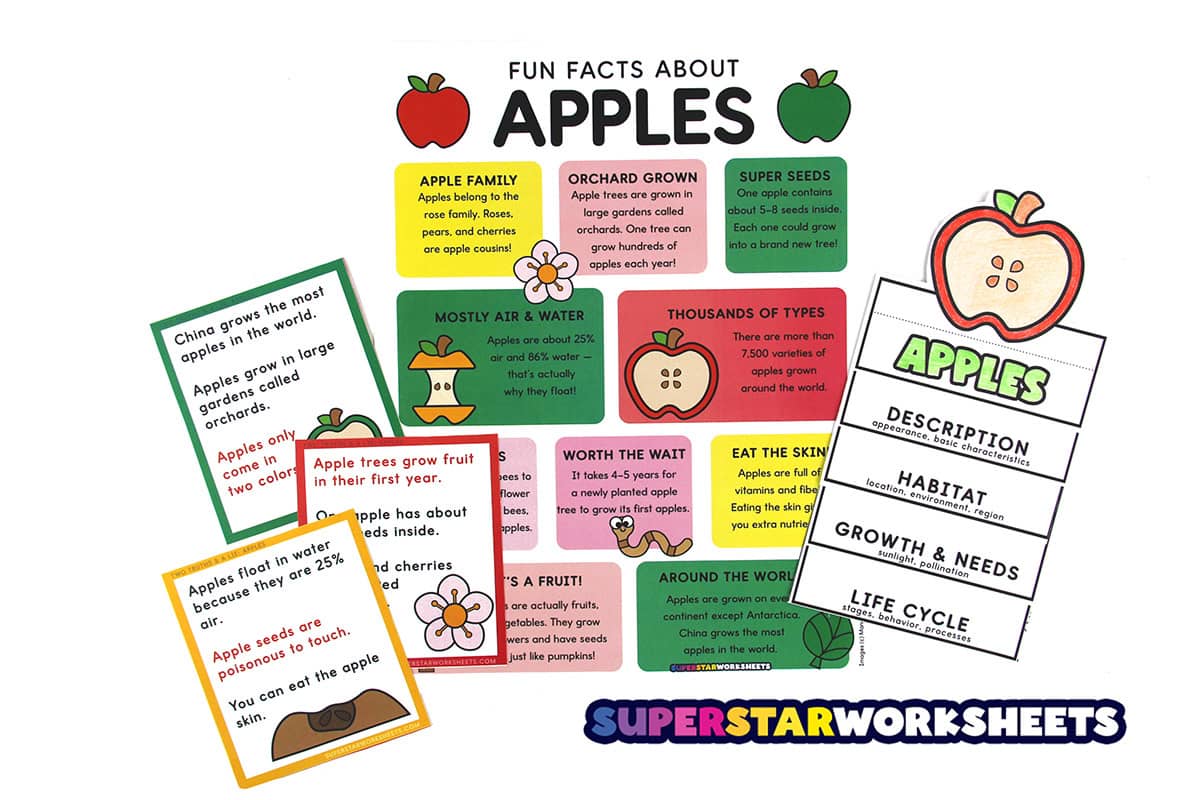
This colorful infographic-style poster features ten illustrated apple fun facts with bold titles and full-sentence descriptions, perfect for a classroom display or whole-group read-aloud. Download and print this PDF apple facts chart to kick off your apple science unit and spark curiosity about plant science.
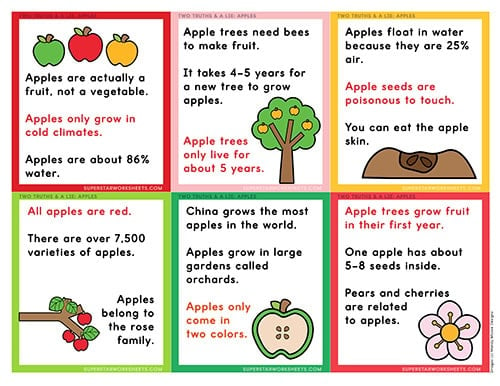
Apple Two Truths and a Lie Game
Students read three statements about apples on each card and decide which one is a lie in this fun apple facts activity. With six cards per page and lies printed in red for easy checking, this printable apple game is perfect for science centers, partner work, and whole-class discussion about evaluating information.
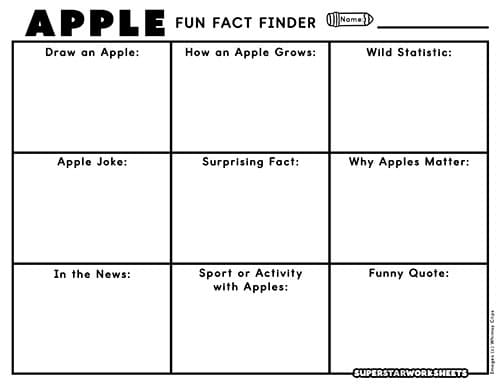
Students research and record apple facts across nine creative prompts from drawing an apple and finding a wild statistic to sharing an apple joke and explaining why apples matter with this open-ended apple research worksheet. A great activity for integrating science and writing at the elementary level.
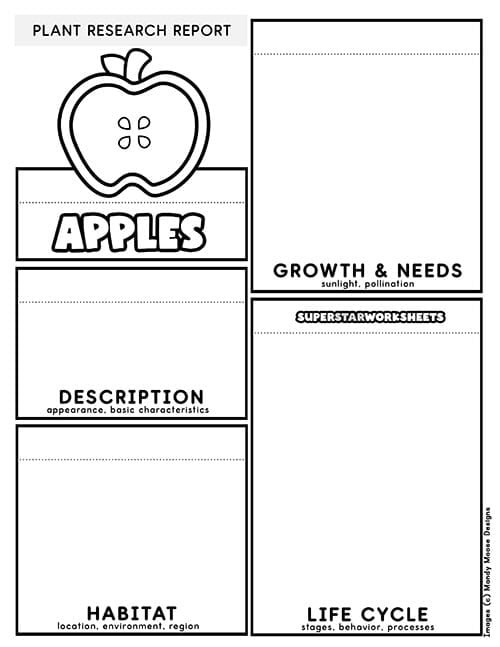
Students organize their apple research into four structured sections with this printable plant research layer book. This apple writing activity is perfect for culminating a plant science unit and helps students practice organizing and communicating informational text. For further apple related studying, check out Apples by Gail Gibson!
Amazing Apple Facts
Here are ten amazing apple facts to share with your students before, during, or after your apple science unit. These facts are included in the Fun Facts About Apples poster above and can be used for read-alouds, discussion starters, or as a reference while students complete the Two Truths and a Lie activity.
It’s a Fruit!: Apples are actually fruits, not vegetables — they grow from flowers and have seeds inside, just like pumpkins!
Apple Family: Apples belong to the rose family. Roses, pears, and cherries are apple cousins!
Thousands of Types: There are more than 7,500 varieties of apples grown around the world.
Mostly Air & Water: Apples are about 25% air and 86% water — that’s actually why they float!
Busy Bees: Apple trees need bees to carry pollen from flower to flower. Without bees, there would be no apples.
Orchard Grown: Apple trees are grown in large gardens called orchards. One tree can grow hundreds of apples each year!
Worth the Wait: It takes 4–5 years for a newly planted apple tree to grow its first apples.
Super Seeds: One apple contains about 5–8 seeds inside. Each one could grow into a brand-new tree!
Eat the Skin!: Apples are full of vitamins and fiber. Eating the skin gives you extra nutrients!
Around the World: Apples are grown on every continent except Antarctica. China grows the most apples in the world.
Comment (1)
I would love these free worksheets