
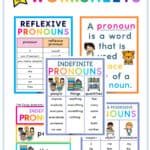
Free Printable pronoun worksheets and charts for kids! Download and print PDF activities covering personal pronouns, possessive pronouns, indefinite pronouns, and reflexive pronouns. This collection includes colorful reference charts, sorting activities, fill-in-the-blank worksheets, flashcard sets, and creative writing pages designed for elementary learners. These resources help young students build confidence in identifying and using pronouns in sentences, develop grammar skills that carry through their writing and reading, and make meaningful connections between pronouns and the nouns they replace. Perfect for classroom grammar centers, homeschool lessons, and small group instruction.
Free Printable Pronoun Charts
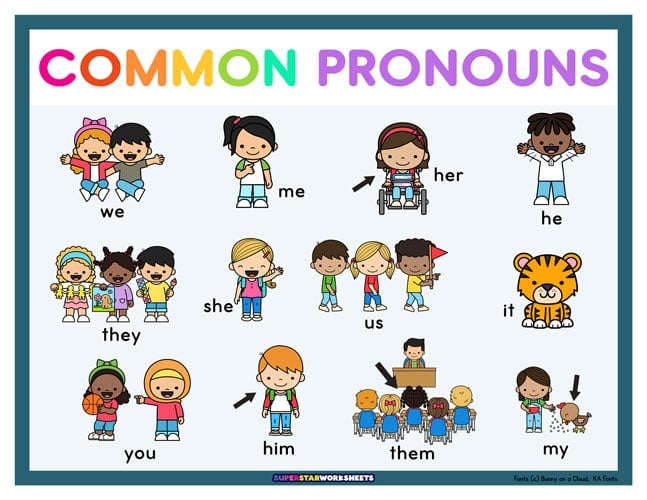
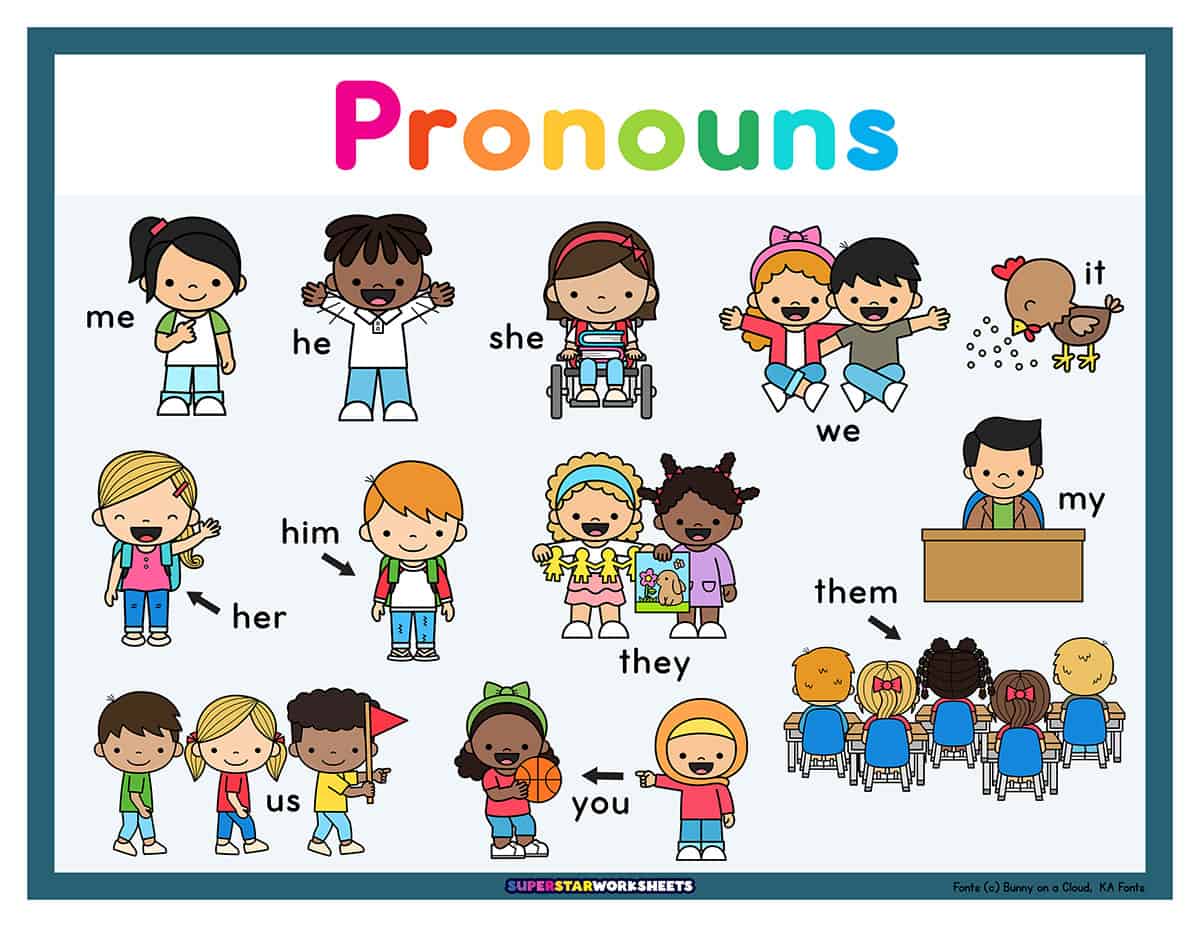
This colorful pronoun chart introduces the most common personal pronouns through pictures and labels, making it easy for beginning readers to connect each pronoun to its meaning. A perfect anchor chart to display during pronoun lessons or send home as a reference tool.
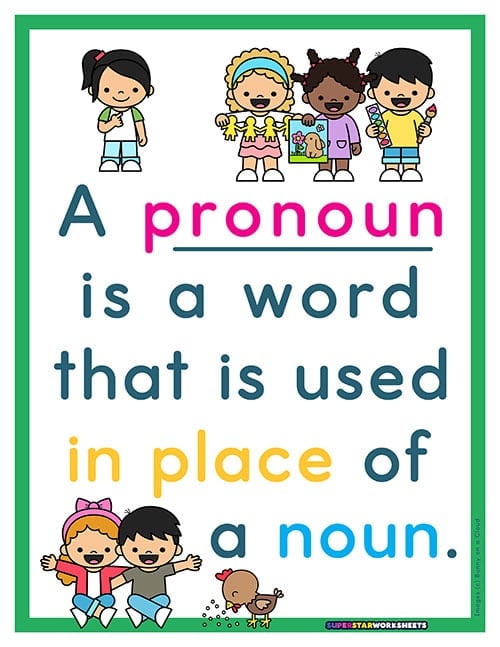
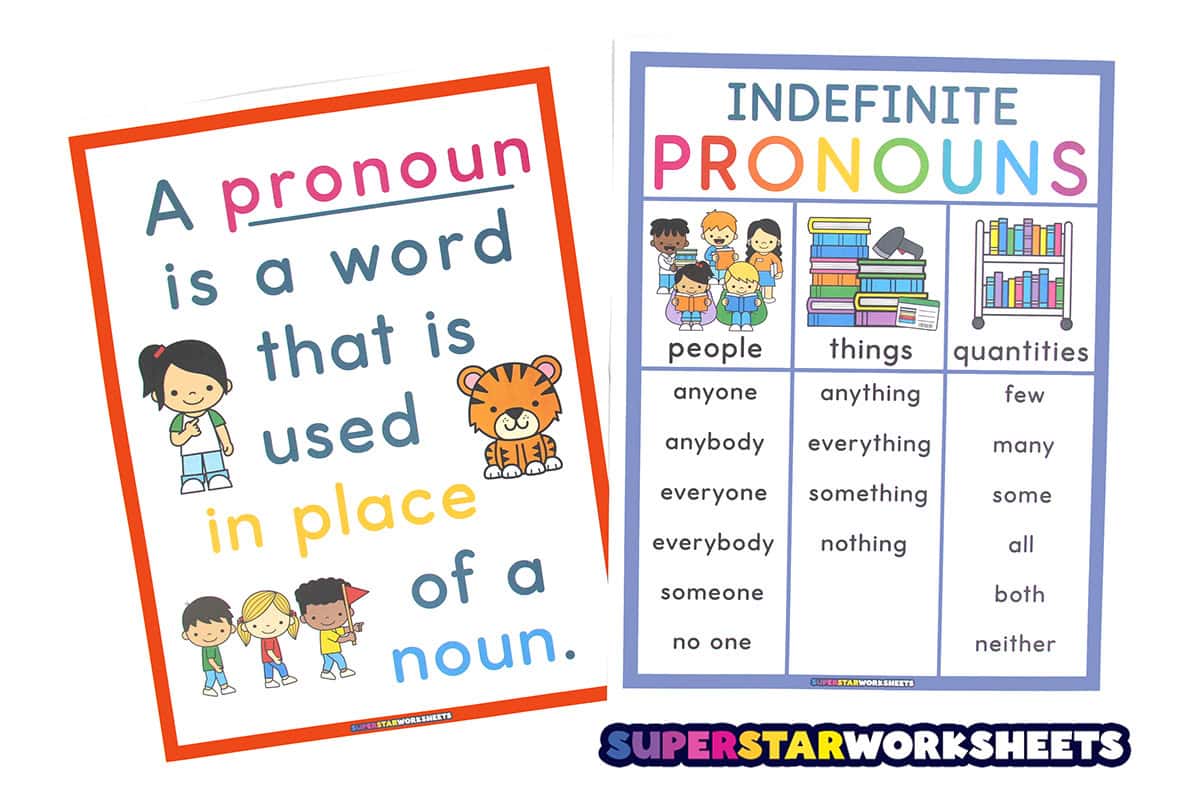
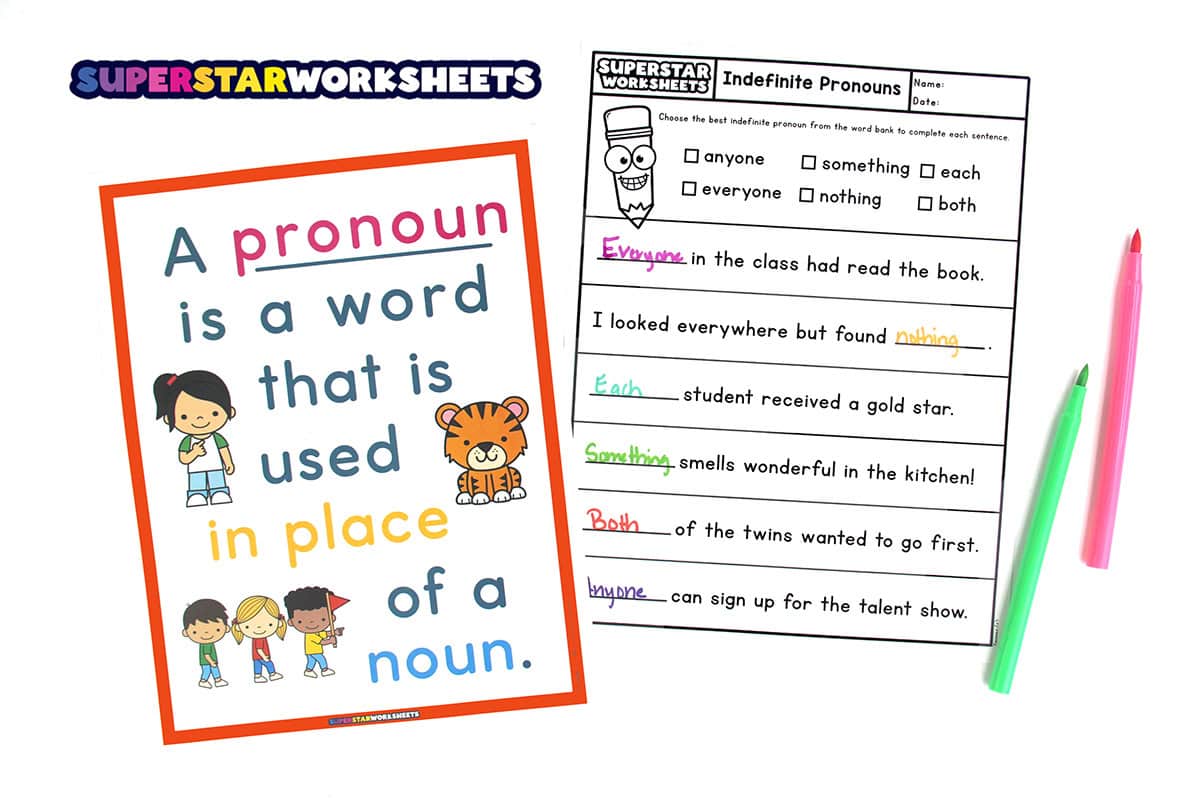
This pronoun definition chart gives students a simple, memorable explanation of what a pronoun is and how it works in place of a noun. Color-coded key terms help students quickly recall the definition during reading and writing activities.
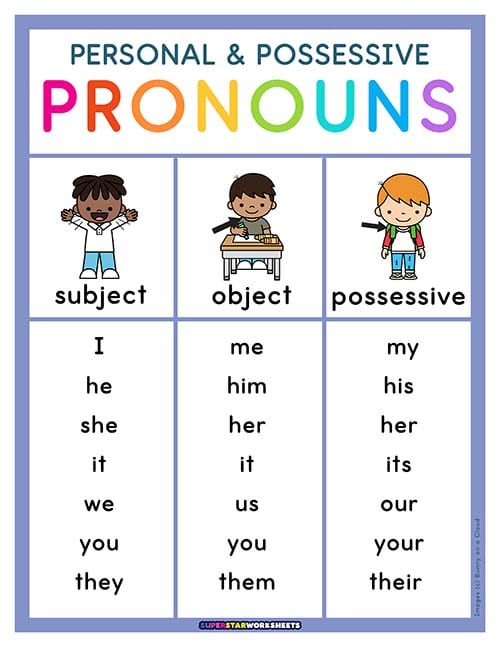
Personal and Possessive Pronouns Chart
This three-column reference chart organizes subject pronouns, object pronouns, and possessive pronouns side by side so students can compare and distinguish each type. Ideal for display in a grammar center or as a desk reference during writing.
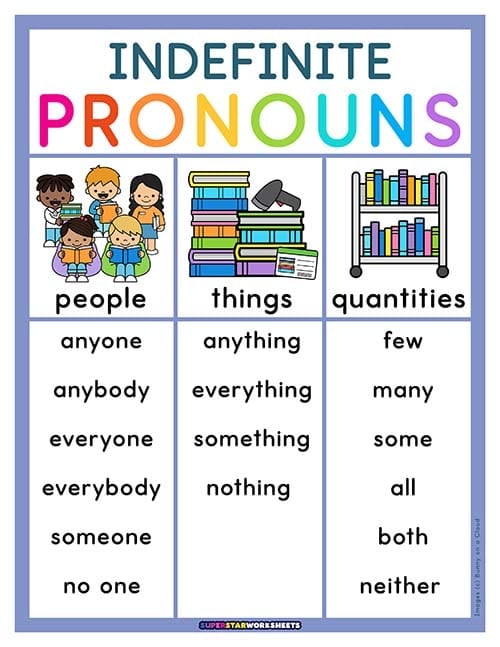
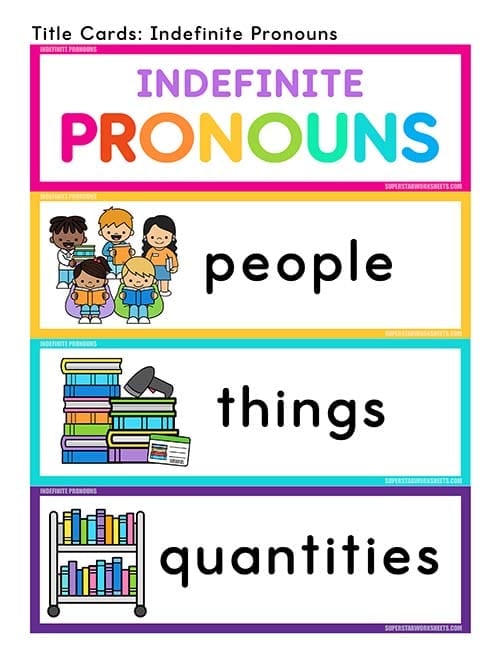
This indefinite pronouns chart groups common indefinite pronouns into three clear categories (people, things, and quantities) giving students a visual framework for understanding this often-tricky pronoun type. Clipart supports each category for easy reference.
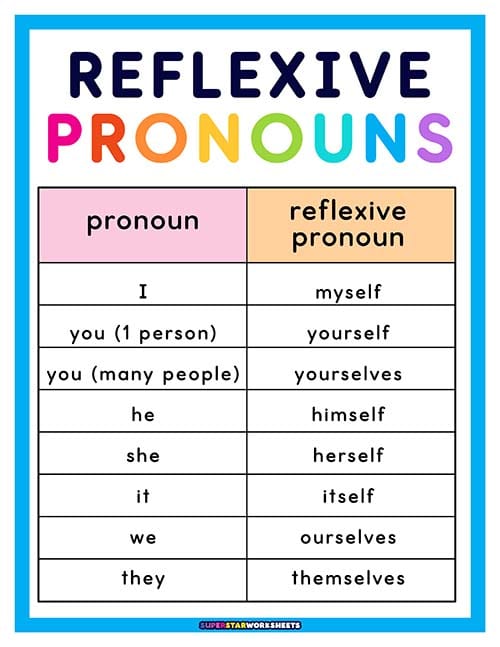
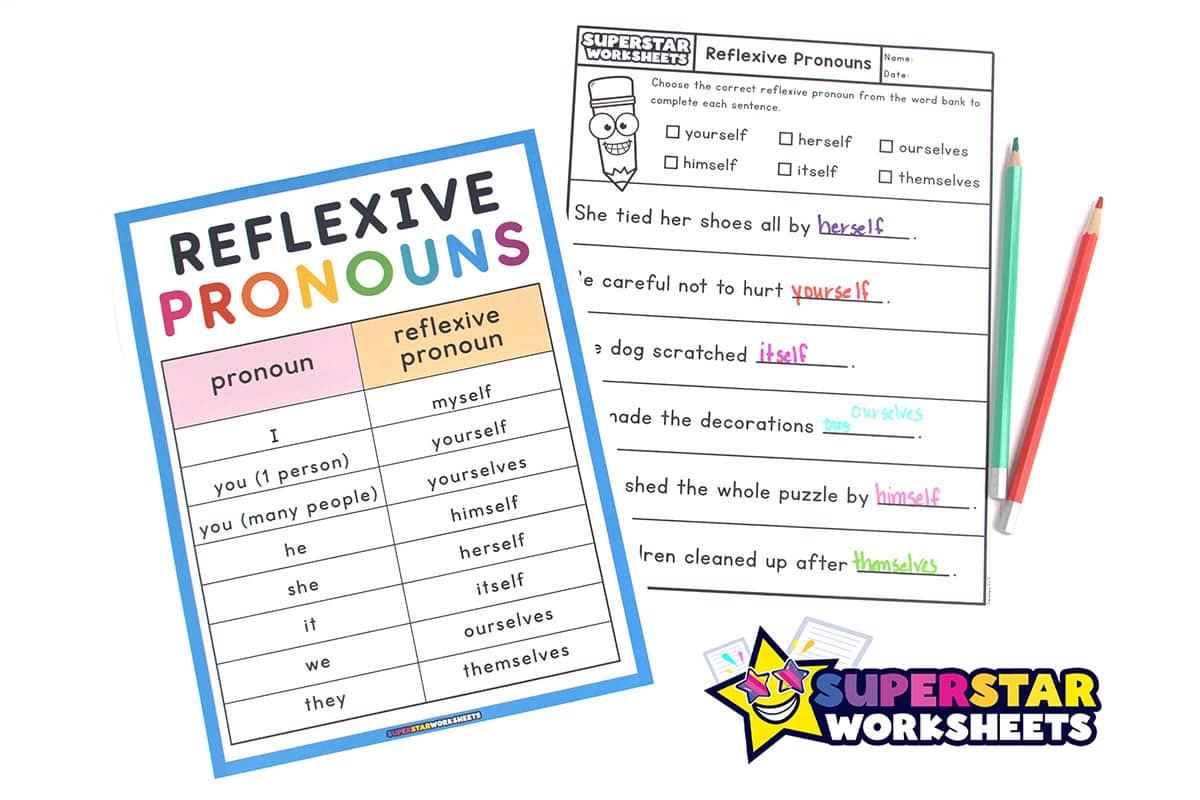
This reflexive pronouns chart pairs each subject pronoun with its matching reflexive form in a clean two-column layout, helping students see the relationship between pronouns like ‘he’ and ‘himself’ at a glance. A handy reference for independent writing and grammar practice. Teachers! For more printables to use in your reading and writing classes, check out our Writing Bundle!
What is a Pronoun?
A pronoun is a word that takes the place of a noun in a sentence. Instead of repeating a person’s name or the name of a thing over and over, we use a pronoun to stand in for it. Without pronouns, our sentences would sound repetitive and awkward. For example, instead of saying “Maria went to Maria’s locker to get Maria’s backpack,” we can say “She went to her locker to get her backpack.”
Personal pronouns refer to specific people or things. Subject pronouns tell us who is doing the action. Object pronouns tell us who receives the action. Possessive pronouns show ownership and modify the nouns that follow them. Learning to identify and use these three types correctly is one of the most important early grammar skills for young writers.
“A pronoun is a word used in place of a noun.”
Personal and Possessive Pronoun Activities
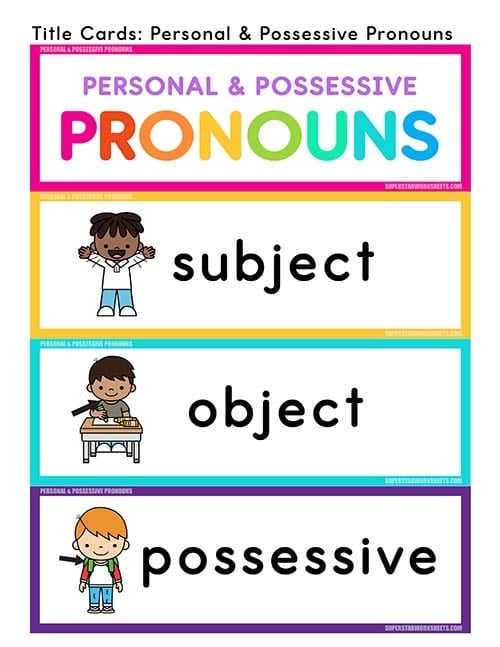
Personal and Possessive Pronoun Flashcards
This flashcard set features all personal and possessive pronouns, organized with subject, object, and possessive title cards to guide sorting and review. Students can use these cards for independent practice, partner games, or small group sorting activities. For more FREE noun-related printables, check out our Common Noun Worksheets today!
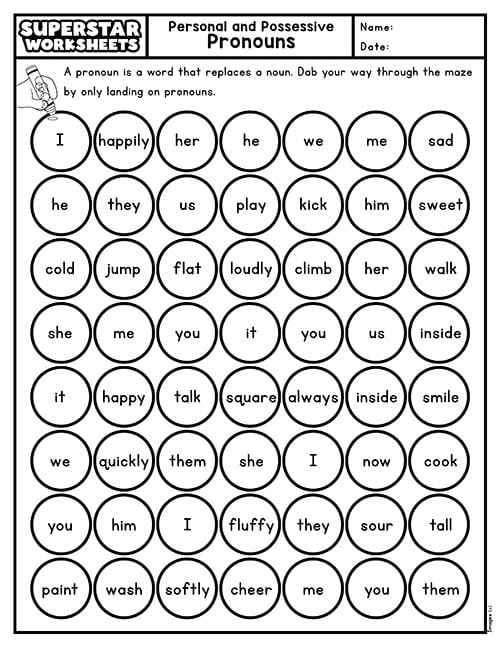
Personal and Possessive Pronouns Dab Worksheet
Students dab their way through a maze of words, marking only the personal and possessive pronouns they find along the path. This engaging activity builds pronoun recognition fluency while mixing in nouns, verbs, and adjectives as distractors.
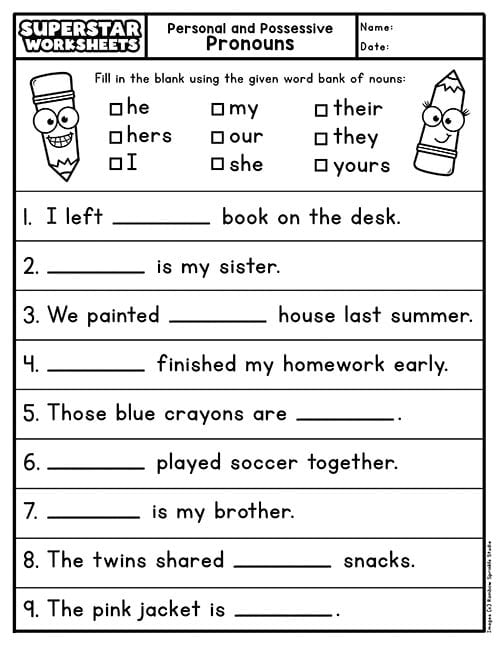
Personal and Possessive Pronouns Worksheet
This fill-in-the-blank worksheet gives students practice choosing the correct personal or possessive pronoun to complete each sentence using a word bank. Each sentence targets a distinct pronoun type, providing broad coverage in a focused activity.
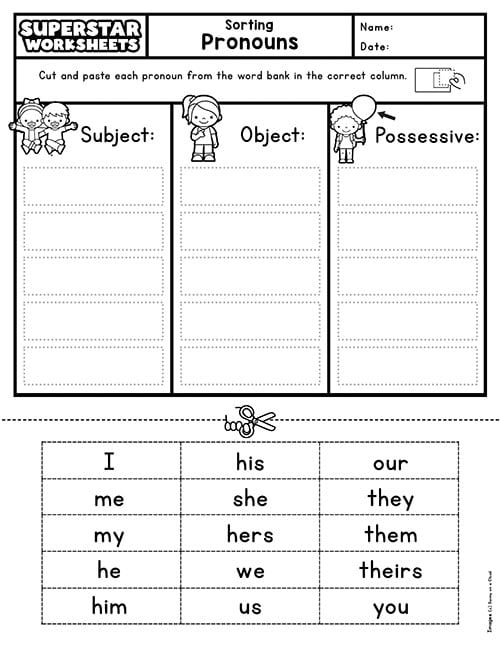
Students cut and paste pronouns from a word bank into three labeled columns (subject, object, and possessive) reinforcing their understanding of how each pronoun type functions in a sentence. An answer key is included for easy self-checking or teacher review.
What are Indefinite Pronouns?
An indefinite pronoun is a pronoun that does not refer to any specific person, place, or thing. Unlike personal pronouns, which point to a particular person (she, him, they), indefinite pronouns are intentionally vague — they refer to unspecified people, things, or amounts. Common indefinite pronouns are grouped by what they describe: people words like anyone, everyone, someone, and nobody; thing words like anything, everything, something, and nothing; and quantity words like few, many, some, all, both, either, and neither.
“An indefinite pronoun does not refer to a specific person or thing.”
Indefinite Pronoun Activities
Indefinite Pronouns Sorting Cards
This flashcard and sorting card set lets students categorize indefinite pronouns into people, things, and quantity groups using title cards as sorting headers. A hands-on activity well suited for grammar centers, partner work, or small group instruction. Teachers! Check out these free Possessive Noun Worksheets.
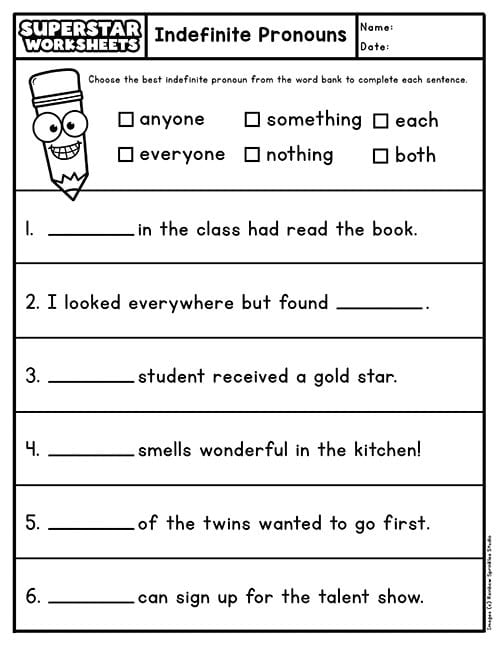
Students choose the best indefinite pronoun from a word bank to complete each sentence, practicing high-frequency indefinite pronouns in meaningful context. This activity works well as guided practice, independent seat work, or homework.
Find the Indefinite Pronoun Worksheet
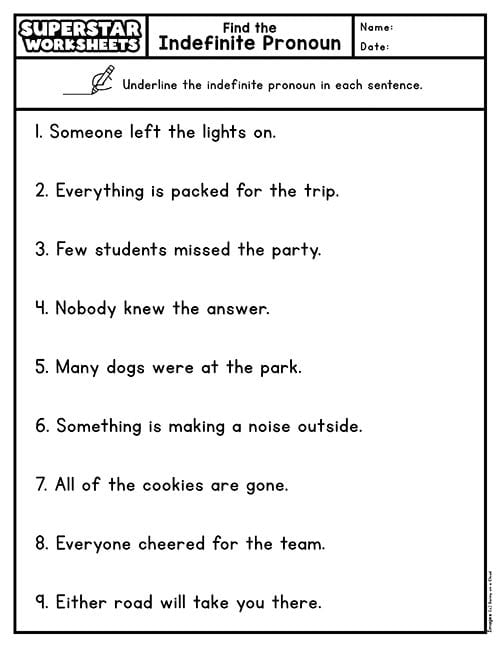
Students read each sentence and underline the indefinite pronoun, building identification skills in the context of complete sentences. This worksheet is an effective formative check after introducing the indefinite pronouns chart.
What are Reflexive Pronouns?
A reflexive pronoun is a pronoun that refers back to the subject of the sentence. Reflexive pronouns always end in -self (singular) or -selves (plural) and include: myself, yourself, himself, herself, itself, ourselves, yourselves, and themselves. They are used when the subject and the object of a sentence are the same person or thing — for example, “She made herself a snack” or “The cat cleaned itself.”
“A reflexive pronoun refers back to the subject of the sentence.”
Reflexive Pronoun Activities
Reflexive Pronouns Learning Mat and Cards
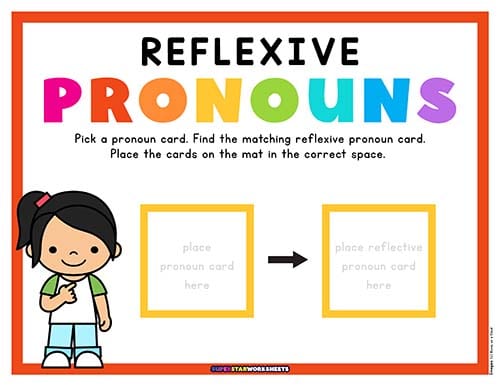
This reusable learning mat and card set invites students to match each subject pronoun card to its correct reflexive pronoun, reinforcing the relationship between pronoun pairs through hands-on practice. Laminate the mat for repeated use at a grammar center.
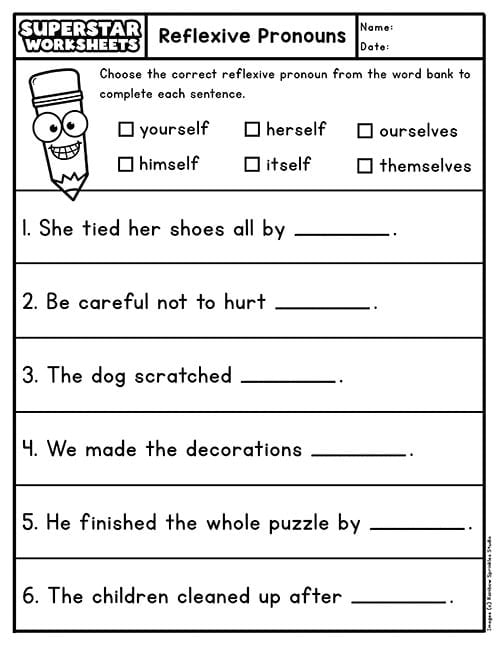
Students complete each sentence by selecting the correct reflexive pronoun from a word bank, practicing all eight reflexive pronoun forms in familiar, everyday sentence contexts. Includes an answer key for quick correction.
Writing with Reflexive Pronouns
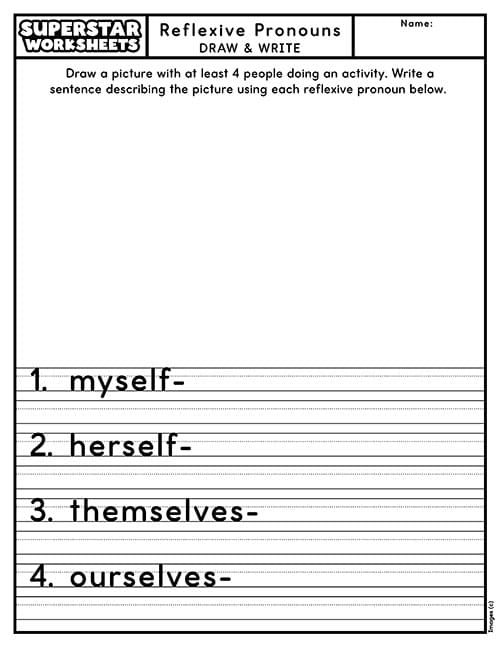
Students draw a picture showing people doing an activity, then write original sentences using four different reflexive pronouns to describe the scene. This creative writing expansion connects grammar skills to authentic expression.
Leave a Reply