
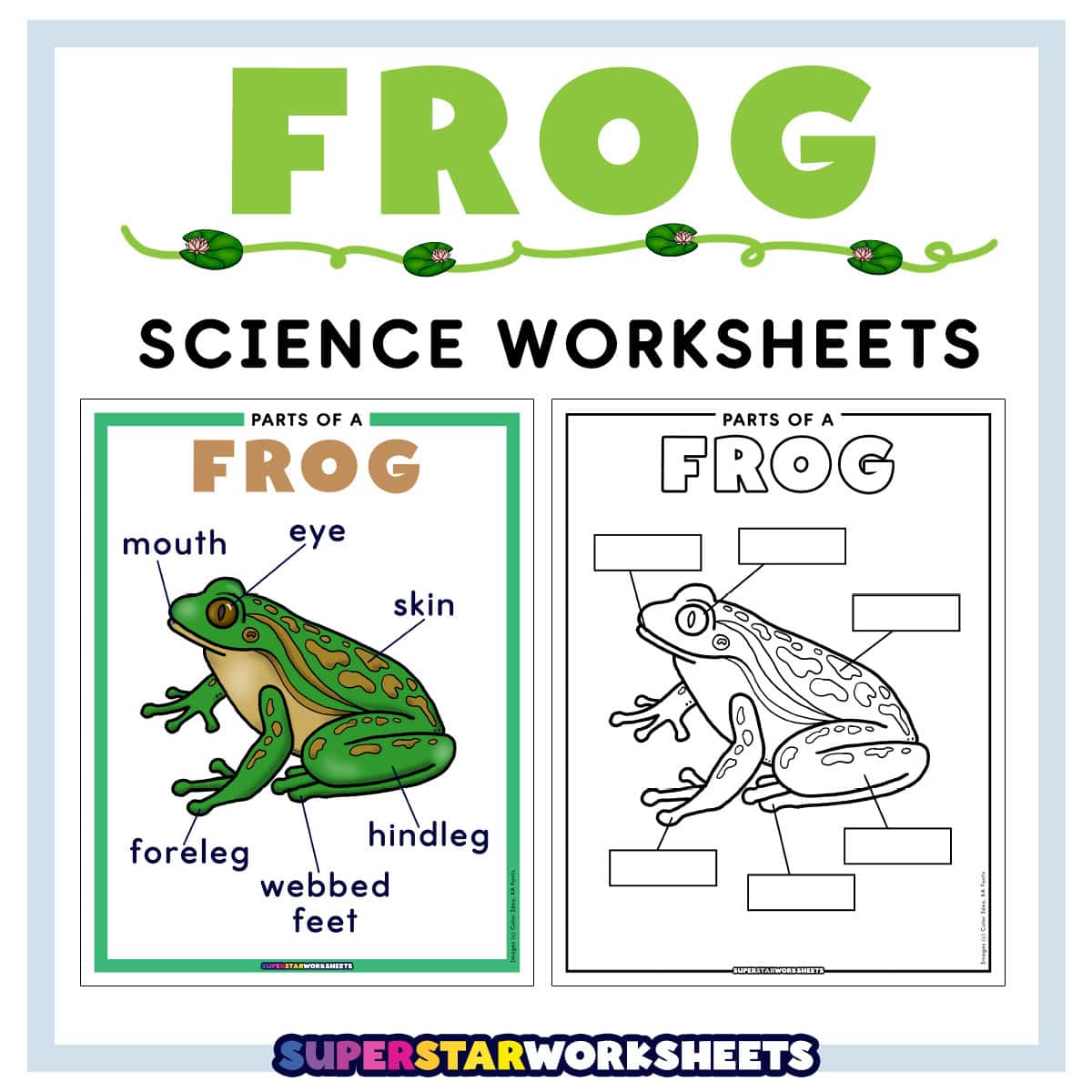
Free printable Frog Worksheets make it easy to bring hands-on science into your classroom or homeschool. This growing collection includes frog life cycle diagrams, parts of a frog charts, adaptation activities, food web diagrams, and fun fact research pages for elementary students. Download and print PDF frog worksheets, vocabulary cards, coloring pages, and cut-and-paste activities that build vocabulary, reading, and research skills. Whether you are teaching a whole class science unit, running a small-group activity, or setting up a homeschool lesson, these worksheets help kids explore how frogs grow, adapt, and fit into their pond habitat.
Frog Life Cycle Worksheets
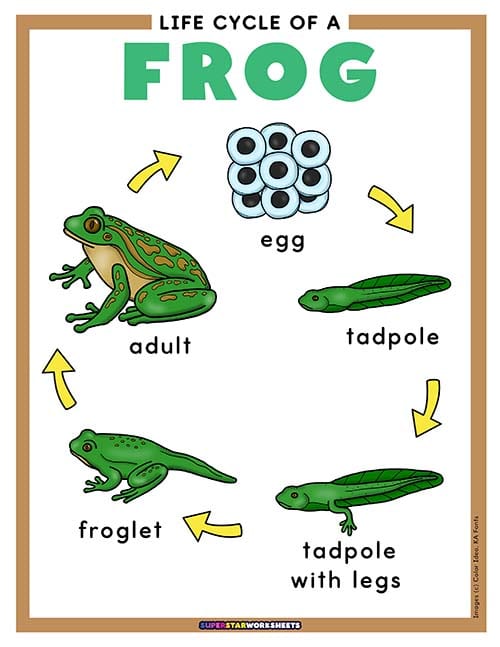
This colorful frog life cycle chart walks kids through each stage, from egg to tadpole to full grown adult frog. The bright yellow arrows and simple labels make it an easy visual anchor for a science lesson or classroom wall. It’s a great first look at frog life cycle worksheets before diving into hands-on practice.
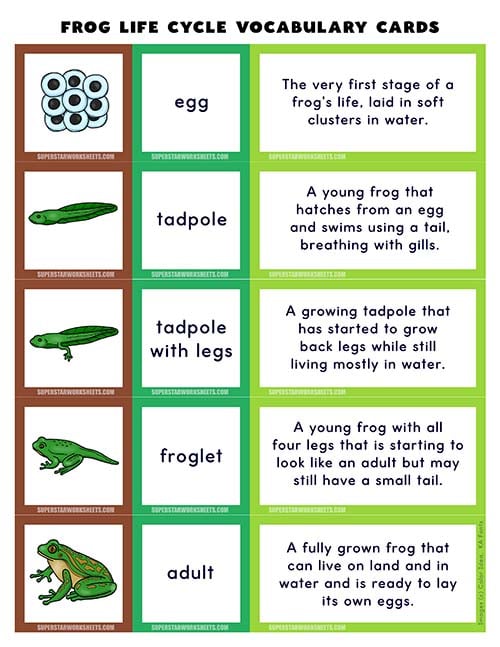
Frog Life Cycle Vocabulary Cards
These picture, word, and definition cards help kids match each frog life cycle term to its meaning and matching image. They pair perfectly with the reusable frog vocabulary mat for hands-on practice. It’s a fun way to build vocabulary before moving into independent worksheets.
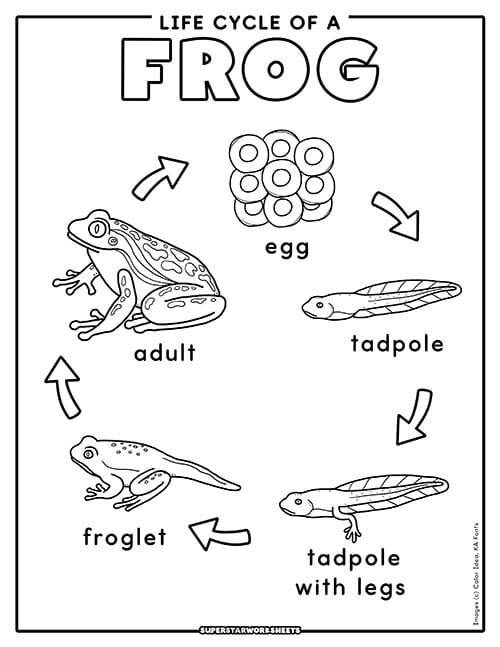
Frog Life Cycle Coloring Chart
Kids color in each stage of the frog life cycle while reading the word labels already provided. This black and white version works well as an independent coloring activity that reinforces the life cycle sequence. It’s a simple, low-prep way to review frog life cycle vocabulary.
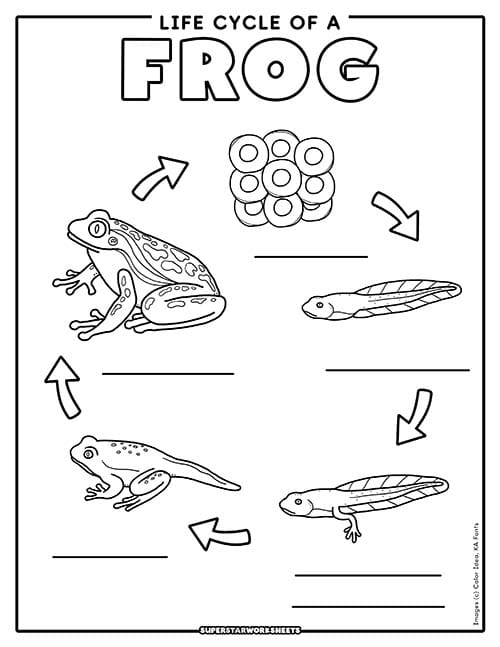
Students test their memory by writing in the correct label under each stage of the frog life cycle. This blank-line version works well as a quick assessment after the coloring chart. It’s an easy way to check understanding of the frog life cycle sequence.
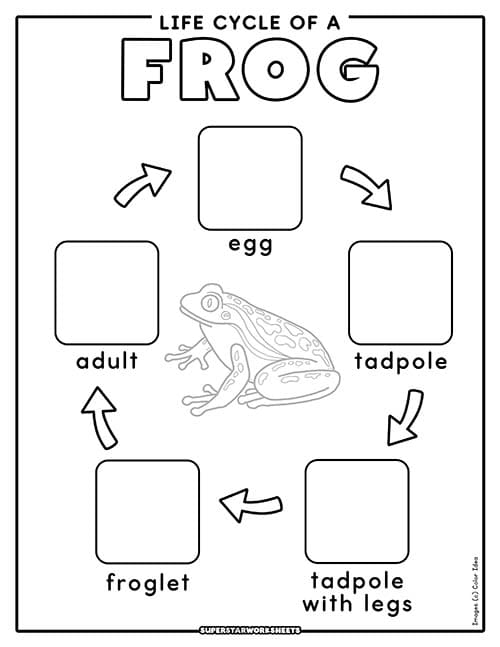
This hands-on cut-and-paste activity has kids glue each frog life cycle picture into the matching spot and write the stage name below. It’s a great fine motor activity for younger learners practicing the frog life cycle in order. It comes with pre-cut picture squares ready for small groups.
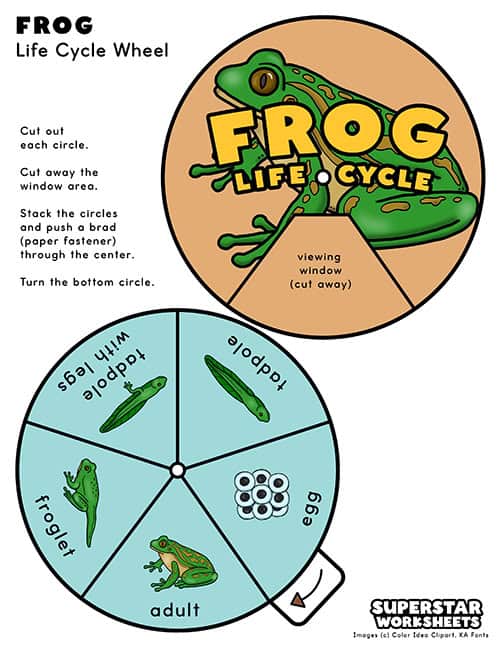
Students color, cut, and assemble a spinning wheel that reveals each stage of the frog life cycle through a window cutout. This craftivity turns life cycle review into a hands-on project kids can take home. It’s a fun alternative to a traditional frog life cycle worksheet.
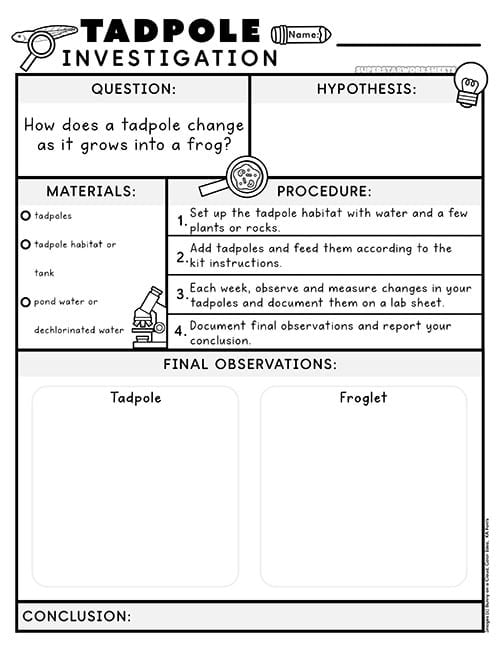
This science investigation has students observe real tadpoles growing into frogs over several weeks, recording predictions and changes along the way. Paired with a lab journal, it turns the frog life cycle into a hands-on classroom experiment. It’s a perfect extension activity for a tadpole kit or classroom habitat.
Teaching the Frog Life Cycle
When introducing the frog life cycle, start with the Model chart to build a clear mental picture of all five stages before moving into hands-on practice. Younger students benefit from the coloring and cut-and-paste activities, which reinforce sequencing through repetition rather than memorization alone. For older students, the labeling worksheet works well as a quick formative assessment. If your classroom has access to a tadpole kit, the investigation pairs beautifully with this unit and turns the life cycle into a live, ongoing observation.
Vocabulary Bank: egg, tadpole, tadpole with legs, froglet, adult
Fun Facts About Frogs
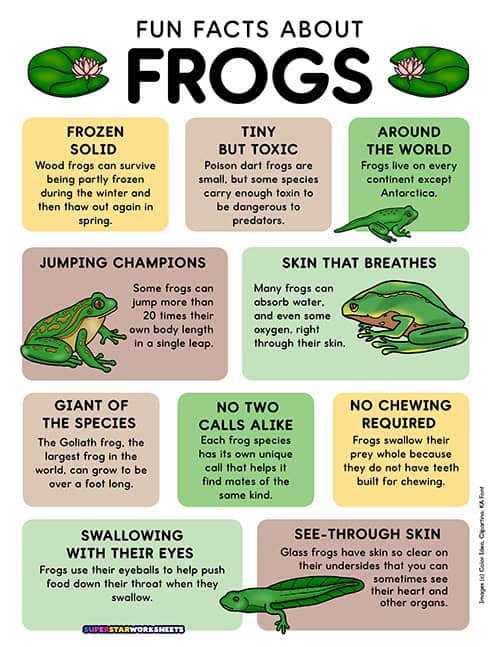
This colorful reference chart shares ten fun and surprising frog facts written in simple, kid-friendly sentences. It’s a great way to spark curiosity before starting a frog research project. It works well for a science center or classroom display.
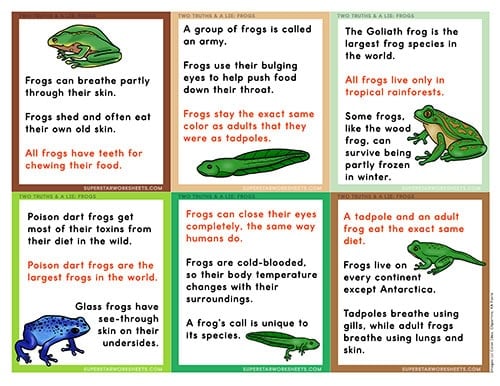
Frog Facts: Two Truths and a Lie
Each card gives two true frog facts and one sneaky lie for kids to spot using reasoning and what they already know. This game-style activity works well in small groups or as a whole class challenge. It’s a playful way to review frog facts and encourage critical thinking.
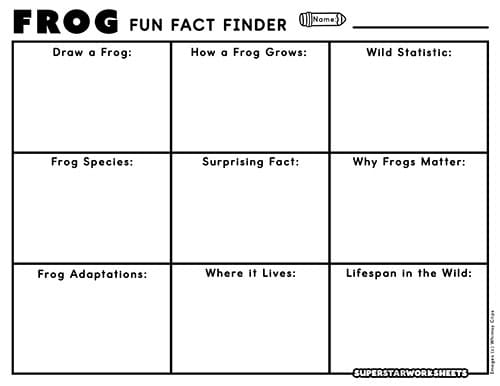
This research activity gives kids nine engaging prompts to explore, from drawing a frog to uncovering a wild frog statistic. It’s an easy, open-ended way to guide independent or small group frog research. It works great for building research skills alongside a frog unit.
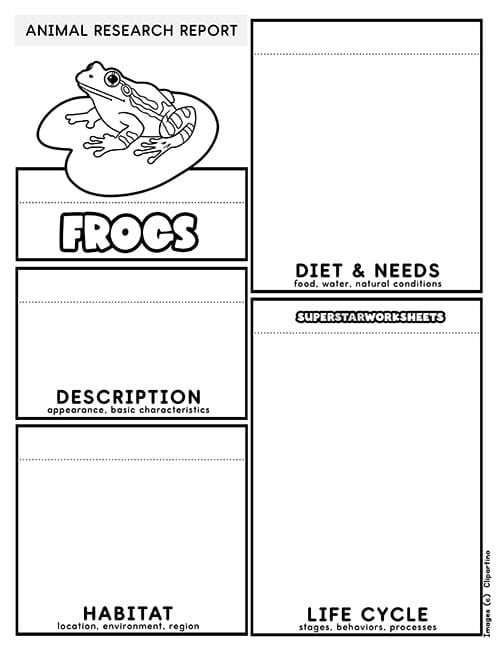
Students research and record what they learn about frog description, habitat, diet, and life cycle in this layered flip-book report. It’s a fun, hands-on way to present frog research in a compact, foldable format. It makes a great culminating project for a frog research unit. Make sure to check out our free Frog templates too!
Teaching Frog Research Skills
The Fun Facts chart works well as a hook to build excitement before starting a frog research unit. Two Truths and a Lie is a great group warm-up that gets kids talking and reasoning about what they already know. Once curiosity is sparked, the Fact Finder gives structure to independent research, and the layer book gives students a simple, hands-on way to present what they learned. This arc works well as a wrap-up activity after covering the other frog topics.
Parts of a Frog Worksheets
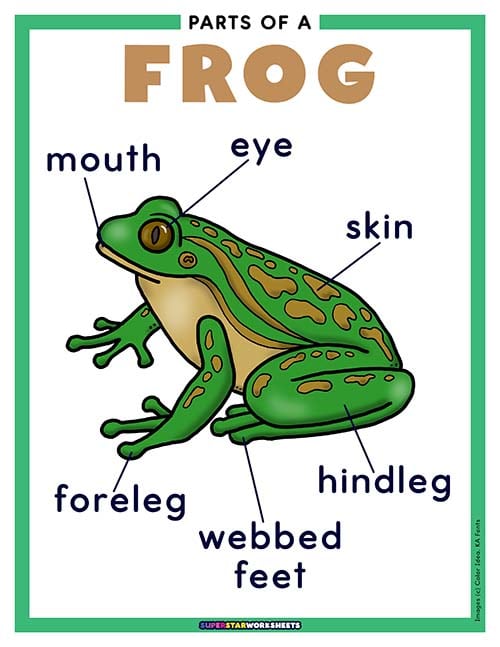
This labeled diagram introduces the external parts of a frog, including its eyes, mouth, legs, and webbed feet. It’s a clear visual reference to use before starting any parts of a frog worksheet. It works great as a first step for teaching frog anatomy basics.
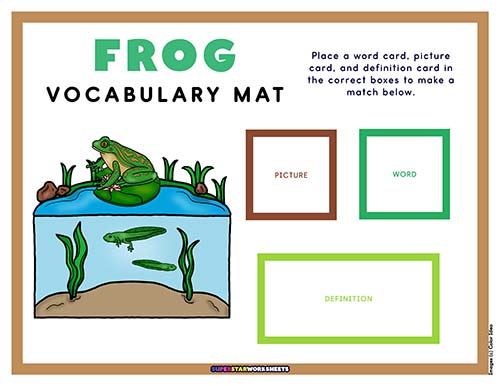
This reusable mat lets kids match picture, word, and definition cards for any frog vocabulary set, starting with the parts of a frog. It’s designed to work across the whole frog unit, so it can be used again with life cycle and adaptation vocabulary too. It’s a flexible, hands-on tool for vocabulary practice.
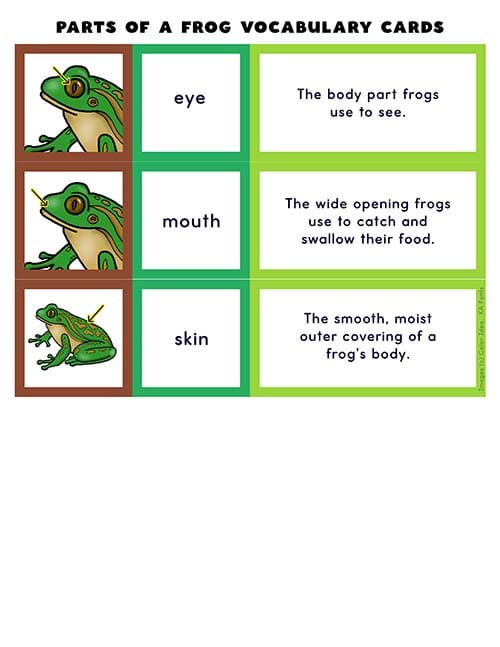
Parts of a Frog Vocabulary Cards
These picture, word, and definition cards cover all six external frog parts for hands-on vocabulary practice. They pair with the frog vocabulary mat for a simple matching game. It’s a great way to reinforce parts of a frog vocabulary before moving to independent worksheets.
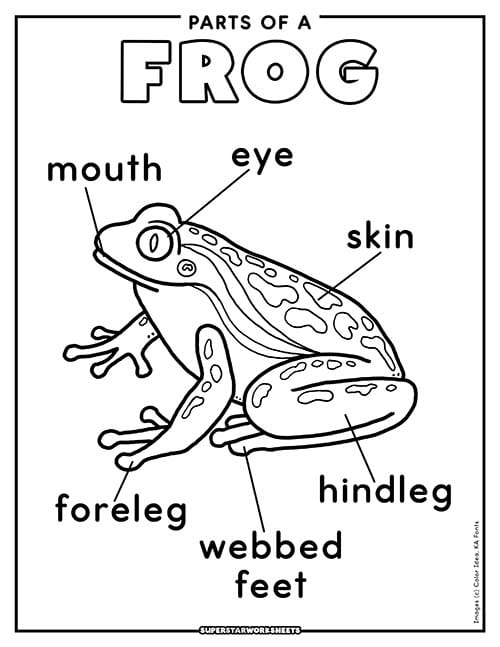
Parts of a Frog Coloring Chart
Kids identify, name, and color each external part of a frog using this black-and-white version of the parts chart. It’s an easy independent activity that reinforces frog anatomy vocabulary. It works well as a simple companion to the color parts of a frog model.
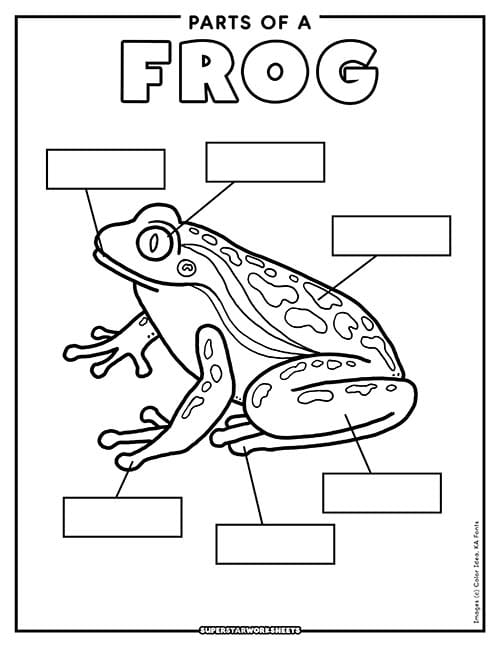
Students match and place word labels onto a frog diagram in this hands-on cut-and-paste activity. It’s a great way to assess whether kids can identify each external frog part on their own. It makes a fun, low-prep follow-up to the parts of a frog chart.
Teaching the Parts of a Frog
Start with the Model chart to introduce all six external frog parts before moving into vocabulary practice. The reusable vocabulary mat and matching cards give younger students a hands-on way to connect each word to its meaning and picture. Once vocabulary is solid, the coloring chart and cut-and-paste activity offer two different ways to check whether kids can identify frog parts independently. This arc works well as the very first lesson in a frog unit, since it builds the foundational vocabulary used throughout the rest of the topics.
Vocabulary Bank: eyes, mouth, forelegs, hindlegs, webbed feet, skin
Frog Adaptations Worksheets
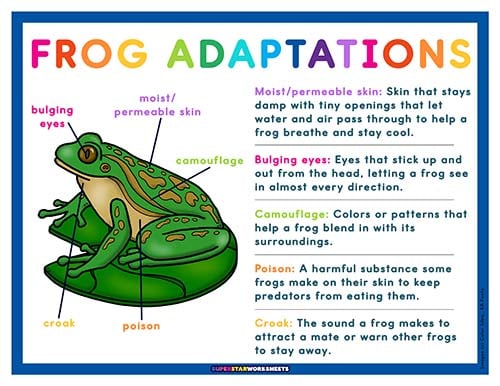
This labeled diagram highlights how a frog’s moist skin, bulging eyes, camouflage, and croaking call all help it survive in the wild. It’s a strong visual introduction before exploring frog adaptations in more depth. It works great as an anchor chart for a frog survival and adaptations lesson.
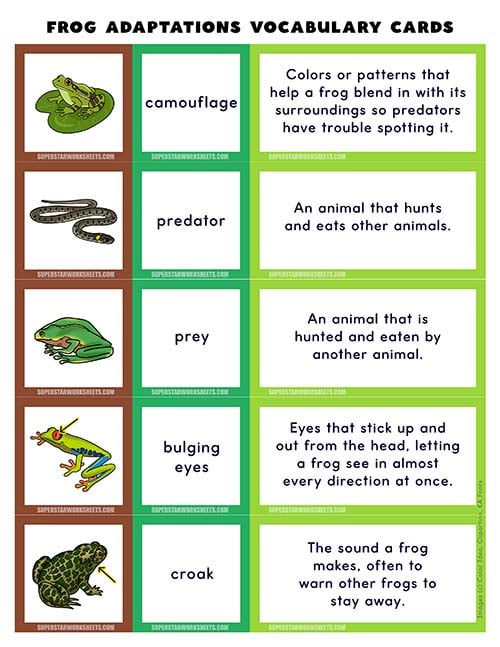
Frog Adaptations Vocabulary Cards
These picture, word, and definition cards cover key frog adaptation vocabulary, from camouflage and predators to poison and permeable skin. They pair with the frog vocabulary mat for hands-on matching practice. It’s a helpful step before tackling the adaptations worksheets.
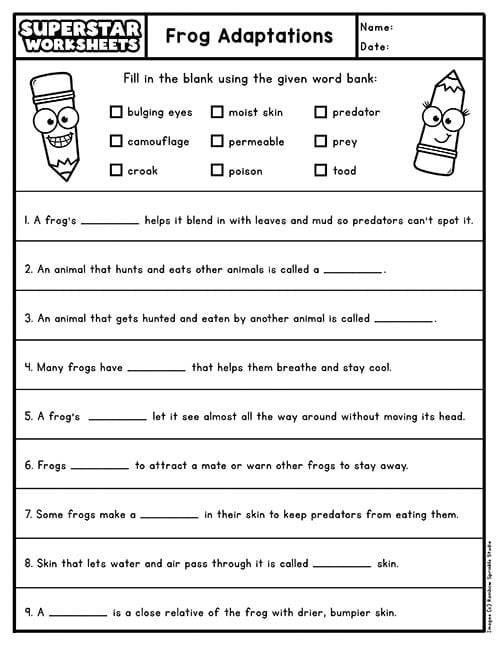
Frog Adaptations Fill in the Blank
Students use context clues to complete sentences about how frogs use camouflage, poison, and other adaptations to survive. This fill-in-the-blank worksheet reinforces adaptation vocabulary in a low-prep format. It’s a solid independent practice activity for a frog adaptations unit.
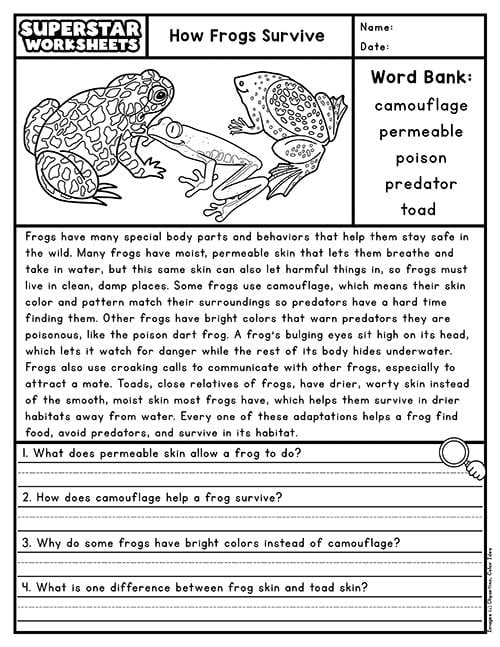
How Frogs Survive Reading Comprehension
This short passage explains how frogs use camouflage, permeable skin, and other adaptations to stay safe in the wild, followed by comprehension questions. It’s a great way to combine reading practice with frog adaptations content. It works well for guided reading groups or independent practice.
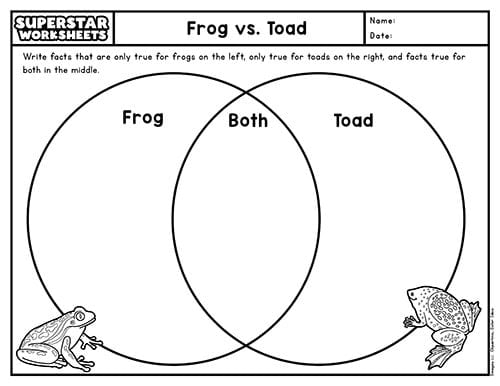
Kids compare and contrast frogs and toads by sorting facts about skin, legs, and habitat into this two-circle Venn diagram. It’s an engaging way to extend the frog adaptations unit into a compare and contrast activity. It makes a fun challenge for kids who love frog vs. toad trivia.
Teaching Frog Adaptations
The adaptations chart is a strong visual to introduce before discussing why frogs look and behave the way they do. Vocabulary cards help build the language kids need before tackling the fill-in-the-blank and reading comprehension worksheets, which reinforce the same vocabulary in two different formats. The Frog vs. Toad Venn diagram makes a fun extension once kids understand frog adaptations, since it challenges them to apply what they learned to a related animal. This arc works well for older elementary students ready to think more deeply about survival and habitat.
Vocabulary Bank: camouflage, predator, prey, moist skin, bulging eyes, croak, poison/toxin, permeable skin, toad, warty skin, smooth skin
Frogs in the Food Web Worksheets
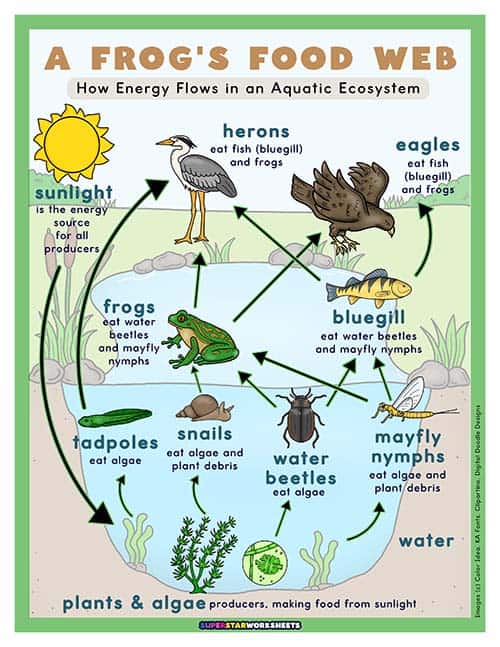
This pond habitat diagram models how energy moves from the sun to plants, insects, frogs, and other pond animals. It’s a clear visual introduction to how frogs fit into a larger food web. It makes a strong anchor chart for teaching ecosystems and food webs.
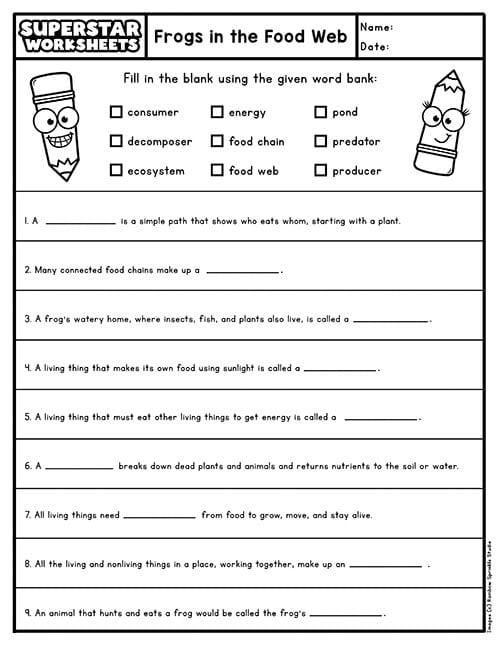
Frogs in the Food Web Fill in the Blank
Students use context clues to complete sentences about food chains, food webs, producers, and consumers using a frog pond as the example. This fill-in-the-blank worksheet reinforces key ecosystem vocabulary. It’s a great independent practice activity for a food web unit.
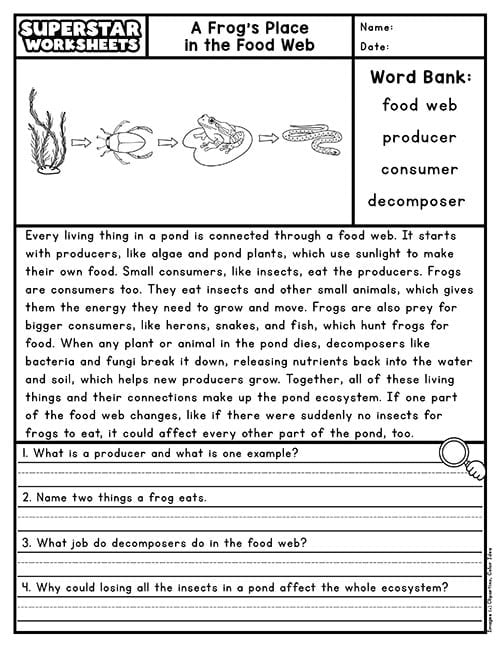
A Frog’s Place in the Food Web Reading Comprehension
This short passage explains how a frog fits into a pond food web as both predator and prey, followed by comprehension questions. It’s a helpful way to combine reading practice with food web and ecosystem content. It works well for guided reading groups or independent practice.
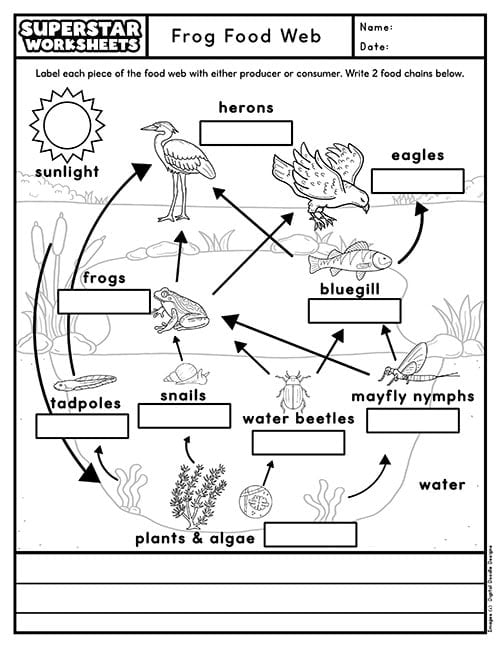
Kids label each part of a pond food web as a producer or consumer and write out two food chains of their own. It’s a strong culminating activity for a frog food web unit. It’s a great way to check understanding of how energy moves through an ecosystem.
Leave a Reply