
Free printable Salmon Worksheets give elementary students a hands-on way to explore the fascinating world of salmon, from their life cycle and body parts to migration, adaptations, and conservation. Download and print PDF charts, labeling worksheets, vocabulary cards, reading comprehension passages, and fun fact activities designed for young learners. These resources build reading comprehension, scientific vocabulary, and an understanding of how animals survive and change over time. Perfect for classroom science centers, homeschool lessons, or small group learning, this collection makes it easy to bring salmon science to life.
Life Cycle of a Salmon Printables
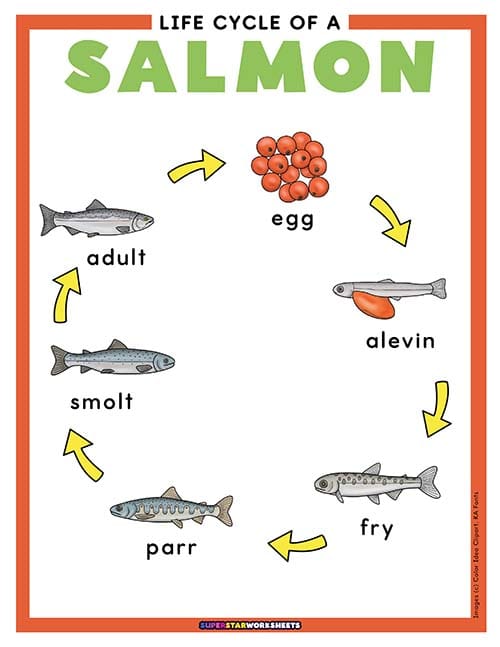
This colorful salmon life cycle chart shows the stages a salmon goes through, from egg to adult, in an easy-to-follow circular diagram. It’s a great anchor chart for a life cycle unit or science journal reference. Pair it with our salmon life cycle vocabulary cards for a deeper hands-on learning experience.
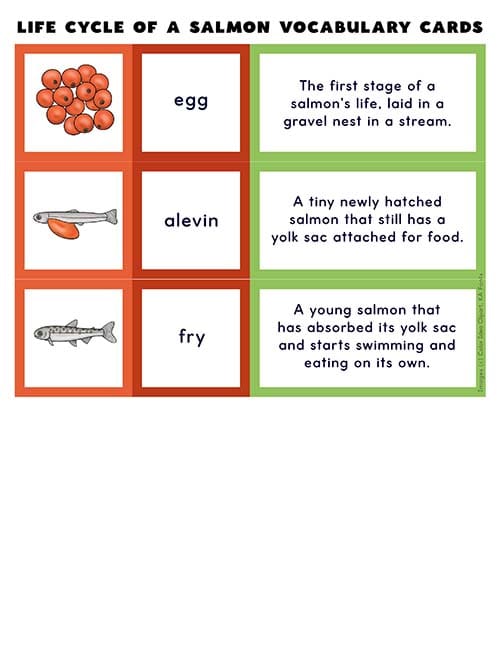
Salmon Life Cycle Vocabulary Cards
These salmon life cycle vocabulary cards help students match pictures, terms, and definitions for each stage of a salmon’s life. They build vocabulary and reading skills while reinforcing the life cycle sequence. Great for learning centers, small group instruction, or independent practice.
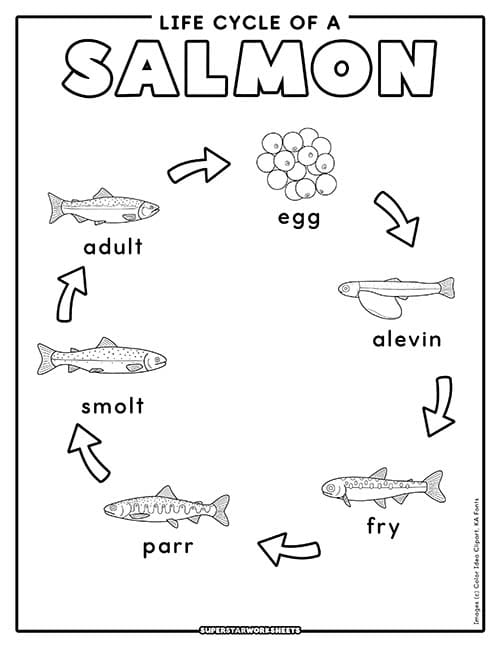
Students color, label, and sequence the stages of a salmon life cycle with this printable worksheet, available with or without a word bank. It’s a flexible way to check understanding after introducing the life cycle chart. Use it for independent practice or as a quick assessment.
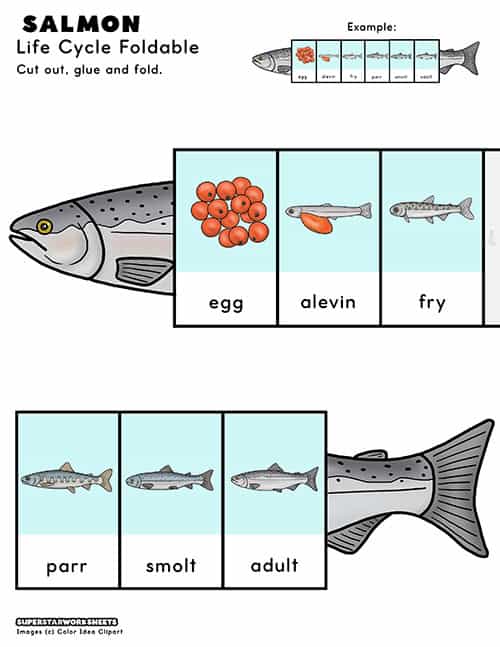
This accordion-style salmon life cycle foldable lets students color, cut, and assemble each stage into a hands-on flip book. It’s a fun way to reinforce sequencing skills and gives students something they can proudly take home. Available in color and black-and-white versions.
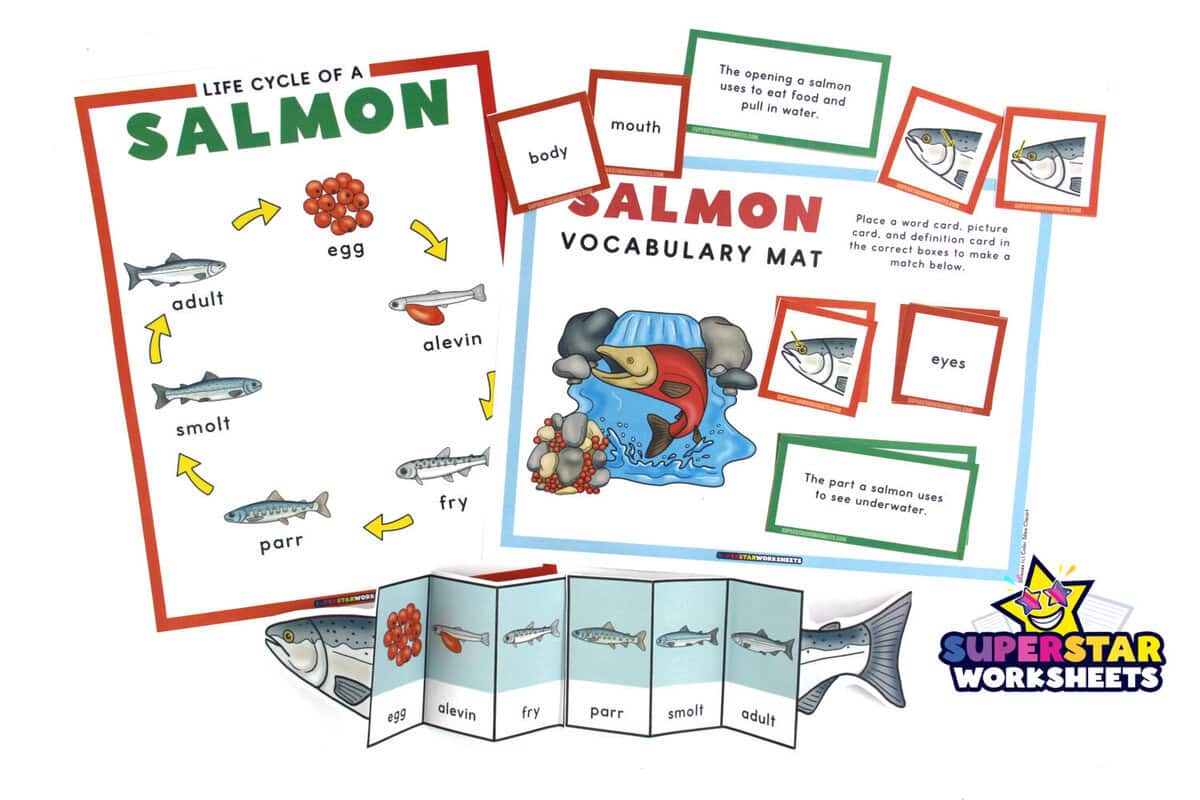
Teaching the Life Cycle of a Salmon
When teaching the salmon life cycle, it helps to walk students through each stage in order, from the tiny egg laid in a gravel nest to the fully grown adult salmon returning to spawn. Emphasize how salmon change dramatically as they move from freshwater streams to the ocean and back again. Encourage students to compare the salmon life cycle to other animals they have studied, noting what makes it unique.
Vocabulary Bank: egg, alevin, fry, parr, smolt, adult
Parts of a Salmon Printables
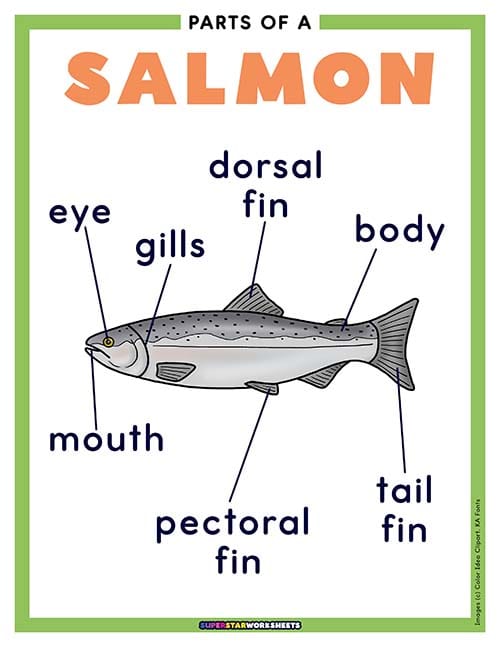
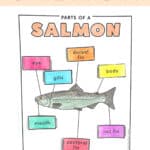
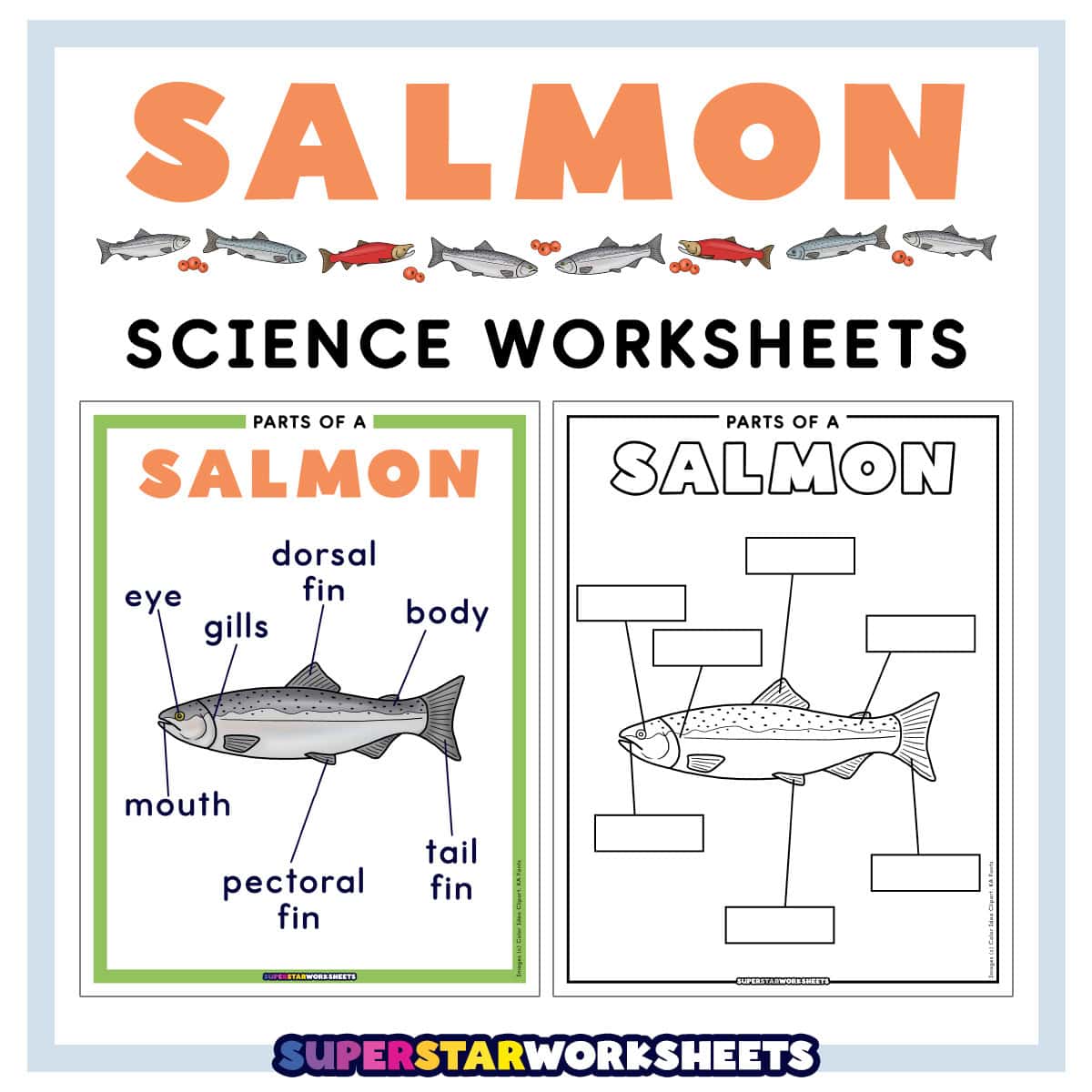
This labeled parts of a salmon chart introduces young learners to the external features that help a salmon survive, including its gills, fins, and eyes. It works well as a classroom anchor chart or a simple reference for science journals. Use it to introduce new vocabulary before moving into hands-on practice activities.
Salmon Vocabulary Learning Mat
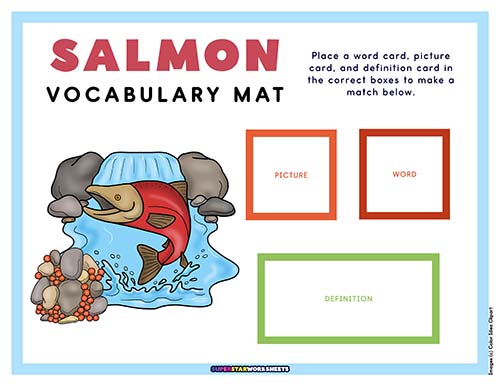
This reusable vocabulary learning mat gives students a hands-on way to match pictures, words, and definitions for salmon-related vocabulary. Because it is designed to work with every vocabulary card set in this collection, it’s a versatile tool for learning centers all year. Perfect for pairing with any of the vocabulary card sets in this collection.
Parts of a Salmon Vocabulary Cards
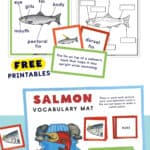
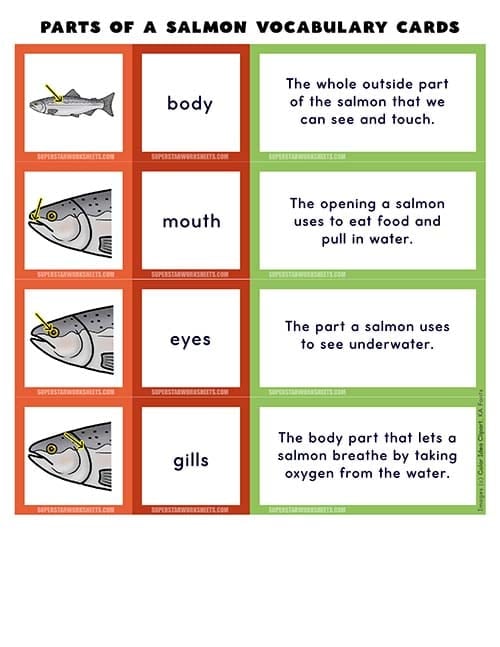
Students practice matching pictures, words, and definitions for each external part of a salmon with this vocabulary card set. It’s a great way to build science vocabulary while reinforcing what each body part does. Use with the vocabulary learning mat for an engaging small-group activity.
Label the Parts of a Salmon Worksheet
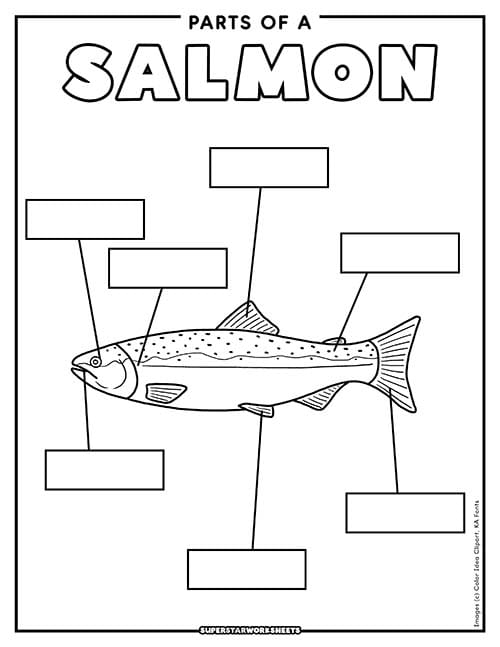
This labeling worksheet lets students color and label the external parts of a salmon, with a cut-and-paste version available for younger learners. It’s an easy way to check understanding after introducing the parts of a salmon chart. Great for independent practice or small group work.
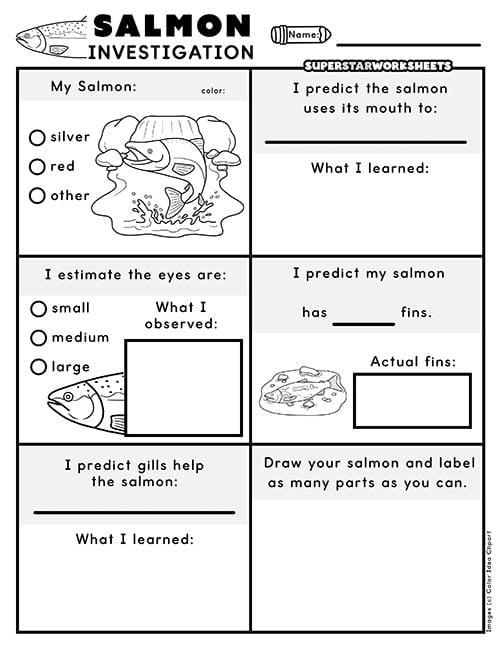
This hands-on investigation activity invites students to observe and describe the external parts of a salmon using a picture or model. Students make predictions, record observations, and draw conclusions about how each part helps a salmon survive. A wonderful way to extend learning beyond the worksheet.
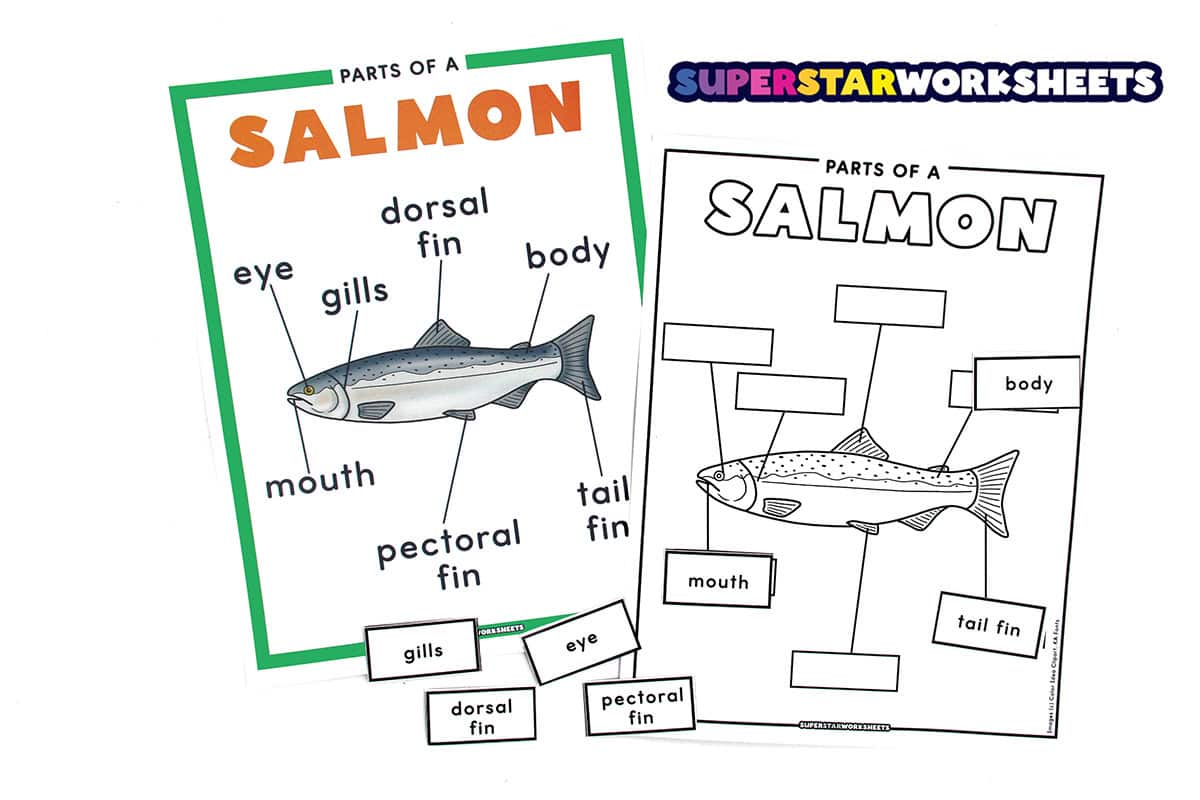
Teaching the Parts of a Salmon
Teaching the parts of a salmon works best when students can see, touch, or closely observe a real or model salmon alongside the chart and vocabulary cards. Point out how each part, from the gills to the fins, plays a specific role in helping the salmon breathe, swim, and survive. This foundational vocabulary will support students as they move into life cycle, migration, and adaptation topics.
Vocabulary Bank: body, mouth, eye, gills, dorsal fin, tail fin, pectoral fins
Salmon Migration & Adaptations Printables
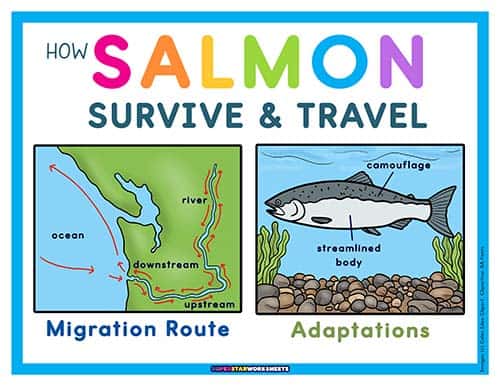
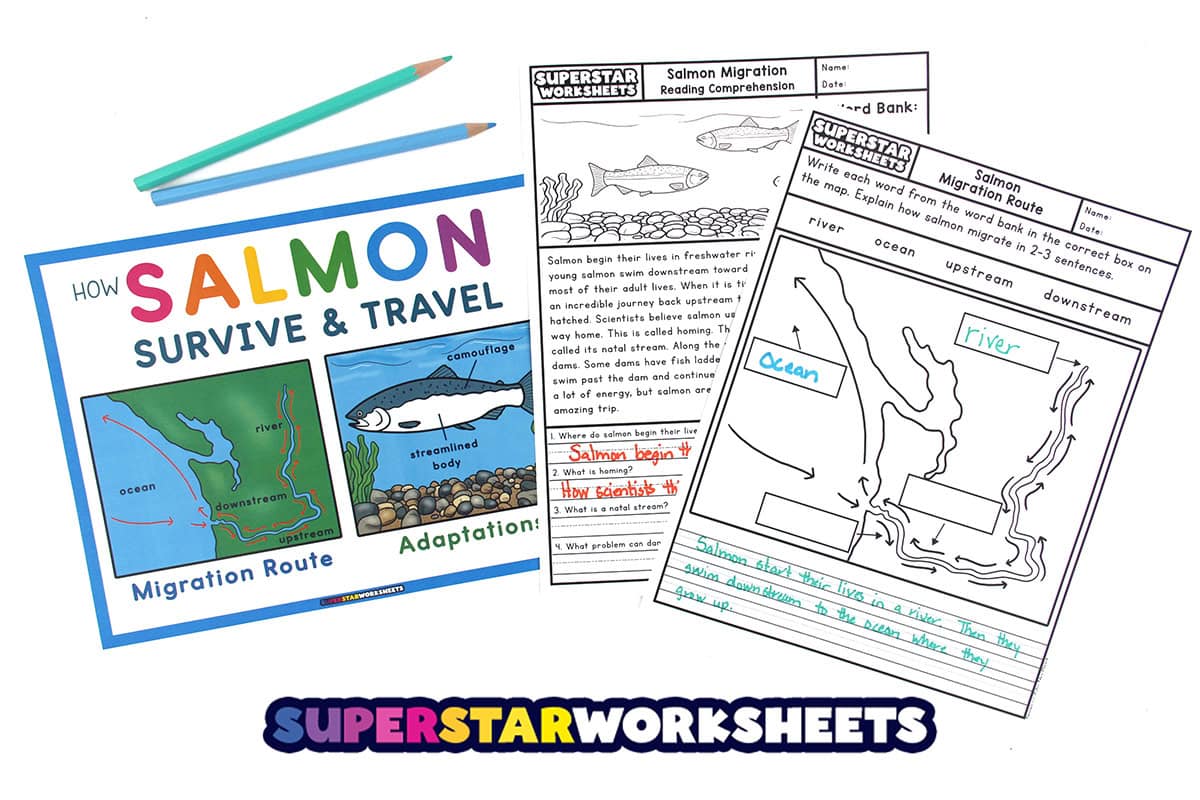
How Salmon Survive & Travel Chart
This chart introduces students to the incredible journey salmon take between freshwater and ocean habitats, along with the special adaptations that help them survive along the way. It covers migration route vocabulary and adaptation features side by side. A great visual introduction before moving into more detailed practice activities.
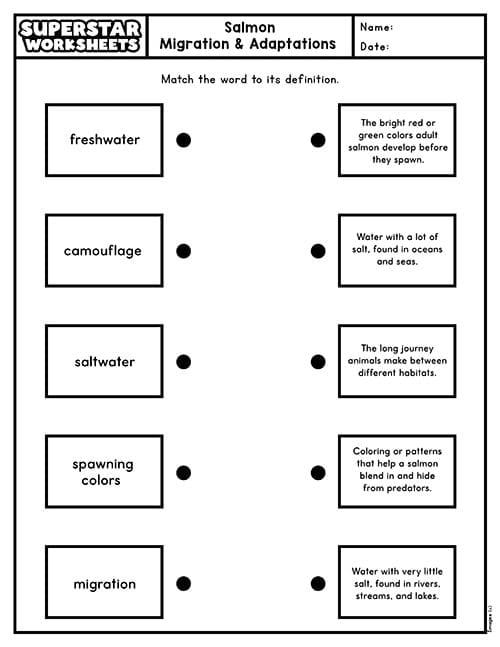
Salmon Migration & Adaptations Matching Activity
Students match migration and adaptation vocabulary terms to their correct definitions in this hands-on matching activity. It reinforces new vocabulary in a low-pressure, engaging format. A great follow-up to the migration and adaptations chart. Need more FREE water animal worksheets? Check out our Shark Week Printables!
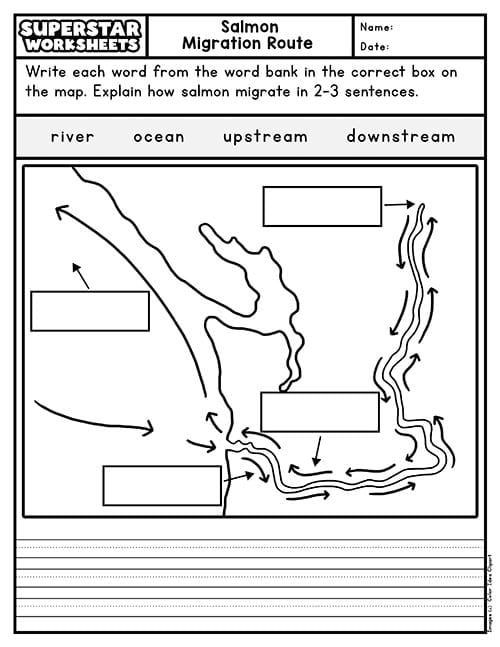
Label the Salmon Migration Route
In this activity, students label a map showing the path a salmon takes from river to ocean and back again. It reinforces key migration vocabulary like upstream, downstream, freshwater, and saltwater. A hands-on way to build geography and science skills together.
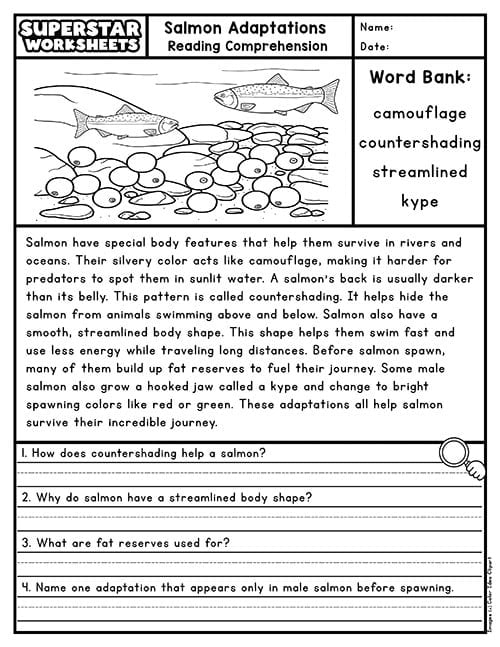
Salmon Adaptations Reading Comprehension
This reading passage explores the special adaptations that help salmon survive, including camouflage, countershading, and streamlined body shape. Comprehension questions check understanding and reinforce new vocabulary. A great way to combine reading practice with science content.
Salmon Migration Reading Comprehension
This reading passage walks students through a salmon’s incredible migration journey, including how salmon use their sense of smell to find their way home. Comprehension questions reinforce key vocabulary like homing and natal stream. A meaningful way to build reading skills alongside science content.
Teaching Salmon Migration & Adaptations
Migration and adaptations naturally go together, since many of a salmon’s unique features exist to help it survive its long journey between freshwater and ocean habitats. Encourage students to think about why each adaptation matters, such as how a streamlined body helps a salmon swim efficiently against a strong current. The reading passages in this section are a great way to reinforce vocabulary while building comprehension skills.
Vocabulary Bank: river, ocean, upstream, downstream, migration, freshwater, saltwater, homing, natal stream, fish ladder, camouflage, streamlined body, countershading, fat reserves, spawning colors
Salmon Conservation Printables
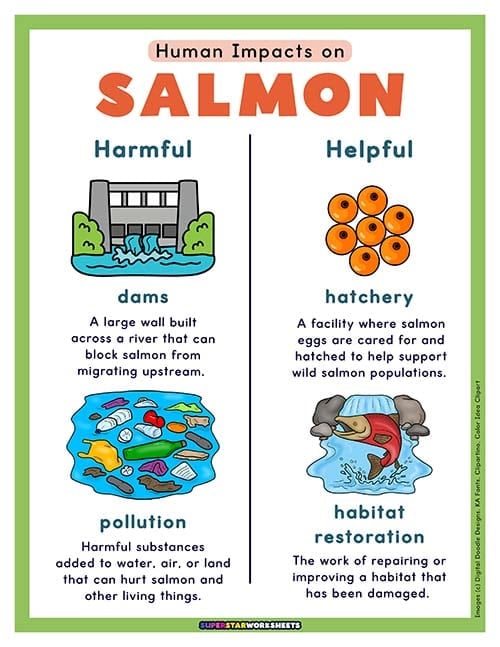
This chart introduces students to the ways human activity can affect salmon habitats, including dams, pollution, and habitat loss. It’s a helpful visual to introduce conservation vocabulary before moving into reading and practice activities. A great starting point for a conversation about protecting wildlife habitats.
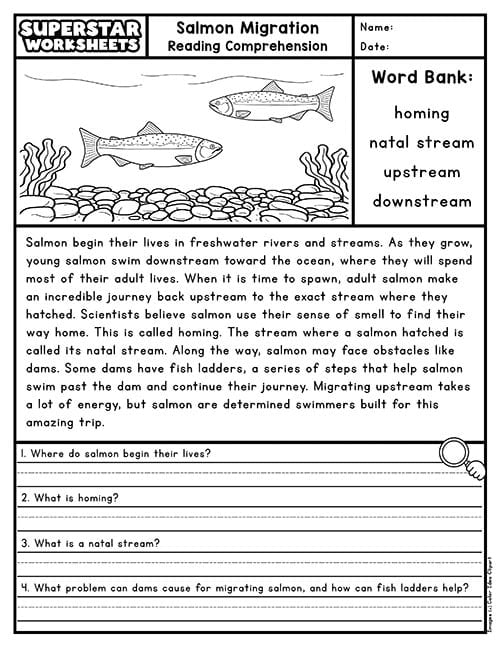
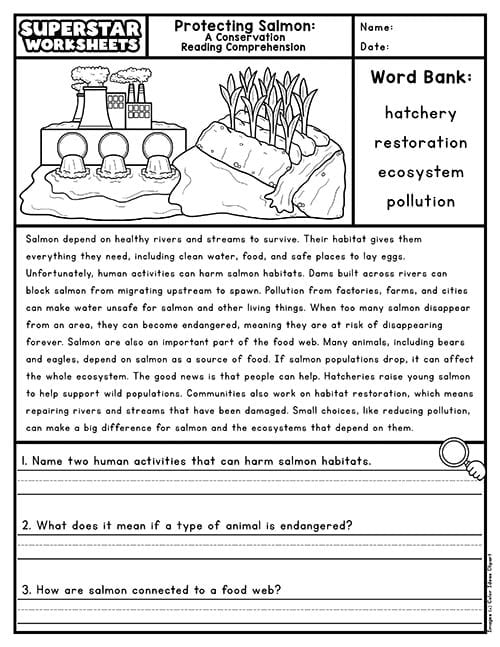
Protecting Salmon Reading Comprehension
This reading passage explores how human choices affect salmon habitats and what people can do to help protect them. Comprehension questions reinforce vocabulary like habitat, hatchery, and restoration. A meaningful way to connect reading skills with environmental science.
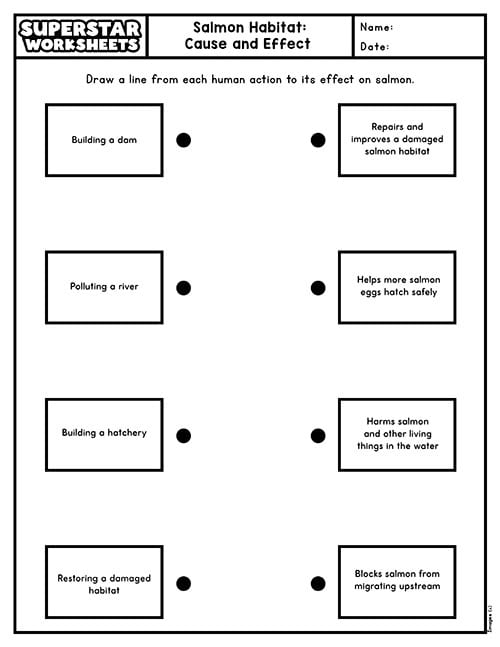
Salmon Habitat Cause and Effect Worksheet
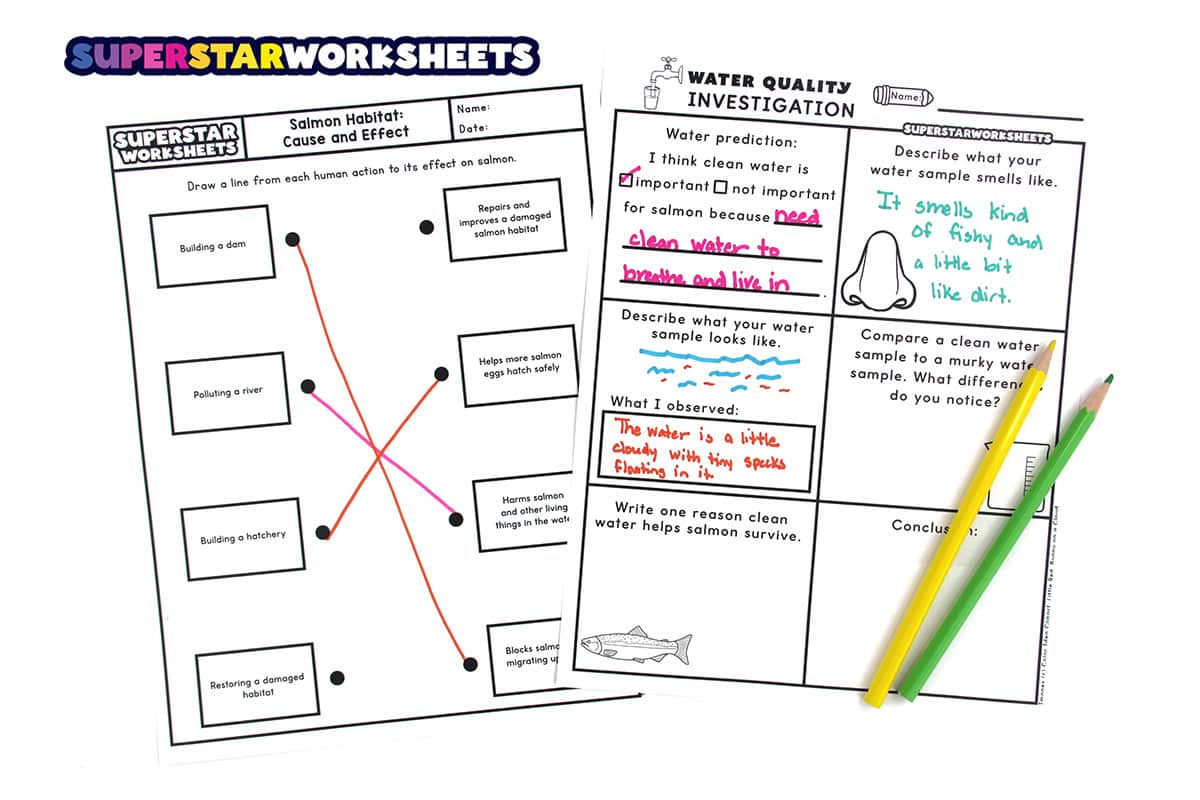
Students match human actions to their effects on salmon habitats in this cause and effect worksheet. It’s a simple, engaging way to reinforce conservation vocabulary and critical thinking skills. Great for independent practice or small group discussion.
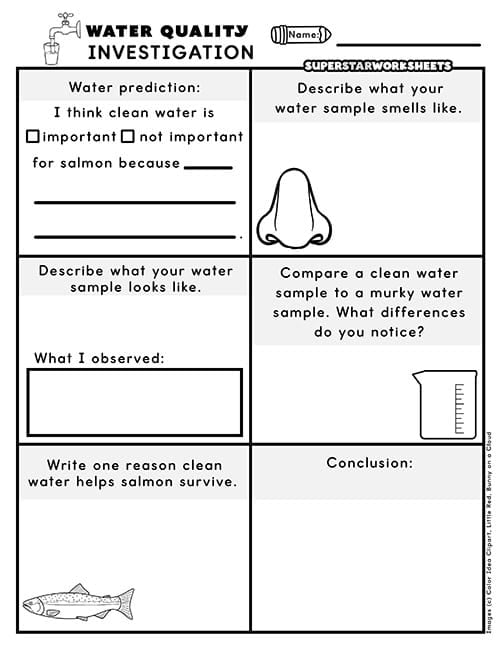
Why Clean Rivers Matter: A Water Quality Investigation
In this hands-on investigation, students explore why clean water matters for salmon survival by observing and comparing water samples. It’s a simple way to connect environmental science with real-world observation skills. A meaningful extension activity for a salmon conservation unit.
Teaching Salmon Conservation
Conservation topics give students a chance to think critically about how human choices affect the natural world. Use the reading passage and cause and effect worksheet together to help students understand both the challenges salmon face and the solutions people are working on, like hatcheries and habitat restoration. The water quality investigation is a memorable, hands-on way to make this topic feel real and relevant.
Vocabulary Bank: habitat, dam, pollution, endangered, ecosystem, food web, hatchery, restoration, human impact
Salmon Facts for Kids
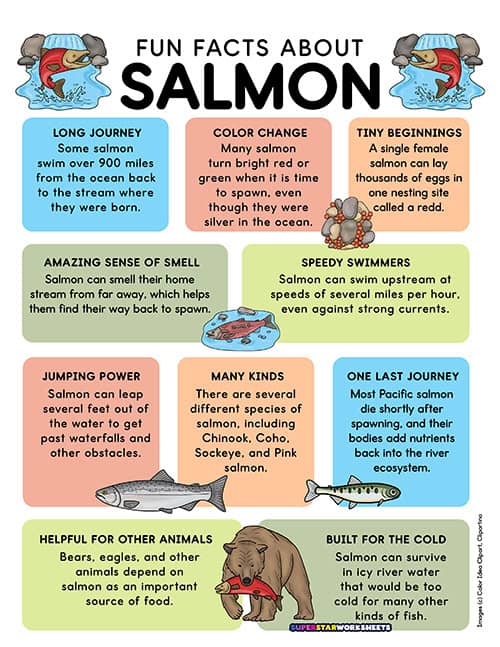
This colorful poster shares ten fun and surprising facts about salmon, perfect for sparking curiosity at the start of a science unit. It works well as a classroom display or a quick reference during research activities. A fun way to introduce salmon science facts. For more FREE printable fish activities, check out our Fish Templates here!
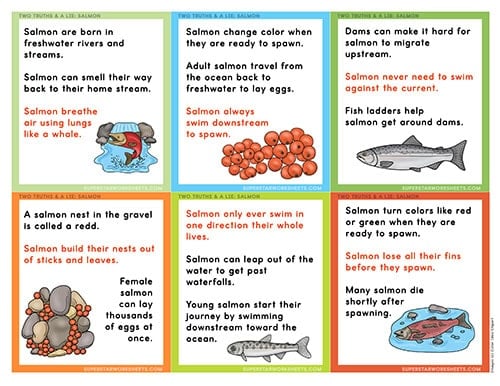
Students read three statements about salmon and try to determine which one is false in this fun critical thinking card game. It’s a playful way to review facts while encouraging students to think carefully about what they have learned. Great for whole group review or a quick classroom transition activity.
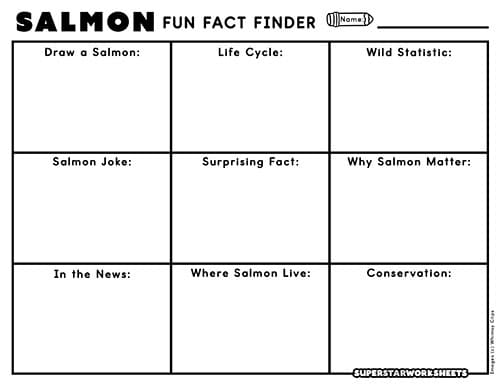
This research based scavenger hunt encourages students to seek out fun and surprising facts about salmon on their own. It builds research skills while keeping the activity playful and engaging. A great way to extend learning beyond the classroom.
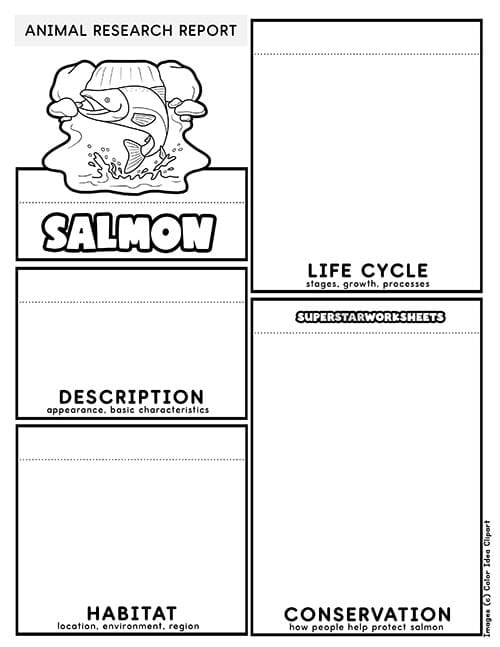
Salmon Research Report Layer Book
Once students have gathered their salmon facts, they can organize them into this simple layer book covering description, habitat, life cycle, and conservation. It’s a great way for young learners to practice organizing research into a simple report format. A fun capstone activity for a salmon unit.
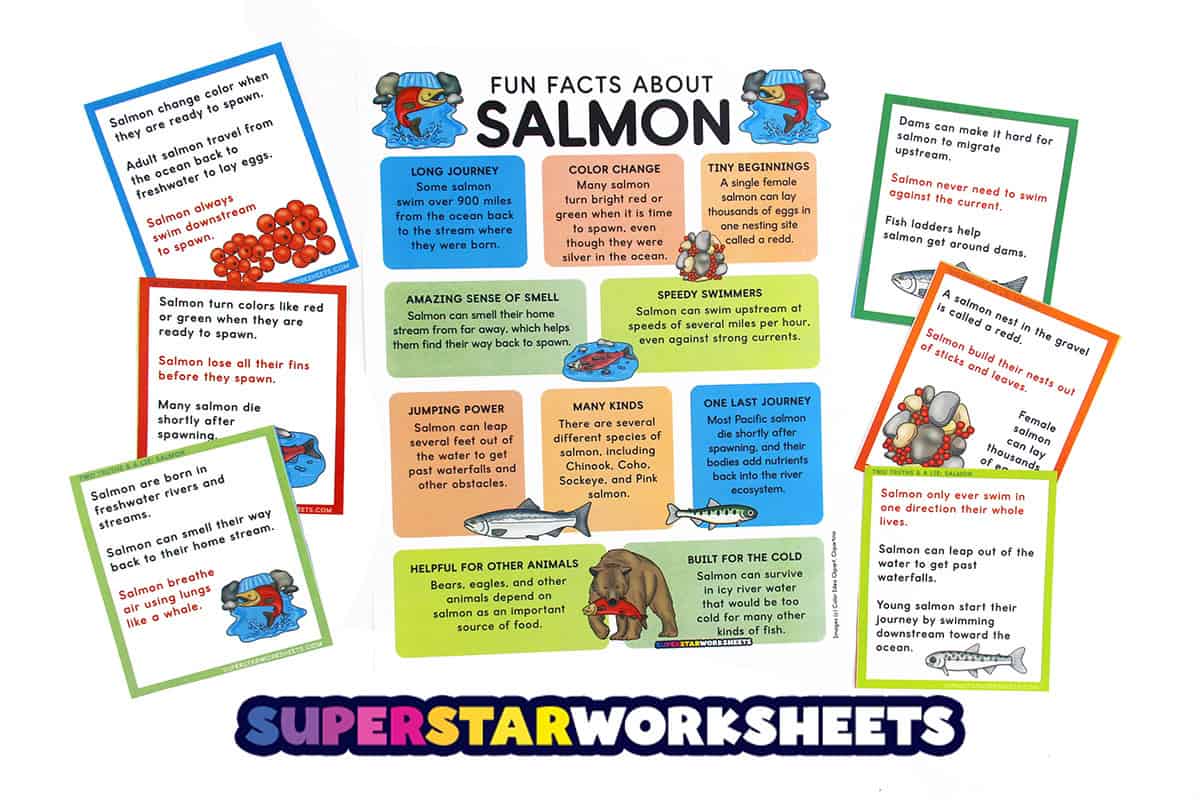
Amazing Salmon Facts
Wrap up a salmon unit with fun facts and research activities that let students explore what excites them most about this incredible fish. The two truths and a lie game and fact finder both work well in pairs or small groups, encouraging discussion and curiosity. Finally, the research report layer book gives students a simple way to bring everything they’ve learned together in one place.
Vocabulary Bank: Featured Facts: Long Journey, Amazing Sense of Smell, Color Change, One Last Journey, Jumping Power, Many Kinds, Speedy Swimmers, Helpful for Other Animals, Tiny Beginnings, Built for the Cold
Leave a Reply