
Free printable plant worksheets for elementary students! Download and print our PDF plant science worksheets covering parts of a plant, the plant life cycle, photosynthesis, and more. This collection includes labeled diagrams, cut and paste activities, vocabulary cards, coloring pages, life cycle crafts, research reports, and a hands-on bean plant science experiment. Perfect for classroom science units, homeschool plant lessons, and science centers, these plant printables help young learners develop observation, research, and science literacy skills from kindergarten through fifth grade.
Parts of a Plant Printables
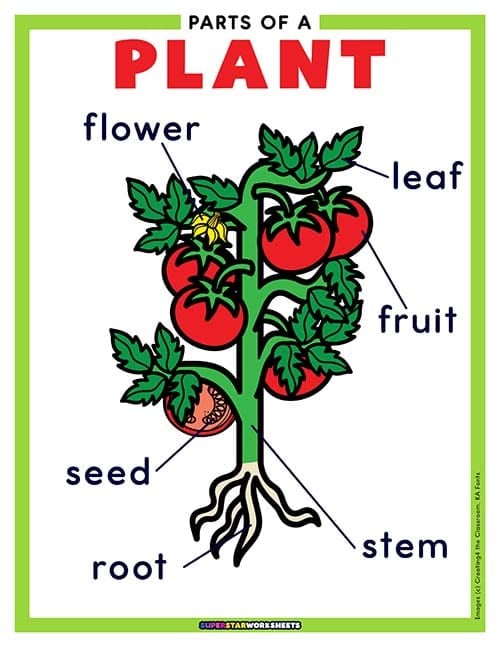
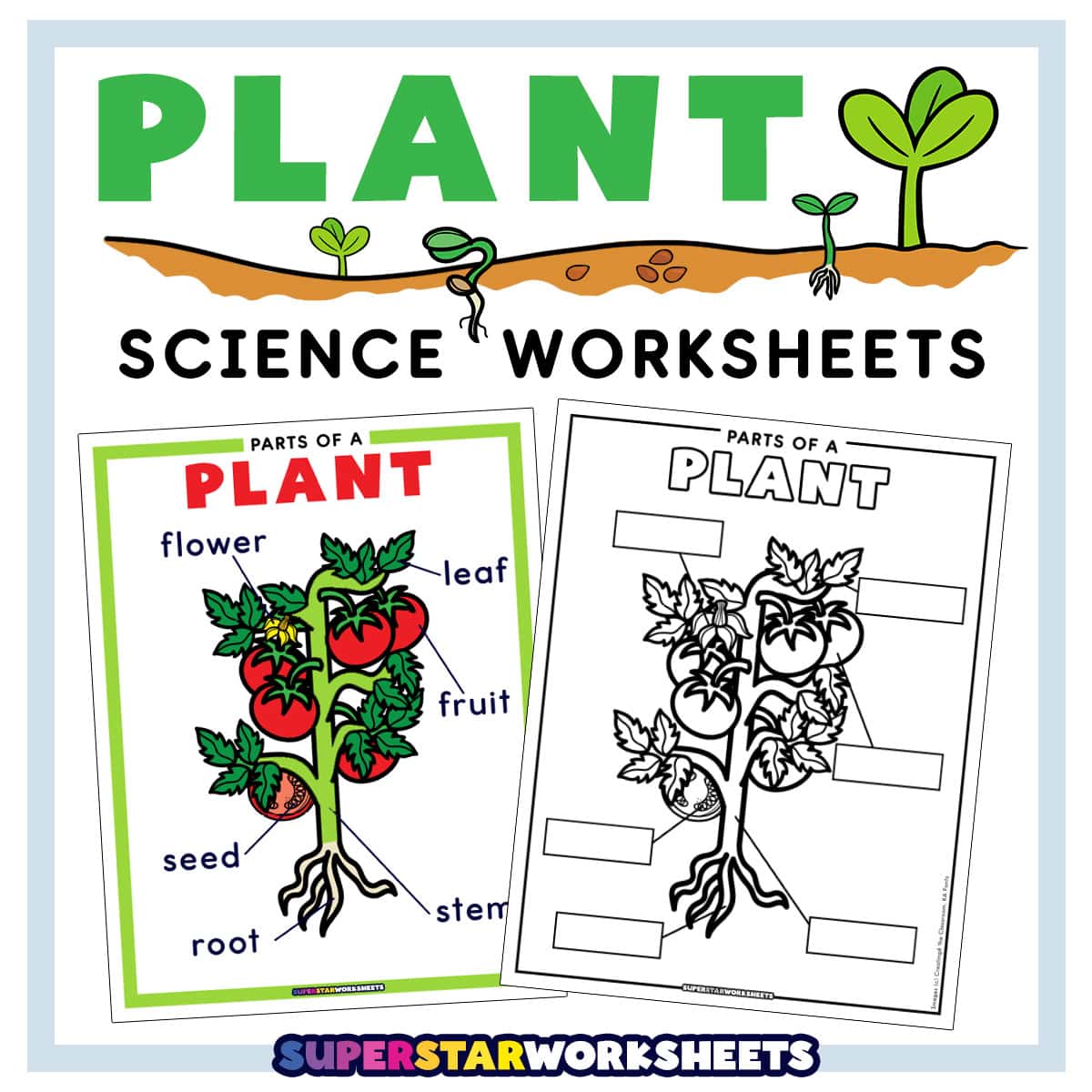
Download and print this full color Parts of a Plant diagram featuring a labeled tomato plant. This classroom-ready anchor chart shows all six external parts with clear lowercase labels and pointer lines. Use as a reference chart during plant science lessons or display it in your science center.
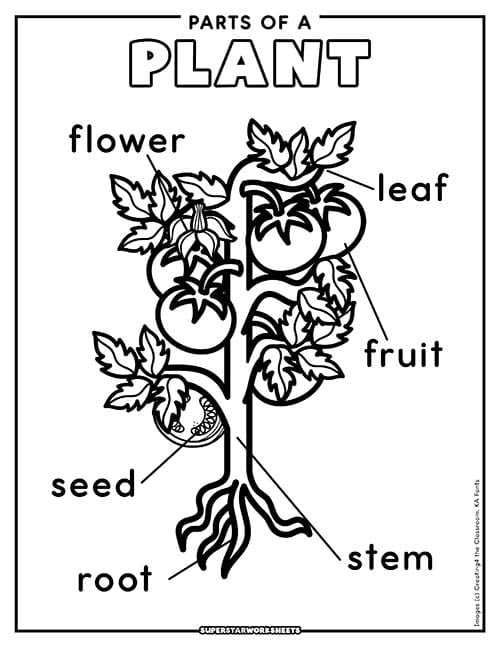
This black and white parts of a plant diagram is a low-ink printable perfect for student notebooks and science journals. All six external parts are clearly labeled on a tomato plant illustration. This is ideal for coloring, annotating, or using as a student reference sheet alongside the full color anchor chart.
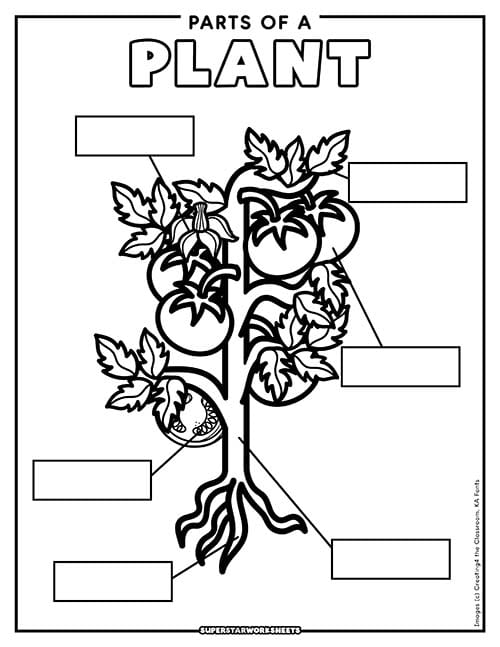
Students practice identifying plant parts with this cut and paste labeling activity. The first page features an unlabeled tomato plant diagram with blank label boxes, and the second page provides word cards for each of the six parts to cut out and paste in the correct spots. Older students can write the labels directly in the boxes.
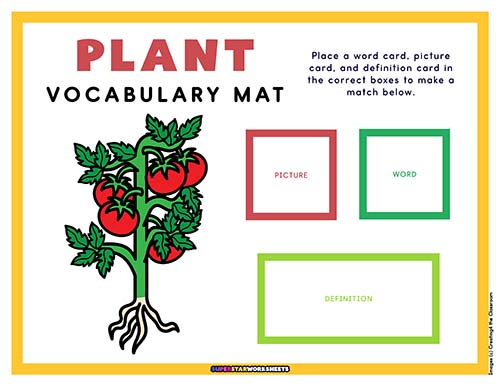
This reusable plant vocabulary learning mat is a hands-on center activity for early learners. Students match picture cards, word cards, and definition cards for plant parts, life cycle stages, plant needs, and photosynthesis terms. Laminate the mat for repeated use throughout your entire plant science unit.
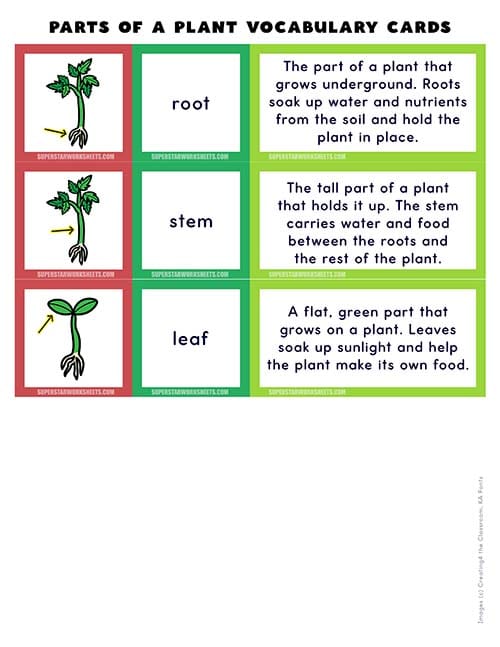
Parts of a Plant Vocabulary Cards
Students build plant science vocabulary with these 3-part vocabulary cards featuring a picture, word, and definition for each of the six plant parts. Use these cards independently, with the vocabulary learning mat, or as a matching center activity. Includes two pages of cards covering root, stem, leaf, flower, fruit, and seed. Check out our sunflower worksheets!
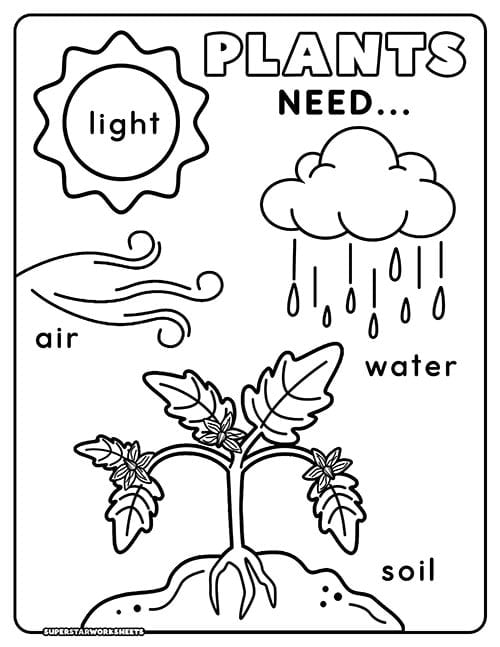
Students read and color plant needs including sunlight, air, water, and soil. This is a simple, bold outline coloring sheet that will help early elementary students learn what plants need to survive and thrive.
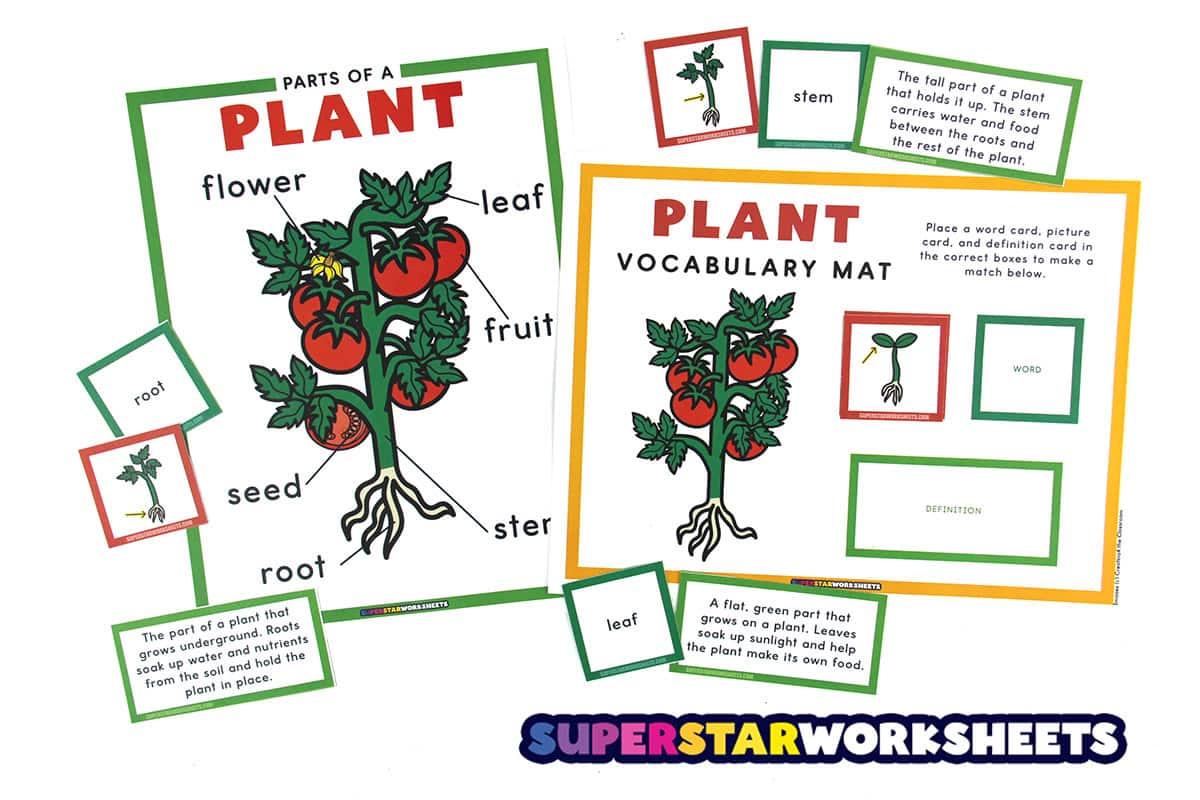
Teaching Parts of a Plant
As you introduce each part of a plant, ask students, “What would happen if the plant didn’t have this part?” so they think through why it matters instead of just memorizing a label. This helps them understand that every part has a job: roots absorb water and anchor the plant, the stem transports water and nutrients, leaves capture sunlight, flowers attract pollinators, fruit protects seeds, and seeds start the cycle over again. Once students see how the parts work together, they’ll have a strong foundation for learning how plants grow, survive, and make new plants.
root: The part of a plant that grows underground. Roots soak up water and nutrients from the soil and hold the plant in place.
stem: The tall part of a plant that holds it up. The stem carries water and food between the roots and the rest of the plant.
leaf: A flat, green part that grows on a plant. Leaves soak up sunlight and help the plant make its own food.
flower: The colorful part of a plant that blooms. Flowers help the plant make seeds so new plants can grow.
fruit: The part of a plant that grows around the seeds and protects them. On a tomato plant, the tomato is the fruit!
seed: A tiny package that holds a baby plant inside. When a seed gets water and warmth, it starts to grow!
Plant Life Cycle Printables
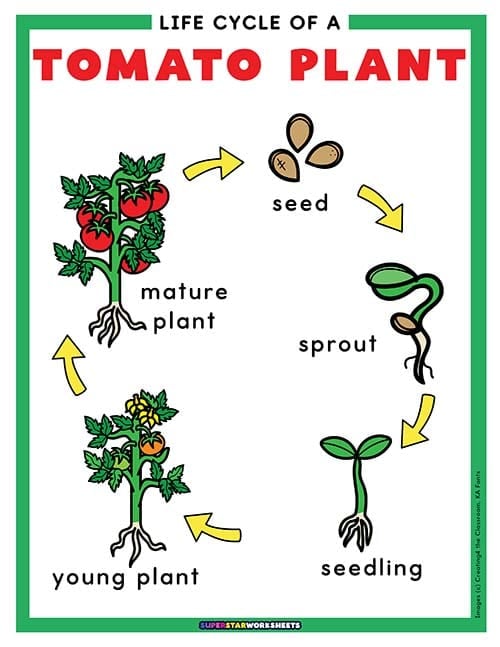
Life Cycle of a Tomato Plant Chart
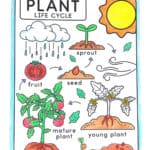
This full color tomato plant life cycle chart shows all six stages of plant growth in a circular diagram. Each stage is illustrated with cohesive clipart and lowercase labels, making it accessible for early elementary learners. Post it in your classroom or science center as a reference during your plant life cycle unit. For more free science coloring pages, check out our Pumpkin Worksheets!
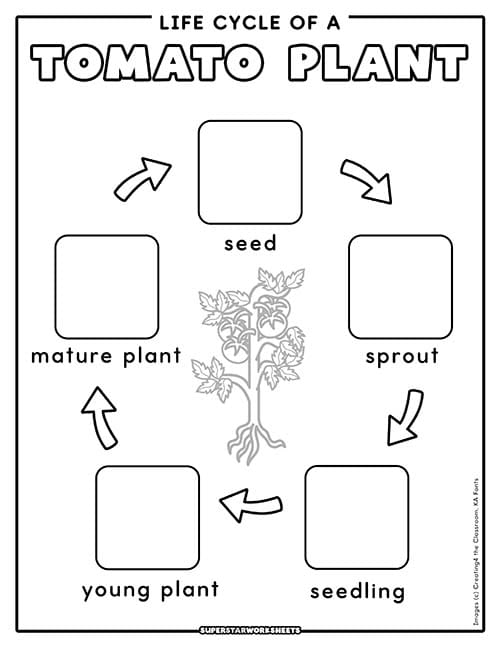
Plant Life Cycle Cut and Paste
Students sequence the six stages of a tomato plant life cycle with this cut and paste activity. The first page features an unlabeled circular diagram with blank stage boxes, and the second page provides illustrated picture cards for each stage. Teachers can pre-cut cards for younger students or have older learners cut and paste independently to show their understanding of plant life cycle order. Check out our fern worksheets for more leaf based practice!
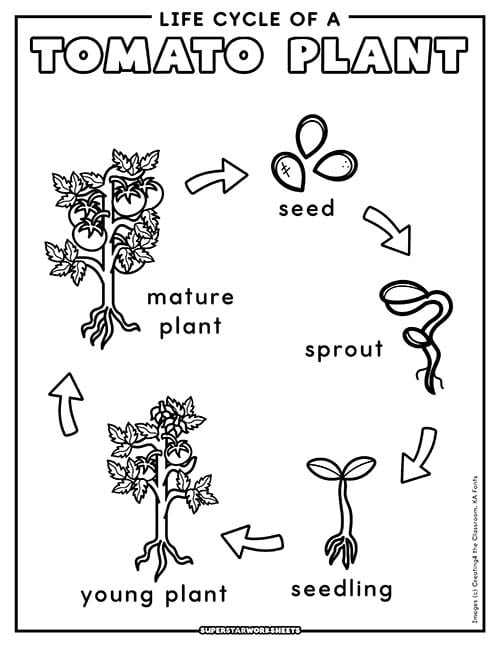
This black and white tomato plant life cycle worksheet is a great low-ink option for student science journals and notebooks. The circular diagram shows all six life cycle stages with labels in lowercase. Students can color each stage and use it as a personal reference guide alongside the full color anchor chart. Check out our cactus worksheets for more plant practice!
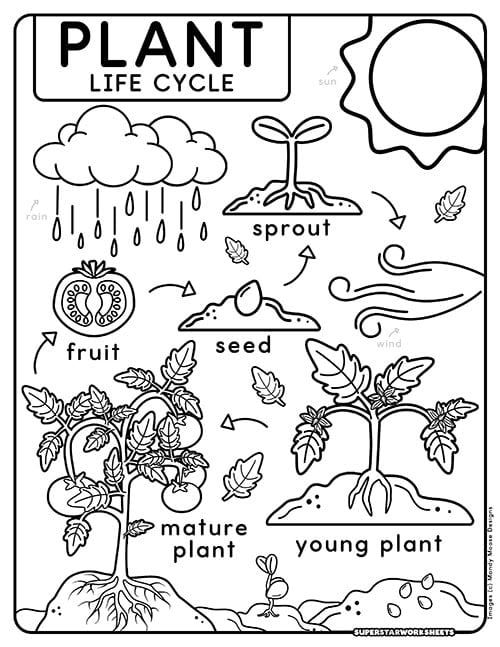
Plant Life Cycle Coloring Page
This plant life cycle coloring page combines life cycle stages with plant needs in one integrated activity. Students color each stage of the tomato plant life cycle while also identifying the five things a plant needs to survive shown through icons woven throughout the diagram. Perfect as a whole-class activity or independent practice. Check out our mushroom worksheets for more life cycles!
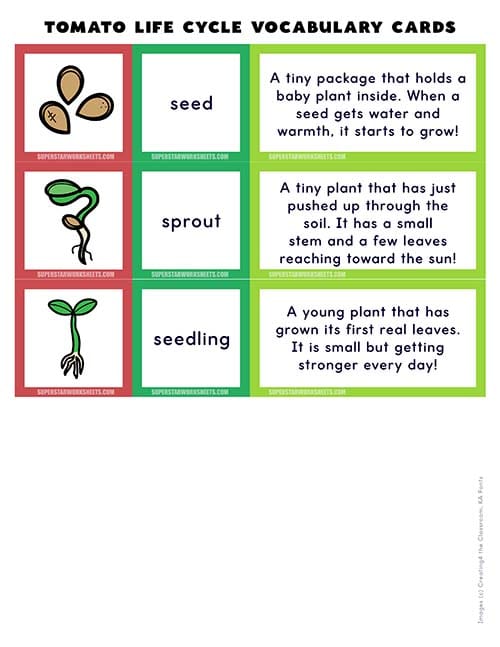
Plant Life Cycle Vocabulary Cards
These 3-part vocabulary cards cover all six stages of the tomato plant life cycle plus five plant needs. Students match picture, word, and definition cards to build science vocabulary in a hands-on center format. Includes three pages of cards for use with the vocabulary learning mat or as a standalone matching activity.
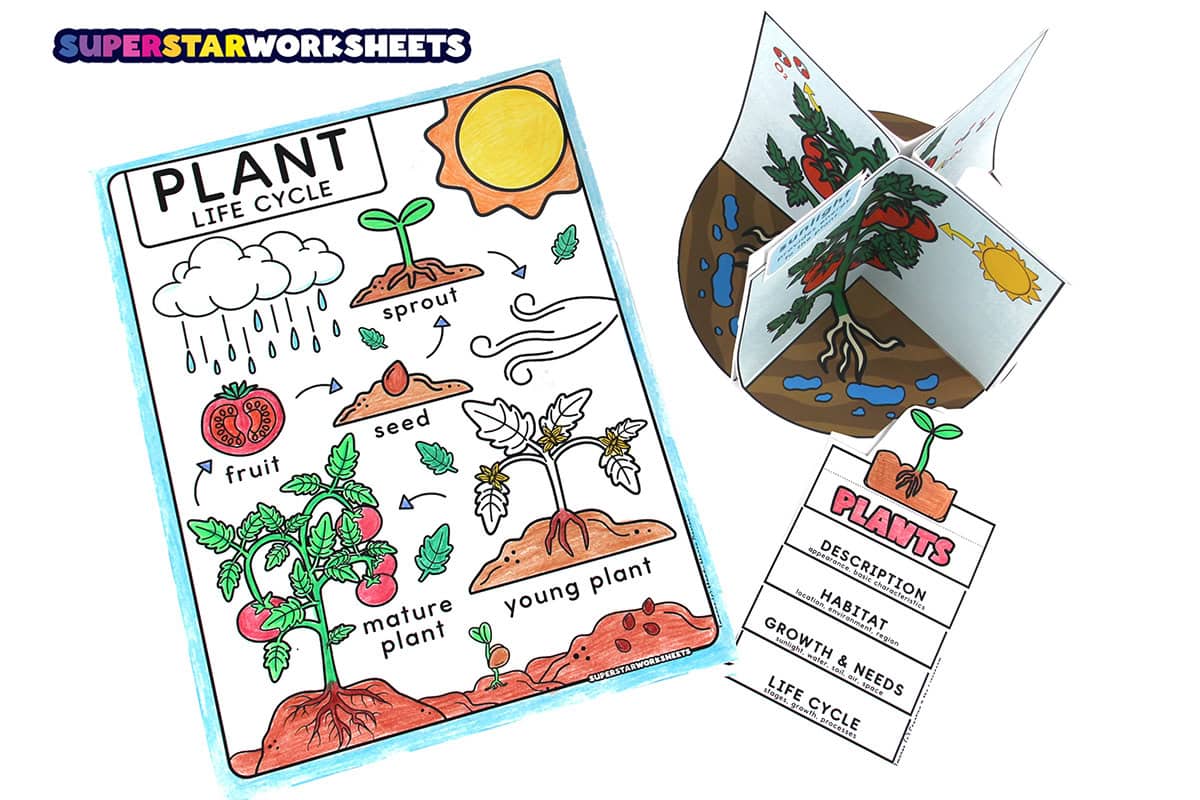
Teaching the Life Cycle of a Plant and Plant Needs
Nothing beats the real thing, so bring a tomato plant into the classroom and let your kiddos point out the roots, stem, leaves, flowers, and fruit up close, then show them how that tomato is full of seeds ready to start the whole cycle again! Next, plant some seeds together (beans in a zip-top bag on a sunny window sprout fast and are so fun to watch) and track their growth as a class, checking in each week to see what’s changed. Along the way, keep coming back to what plants need to survive: sunlight, water, soil, air, and space, and let students be the plant caretakers who make sure their seedlings get all five.
seed a tiny package found inside a tomato that holds a baby plant inside. When it is planted in soil and gets water, warmth, and sunlight, it starts to grow.
sprout a tiny, young plant that has just pushed up through the soil. It has a thin stem and two small leaves that reach up toward the sun.
seedling a small plant that is growing stronger every day. It grows more leaves and longer roots so it can take in water and nutrients from the soil.
young plant a taller, leafy plant that is growing quickly. Small yellow flowers begin to bloom, and after pollination, tiny green tomatoes start to grow.
mature plant a full-grown tomato plant with a strong stem, lots of leaves, and branches heavy with tomatoes. It needs sunlight, water, soil, air, and space to keep its fruit growing.
tomato a ripe, red fruit that is ready to be picked. Inside it holds the seeds that can start the whole life cycle all over again!
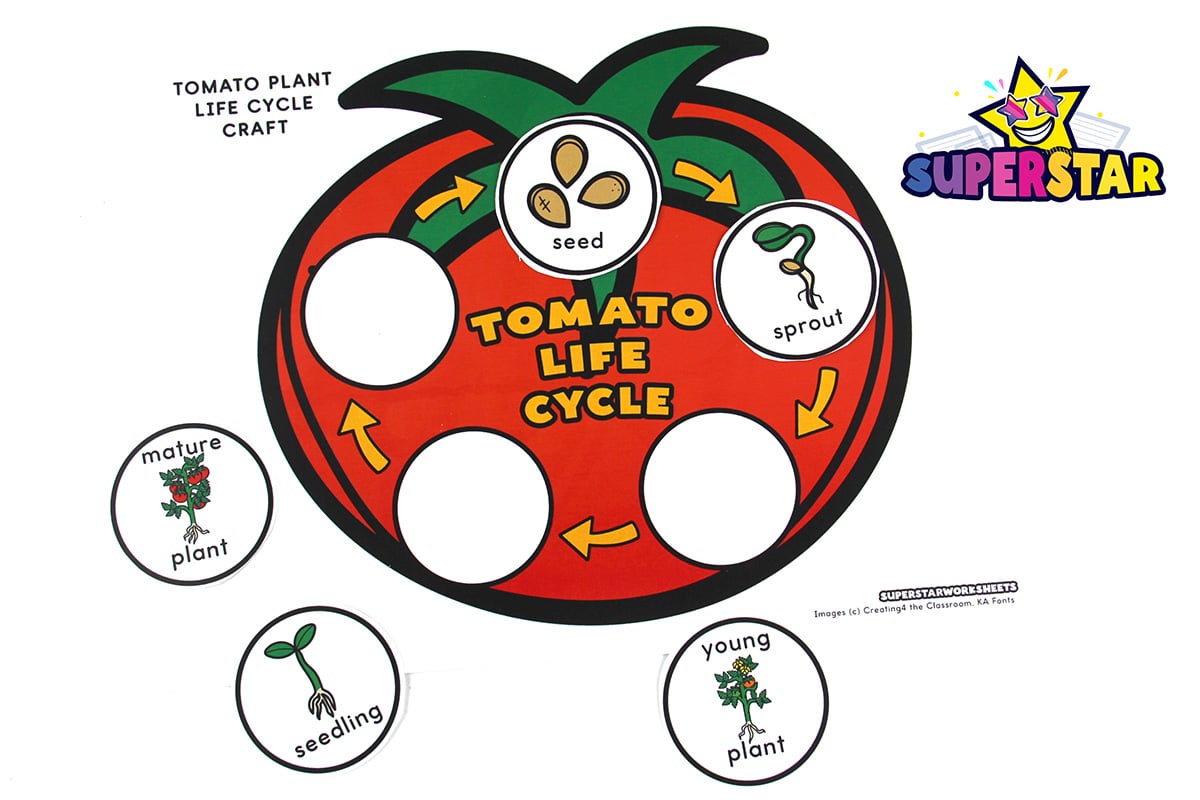
Plant Life Cycle Crafts & Activities for Kids
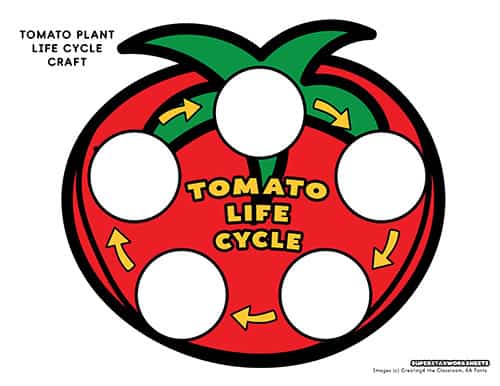
Students assemble this tomato-shaped plant life cycle craft by coloring, cutting, and pasting the six life cycle stages inside a large round tomato template. This hands-on project makes a great display piece and helps students internalize the circular nature of a plant’s life cycle. Color and black and white versions are included for flexible use.
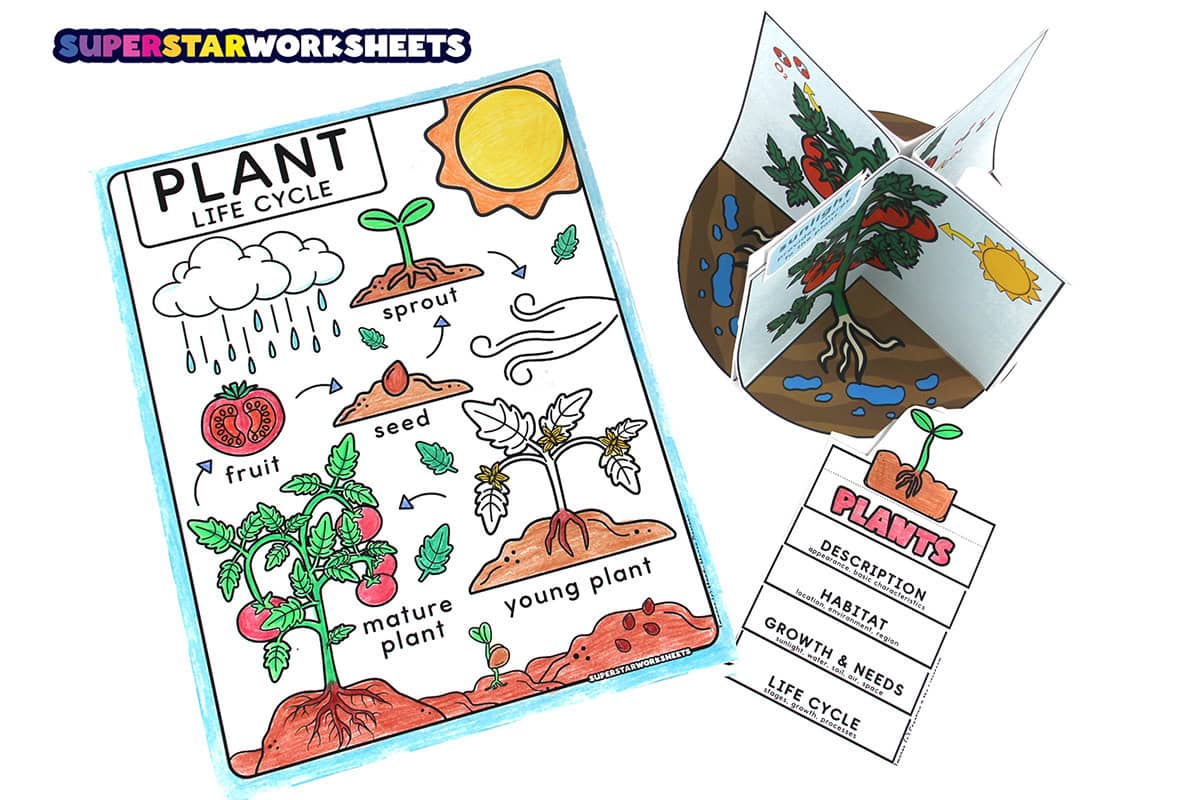
Plant Science Experiment for Kids
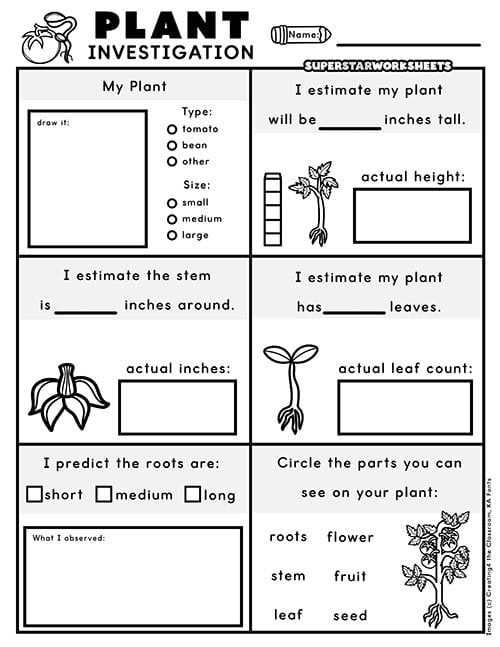
This plant observation investigation invites students to explore a real plant up close. Students estimate and measure plant height, count leaves, observe stem thickness, and circle the plant parts they can see. The six-section observation sheet builds science process skills and connects hands-on exploration to plant science vocabulary.
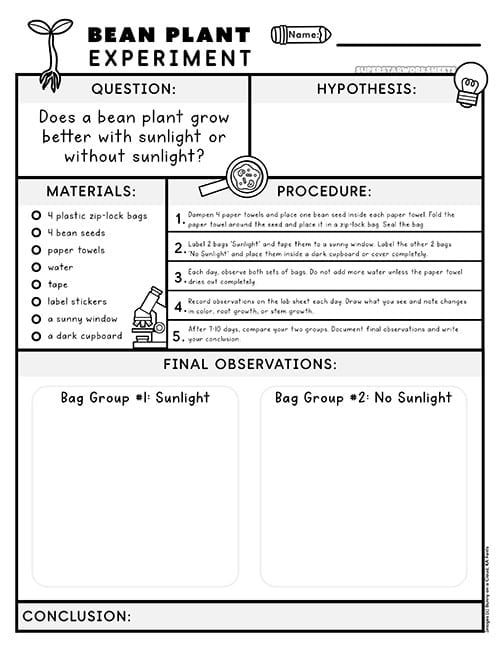
Do Plants Need Sunlight to Grow? Bean Plant Experiment
Students investigate whether bean plants need sunlight to grow with this guided science experiment. The experiment sheet walks students through the scientific method using a simple bean seed in a zip-top bag setup that requires no soil or pots. The companion observational journal provides seven days of recording space with two columns for comparing sunlight and no-sunlight plants side by side. For more science based learning, check out our seed worksheets!
Bean Plant Experiment Materials, Procedure & How-To
This bean plant sunlight investigation requires minimal prep, which makes it one of the most classroom-friendly plant science experiments available. The setup takes about 10 minutes, and students can begin observing results within 2–3 days.
Materials Needed (per student or pair): 2 plastic zip-top bags, 2 bean seeds, 2 paper towels, water, tape, label stickers
Procedure Overview:
1. Dampen a paper towel and place one bean seed inside. Fold the towel around the seed and place it in a zip-top bag. Seal the bag. Repeat for the second seed.
2. Label one bag ‘Sunlight’ and tape it to a sunny window. Label the second bag ‘No Sunlight’ and place it inside a dark cupboard or cover it completely so no light reaches it.
3. Each day, students observe both bags and record their observations — drawing what they see and noting any changes in color, root growth, or stem growth. Do not add water unless the paper towel dries out completely.
4. After 7–10 days, students compare their two groups, complete the final observations page, and write a conclusion.
Teacher Notes: The bean seeds in sunlight will sprout within 3–5 days, developing a green stem and visible root growth. Seeds in darkness will also sprout, this is called etiolation, but the stem will be pale yellow or white and the seedling will be spindly and weak due to the absence of light for photosynthesis. This unexpected result is a powerful teaching moment: even though the seed has stored energy to germinate, the plant cannot stay healthy without sunlight. Encourage students to connect this observation back to the photosynthesis process and the plant needs chart.
Expected Conclusion Sample: The bean plant with sunlight grew better. It had a green stem and healthy roots. The plant without sunlight had a pale yellow stem and looked weak. Plants need sunlight to grow.
Plant Science Facts for Kids
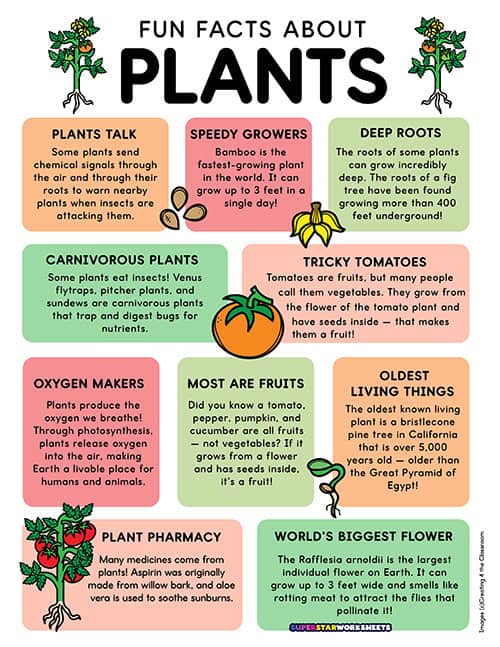
This colorful plant fun facts poster features ten illustrated fact blocks covering fascinating plant science topics. Use it as a read-aloud anchor, a classroom display, or the launching point for a plant research unit.
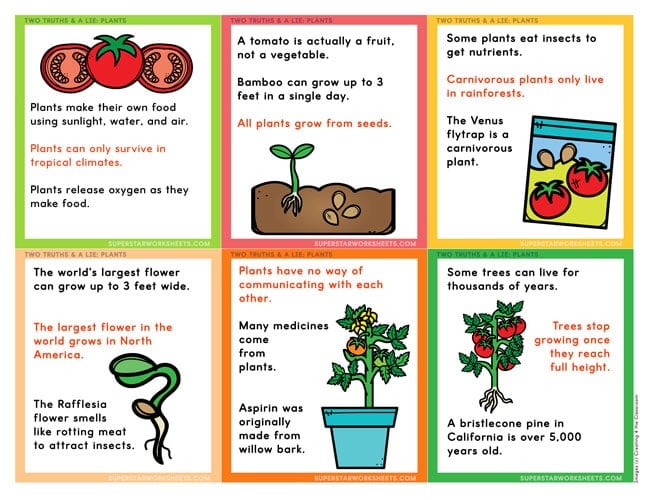
Students sharpen science reasoning skills with this Two Truths & a Lie card game. Each of the six cards presents two facts and one false statement printed in red. Students read, discuss, and identify the lie, then investigate to confirm. A great activity for science discussion, partner work, or a whole-class warm-up.
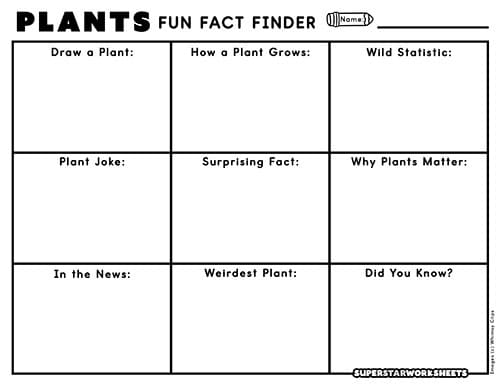
This nine-cell plant research grid gives students creative research prompts to explore plant science independently. Cells ask students to draw a plant, share a wild statistic, find a plant joke, describe the weirdest plant, explain why plants matter, and more. Perfect for library research time, science centers, or early finisher enrichment.
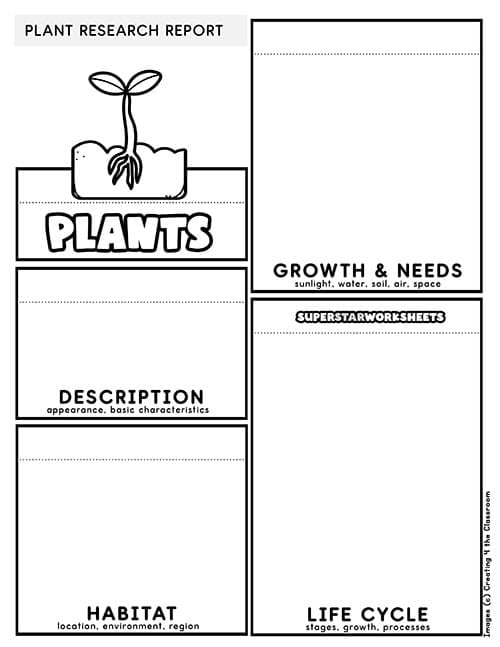
Students write and assemble their own plant research report with this four-section layer book. Each layer covers a different topic, and students cut and stack the pages to create a small flip book. A great end-of-unit writing project that integrates science and language arts skills.
Amazing Plant Facts
Food Factories: Plants make their own food using sunlight, water, and air in a process called photosynthesis.
Tomatoes Are Fruits Too: Just like pumpkins, tomatoes are fruits because they grow from flowers and have seeds inside.
Sky High: The world’s tallest tree is a coast redwood in California that stands over 380 feet tall, taller than a 30-story building.
Super Old: Some bristlecone pine trees are more than 4,800 years old, making them some of the oldest living things on Earth.
Tiny Breathing Holes: Leaves have tiny holes called stomata that take in carbon dioxide and release the oxygen we breathe.
Sun Seekers: Plants bend and grow toward the light, which is why a plant on a windowsill leans toward the window.
Speedy Bamboo: Some kinds of bamboo can grow almost 3 feet in a single day!
Seed Travelers: Seeds travel by wind, water, and animals. Dandelion seeds float like tiny parachutes, and burrs hitch a ride on animal fur.
Stinky Giant: The biggest flower in the world, the rafflesia, can grow about 3 feet wide and smells like rotten meat to attract flies.
Secret Roots and Stems: When you eat a carrot, you’re eating a root, and when you eat a potato, you’re eating an underground stem.
Photosynthesis Worksheets
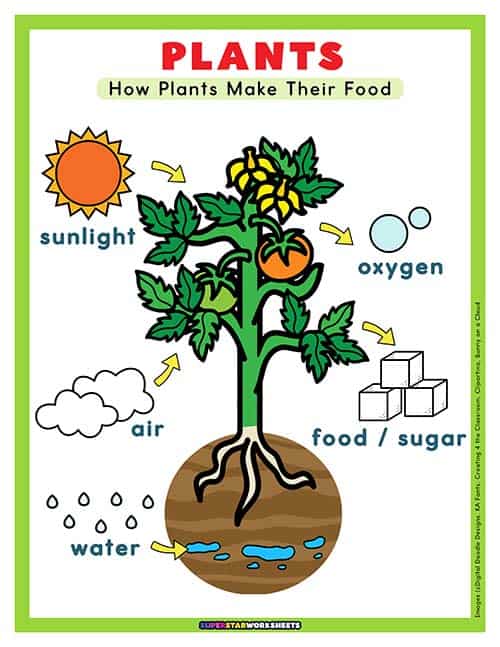
This simplified plant food-making process chart is designed for early grades. A tomato plant in the center shows sunlight, water, and air on the left and food and oxygen on the right with clear directional arrows. Use this chart to introduce the concept of photosynthesis before moving students to the more advanced diagram.
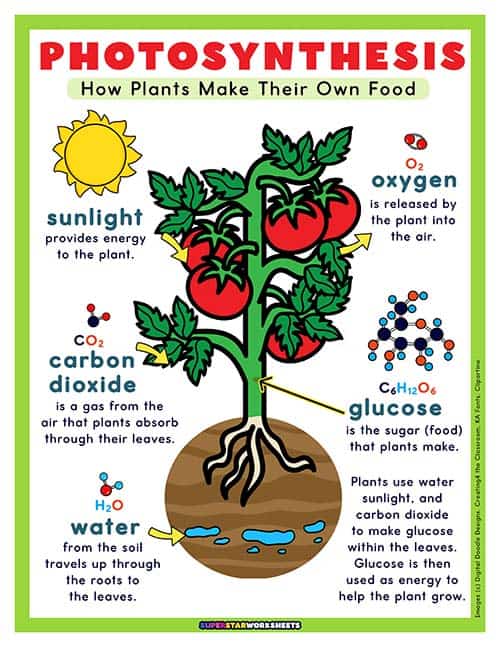
This advanced photosynthesis reference diagram for upper grades shows the full photosynthesis process using scientific vocabulary. Carbon dioxide, water, and solar energy enter the leaf on the left; chlorophyll drives the process at the center; glucose and oxygen are released on the right. A simplified equation at the bottom connects the visual model to the chemical process. Use as an anchor chart during upper elementary plant science instruction.
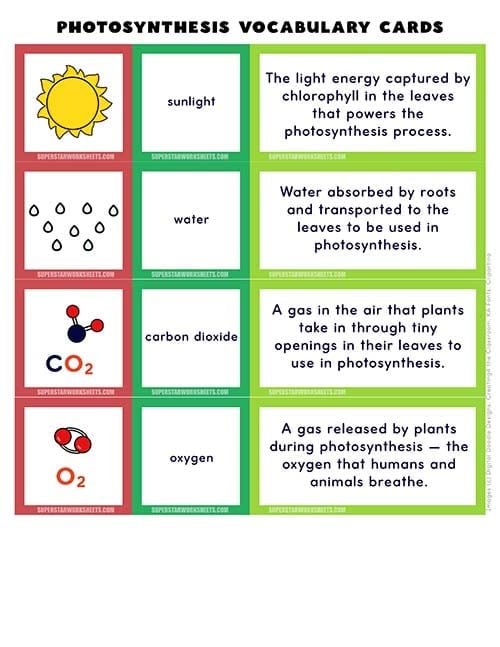
Photosynthesis Vocabulary Cards
Students build photosynthesis vocabulary with these 3-part cards featuring a picture, word, and definition for eight key terms. Two pages of cards cover all inputs, outputs, and process components of photosynthesis. Use with the vocabulary learning mat or as a standalone sorting and matching center. For more FREE printable science worksheets, check out our Apple Worksheets!
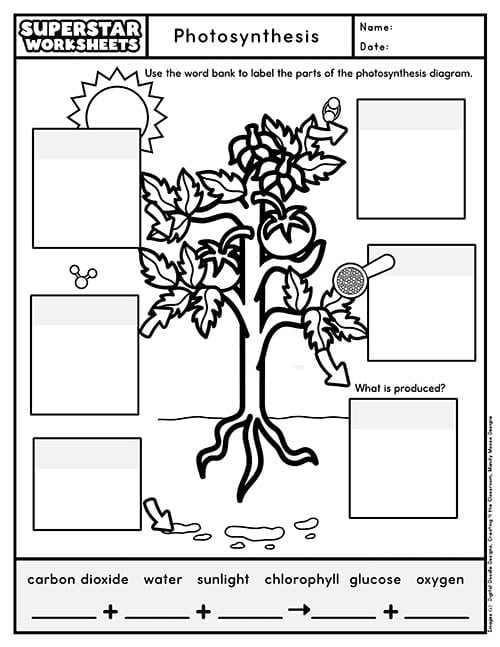
Students label the inputs, outputs, and key components of the photosynthesis process on this black and white diagram worksheet. Using a provided word bank, students identify where carbon dioxide, water, and sunlight enter the leaf, where chlorophyll works, and where glucose and oxygen are produced. A fill-in-the-blank equation at the bottom reinforces the photosynthesis formula.
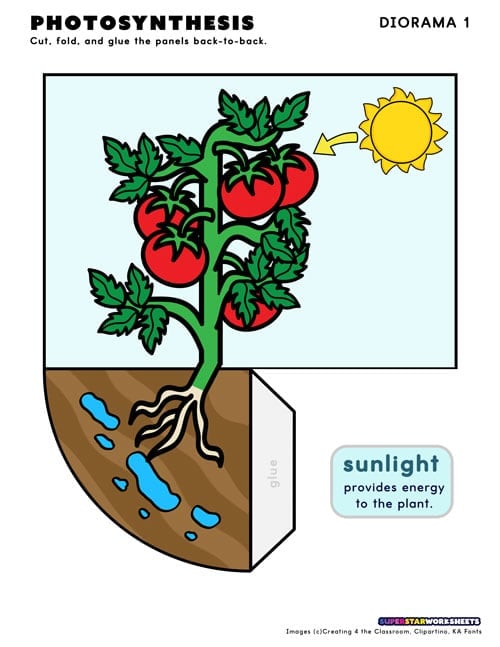
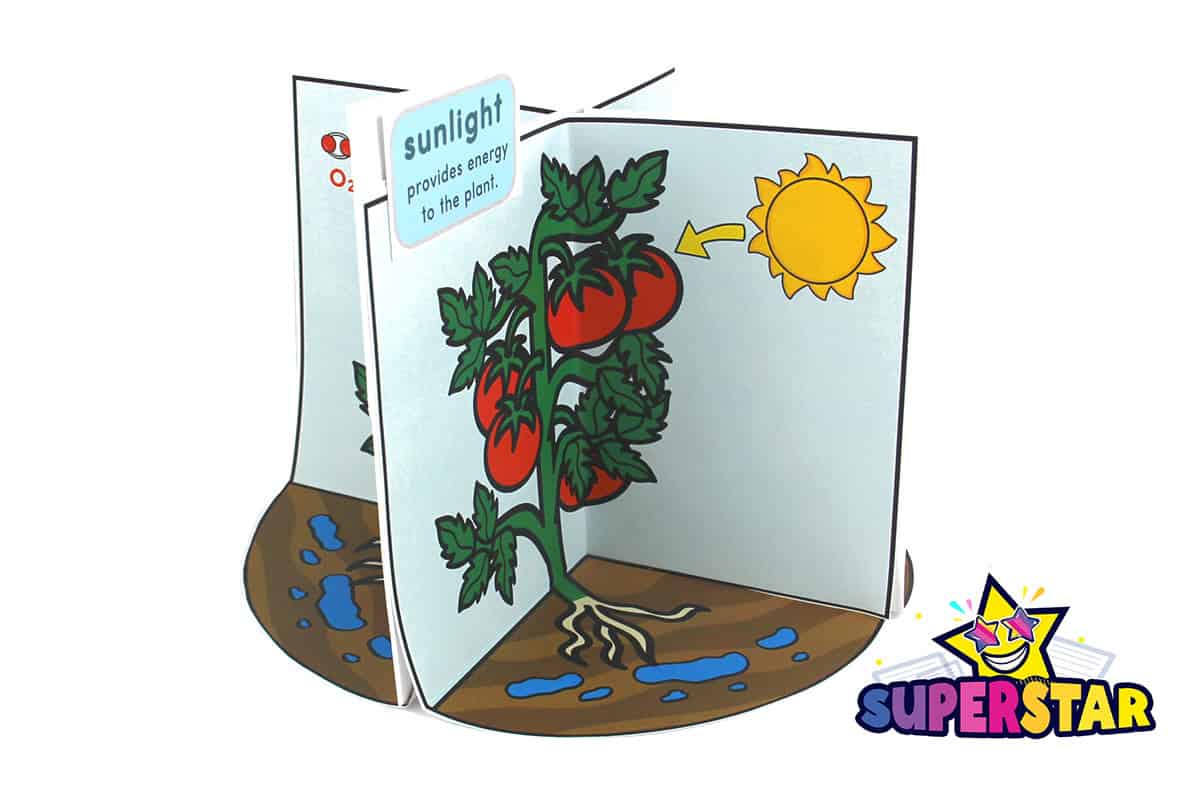
Students assemble this four-panel diorama to model the photosynthesis process step by step. Each panel represents one stage and students color, cut, fold, and glue the panels into a 3D display.
Teaching Photosynthesis
Photosynthesis is one of the most important concepts in plant science and it is also one of the most abstract for elementary learners. The key is to build understanding in two tiers. For early grades, begin with the simplified ‘How Plants Make Food’ chart, which presents the process in plain language: plants take in sunlight, water, and air, and produce food and oxygen. This is fully supported by the grade 2 NGSS standard that plants need sunlight and water to grow. For upper grades, transition to the advanced photosynthesis diagram, which introduces scientific vocabulary: carbon dioxide, chlorophyll, glucose, solar energy, and oxygen. The two charts work beautifully as a scaffolded pair, so display both together and have students compare the simplified and advanced versions to identify how the same process is described at different levels of detail. The vocabulary cards, labeling worksheet, and diorama project all reinforce the advanced vocabulary and are best used after students have had repeated exposure to the anchor charts. The diorama makes an excellent end-of-unit project or display piece that shows understanding of photosynthesis as a sequential process.
Vocabulary Bank
Photosynthesis: The process plants use to turn sunlight, water, and carbon dioxide into food (glucose) and oxygen.
Carbon dioxide: A gas in the air that plants take in through tiny openings in their leaves to use in photosynthesis.
Chlorophyll: The green pigment inside leaves that captures sunlight and gives plants their green color.
Glucose: The sugar produced by photosynthesis that gives the plant energy to grow, flower, and make fruit.
Oxygen: A gas released by plants during photosynthesis — the same oxygen that humans and animals breathe.
Energy: The power that living things need to grow, move, and function. Plants get their energy from sunlight.
Comments (3)
Thank you for free worksheets, my niece truly niece love them. And truly appreciate you
thank you very much
Great site!