
Free printable pumpkin science worksheets for elementary students. Download and print our Parts of Pumpkin PDF charts, labeling worksheets, cut and paste activities, and vocabulary cards. Find Pumpkin Life Cycle diagrams, posters, foldables, wheels, coloring pages, and more. Finish your pumpkin unit study with our fun, pritnable hands-on pumpkin science experiments, labs, and simple pumpkin investigation activities. Everything you need for a low-prep pumpkin unit study is available free below.
Parts of a Pumpkin Printables
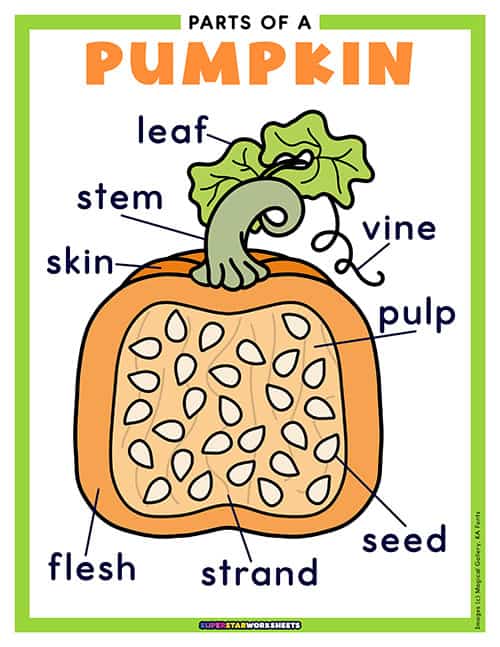
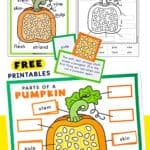
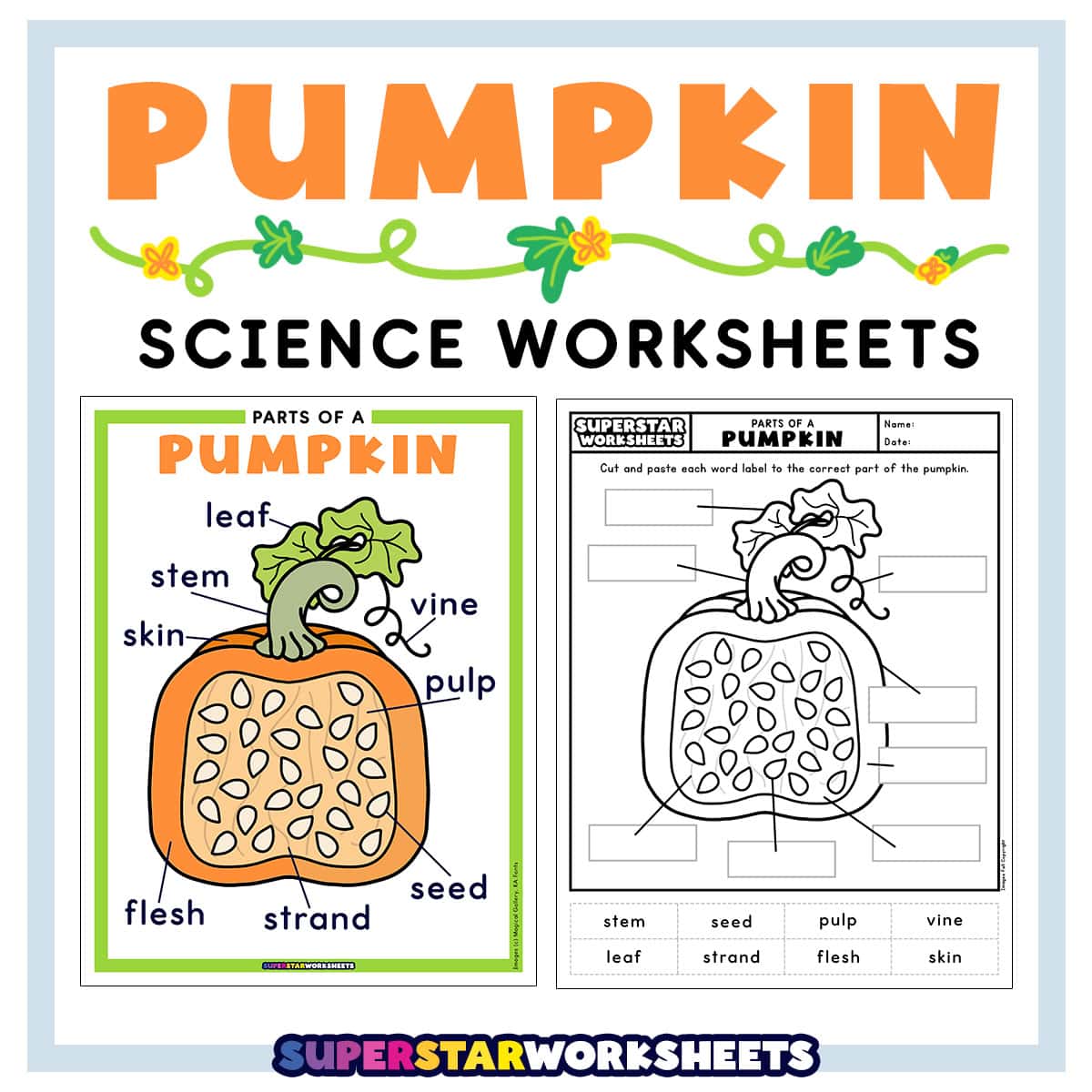
Download and print this beautiful, full color Parts of a Pumpkin diagram in PDF format to show students the various parts of a pumpkin. This classroom-ready pumpkin anatomy poster is designed for high visibility and easy reading. Use as a labeling anchor chart to help your students learn, read, and label the parts of a pumpkin.
Words: seed, leaf, stem, vine, skin, pulp, flesh, strand.
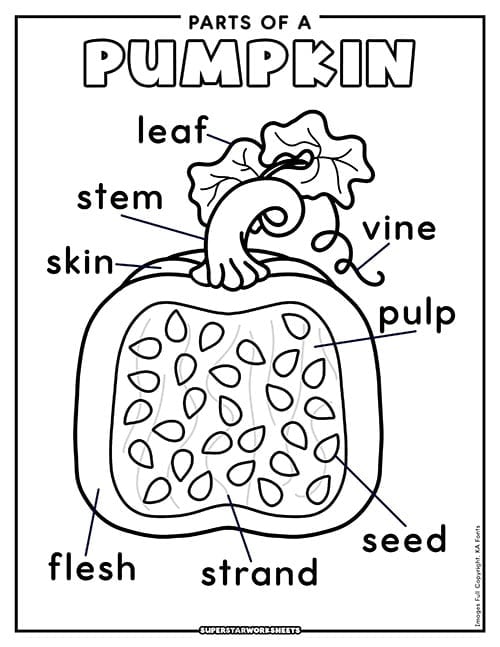
Parts of a Pumpkin Coloring Page
Free printable parts of a pumpkin coloring page. Download and print this PDF coloring sheet featuring a cross-sectional view of both the inside and outside of a pumpkin. Each part is clearly labeled for early readers.
Words: seed, leaf, stem, vine, skin, pulp, flesh, strand.
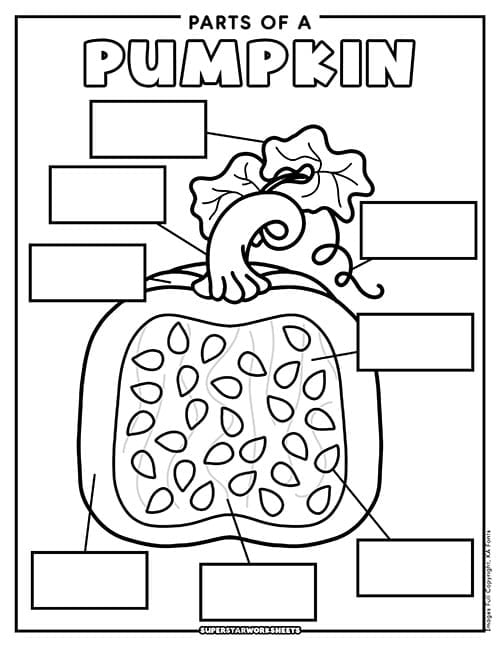
Label the Parts of a Pumpkin Worksheet
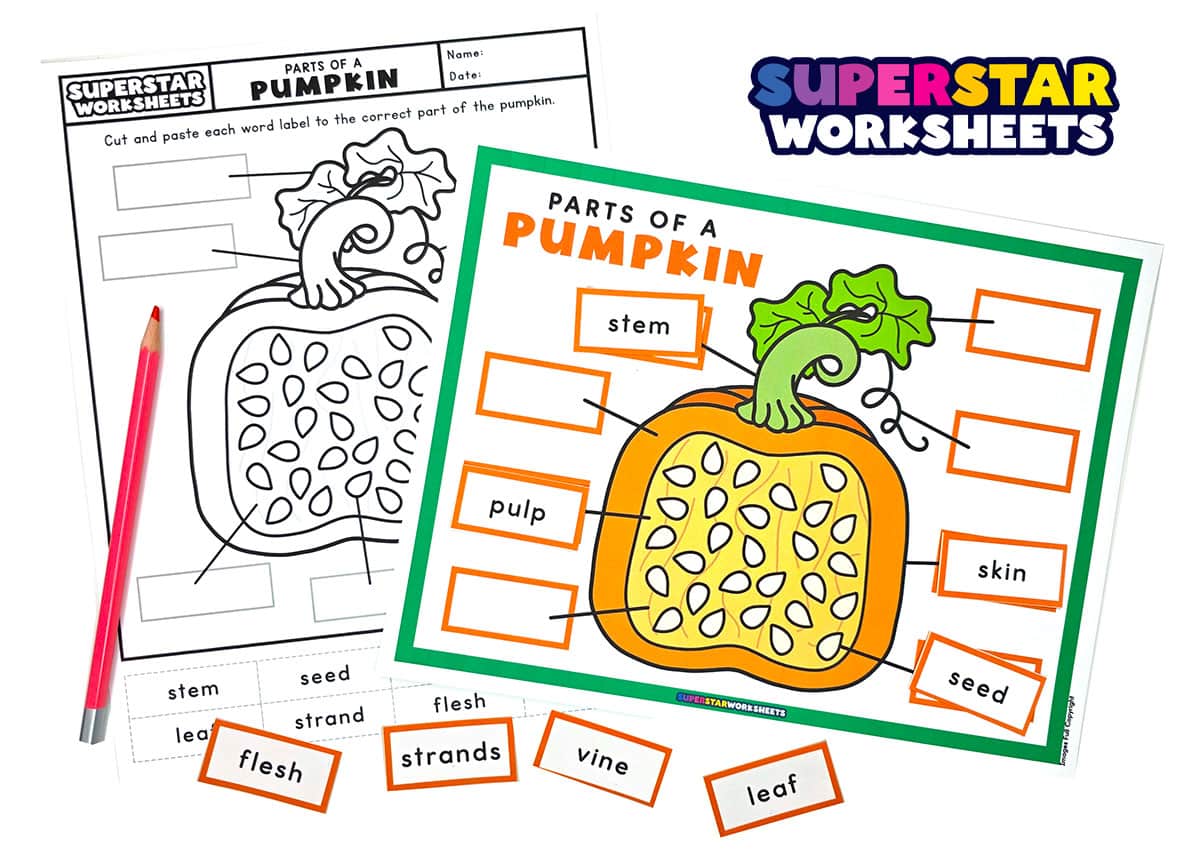
Free blank printable pumpkin parts labeling worksheet for students to write in the correct vocabulary term for each of the 8 main parts of a pumpkin. First students will color each of the parts of a pumpkin. Next, older students can write in each science vocabulary term identifying the anatomy of a pumpkin. This set includes additional cut and paste labels providing easy differentiation for younger students.
Words: seed, leaf, stem, vine, skin, pulp, flesh, strand.
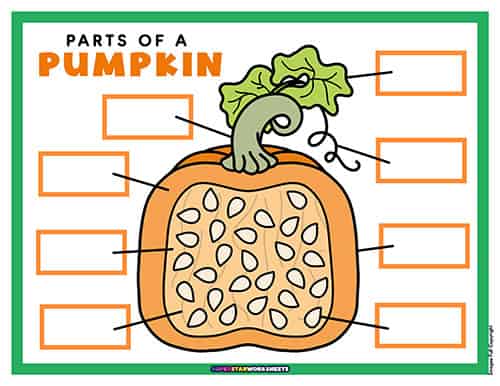
Parts of a Pumpkin Learning Center
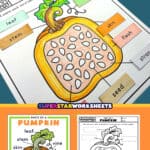
Preschool and Kindergarten students can practice labeling the parts of a pumpkin with this simple reusable learning center activity. Featuring a full color labeling mat and printable cards, we recommend laminating this non-consumable set to be used again and again in your classroom. For more FREE printable science worksheets, check out our Plant Worksheets!
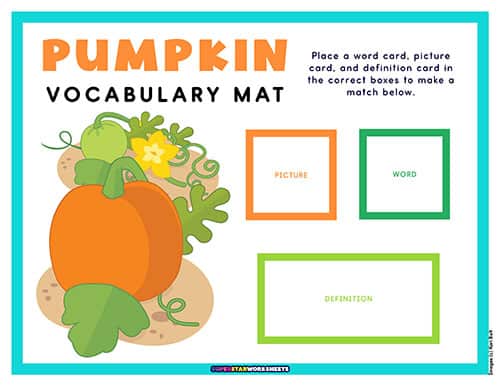
Pumpkin Vocabulary Learning Mat
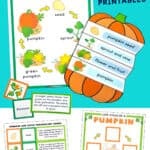
Students work on learning the parts of a pumpkin (as well as the Pumpkin life cycle) with this simple pumpkin vocabulary learning mat. Kids will match up the picture cards, word cards, and definitions. Encourage students to read each definition aloud once they make a match.
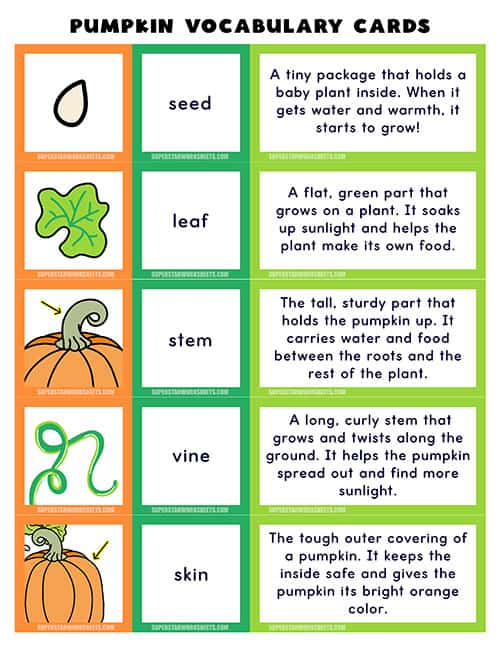
Students build important science and ELA skills with these pumpkin parts vocabulary cards. This set includes visual graphics, terminology, and simple definitions to help your students learn the parts of a pumpkin. This set includes a pumpkin blossom vocabulary card as well.
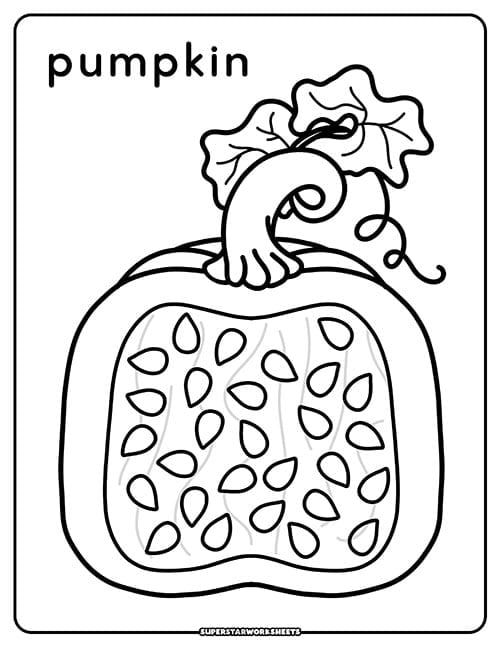
P is for Pumpkin Preschool Coloring Page
Preschool and kindergarten students can color this simple and easy cross-sectional pumpkin coloring sheet. The word “pumpkin” is featured across the top, and students can color both the inside and the outside of the pumpkin.This page includes thick black outlines for early learners. There are no labels on this sheet, as the intention is that students can point to each part and name them aloud. Find more Printable Pumpkin Coloring Pages here.
Teaching the Parts of a Pumpkin
When introducing the parts of a pumpkin to your students it’s important to use language and vocabulary terms they are familiar with. Here are our recommended definitions for each part of the pumpkin, each description provides a visual description as well as a purpose and how each part connects within the living system.
leaf: a flat, green part that grows on a plant. It soaks up sunlight and helps the plant make its own food!
stem: The tall, sturdy part that holds the pumpkin up. It carries water and food between the roots and the rest of the plant!
vine: A long, curly stem that grows and twists along the ground. It helps the pumpkin spread out and find more sunlight!
skin: The tough outer covering of a pumpkin. It keeps the inside safe and gives the pumpkin its bright orange color!
pulp: the soft, wet, stringy stuff inside a pumpkin. It is the first thing you see when you cut a pumpkin open!
flesh: the thick, smooth part just inside the skin. It is the part we cook and use to make yummy pumpkin pie!
strand: the long, stringy fibers inside a pumpkin. They hold the seeds in place until the pumpkin is opened!
seed: a small, oval shape found inside the pumpkin. If you plant it in soil and give it water, it can grow into a brand-new pumpkin!
blossom: a bright yellow flower that grows on the pumpkin vine. After pollination, the petals fall off and a pumpkin starts to grow.
Pumpkin Life Cycle Printables
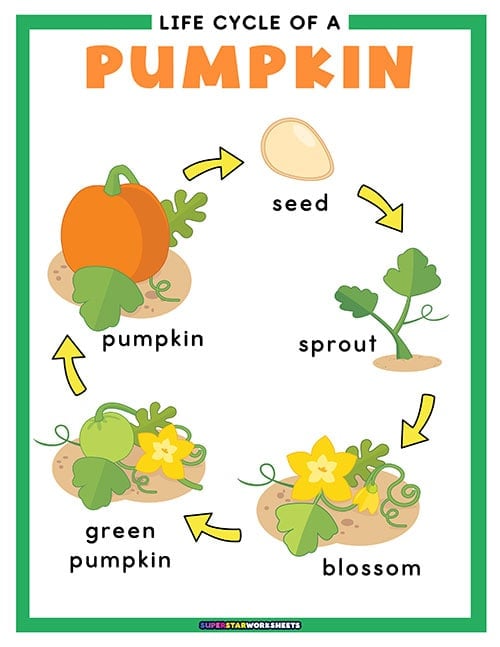
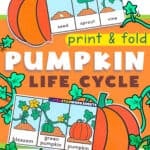
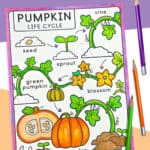
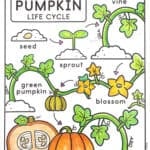
Download and print this free, full color PDF poster chart featuring the stages of a pumpkin life cycle. From seed to pumpkin, this anchor chart serves as a wonderful classroom reference tool, or helpful visual in your science journals.
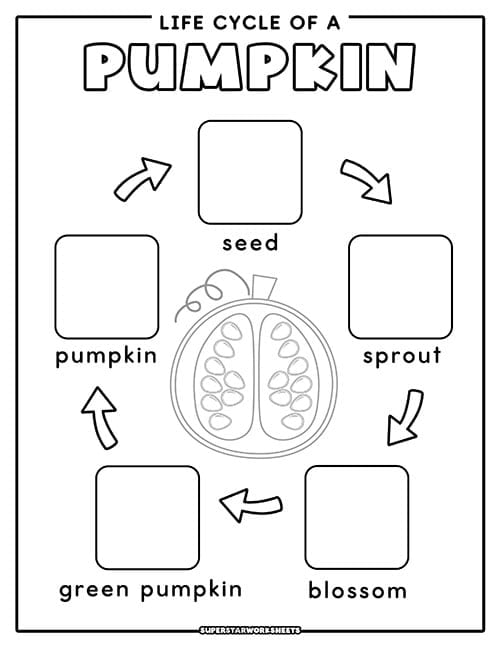
Life Cycle of a Pumpkin Cut & Paste Worksheet
Free printable Pumpkin life cycle cut and paste activity worksheet. Download this PDF for students to cut out each stage of the pumpkin life cycle and paste it into correct order on the life cycle circle. Stages are labeled for student reference and provide opportunity to practice early reading skills. You can expand this activity for older kiddos by asking your students to DRAW each of the stages in the pumpkin life cycle.
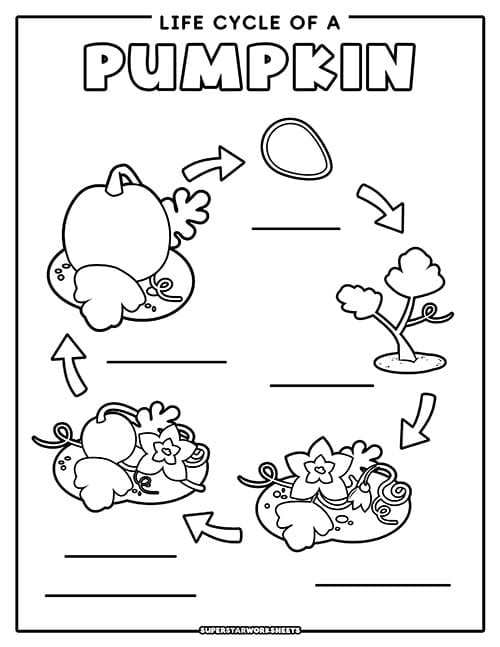
Life Cycle of a Pumpkin Label Worksheet
Free printable pumpkin life cycle labeling worksheet for students to practice writing in the correct science vocabulary term for each stage of development. This black and white PDF printable is helpful for young students to color, and label each of the growth stages of a pumpkin: seed, sprout, blossom, green pumpkin, and pumpkin. For more free printable science worksheets, check out our Apple Worksheets!
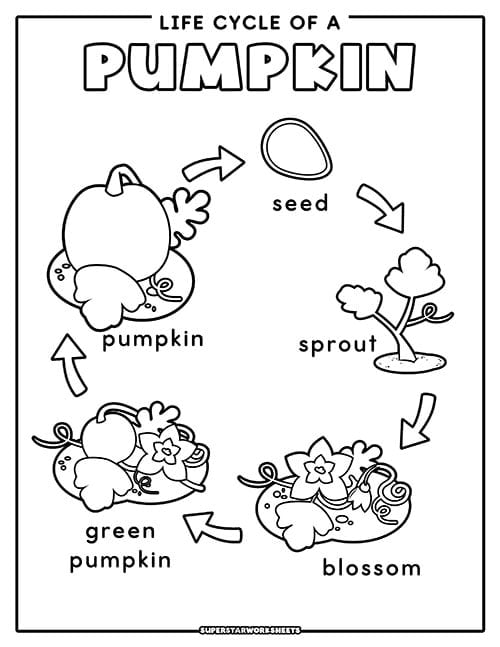
Life Cycle of a Pumpkin Coloring Page
Preschool and kindergarten students can color this simple, black outline life cycle coloring sheet. With this free PDF download, students color each of the 5 stages in a pumpkin life cycle; seed, sprout, blossom, green pumpkin, and pumpkin. This elementary science coloring sheet is appropriate for plant science unit studies as well as as life cycles and plant growth and development.
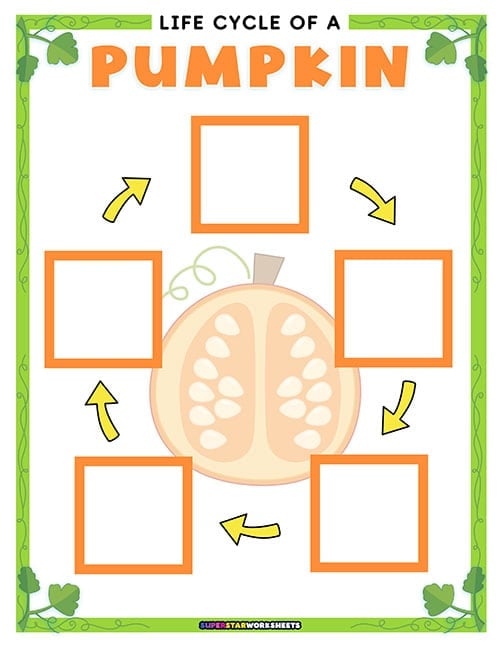
Pumpkin Life Cycle Learning Mat
Preschool and kindergarten students can practice putting the stages of the pumpkin life cycle in order with this free printable learning center mat. Pair this sheet with our pumpking life cycle vocabulary cards for a fun hands-on science activity this fall.
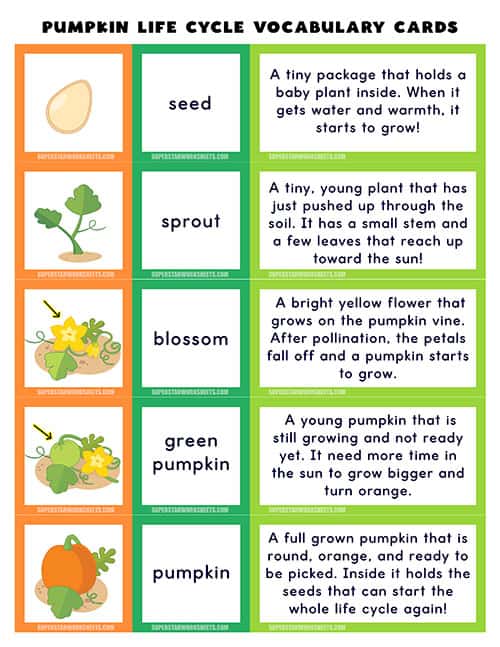
Pumpkin Life Cycle Vocabulary Cards
Students can practice matching the correct visual stage of the pumpkin life cycle to the correct vocabulary terminology as well as a simple definition. This is a wonderful resource that can be used as science learning center activities, memory match or concentration games for early elementary students. These can also be used with our Pumpkin Life Cycle Learning Mat (above) as well.
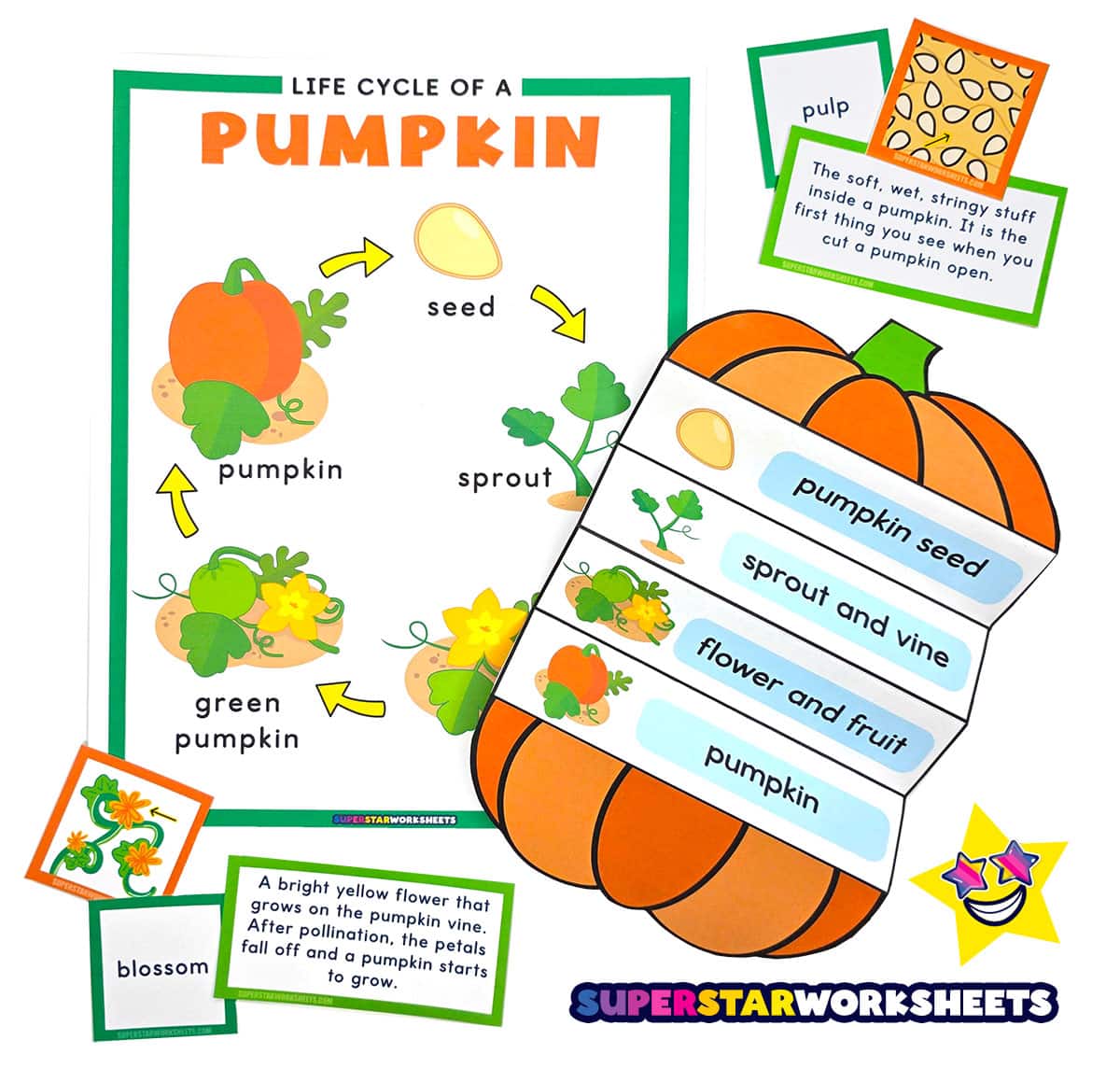
Teaching the Life Cycle of a Pumpkin
The best way for students to learn about pumpkin life cycles is to grow them! Pumpkins are hardy plants by nature, and it’s a fun project to start seedlings in your classroom during the spring, and move them to your school garden as they grow. Encourage your students to observe their plant carefully, identifying all the parts of a pumpkin plant, and to notices the stages as they arrive. Use descriptive and classifying language as you explore the pumpkin growth cycle. Remember, there are many ways to describe the same object at various points, help students learn these different games and use them interchangeably (i.e. fruit, pumpkin and flower, blossom, or vine, tendril etc.)
seed a tiny package found inside a pumpkin that holds a baby plant inside. When it is planted in soil and gets water and warmth, it starts to grow.
sprout a tiny, young plant that has just pushed up through the soil. It has a small stem and a few leaves that reach up toward the sun.
blossom a bright yellow flower that grows on the pumpkin vine. After pollination, the petals fall off and a pumpkin starts to grow.
green pumpkin: a young pumpkin that is still growing and not ready yet. It is green because it needs more time in the sun to grow bigger and turn orange.
pumpkin: a full grown pumpkin that is round, orange, and ready to be picked. Inside it holds the seeds that can start the whole life cycle all over again!
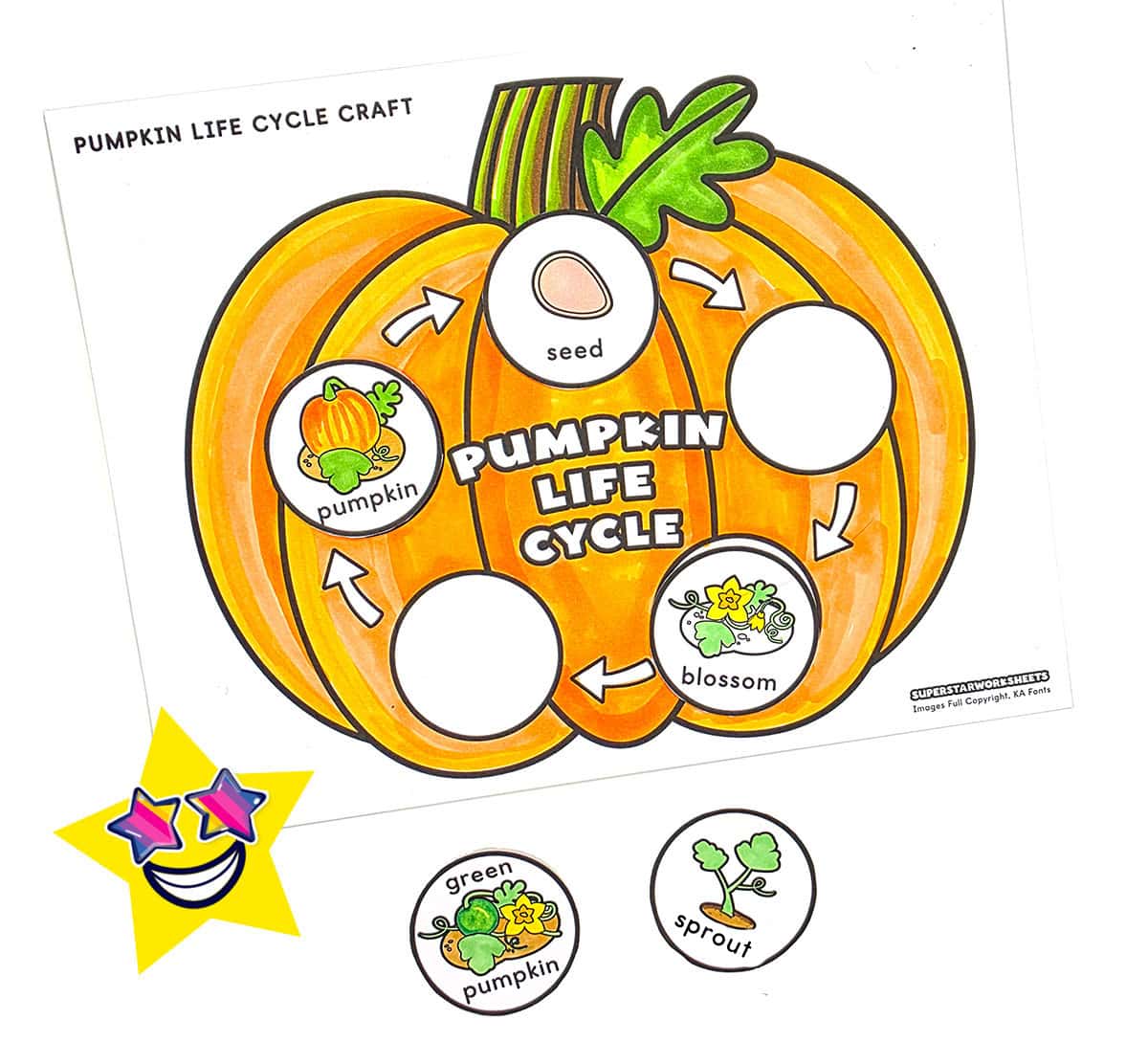
Pumpkin Life Cycle Crafts & Activities for Kids
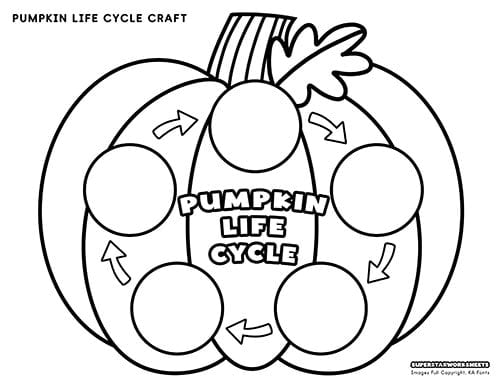
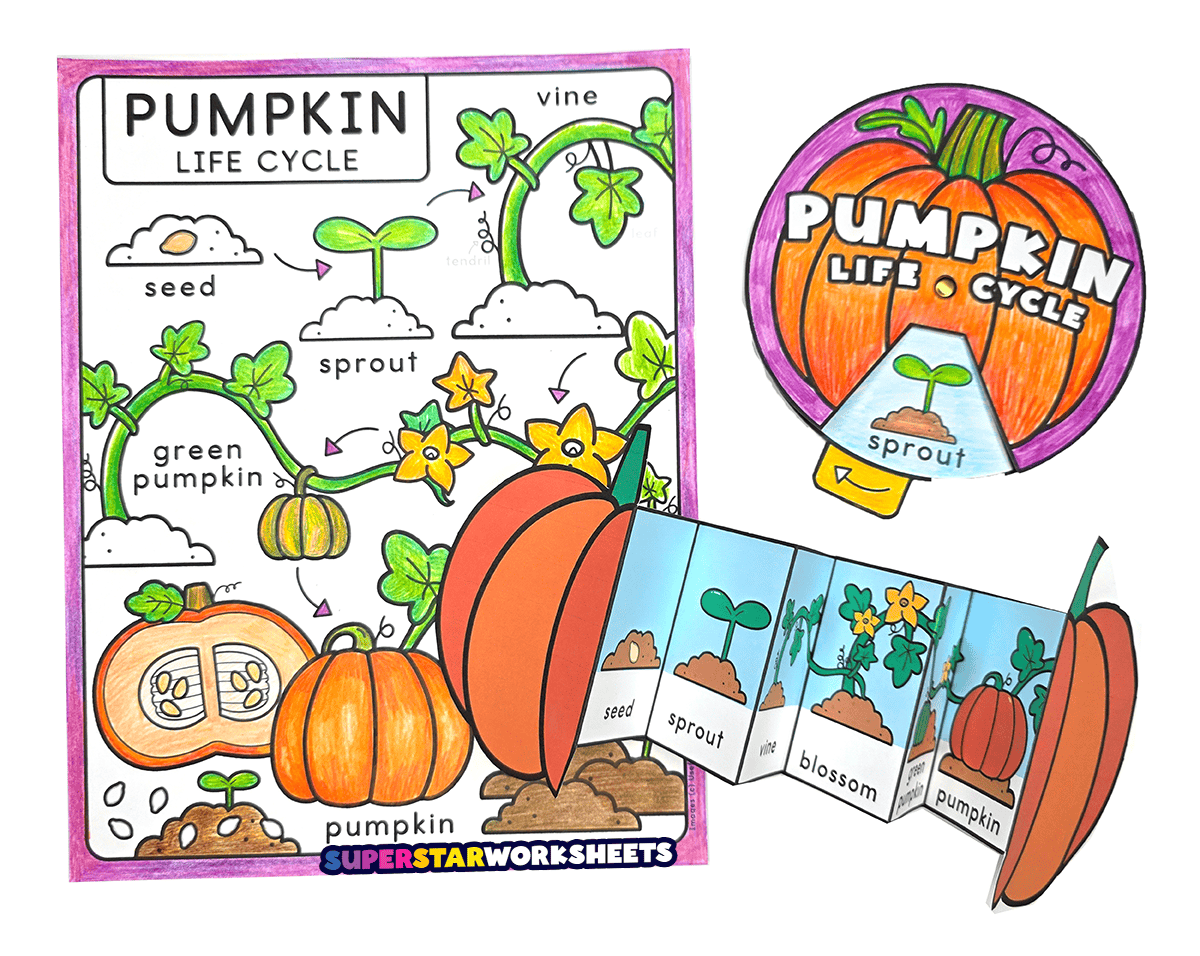
Early elementary students can create this pumpkin life cycle on a pumpkin! How fun is that? Students color, cut, and assemble the stages of the pumpkin life cycle in order, then paste them on to the pumpkin. As as added bonus, students will work on fine motor skills cutting out circles. (TIP: If you are prepping this for younger students try this 2″ circle punch to save time).
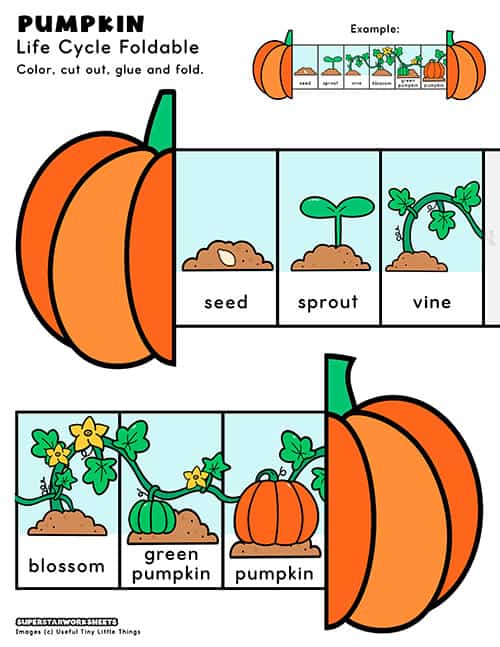
Life Cycle of a Pumpkin Foldable
Free printable life cycle of a pumpkin fold out activity for kids. Featuring stages of the pumpkin life cycle, students can cut out and assemble this fun, hands on learning tool. This folding accordion booklet is a fun way for students to retell the life cycle stages, download in color or black and white. Find more Printable Pumpkin Templates and outlines for Pumpkin Art Projects here.
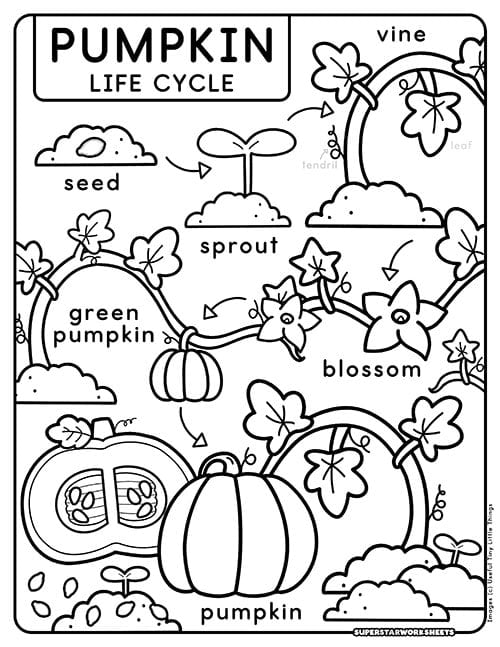
Pumpkin Life Cycle Coloring Page
This beautifully designed pumpkin life cycle coloring page is perfect for science nature journals. Featuring thick black lines, this coloring sheet can be used with colored pencils or thin markers. Kids of all ages will enjoy this unique coloring page representing various stages within the pumpkin growth and development. Featuring seed, sprout, leaf, vine, tendril, blossom, green pumpkin, pumpkin, as well as a cross section of a mature pumpkin showing the pumpkin “brain” and continuation of the cycle. Find more beautiful October themed coloring pages here.
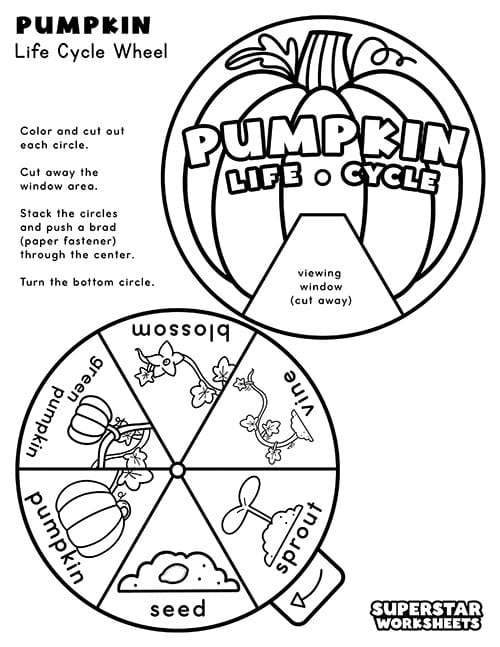
Printable pumpkin life cycle wheel featuring six-stages of the pumpkin growth cycle. Student color, cut, and assemble the wheel. Turning the wheel shows a new stage of development, including a visual as well as the vocabulary terminology. This is a great take home craftivity project for students to retell and remember the individual life cycle stages.
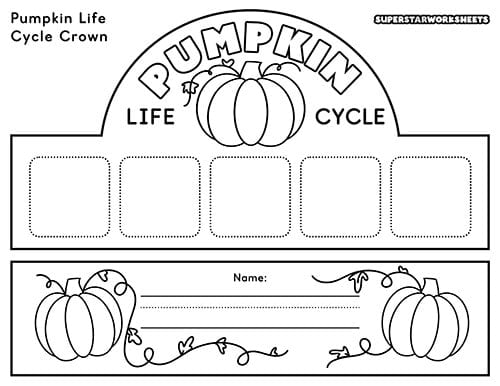
Pumpkin Life Cycle Cut & Paste Crown Project
This pumpkin activity for preschool or kindergarten will provide students the opportunity to cut, paste, and order the stages of the pumpkin life cycle. When complete, this pumpkin life cycle craft project creates a fun crown students can wear for the day.
Pumpkin Science Experiments for Kids
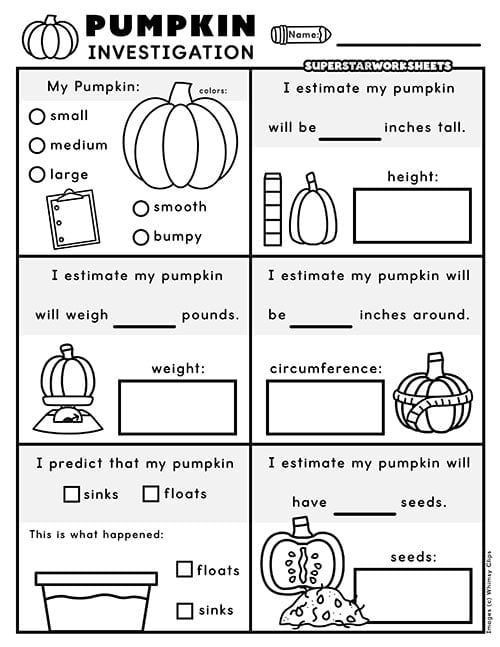
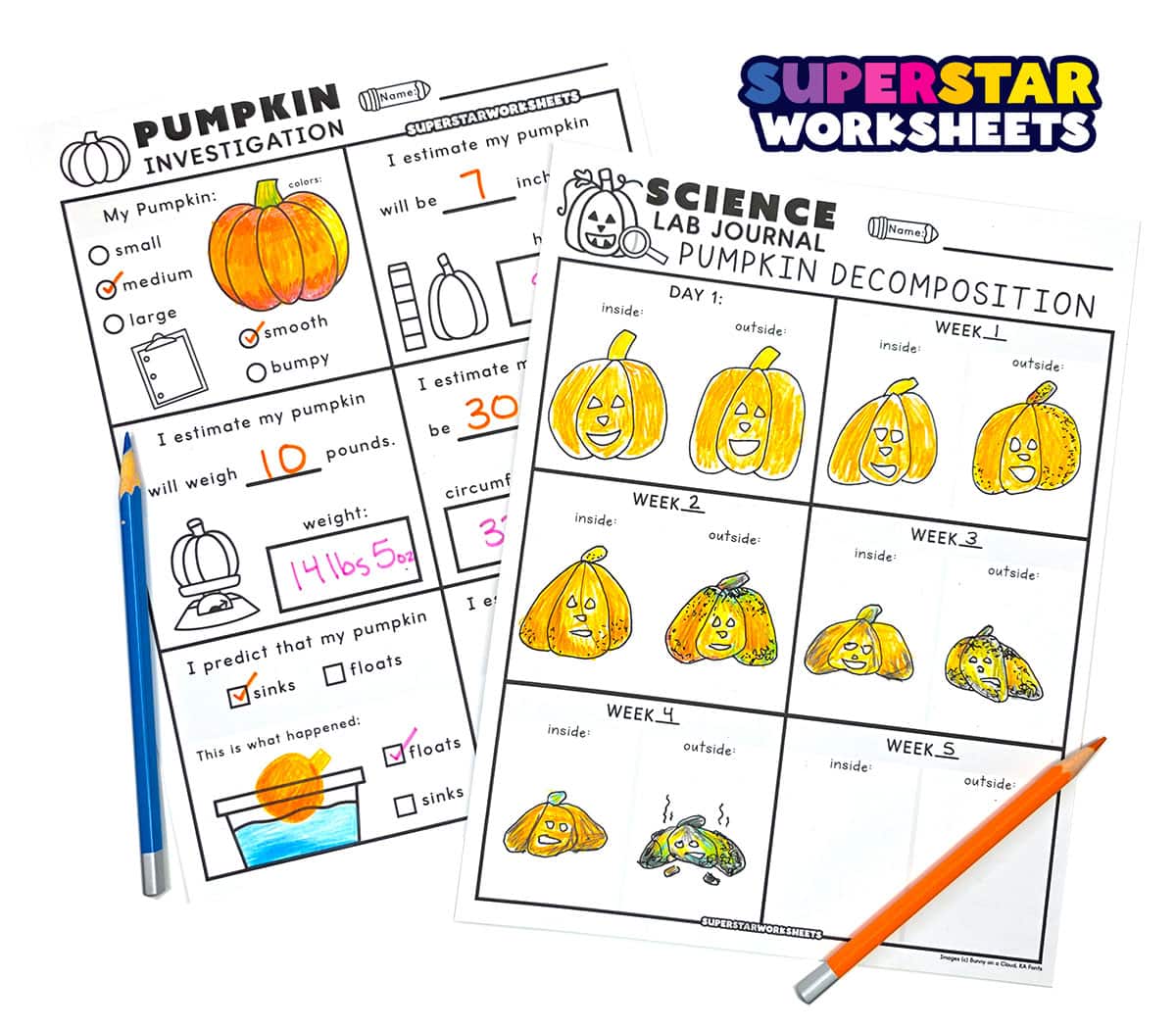
Pumpkin Science Investigation Worksheet
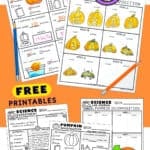
Headed to the pumpkin patch this fall? Once your early elementary students pick their favorite pumpkin you can use our free printable Pumpkin Investigation printable to explore various attributes and measurements. This is a highly engaging hands-on Pumpkin STEM science activity that is sure to be a hit in your classroom! These can be paired with this Free Pumpkin unit study for more hands-on learning.
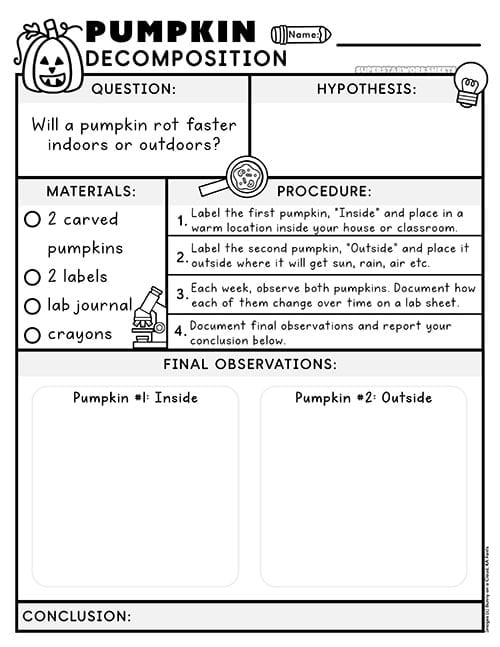
Pumpkin Science Experiment: Decomposition Science Lab
Students learn about decomposition and environmental effects with this simple printable Pumpkin Science Lab Experiment. Includes question, hypothesis, materials list, procedure, observation, and conclusion. Download the additional Science Lab Journal included to draw and observe changes over the weeks. Tip: Read Pumpkin Jack and teach students How to Draw a Pumpkin alongside this science lab.
Pumpkin Decomposition Science Experiment
Do pumpkins rot faster indoors or outdoors? This experiment teaches kids about decomposition; the biological process where microorganisms like bacteria and fungi break down organic matter. Environmental factors like temperature, moisture, and air exposure all affect how quickly decomposition occurs, making a carved pumpkin the perfect real-world subject to observe these forces in action.
Question: Will a pumpkin rot faster indoors or outdoors?
Hypothesis: Before starting, ask students to predict which pumpkin will decompose faster and explain their reasoning in writing.
Materials:
- 2 carved pumpkins
- 2 labels
- Lab journal or observation sheet
- Crayons or pencils
Procedure:
- Label the first pumpkin “Inside” and place it in a warm location inside your home or classroom.
- Label the second pumpkin “Outside” and place it where it will be exposed to sun, rain, and air.
- Each week, observe both pumpkins and document how each one changes over time on your lab sheet.
- Record your final observations and write your conclusion below.
What to Look For:
Students should note changes in color, texture, smell, and shape. The outdoor pumpkin typically decomposes faster due to greater exposure to moisture and microorganisms, though results vary by climate and season.
Conclusion:
After observations are complete, students compare results against their hypothesis and explain what environmental factors they think caused the difference.
Pumpkin Science Facts for Kids
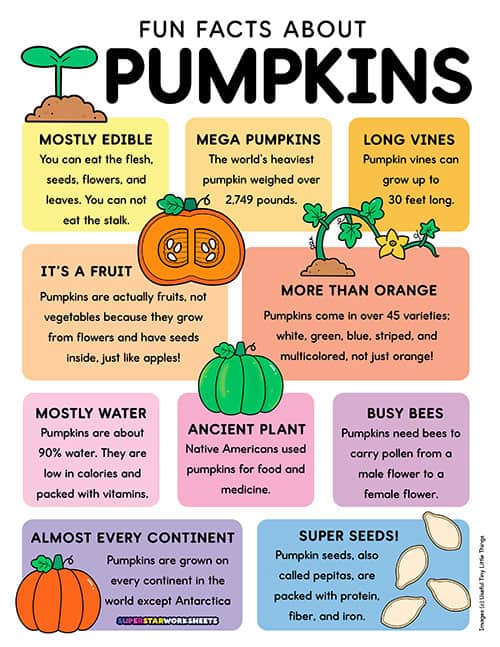
Fun Facts About Pumpkins for Kids
Download this printable reference poster and share fun and engaging pumpkin science facts with your students. Hang near your science centers, or experiment stations for students to read.
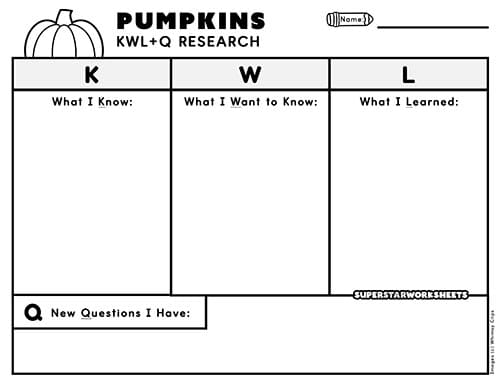
Pumpkin Science KWL + Q Worksheet
This printable graphic organizer will help students keep track of their pumpkin research! Students fill in each section of the KWL +Q research guide which stands for:
- What I Know
- What I Want to know
- What I Learned
- New Questions I have
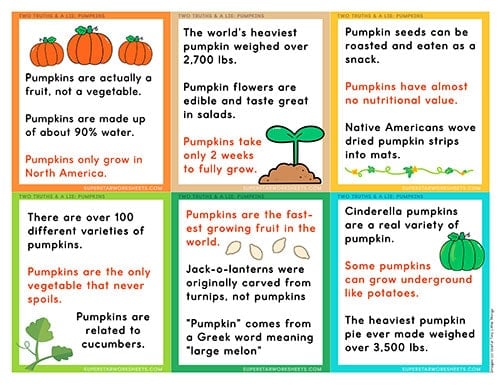
Two Truths & A Lie: Pumpkin Science
Delight your students with these fun pumpkin science facts…or lies?! Two truths and a lie are given on each card, read them aloud for students to try to determine the lie! (Lie is written in red, and correct answers are not given–encourage students to “Look it up!”)
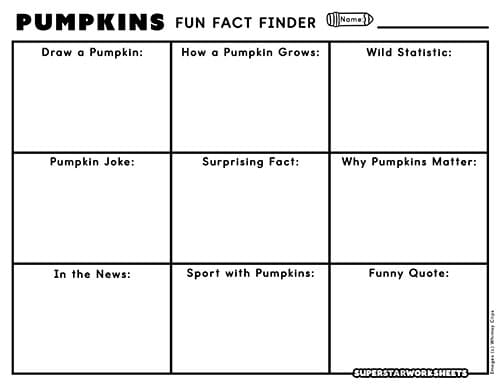
Pumpkin Fun Fact Finder (Research)
Encourage your students to seek and find fun facts about pumpkins with this printable research-based scavenger hunt. Students will put their research skills to the test as they discover fun and engaging facts about pumpkins. Includes drawing, jokes, wild statistics, pumpkin sports, funny quotes, pumpkins in the news and more!
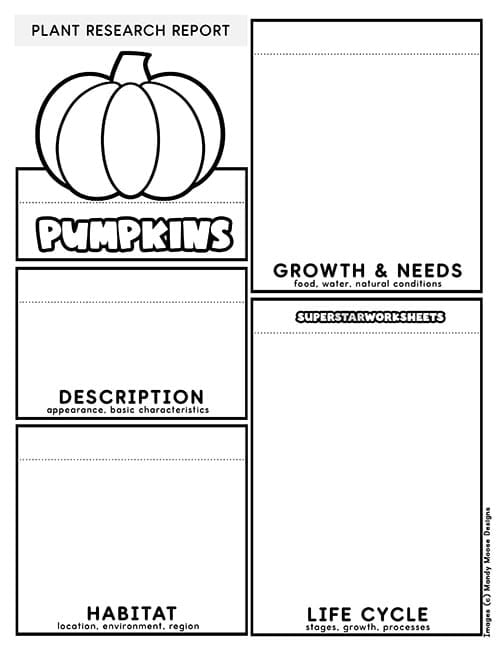
Pumpkin Research Report Booklet
Once your students have gathered their pumpkin facts, have them combine and assemble them into this simple, yet functional pumpkin layer book. Students will record pumpkin descriptions, habitat needs, growth and development stages, and life cycle. These are great for simple reports for young elementary students to organize their facts. For more free printables check out our Tree Worksheets!
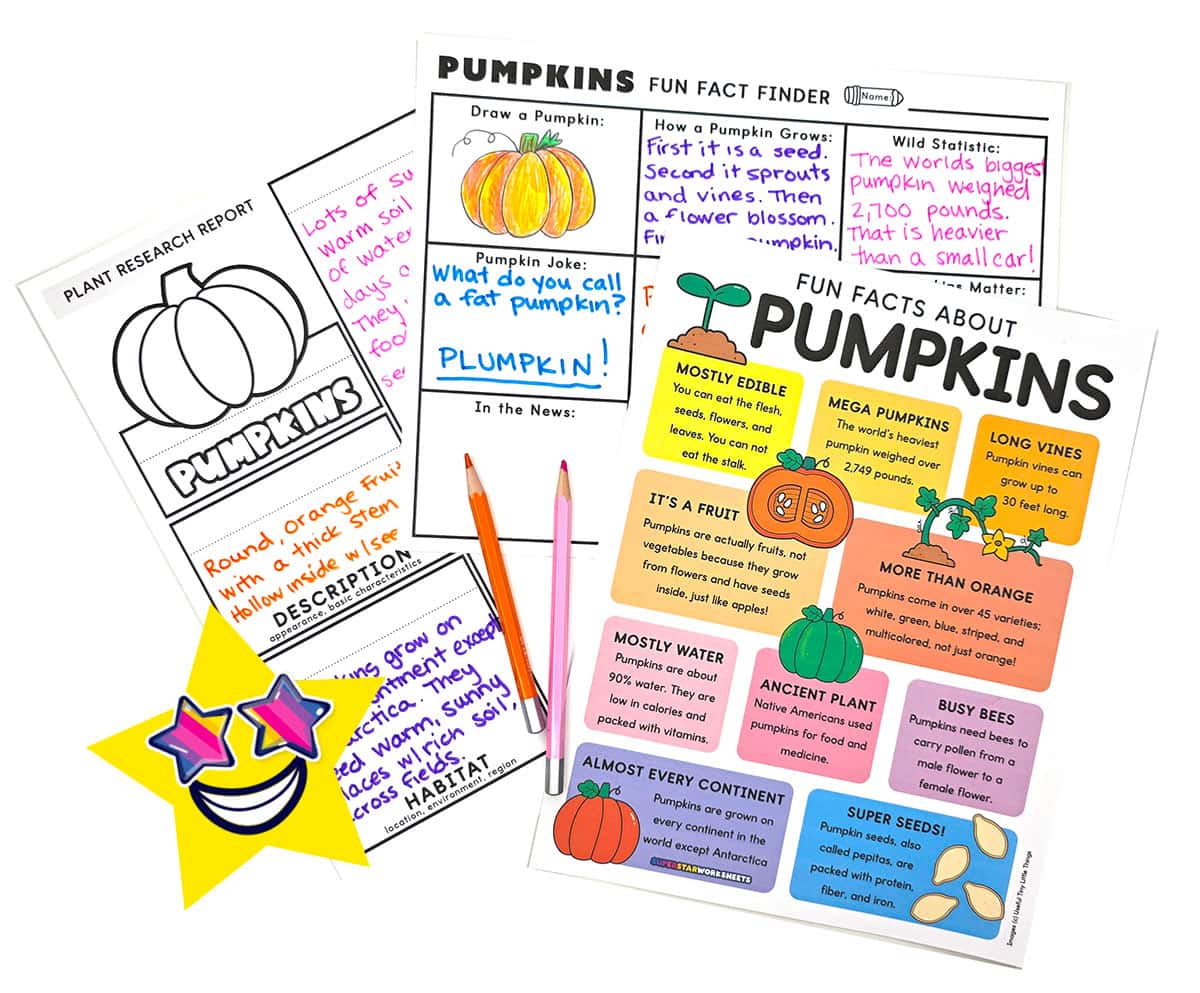
Amazing Pumpkin Facts
Mostly Edible: You can eat the flesh, seeds, flowers, and leaves, but not the stalk.
Mega Pumpkins: The world’s heaviest pumpkin weighed over 2,749 pounds.
Long Vines: Pumpkin vines can grow up to 30 feet long.
It’s a Fruit: Pumpkins are actually fruits, not vegetables, because they grow from flowers and have seeds inside, just like apples.
More Than Orange: Pumpkins come in over 45 varieties: white, green, blue, striped, and multicolored, not just orange.
Mostly Water: Pumpkins are about 90% water, low in calories, and packed with vitamins.
Ancient Plant: Native Americans used pumpkins for food and medicine.
Busy Bees: Pumpkins need bees to carry pollen from a male flower to a female flower.
Almost Every Continent: Pumpkins are grown on every continent except Antarctica.
Super Seeds: Pumpkin seeds, also called pepitas, are packed with protein, fiber, and iron.
Comments (2)
wonderful site for free downloeds for hours of Fun Fun Fun,,
Excellent materials for the upcoming holiday season. Thanks!